Computer Vision

256 papers

Vision-based perception for robotics.

Papers

Sorted by year (newest first)
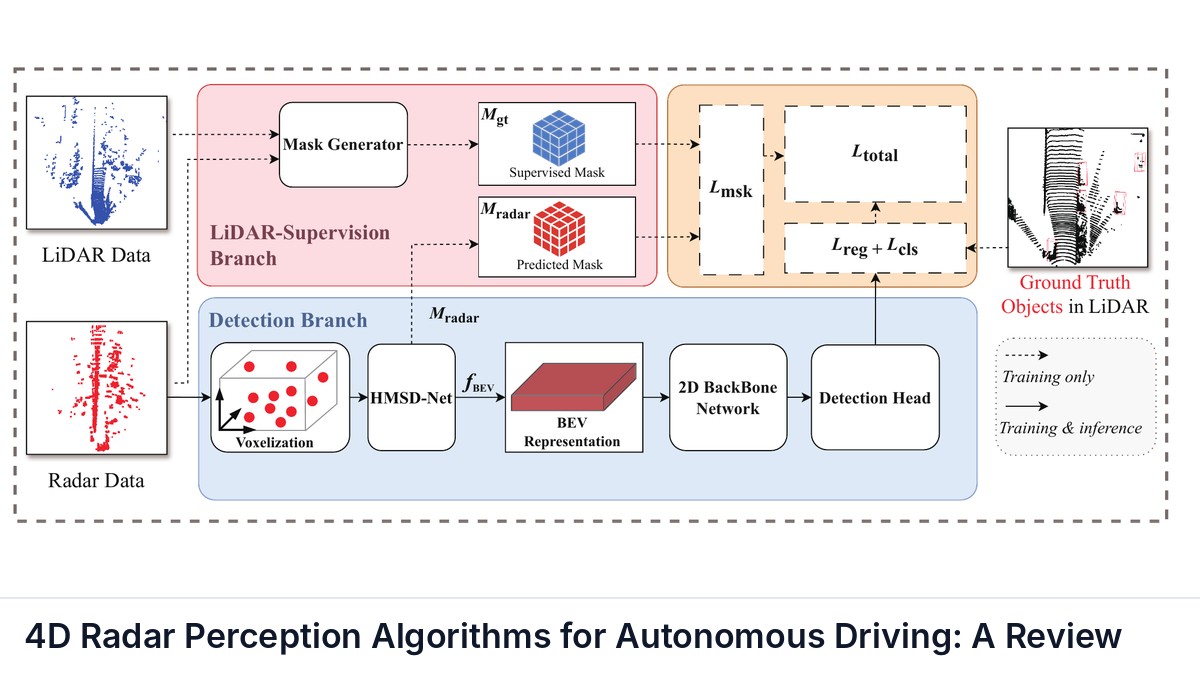
4D Radar Perception Algorithms for Autonomous Driving: A Review
arXiv preprint

4D Radar Perception Algorithms for Autonomous Driving: A Review

Xumin Wu, Jun Zhou, Jilin Mei et al.

Research on 4D millimeter-wave radar perception algorithms has flourished in recent years, extending from signal processing and object detection to semantic segmentation, motion estimation, occupancy prediction, and dynamic scene reconstruction.

vision reinforcement-learning benchmark
PDF Beginner
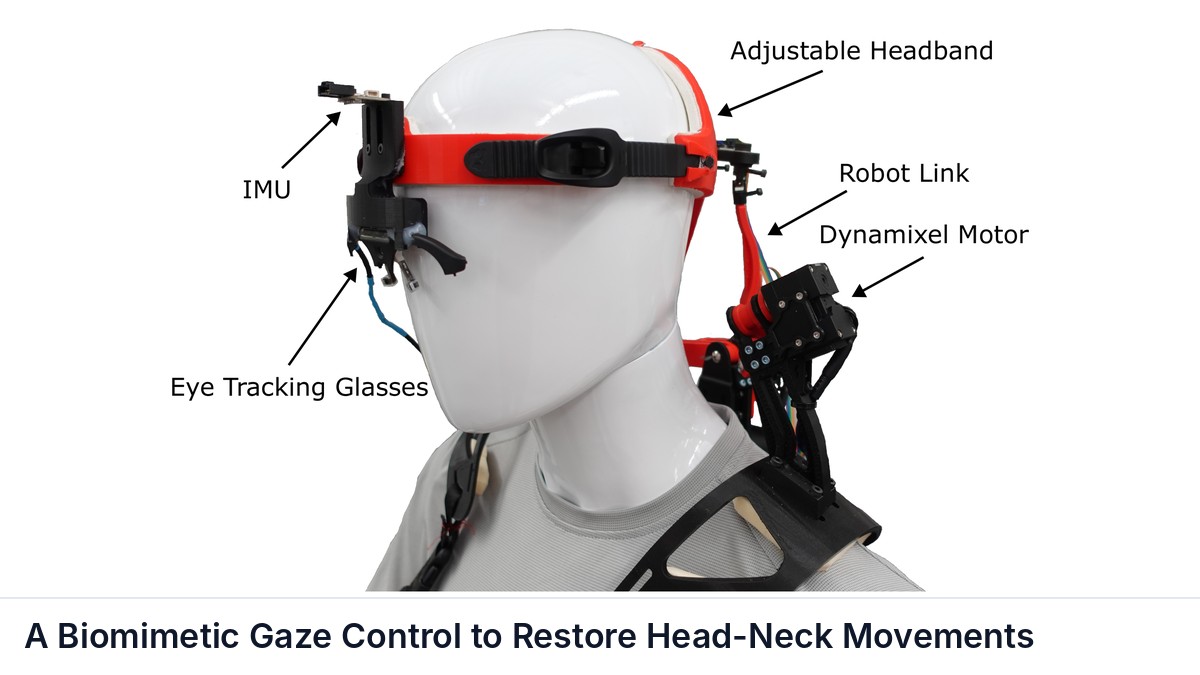
A Biomimetic Gaze Control to Restore Head-Neck Movements
arXiv preprint

A Biomimetic Gaze Control to Restore Head-Neck Movements

Colin Rubow, Haohan Zhang

Powered neck exoskeletons are developed to restore head-neck motions for those with neck muscle weakness. Current methods using hand-held input devices to control these robotic systems are unintuitive or non-viable for these populations.

vision control
PDF Intermediate
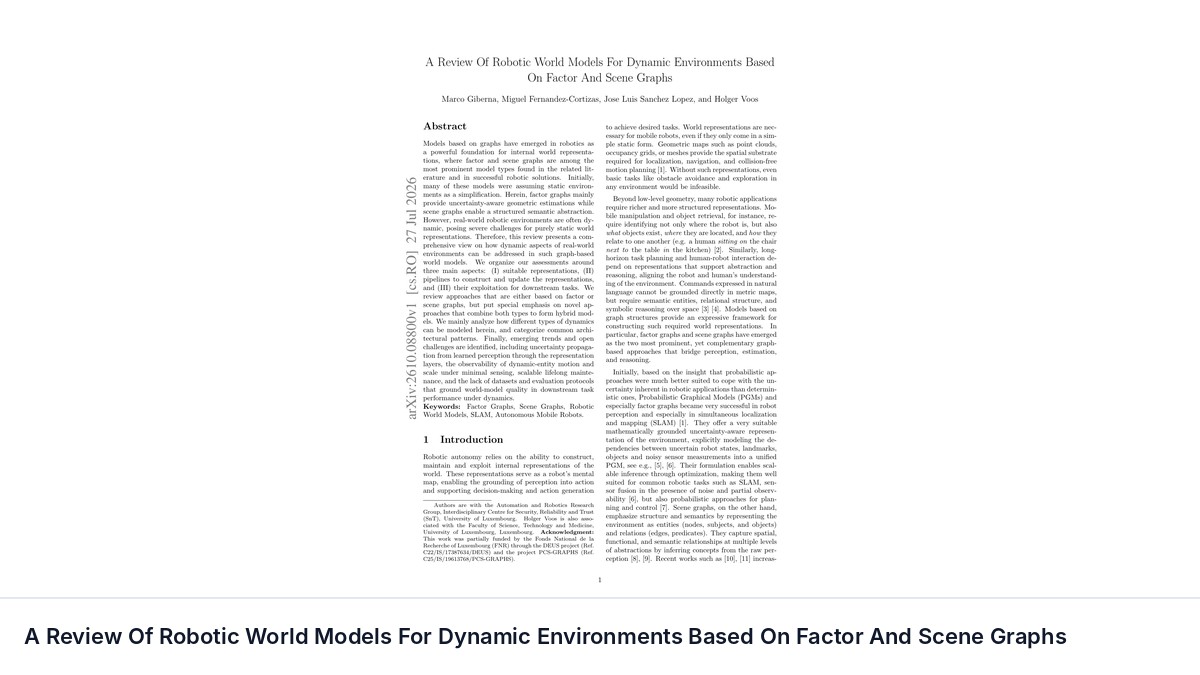
A Review Of Robotic World Models For Dynamic Environments Based On Factor And Scene Graphs
arXiv preprint

A Review Of Robotic World Models For Dynamic Environments Based On Factor And Scene Graphs

Marco Giberna, Miguel Fernandez-Cortizas, Jose Luis Sanchez Lopez et al.

Models based on graphs have emerged in robotics as a powerful foundation for internal world representations, where factor and scene graphs are among the most prominent model types found in the related literature and in successful robotic solutions.

vision reinforcement-learning benchmark
PDF Beginner
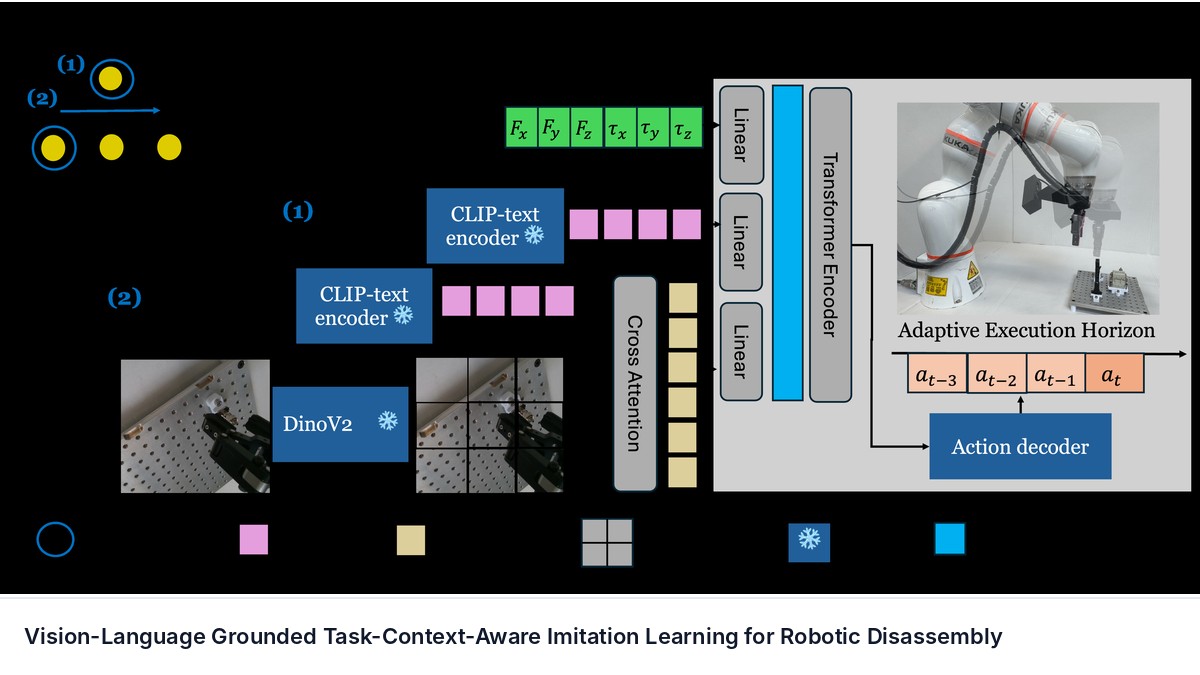
A Sim-to-Real Integration Pipeline for Training and Deployment of Chunk-Based VLA Manipulation Policies
arXiv preprint

A Sim-to-Real Integration Pipeline for Training and Deployment of Chunk-Based VLA Manipulation Policies

Mathilde Kappel, Clémence Grislain, Mohamed Chetouani et al.

Vision-Language-Action (VLA) models have become a prominent paradigm for mapping multimodal inputs, including semantic instructions, visual observations of the scene, and proprioceptive observations, to robot actions.

manipulation vision vla reinforcement-learning sim-to-real control learning-from-demonstration benchmark
PDF Advanced
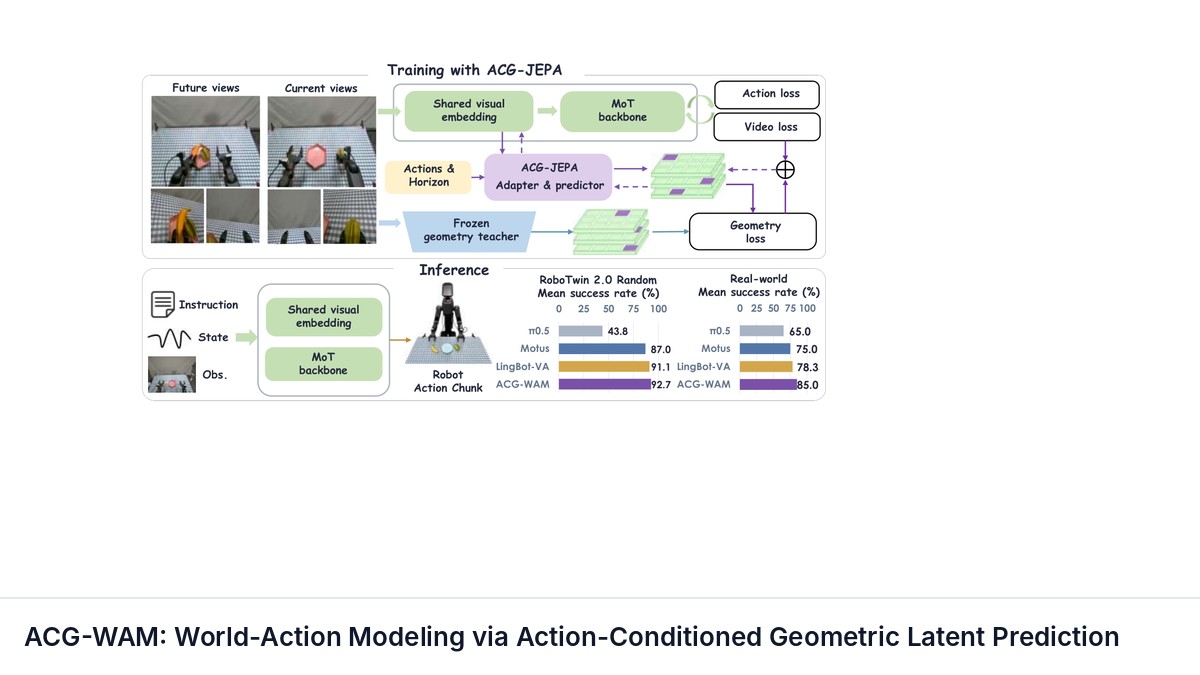
ACG-WAM: World-Action Modeling via Action-Conditioned Geometric Latent Prediction
arXiv preprint

ACG-WAM: World-Action Modeling via Action-Conditioned Geometric Latent Prediction

Jiangtao Liu, Zishang Xiang, Yage He et al.

World action models jointly learn visual predictionand robot actions, providing a way to use observations ofscene evolution for policy learning. Their video and actionlosses, however, provide no explicit target for the geometricconsequences of a demonstrated action sequence.

vision reinforcement-learning
Code PDF Intermediate
GitHub ★ —
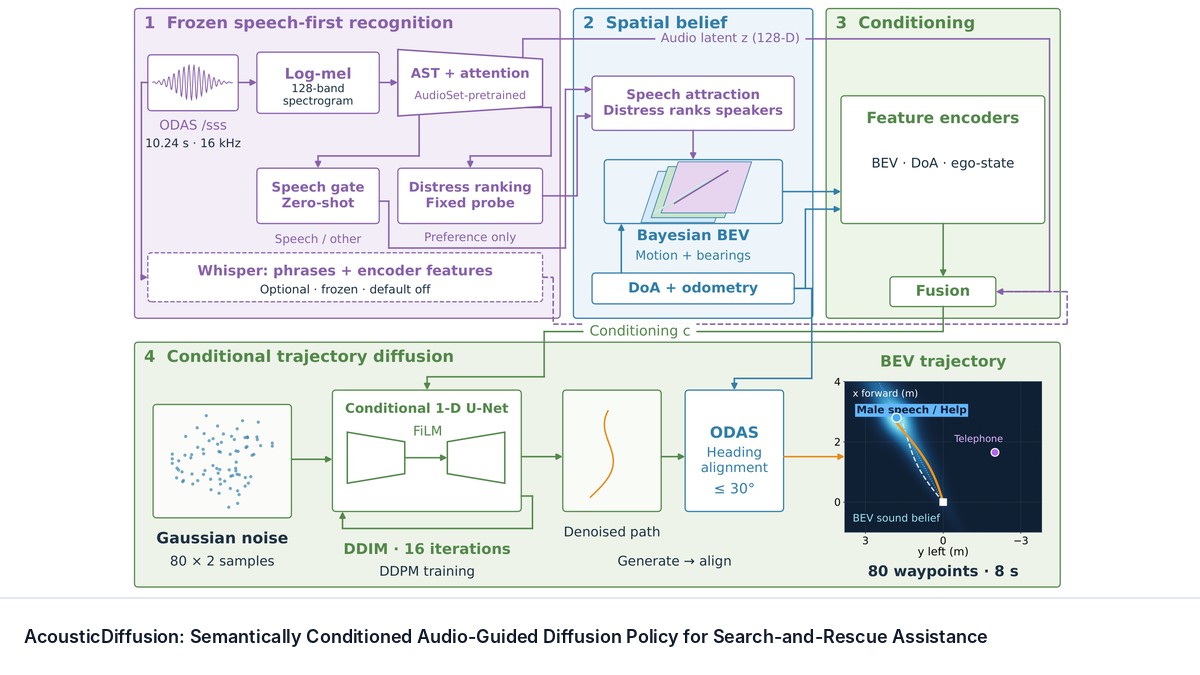
AcousticDiffusion: Semantically Conditioned Audio-Guided Diffusion Policy for Search-and-Rescue Assistance
arXiv preprint

AcousticDiffusion: Semantically Conditioned Audio-Guided Diffusion Policy for Search-and-Rescue Assistance

Iana Zhura, Didar Seyidov, Dmitrii Plotnikov et al.

Navigating toward human callers is an important capability for rescue robots operating where visual contact is degraded or occluded. We present AcousticDiffusion, a semantically conditioned, audio-guided diffusion policy for human-directed navigation.

locomotion vision reinforcement-learning planning
PDF Advanced
Aim Short to Reach Far: Your Frozen World Model Can Plan Better Than You Think
arXiv preprint

Aim Short to Reach Far: Your Frozen World Model Can Plan Better Than You Think

Xvyuan Liu, Jianjie Fang, Chen Gao et al.

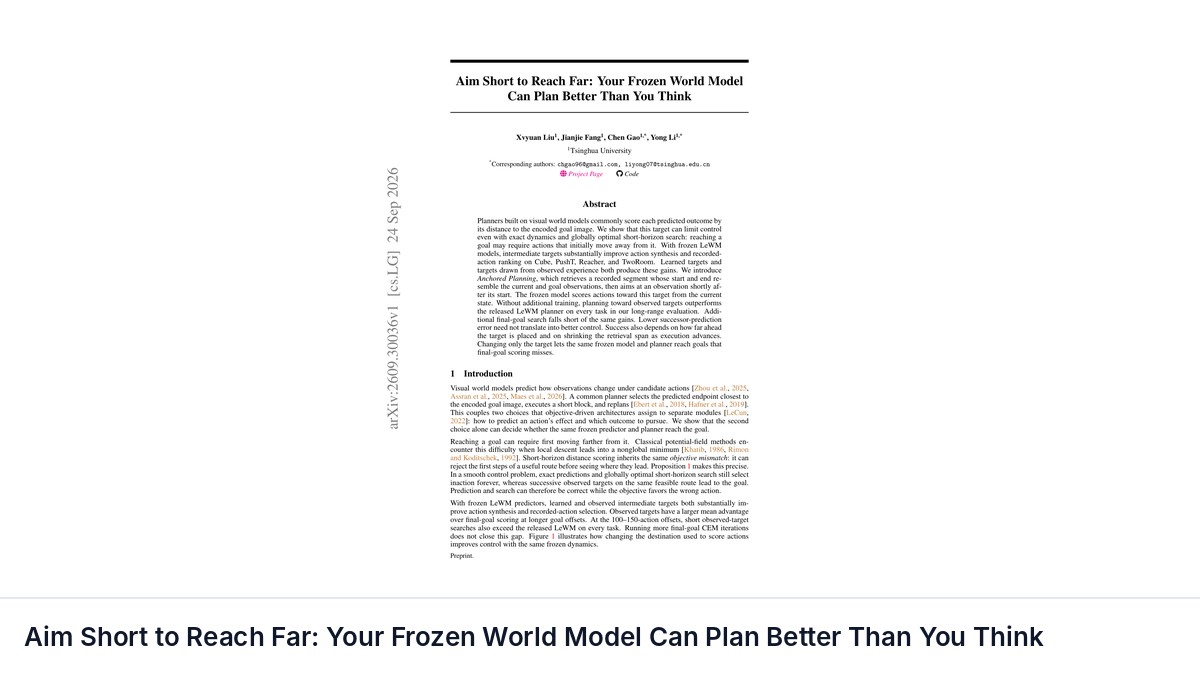
Planners built on visual world models commonly score each predicted outcome by its distance to the encoded goal image. We show that this target can limit control even with exact dynamics and globally optimal short-horizon search: reaching a goal may require actions that initially move away from it.

vision reinforcement-learning planning control human-robot-interaction benchmark
PDF Intermediate
Assessing Physical Frailty and Fall-Risk Indicators with Social Robots: An in situ Evaluation with Older Adults
arXiv preprint

Assessing Physical Frailty and Fall-Risk Indicators with Social Robots: An in situ Evaluation with Older Adults

Aniol Civit, Antonio Andriella, Alba Martínez et al.

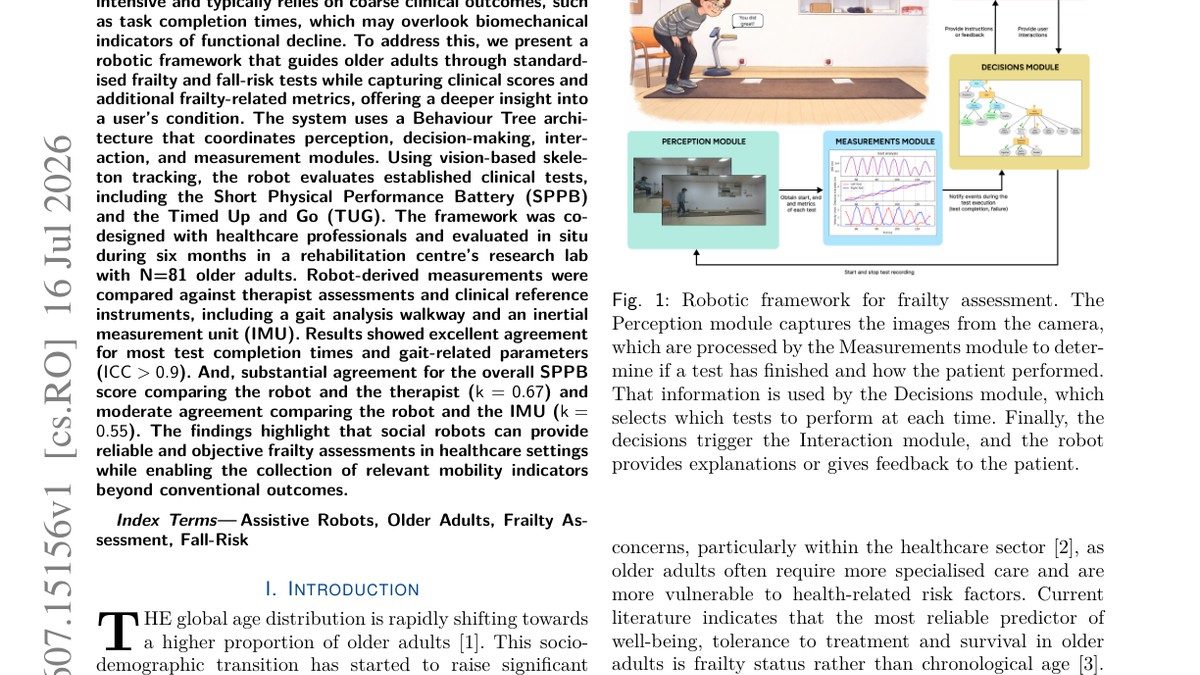
Frailty assessments are crucial to evaluate the risk of adverse events and the health and social care needs of older adults, yet their administration remains resource-intensive and typically relies on coarse clinical outcomes, such as task completion times, which may overlook biomechanical indicators of functional decline.

vision reinforcement-learning human-robot-interaction benchmark
PDF Intermediate
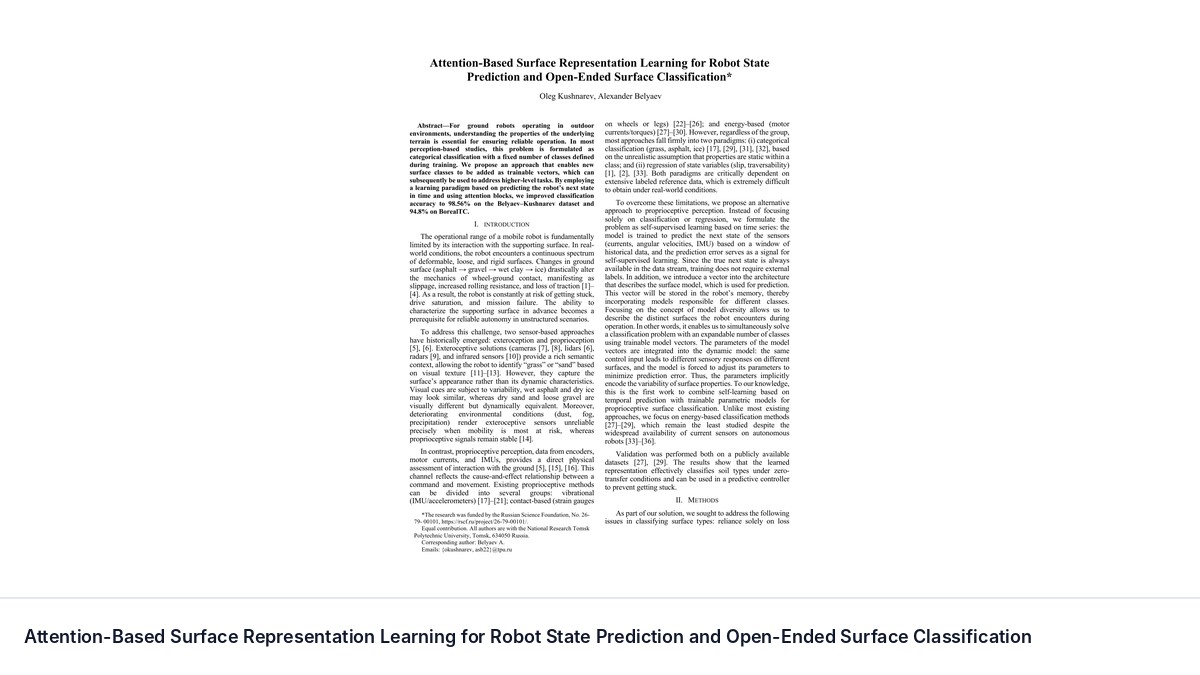
Attention-Based Surface Representation Learning for Robot State Prediction and Open-Ended Surface Classification
arXiv preprint

Attention-Based Surface Representation Learning for Robot State Prediction and Open-Ended Surface Classification

Oleg Kushnarev, Alexander Belyaev

For ground robots operating in outdoor environments, understanding the properties of the underlying terrain is essential for ensuring reliable operation. In most perception-based studies, this problem is formulated as categorical classification with a fixed number of classes defined during training.

vision reinforcement-learning benchmark
Code PDF Intermediate
GitHub ★ —
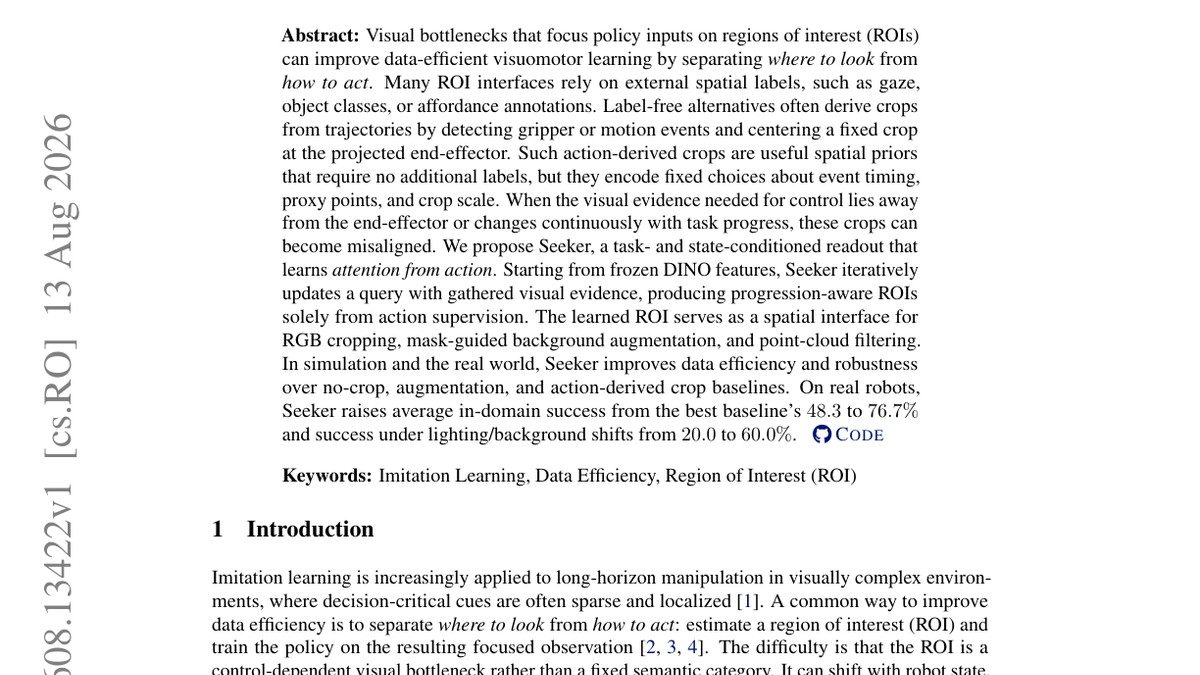
Attention from Action, for Action: Emergent Visual Bottlenecks for Policy Learning
arXiv preprint

Attention from Action, for Action: Emergent Visual Bottlenecks for Policy Learning

Zheyu Zhuang, Ruiyu Wang, Nick Heppert et al.

Visual bottlenecks that focus policy inputs on regions of interest (ROIs) can improve data-efficient visuomotor learning by separating where to look from how to act. Many ROI interfaces rely on external spatial labels, such as gaze, object classes, or affordance annotations.

vision reinforcement-learning control
PDF Intermediate
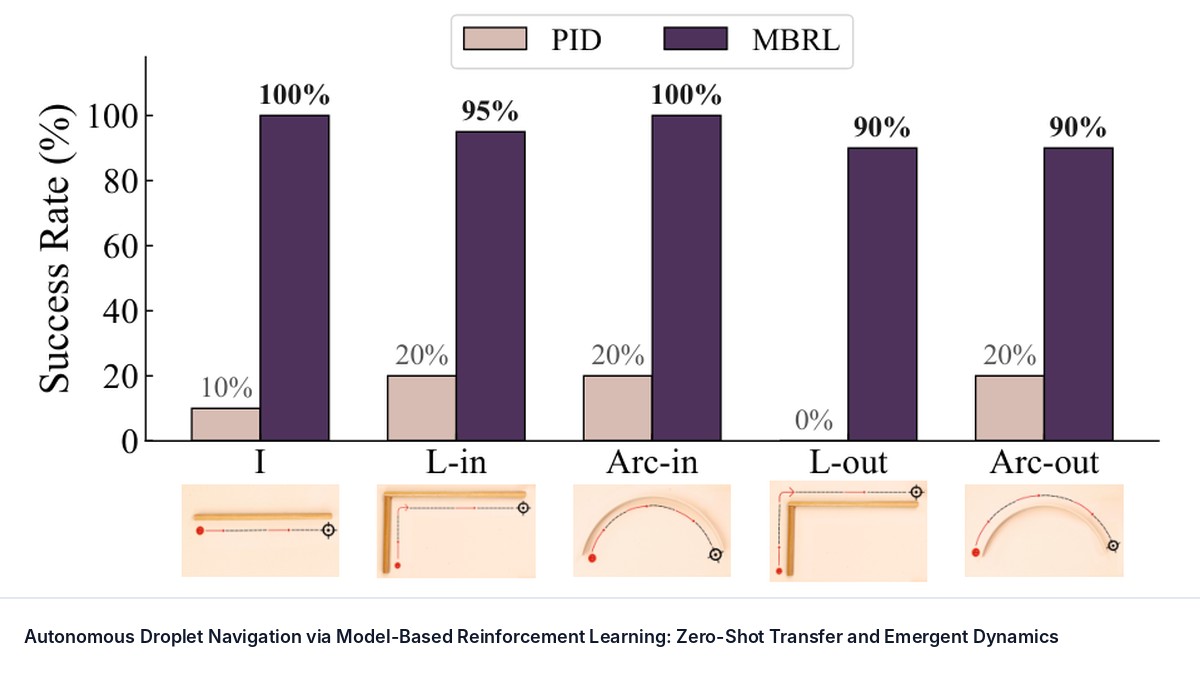
Autonomous Droplet Navigation via Model-Based Reinforcement Learning: Zero-Shot Transfer and Emergent Dynamics
arXiv preprint

Autonomous Droplet Navigation via Model-Based Reinforcement Learning: Zero-Shot Transfer and Emergent Dynamics

Rajneesh Anand, Mayuresh V. Kothare

Self-driving laboratories (SDLs) are transforming chemical and materials discovery through closed-loop automation, yet automated infrastructure for physical manipulation of soft, deformable matter remains beyond current robotic platforms.

manipulation vision reinforcement-learning planning control
Code PDF Intermediate
GitHub ★ —
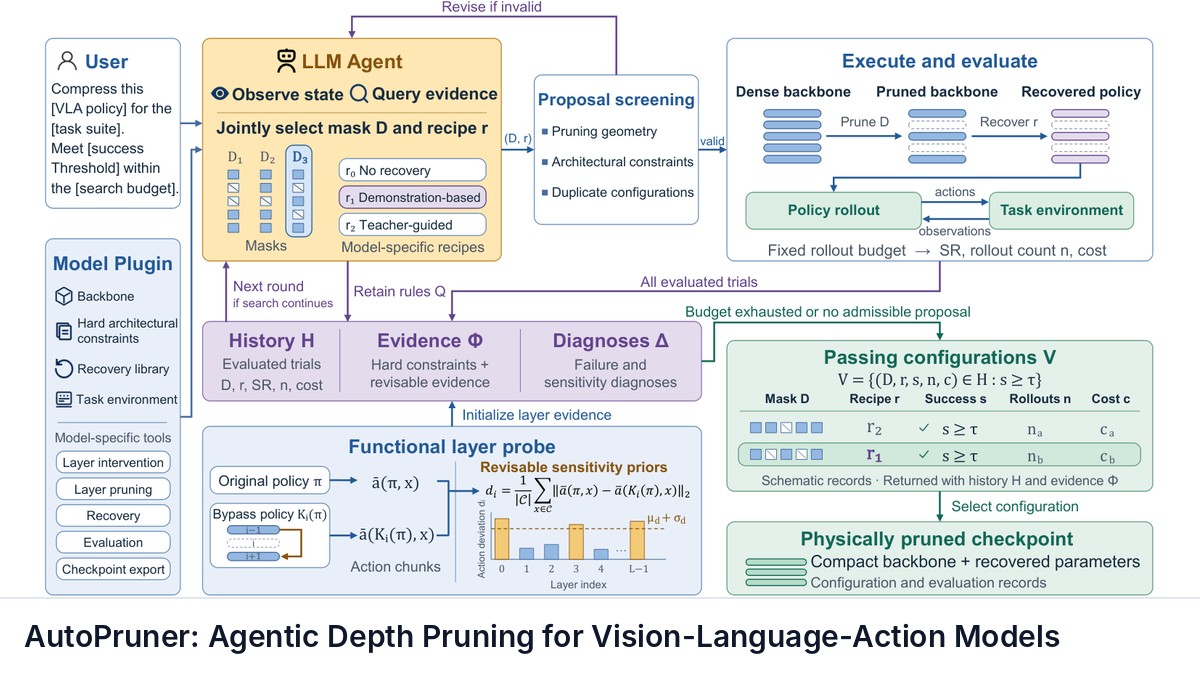
AutoPruner: Agentic Depth Pruning for Vision-Language-Action Models
arXiv preprint

AutoPruner: Agentic Depth Pruning for Vision-Language-Action Models

Tao Lin, Yikeng Chen, Qiwei Liang et al.

Layer pruning reduces the size and inference cost of vision-language-action (VLA) models, but selecting a deployable configuration requires deciding both which layers to remove and how to recover task performance.

vision vla benchmark
PDF Intermediate
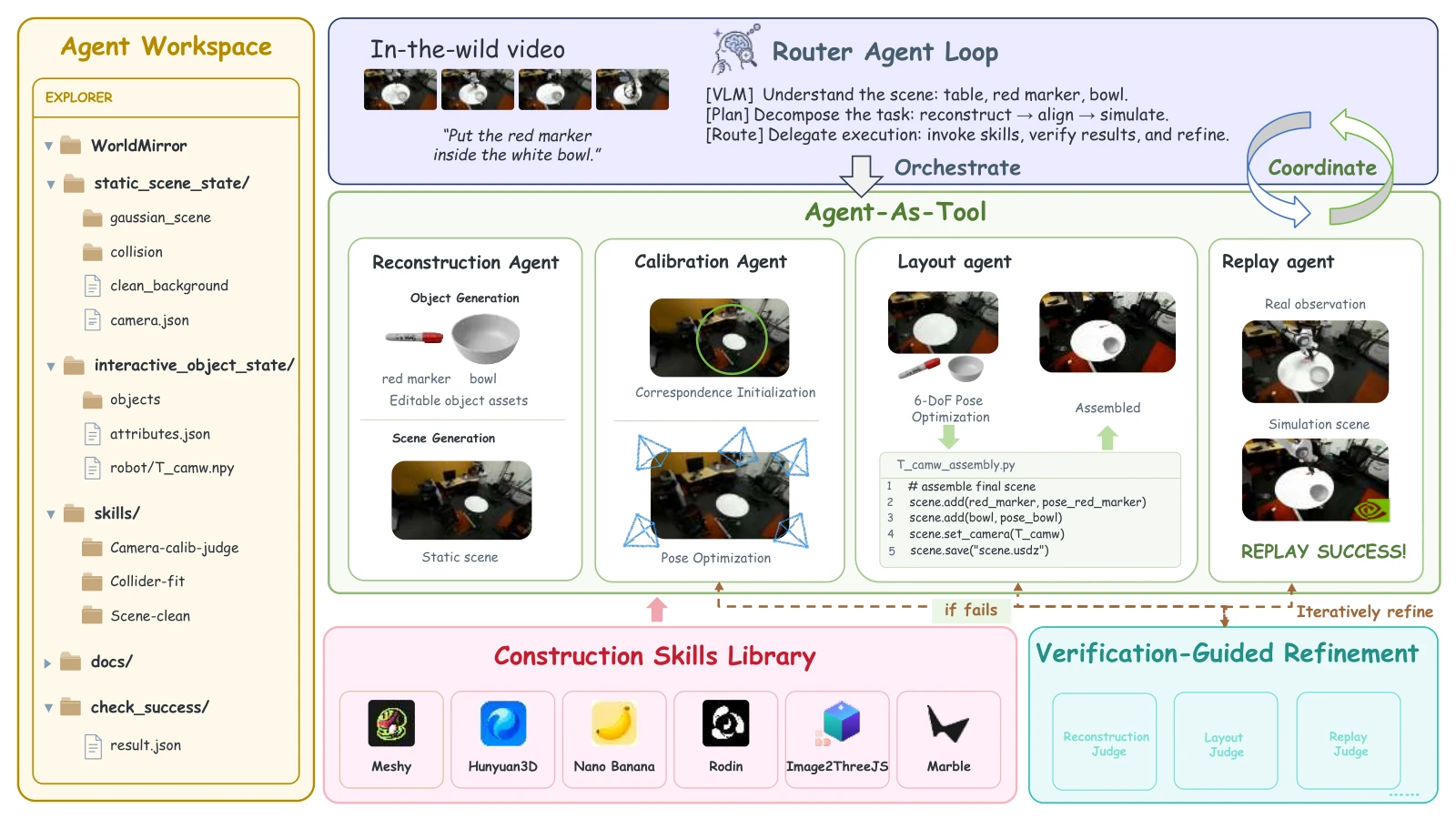
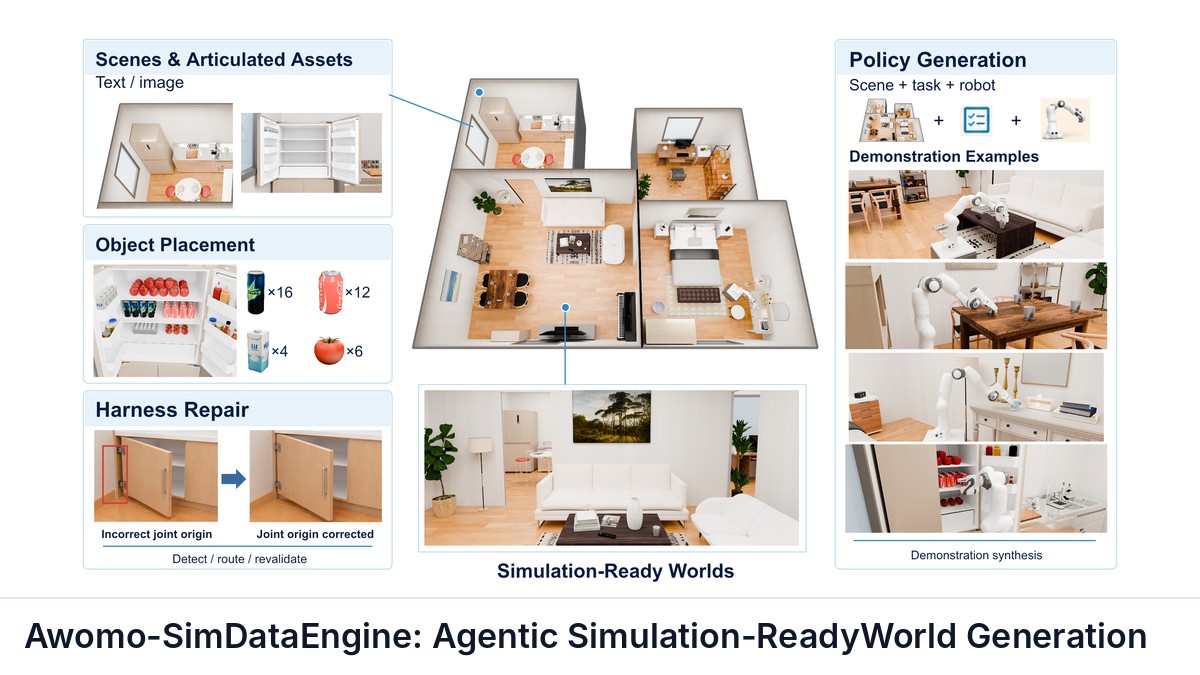
Awomo-SimDataEngine: Agentic Simulation-ReadyWorld Generation
arXiv preprint

Awomo-SimDataEngine: Agentic Simulation-ReadyWorld Generation

PhysicalRSI Team, Danjiao Ma, Enhui Ma et al.

Generating useful robot-training data requires more than visually plausiblescenes: objects must support interaction, placements must remain physicallyvalid, and tasks must admit repeatable execution.

vision reinforcement-learning learning-from-demonstration benchmark
PDF Intermediate
AXIS: A Growable Community-Driven Data Engine for Scalable Robot Manipulation
arXiv preprint

AXIS: A Growable Community-Driven Data Engine for Scalable Robot Manipulation

Mengfei Zhao, Dihong Huang, Yikai Tang et al.

Learning effective robot manipulation policies requires diverse, high-quality demonstrations, yet existing data pipelines are often difficult to scale because they rely on specialized hardware, centralized operators, or fixed task suites.

manipulation vision vla learning-from-demonstration benchmark
PDF Advanced
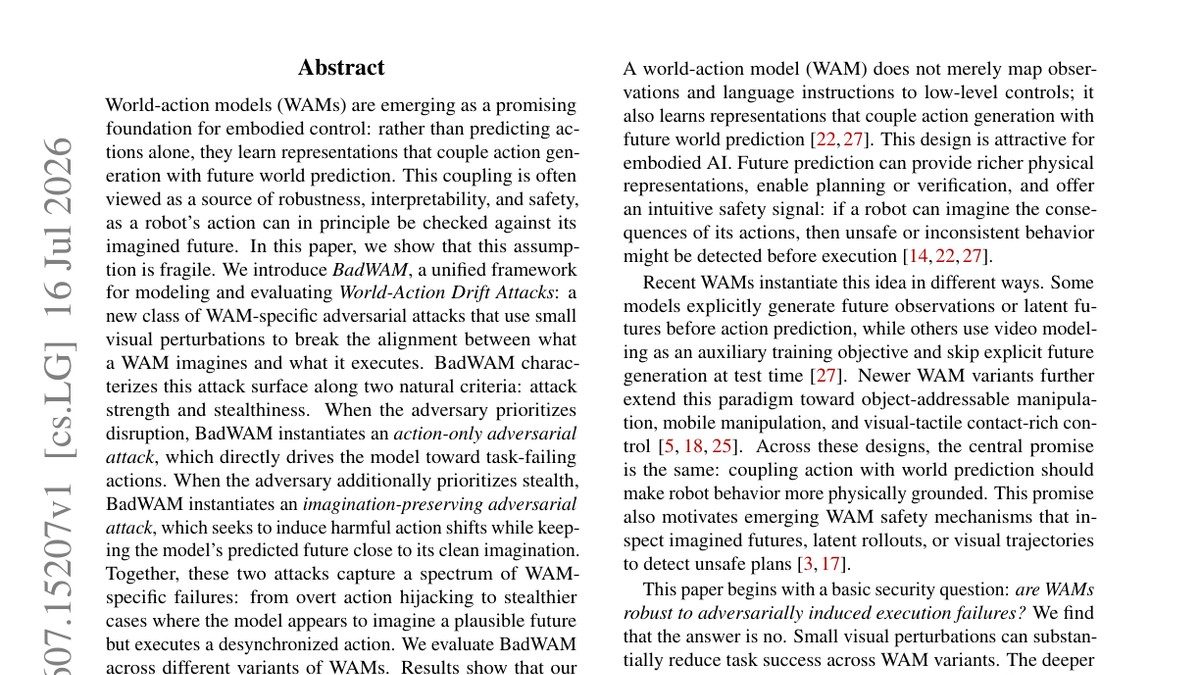
BadWAM: When World-Action Models Dream Right but Act Wrong
arXiv preprint

BadWAM: When World-Action Models Dream Right but Act Wrong

Qi Li, Xingyi Yang, Xinchao Wang

World-action models (WAMs) are emerging as a promising foundation for embodied control: rather than predicting actions alone, they learn representations that couple action generation with future world prediction.

vision reinforcement-learning control
PDF Intermediate
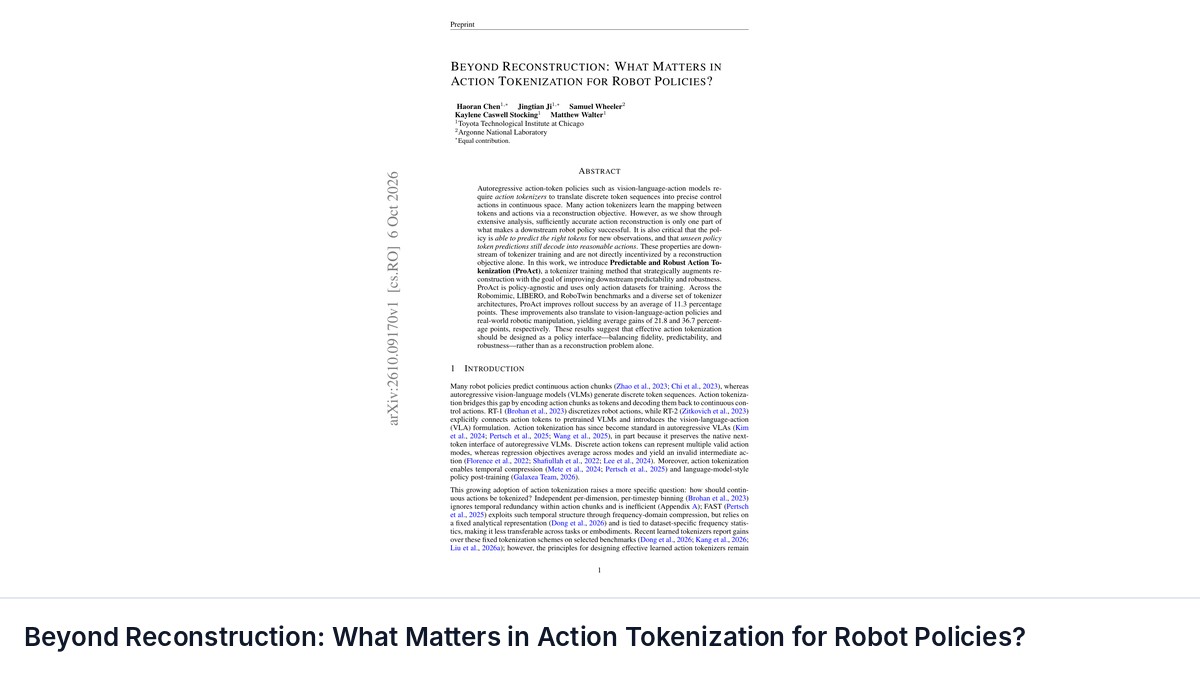
Beyond Reconstruction: What Matters in Action Tokenization for Robot Policies?
arXiv preprint

Beyond Reconstruction: What Matters in Action Tokenization for Robot Policies?

Haoran Chen, Jingtian Ji, Samuel Wheeler et al.

Autoregressive action-token policies such as vision-language-action models require action tokenizers to translate discrete token sequences into precise control actions in continuous space. Many action tokenizers learn the mapping between tokens and actions via a reconstruction objective.

manipulation vision vla reinforcement-learning control benchmark
PDF Intermediate
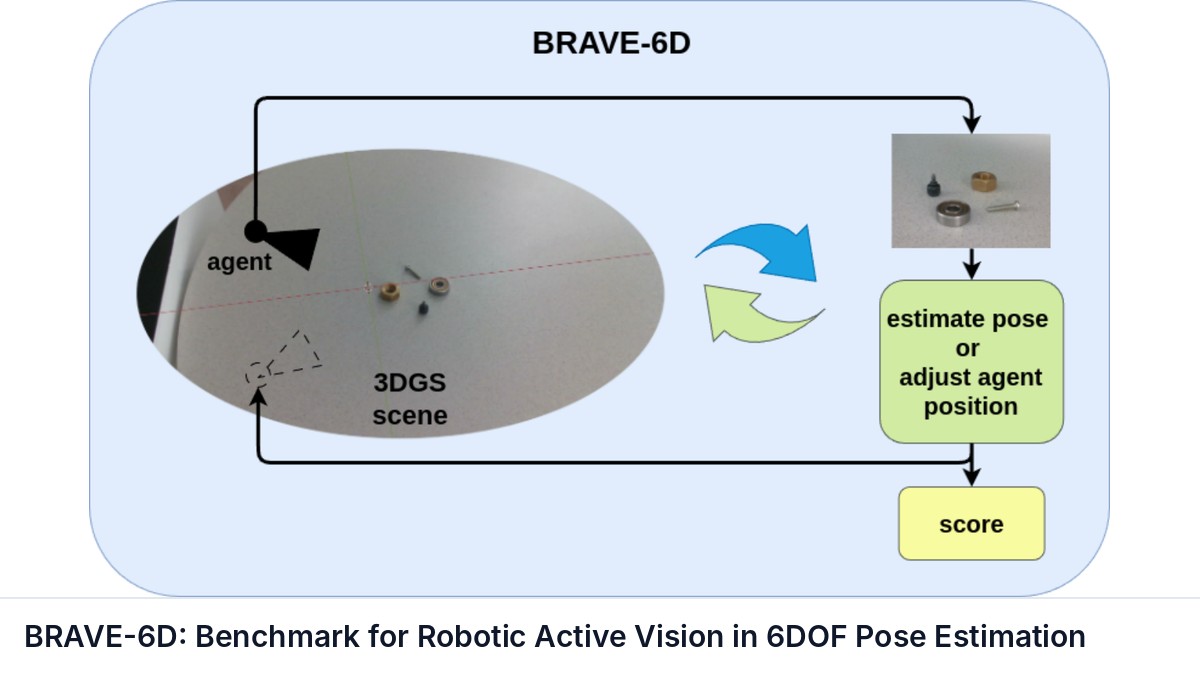
BRAVE-6D: Benchmark for Robotic Active Vision in 6DOF Pose Estimation
arXiv preprint

BRAVE-6D: Benchmark for Robotic Active Vision in 6DOF Pose Estimation

Philipp Ausserlechner, Bernhard Neuberger, Alessandro Scherl et al.

Detecting and grasping small objects remains a significant challenge in robotics. Active vision, where the robot moves closer to the object, is an intuitive solution, yet comparing approaches on common ground is difficult since identical physical scene setups are required.

manipulation vision benchmark
PDF Intermediate
Capability-Aware Arbitration for Semantic Intent-Based Shared Control
arXiv preprint

Capability-Aware Arbitration for Semantic Intent-Based Shared Control

Zhaoda Du, Michael Bowman, Xiaoli Zhang

Shared control often allocates robot authority based on confidence in inferred human intent, assuming reliable autonomous execution. When this assumption fails, high intent confidence can cause over-helping.

manipulation vision vla reinforcement-learning control learning-from-demonstration benchmark
Code PDF Intermediate
GitHub ★ —
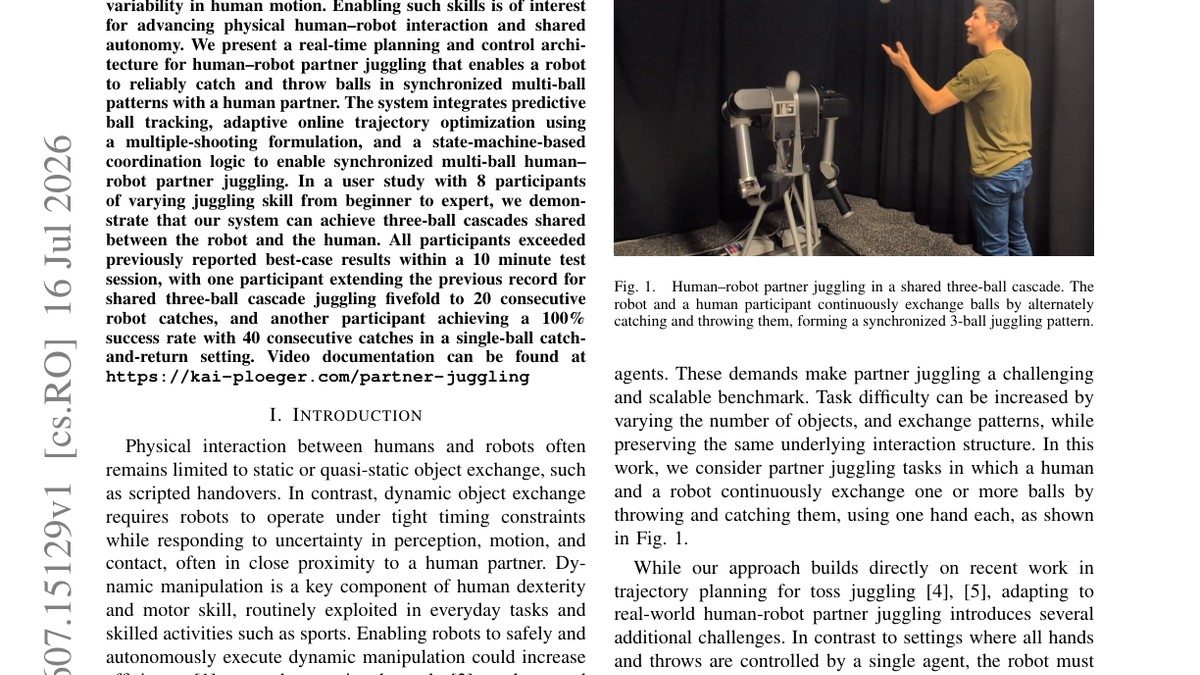
Catch, Throw, Repeat: Planning for Human-Robot Partner Juggling
arXiv preprint

Catch, Throw, Repeat: Planning for Human-Robot Partner Juggling

Jonathan Rainer Lippert, Kai Ploeger, Abir Chowdhury et al.

Dynamic object exchange between humans and robots remains a challenging problem due to uncertainty in perception, timing, and contact-rich interaction.

vision reinforcement-learning planning control human-robot-interaction
PDF Intermediate
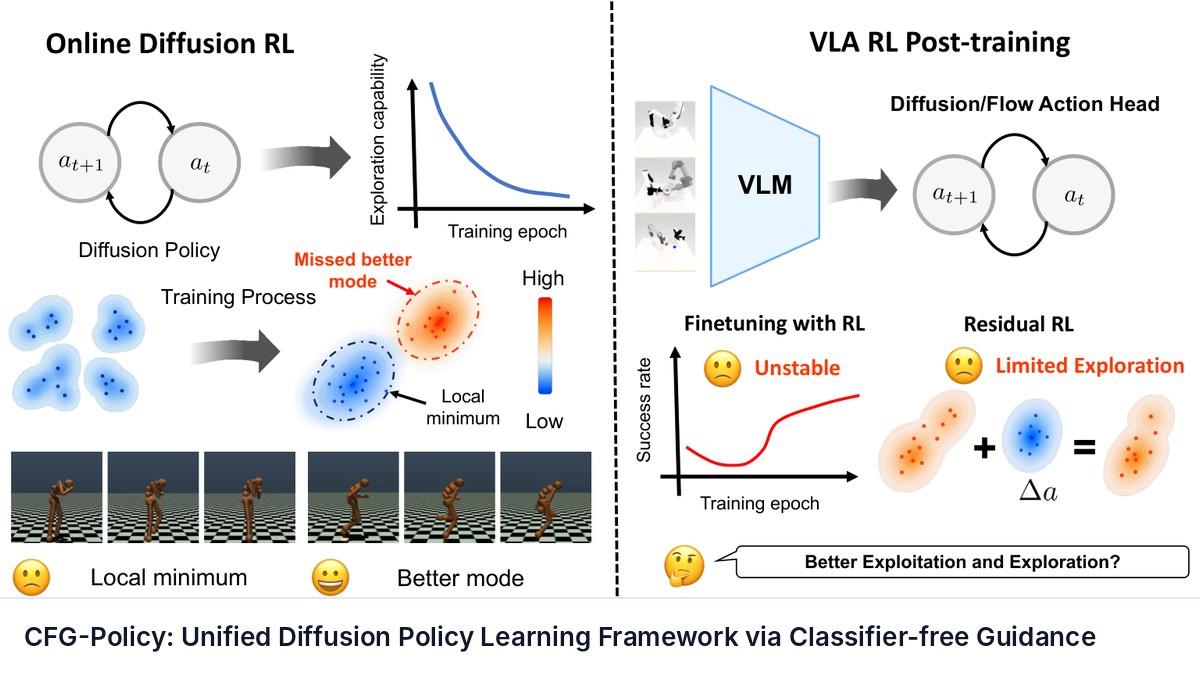
CFG-Policy: Unified Diffusion Policy Learning Framework via Classifier-free Guidance
arXiv preprint

CFG-Policy: Unified Diffusion Policy Learning Framework via Classifier-free Guidance

Shutong Ding, Zhaoyang Liu, Yimiao Zhou et al.

Diffusion policies are increasingly used in robotic control and manipulation, vision-language-action models, and world-model-based agents. Their ability to represent multimodal action distributions offers rich opportunities for exploration in reinforcement learning (RL).

manipulation vision vla reinforcement-learning control
Code PDF Advanced
GitHub ★ —
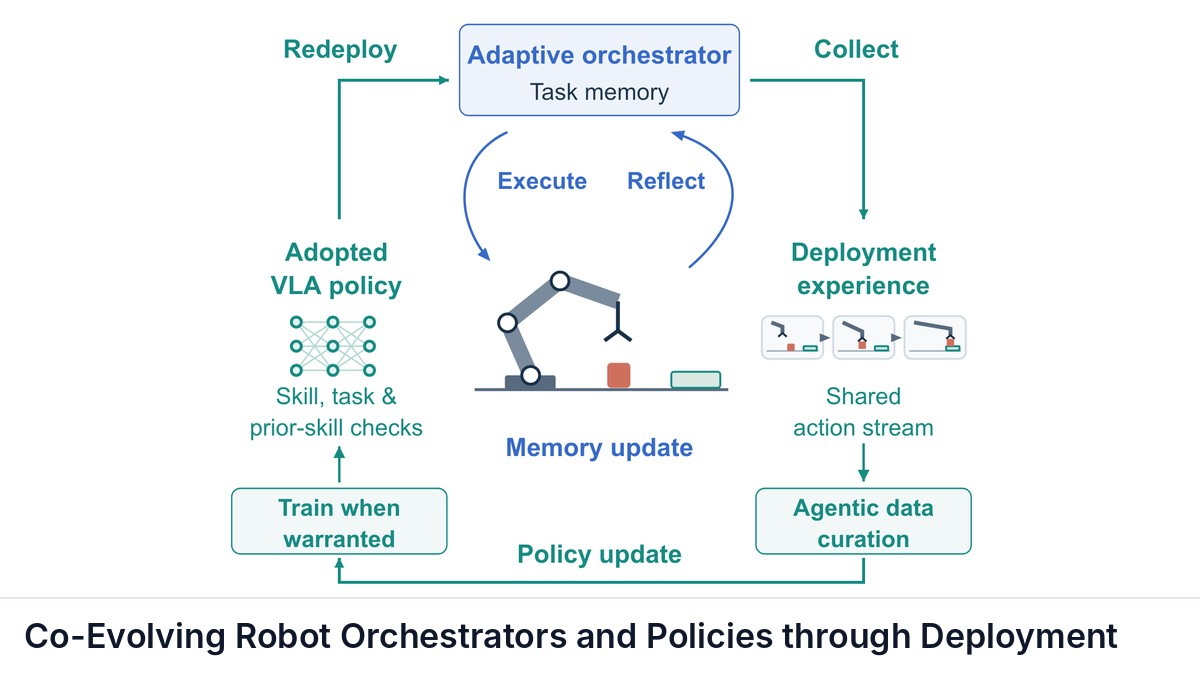
Co-Evolving Robot Orchestrators and Policies through Deployment
arXiv preprint

Co-Evolving Robot Orchestrators and Policies through Deployment

Xilun Zhang, Maggie Wang, Erik Bauer et al.

Vision-language-action (VLA) policies trained on large datasets are capable within their training domains, yet they still fail to generalize to the variety of situations a robot meets in real-world deployment.

vision vla reinforcement-learning learning-from-demonstration benchmark
PDF Intermediate
CoDA: Co-Evolution of Data Engines and Action Policies
arXiv preprint

CoDA: Co-Evolution of Data Engines and Action Policies

Tianjiao Yu, Zhilin Ou, Yifan Shen et al.

Generative simulation can automate robot environment construction, but physically valid environments are not necessarily useful for training. The challenge is to identify environments that address a policy's failures and supervision that helps it overcome them.

manipulation vision reinforcement-learning
PDF Intermediate
Context-Aware RGB-Thermal-Radar Obstacle Perception for Resource-Constrained ASVs
arXiv preprint

Context-Aware RGB-Thermal-Radar Obstacle Perception for Resource-Constrained ASVs

Pranav Kedia, Edwin Redhead, Heiko Hamann

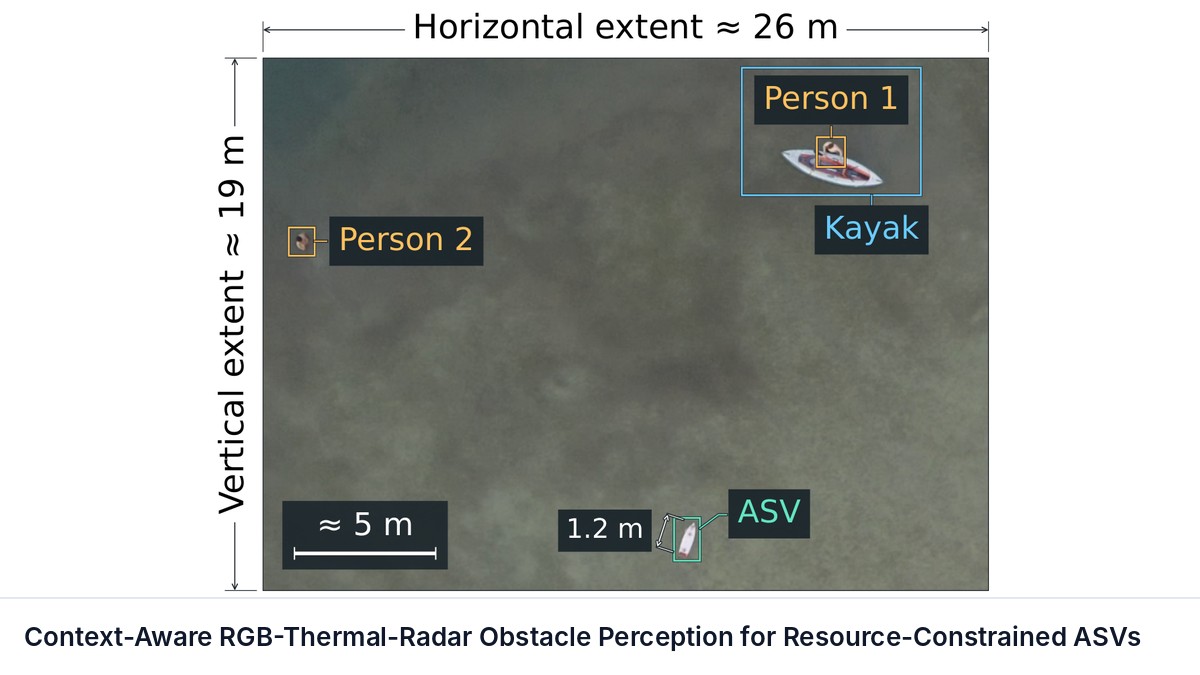
Reliable obstacle perception is challenging for small autonomous surface vessels (ASVs): reflections and glare confound visible-light cameras, vessel motion shifts the apparent waterline, and darkness removes the dominant sensing modality altogether.

vision reinforcement-learning planning control
PDF Intermediate
Decoding Task Progress from VLA Representations
arXiv preprint

Decoding Task Progress from VLA Representations

Atiksh Bhardwaj, Edward Weiyi Duan, Prithwish Dan et al.

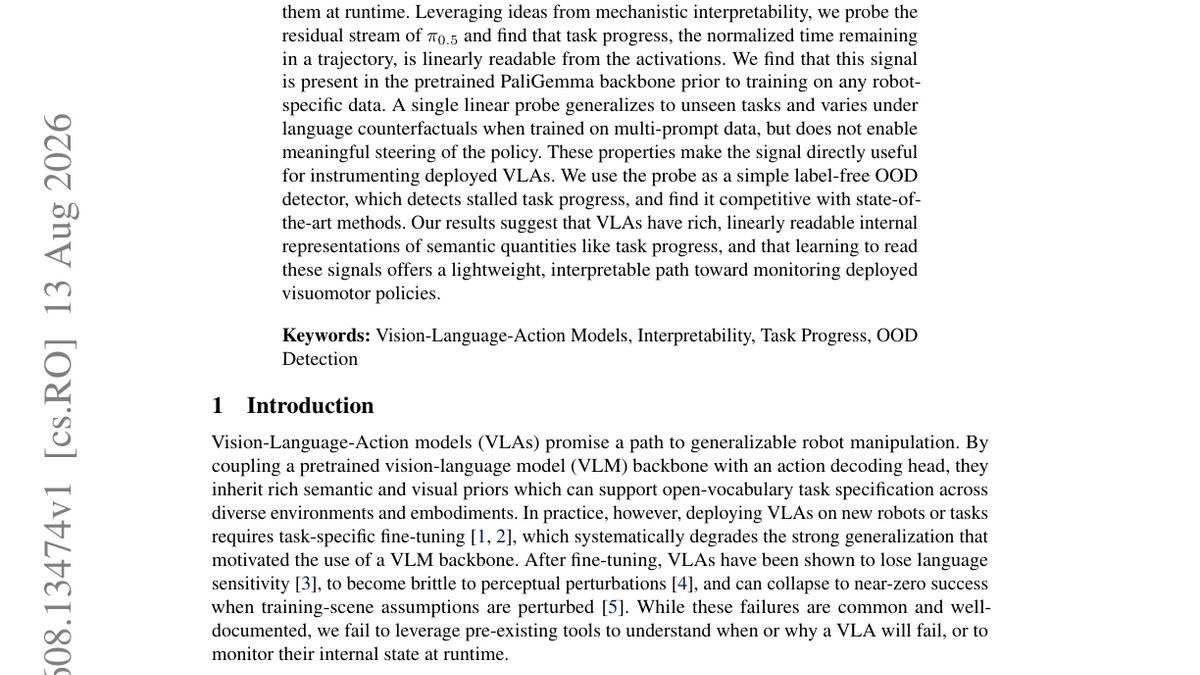
Vision-language-action models (VLAs) are moving rapidly towards deployment as general-purpose manipulation policies, but we currently lack basic tools for understanding what these models represent internally or for monitoring them at runtime.

manipulation vision vla reinforcement-learning control
PDF Intermediate
DECOWAM: Decoupled Whole-Body World-Action Model for Legged Mobile Manipulation
arXiv preprint

DECOWAM: Decoupled Whole-Body World-Action Model for Legged Mobile Manipulation

Siyuan Ma, Boshi Zhang, Yutian Zhang et al.

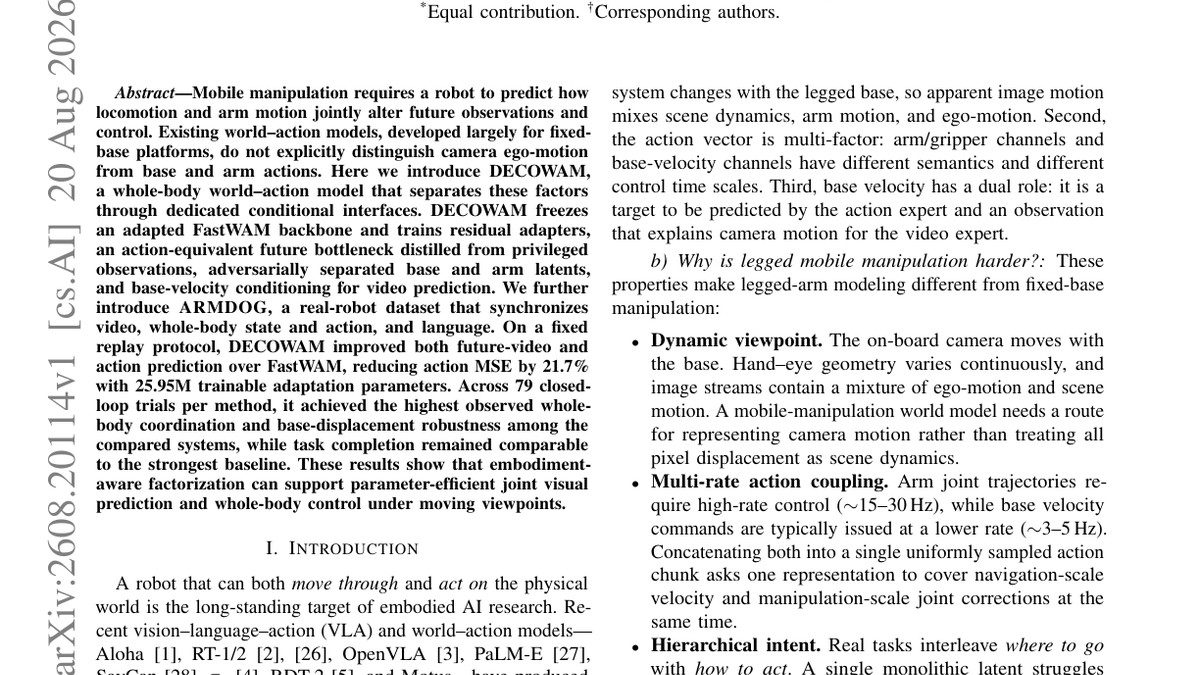
Mobile manipulation requires a robot to predict how locomotion and arm motion jointly alter future observations and control. Existing world-action models, developed largely for fixed-base platforms, do not explicitly distinguish camera ego-motion from base and arm actions.

manipulation locomotion vision reinforcement-learning control benchmark
PDF Intermediate
Development of a Humanoid Robot Prototype for Multimodal Human-Robot Interaction
arXiv preprint

Development of a Humanoid Robot Prototype for Multimodal Human-Robot Interaction

Thang Tran Viet, Thanh Nguyen Canh, Huy Uong Gia et al.

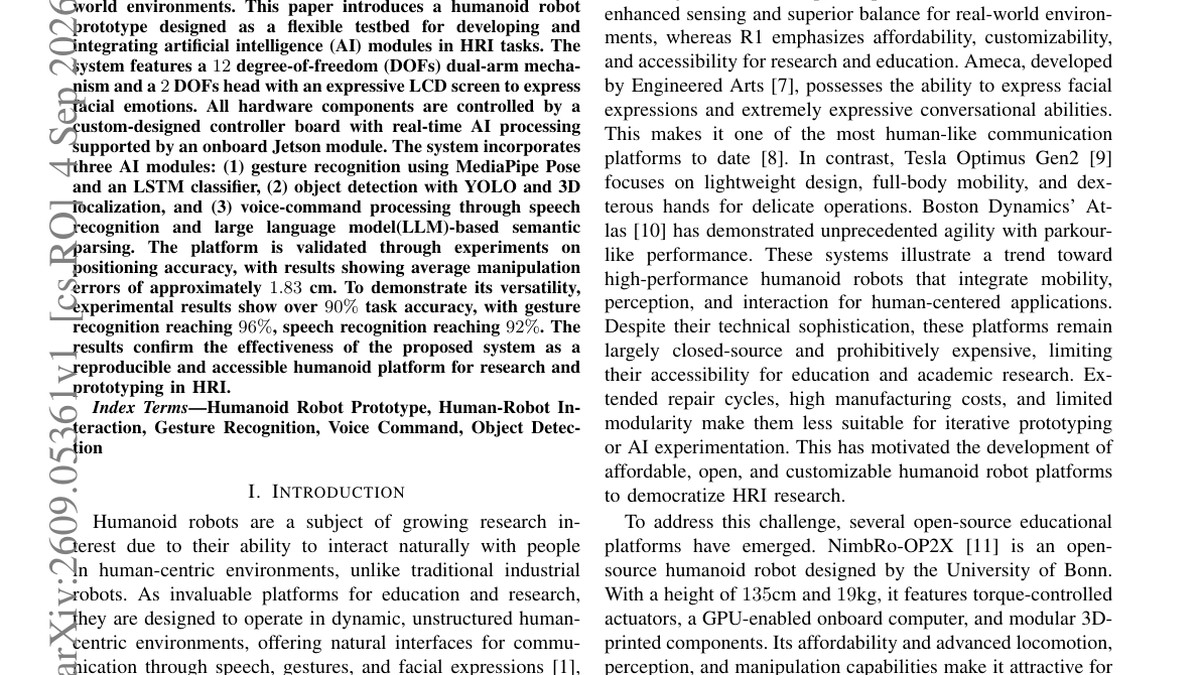
Human-robot interaction (HRI) enables intuitive and intelligent collaboration between humans and robots in real-world environments. This paper introduces a humanoid robot prototype designed as a flexible testbed for developing and integrating artificial intelligence (AI) modules in HRI tasks.

manipulation vision vla reinforcement-learning control human-robot-interaction
Code PDF Intermediate
GitHub ★ —
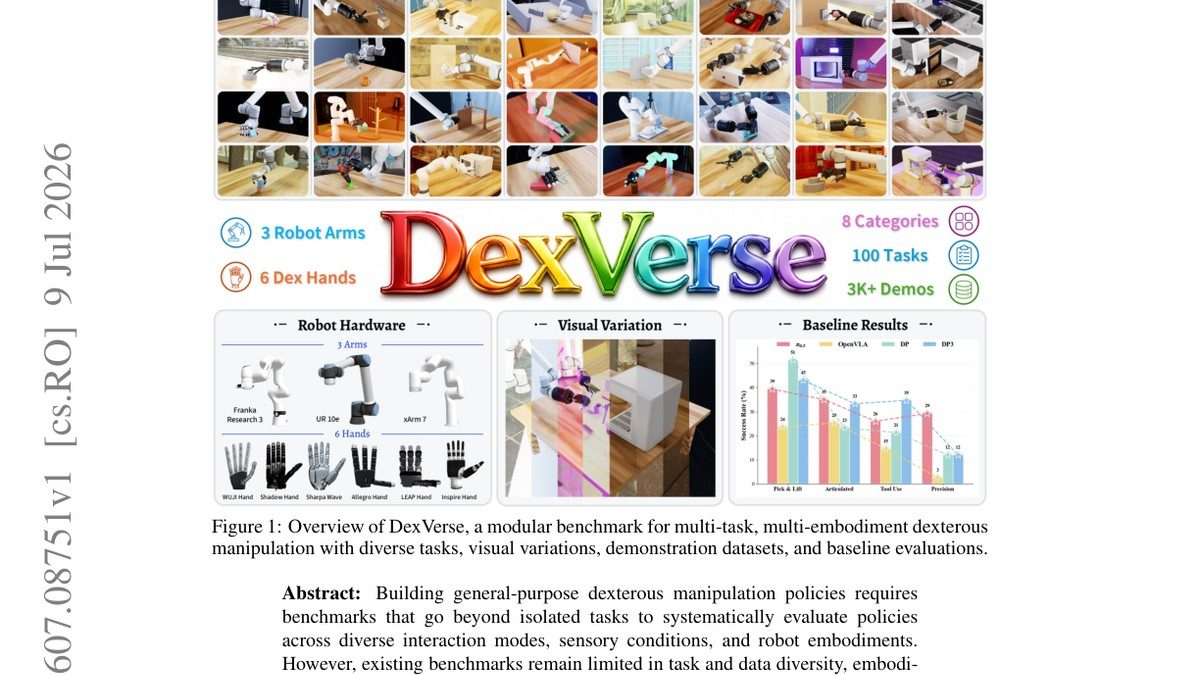
DexVerse: A Modular Benchmark for Multi-Task, Multi-Embodiment Dexterous Manipulation
arXiv preprint

DexVerse: A Modular Benchmark for Multi-Task, Multi-Embodiment Dexterous Manipulation

Yunchao Yao, Zhuxiu Xu, Tianqi Zhang et al.

Building general-purpose dexterous manipulation policies requires benchmarks that go beyond isolated tasks to systematically evaluate policies across diverse interaction modes, sensory conditions, and robot embodiments.

manipulation vision vla reinforcement-learning control learning-from-demonstration benchmark
PDF Advanced
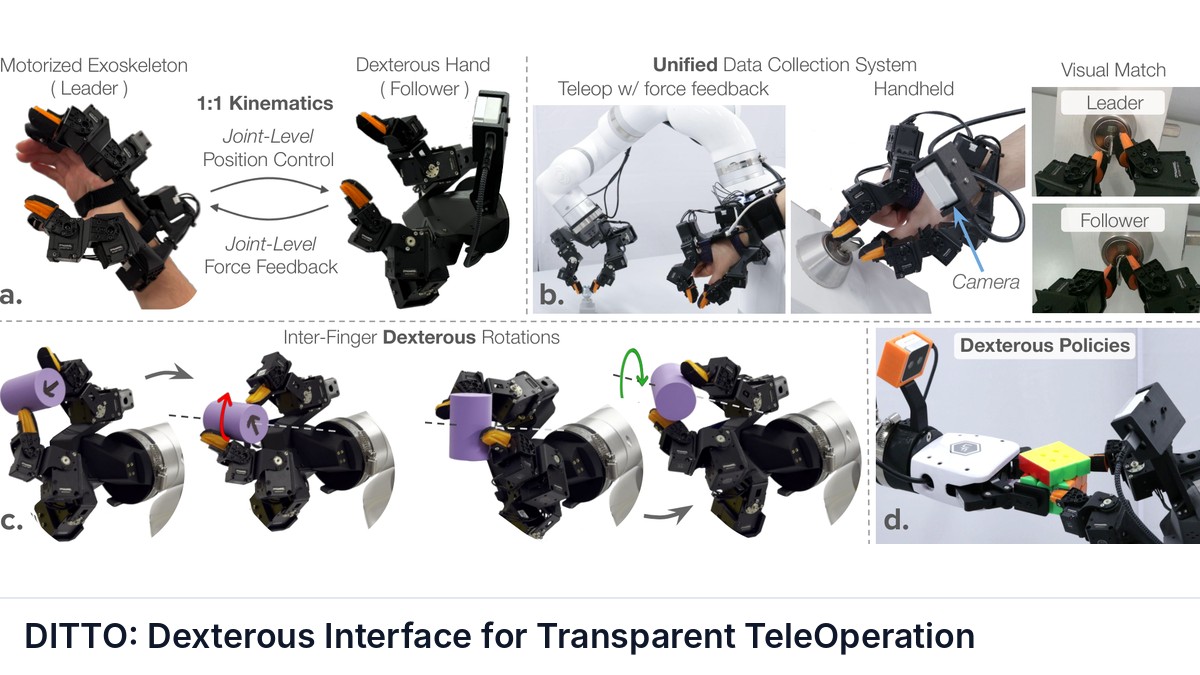
DITTO: Dexterous Interface for Transparent TeleOperation
arXiv preprint

DITTO: Dexterous Interface for Transparent TeleOperation

Joaquin Palacios, Katelyn Lee, Cheng Zhang et al.

Collecting data for manipulation with high-DOF hands is challenging, as interfaces must capture rich hand motion while rendering the contact interactions essential for precise manipulation.

manipulation vision learning-from-demonstration
Code PDF Intermediate
GitHub ★ —
Does a Learned Corrector Beat a Simple Retreat? Evidence from a Frozen VLA
arXiv preprint

Does a Learned Corrector Beat a Simple Retreat? Evidence from a Frozen VLA

Chenchao Sheng, Zhuang Jiang, Liuhaichen Yang et al.

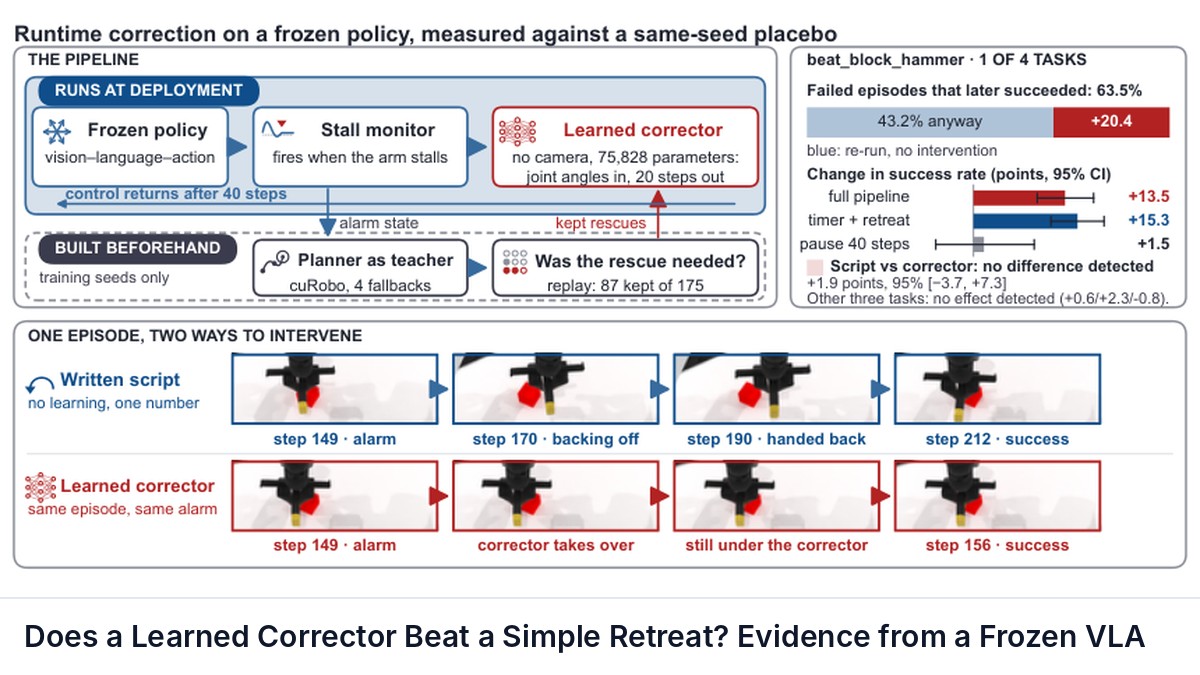
Before deploying runtime recovery for a frozen vision-language-action (VLA) policy, one must establish that an intervention improves success beyond ordinary run-to-run variation and that its complexity adds value over a simple action.

vision vla reinforcement-learning control benchmark
PDF Intermediate
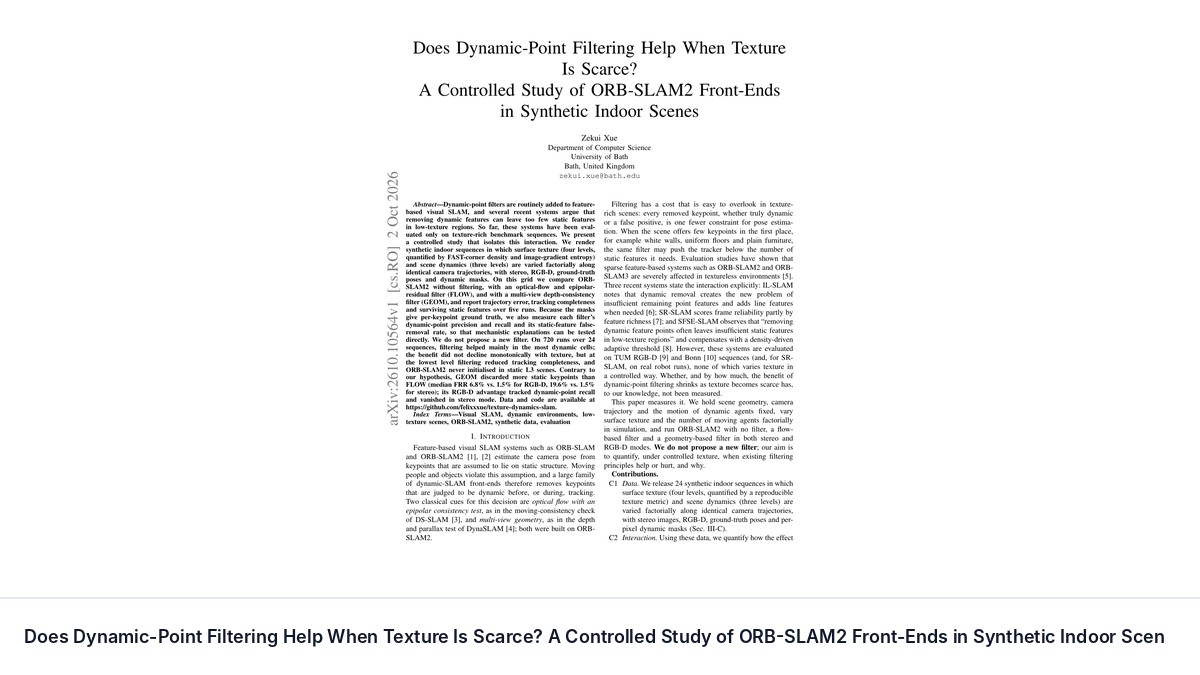
Does Dynamic-Point Filtering Help When Texture Is Scarce? A Controlled Study of ORB-SLAM2 Front-Ends in Synthetic Indoor Scenes
arXiv preprint

Does Dynamic-Point Filtering Help When Texture Is Scarce? A Controlled Study of ORB-SLAM2 Front-Ends in Synthetic Indoor Scenes

Zekui Xue

Dynamic-point filters are routinely added to feature-based visual SLAM, and several recent systems argue that removing dynamic features can leave too few static features in low-texture regions. So far, these systems have been evaluated only on texture-rich benchmark sequences.

vision planning control benchmark
Code PDF Intermediate
GitHub ★ —
EditWM: Event-Decomposed World Modeling with Incremental Correction for End-to-End Autonomous Driving
arXiv preprint

EditWM: Event-Decomposed World Modeling with Incremental Correction for End-to-End Autonomous Driving

Junjie Yang, Qingwei Zeng, Youyou Li et al.

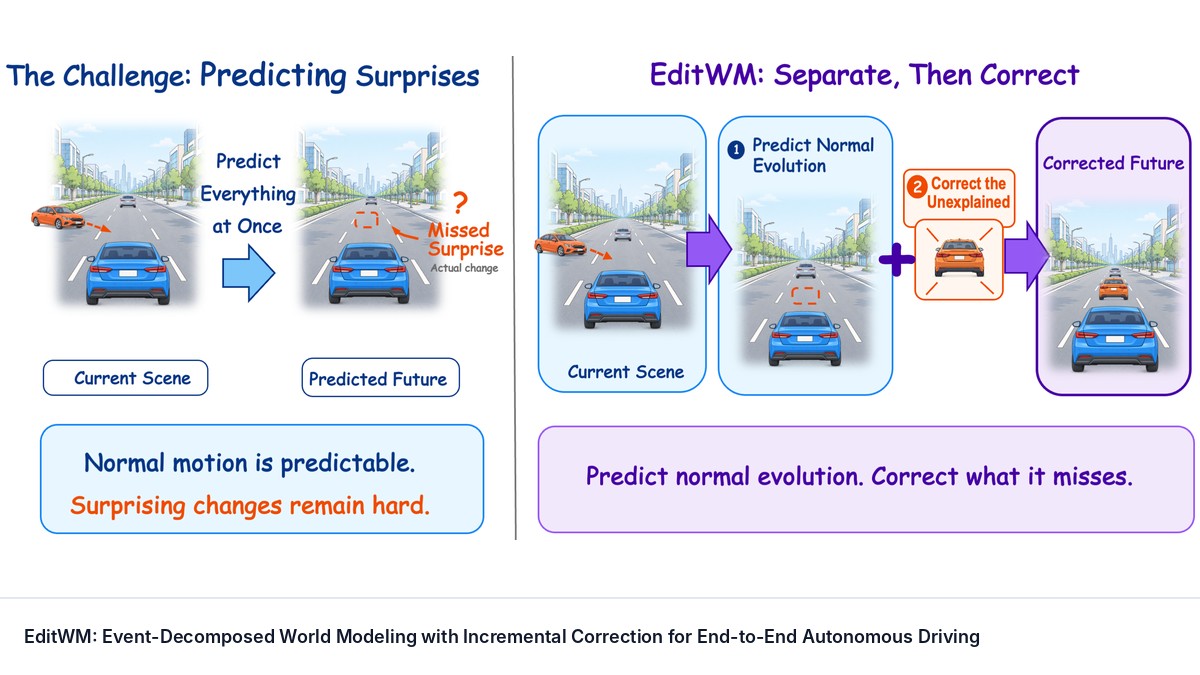
World models support autonomous driving by predicting the scene evolution associated with candidate trajectories. Driving dynamics differ in predictability, motivating a distinction between regular evolution and event-induced deviations that call for selective correction.

vision reinforcement-learning planning benchmark
PDF Advanced
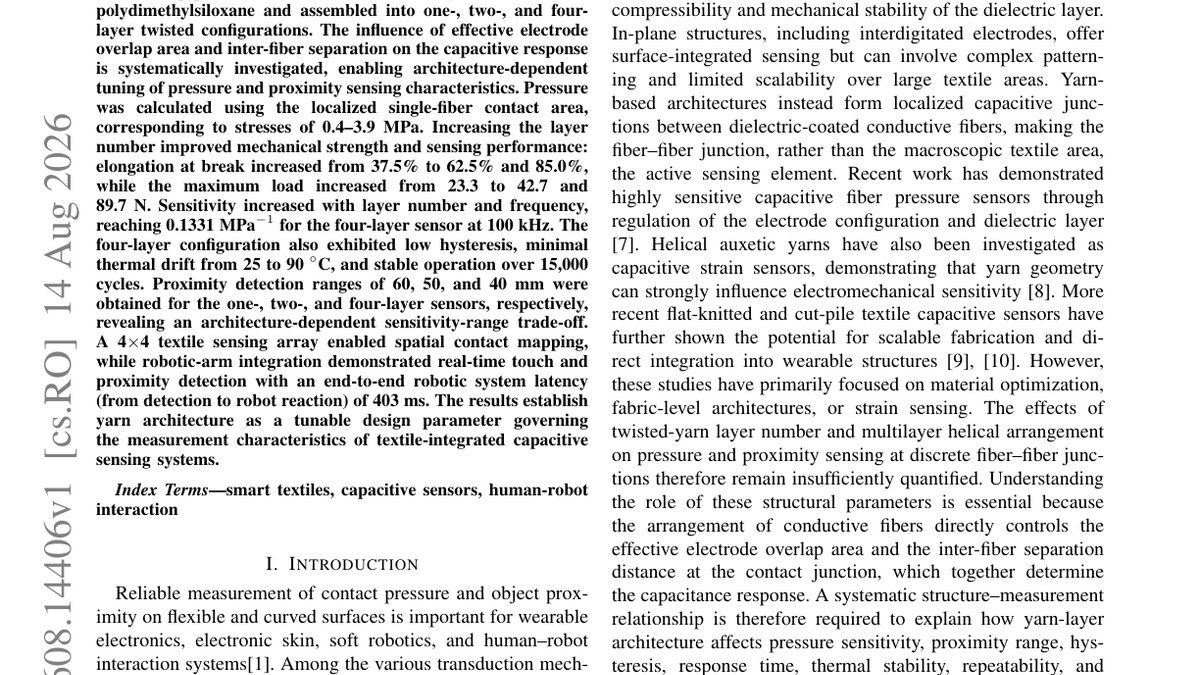
Effect of Twisted-Yarn Architecture on Pressure and Proximity Sensing Characteristics of Textile Capacitive Sensors for Robotic Skin
arXiv preprint

Effect of Twisted-Yarn Architecture on Pressure and Proximity Sensing Characteristics of Textile Capacitive Sensors for Robotic Skin

Ishtia Zahir, Eslam Saleh, Maryam Rezayati et al.

Textile-integrated capacitive sensors offer flexible and conformable tactile sensing for wearable electronics and human-robot interaction; however, the influence of yarn-level architecture on capacitive transduction characteristics remains insufficiently quantified.

vision reinforcement-learning human-robot-interaction tactile
PDF Advanced
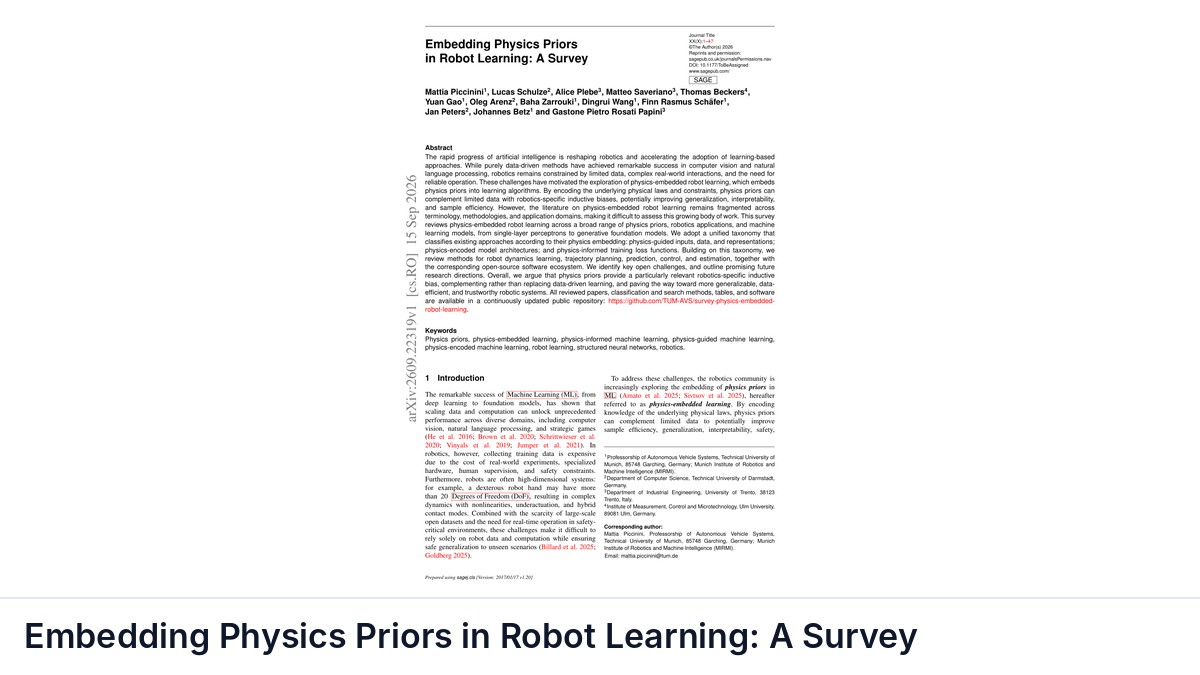
Embedding Physics Priors in Robot Learning: A Survey
arXiv preprint

Embedding Physics Priors in Robot Learning: A Survey

Mattia Piccinini, Lucas Schulze, Alice Plebe et al.

The rapid progress of artificial intelligence is reshaping robotics and accelerating the adoption of learning-based approaches.

vision reinforcement-learning planning control
Code PDF Beginner
GitHub ★ —
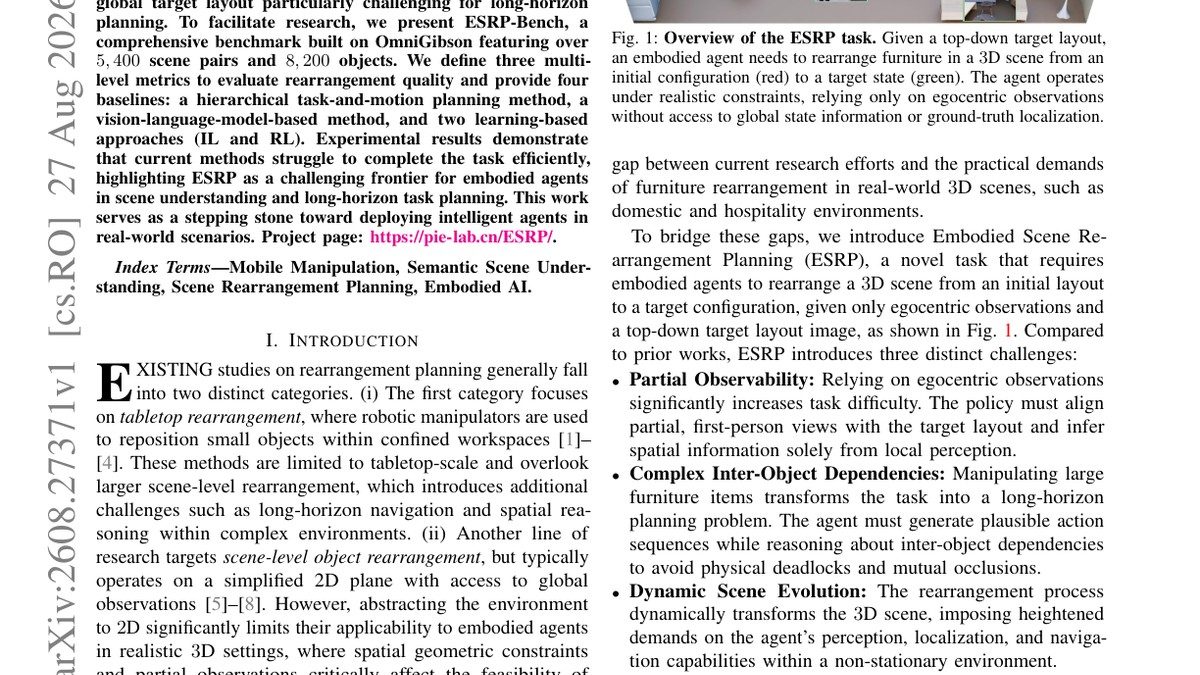
Embodied Scene Rearrangement Planning
arXiv preprint

Embodied Scene Rearrangement Planning

Canzhi Chen, Zan Wang, Siqi Zhu et al.

This paper introduces Embodied Scene Rearrangement Planning (ESRP), a novel task requiring embodied agents to rearrange furniture in 3D scenes to match a target configuration using only egocentric observations and a top-down target layout.

vision reinforcement-learning planning benchmark
Code PDF Intermediate
GitHub ★ —
ErgoSurf: Ergodic Control for the Coverage of Unknown Surfaces
arXiv preprint

ErgoSurf: Ergodic Control for the Coverage of Unknown Surfaces

Stefan Schneyer, Timo Bachmann, Maged Iskandar et al.

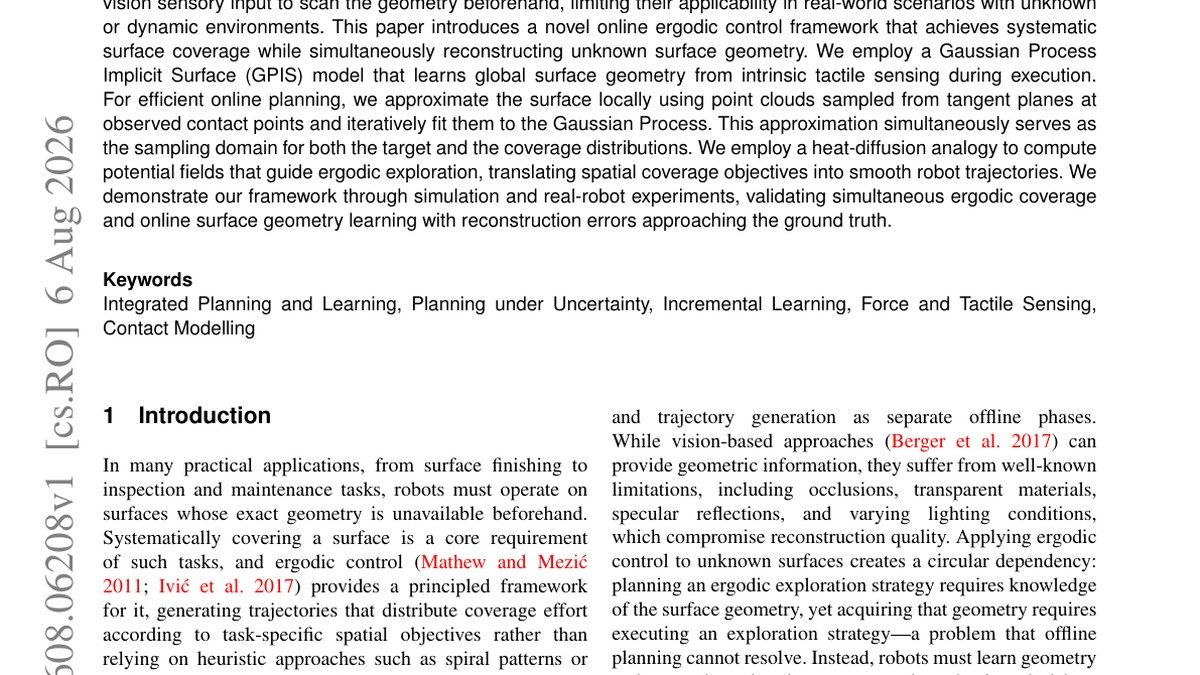
Contact-centric tasks on surfaces, ranging from inspection and cleaning to sanding and polishing, require robots to systematically cover the surface while maintaining stable contact.

vision reinforcement-learning planning control tactile
PDF Advanced
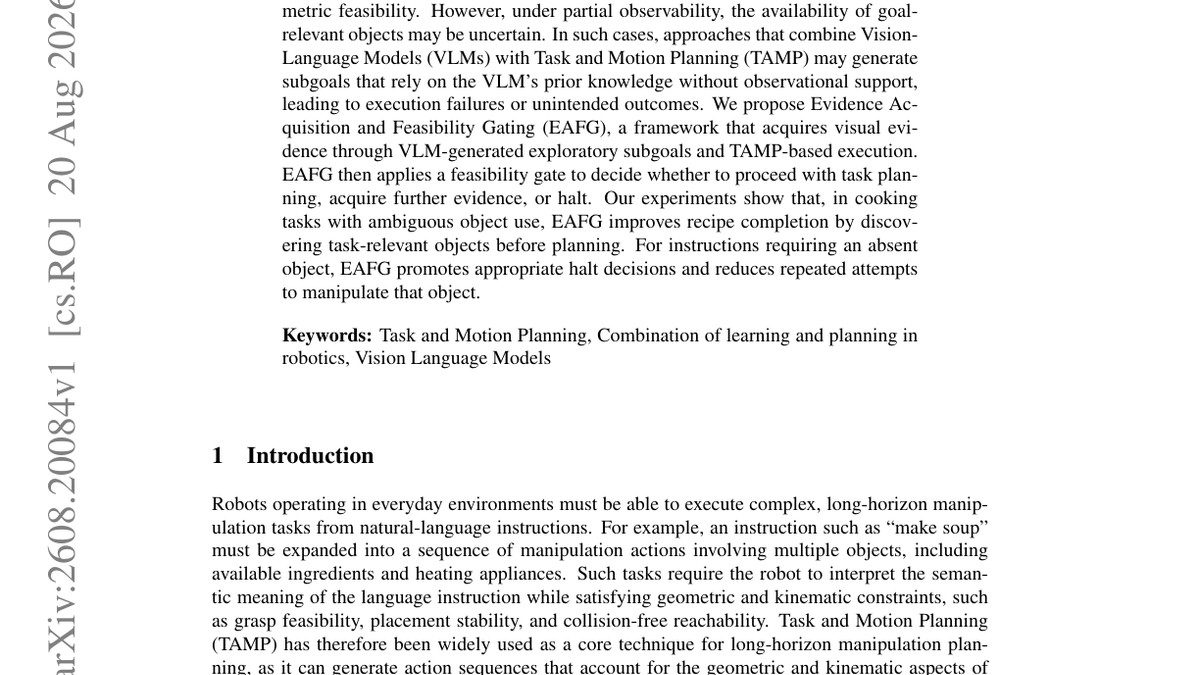
Evidence-Gated Task and Motion Planning with Vision-Language Models
arXiv preprint

Evidence-Gated Task and Motion Planning with Vision-Language Models

Tsunehiko Tanaka, Matthew Stephenson, Alistair Macvicar et al.

Robots executing long-horizon manipulation tasks from natural-language instructions must reason about both semantic task structure and geometric feasibility. However, under partial observability, the availability of goal-relevant objects may be uncertain.

manipulation vision vla reinforcement-learning planning
PDF Intermediate
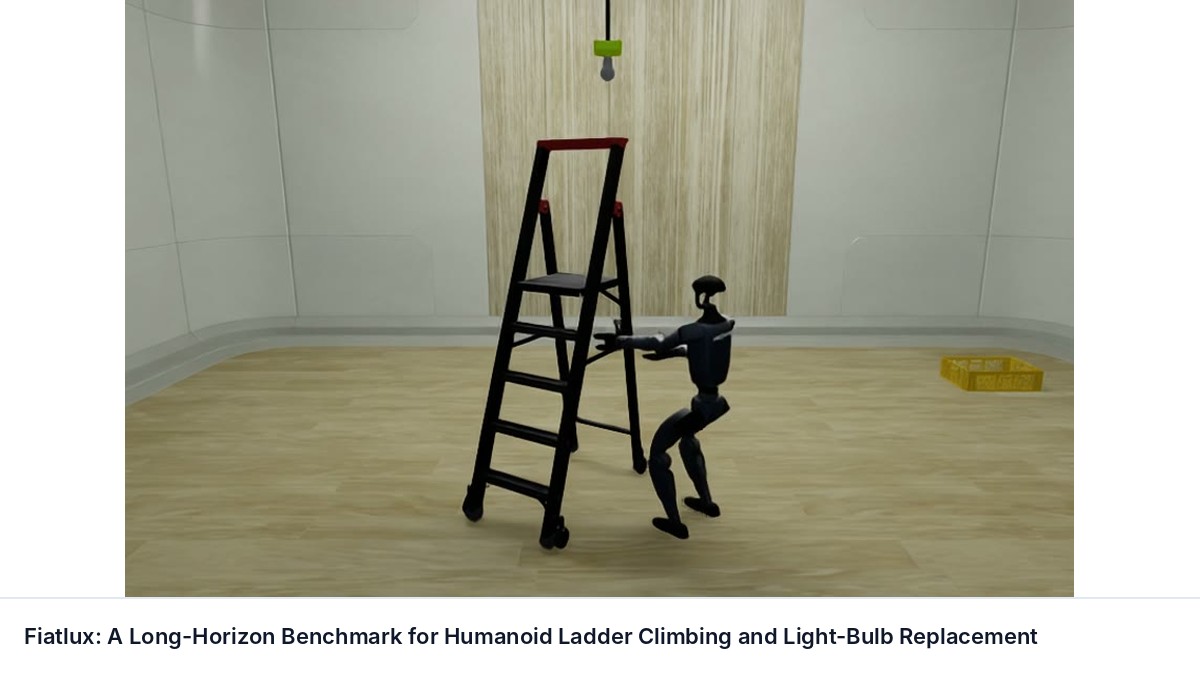
Fiatlux: A Long-Horizon Benchmark for Humanoid Ladder Climbing and Light-Bulb Replacement
arXiv preprint

Fiatlux: A Long-Horizon Benchmark for Humanoid Ladder Climbing and Light-Bulb Replacement

Pavel Bushuyeu, Yujin Chen, Anton Nikolaev et al.

Existing benchmarks evaluate tabletop manipulation, flat-floor household activity, or humanoid locomotion and manipulation as separate task groups; none scores vertical mobility and dexterous work on a fragile payload in one long-horizon episode.

manipulation locomotion vision vla reinforcement-learning control benchmark
PDF Intermediate
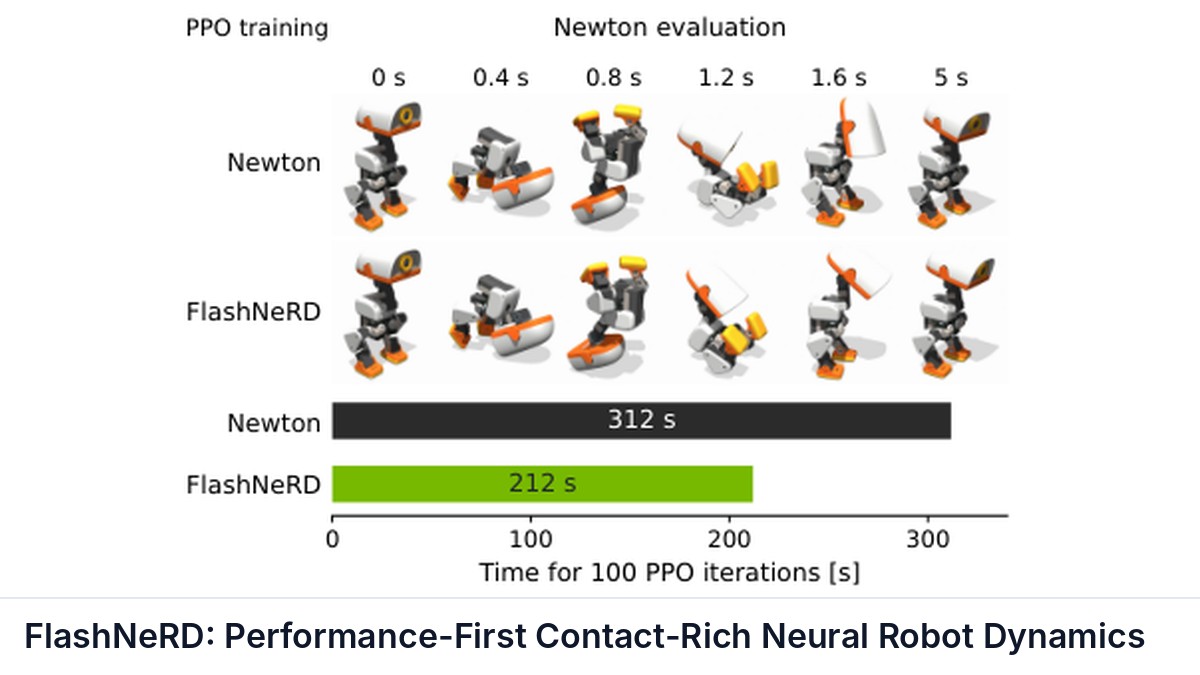
FlashNeRD: Performance-First Contact-Rich Neural Robot Dynamics
arXiv preprint

FlashNeRD: Performance-First Contact-Rich Neural Robot Dynamics

Mohammadmehdi Ataei, Mohammad Amin Nabian, Jie Xu et al.

Compared with analytical physics, learned dynamics models promise robot simulation that is faster, inherently differentiable, and easily adaptable to real data.

locomotion vision reinforcement-learning planning control
PDF Intermediate
FORCA: A Force-Aware Coding Agent for Contact-Rich Robot Manipulation
arXiv preprint

FORCA: A Force-Aware Coding Agent for Contact-Rich Robot Manipulation

Xiao Tan, Yixuan Wang, Zhexi Wang et al.

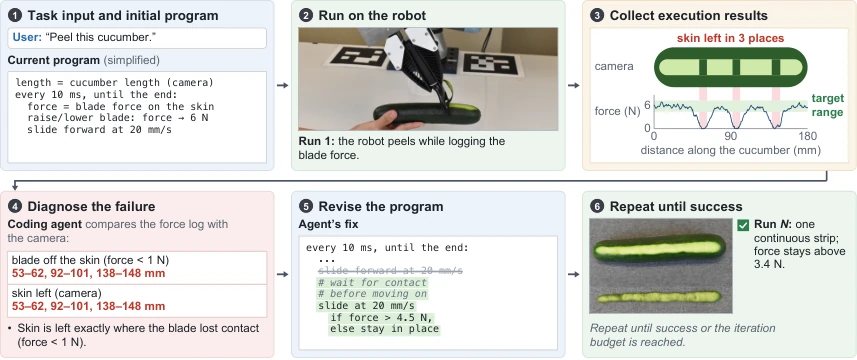
FORCA lets a coding agent use wrist force/torque readings both while its robot program runs and when it revises that program between real-robot attempts, without demonstrations or task-specific training.

manipulation vision control learning-from-demonstration
PDF Intermediate
ForeTac-VLA: A Forecasting-Based Tactile-Vision-Language-Action Model for Contact-Rich Robotic Manipulation
arXiv preprint

ForeTac-VLA: A Forecasting-Based Tactile-Vision-Language-Action Model for Contact-Rich Robotic Manipulation

Zhengyu Tao, Xin Li, Xin Wang

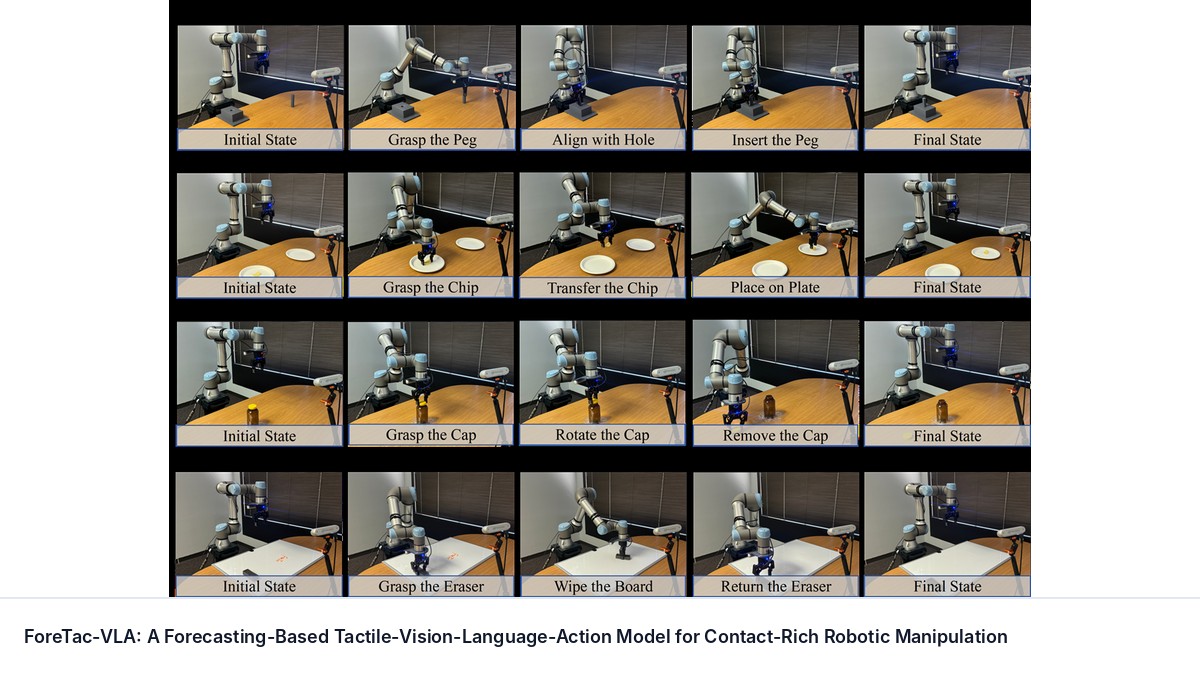
Vision-language-action (VLA) models have demonstrated strong capabilities in robotic manipulation, yet their reliance on visual perception limits robustness in contact-rich environments, where critical physical interaction states may not be visually observable.

manipulation vision vla reinforcement-learning learning-from-demonstration tactile
PDF Intermediate
GeniWorld: A Generalizable Interactive World Model for Robotic Manipulation via Visual Actions
arXiv preprint

GeniWorld: A Generalizable Interactive World Model for Robotic Manipulation via Visual Actions

Chenghao Gu, Hanyang Yu, Jingbo Zhang et al.

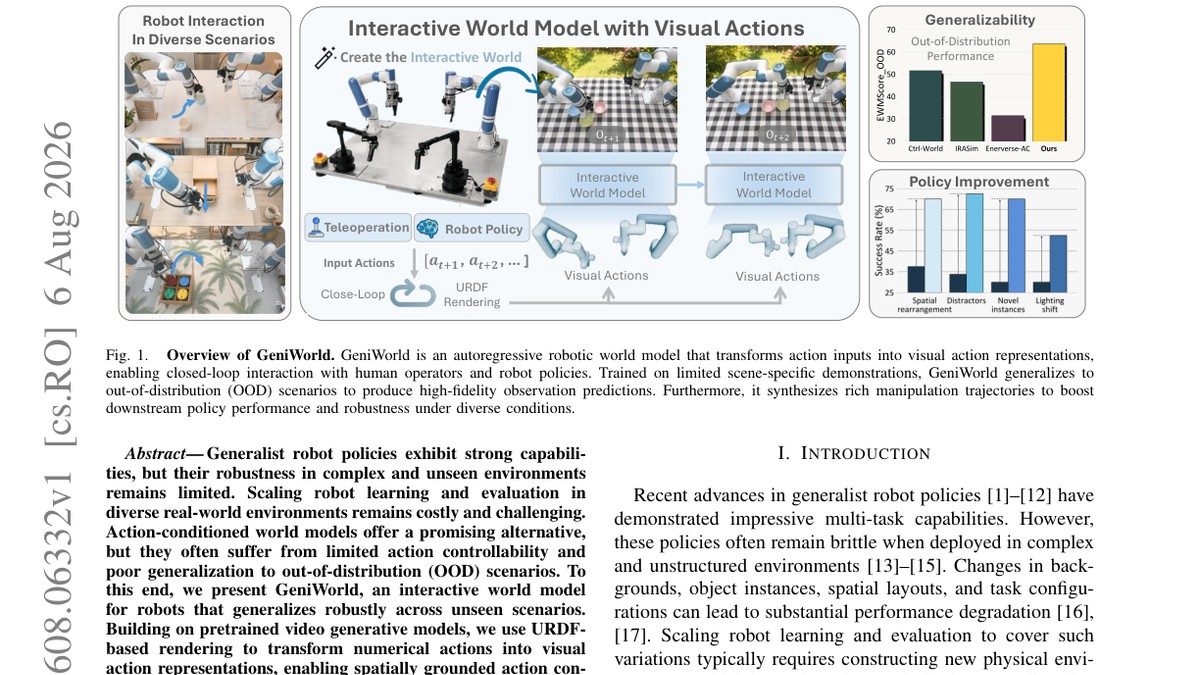
Generalist robot policies exhibit strong capabilities, but their robustness in complex and unseen environments remains limited. Scaling robot learning and evaluation in diverse real-world environments remains costly and challenging.

manipulation vision reinforcement-learning control learning-from-demonstration benchmark
PDF Intermediate
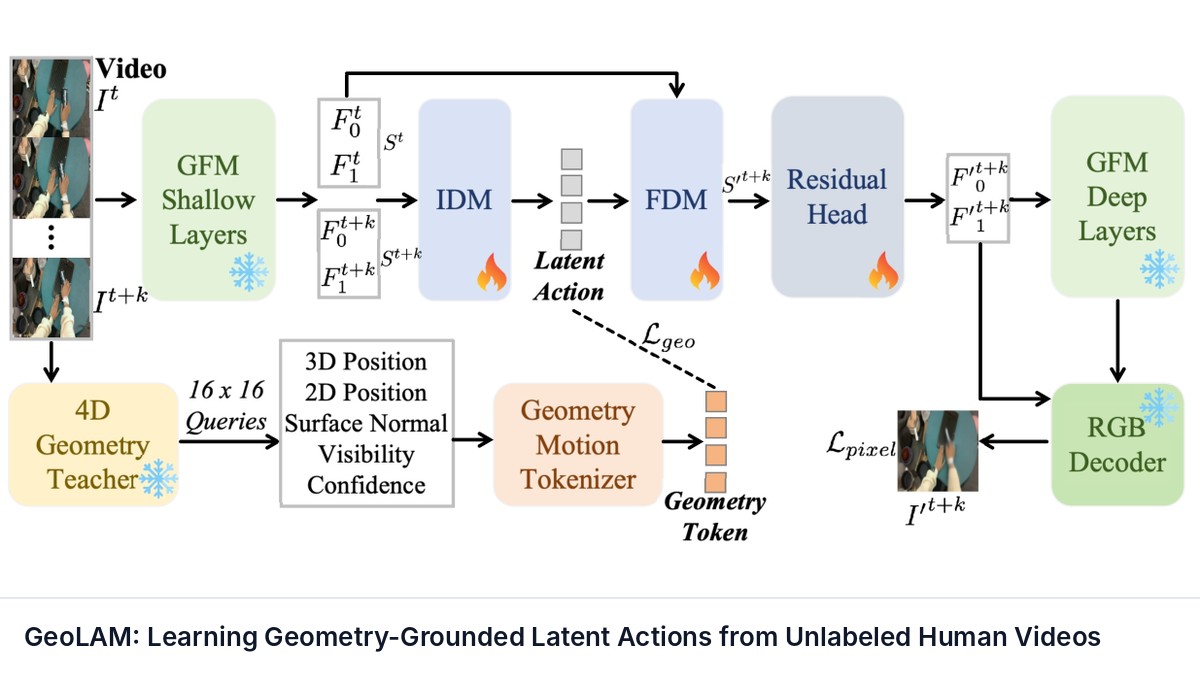
GeoLAM: Learning Geometry-Grounded Latent Actions from Unlabeled Human Videos
arXiv preprint

GeoLAM: Learning Geometry-Grounded Latent Actions from Unlabeled Human Videos

Yifan Xie, Hekun Tian, Jinkun Liu et al.

Human videos provide rich manipulation experience, but extracting action representations that preserve useful motion remains challenging. Visual reconstruction alone can entangle manipulation-related motion with appearance changes and camera movement.

manipulation vision reinforcement-learning learning-from-demonstration benchmark
PDF Intermediate
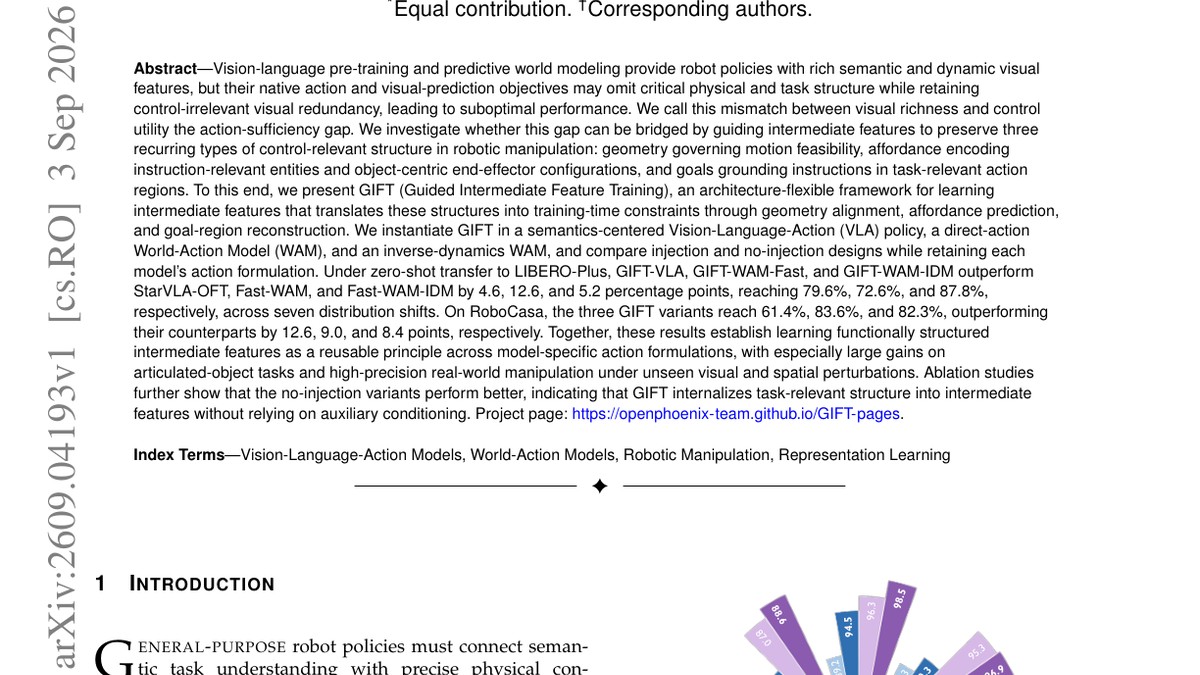
GIFT: Guided Intermediate Feature Training via Action-Oriented Structural Supervision for Robotic Manipulation
arXiv preprint

GIFT: Guided Intermediate Feature Training via Action-Oriented Structural Supervision for Robotic Manipulation

Yupeng Zheng, Xiang Li, Songen Gu et al.

Vision-language pre-training and predictive world modeling provide robot policies with rich semantic and dynamic visual features, but their native action and visual-prediction objectives may omit critical physical and task structure while retaining control-irrelevant visual redundancy.

manipulation vision vla reinforcement-learning control
PDF Intermediate
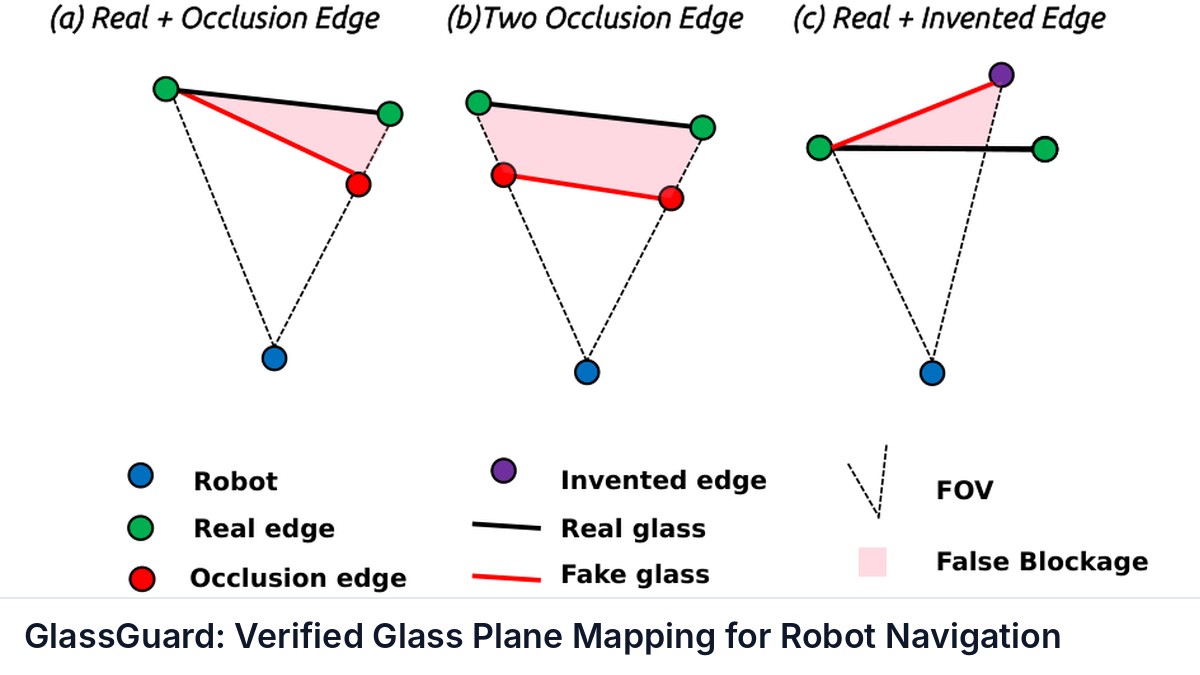
GlassGuard: Verified Glass Plane Mapping for Robot Navigation
arXiv preprint

GlassGuard: Verified Glass Plane Mapping for Robot Navigation

Hanwen Guo, Zhengzhi Lin, Yusen Xie et al.

Transparent and specular surfaces pose a serious challenge to LiDAR-based SLAM and navigation because laser returns may pass through glass, leaving collision boundaries absent from the map.

vision reinforcement-learning planning
Code PDF Intermediate
GitHub ★ —
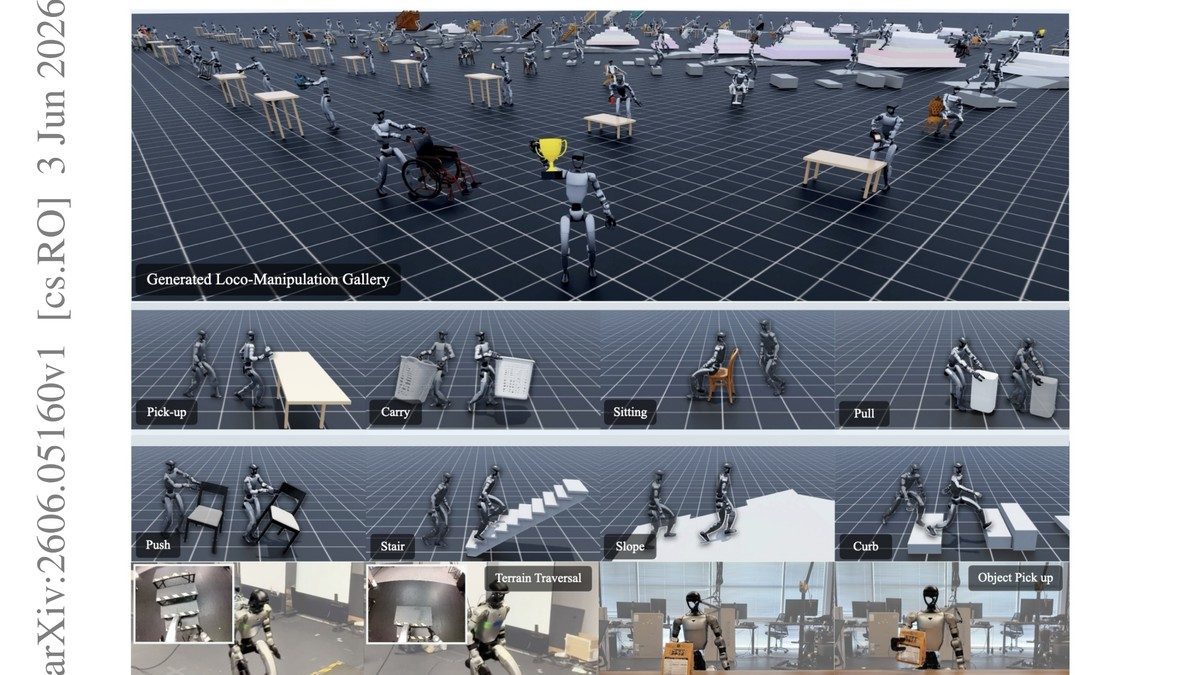
GRAIL: Generating Humanoid Loco-Manipulation from 3D Assets and Video Priors
arXiv preprint

GRAIL: Generating Humanoid Loco-Manipulation from 3D Assets and Video Priors

Tianyi Xie, Haotian Zhang, Jinhyung Park et al.

Scaling humanoid loco-manipulation requires robot-compatible demonstrations across diverse objects, whole-body motions, and scene geometries, but teleoperation and motion capture are difficult to scale because each collection depends on physical setups, instrumented actors, and robot operation.

sim-to-real reinforcement-learning vision manipulation humanoid
Code PDF Advanced
GitHub ★ 275 Updated Jun 2026
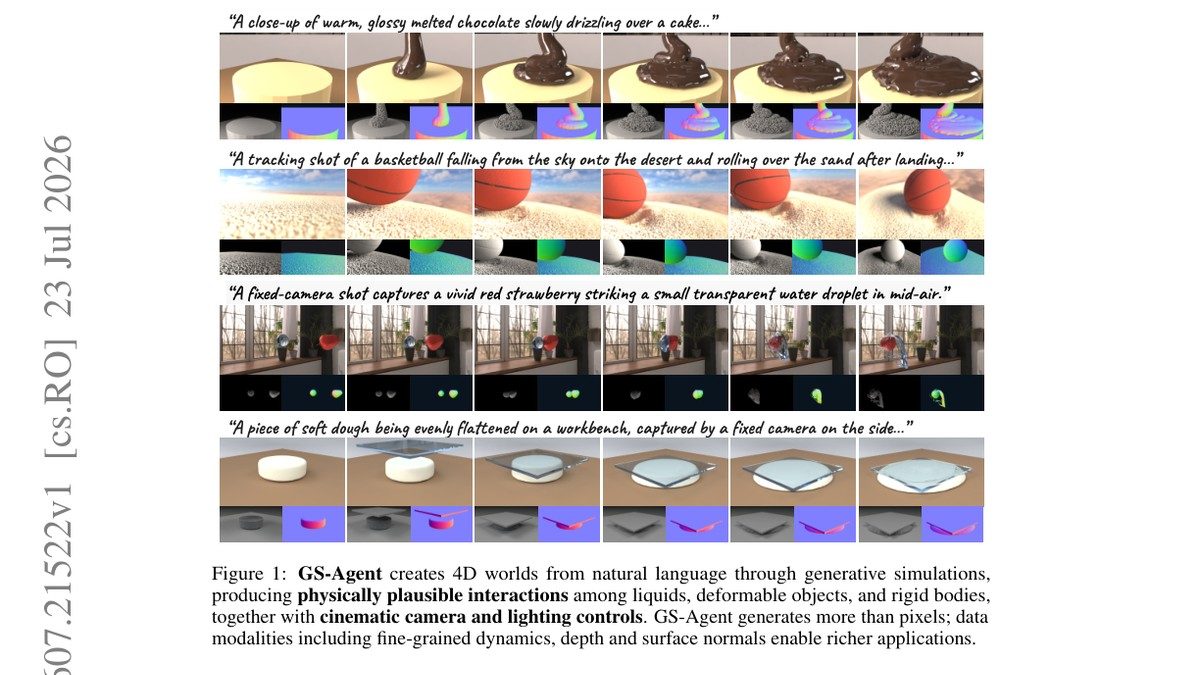
GS-Agent: Creating 4D Physical Worlds With Generative Simulation
arXiv preprint

GS-Agent: Creating 4D Physical Worlds With Generative Simulation

Hongxin Zhang, Chunru Lin, Junyan Li et al.

Creating dynamic and physically realistic 4D worlds from natural language descriptions is both fascinating and challenging. Traditional computer graphics methods rely on manual creation, requiring extensive human effort to fine-tune materials, motions, and visual fidelity.

manipulation vision reinforcement-learning control
Code PDF Advanced
GitHub ★ —
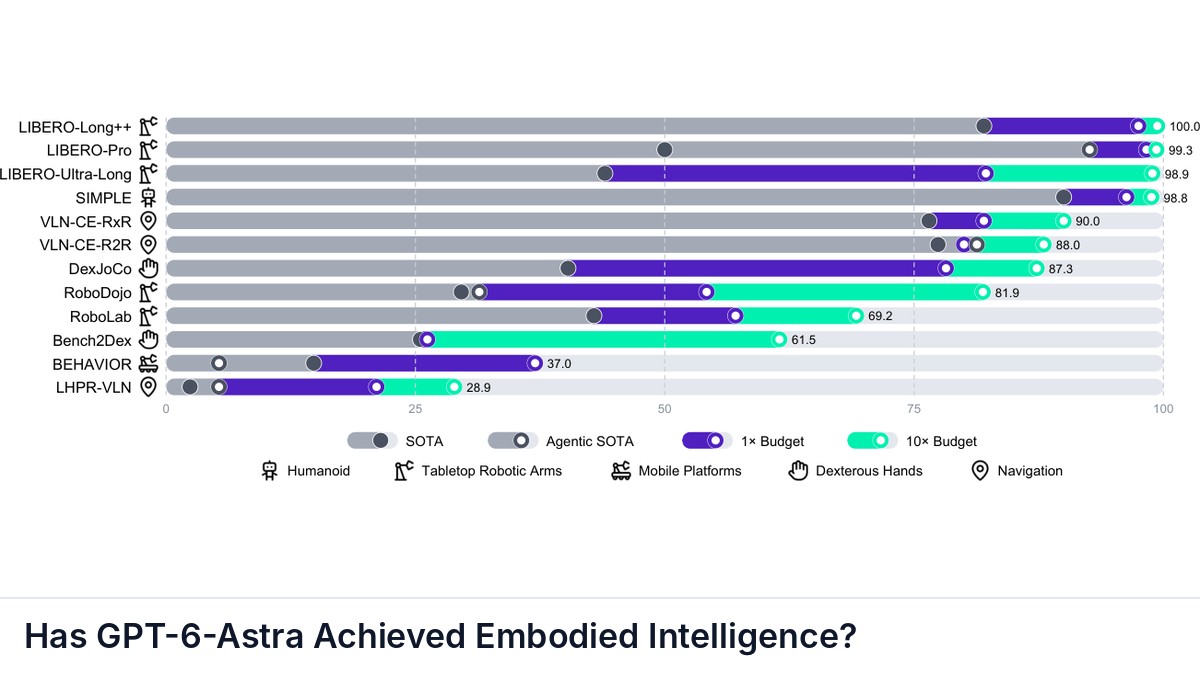
Has GPT-6-Astra Achieved Embodied Intelligence?
arXiv preprint

Has GPT-6-Astra Achieved Embodied Intelligence?

SenseNova, Joint Research Team, : et al.

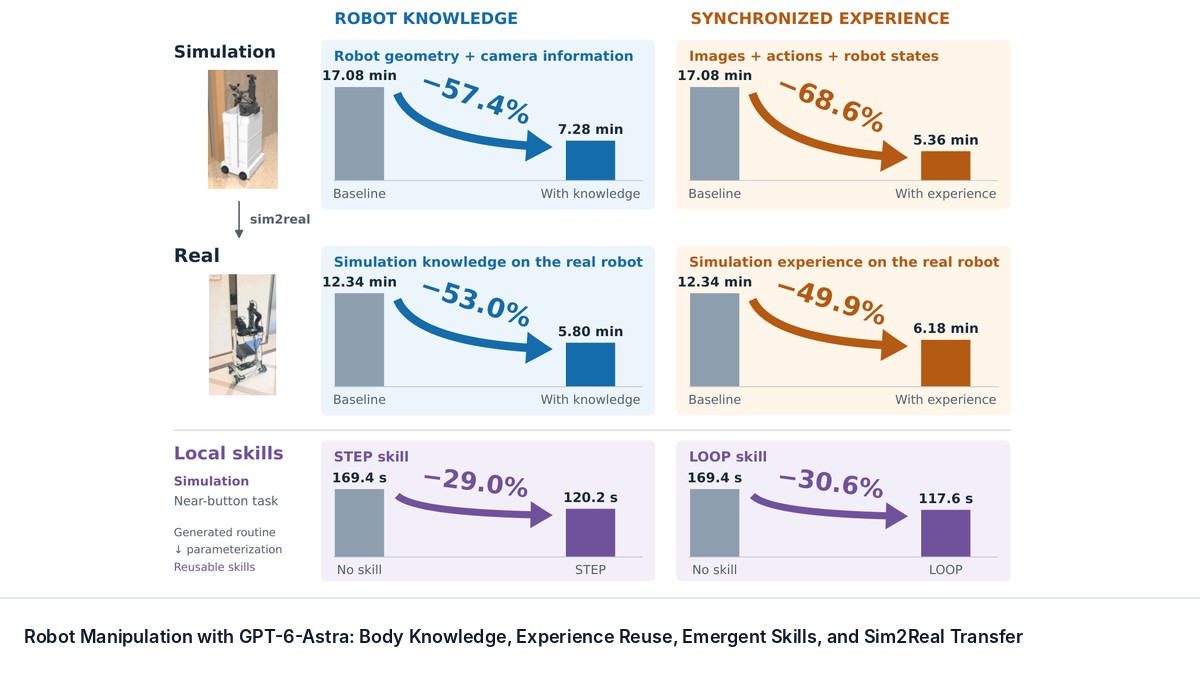
GPT-6-Astra demonstrates a level of competence in robotic manipulation and navigation that challenges the conventional paradigm of building specialized models for individual tasks and embodiments.

manipulation locomotion vision reinforcement-learning planning control learning-from-demonstration benchmark
Code PDF Advanced
GitHub ★ —
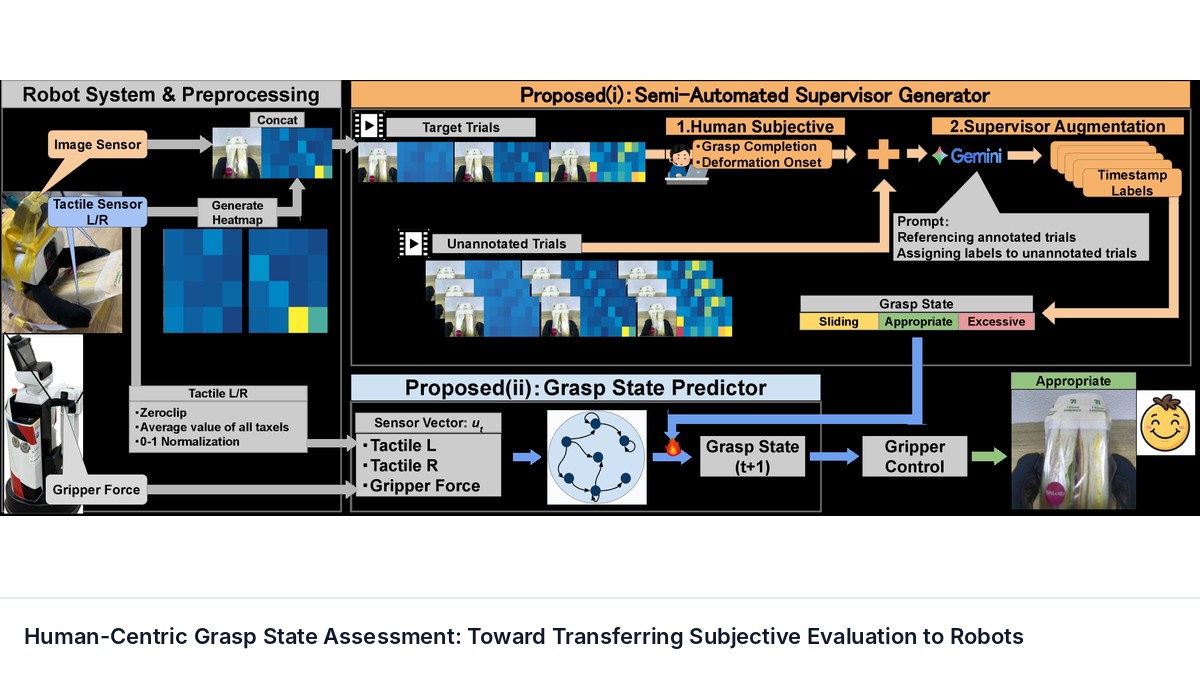
Human-Centric Grasp State Assessment: Toward Transferring Subjective Evaluation to Robots
arXiv preprint

Human-Centric Grasp State Assessment: Toward Transferring Subjective Evaluation to Robots

Ryohei Kobayashi, Kosei Isomoto, Yuga Yano et al.

We propose a framework that transfers tacit human subjective criteria to robotic systems for the appropriate grasping of deformable objects. Achieving such behavior is challenging because a semantic gap exists between qualitative human expectations and quantitative robotic measurements.

manipulation vision vla control tactile benchmark
PDF Intermediate
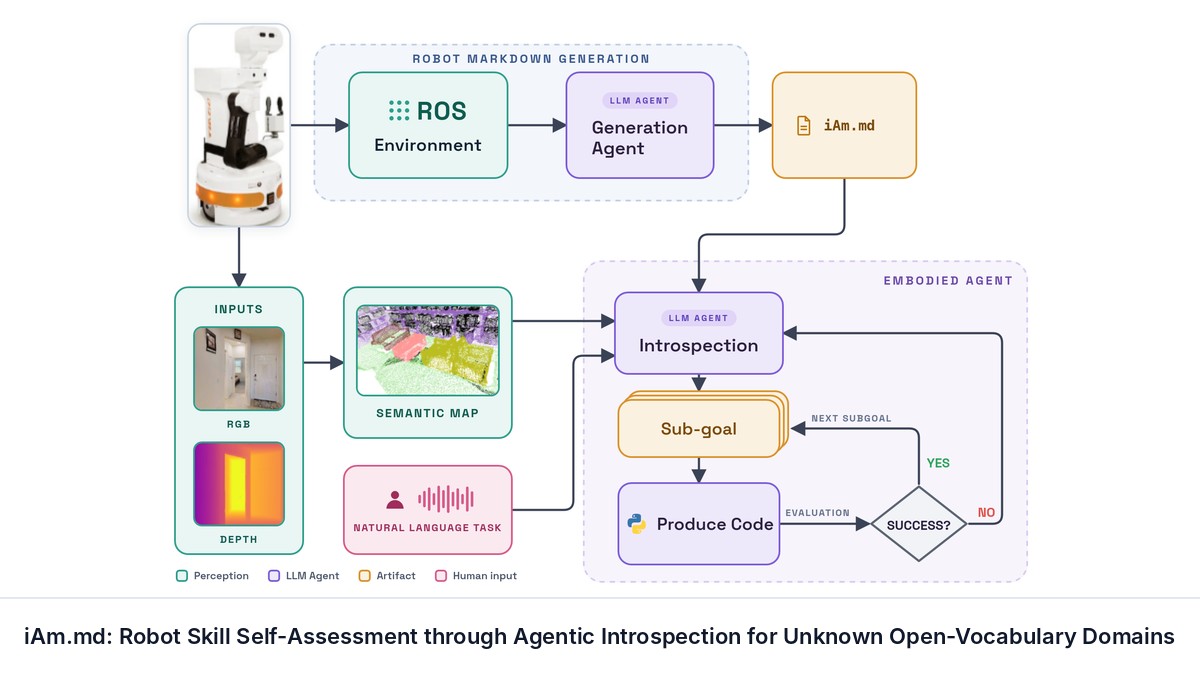
iAm.md: Robot Skill Self-Assessment through Agentic Introspection for Unknown Open-Vocabulary Domains
arXiv preprint

iAm.md: Robot Skill Self-Assessment through Agentic Introspection for Unknown Open-Vocabulary Domains

Vincenzo Guarino, Emanuele Musumeci, Vincenzo Suriani et al.

Agentic AI based on Large Language Model generalization capabilities offers a wide range of potential applications, including planning for embodied tasks. For example, embodied agents based on Foundation models can generate plausible plans in autonomous robotics scenarios.

manipulation vision reinforcement-learning planning
PDF Advanced
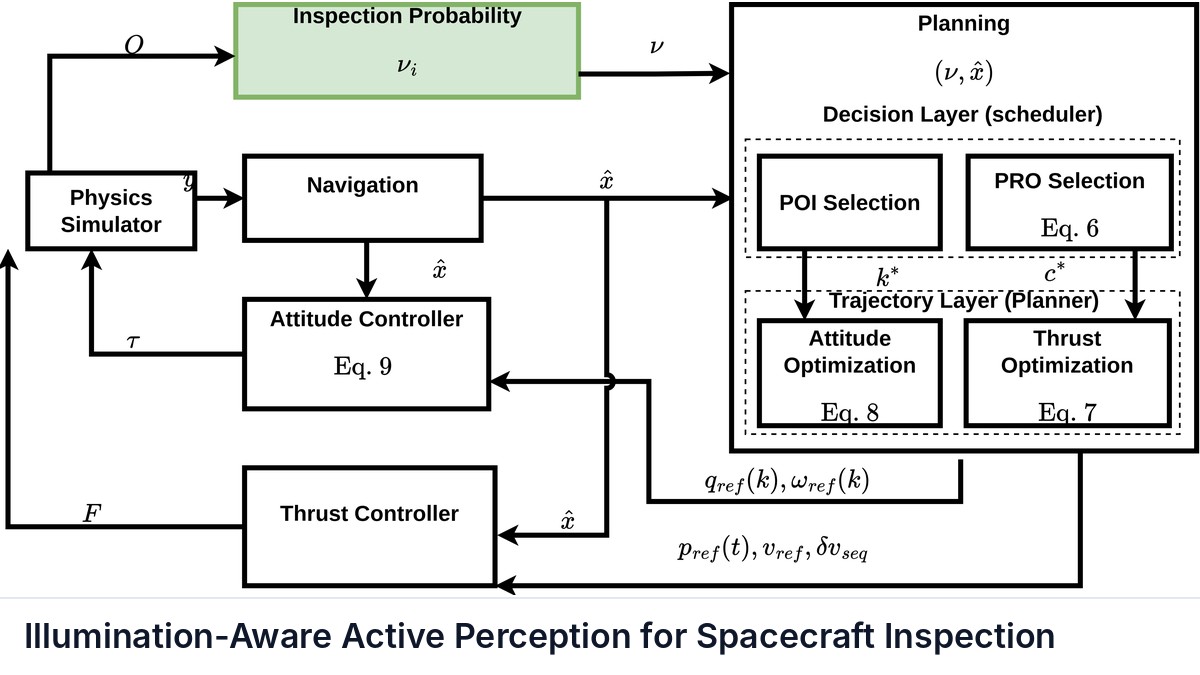
Illumination-Aware Active Perception for Spacecraft Inspection
arXiv preprint

Illumination-Aware Active Perception for Spacecraft Inspection

Sagarika Rao Valluri, Benjamin Riviere

Harsh and rapidly varying orbital illumination introduces failure modes during spacecraft inspection. Existing planners rely on line-of-sight inspection metrics which perform occlusion checks against a known target and conflate geometric visibility with task-relevant information.

vision reinforcement-learning planning control
PDF Intermediate
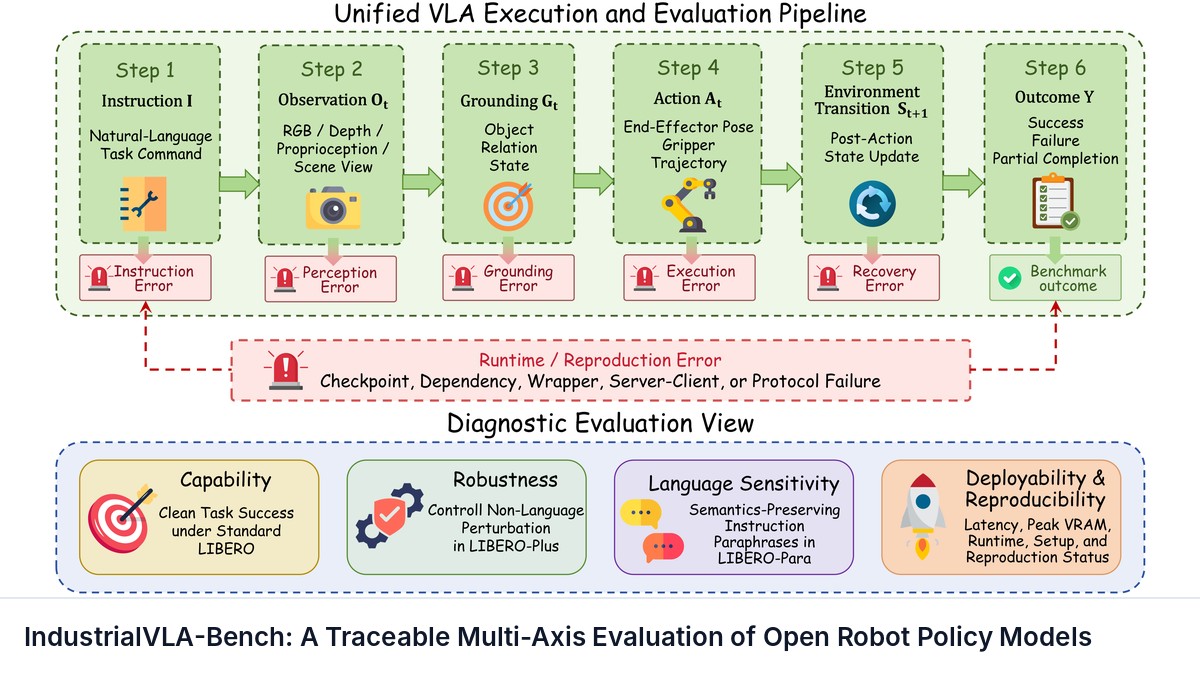
IndustrialVLA-Bench: A Traceable Multi-Axis Evaluation of Open Robot Policy Models
arXiv preprint

IndustrialVLA-Bench: A Traceable Multi-Axis Evaluation of Open Robot Policy Models

Yiqi Wang, Zhifeng Rao, Jiaqi Zhang et al.

Open robot policies increasingly follow two paradigms: vision-language-action models (VLAs) directly map observations and instructions to actions, whereas world-action models (WAMs) incorporate learned video or world dynamics into policy learning or action generation.

manipulation vision vla reinforcement-learning benchmark
Code PDF Intermediate
GitHub ★ —
JEPA Policy: Diffusion-Free Imitation Learning via Paired Action and Future Representation Prediction
arXiv preprint

JEPA Policy: Diffusion-Free Imitation Learning via Paired Action and Future Representation Prediction

Jie Xu, Kangjin Yu, Ziyi Jin et al.

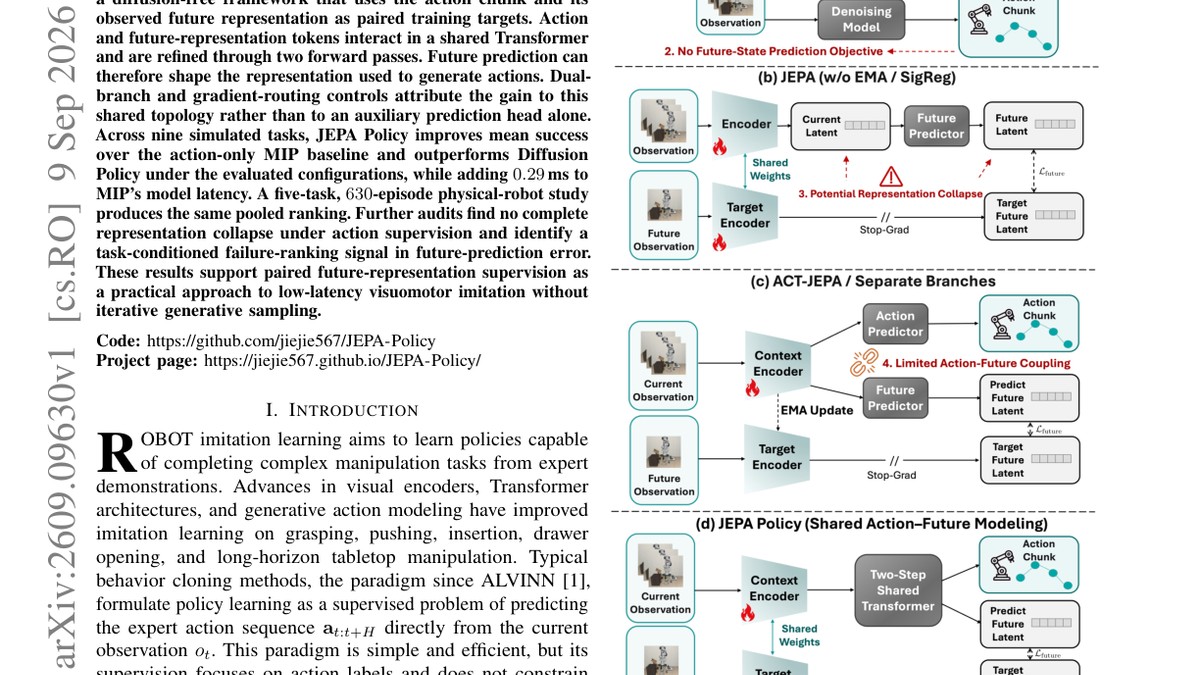
Standard behavior cloning supervises actions without explicitly constraining the future representation paired with each demonstrated action chunk. We introduce JEPA Policy, a diffusion-free framework that uses the action chunk and its observed future representation as paired training targets.

vision reinforcement-learning control learning-from-demonstration
Code PDF Advanced
GitHub ★ —
KPI: A Promptable Kernel for Physical Interaction on Humanoids
arXiv preprint

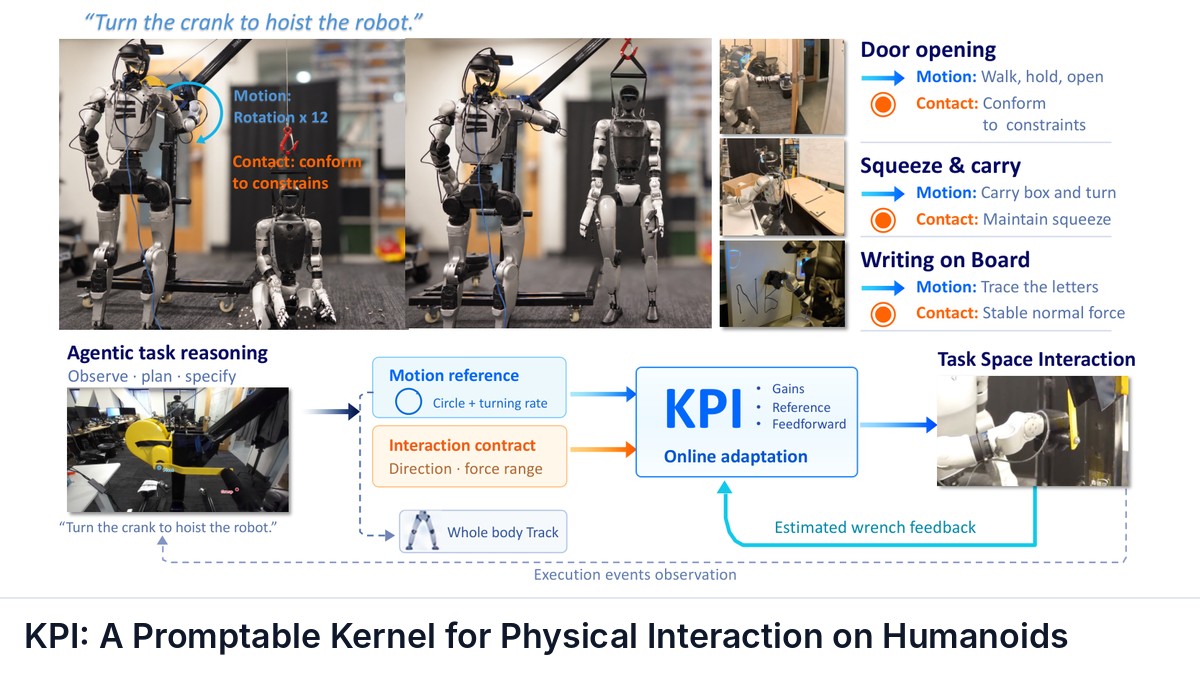
KPI: A Promptable Kernel for Physical Interaction on Humanoids

Yikai Wang, Honghao Zhu, Xiao Hu et al.

Humanoids now walk, balance and reach with remarkable generality: one whole-body tracking policy follows references from a human, or from an end-to-end policy.

vision reinforcement-learning control learning-from-demonstration
PDF Advanced
LadderMan: Learning Humanoid Perceptive Ladder Climbing
arXiv preprint

LadderMan: Learning Humanoid Perceptive Ladder Climbing

Siheng Zhao, Yuanhang Zhang, Ziqi Lu et al.

Humanoid robots hold great promise for operating in human-centered environments, yet ladder climbing remains one of the most challenging tasks due to sparse footholds and handholds, complex whole-body coordination, and sensitivity to perception and control errors.

sim-to-real reinforcement-learning vision manipulation humanoid
PDF Advanced
LEAP: Learning Emergent Active Perception for Quadruped Navigation
arXiv preprint

LEAP: Learning Emergent Active Perception for Quadruped Navigation

\"U. Bora G\"okbakan (WILLOW), St\'ephane Caron (ISIR), Philippe Sou\`eres (LAAS-GEPETTO)

Active perception allows autonomous agents to select their viewpoints rather than passively process the viewpoints given to them, enabling them to target where to reduce uncertainty about their environment.

locomotion vision planning control benchmark
PDF Intermediate
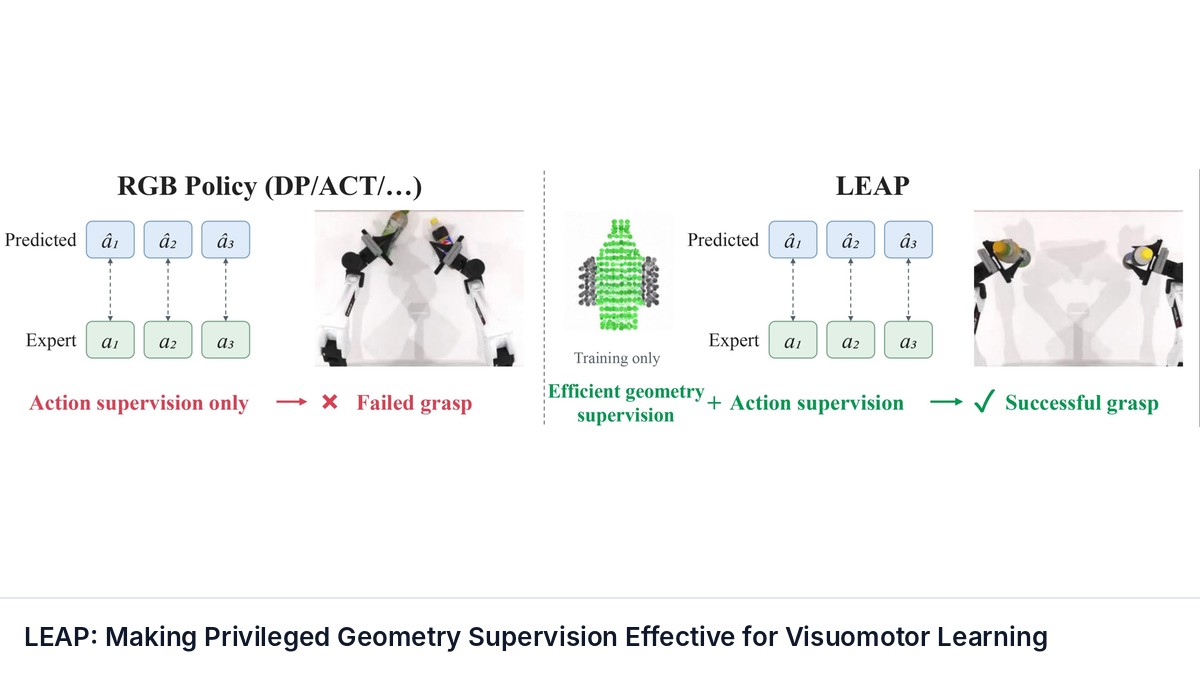
LEAP: Making Privileged Geometry Supervision Effective for Visuomotor Learning
arXiv preprint

LEAP: Making Privileged Geometry Supervision Effective for Visuomotor Learning

Han Fang, Yunpeng Jiang, Jianshu Hu et al.

Privileged 3D supervision uses additional geometric information during training to guide RGB-based visuomotor policy learning, without requiring geometric inputs at deployment. However, low reconstruction error does not ensure that visual representations capture geometry useful for control.

manipulation vision reinforcement-learning control
PDF Advanced
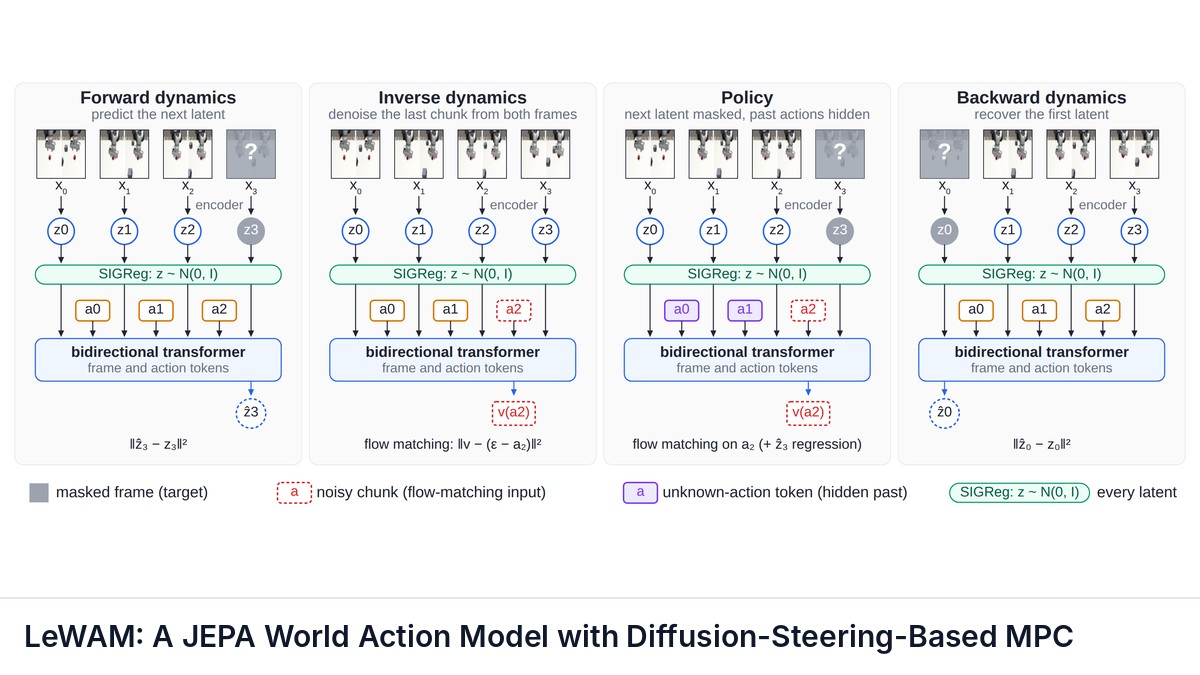
LeWAM: A JEPA World Action Model with Diffusion-Steering-Based MPC
arXiv preprint

LeWAM: A JEPA World Action Model with Diffusion-Steering-Based MPC

Shashank Hegde, Alexander Popov, Elie Aljalbout et al.

World action models (WAMs) predict actions and future observations, typically from a reconstruction-based representation that carries noisy, redundant information which can complicate downstream predictions.

vision reinforcement-learning planning control benchmark
PDF Advanced
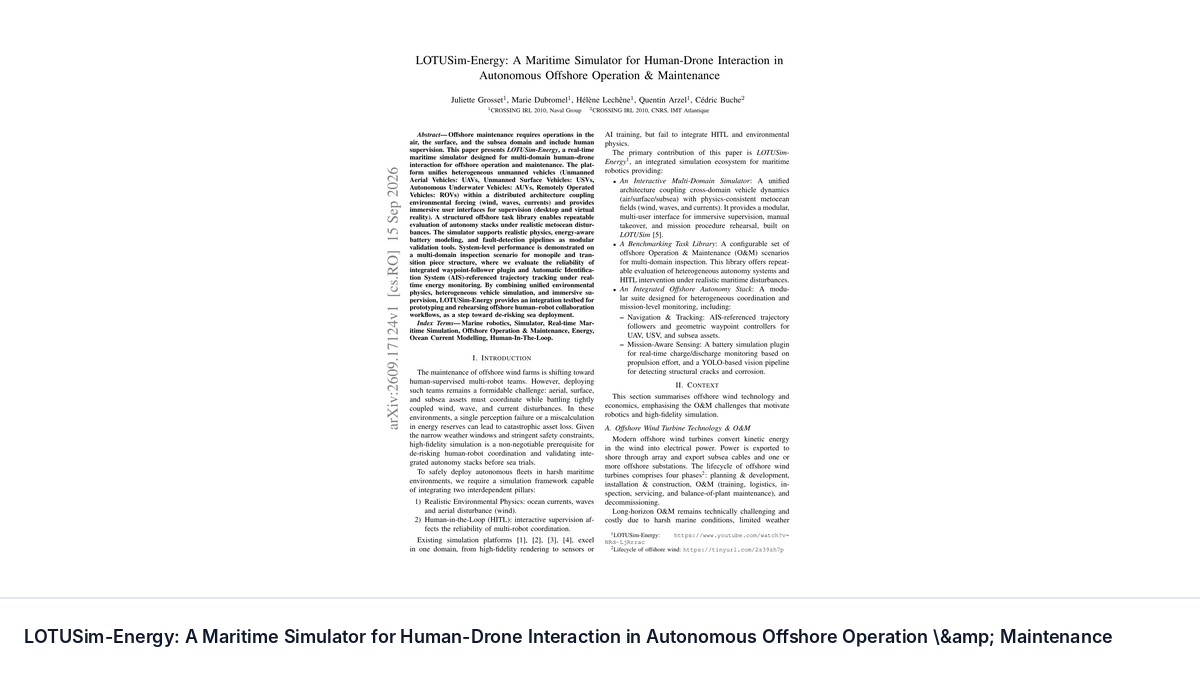
LOTUSim-Energy: A Maritime Simulator for Human-Drone Interaction in Autonomous Offshore Operation \& Maintenance
arXiv preprint

LOTUSim-Energy: A Maritime Simulator for Human-Drone Interaction in Autonomous Offshore Operation \& Maintenance

Juliette Grosset, Marie Dubromel, Hélène Lechêne et al.

Offshore maintenance requires operations in the air, the surface, and the subsea domain and include human supervision. This paper presents LOTUSim-Energy, a real-time maritime simulator designed for multi-domain human--drone interaction for offshore operation and maintenance.

vision reinforcement-learning benchmark
PDF Advanced
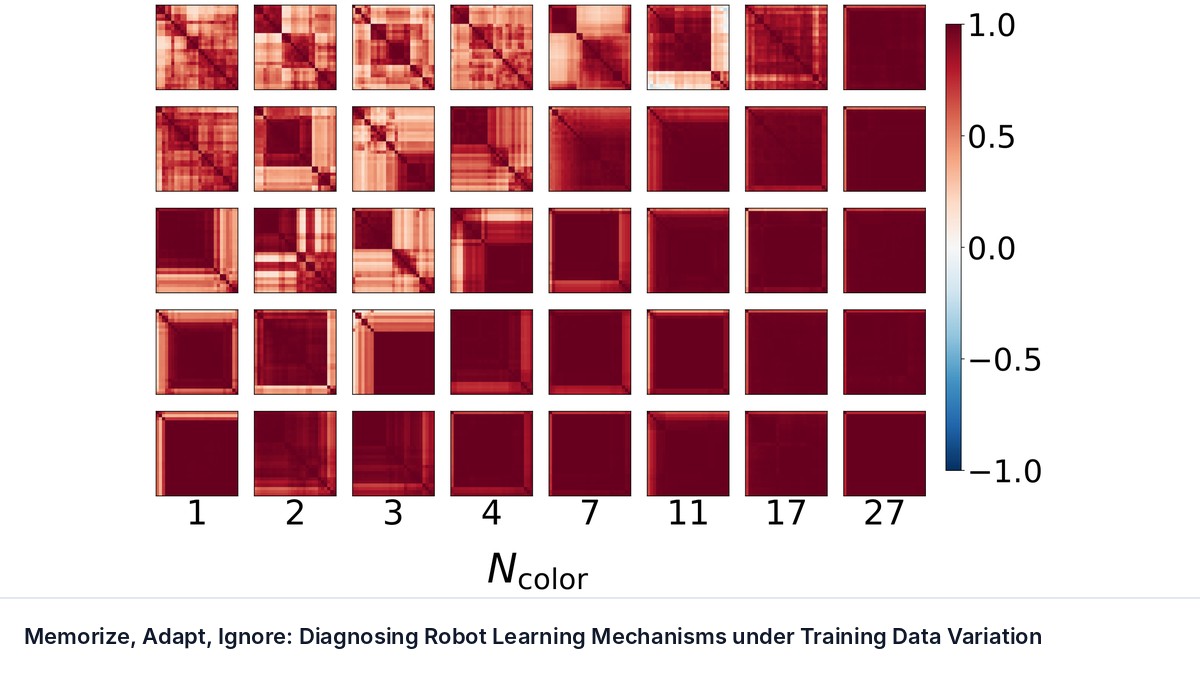
Memorize, Adapt, Ignore: Diagnosing Robot Learning Mechanisms under Training Data Variation
arXiv preprint

Memorize, Adapt, Ignore: Diagnosing Robot Learning Mechanisms under Training Data Variation

Ke Zhang, Danica J. Sutherland, Chao Liu

Training data variation, whether through designing a domain randomization (DR) scheme in simulation or curating demonstrations for imitation learning, is a primary lever for improving the robustness of robotic manipulation policies.

manipulation vision vla reinforcement-learning sim-to-real learning-from-demonstration
PDF Intermediate
Memory as Plans: World-Action Modeling with Memory-Grounded Planning
arXiv preprint

Memory as Plans: World-Action Modeling with Memory-Grounded Planning

Sizhe Zhao, Haozhe Xie, Weiyu Zhao et al.

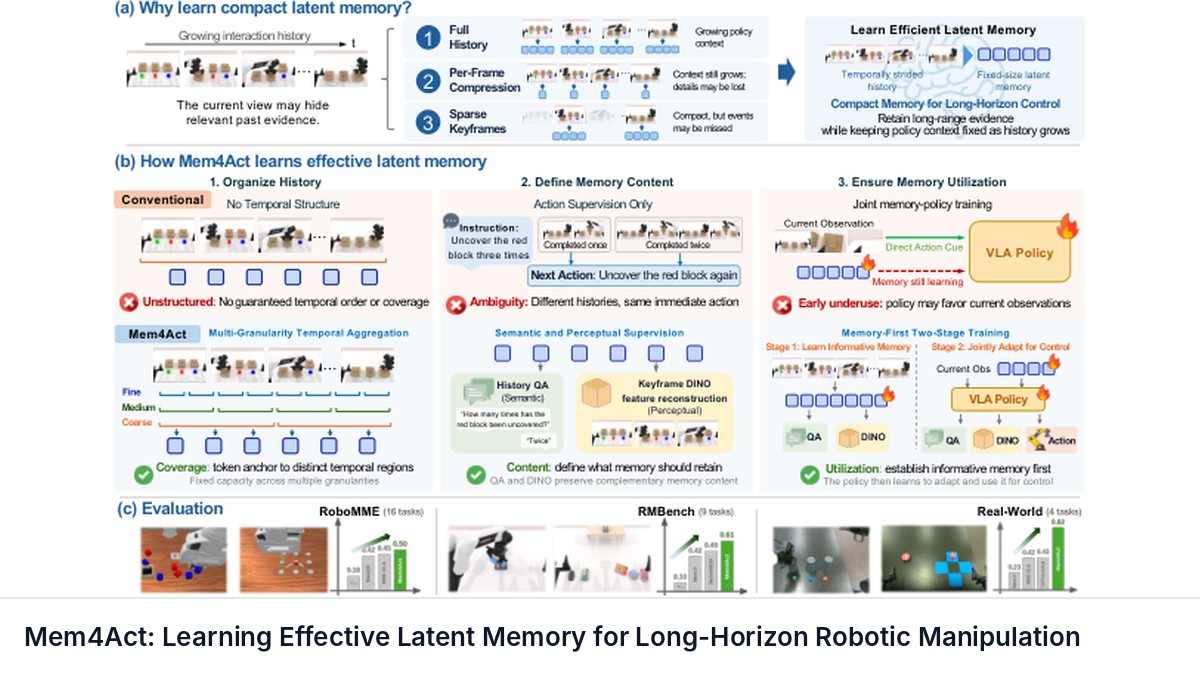
Mainstream robotic policies often adopt a Markovian formulation, but many complex real-world manipulation tasks are inherently non-Markovian, requiring long-horizon memory beyond the current observation.

manipulation vision reinforcement-learning planning
PDF Intermediate
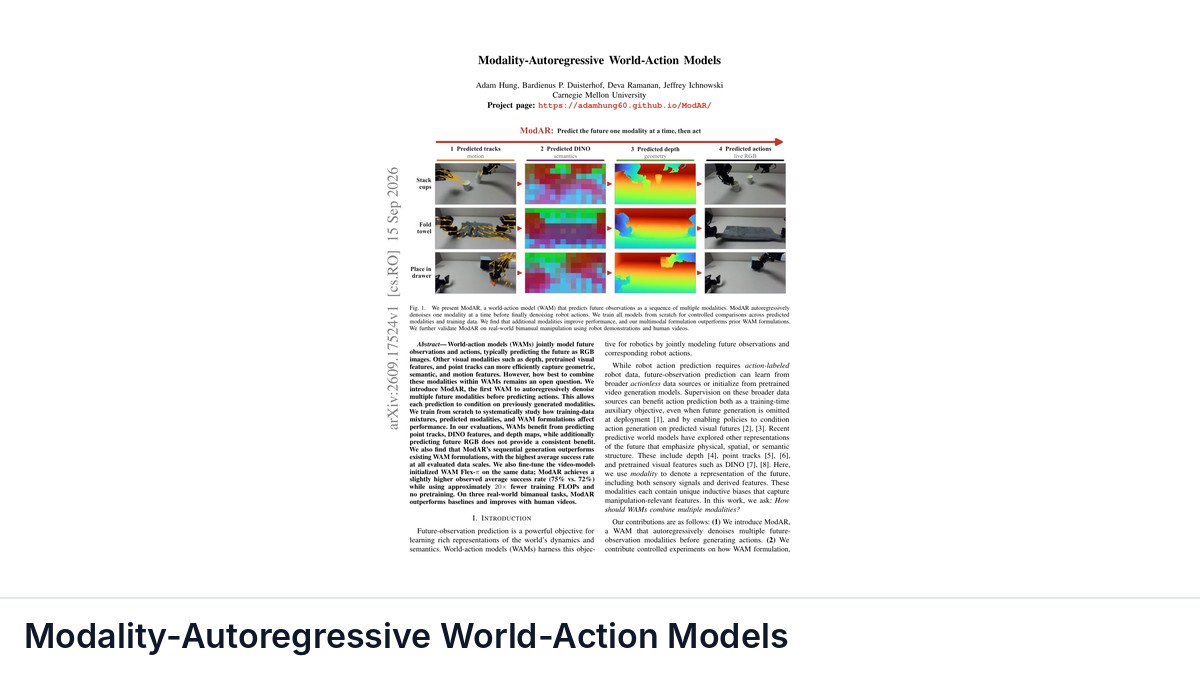
Modality-Autoregressive World-Action Models
arXiv preprint

Modality-Autoregressive World-Action Models

Adam Hung, Bardienus P. Duisterhof, Deva Ramanan et al.

World-action models (WAMs) jointly model future observations and actions, typically predicting the future as RGB images. Other visual modalities such as depth, pretrained visual features, and point tracks can more efficiently capture geometric, semantic, and motion features.

vision reinforcement-learning benchmark
Code PDF Intermediate
GitHub ★ —
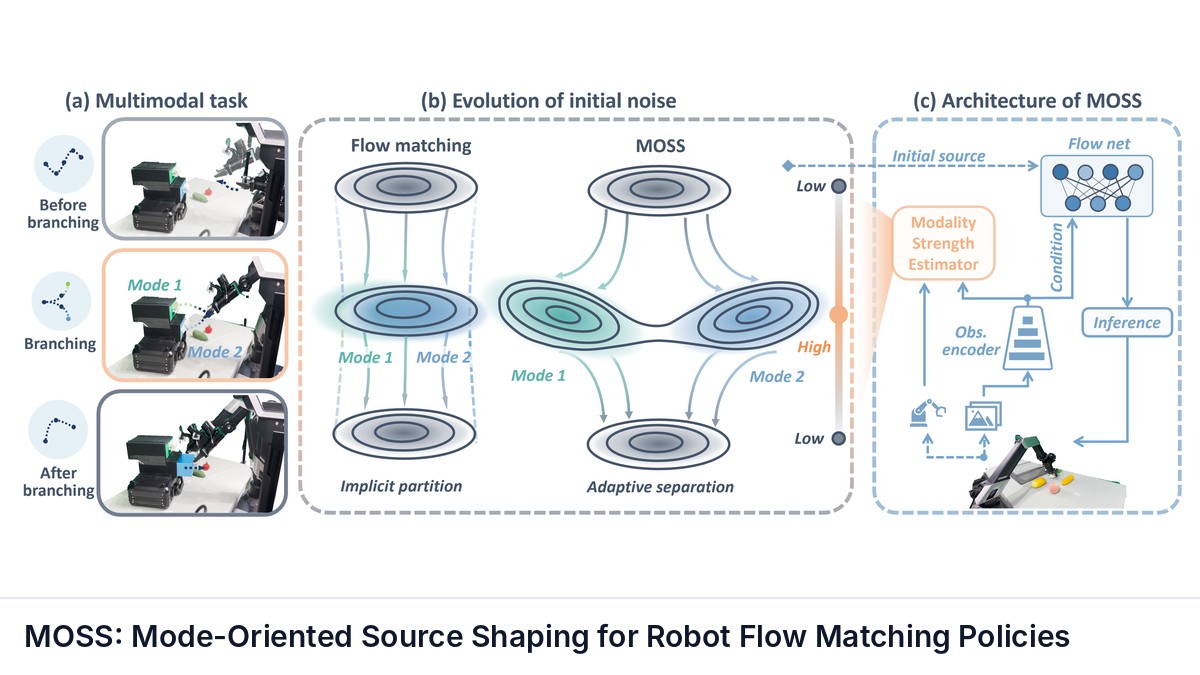
MOSS: Mode-Oriented Source Shaping for Robot Flow Matching Policies
arXiv preprint

MOSS: Mode-Oriented Source Shaping for Robot Flow Matching Policies

Zirun Ma, Jindou Jia, Tuo An et al.

In robotic manipulation, the same observation often admits multiple feasible actions. Generative policies such as diffusion and flow matching naturally capture such multimodal behaviors, yet which mode is executed is left to random sampling and cannot be actively controlled.

manipulation vision reinforcement-learning control benchmark
Code PDF Advanced
GitHub ★ —
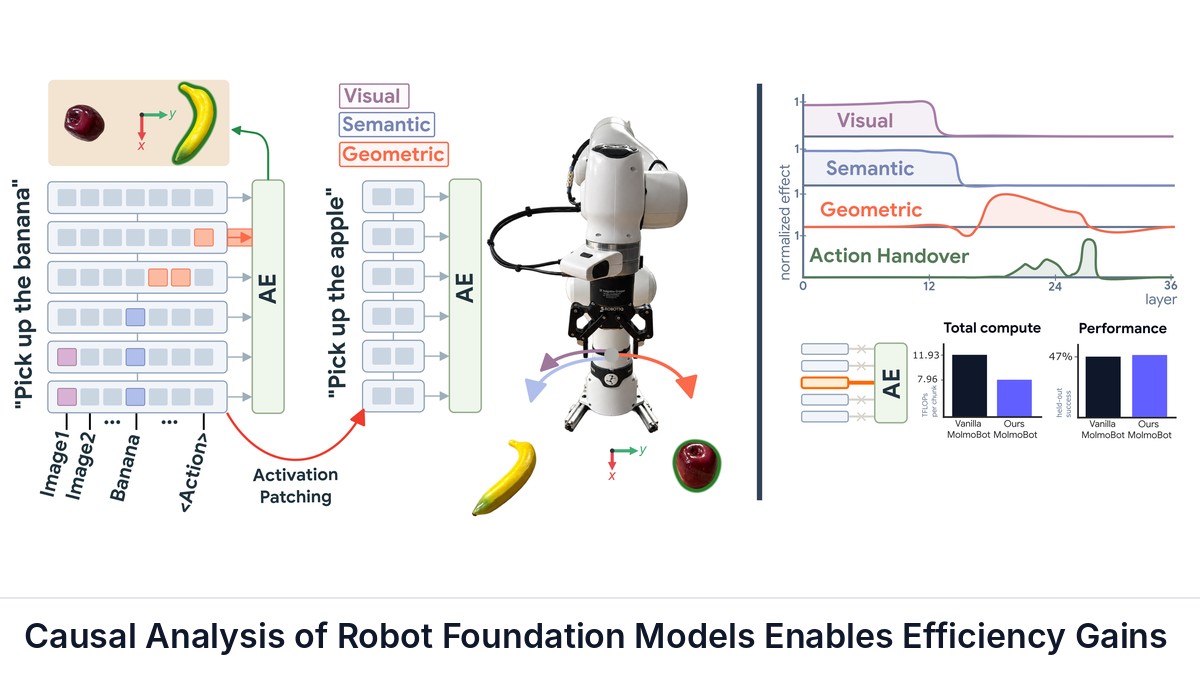
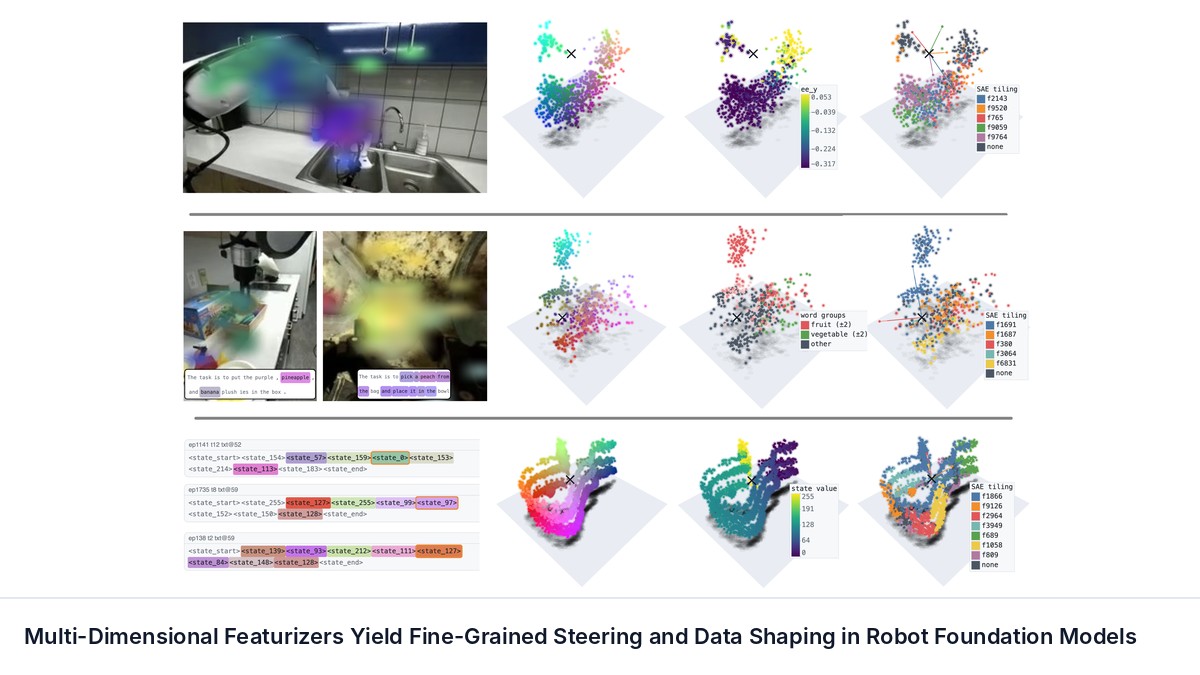
Multi-Dimensional Featurizers Yield Fine-Grained Steering and Data Shaping in Robot Foundation Models
arXiv preprint

Multi-Dimensional Featurizers Yield Fine-Grained Steering and Data Shaping in Robot Foundation Models

Aiden Swann, Mozes Jacobs, Mathilde Papillon et al.

Can better feature discovery improve control over robot behavior through internal interventions and training data? Recent work in vision and language models reveals multidimensional features, motivating block-sparse featurizers (BSFs), which represent each feature in a low-dimensional subspace.

vision vla reinforcement-learning control benchmark
Code PDF Advanced
GitHub ★ —
Native Video-Action Pretraining for Generalizable Robot Control
arXiv preprint

Native Video-Action Pretraining for Generalizable Robot Control

Qihang Zhang, Lin Li, Luyao Zhang et al.

The advent of video-action models offers a promising path for robot control. Nevertheless, we argue that repurposing video generative models designed for digital content creation is inherently inadequate for physical environments.

manipulation vision reinforcement-learning control
PDF Advanced
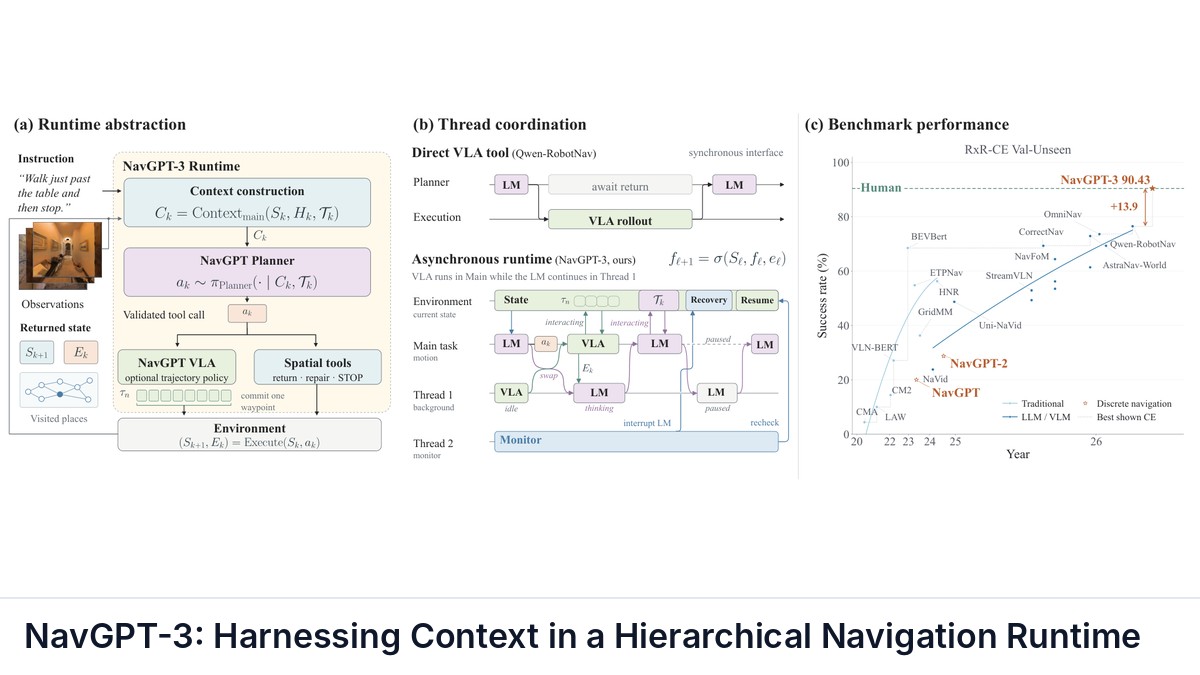
NavGPT-3: Harnessing Context in a Hierarchical Navigation Runtime
arXiv preprint

NavGPT-3: Harnessing Context in a Hierarchical Navigation Runtime

Gengze Zhou, Yicong Hong, Jiazhao Zhang et al.

Language models trained with long-horizon agentic reinforcement learning can generalize knowledge through reasoning, express precise actions, and pursue goals over many steps, raising the ceiling on what an embodied agent can understand and decide.

vision vla reinforcement-learning planning control benchmark
Code PDF Intermediate
GitHub ★ —
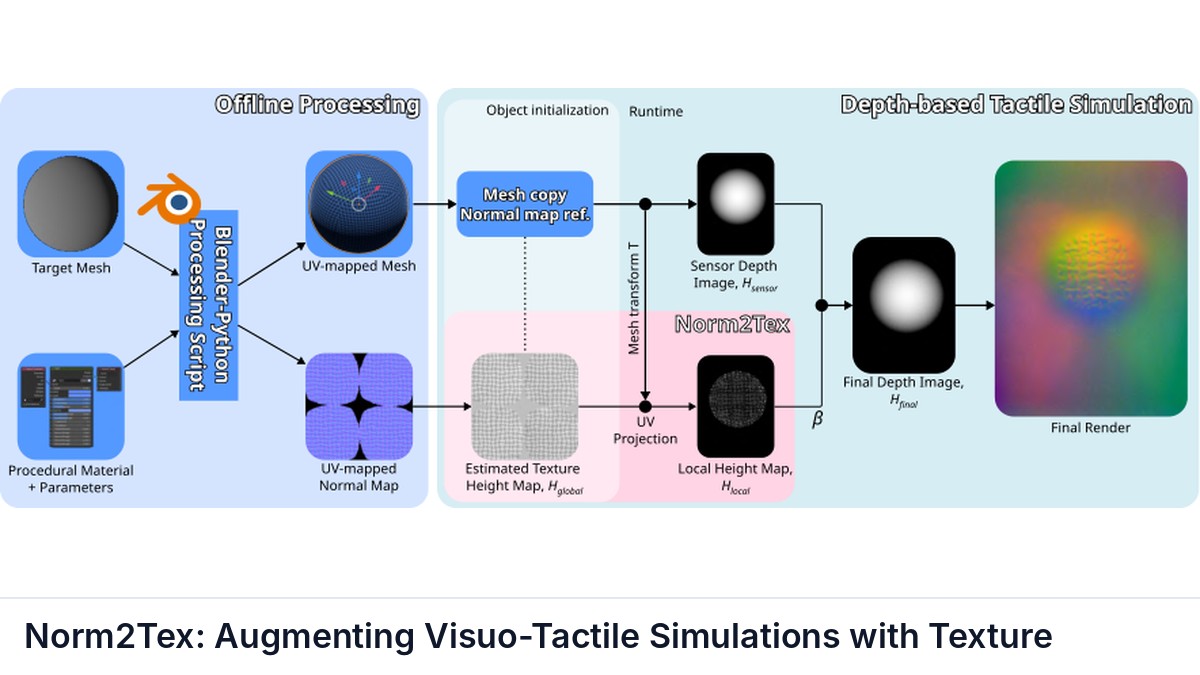
Norm2Tex: Augmenting Visuo-Tactile Simulations with Texture
arXiv preprint

Norm2Tex: Augmenting Visuo-Tactile Simulations with Texture

Seongjin Bien, D\'ebora Oliveira Makowski, Roberto Calandra et al.

Large-scale datasets are essential for training generalist robot control policies. Collecting real-world tactile data is costly and time-consuming, motivating the use of tactile simulations. However, current tactile simulators capture only overall contact geometry and miss fine details like texture.

vision reinforcement-learning sim-to-real control tactile benchmark
PDF Advanced
Odometer-Agnostic Drift Correction Using OpenStreetMap Lane Geometry
arXiv preprint

Odometer-Agnostic Drift Correction Using OpenStreetMap Lane Geometry

Joaquin Caballero, Emilio Garcia-Fidalgo, Alberto Ortiz et al.

Despite significant progress in odometry estimation, long-term drift remains a fundamental limitation of incremental pose integration, especially in large-scale or loop-free environments.

vision reinforcement-learning
PDF Advanced
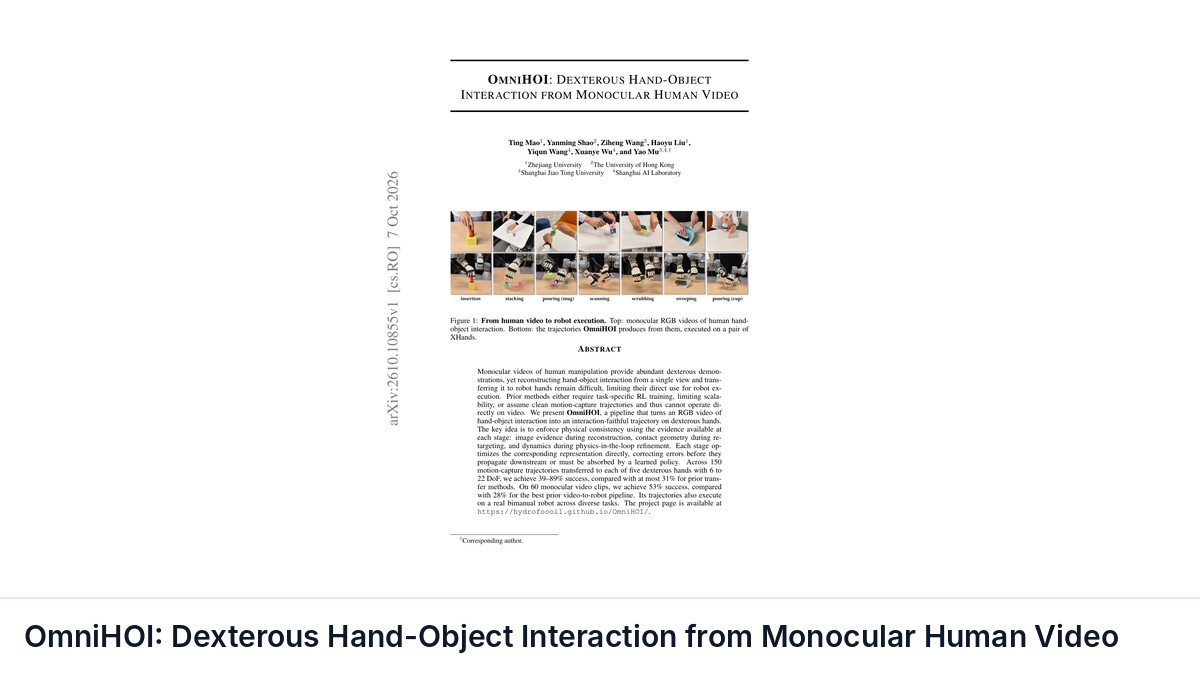
OmniHOI: Dexterous Hand-Object Interaction from Monocular Human Video
arXiv preprint

OmniHOI: Dexterous Hand-Object Interaction from Monocular Human Video

Ting Mao, Yanming Shao, Ziheng Wang et al.

Monocular videos of human manipulation provide abundant dexterous demonstrations, yet reconstructing hand-object interaction from a single view and transferring it to robot hands remain difficult, limiting their direct use for robot execution.

manipulation vision reinforcement-learning learning-from-demonstration
PDF Intermediate
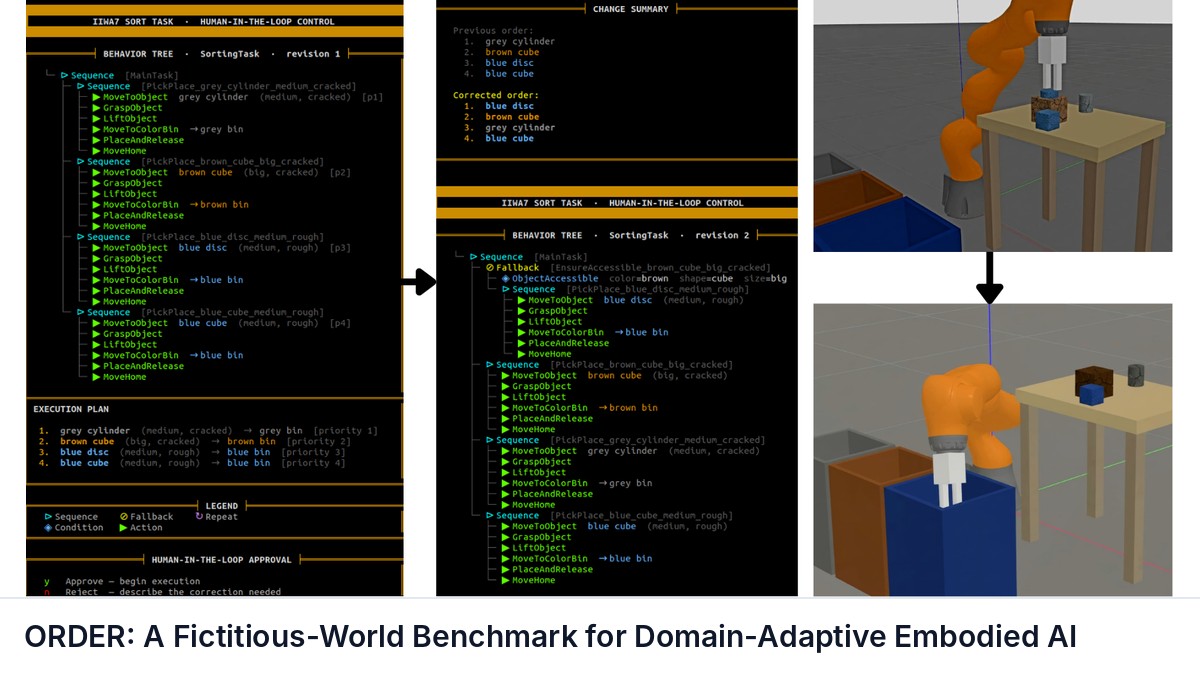
ORDER: A Fictitious-World Benchmark for Domain-Adaptive Embodied AI
arXiv preprint

ORDER: A Fictitious-World Benchmark for Domain-Adaptive Embodied AI

Sai Krishna Reddy Sathi, Anuj Tiwari

Adapting language models to new domains via continual pre-training raises a basic evaluation problem: if the training corpus overlaps with what the model already knows, performance gains cannot be cleanly attributed to new learning rather than pre-existing knowledge.

manipulation vision reinforcement-learning benchmark
PDF Intermediate
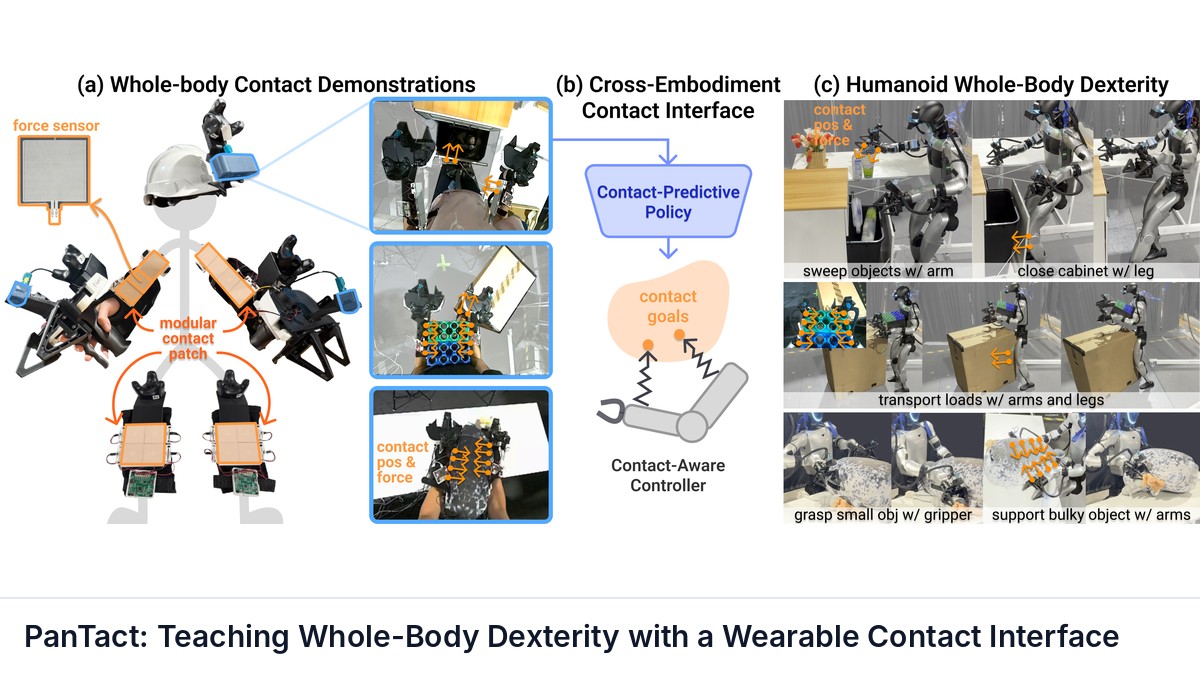
PanTact: Teaching Whole-Body Dexterity with a Wearable Contact Interface
arXiv preprint

PanTact: Teaching Whole-Body Dexterity with a Wearable Contact Interface

Xiaomeng Xu, Han Zhang, Zhian Ruan et al.

Humanoid robots have many degrees of freedom and contact surfaces, yet most loco-manipulation research restricts manipulation to the hands and avoids other body contacts with the environment.

manipulation vision reinforcement-learning control learning-from-demonstration
PDF Intermediate
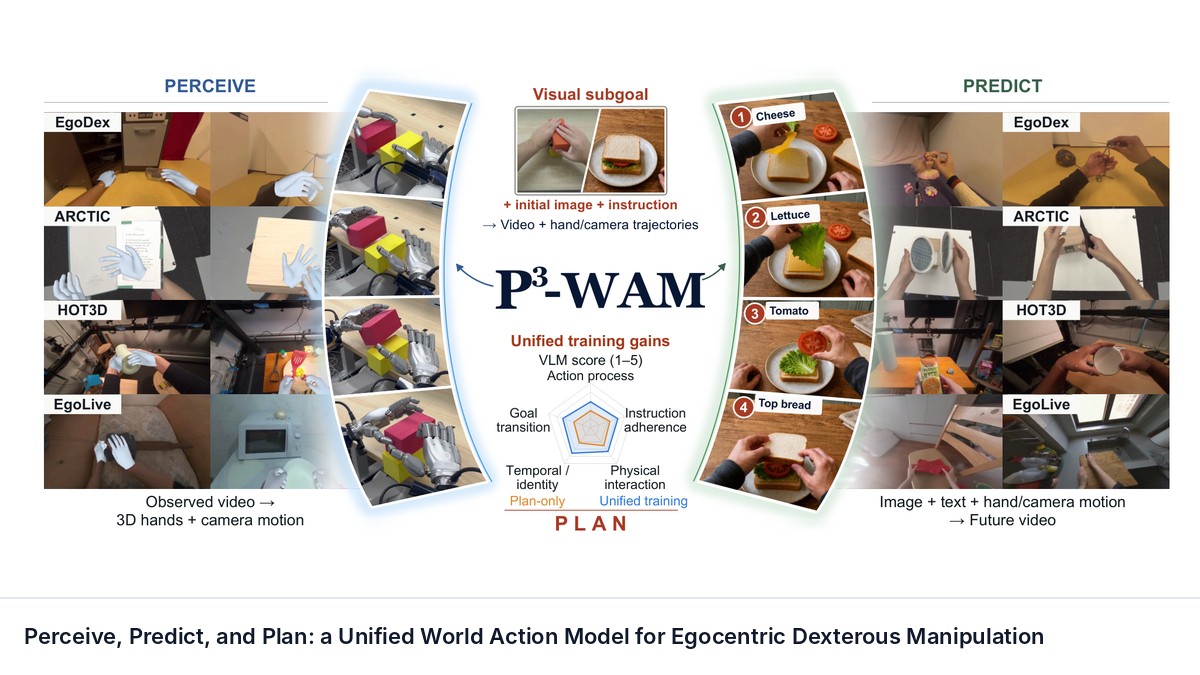
Perceive, Predict, and Plan: a Unified World Action Model for Egocentric Dexterous Manipulation
arXiv preprint

Perceive, Predict, and Plan: a Unified World Action Model for Egocentric Dexterous Manipulation

Zirui Wu, Chen Guo, Tianjian Jiang et al.

We introduce P$^{3}$-WAM, a unified world action model for egocentric dexterous manipulation that learns 3D perception, action-conditioned prediction, and goal-directed planning through three complementary modes: Perceive, which reconstructs articulated hand motion and camera trajectories from video; Predict, which generates visual futures under prescribed actions; and Plan, which jointly generates action trajectories and their anticipated visual consequences conditioned on an initial image, a language instruction, and an optional visual goal.

manipulation vision reinforcement-learning planning benchmark
Code PDF Advanced
GitHub ★ —
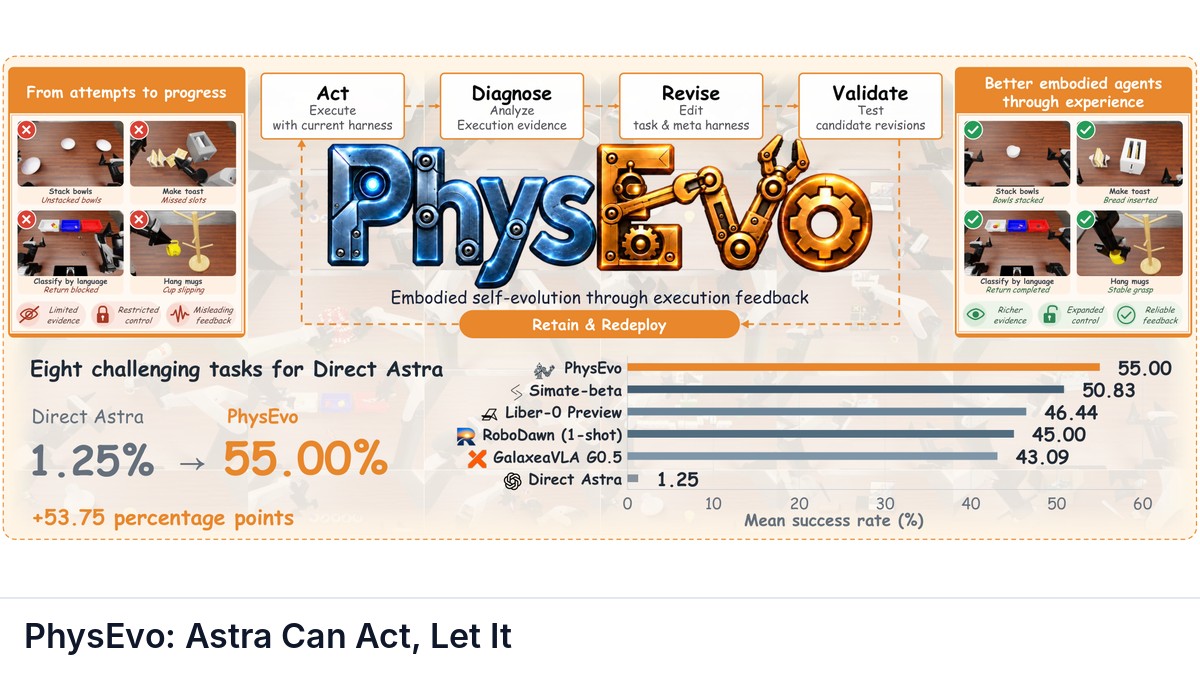
PhysEvo: Astra Can Act, Let It
arXiv preprint

PhysEvo: Astra Can Act, Let It

Wenqing Tian, Zeyu Zhang, Zhaocheng Liu et al.

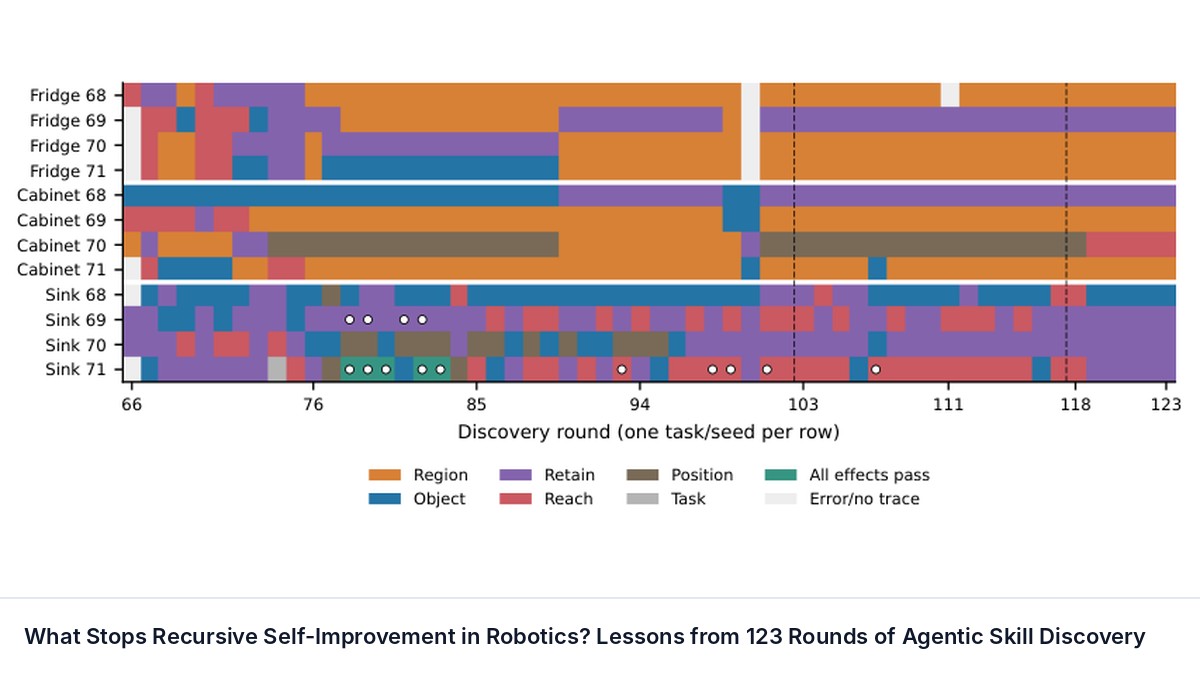
Astra can act, yet reliable manipulation depends on the system through which it observes and controls the world. We introduce PhysEvo, a framework for physical recursive self-improvement (RSI) around a single frozen model.

manipulation vision reinforcement-learning control benchmark
Code PDF Intermediate
GitHub ★ —
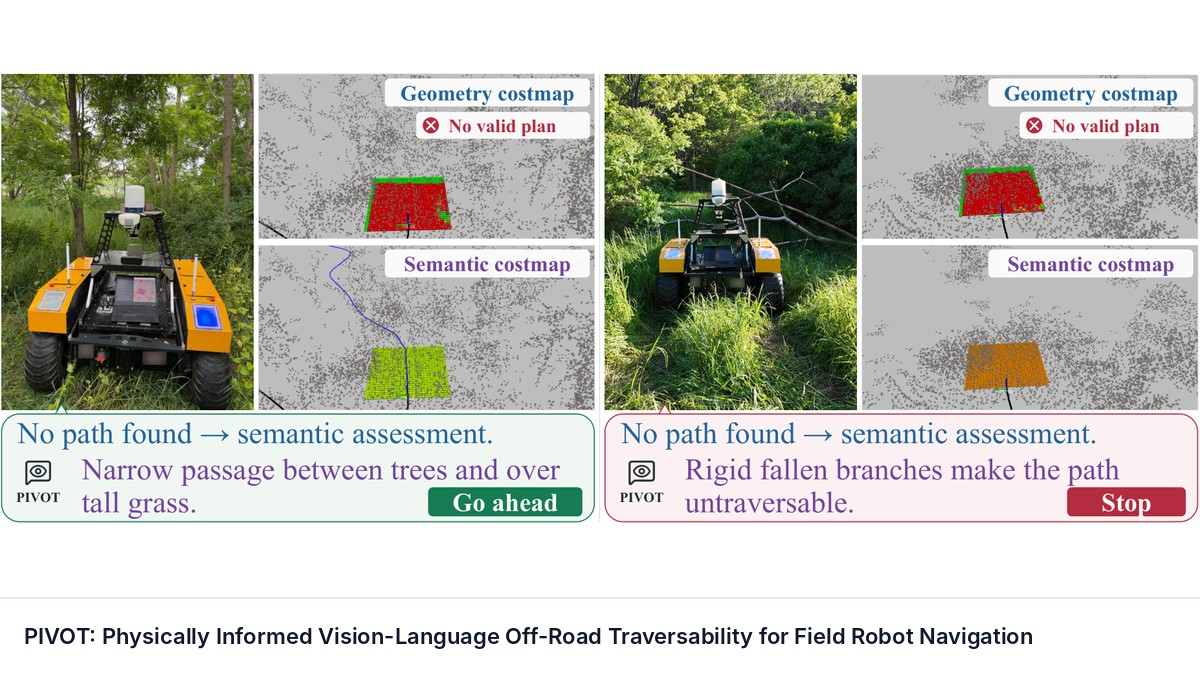
PIVOT: Physically Informed Vision-Language Off-Road Traversability for Field Robot Navigation
arXiv preprint

PIVOT: Physically Informed Vision-Language Off-Road Traversability for Field Robot Navigation

Aoran Jiao, Wenda Zhao, Hshmat Sahak et al.

Terrain assessment is a critical capability for off-road mobile robots, enabling safe and reliable navigation through unstructured and geometrically complex environments. Conventional geometry-based terrain assessment is fast to compute but often overly conservative in unstructured environments.

vision vla reinforcement-learning planning
PDF Intermediate
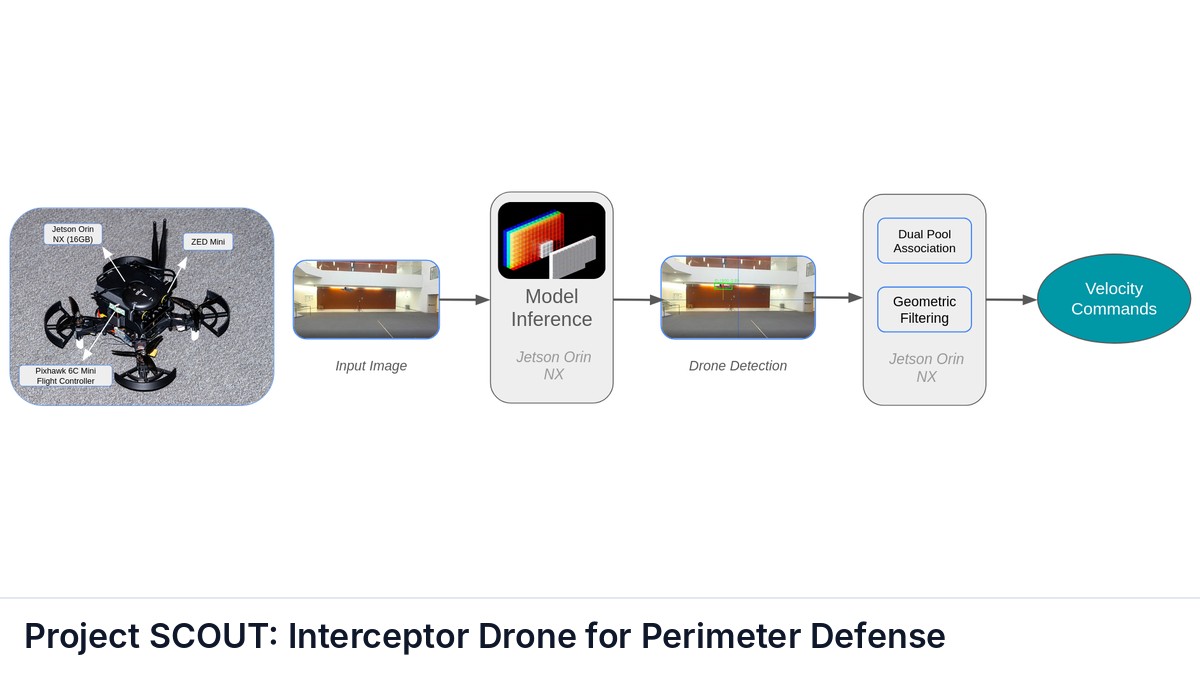
Project SCOUT: Interceptor Drone for Perimeter Defense
arXiv preprint

Project SCOUT: Interceptor Drone for Perimeter Defense

Azmain Yousuf, Siwei Cai, Knut Peterson et al.

The rapid proliferation of unauthorized unmanned aerial vehicles (UAVs) has created a growing need for robust, jamming-resistant counter-UAV systems for perimeter defense.

vision reinforcement-learning control learning-from-demonstration
PDF Advanced
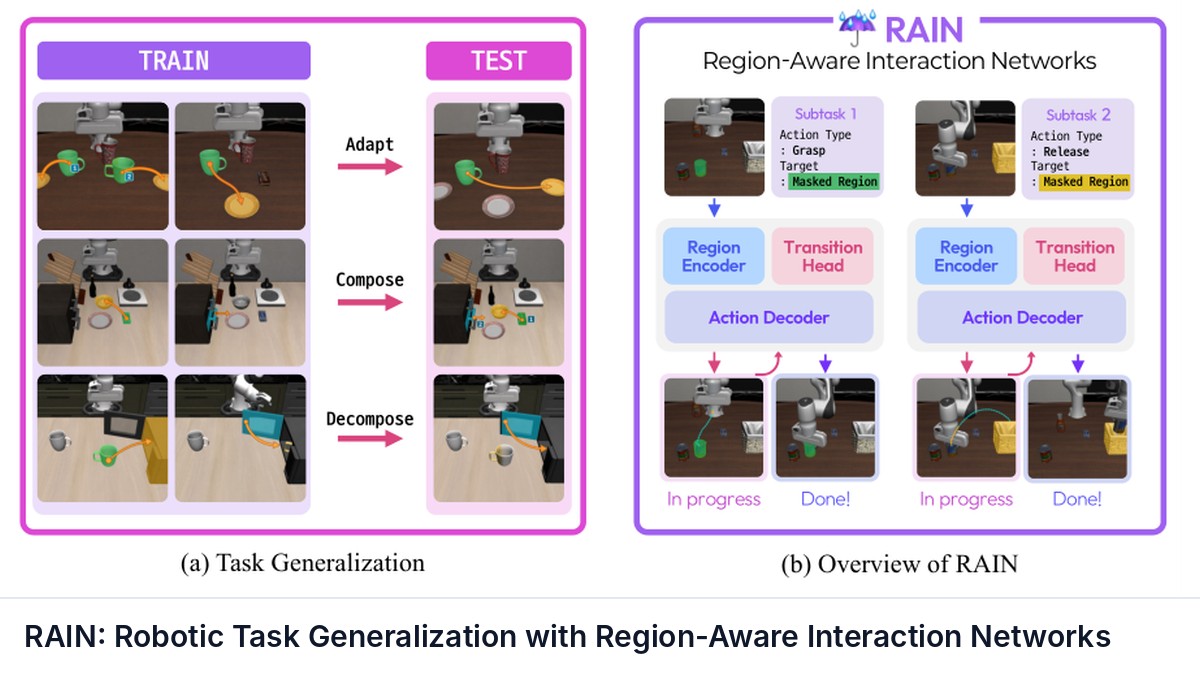
RAIN: Robotic Task Generalization with Region-Aware Interaction Networks
arXiv preprint

RAIN: Robotic Task Generalization with Region-Aware Interaction Networks

Seunghun Lee, Kyuhwan Shim, Yeogyeong Song et al.

Existing vision-language-action (VLA) models benefit from large-scale vision-language pretraining, but tend to memorize training trajectories, limiting their ability to adapt learned interactions to new task and scene configurations.

vision vla reinforcement-learning benchmark
Code PDF Advanced
GitHub ★ —
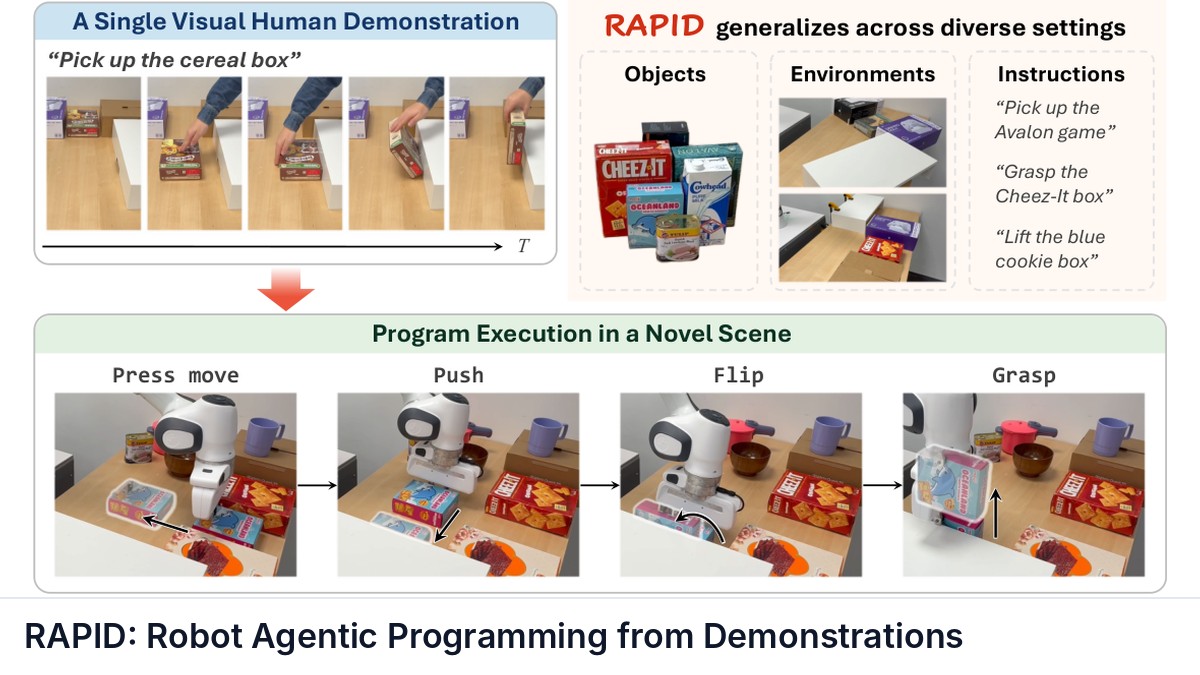
RAPID: Robot Agentic Programming from Demonstrations
arXiv preprint

RAPID: Robot Agentic Programming from Demonstrations

Yuyao Liu, Jiayuan Mao, David Hsu et al.

Coding agents have demonstrated enormous success in solving complex programming problems.

manipulation vision reinforcement-learning control learning-from-demonstration benchmark
PDF Intermediate
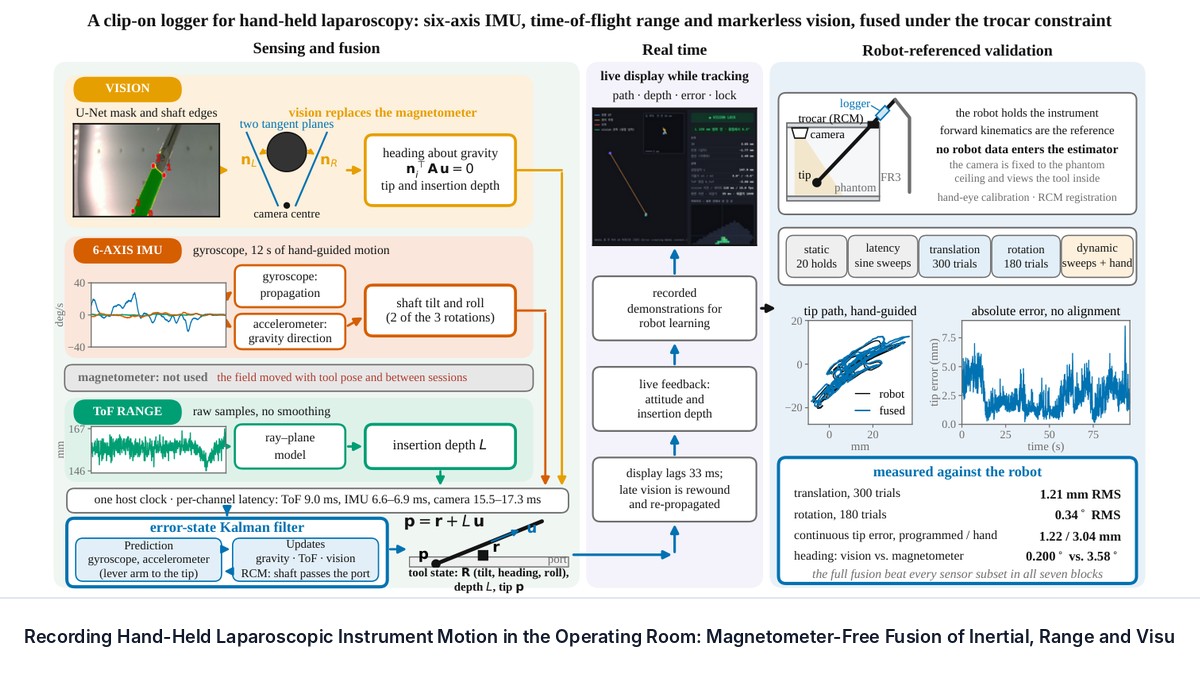
Recording Hand-Held Laparoscopic Instrument Motion in the Operating Room: Magnetometer-Free Fusion of Inertial, Range and Visual Sensing
arXiv preprint

Recording Hand-Held Laparoscopic Instrument Motion in the Operating Room: Magnetometer-Free Fusion of Inertial, Range and Visual Sensing

Jiyul Lee, Dongho Yee, Juahn Oh et al.

Most minimally invasive procedures are still performed with hand-held laparoscopic instruments, yet only the endoscopic video is retained; the instrument motion that expresses surgical skill, and that could support skill assessment and robot learning, is lost.

vision reinforcement-learning
PDF Intermediate
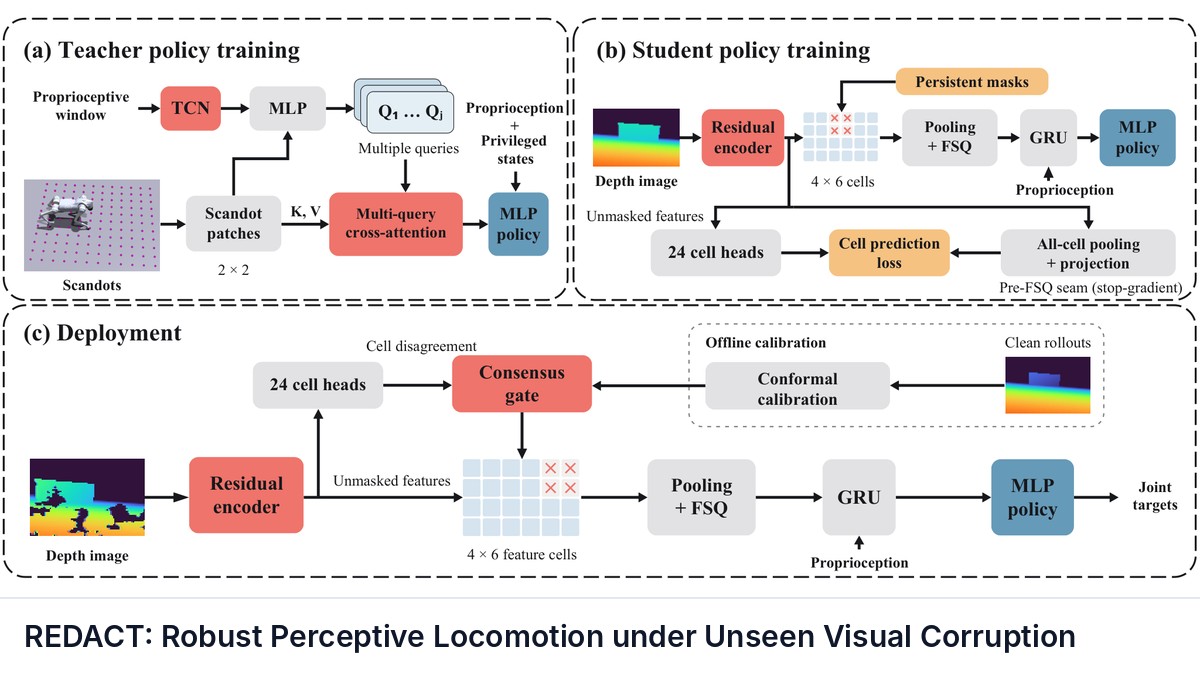
REDACT: Robust Perceptive Locomotion under Unseen Visual Corruption
arXiv preprint

REDACT: Robust Perceptive Locomotion under Unseen Visual Corruption

Natapat Kirdwichai, Tobias Driskell-Poole, Andrei Sontea et al.

Depth-conditioned locomotion policies have demonstrated impressive agile maneuvers, but can be steered to unpredictable actions when observations are outside their training distribution.

locomotion vision reinforcement-learning benchmark
PDF Intermediate
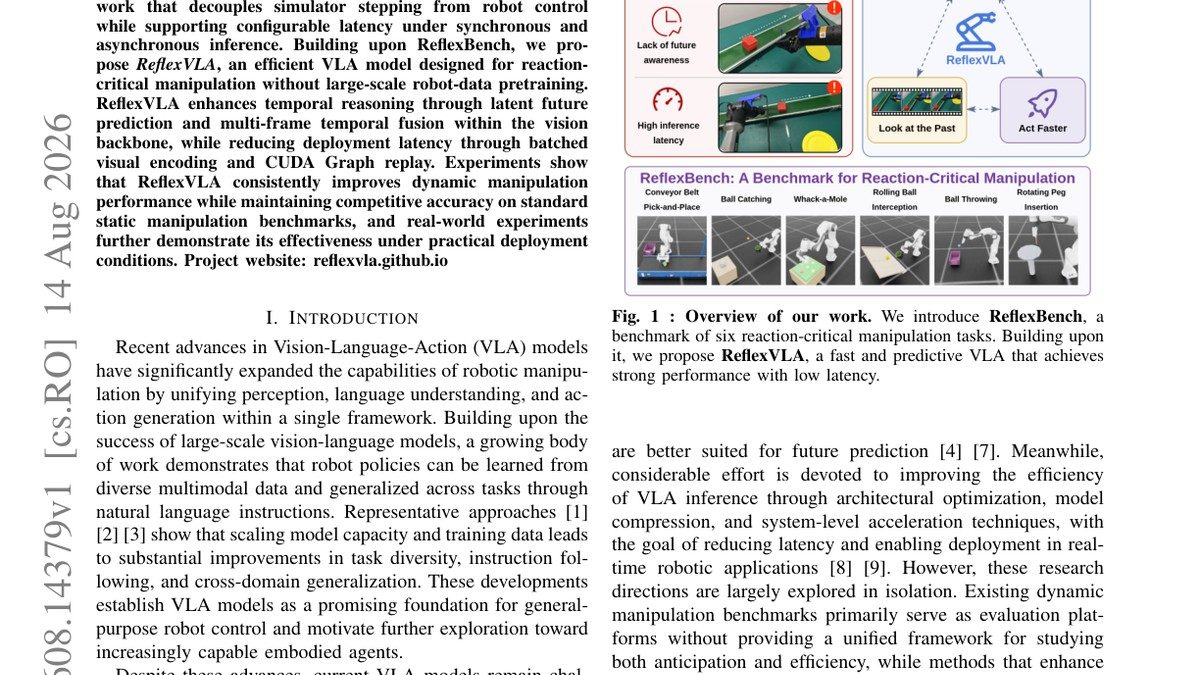
Reflex: Enabling Fast and Predictive Vision-Language-Action Models for Reaction-Critical Manipulation
arXiv preprint

Reflex: Enabling Fast and Predictive Vision-Language-Action Models for Reaction-Critical Manipulation

Yuxuan Chen, Wanruo Zhang, Xiao Li

Vision-Language-Action (VLA) models have recently achieved promising performance in robotic manipulation. However, existing benchmarks mainly evaluate generalization on static manipulation tasks and largely overlook dynamic interaction scenarios.

manipulation vision vla reinforcement-learning control benchmark
Code PDF Advanced
GitHub ★ —
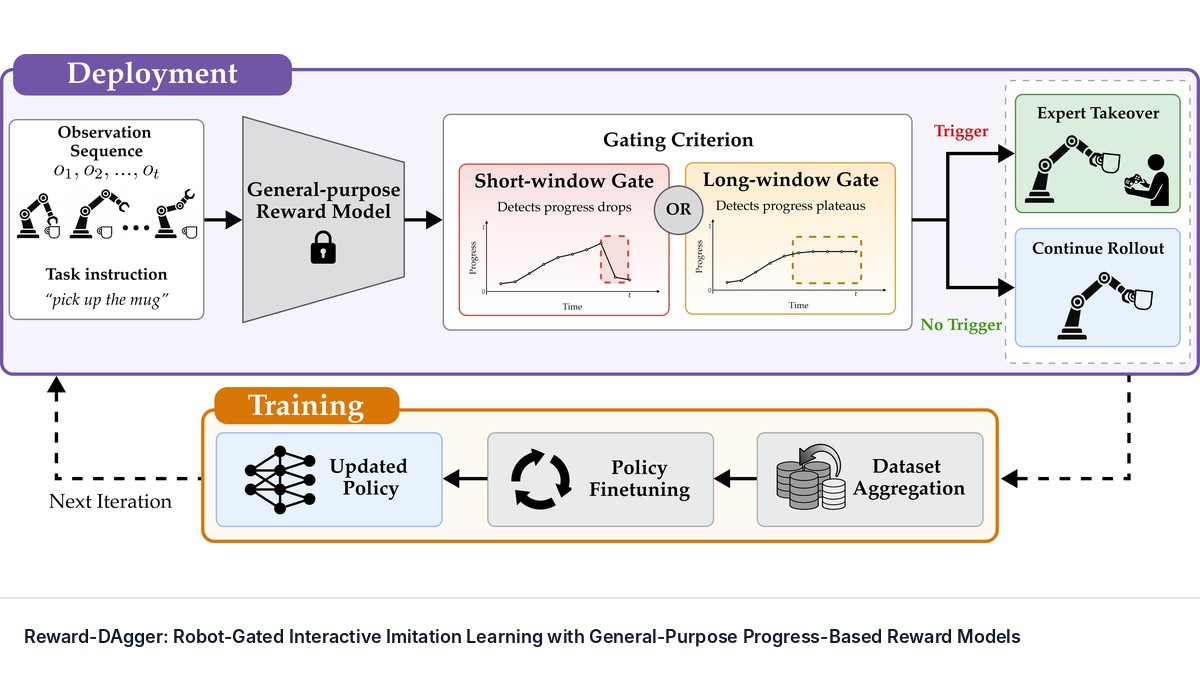
Reward-DAgger: Robot-Gated Interactive Imitation Learning with General-Purpose Progress-Based Reward Models
arXiv preprint

Reward-DAgger: Robot-Gated Interactive Imitation Learning with General-Purpose Progress-Based Reward Models

Ryan Li, Yigit Korkmaz, Erdem B{\i}y{\i}k

Recent advances in robot learning have enabled generalist control policies capable of completing a wide range of tasks. However, their performance degrades when deployed in unseen environments, making it critical to detect failures and teach recovery behaviors.

vision reinforcement-learning control learning-from-demonstration
PDF Intermediate
RoboTTT: Context Scaling for Robot Policies
arXiv preprint

RoboTTT: Context Scaling for Robot Policies

Yunfan Jiang, Yevgen Chebotar, Ruijie Zheng et al.

Recent robot foundation models operate with single-step or short-history visuomotor context.

manipulation vision vla reinforcement-learning learning-from-demonstration
Code PDF Advanced
GitHub ★ —
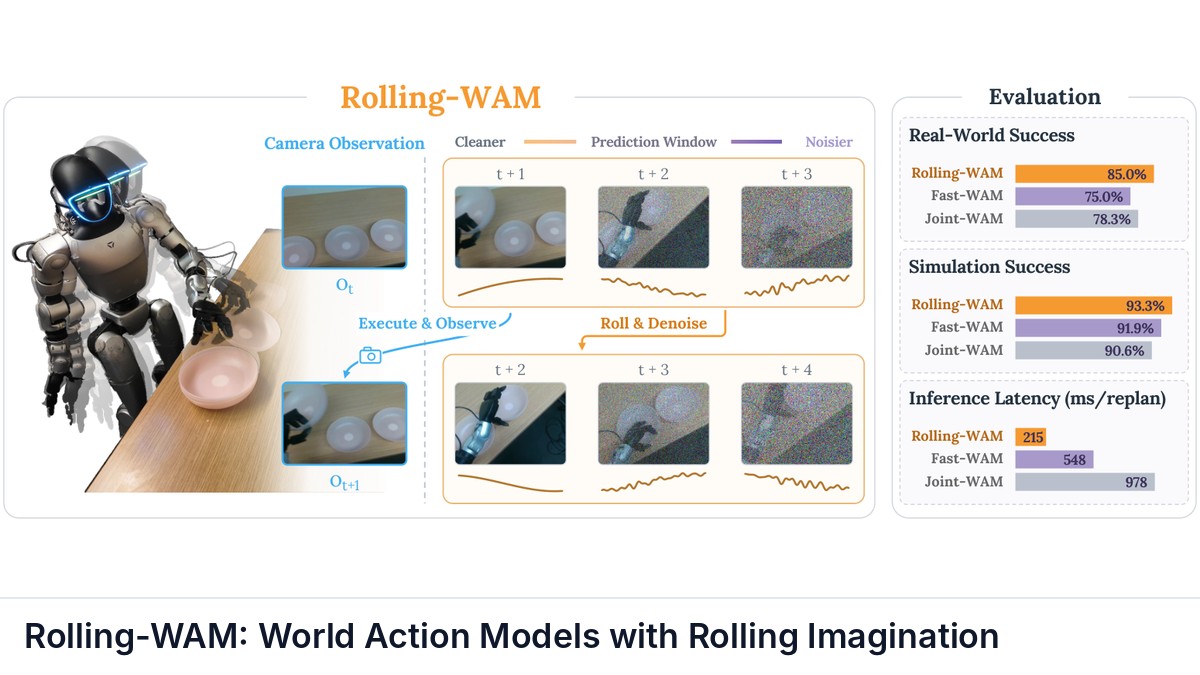
Rolling-WAM: World Action Models with Rolling Imagination
arXiv preprint

Rolling-WAM: World Action Models with Rolling Imagination

Yinghua Zhou, Junjie Ye, Yiqi Zhao et al.

World Action Models (WAMs) couple action generation with future visual prediction for robotic manipulation. However, completing the joint video-action denoising process at each replanning cycle incurs substantial latency, delaying action updates and limiting closed-loop responsiveness.

manipulation vision reinforcement-learning planning benchmark
Code PDF Intermediate
GitHub ★ —
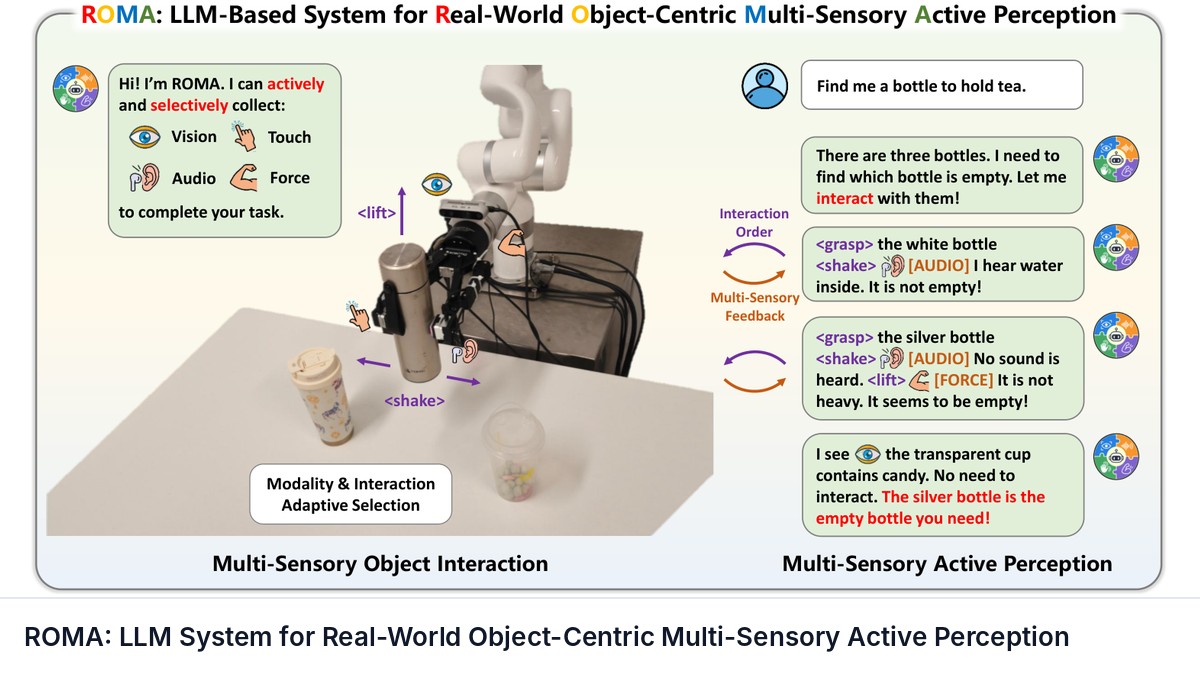
ROMA: LLM System for Real-World Object-Centric Multi-Sensory Active Perception
arXiv preprint

ROMA: LLM System for Real-World Object-Centric Multi-Sensory Active Perception

Ruoxuan Feng, Yutong Chen, Ruihua Song et al.

Humans inherently understand the physical world through an active process. When sensory evidence is insufficient to infer physical properties, we naturally interact with the environment by deciding what information is missing, how to acquire it, and when sufficient evidence has been obtained.

vision vla reinforcement-learning tactile benchmark
Code PDF Advanced
GitHub ★ —
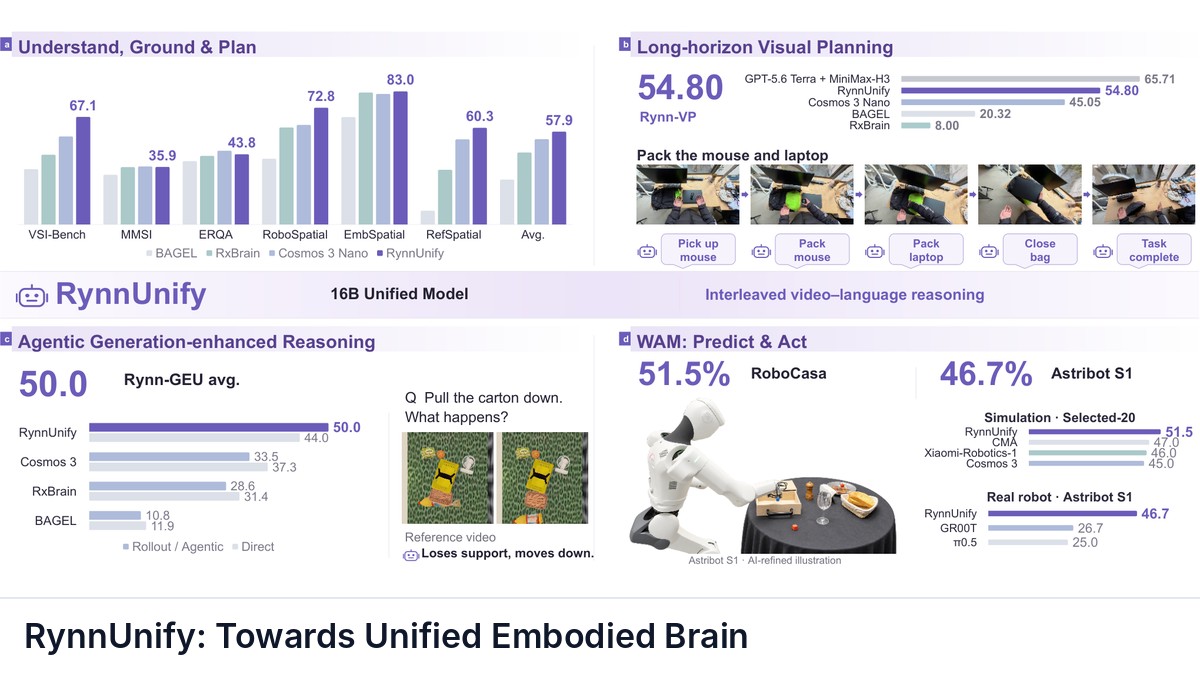
RynnUnify: Towards Unified Embodied Brain
arXiv preprint

RynnUnify: Towards Unified Embodied Brain

Minghao Zhu, Bohan Hou, Kun Xiang et al.

We introduce RynnUnify, a 16B unified embodied model that combines strong embodied understanding with long-horizon visual planning through interleaved video--language reasoning.

vision reinforcement-learning planning control
Code PDF Intermediate
GitHub ★ —
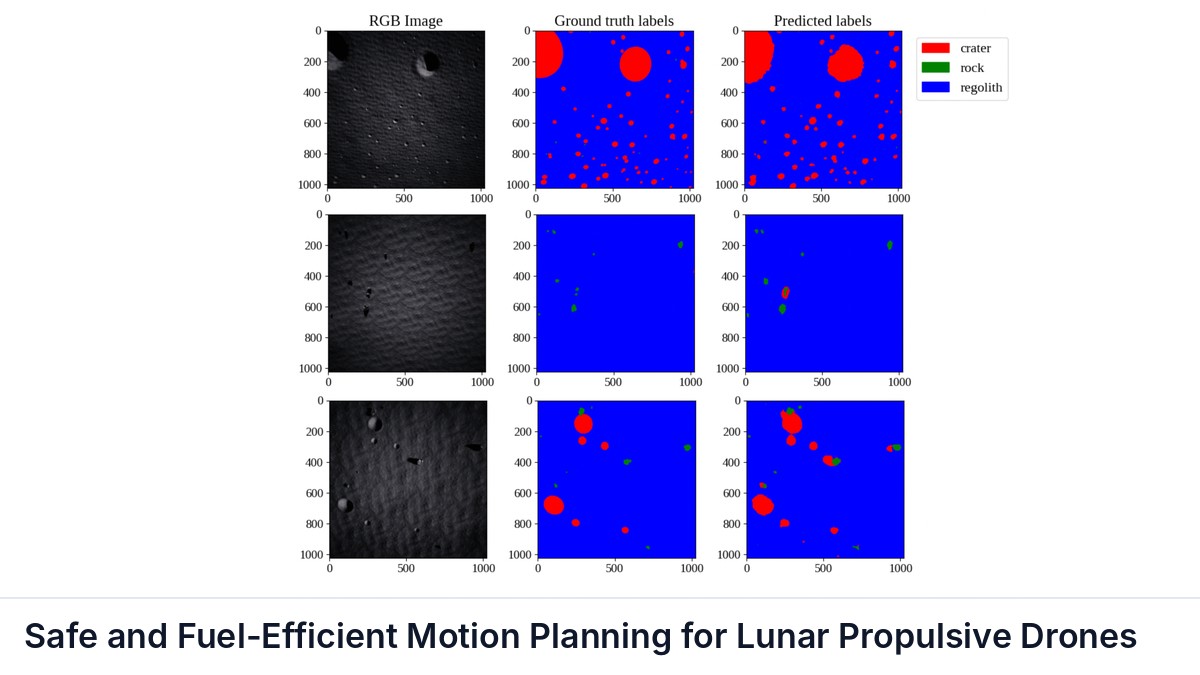
Safe and Fuel-Efficient Motion Planning for Lunar Propulsive Drones
arXiv preprint

Safe and Fuel-Efficient Motion Planning for Lunar Propulsive Drones

Elena Wittemyer, Graco Gao

Propulsive drones are a promising new technology for generating high-resolution terrain models of the Moon. In future lunar missions, propulsive drones will complete a series of hops across the lunar surface while capturing images with downward-facing cameras.

vision planning control
PDF Intermediate
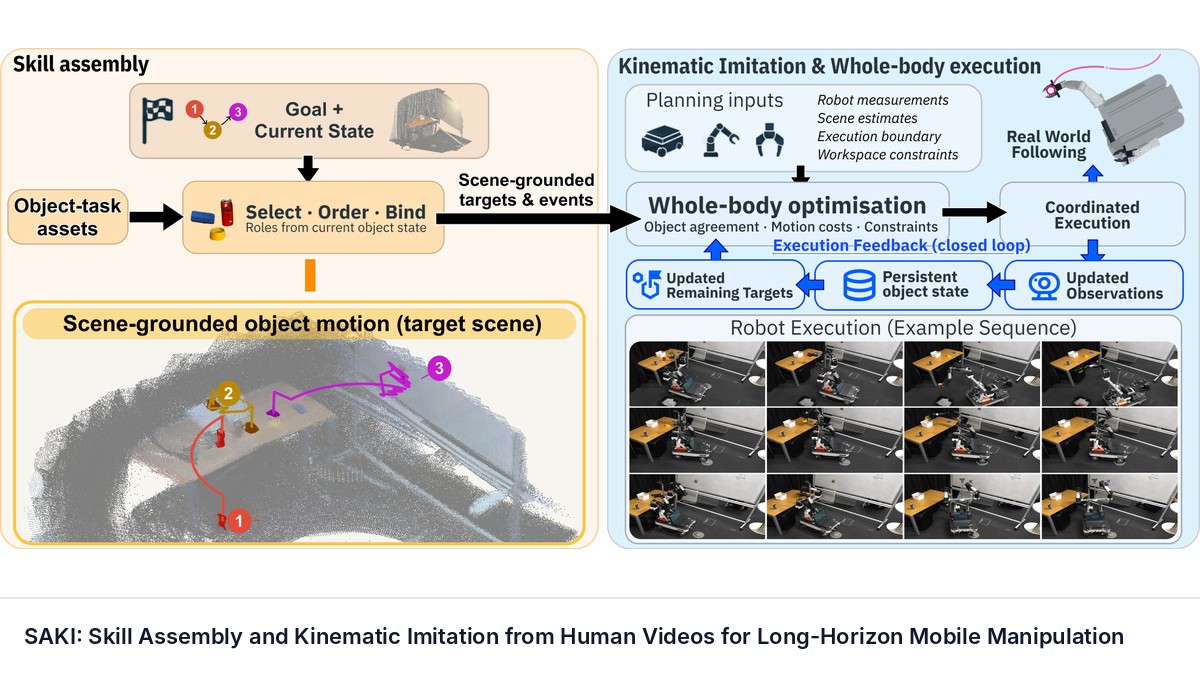
SAKI: Skill Assembly and Kinematic Imitation from Human Videos for Long-Horizon Mobile Manipulation
arXiv preprint

SAKI: Skill Assembly and Kinematic Imitation from Human Videos for Long-Horizon Mobile Manipulation

Yijie Lu, James Zhao, Weiming Zhi

Learning from human videos offers a promising route to acquiring diverse manipulation skills. Extending this capability beyond tabletop settings to long-horizon mobile manipulation requires adapting and composing demonstrated interactions across changing scenes and robot configurations.

manipulation vision learning-from-demonstration
PDF Intermediate
Same Action, Different Outcome: Variability in Dynamic Cloth Manipulation
arXiv preprint

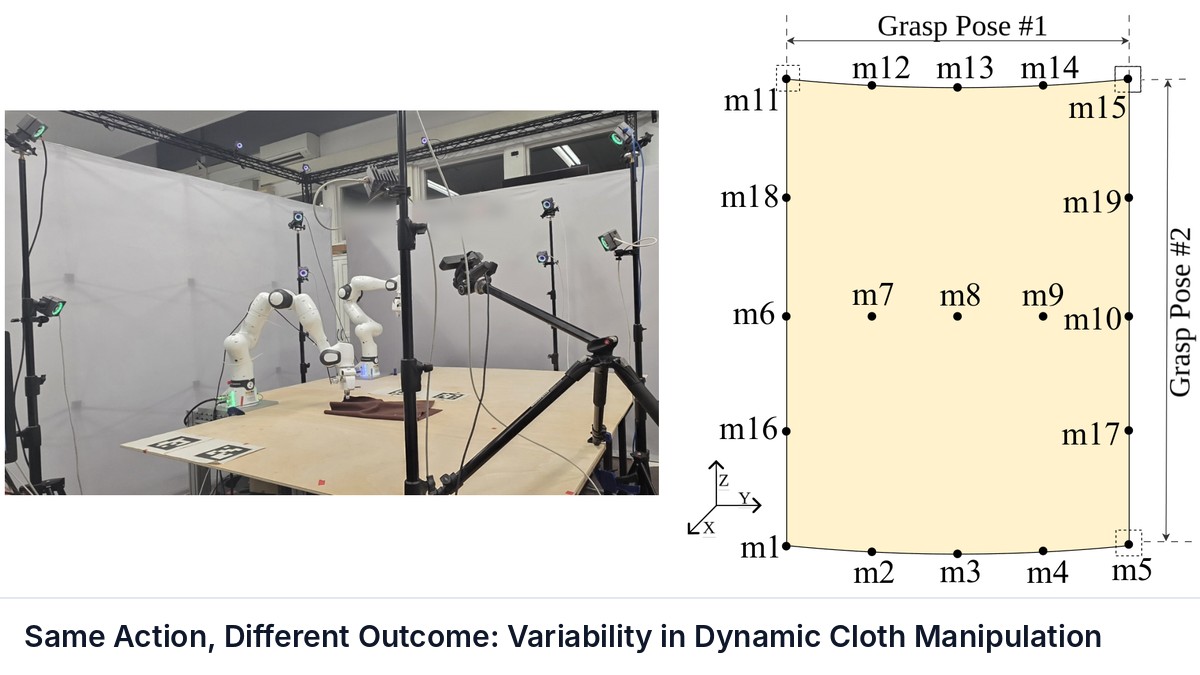
Same Action, Different Outcome: Variability in Dynamic Cloth Manipulation

Mahed Dadgostar, Guillem Aleny\`a, J\'ulia Borr\`as

Although cloth is known to exhibit different outcomes under repeated fast dynamic motions, even when the same trajectory is applied, this variability has not yet been systematically characterized.

manipulation vision reinforcement-learning benchmark
Code PDF Intermediate
GitHub ★ —
Same Trajectory, Contradictory Rewards (ROBORMBENCH): Paraphrase Fragility in Vision Language Reward Models
arXiv preprint

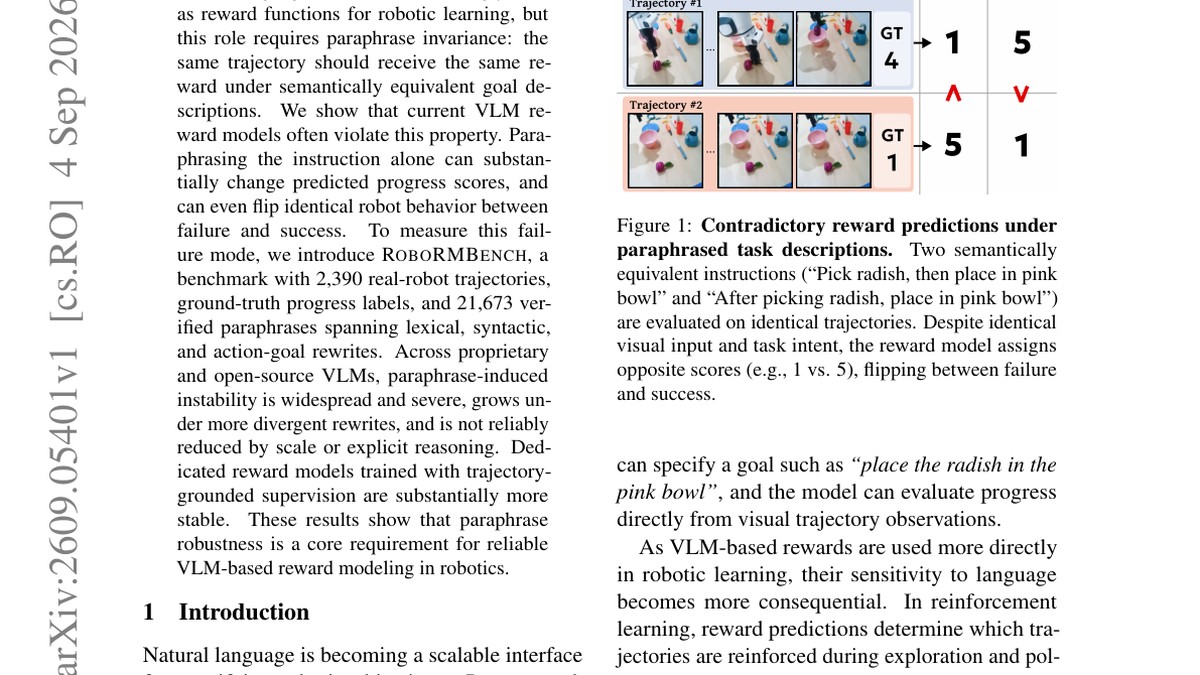
Same Trajectory, Contradictory Rewards (ROBORMBENCH): Paraphrase Fragility in Vision Language Reward Models

Wonje Jeung, Sangyeon Yoon, Hyesoo Hong et al.

Vision-language models are increasingly used as reward functions for robotic learning, but this role requires paraphrase invariance: the same trajectory should receive the same reward under semantically equivalent goal descriptions. We show that current VLM reward models often violate this property.

vision vla benchmark
PDF Intermediate
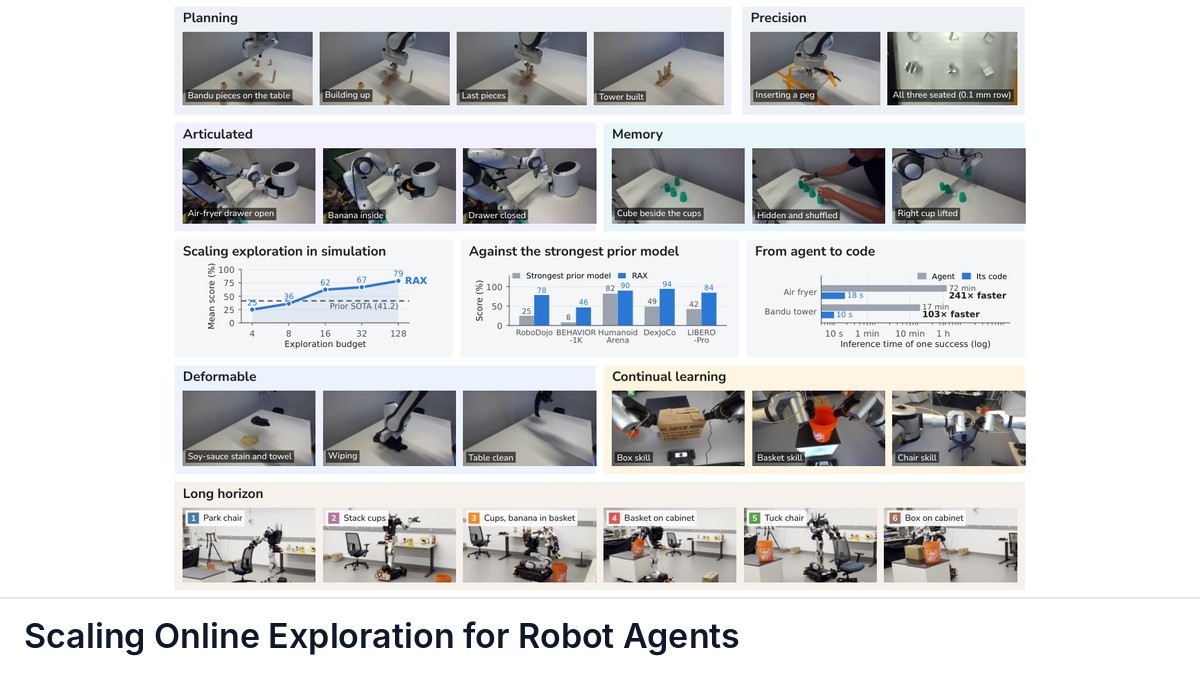
Scaling Online Exploration for Robot Agents
arXiv preprint

Scaling Online Exploration for Robot Agents

Runhan Huang, Xiangcheng Zhang, Haoyu Chen et al.

Robot learning has advanced by scaling demonstration datasets and model capacity; however, deploying a new robot embodiment or task typically necessitates a dedicated teleoperation corpus.

manipulation vision reinforcement-learning planning control learning-from-demonstration benchmark
PDF Intermediate
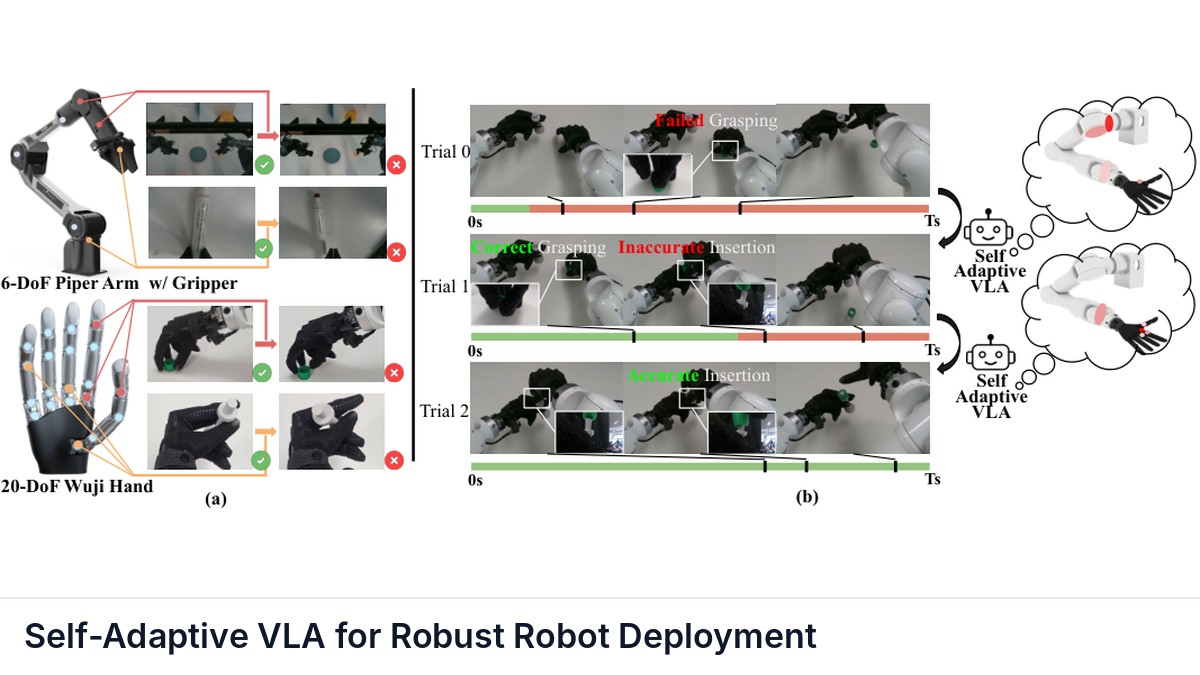
Self-Adaptive VLA for Robust Robot Deployment
arXiv preprint

Self-Adaptive VLA for Robust Robot Deployment

Hongxin Zhang, Chunru Lin, Tsun-Hsuan Wang et al.

While Vision-Language-Action (VLA) models demonstrate impressive capabilities in robotic manipulation, their memoryless nature renders them brittle to test-time environment shifts, particularly hardware shifts caused by wear or imperfect calibration.

manipulation vision vla reinforcement-learning learning-from-demonstration
Code PDF Advanced
GitHub ★ —
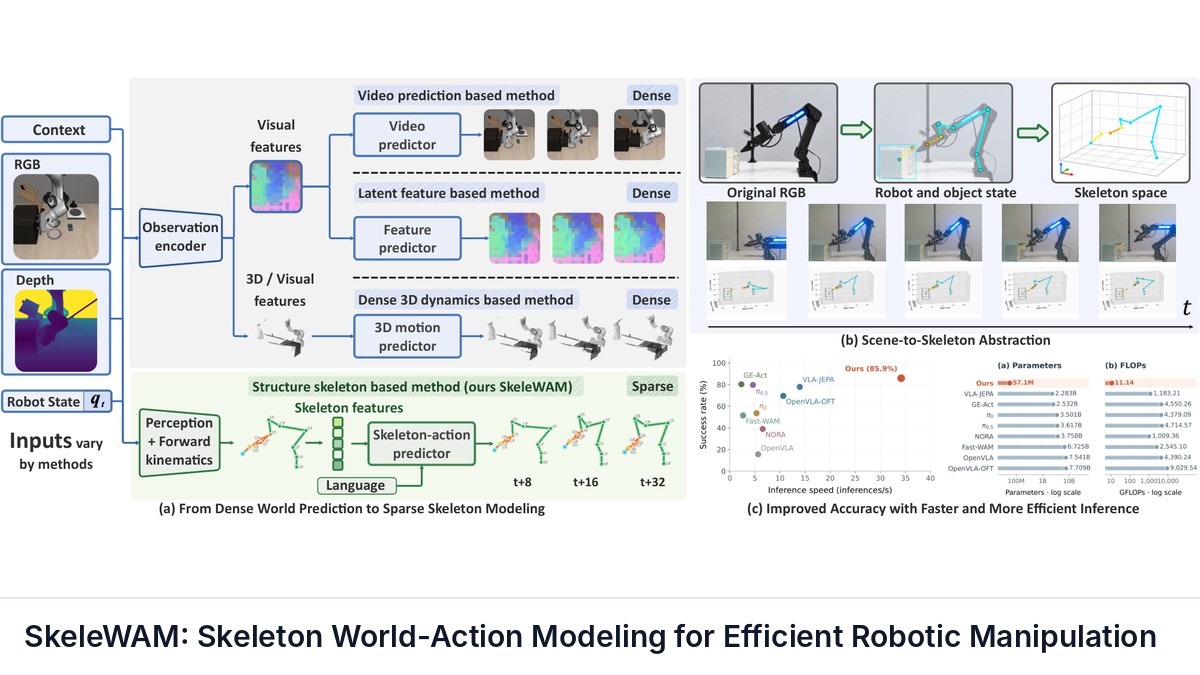
SkeleWAM: Skeleton World-Action Modeling for Efficient Robotic Manipulation
arXiv preprint

SkeleWAM: Skeleton World-Action Modeling for Efficient Robotic Manipulation

Juyi Sheng, Hua Wang, Mengyuan Liu

World action models (WAMs) combine robot action generation with future state prediction. Existing WAMs typically predict videos or learned visual latents, which represent interaction geometry only implicitly and may retain appearance information unrelated to control.

manipulation vision reinforcement-learning control
PDF Intermediate
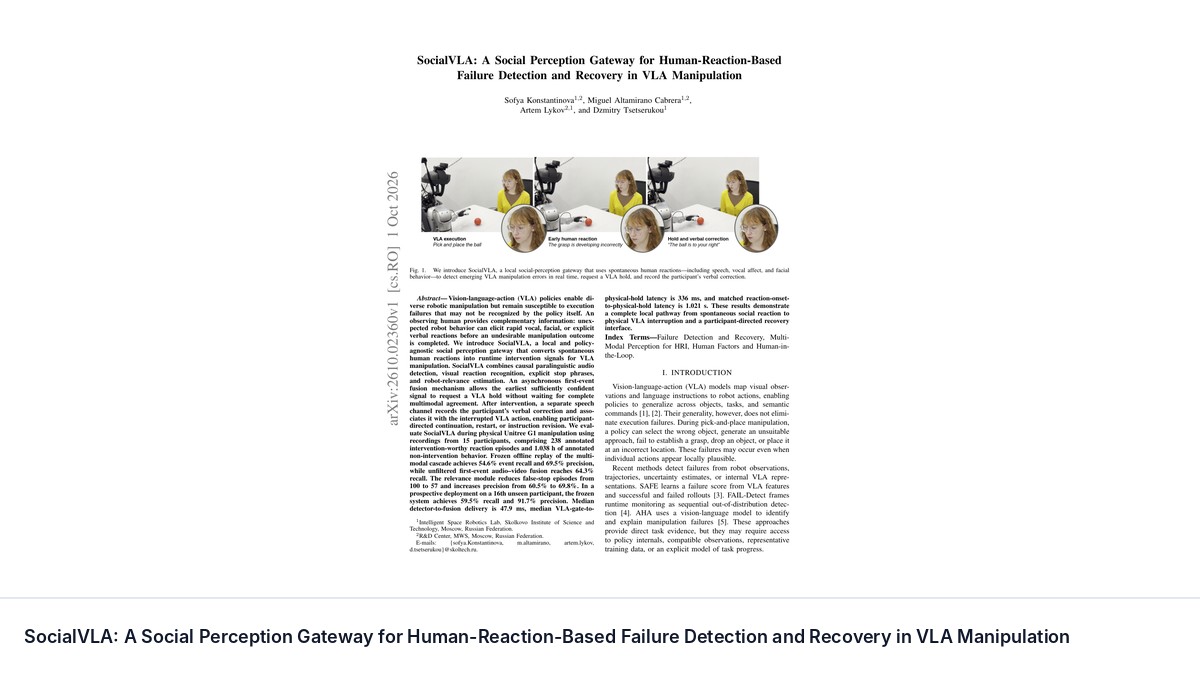
SocialVLA: A Social Perception Gateway for Human-Reaction-Based Failure Detection and Recovery in VLA Manipulation
arXiv preprint

SocialVLA: A Social Perception Gateway for Human-Reaction-Based Failure Detection and Recovery in VLA Manipulation

Sofya Konstantinova, Miguel Altamirano Cabrera, Artem Lykov et al.

Vision-language-action (VLA) policies enable diverse robotic manipulation but can fail during execution without recognizing their own errors. Human observers provide complementary signals, as unexpected robot behavior can trigger rapid vocal, facial, or verbal reactions before failure is completed.

manipulation vision vla reinforcement-learning control
Code PDF Intermediate
GitHub ★ —
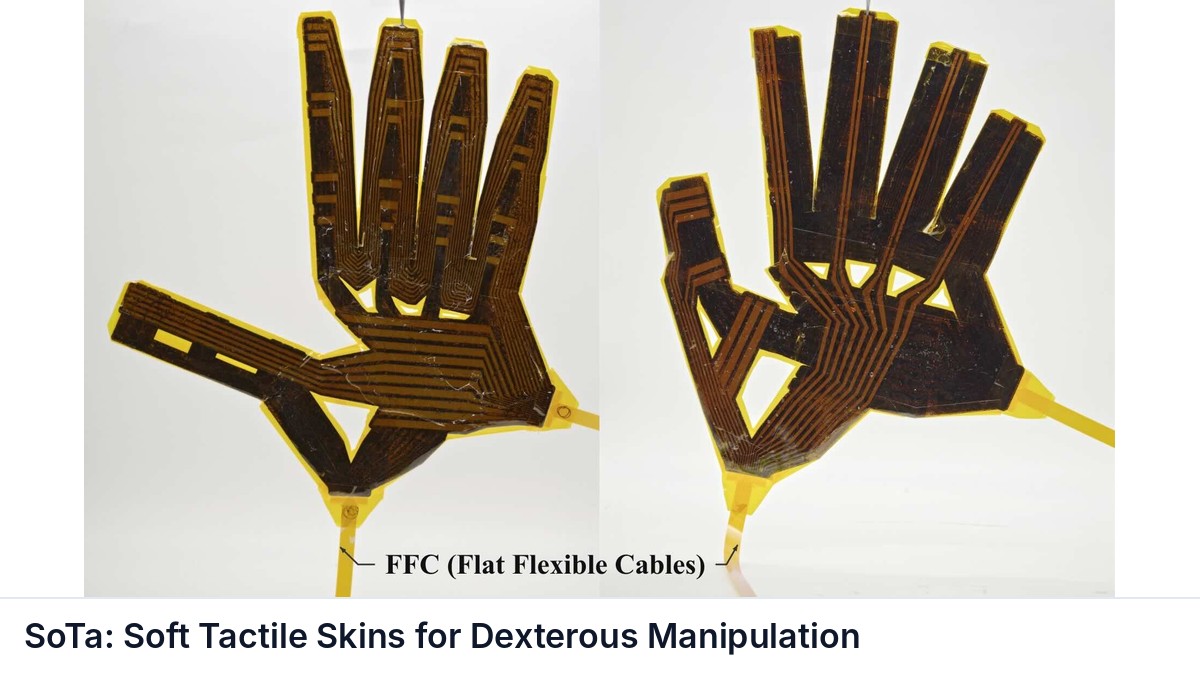
SoTa: Soft Tactile Skins for Dexterous Manipulation
arXiv preprint

SoTa: Soft Tactile Skins for Dexterous Manipulation

Jingyun Yang, Baiyu Shi, Timothy Yu et al.

A growing body of work suggests that tactile sensing gives robot policies contact information that complements vision in dexterous manipulation. However, visuo-tactile robot data remains scarce: dexterous demonstrations require teleoperating robots, which limits dataset scale.

manipulation vision reinforcement-learning learning-from-demonstration tactile benchmark
PDF Intermediate
SUAVE: Unified Video-Action Models via Masked Diffusion
arXiv preprint

SUAVE: Unified Video-Action Models via Masked Diffusion

Rhythm Syed, Jean Mercat, Sedrick Keh et al.

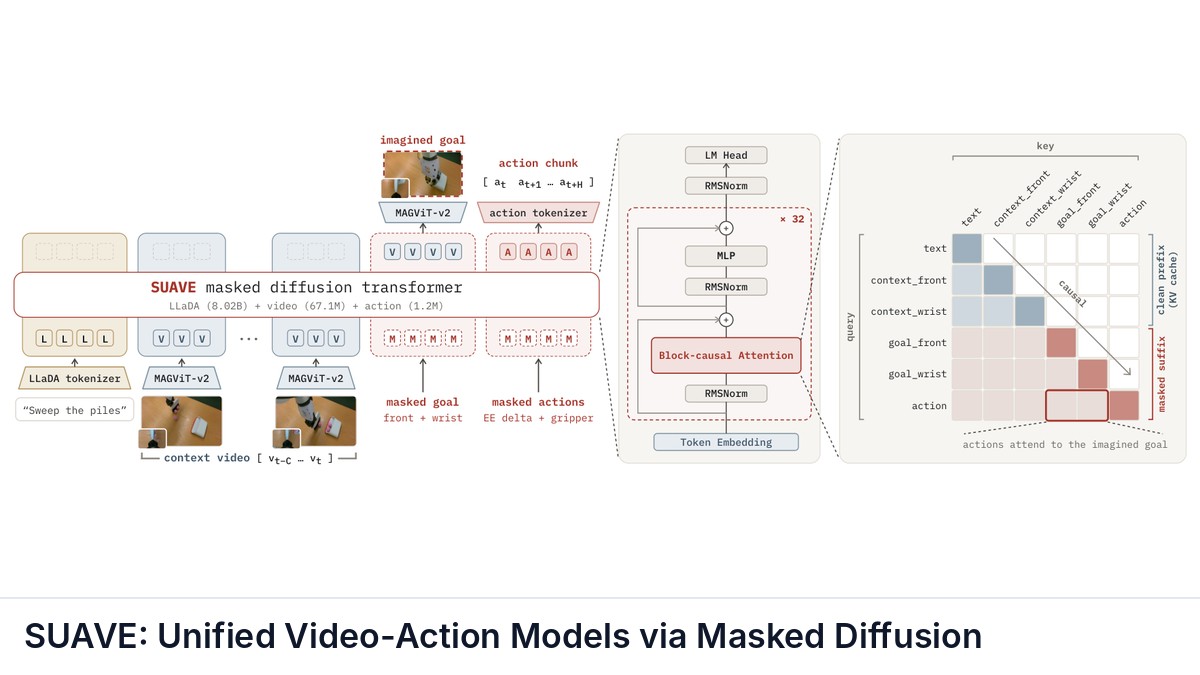
Vision-language-action models (VLAs) inherit strong semantic grounding from pretrained vision-language backbones but are typically optimized for predicting actions rather than future observations. They can see and act, but they do not imagine the future before acting.

manipulation vision vla reinforcement-learning control
PDF Advanced
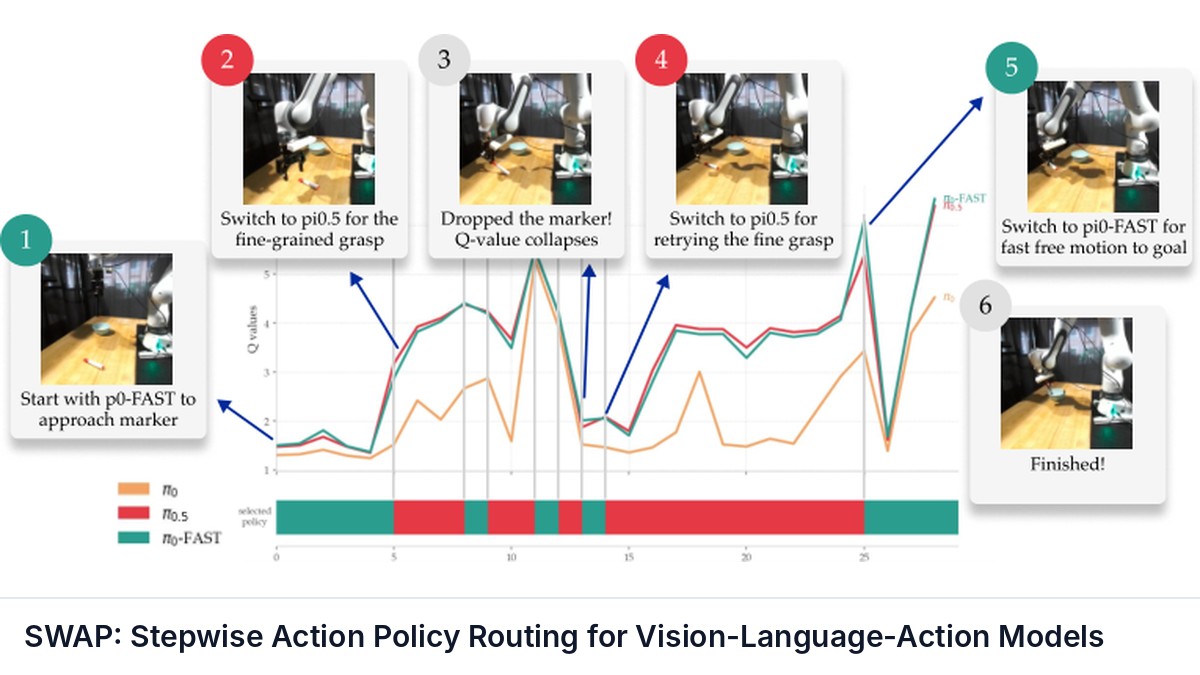
SWAP: Stepwise Action Policy Routing for Vision-Language-Action Models
arXiv preprint

SWAP: Stepwise Action Policy Routing for Vision-Language-Action Models

Mousumi Das, Aditeya Prajapati, Abrar Anwar et al.

Robot manipulation systems using Vision-Language-Action (VLA) model backbones typically use just one VLA for task execution. However, individual VLAs do not perform well across different task states and environments.

manipulation vision vla reinforcement-learning
Code PDF Intermediate
GitHub ★ —
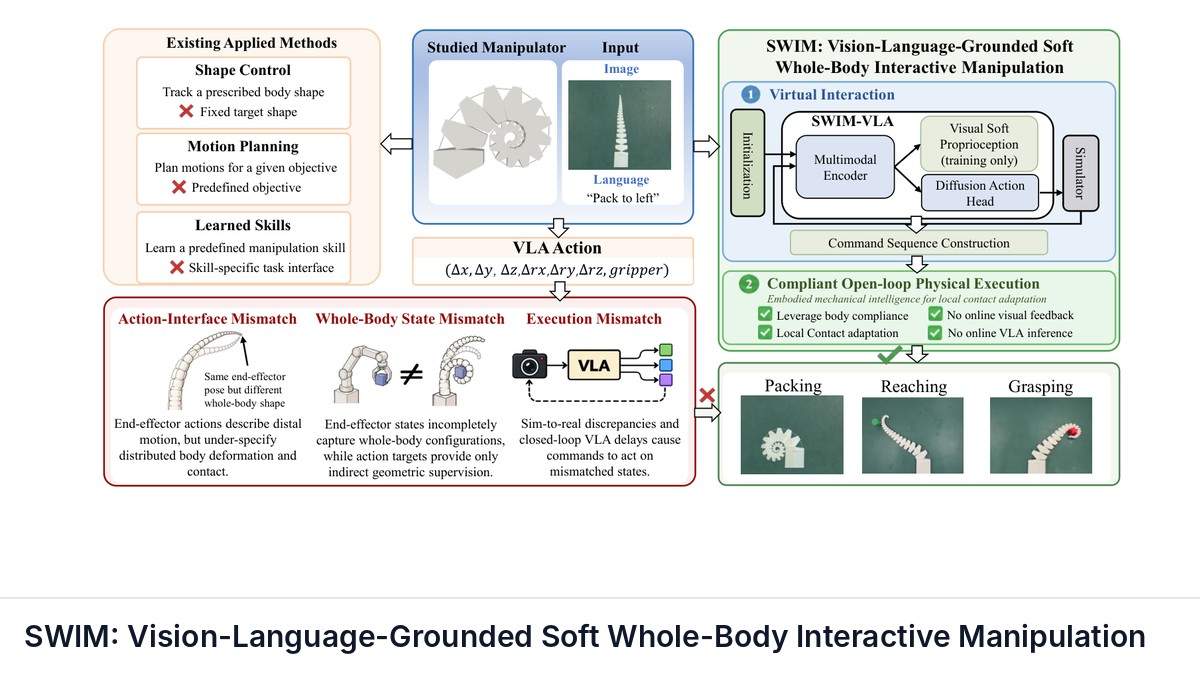
SWIM: Vision-Language-Grounded Soft Whole-Body Interactive Manipulation
arXiv preprint

SWIM: Vision-Language-Grounded Soft Whole-Body Interactive Manipulation

Tingcong Liu, Aye Phyu Phyu Aung, Junjie Xiong et al.

Soft and continuum robots enable manipulation through distributed body deformation and contact, yet translating language and visual context into executable whole-body actuation remains a fundamental challenge.

manipulation vision vla reinforcement-learning control learning-from-demonstration
PDF Advanced
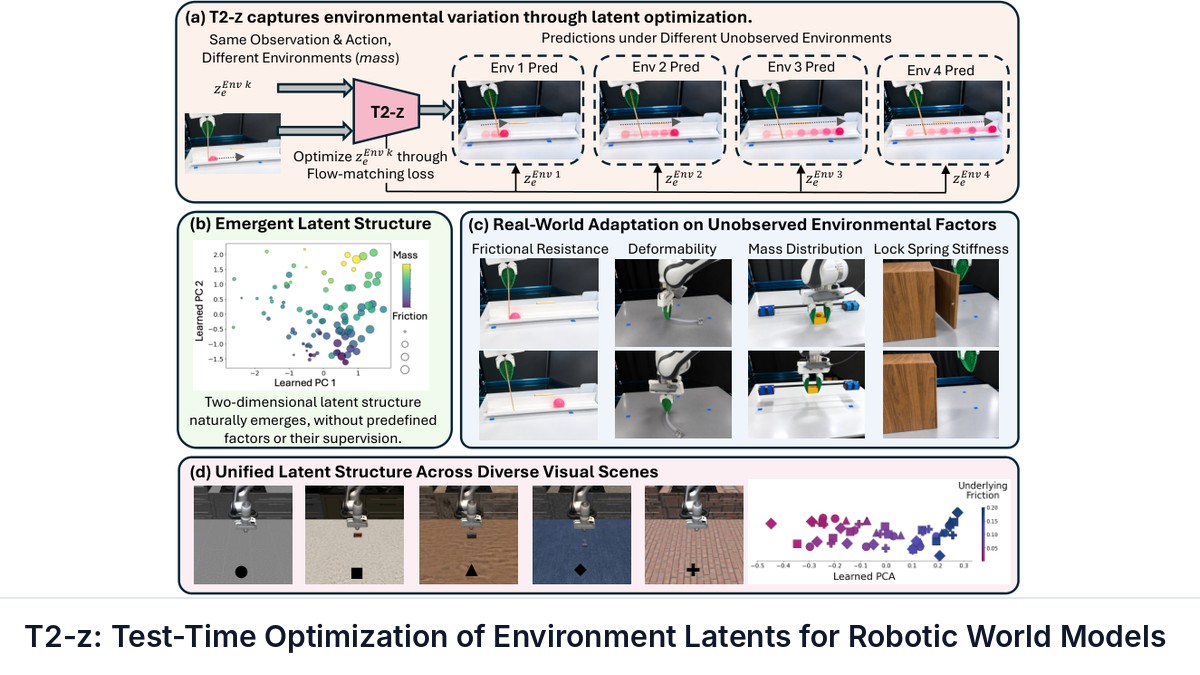
T2-z: Test-Time Optimization of Environment Latents for Robotic World Models
arXiv preprint

T2-z: Test-Time Optimization of Environment Latents for Robotic World Models

Chenyuan Zhou, Yining Hong, Huang Huang et al.

Predicting how the world responds to an action requires more than what can be seen: robots must account for environmental factors that are neither directly observable nor explicitly specified, from physical properties such as friction and mass to human-defined environmental rules.

vision reinforcement-learning
Code PDF Intermediate
GitHub ★ —
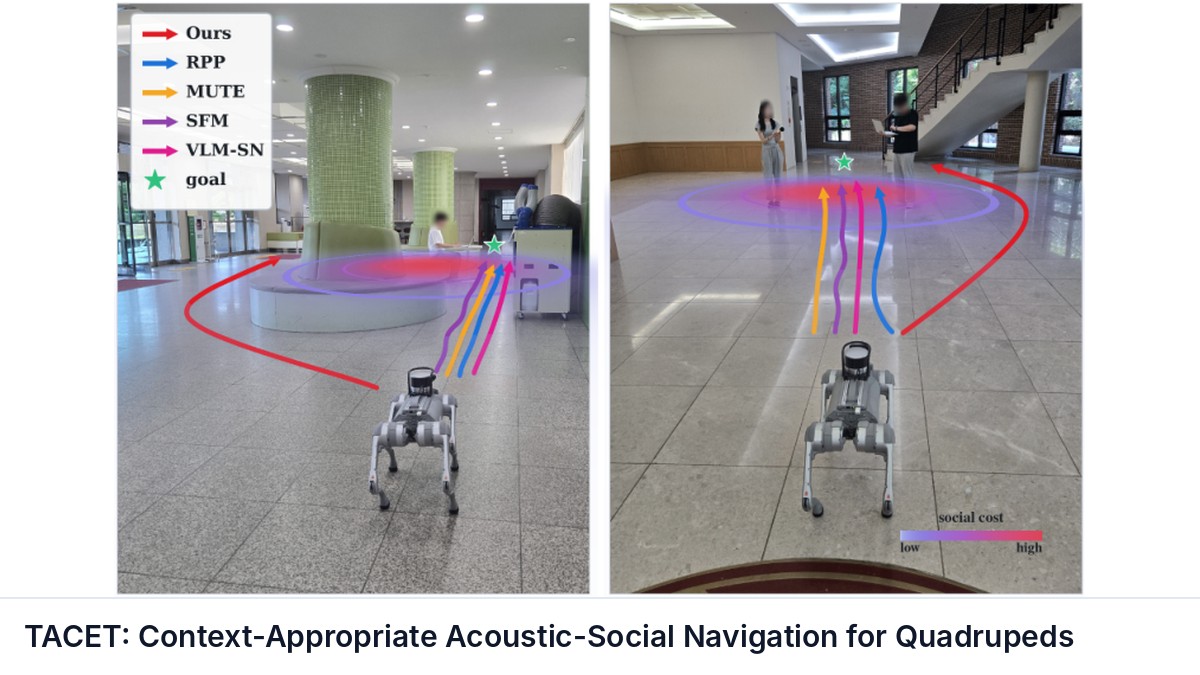
TACET: Context-Appropriate Acoustic-Social Navigation for Quadrupeds
arXiv preprint

TACET: Context-Appropriate Acoustic-Social Navigation for Quadrupeds

Sungsan Park, Young-Sik Shin, Sanghyun Kim

Quadruped robots entering hospitals, care homes, and quiet offices must be context-appropriate not only in where they move but in how loudly they move: a legged robot's locomotion noise, dominated by foot-ground impacts, is itself a social variable.

locomotion vision reinforcement-learning planning control
Code PDF Intermediate
GitHub ★ —
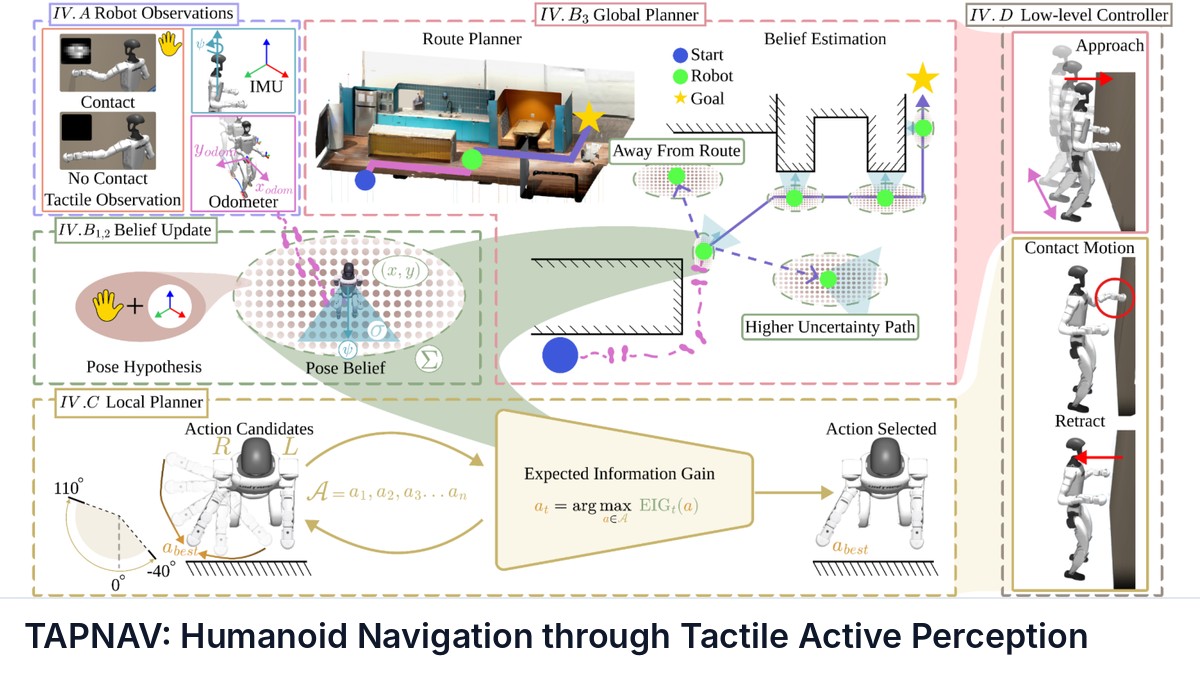
TAPNAV: Humanoid Navigation through Tactile Active Perception
arXiv preprint

TAPNAV: Humanoid Navigation through Tactile Active Perception

Huaze Liu, Zhenyu Wu, Jaehwi Jang et al.

Navigation in vision-denied environments is challenging for humanoid robots because proprioceptive odometry drifts and localization uncertainty accumulates rapidly.

locomotion vision reinforcement-learning planning control tactile
PDF Intermediate
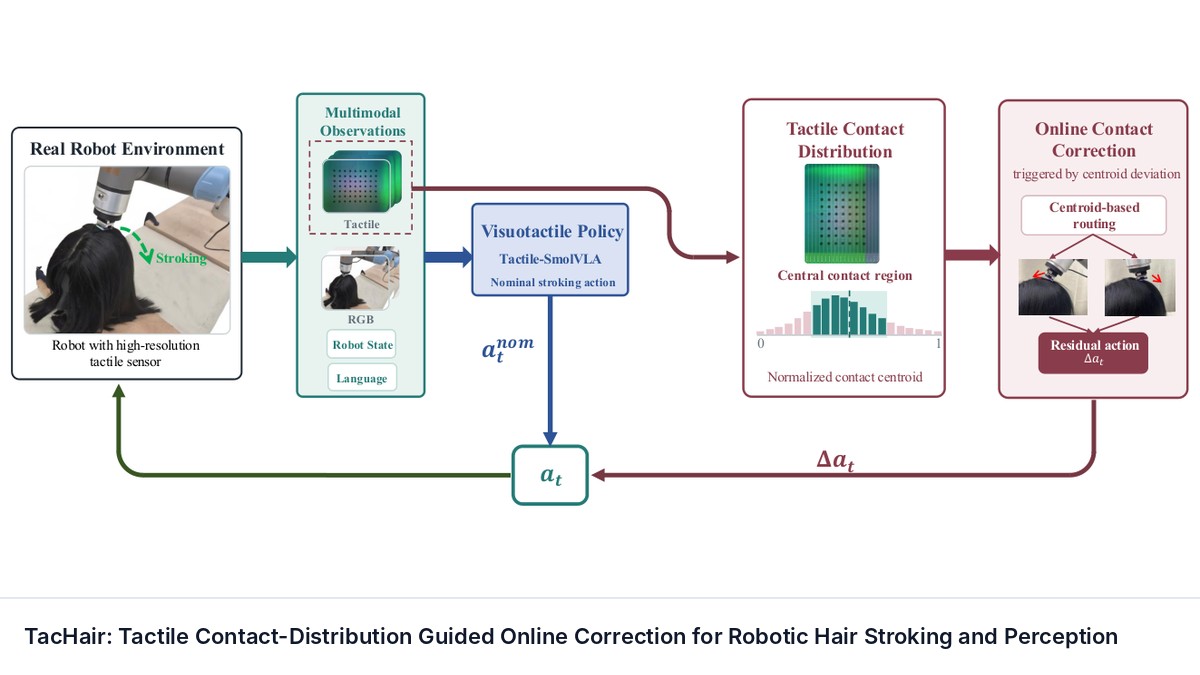
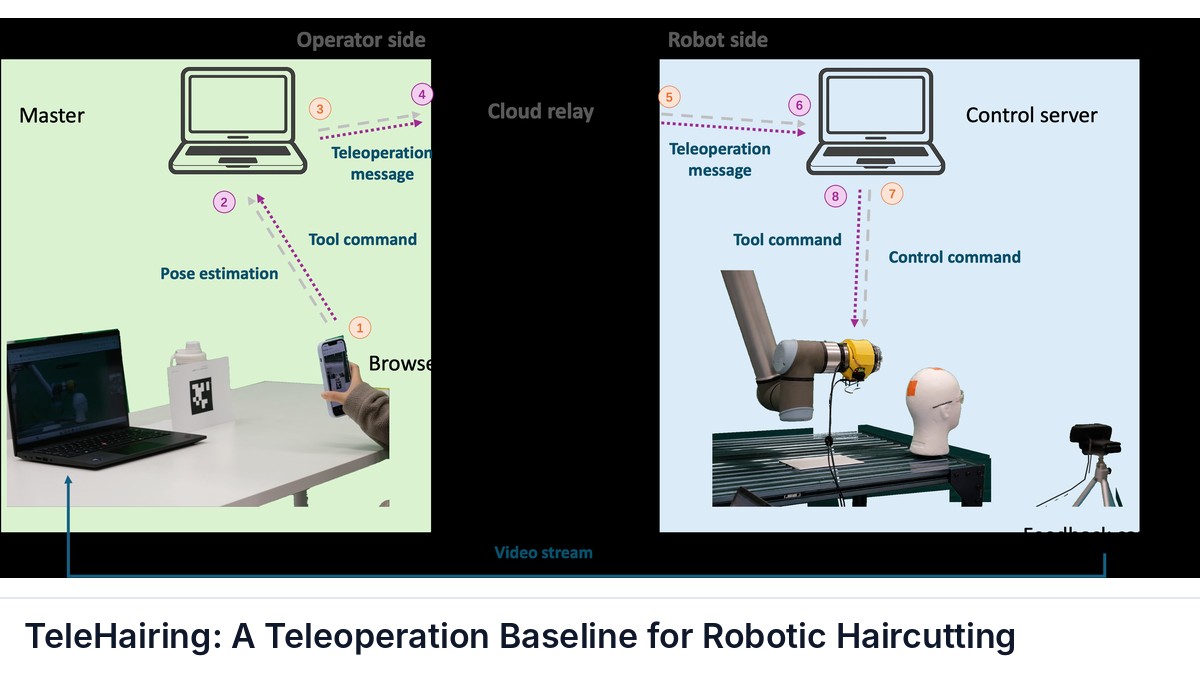
TeleHairing: A Teleoperation Baseline for Robotic Haircutting
arXiv preprint

TeleHairing: A Teleoperation Baseline for Robotic Haircutting

Zhendai Huang, Aleksi Vilkki, Jianan Huang et al.

Robotic haircutting requires controlled tool motion near the head while simultaneously accounting for communication, visual feedback, tool actuation, and interruption handling.

vision control learning-from-demonstration benchmark
PDF Intermediate
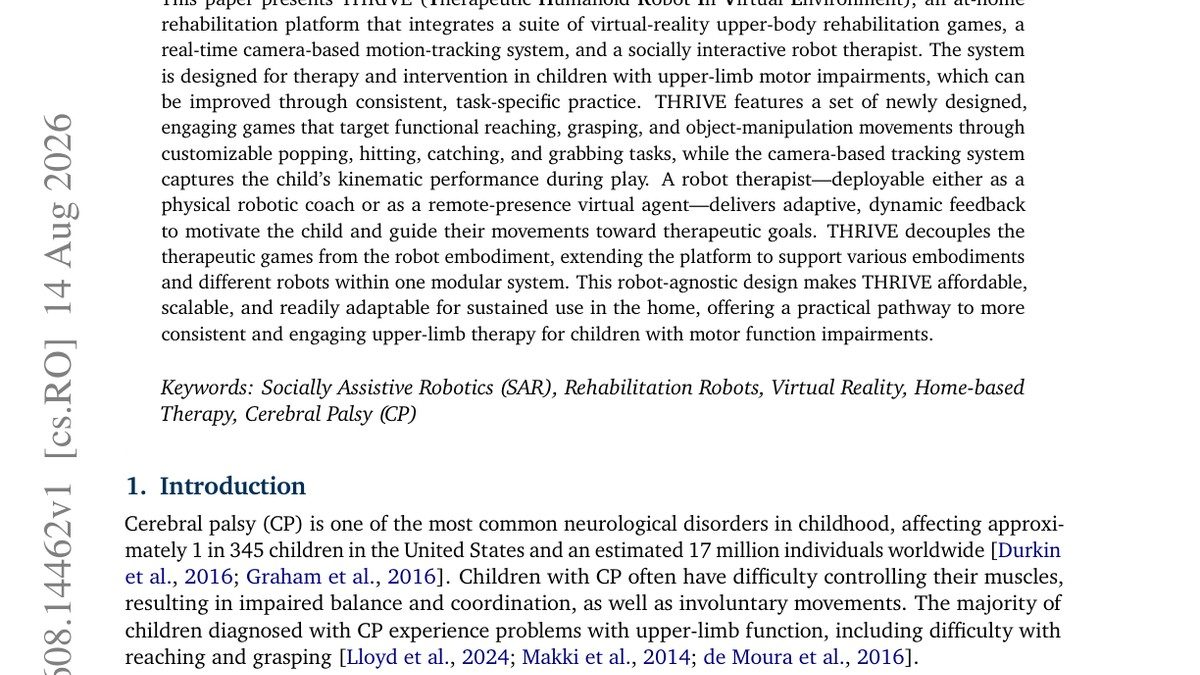
THRIVE: Therapeutic Humanoid Robot In Virtual Environment
arXiv preprint

THRIVE: Therapeutic Humanoid Robot In Virtual Environment

Jin Xu, Yu-Ping Chen, Ayanna Howard

This paper presents THRIVE (Therapeutic Humanoid Robot In Virtual Environment), an at-home rehabilitation platform that integrates a suite of virtual-reality upper-body rehabilitation games, a real-time camera-based motion-tracking system, and a socially interactive robot therapist.

manipulation vision reinforcement-learning human-robot-interaction
PDF Intermediate
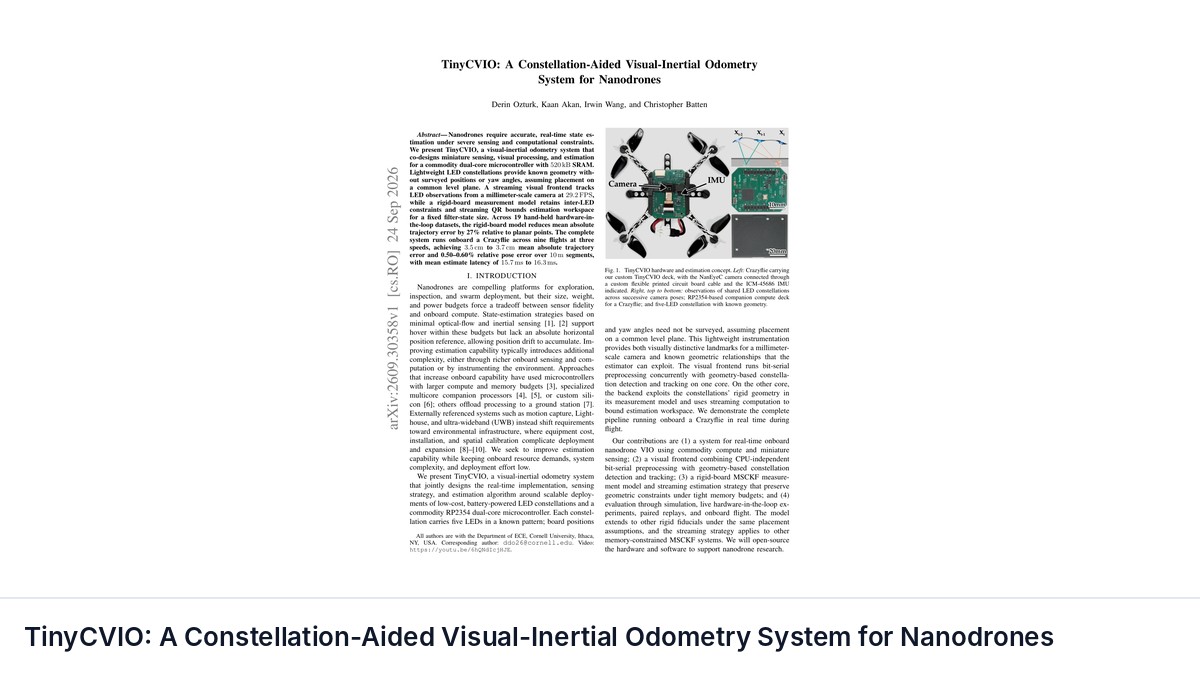
TinyCVIO: A Constellation-Aided Visual-Inertial Odometry System for Nanodrones
arXiv preprint

TinyCVIO: A Constellation-Aided Visual-Inertial Odometry System for Nanodrones

Derin Ozturk, Kaan Akan, Irwin Wang et al.

Nanodrones require accurate, real-time state estimation under severe sensing and computational constraints. We present TinyCVIO, a visual-inertial odometry system that co-designs miniature sensing, visual processing, and estimation for a commodity dual-core microcontroller with 520 kB SRAM.

vision control benchmark
PDF Beginner
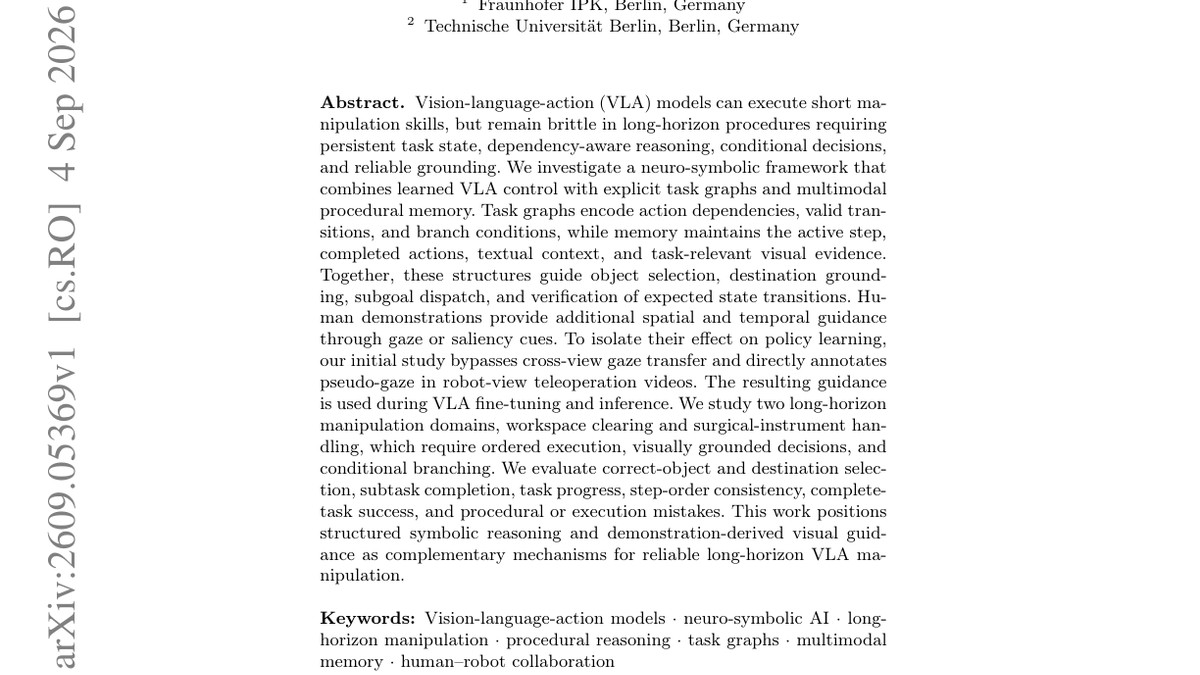
Towards Neuro-Symbolic Procedural Reasoning for Long-Horizon Vision-Language-Action Manipulation
arXiv preprint

Towards Neuro-Symbolic Procedural Reasoning for Long-Horizon Vision-Language-Action Manipulation

Vivek Chavan, Yahuan Shi, Oliver Heimann et al.

Vision-language-action (VLA) models can execute short manipulation skills, but remain brittle in long-horizon procedures requiring persistent task state, dependency-aware reasoning, conditional decisions, and reliable grounding.

manipulation vision vla reinforcement-learning control learning-from-demonstration
PDF Intermediate
Towards Surgical World-Action Modeling: A Preliminary Joint Visual-Trajectory Forecasting for Surgical Motion Planning
arXiv preprint

Towards Surgical World-Action Modeling: A Preliminary Joint Visual-Trajectory Forecasting for Surgical Motion Planning

Weiliang Huang, Huanrong Liu, Bob Zhang et al.

Reliable surgical planning requires models to anticipate not only how instruments will move, but also how the operative visual state will evolve together with such motion. Existing approaches typically treat future scene generation and instrument trajectory prediction as two separate tasks.

vision reinforcement-learning planning benchmark
Code PDF Intermediate
GitHub ★ —
Training-free Behavior Cloning
arXiv preprint

Training-free Behavior Cloning

Maximilian Adang, Timothy Chen, Lars Osterberg et al.

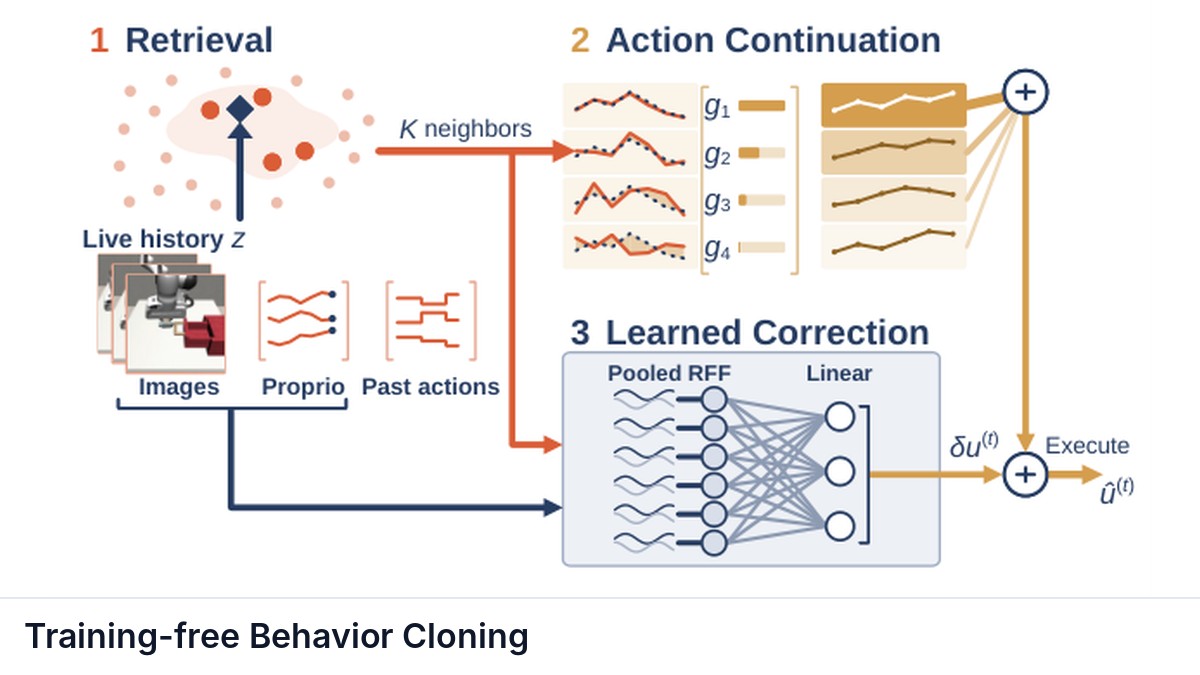
Neural behavior cloning compresses demonstrations into large models, making individual actions difficult to trace and policy updates costly. Retrieval policies retain access to demonstrations but struggle with mismatch between recorded and live behavior.

vision reinforcement-learning control learning-from-demonstration benchmark
PDF Advanced
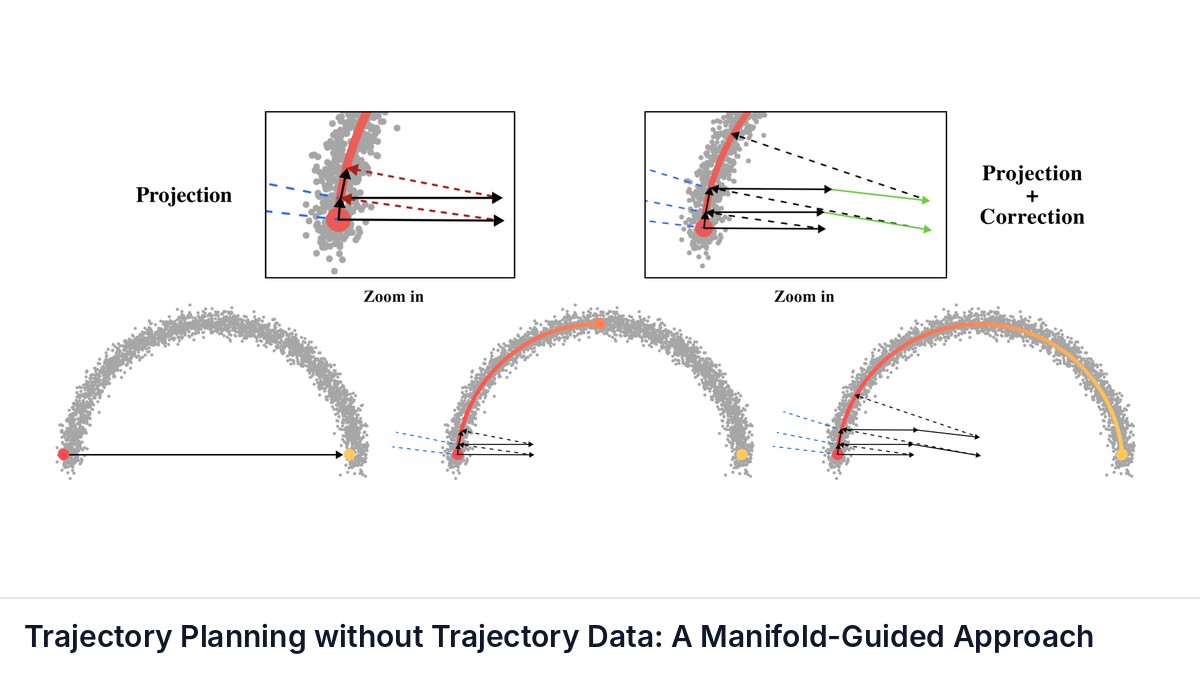
Trajectory Planning without Trajectory Data: A Manifold-Guided Approach
arXiv preprint

Trajectory Planning without Trajectory Data: A Manifold-Guided Approach

Silong Yong, Anji Liu, Cunxi Dai et al.

A common way for trajectory planning is to leverage generative models trained on large collections of expert trajectories. At inference time, the model generates executable trajectories by conditioning on task goal constraints.

vision reinforcement-learning planning benchmark
Code PDF Intermediate
GitHub ★ —
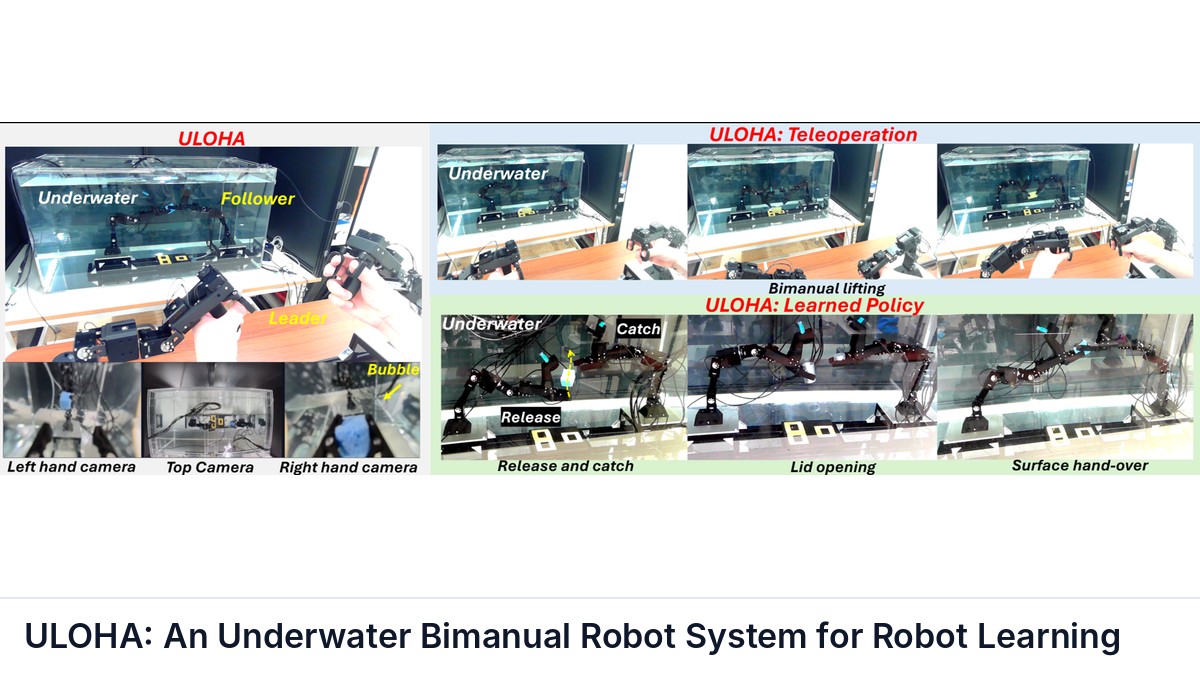
ULOHA: An Underwater Bimanual Robot System for Robot Learning
arXiv preprint

ULOHA: An Underwater Bimanual Robot System for Robot Learning

Masato Kobayashi, Takeru Tsunoori

Underwater visuomotor policy learning has focused primarily on single manipulators, while bimanual imitation learning has been studied largely in air.

manipulation vision vla reinforcement-learning learning-from-demonstration
Code PDF Advanced
GitHub ★ —
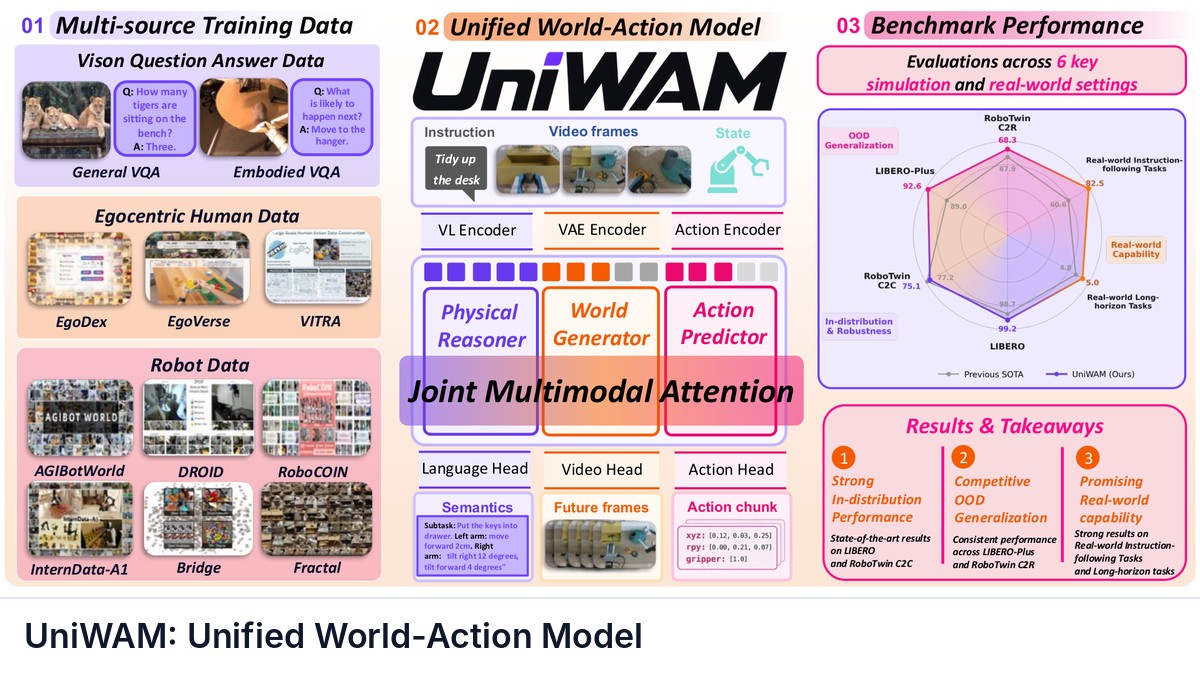
UniWAM: Unified World-Action Model
arXiv preprint

UniWAM: Unified World-Action Model

Jiayi Chen, Wenxuan Song, Jingbo Wang et al.

Vision-language-action models benefit from the understanding and reasoning capabilities of pretrained vision-language models, but action-only supervision provides limited grounding in world dynamics.

vision vla reinforcement-learning learning-from-demonstration benchmark
Code PDF Advanced
GitHub ★ —
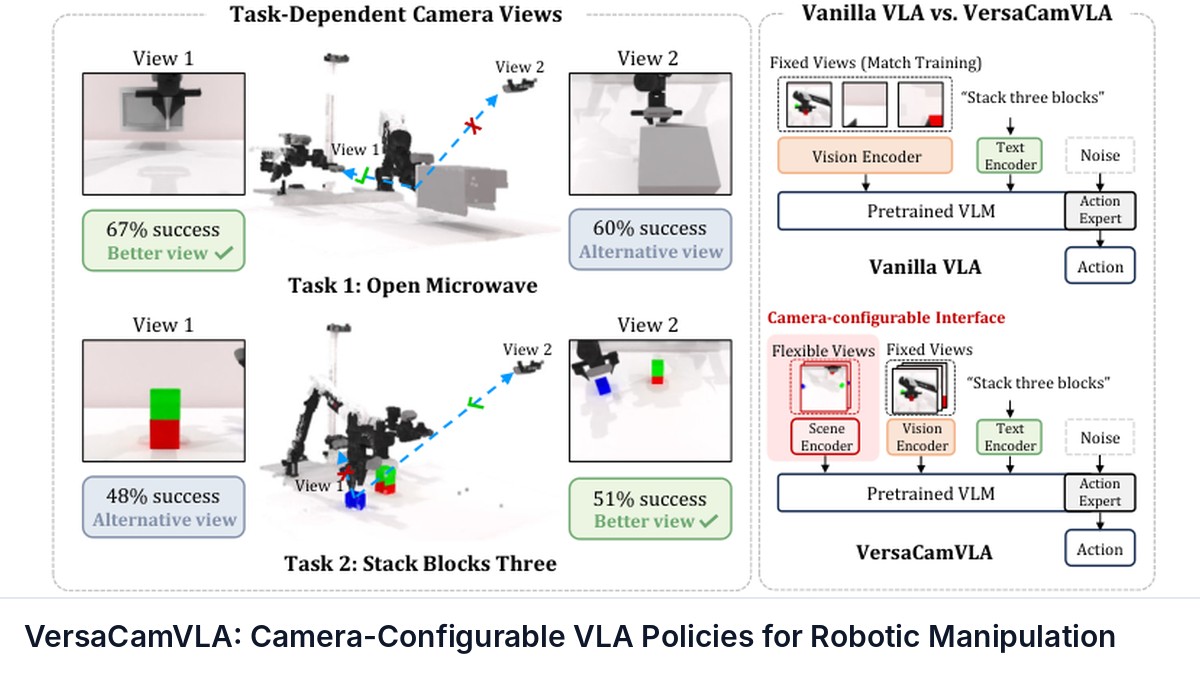
VersaCamVLA: Camera-Configurable VLA Policies for Robotic Manipulation
arXiv preprint

VersaCamVLA: Camera-Configurable VLA Policies for Robotic Manipulation

Boyao Han, Chen Shi, Jingjing Qian et al.

Vision-Language-Action (VLA) models have emerged as powerful foundations for robotic manipulation, but their reliance on fixed camera configurations during training makes them brittle to changes in camera count or pose during deployment.

manipulation vision vla reinforcement-learning
Code PDF Intermediate
GitHub ★ —
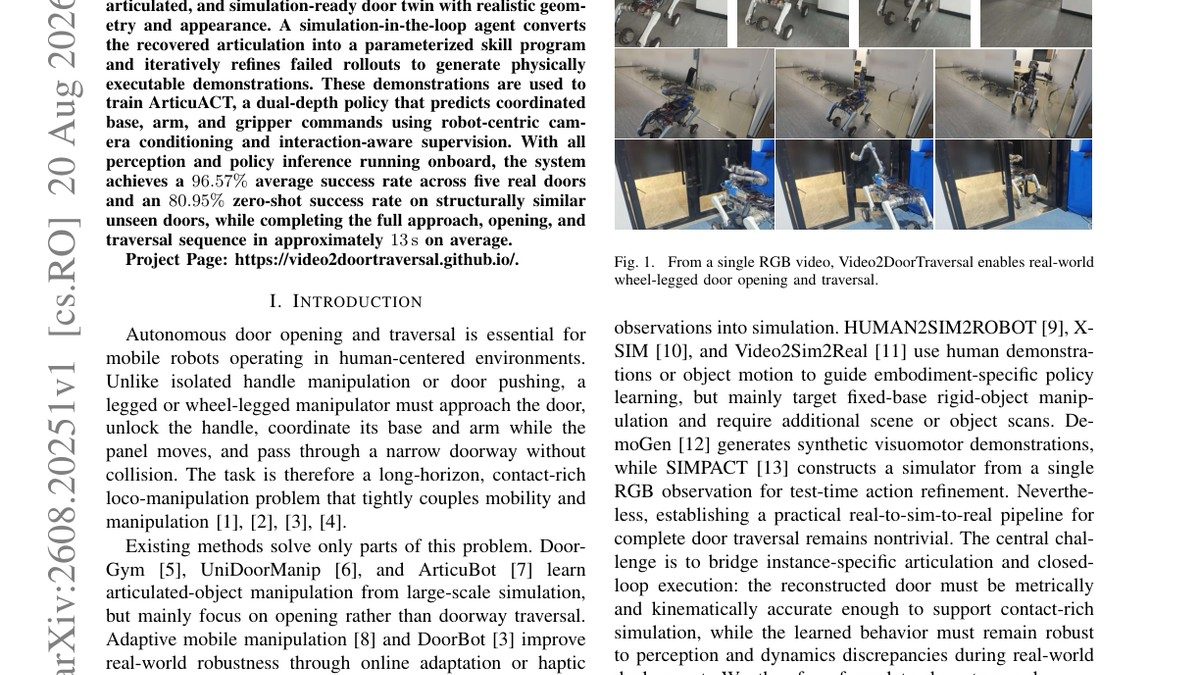
Video2DoorTraversal: Push Door Traversal via Simulated Door Twins
arXiv preprint

Video2DoorTraversal: Push Door Traversal via Simulated Door Twins

Xincheng Tang, Yiji Chen, Youhan Xie et al.

Door opening and traversal is a long-horizon loco-manipulation task that requires precise handle interaction and coordinated base-arm control. We present Video2DoorTraversal, a single-video real-to-sim-to-real framework for wheel-legged mobile manipulators.

manipulation locomotion vision reinforcement-learning sim-to-real control learning-from-demonstration
PDF Intermediate
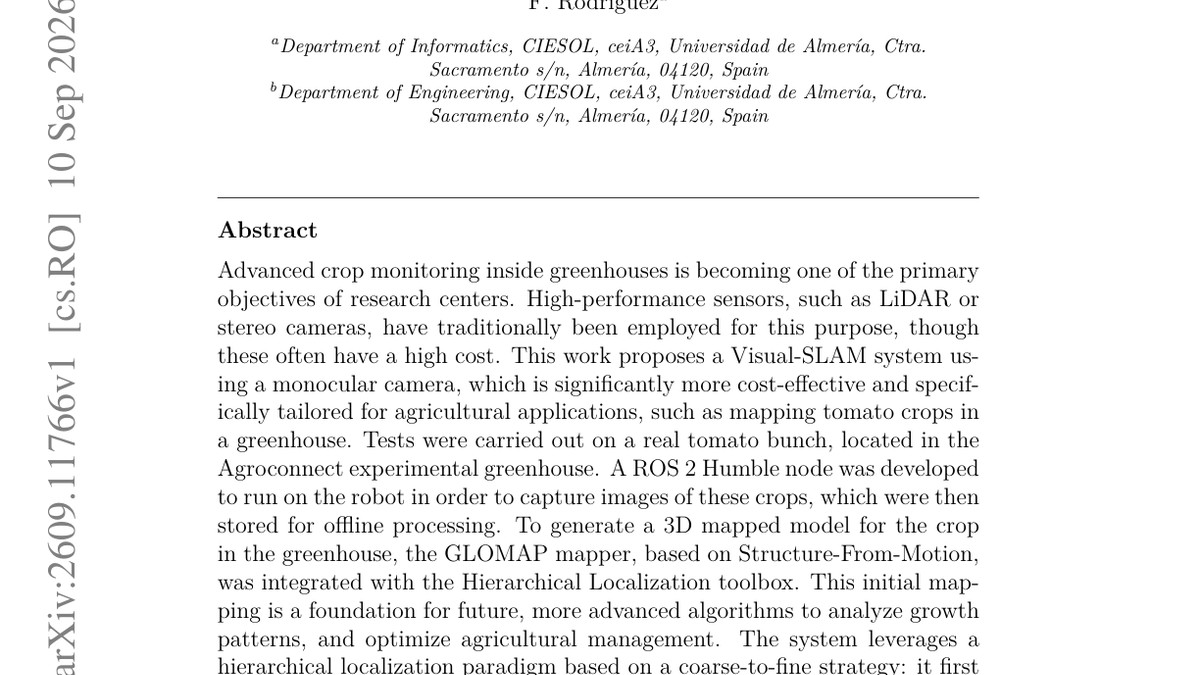
Visual-SLAM for the detection of hidden tomatoes in greenhouses by Hierarchical Localization and GLOMAPfor robotized harvesting
arXiv preprint

Visual-SLAM for the detection of hidden tomatoes in greenhouses by Hierarchical Localization and GLOMAPfor robotized harvesting

Fernando Cañadas-Aránega, José C. Moreno, José L. Blanco-Claraco et al.

Advanced crop monitoring inside greenhouses is becoming one of the primary objectives of research centers. High-performance sensors, such as LiDAR or stereo cameras, have traditionally been employed for this purpose, though these often have a high cost.

vision planning
Code PDF Intermediate
GitHub ★ —
VLA-Corrector: Stage-Aware Observable State Understanding for Prompt-Based Closed-Loop Recovery of Vision-Language-Action Policies
arXiv preprint

VLA-Corrector: Stage-Aware Observable State Understanding for Prompt-Based Closed-Loop Recovery of Vision-Language-Action Policies

Chang Song, Bin Qian, Yan Feng et al.

Long-horizon robot manipulation with Vision-Language-Action (VLA) policies remains vulnerable to execution-time deviations, as final task success provides little information for diagnosing and correcting failures caused by action noise, object displacement, or goal misalignment.

manipulation vision vla reinforcement-learning benchmark
PDF Intermediate
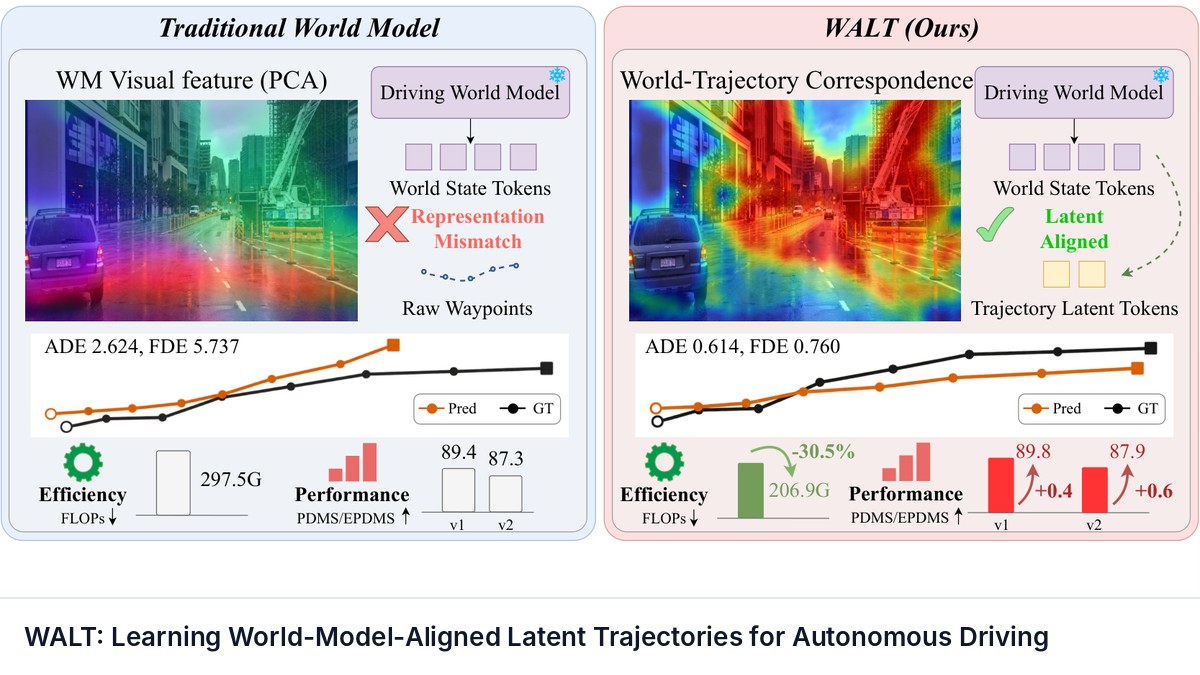
WALT: Learning World-Model-Aligned Latent Trajectories for Autonomous Driving
arXiv preprint

WALT: Learning World-Model-Aligned Latent Trajectories for Autonomous Driving

Mingkai Jia, Jiaxin Guo, Zhijian Shu et al.

Driving world models learn rich predictive representations of the surrounding environment from visual observations, yet accurate visual prediction does not necessarily translate into effective trajectory planning.

vision reinforcement-learning planning benchmark
PDF Intermediate
When Listening Becomes Easier: Scrubbing Visual Cues for Shortcut-Free VLAs
arXiv preprint

When Listening Becomes Easier: Scrubbing Visual Cues for Shortcut-Free VLAs

Jasper Gerigk, Kenzo Aspuru-Takata, Chin-Hsuan Wu et al.

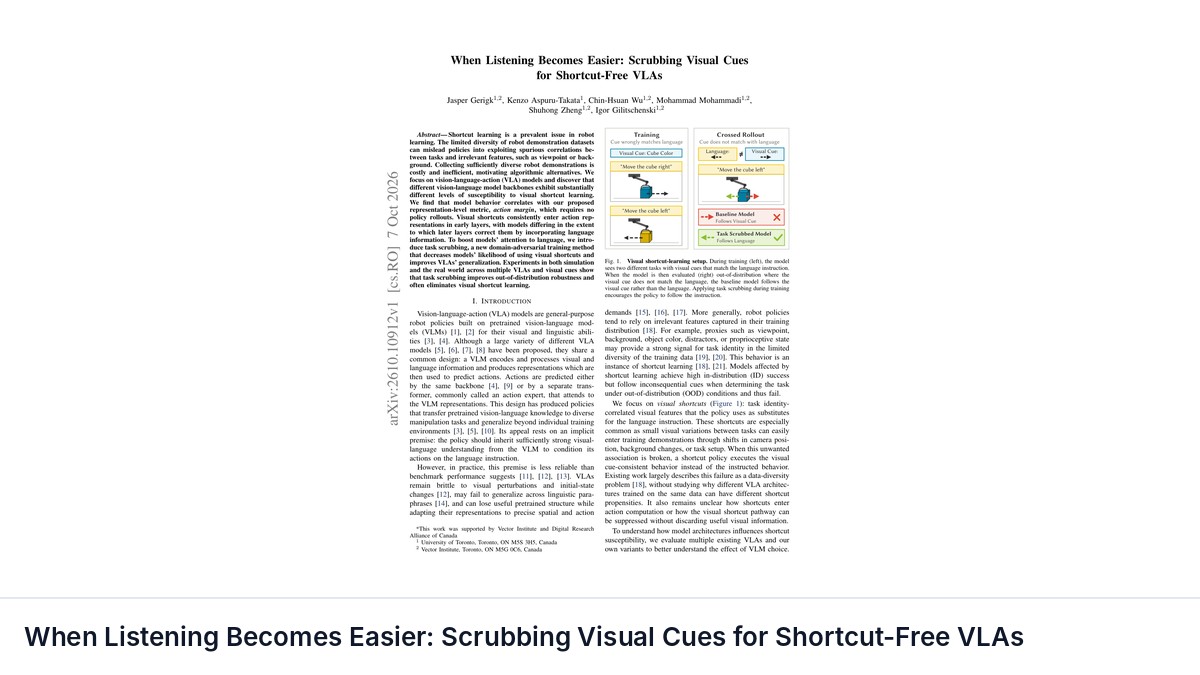
Shortcut learning is a prevalent issue in robot learning. The limited diversity of robot demonstration datasets can mislead policies into exploiting spurious correlations between tasks and irrelevant features, such as viewpoint or background.

vision vla reinforcement-learning learning-from-demonstration benchmark
PDF Intermediate
When Plans Change, Remember: Replanning-Guided Visual Memory for Vision-Language-Action Models
arXiv preprint

When Plans Change, Remember: Replanning-Guided Visual Memory for Vision-Language-Action Models

Victoria Smelova, Daniil Kazachkov, Georgiy Kazantsev et al.

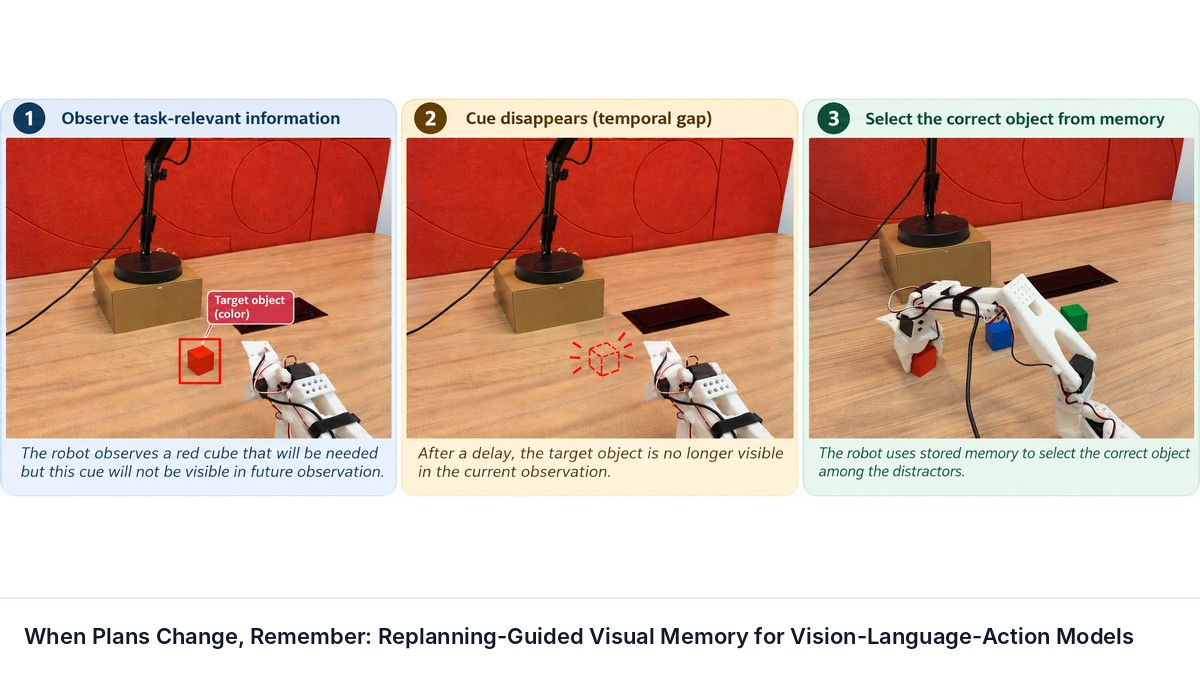
Long-horizon, multi-stage Vision-Language-Action (VLA) policies often require visual information that is no longer present in the current observation. Retaining the complete observation history is computationally expensive and highly redundant, motivating selective visual memory.

vision vla reinforcement-learning planning control
PDF Intermediate
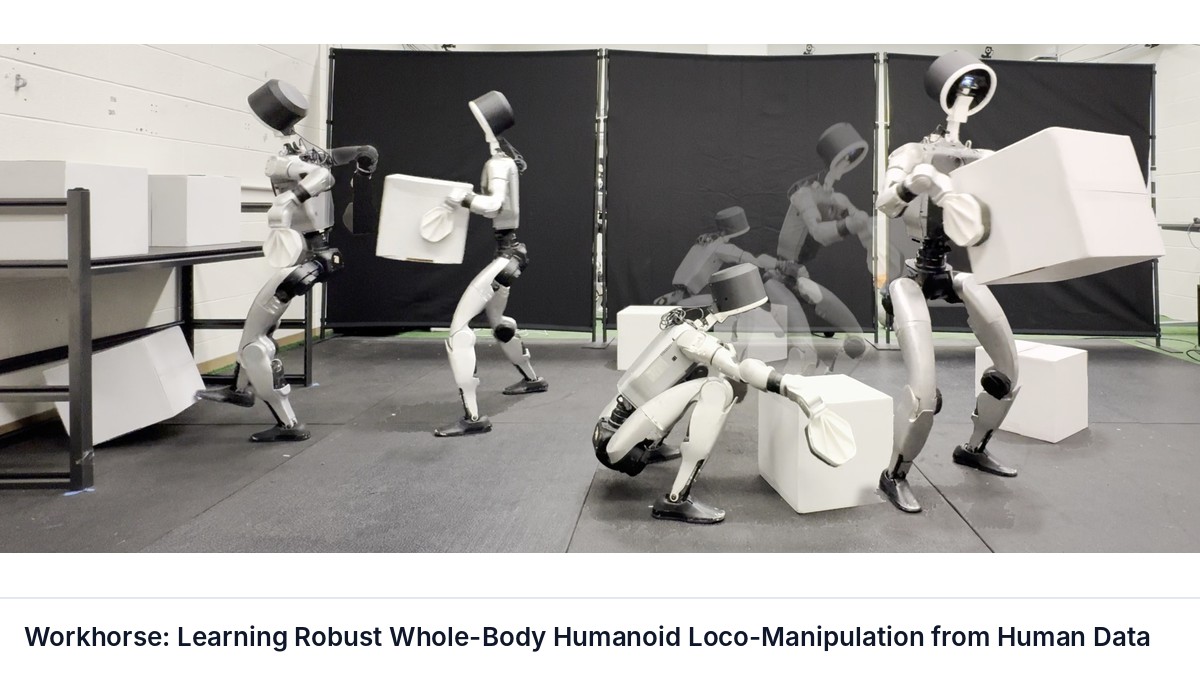
Workhorse: Learning Robust Whole-Body Humanoid Loco-Manipulation from Human Data
ICRA (under review)

Workhorse: Learning Robust Whole-Body Humanoid Loco-Manipulation from Human Data

Hu, Songbo, Liao, Qiayuan, Chi, Yufeng et al.

Humanoid robots still struggle to plan contact-rich whole-body manipulation from egocentric RGB and proprioception. Workhorse learns such manipulation from robot-free human demonstrations. A visual planner predicts five-link targets: the poses of the torso, both wrists, and both feet.

manipulation vision reinforcement-learning learning-from-demonstration
PDF Intermediate
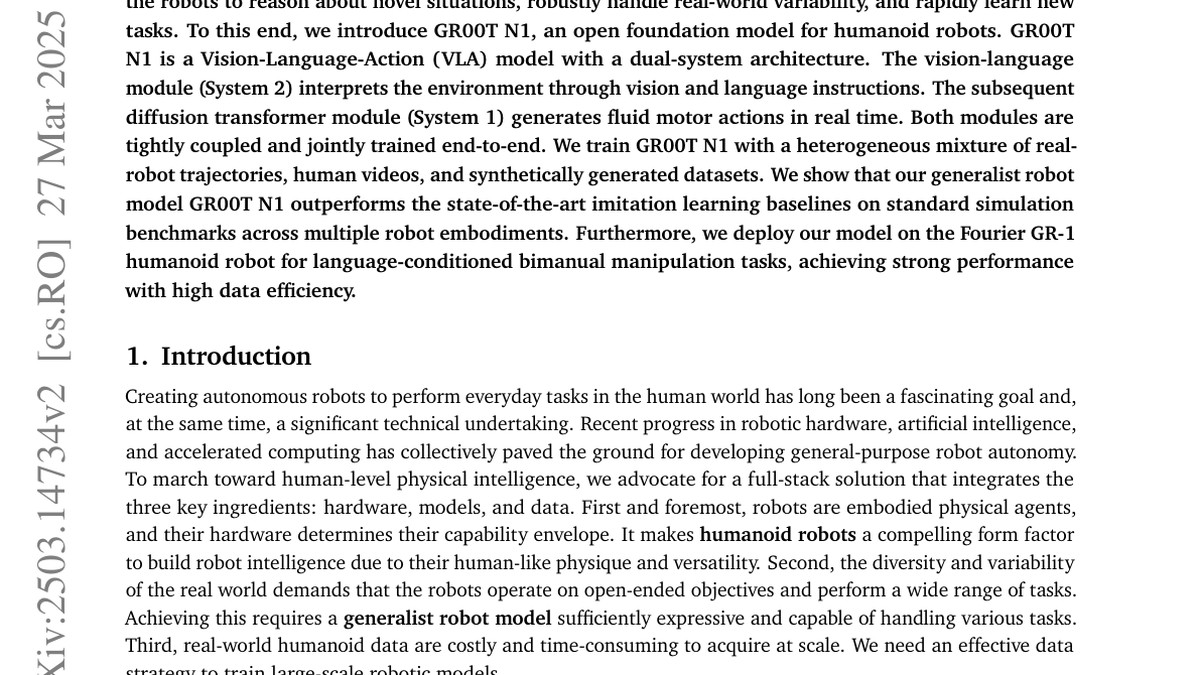
GR00T N1: An Open Foundation Model for Generalist Humanoid Robots
arXiv preprint

GR00T N1: An Open Foundation Model for Generalist Humanoid Robots

NVIDIA, :, Johan Bjorck et al.

General-purpose robots need a versatile body and an intelligent mind. Recent advancements in humanoid robots have shown great promise as a hardware platform for building generalist autonomy in the human world.

manipulation vision vla reinforcement-learning control learning-from-demonstration benchmark
Code PDF Advanced
GitHub ★ —
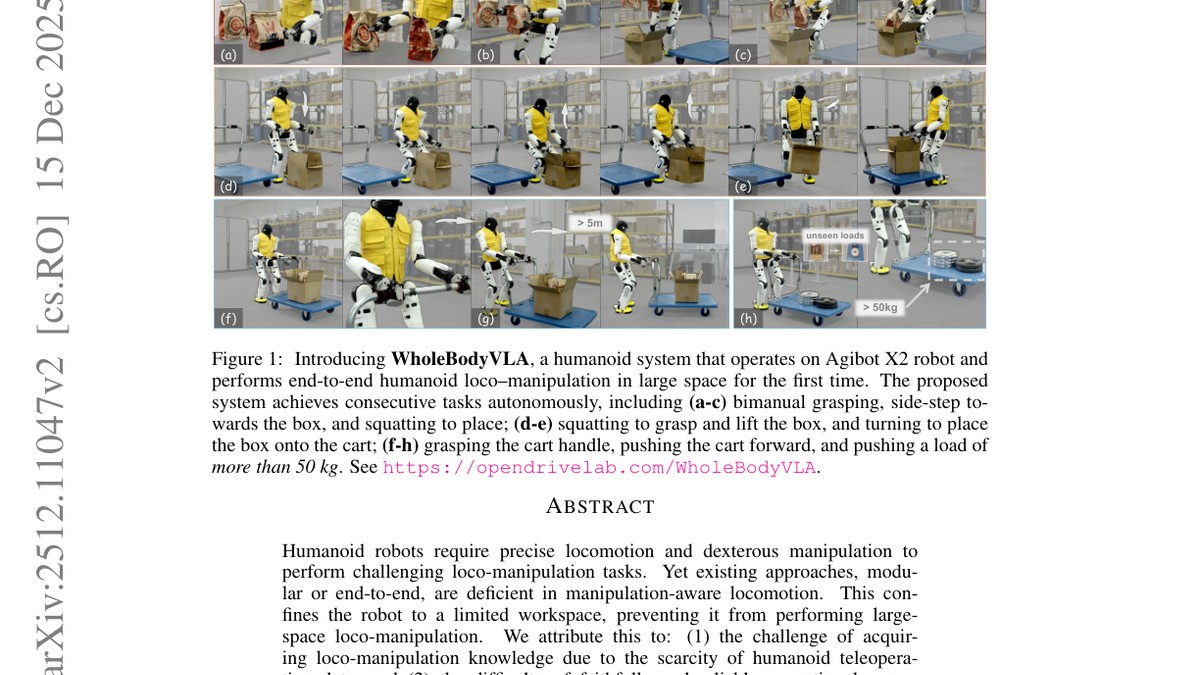
WholeBodyVLA: Towards Unified Latent VLA for Whole-Body Loco-Manipulation Control
arXiv preprint

WholeBodyVLA: Towards Unified Latent VLA for Whole-Body Loco-Manipulation Control

Haoran Jiang, Jin Chen, Qingwen Bu et al.

Humanoid robots require precise locomotion and dexterous manipulation to perform challenging loco-manipulation tasks. Yet existing approaches, modular or end-to-end, are deficient in manipulation-aware locomotion.

manipulation locomotion vision vla reinforcement-learning control learning-from-demonstration benchmark
Code PDF Advanced

GitHub ★ —

Suggested Learning Path
Read these papers in order to build expertise in Computer Vision.
  1. 1
  2. 2
  3. 3
  4. 4
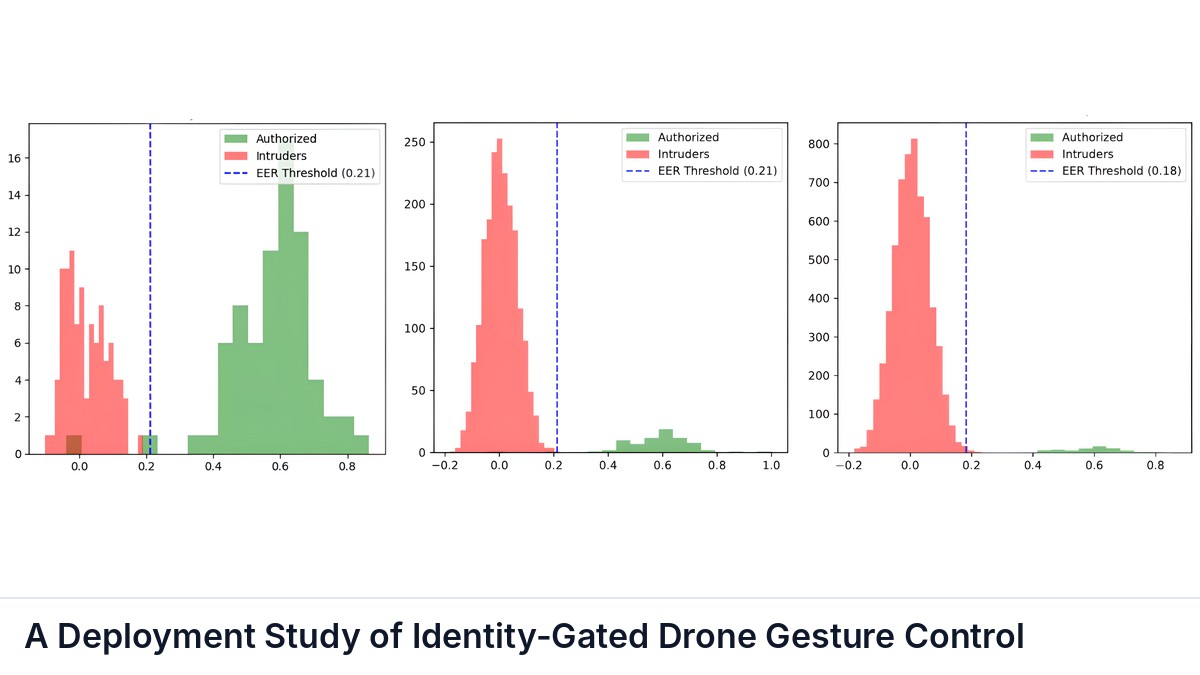
    A Deployment Study of Identity-Gated Drone Gesture Control
    Diyari Mohammed Salih, Ilyes Chaabeni et al. · 2026
  5. 5
  6. 6
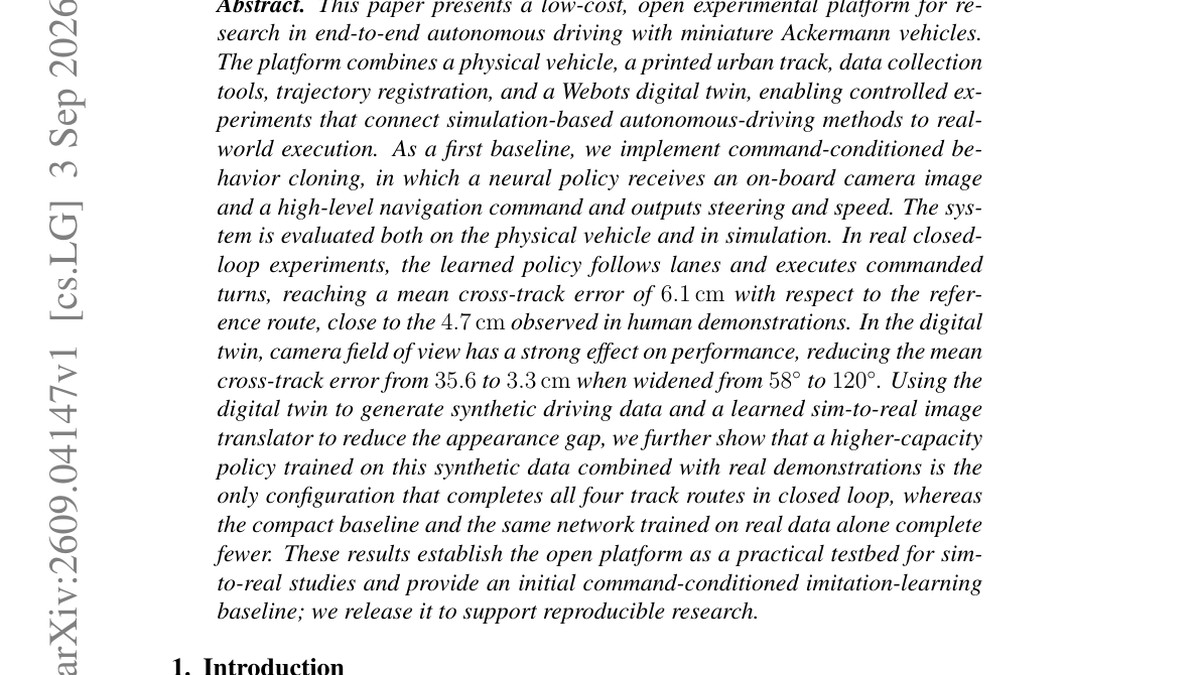
    A Low-Cost, Open Platform for End-to-End Autonomous Driving on a Miniature Ackermann Vehicle

    Gustavo Claudio Karl Couto, Eric Aislan Antonelo et al. · 2026

…and 250 more papers.