
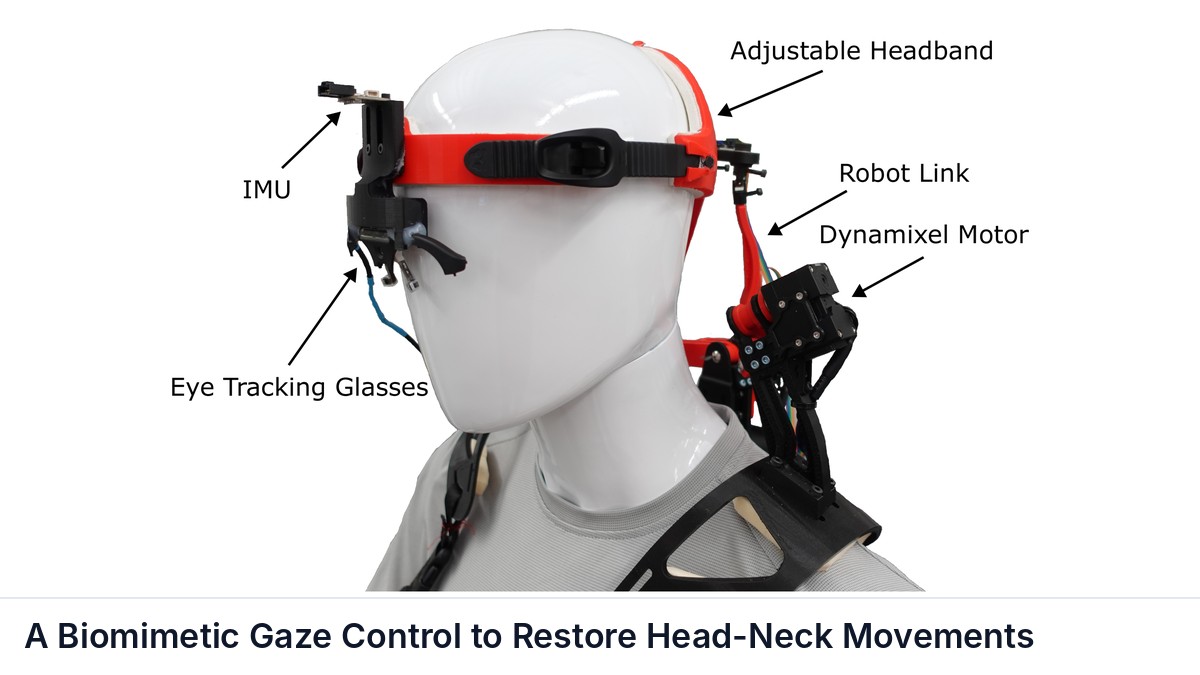
A Biomimetic Gaze Control to Restore Head-Neck Movements
Colin Rubow, Haohan Zhang · N/A · 2026
Framework
N/A
License
N/A
Stars
N/A
Summary
Powered neck exoskeletons are developed to restore head-neck motions for those with neck muscle weakness. Current methods using hand-held input devices to control these robotic systems are unintuitive or non-viable for these populations.
Abstract Summary
Key Points
- Powered neck exoskeletons are developed to restore head-neck motions for those with neck muscle weakness.
- Current methods using hand-held input devices to control these robotic systems are unintuitive or non-viable for these populations.
- Alternatively, the eyes coordinate with the head to accomplish many daily tasks
- Therefore, movements of the eyes can be a useful signal to control the neck exoskeletons without needing to use the hands.
- However, previous control models lack biobehavioral basis as well as means to personalize the control behavior, causing unnatural head-neck movements.
Design of a Novel Gaze Control Model
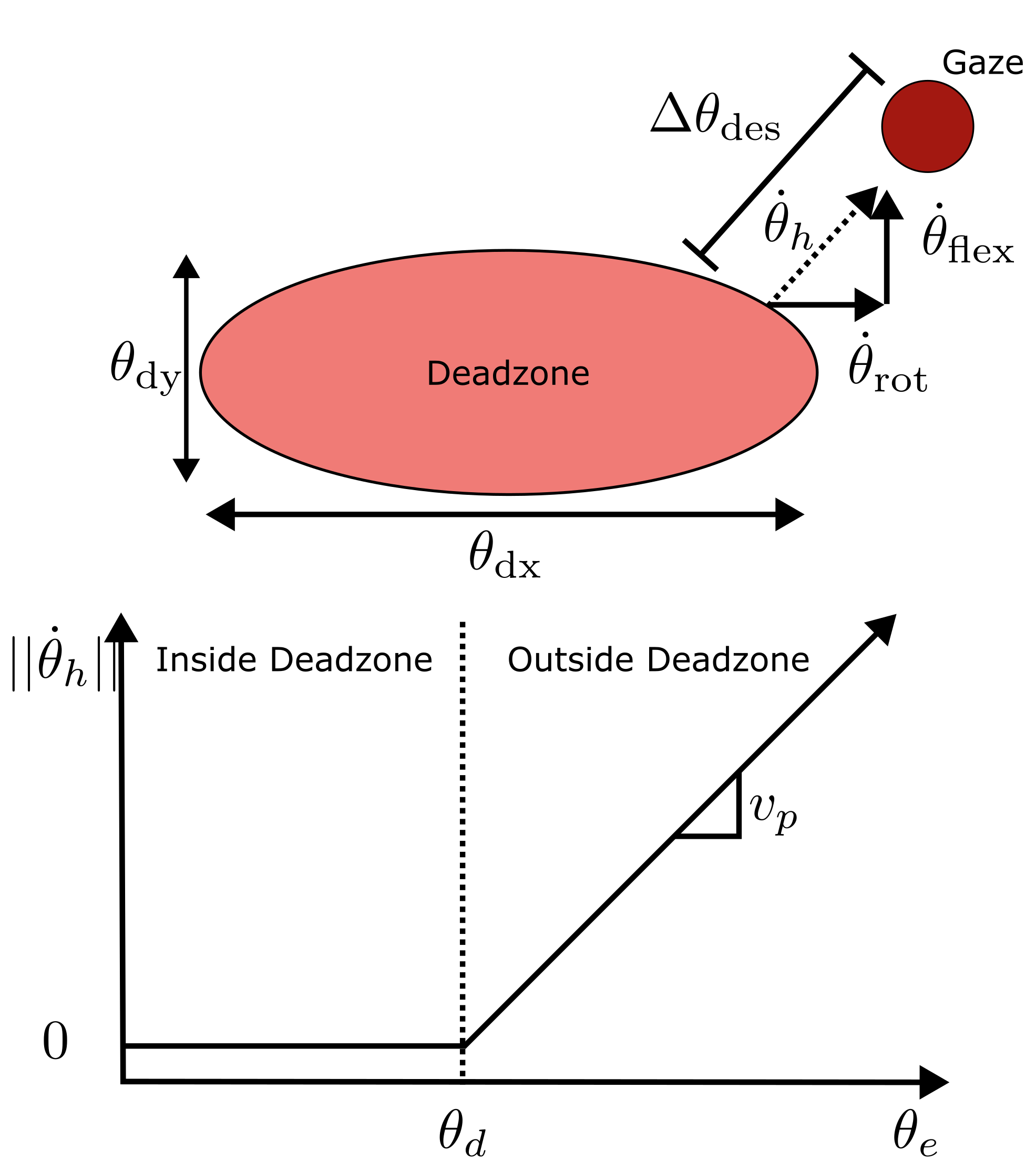
In the literature, gaze is defined as the head angle plus the eye angle relative to the head, or, the direction of sight [ 19 ] . When a gaze shift is performed, the eyes quickly shift towards the target (saccade). The VOR then enables the counter rotations of the eyes and head so that the gaze remains fixed on the target while the eyes become centered in the head [ 20 , 21 ] .
Robotic Integration
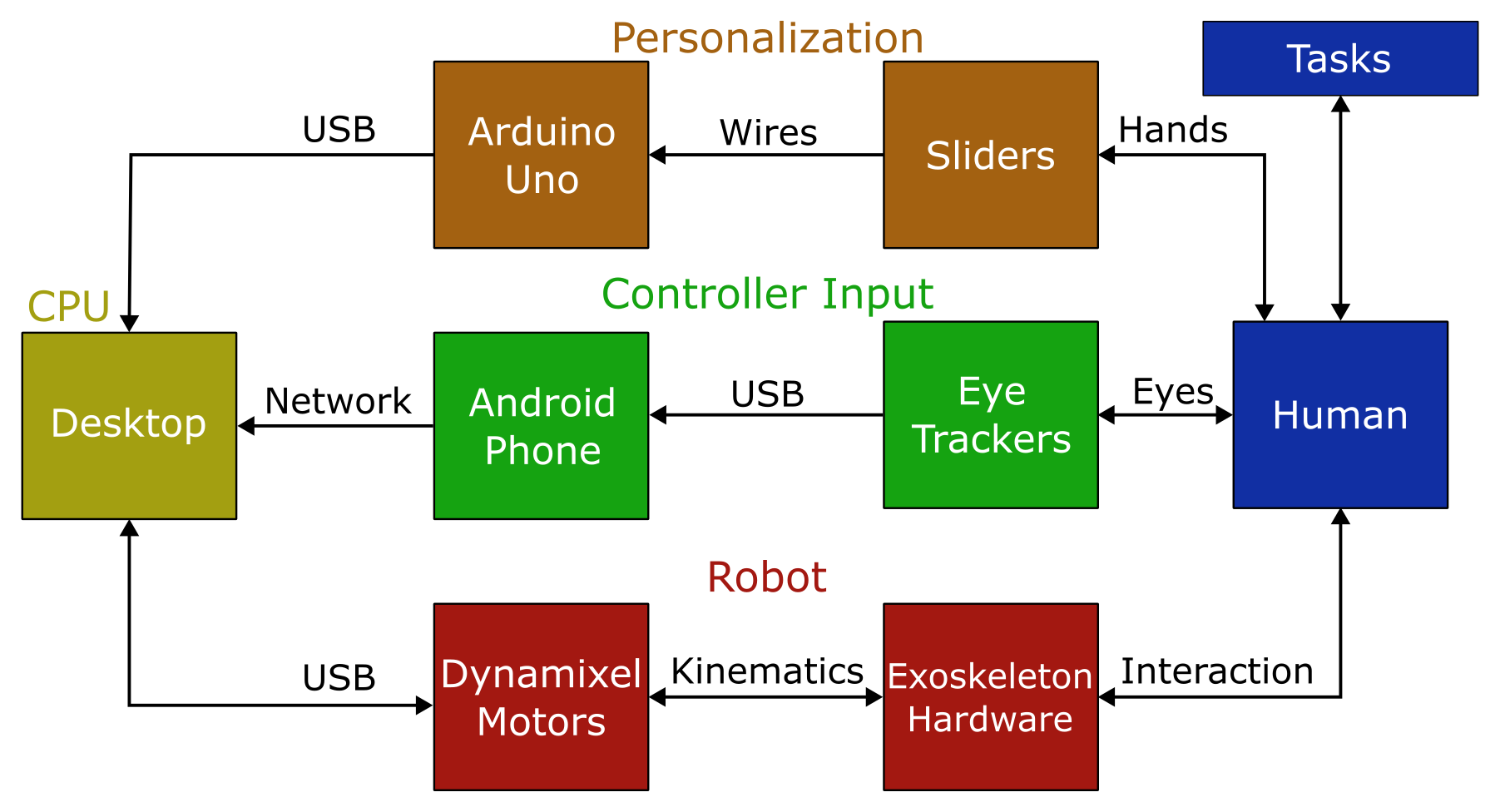
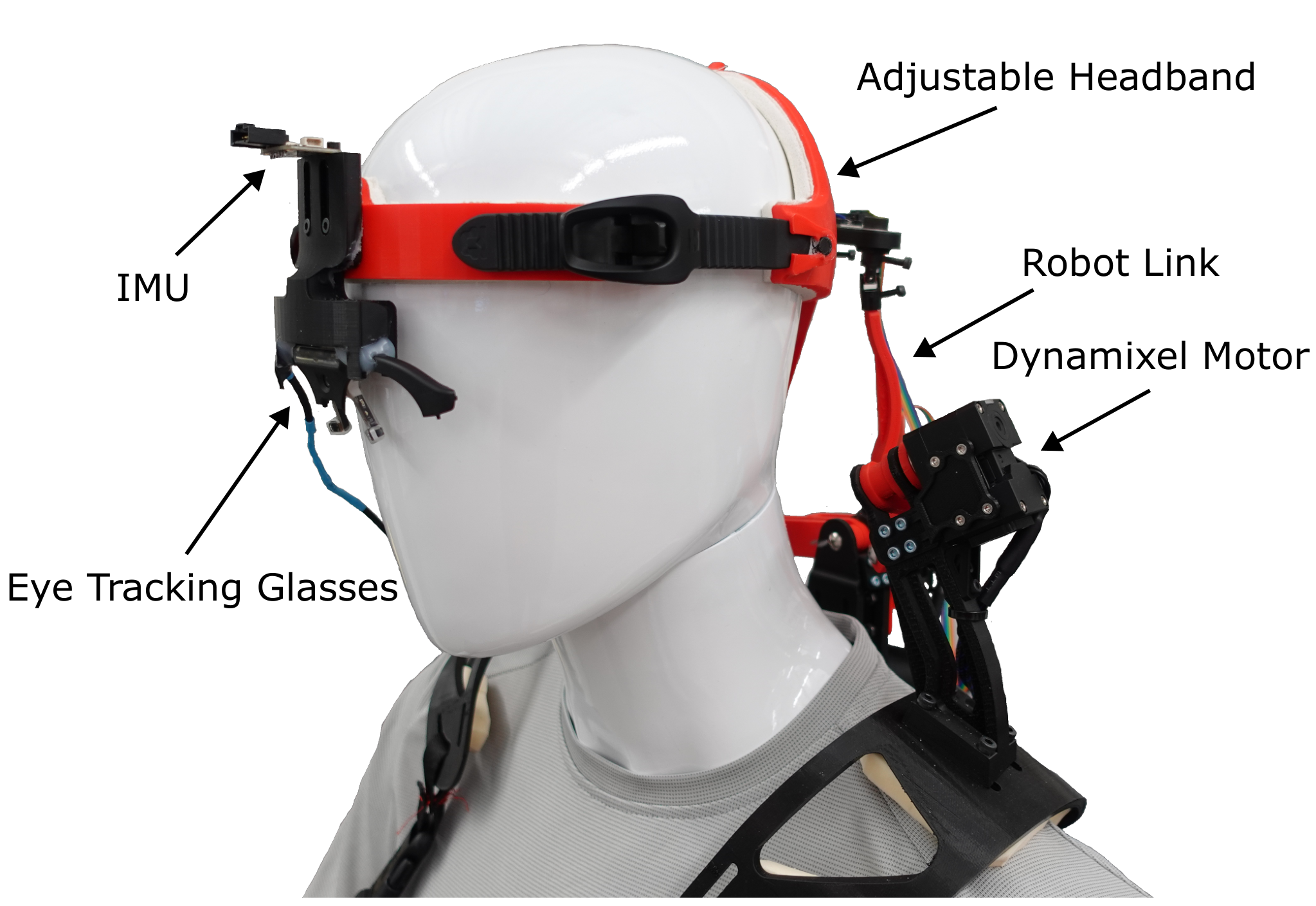
We then implemented the vector gaze control model with a powered neck exoskeleton to evaluate the model performance in the context of a human-robot system. In this section, we describe the hardware and software implementation of this controller, as well as tools for tuning controller parameters for potential personalization. The robotic system contains four main components (Fig.
3 ): an exoskeleton hardware, a head-mounted eye-tracker, mechanical sliders for manual parameter tuning, and computer programs associated with control software.
Experiments with Human Users
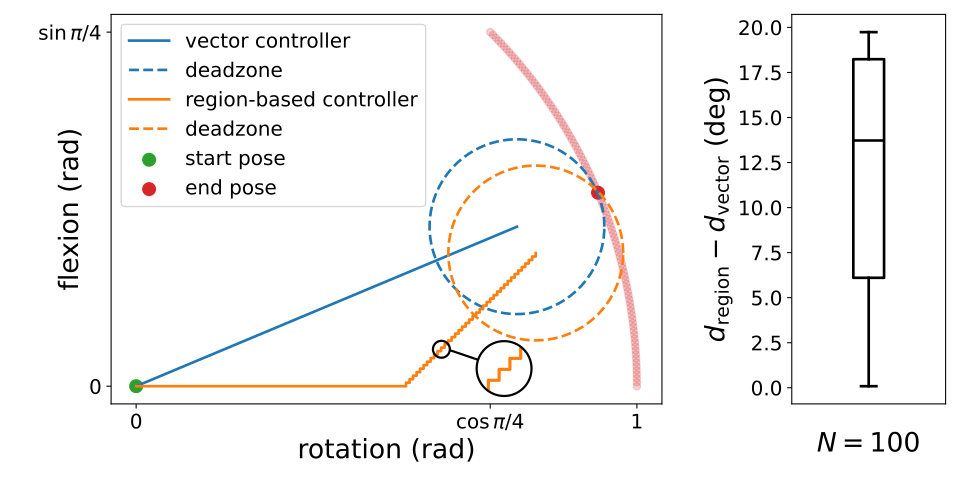
To test our deadzone hypothesis and justify the vector gaze control model, as well as evaluate the performance of the controller in a human-robot context, we performed a human experiment. Eight healthy participants without known history of head-neck injuries were enrolled in this study (4 male, 4 female , 23-29 yrs). Four participants wear glasses and were given the option to not wear them during the experiment.
Three opted for that option and were able to perform the given tasks.
Results
The natural velocity proportion and deadzone characteristics are summarized by participant in Table II . Reported is the slope and r-value of the regression results for calculating the velocity proportion ($p [ 23 , 19 , 22 ] , while the deadzone columns provide new results in eye-head coordination. A wide variety of best-fit ellipse dimensions were observed.
As an example, the best-fit ellipse and velocity proportion regression results are shown for participant 4 in Fig. 7 .
Sources and Demonstrations
Figures are reproduced from Rubow et al. See the full paper for experimental details and the project page, when the paper links one, for demonstrations and videos.
Related Papers
A Deployment Study of Identity-Gated Drone Gesture Control
Diyari Mohammed Salih, Ilyes Chaabeni, Naima Ait Oufroukh
Vision-based gesture control accepts commands from any hand in the camera field of view, which is unsafe in shared indoor spaces.
A Low-Cost, Open Platform for End-to-End Autonomous Driving on a Miniature Ackermann Vehicle
Gustavo Claudio Karl Couto, Eric Aislan Antonelo, Gabriel George Zipperer
This paper presents a low-cost, open experimental platform for research in end-to-end autonomous driving with miniature Ackermann vehicles.
A New Human-Likeness and Comfort Index for Robot Movements Along Prescribed Paths
Rosanna Coccaro, Enrico Ferrentino, Antonio Parziale et al.
As human-robot interaction rapidly spreads in numerous fields, the subject of robot acceptance gains increasing importance.
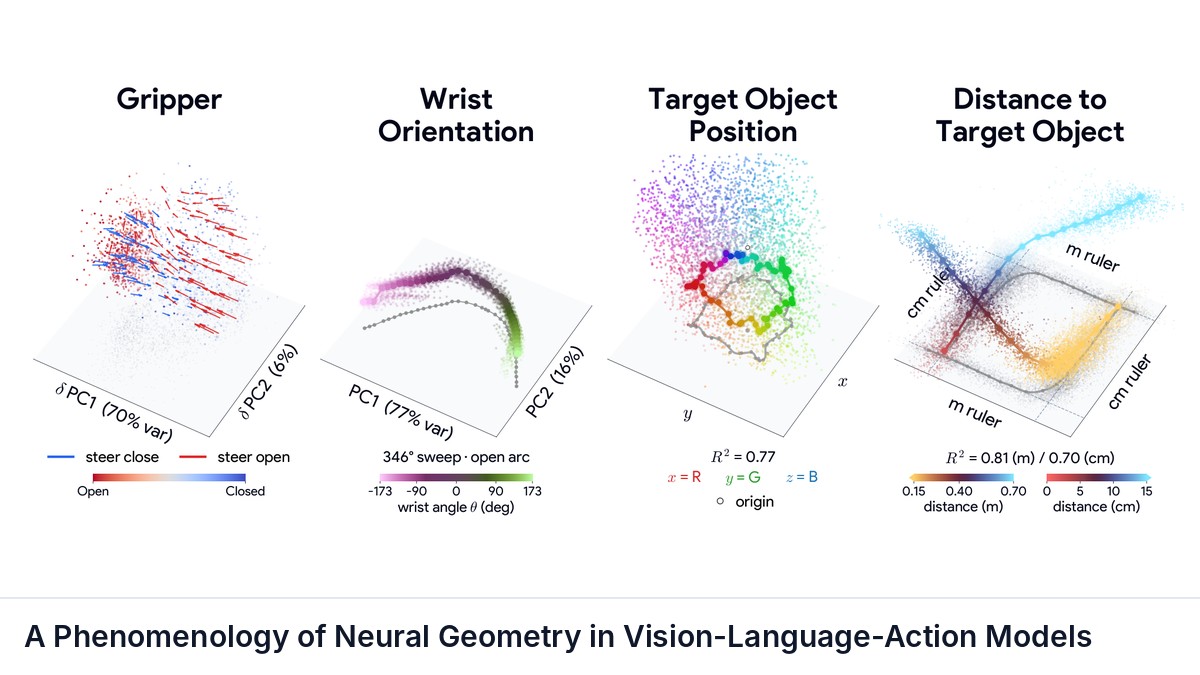
A Phenomenology of Neural Geometry in Vision-Language-Action Models
Mozes Jacobs, Aiden Swann, Mathilde Papillon et al.
Robotic manipulation is inherently geometric, but what shape does the world take inside the policy that performs it?