
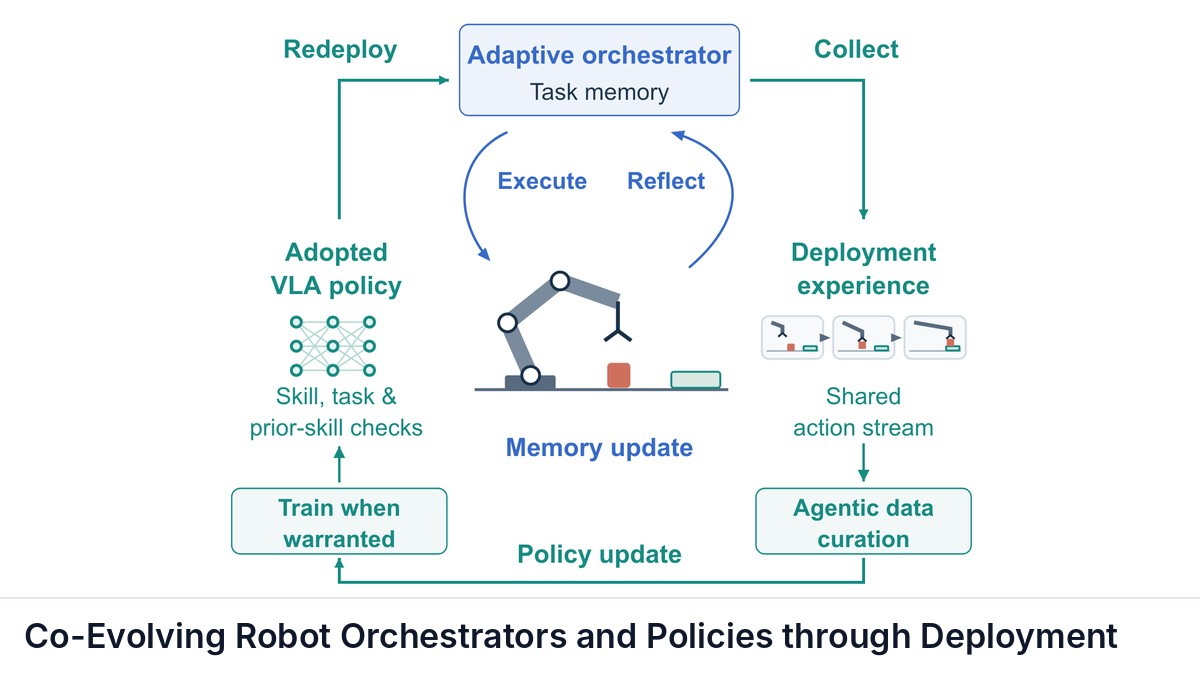
Co-Evolving Robot Orchestrators and Policies through Deployment
Xilun Zhang, Maggie Wang, Erik Bauer, Hong-Xing Yu, Huang Huang, Jiajun Wu, Marco Pavone · N/A · 2026
Framework
N/A
License
N/A
Stars
N/A
Summary
Vision-language-action (VLA) policies trained on large datasets are capable within their training domains, yet they still fail to generalize to the variety of situations a robot meets in real-world deployment.
Abstract Summary
Key Points
- Vision-language-action (VLA) policies trained on large datasets are capable within their training domains, yet they still fail to generalize to the variety of situations a robot meets in real-world deployment.
- Agentic robot systems complement the policy with a vision-language model (VLM) orchestrator that learns when to call the policy, how to instruct it, and when to use scripted skills instead.
- However, because the harness is built around a frozen policy that has limited language steerability, the orchestrator can avoid the policy's failures but never overcome them.
- The policy becomes the bottleneck of the whole system
- Fine-tuning the policy can remove this bottleneck, but updating it alone decouples it from an orchestrator tuned to its old behavior.
Method
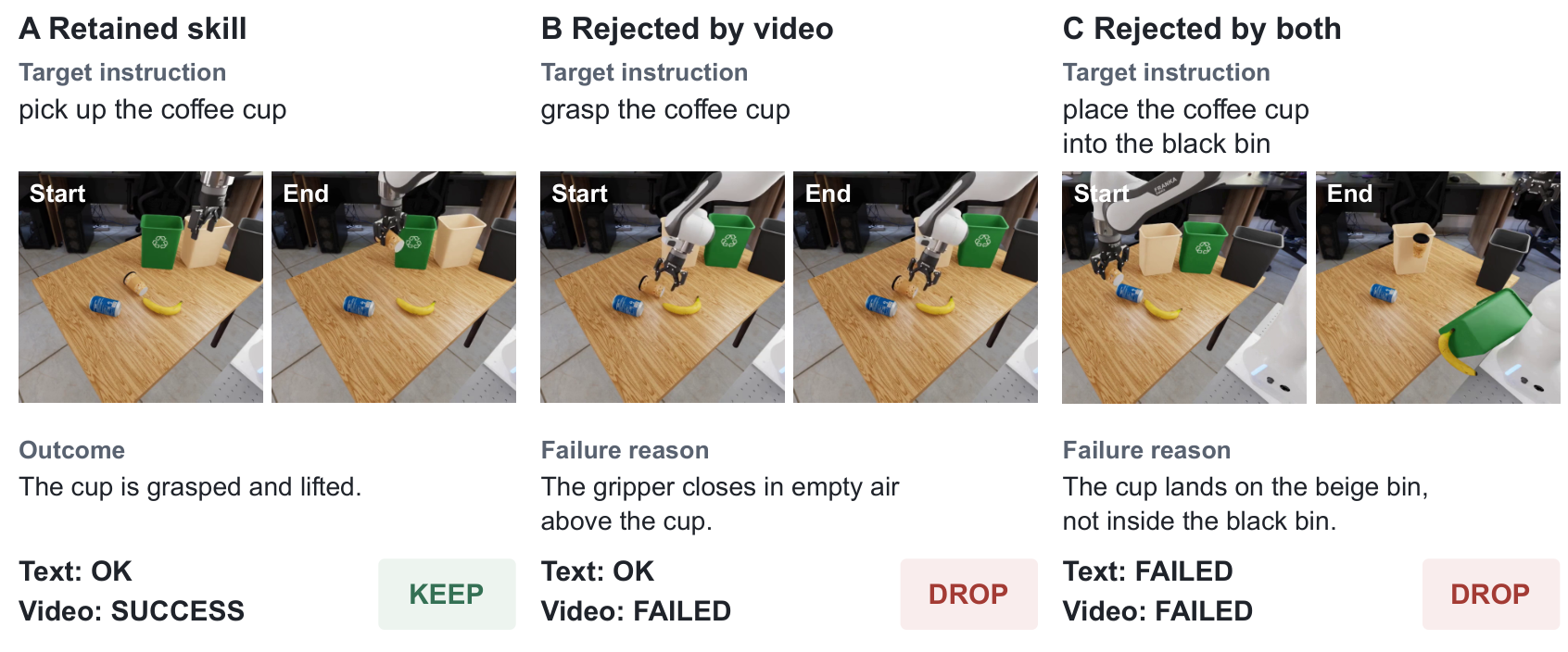
Robo-COP updates both the VLA policy and the adaptive harness that orchestrates its use (Figure 2 ). The harness logs policy and scripted actions as one stream (Section 3.1 ), curates it into skill demonstrations (Section 3.2 ), and verifies each new policy before adoption, revising the memory tied to the old one (Section 3.3 ).
Robo-COP is an embodied coding agent built on the CaP-X execution tools ( Fu et al., 2026 ) , extended with an execute_vla tool that invokes the VLA policy on a language instruction.
Experiments
Through this section, we aim to address three main questions. Q1: Does co-evolution improve held-out success over a frozen-policy harness and fixed-schedule training, and in which task regimes? Q2: Does the system decide correctly when to train and whether to adopt? Q3: Does learning during deployment cost task success along the way?
We answer them on ten simulated tasks and then test the full loop on three real-world tasks.

Sources and Demonstrations
Figures are reproduced from Zhang et al. See the full paper for experimental details and the project page, when the paper links one, for demonstrations and videos.
Related Papers

A Sim-to-Real Integration Pipeline for Training and Deployment of Chunk-Based VLA Manipulation Policies
Mathilde Kappel, Clémence Grislain, Mohamed Chetouani et al.
Vision-Language-Action (VLA) models have become a prominent paradigm for mapping multimodal inputs, including semantic instructions, visual observations of the scene, and proprioceptive observations, to robot actions.
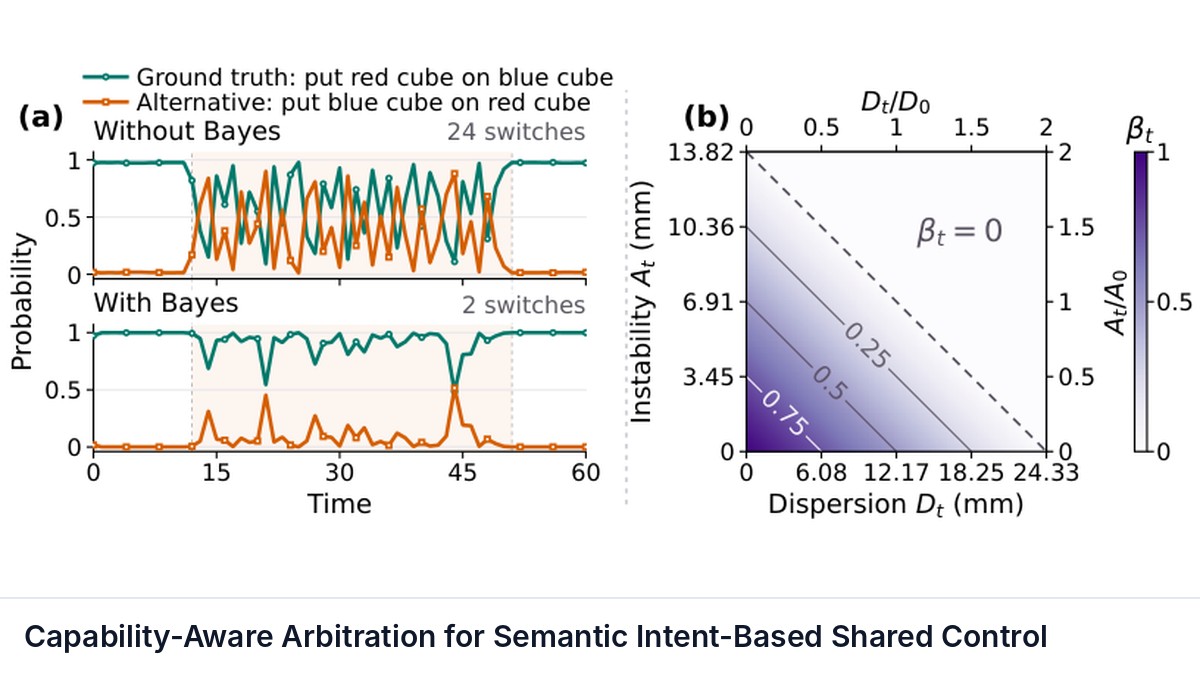
Capability-Aware Arbitration for Semantic Intent-Based Shared Control
Zhaoda Du, Michael Bowman, Xiaoli Zhang
Shared control often allocates robot authority based on confidence in inferred human intent, assuming reliable autonomous execution. When this assumption fails, high intent confidence can cause over-helping.
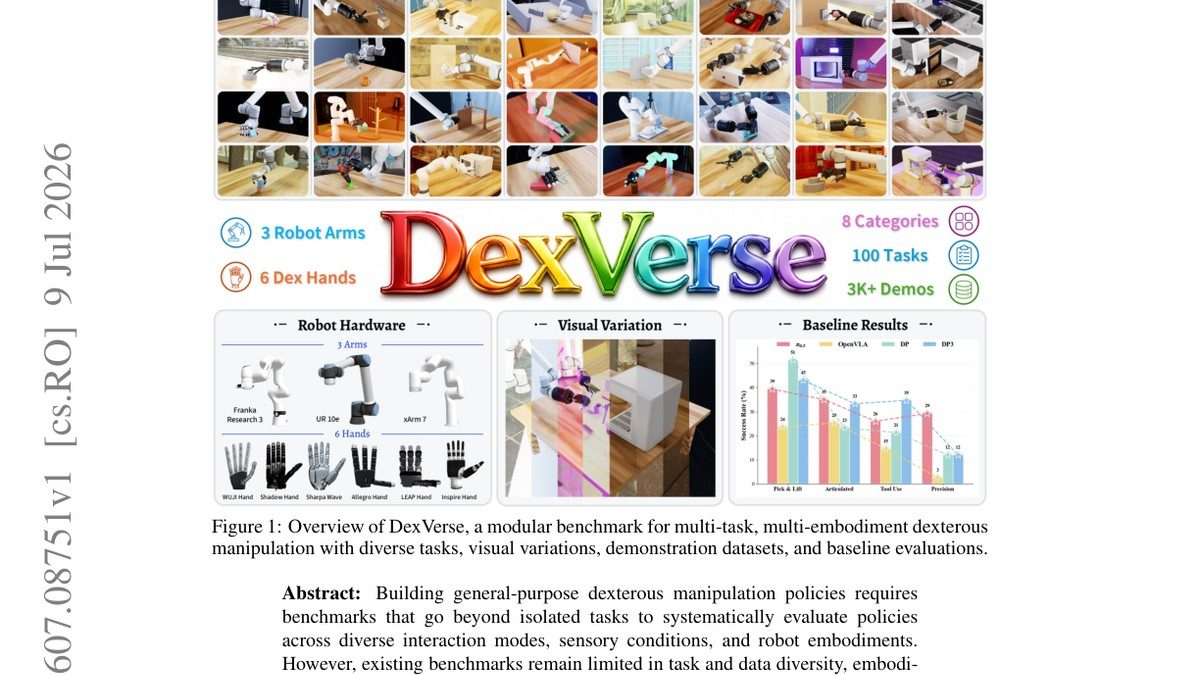
DexVerse: A Modular Benchmark for Multi-Task, Multi-Embodiment Dexterous Manipulation
Yunchao Yao, Zhuxiu Xu, Tianqi Zhang et al.
Building general-purpose dexterous manipulation policies requires benchmarks that go beyond isolated tasks to systematically evaluate policies across diverse interaction modes, sensory conditions, and robot embodiments.
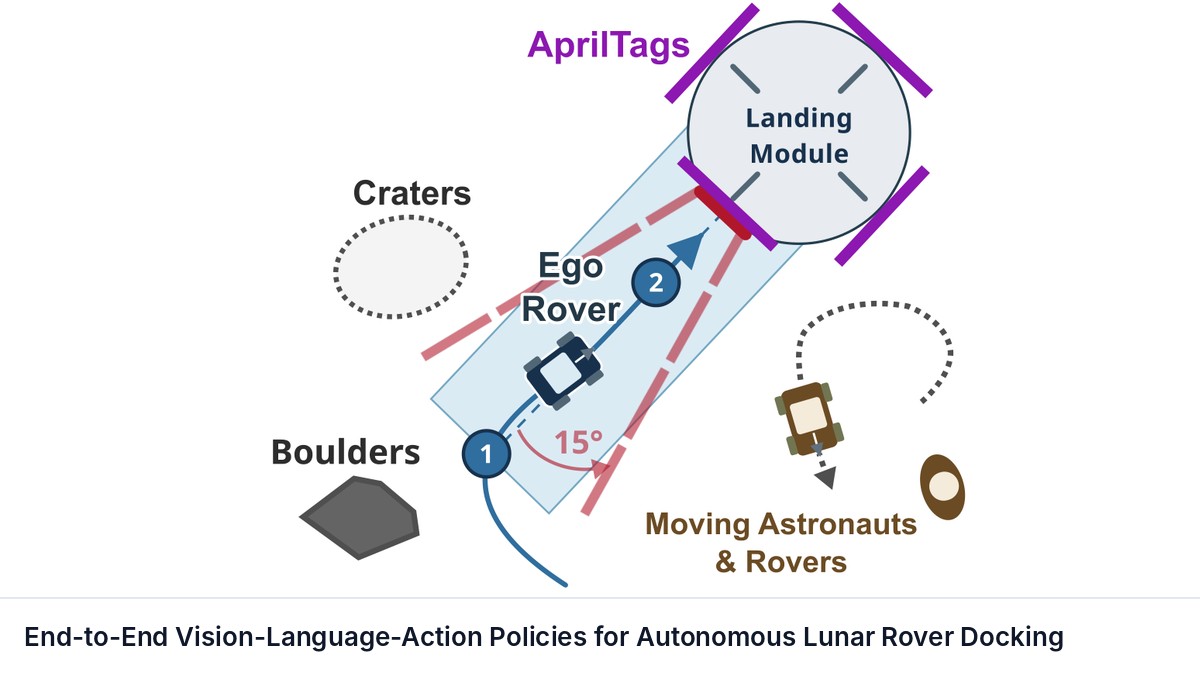
End-to-End Vision-Language-Action Policies for Autonomous Lunar Rover Docking
Sitan Huang, Grace Gao
Surface navigation on the Moon is subject to extreme illumination contrast and deployment-time perceptual disturbances.