
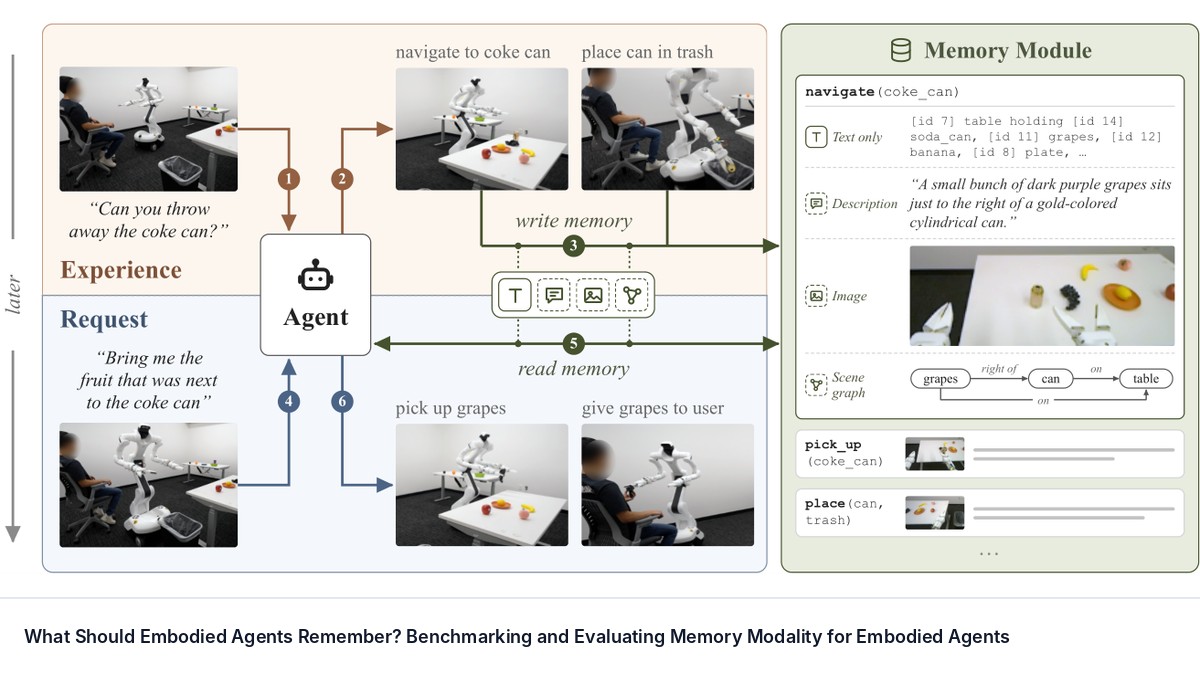
What Should Embodied Agents Remember? Benchmarking and Evaluating Memory Modality for Embodied Agents
Junxiang Wang, Yuchen Liu, Yi Wu, Guofei Chen, Nir Pechuk, Tao Chen, Zackory Erickson, Yuzhe Qin, Tianyu Li · N/A · 2026
Framework
N/A
License
N/A
Stars
N/A
Summary
Memory allows large language model (LLM) agents to use past experience, often stored as textual records, when responding to requests.
Abstract Summary
Key Points
- Memory allows large language model (LLM) agents to use past experience, often stored as textual records, when responding to requests.
- For embodied agents that control robots, visual and spatial observations introduce a broader choice of memory modalities, affecting both the information available for subsequent tasks and the model inference costs of constructing and using memory.
- We introduce MeMoREval, a benchmark for studying this problem through a controlled experience-request protocol.
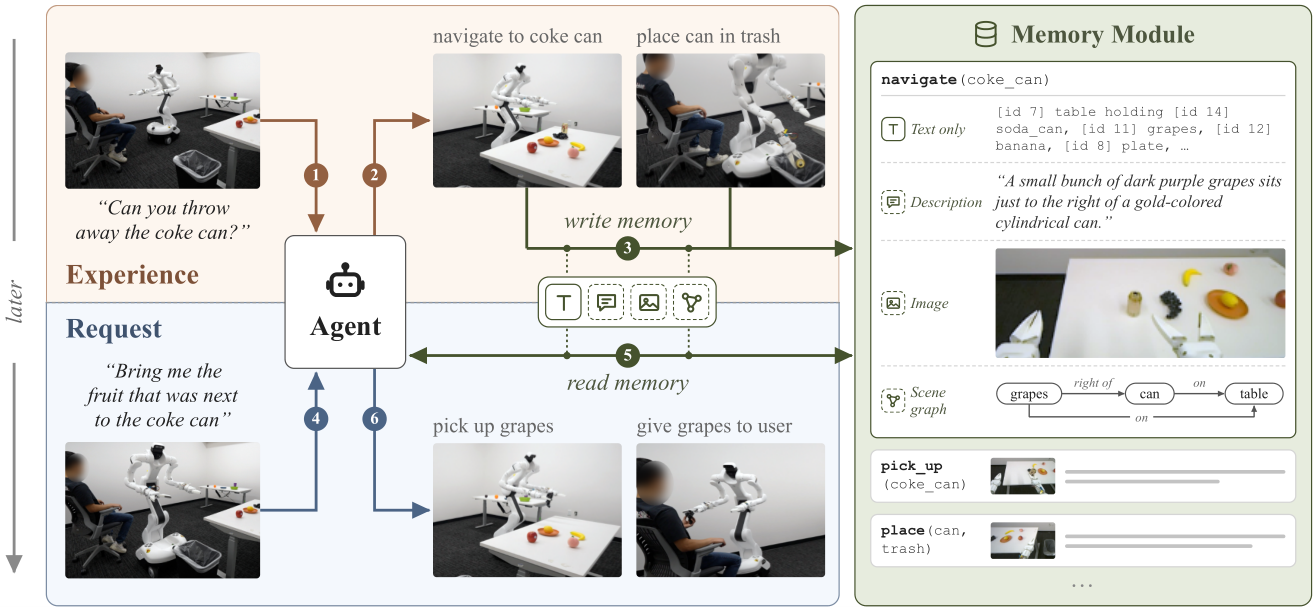
- Agents first experience a sequence of events without knowing the subsequent tasks, and subsequently they use memory to respond to information and action requests without receiving new observations.
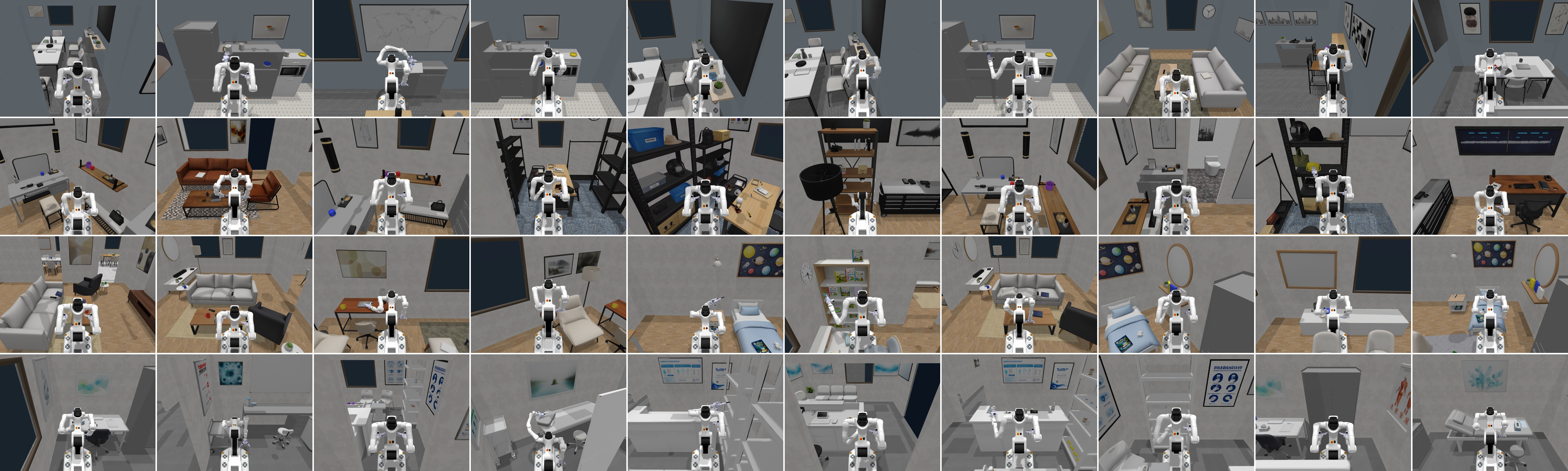
- The benchmark comprises 53 tasks across four simulated indoor environments and measures task success alongside the inference costs of memory construction and use.
Preliminaries: LLM-Based Embodied Agents and Memory
We consider LLM-based embodied agents in which a language or vision-language model selects physical skills for a robot. The interaction loop resembles that of a coding agent: the model receives a task and observations, calls a tool, and uses the returned feedback and updated observations to decide the following action.
Each tool corresponds to a physical skill, such as navigating to a room, grasping an object, or opening a drawer, executed by a separate robot controller so the model chooses actions without generating motor commands.
MeMoREval: Evaluation Protocol and Benchmark
We introduce MeMoREval, a benchmark for evaluating memory modalities in robotic embodied agents. We first describe its evaluation protocol, including task composition and measured performance metrics, such as task success and inference costs (§ 4.1 ), and then discuss the simulation environments and tasks that instantiate it (§ 4.2 ).
Experiments
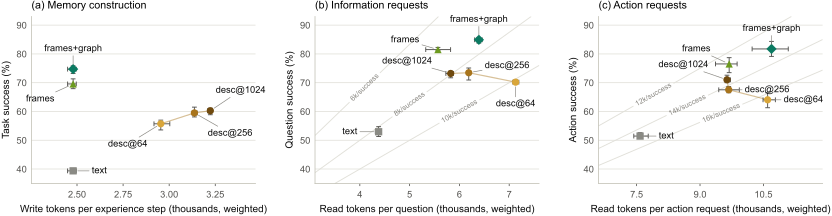
Memory conditions. Our main comparison varies the evidence archived for later retrieval while holding the memory writer’s textual input fixed. For a given backend, task, and seed, the six main conditions share the textual memory constructed from the common observations in § 4.2 . The text condition retains only this memory.
The frames condition additionally archives the annotated camera frames, while frames+graph also archives scene graph snapshots.
Sources and Demonstrations
Figures are reproduced from Wang et al. See the full paper for experimental details and the project page, when the paper links one, for demonstrations and videos.
Related Papers

A Sim-to-Real Integration Pipeline for Training and Deployment of Chunk-Based VLA Manipulation Policies
Mathilde Kappel, Clémence Grislain, Mohamed Chetouani et al.
Vision-Language-Action (VLA) models have become a prominent paradigm for mapping multimodal inputs, including semantic instructions, visual observations of the scene, and proprioceptive observations, to robot actions.
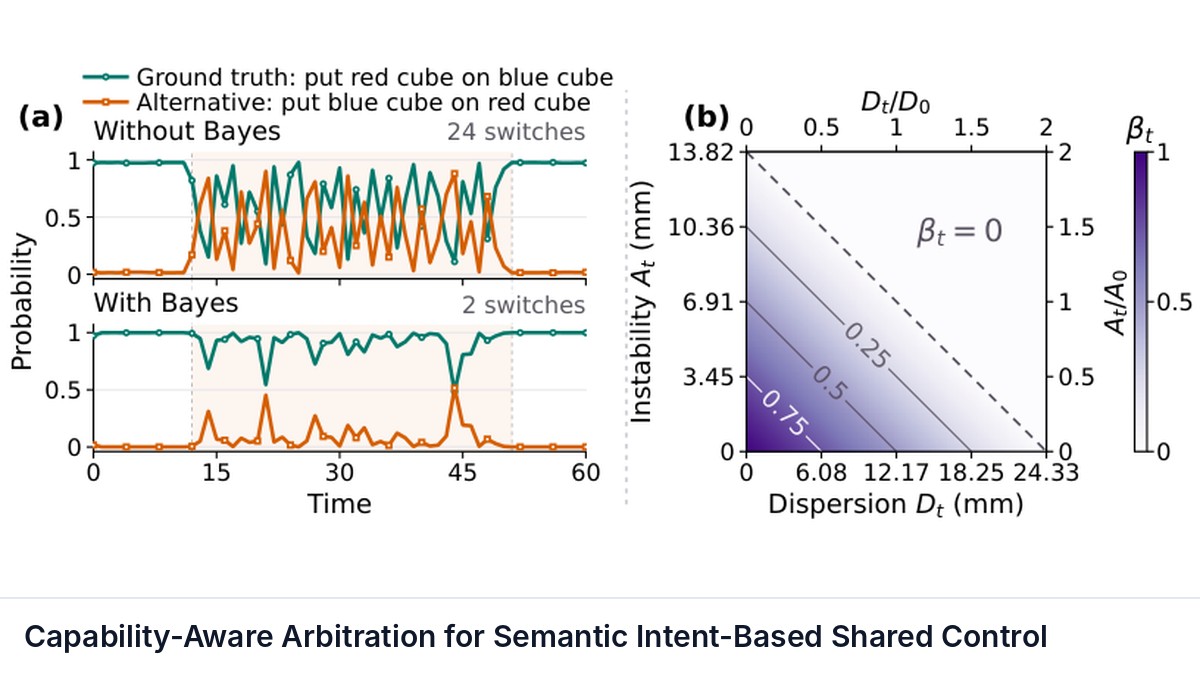
Capability-Aware Arbitration for Semantic Intent-Based Shared Control
Zhaoda Du, Michael Bowman, Xiaoli Zhang
Shared control often allocates robot authority based on confidence in inferred human intent, assuming reliable autonomous execution. When this assumption fails, high intent confidence can cause over-helping.
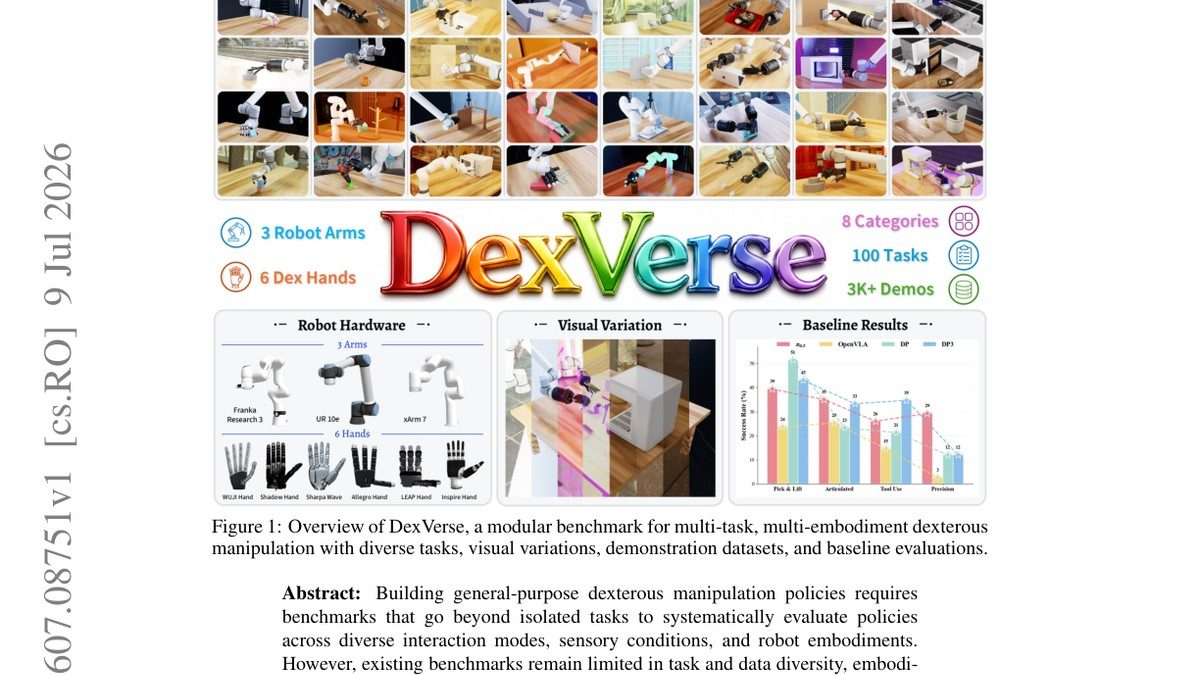
DexVerse: A Modular Benchmark for Multi-Task, Multi-Embodiment Dexterous Manipulation
Yunchao Yao, Zhuxiu Xu, Tianqi Zhang et al.
Building general-purpose dexterous manipulation policies requires benchmarks that go beyond isolated tasks to systematically evaluate policies across diverse interaction modes, sensory conditions, and robot embodiments.
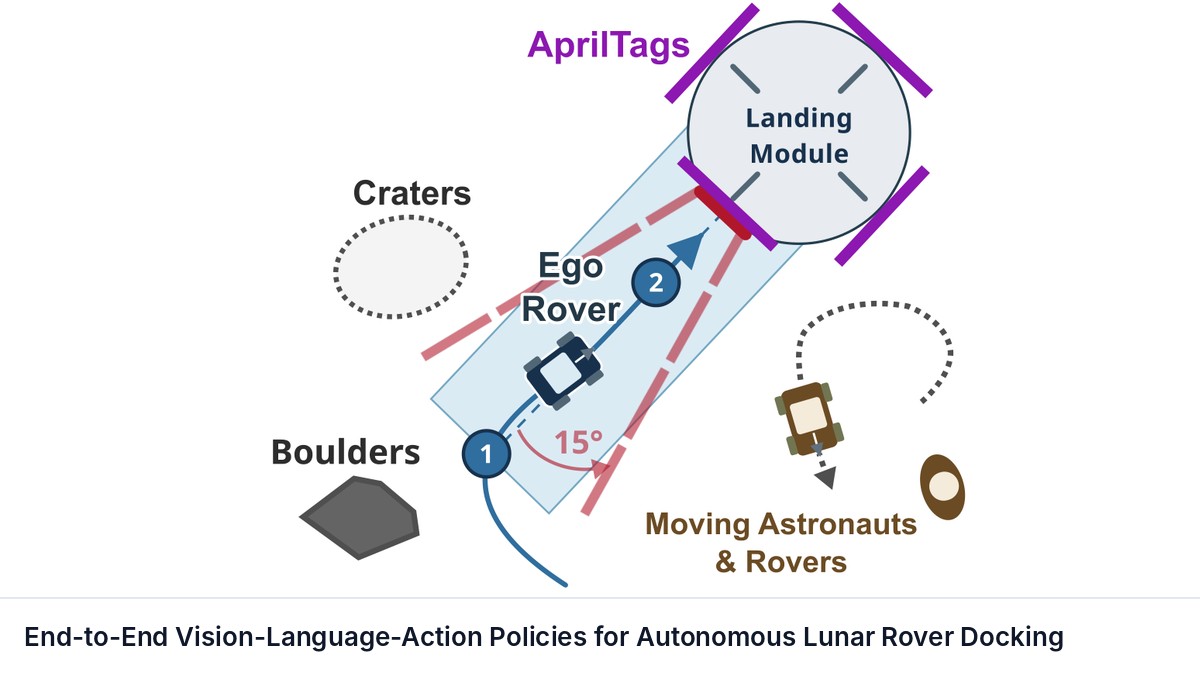
End-to-End Vision-Language-Action Policies for Autonomous Lunar Rover Docking
Sitan Huang, Grace Gao
Surface navigation on the Moon is subject to extreme illumination contrast and deployment-time perceptual disturbances.