
SWAP: Stepwise Action Policy Routing for Vision-Language-Action Models
Mousumi Das, Aditeya Prajapati, Abrar Anwar, Jesse Thomason · N/A · 2026
Framework
N/A
License
N/A
Stars
N/A
Summary
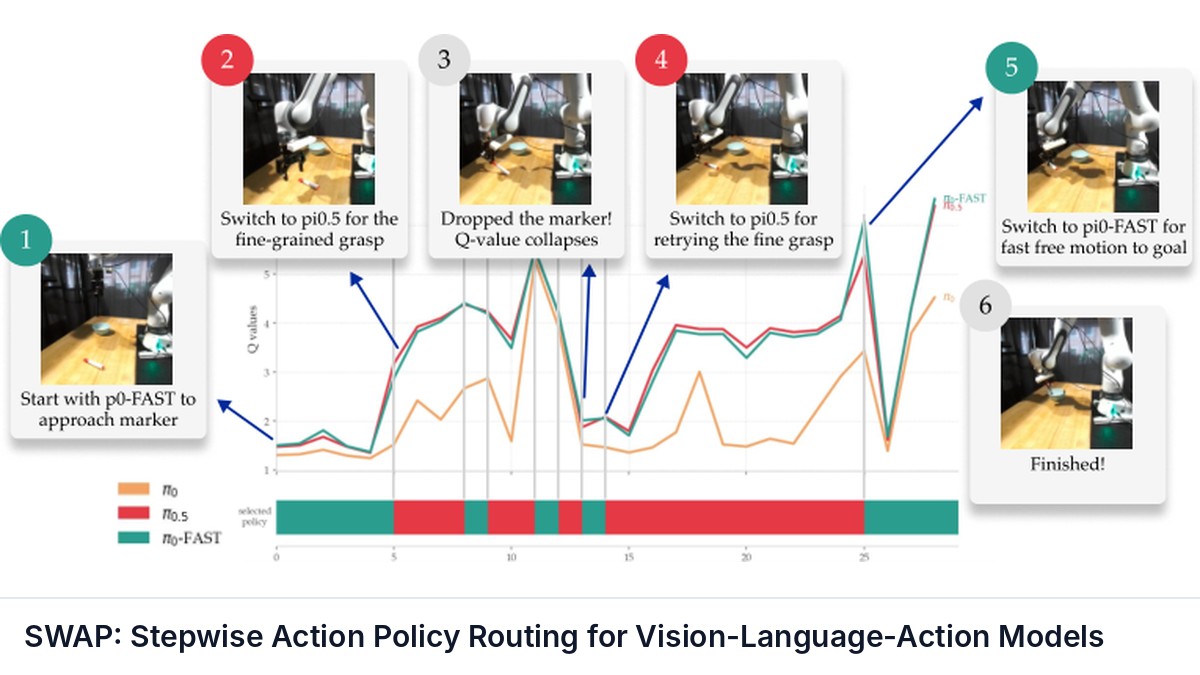
Robot manipulation systems using Vision-Language-Action (VLA) model backbones typically use just one VLA for task execution. However, individual VLAs do not perform well across different task states and environments.
Abstract Summary
Key Points
- Robot manipulation systems using Vision-Language-Action (VLA) model backbones typically use just one VLA for task execution.
- However, individual VLAs do not perform well across different task states and environments
- We introduce a framework for dynamically composing multiple VLA policies during execution: StepWise Action Policy Routing (SWAP).
- SWAP formulates policy routing as an offline reinforcement learning problem, learning a routing critic that selects the most appropriate policy at each decision step given the current observation.
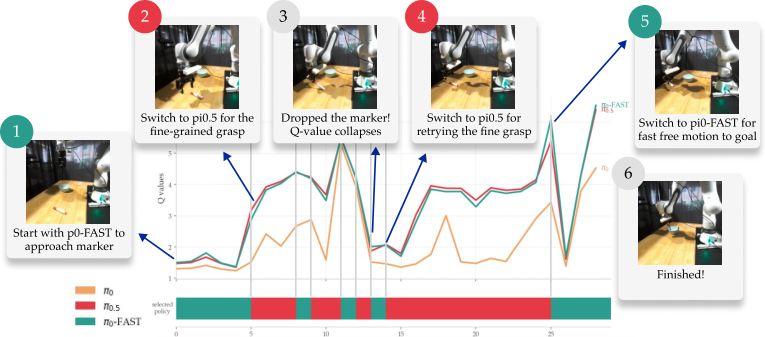
- SWAP enables robots to select new policies to execute online rather than committing to a single policy for the duration of an episode.
Robot Policy Routing
While modern VLA policies can exhibit strong generalization, no single policy is uniformly optimal across all task states, environments, or execution regimes. A policy that performs well during coarse free-space motion may fail during contact-rich manipulation, while another may excel at precise object interaction yet behave conservatively during exploration or recovery.
SWAP: Stepwise Action Policy Routing
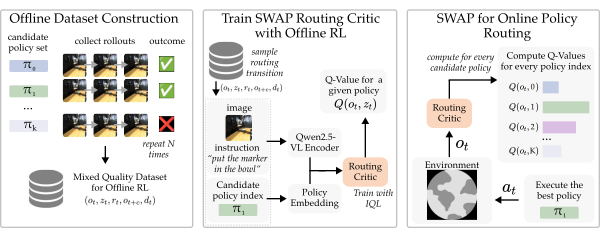
We instantiate the policy routing framework as S tep- W ise A ction P olicy Routing (SWAP), an offline reinforcement learning approach for selecting among candidate robot policies during robot action rollouts (Figure 2 ). SWAP learns a routing critic that estimates which policy is most likely to lead to successful task completion given the robot’s current execution state.
Experiments and Results
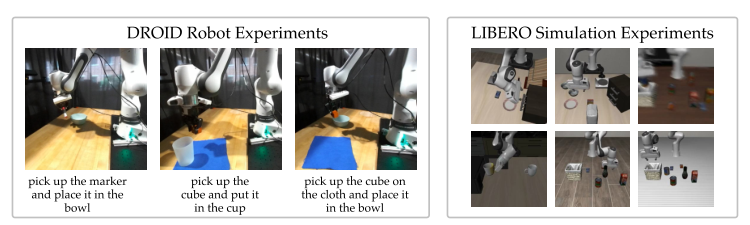
We evaluate SWAP in both real-world and simulated manipulation settings to assess whether learned stepwise policy routing improves robot manipulation performance over fixed policy execution. In each setting, SWAP is trained using offline interaction data collected from the candidate policies. We compare SWAP against two classes of baselines.
First, we evaluate each candidate policy independently, corresponding to the standard setting where a single policy is executed for the full episode without routing.
Sources and Demonstrations
Figures are reproduced from Das et al. See the full paper for experimental details and the project page, when the paper links one, for demonstrations and videos.
Related Papers
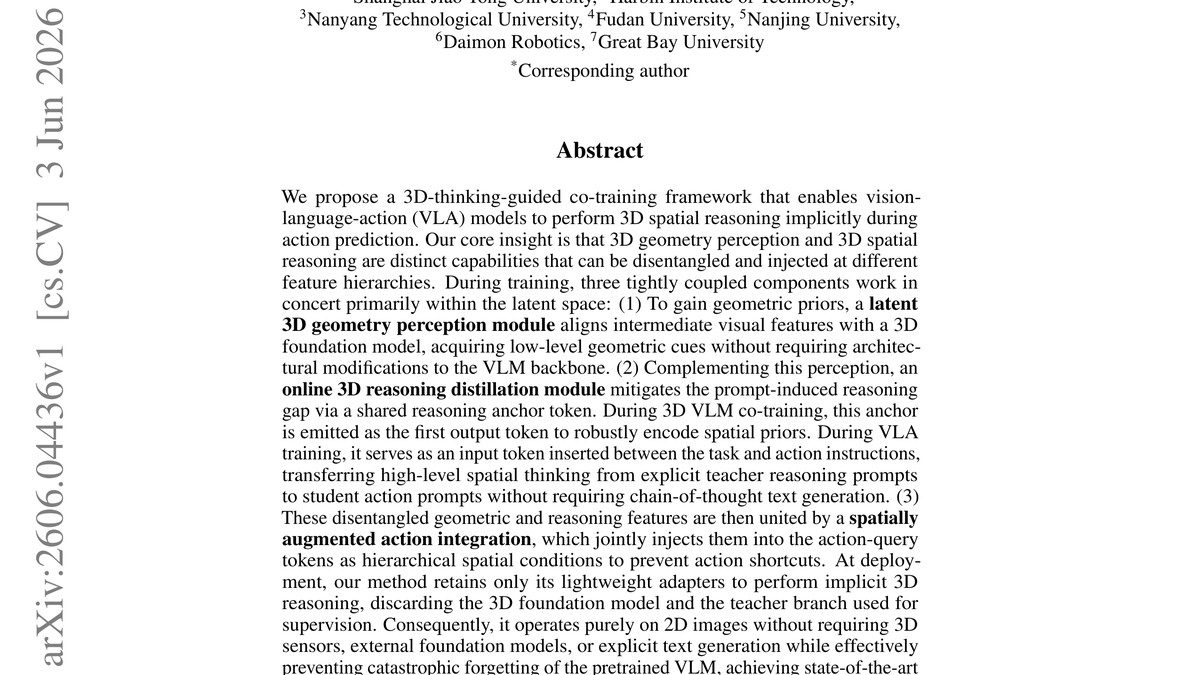
3DThinkVLA: Endowing Vision-Language-Action Models with Latent 3D Priors via 3D-Thinking-Guided Co-training
Jiaxin Shi, Xidong Zhang, Fucai Zhu et al.
We propose a 3D-thinking-guided co-training framework that enables vision-language-action (VLA) models to perform 3D spatial reasoning implicitly during action prediction.
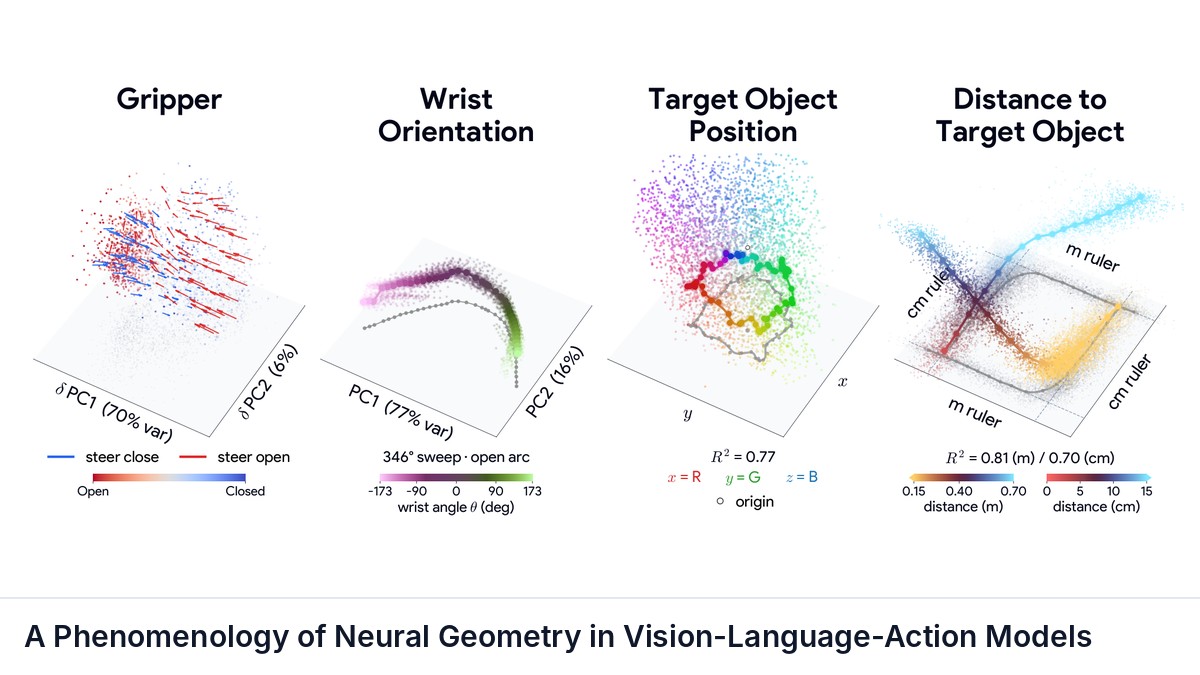
A Phenomenology of Neural Geometry in Vision-Language-Action Models
Mozes Jacobs, Aiden Swann, Mathilde Papillon et al.
Robotic manipulation is inherently geometric, but what shape does the world take inside the policy that performs it?

A Sim-to-Real Integration Pipeline for Training and Deployment of Chunk-Based VLA Manipulation Policies
Mathilde Kappel, Clémence Grislain, Mohamed Chetouani et al.
Vision-Language-Action (VLA) models have become a prominent paradigm for mapping multimodal inputs, including semantic instructions, visual observations of the scene, and proprioceptive observations, to robot actions.
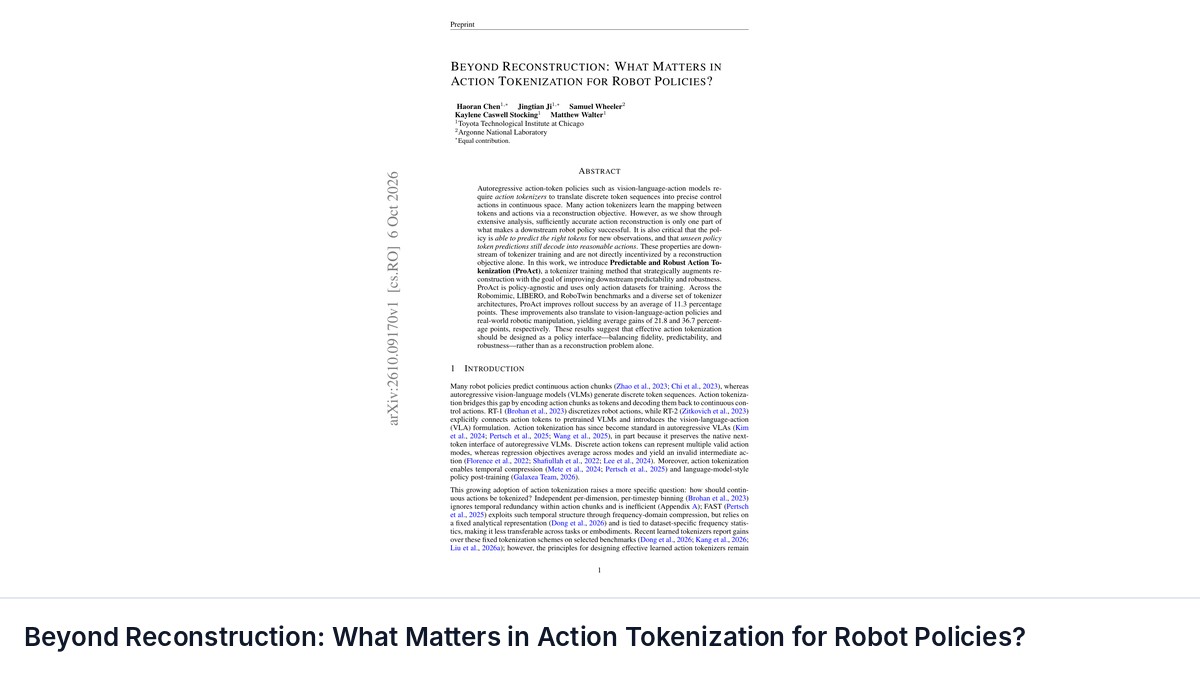
Beyond Reconstruction: What Matters in Action Tokenization for Robot Policies?
Haoran Chen, Jingtian Ji, Samuel Wheeler et al.
Autoregressive action-token policies such as vision-language-action models require action tokenizers to translate discrete token sequences into precise control actions in continuous space. Many action tokenizers learn the mapping between tokens and actions via a reconstruction objective.