
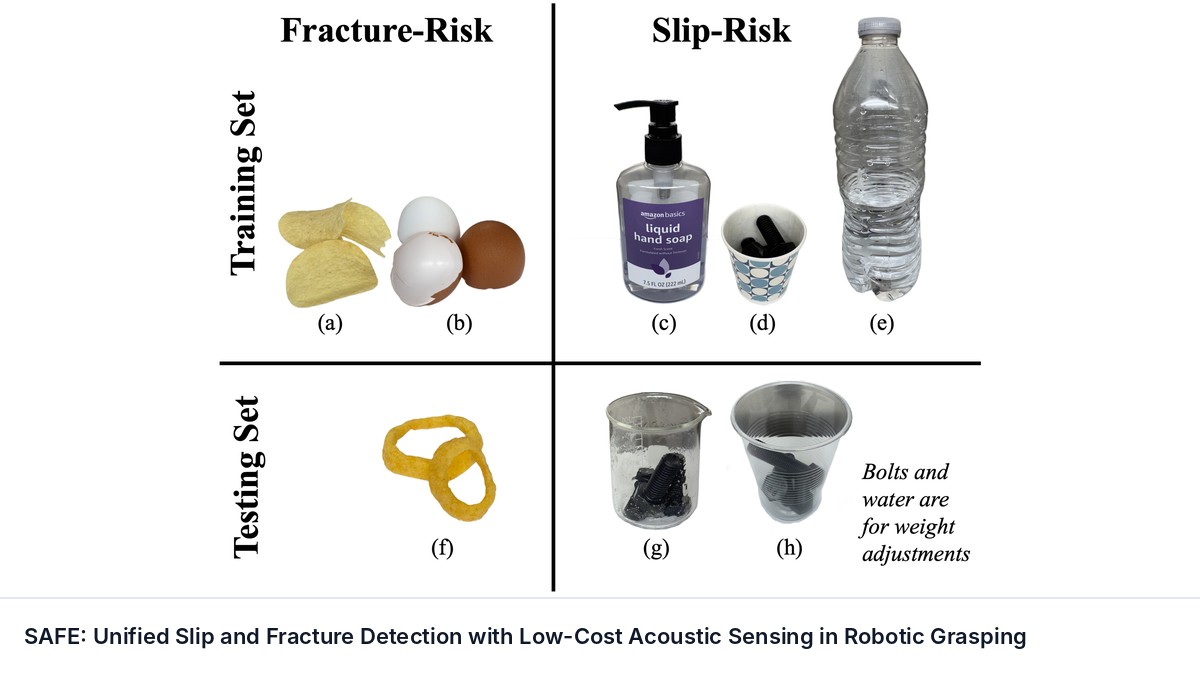
SAFE: Unified Slip and Fracture Detection with Low-Cost Acoustic Sensing in Robotic Grasping
Zerun Wang, Vivek Kamat, Shekhar Bhansali · N/A · 2026
Framework
N/A
License
N/A
Stars
N/A
Summary
Manipulating fragile objects remains challenging as robots must understand the state of what they grasp, such as slip or fracture, to respond appropriately, especially when material properties are unknown.
Abstract Summary
Key Points
- Manipulating fragile objects remains challenging as robots must understand the state of what they grasp, such as slip or fracture, to respond appropriately, especially when material properties are unknown.
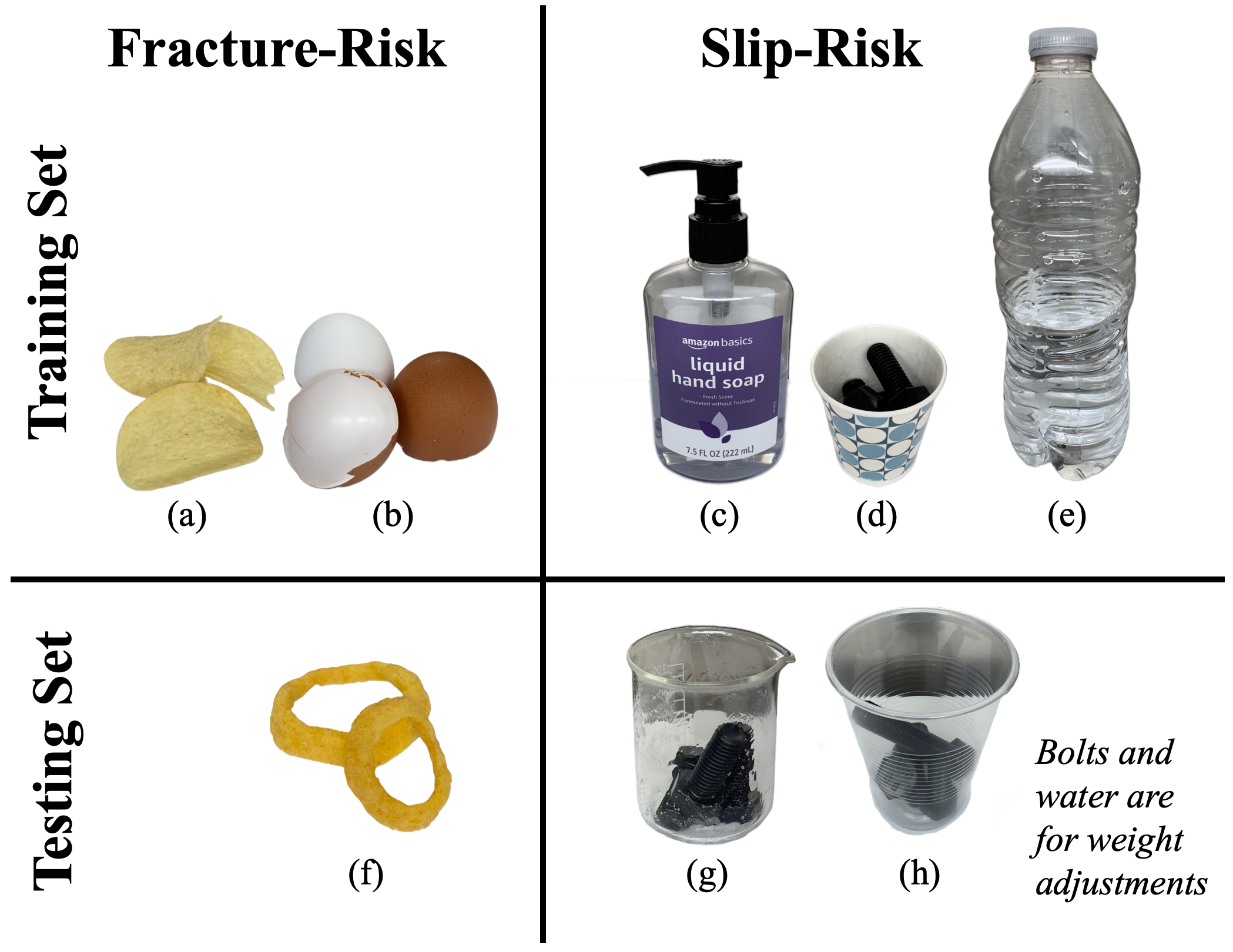
- In this paper, we present SAFE: a low-cost, general-purpose sensing approach that detects both slip and fracture in real time using two passive polyvinylidene fluoride (PVDF) acoustic sensors and motor proprioception, without relying on vision or prior material knowledge.
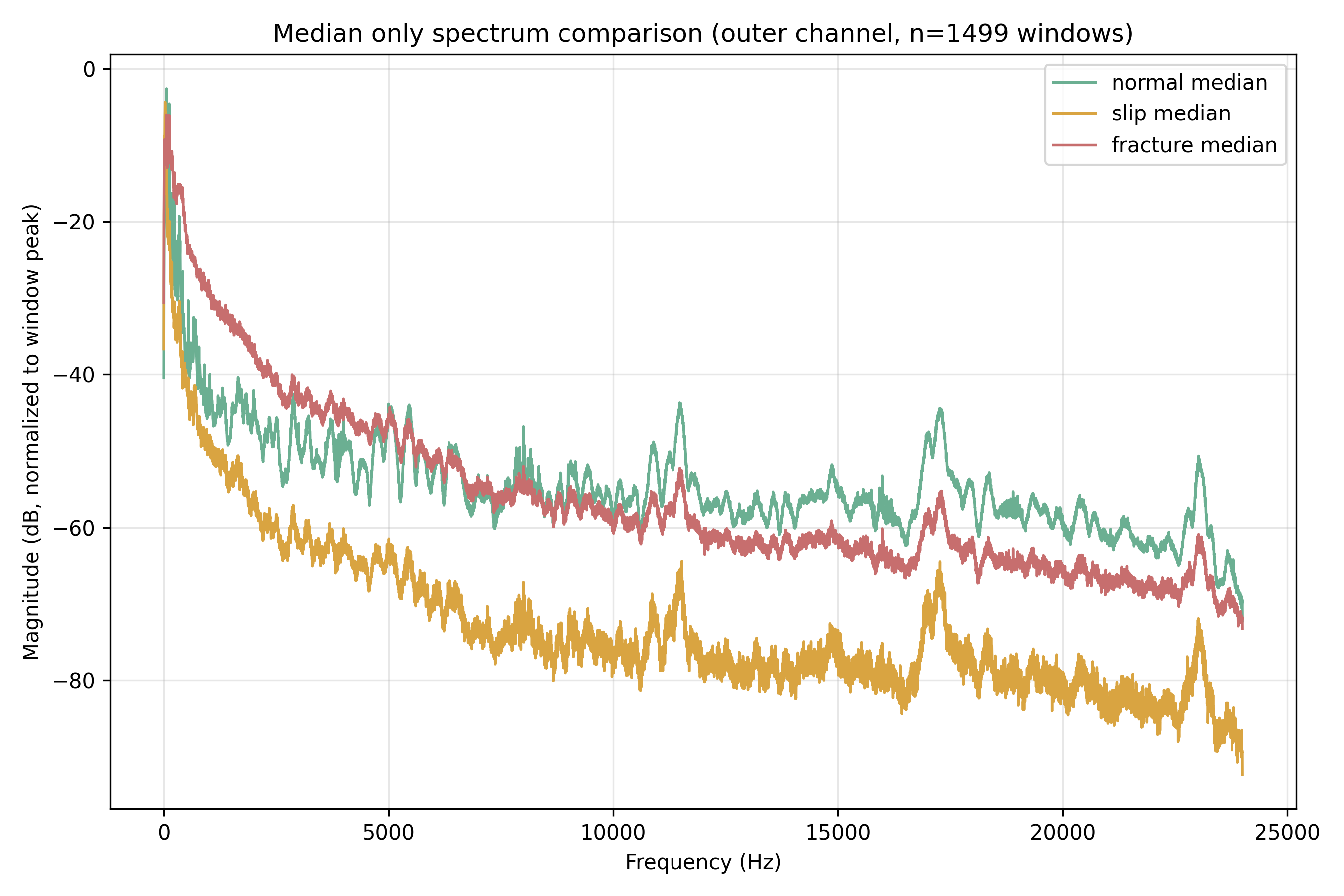
- The sensors are mounted on a compliant Fin Ray gripper, and a unified HistGradientBoosting classifier reports the state (normal, slip, or fracture) from a 79-dimensional feature vector.
- Under leave-one-grasp-out cross-validation, SAFE achieves an Alert-F1 of 0.884 with near-zero slip-fracture confusion, and ablations confirm that acoustic sensing is indispensable.
- An adaptive grasp controller built on this detection layer runs at 104 Hz on a Jetson Orin Nano, achieving 91.3% success across 46 closed-loop robot trials spanning diverse object categories, while each fixed-force strategy drops to 0% on object conditions that mismatch its preset.
Methodology
Real-time detection of slip and fracture during grasping must satisfy three constraints: it cannot rely on prior knowledge of object material, it must run within a real-time control loop on low-cost edge hardware, and it must resolve two physically different failure signatures from a single, minimal sensing layer.
We address these with compliant hardware carrying acoustic/proprioceptive sensing, a windowed feature representation, and a unified classifier.
Experiments
Table 2 reports classification performance under the Leave-One-Grasp-Out protocol described in Section III-D . The proposed model achieved an Alert-F1 (the mean of slip and fracture F1: the normal class comprises 71% of samples and would otherwise dominate an aggregate score) of 0.884 [0.856, 0.908], with slip and fracture individually reaching F1 of 0.916 and 0.851.
The 95% confidence interval (CI) was estimated using a group-level cluster bootstrap with 5000 resamples over grasp-trial groups. As shown in the confusion matrix (Fig.
Sources and Demonstrations
Figures are reproduced from Wang et al. See the full paper for experimental details and the project page, when the paper links one, for demonstrations and videos.
Related Papers
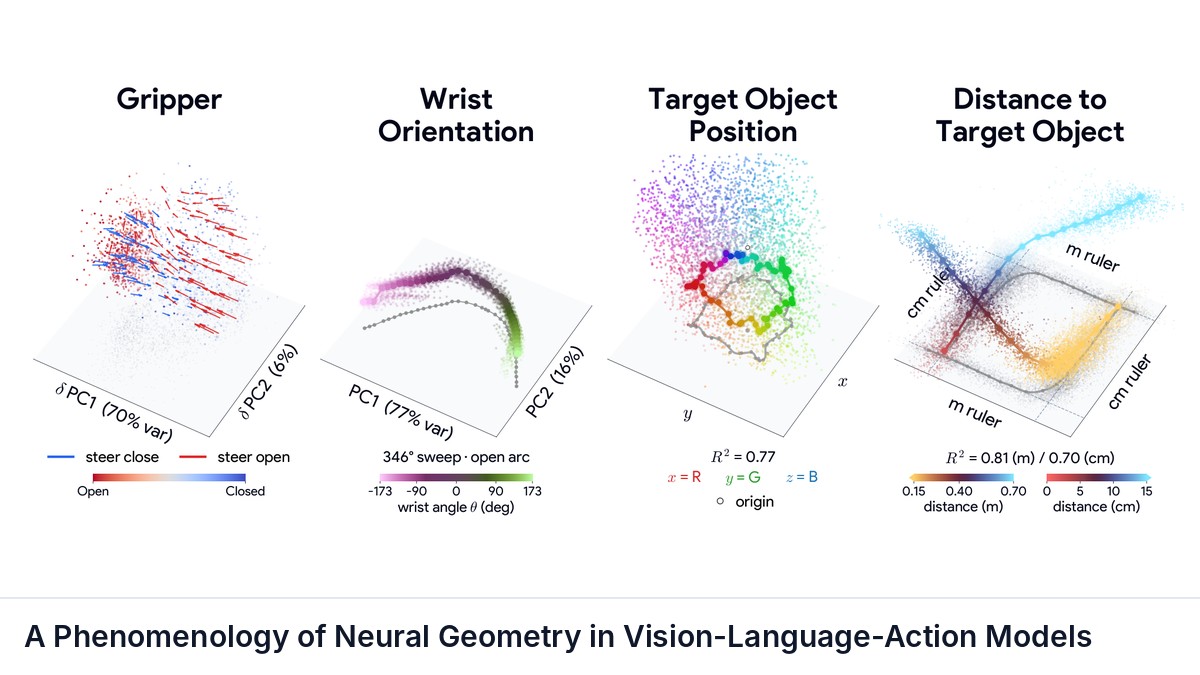
A Phenomenology of Neural Geometry in Vision-Language-Action Models
Mozes Jacobs, Aiden Swann, Mathilde Papillon et al.
Robotic manipulation is inherently geometric, but what shape does the world take inside the policy that performs it?

A Sim-to-Real Integration Pipeline for Training and Deployment of Chunk-Based VLA Manipulation Policies
Mathilde Kappel, Clémence Grislain, Mohamed Chetouani et al.
Vision-Language-Action (VLA) models have become a prominent paradigm for mapping multimodal inputs, including semantic instructions, visual observations of the scene, and proprioceptive observations, to robot actions.
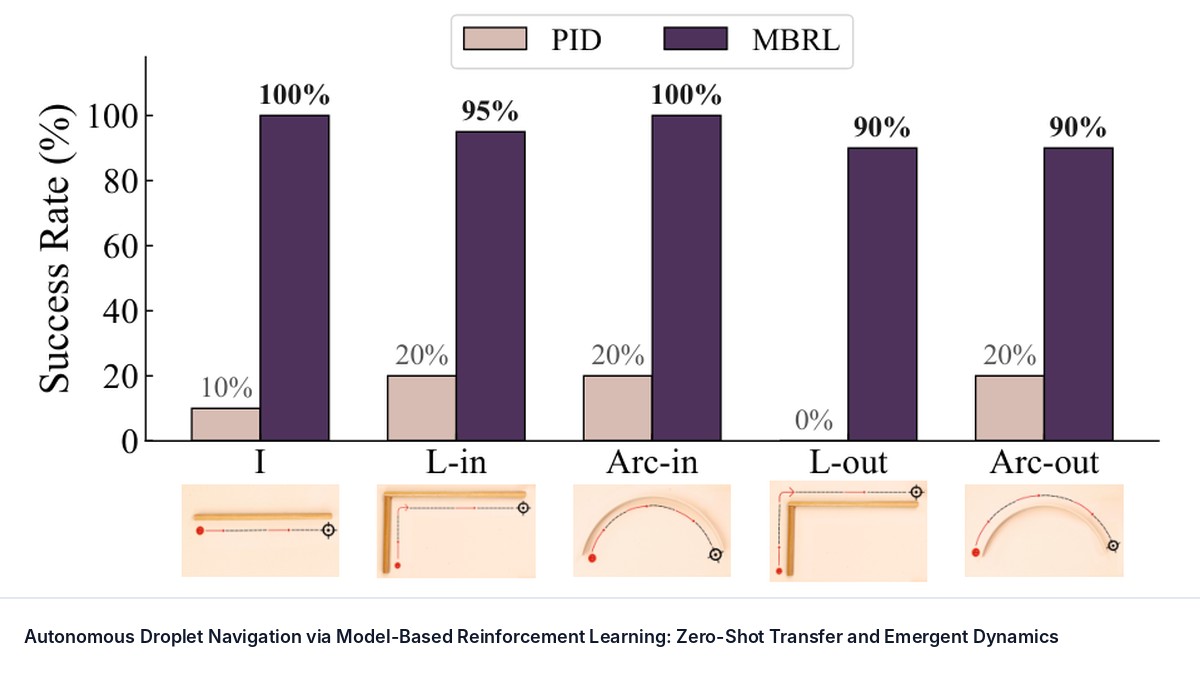
Autonomous Droplet Navigation via Model-Based Reinforcement Learning: Zero-Shot Transfer and Emergent Dynamics
Rajneesh Anand, Mayuresh V. Kothare
Self-driving laboratories (SDLs) are transforming chemical and materials discovery through closed-loop automation, yet automated infrastructure for physical manipulation of soft, deformable matter remains beyond current robotic platforms.
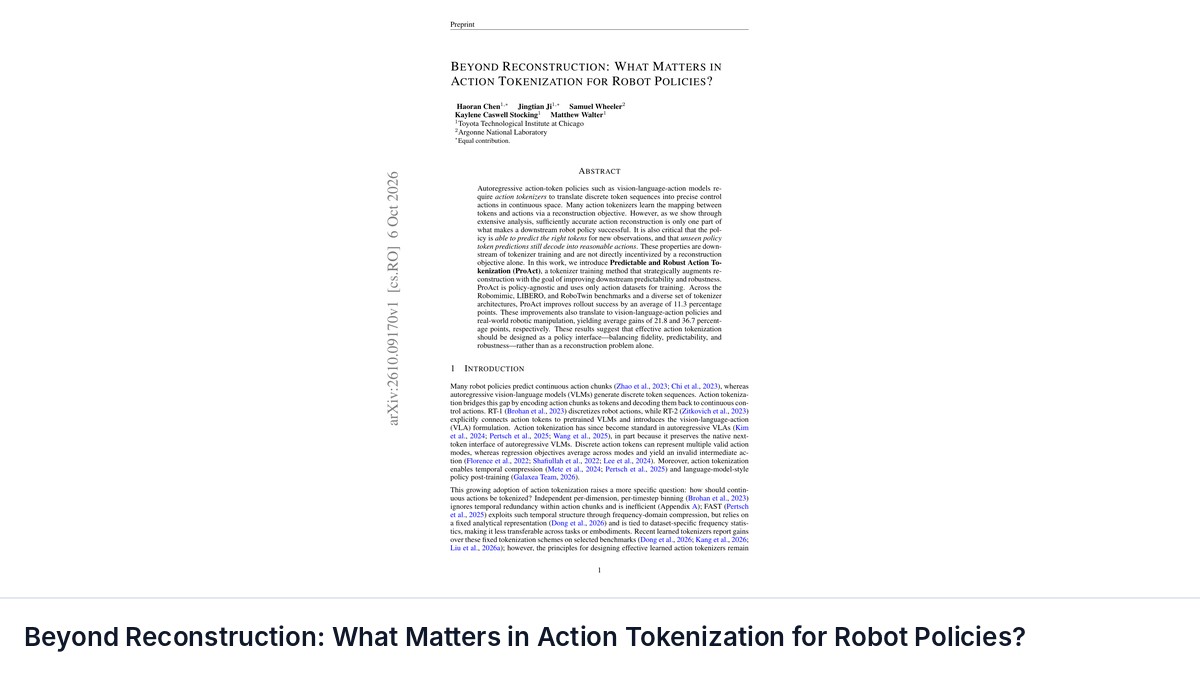
Beyond Reconstruction: What Matters in Action Tokenization for Robot Policies?
Haoran Chen, Jingtian Ji, Samuel Wheeler et al.
Autoregressive action-token policies such as vision-language-action models require action tokenizers to translate discrete token sequences into precise control actions in continuous space. Many action tokenizers learn the mapping between tokens and actions via a reconstruction objective.