
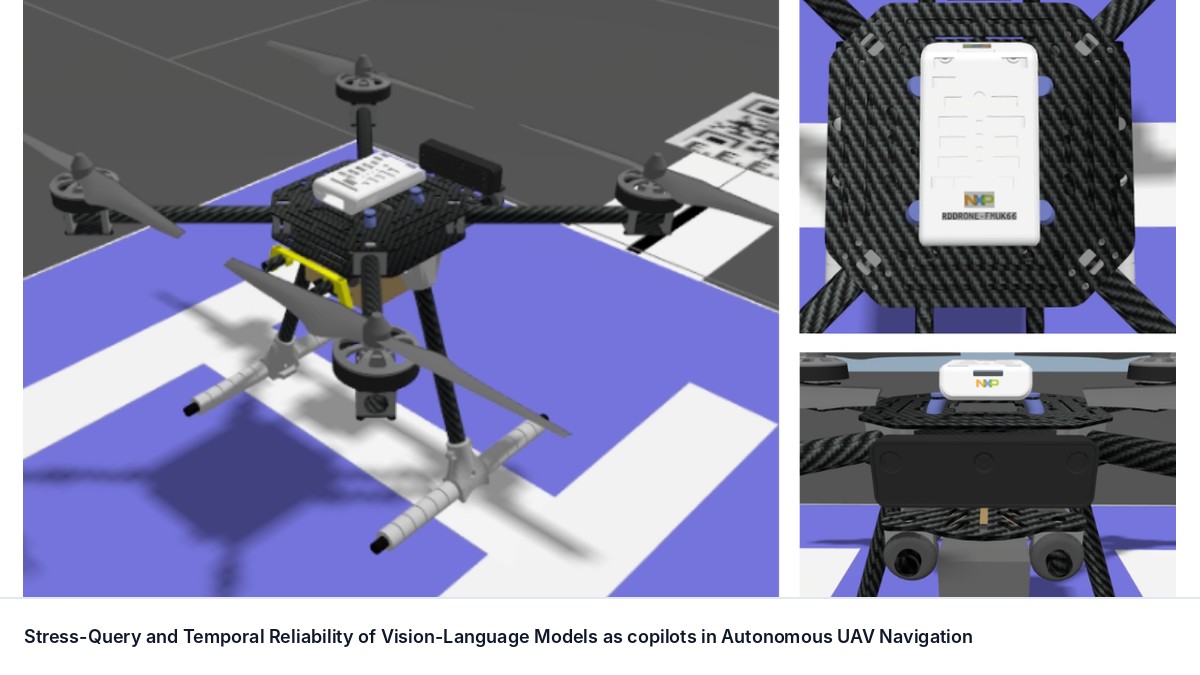
Stress-Query and Temporal Reliability of Vision-Language Models as copilots in Autonomous UAV Navigation
Hiago Sodre, Sebastian Barcelona, Vincent Sandin, Pablo Moraes, Andre S. Kelbouscas, Ricardo B. Grando · N/A · 2026
Framework
N/A
License
N/A
Stars
N/A
Summary
Integrating Vision-Language Models (VLMs) into autonomous UAV navigation enables high-level semantic reasoning but introduces critical temporal bottlenecks that can destabilize flight control.
Abstract Summary
Key Points
- Integrating Vision-Language Models (VLMs) into autonomous UAV navigation enables high-level semantic reasoning but introduces critical temporal bottlenecks that can destabilize flight control.
- This paper presents a systematic benchmark that evaluates the operational trade-offs among model scale, hardware constraints, and flight reliability.
- By subjecting the system to extensive stress tests on both a high-performance workstation and a constrained integrated-graphics laptop, we isolate the kinetic impact of inference latency against reasoning accuracy.
- Our findings reveal a performance dichotomy: lightweight models struggle with structural hallucinations that break deterministic state machines, while heavyweight models induce trajectory overcorrections due to inference lag.
- We demonstrate that a mid-weight architecture strikes the optimal balance, successfully rehabilitating navigation in degraded environments without compromising real-time stability across different hardware profiles.
System Overview and Benchmarking Framework
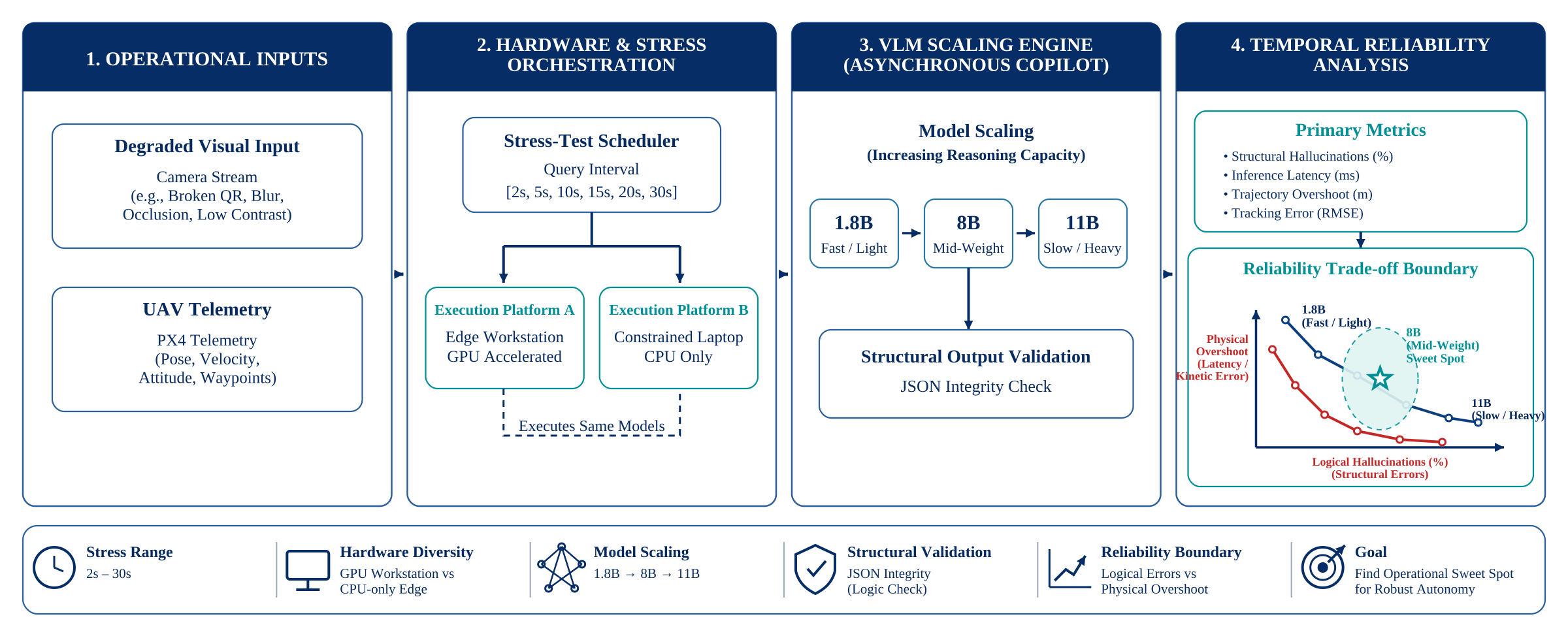
To systematically evaluate the impact of Vision-Language Model scaling and cognitive latency on real-time autonomous flight, an exhaustive benchmarking framework was developed. The evaluations are executed within a fully physics-accurate Software-In-The-Loop (SITL) stack running PX4 Autopilot, ROS 2 Humble middleware, and Gazebo Harmonic (Figure 2 ).
The testbed operates under a decoupled hybrid control paradigm, deliberately separating low-level kinetic stability from high-level generative reasoning.
Sources and Demonstrations
Figures are reproduced from Sodre et al. See the full paper for experimental details and the project page, when the paper links one, for demonstrations and videos.
Related Papers
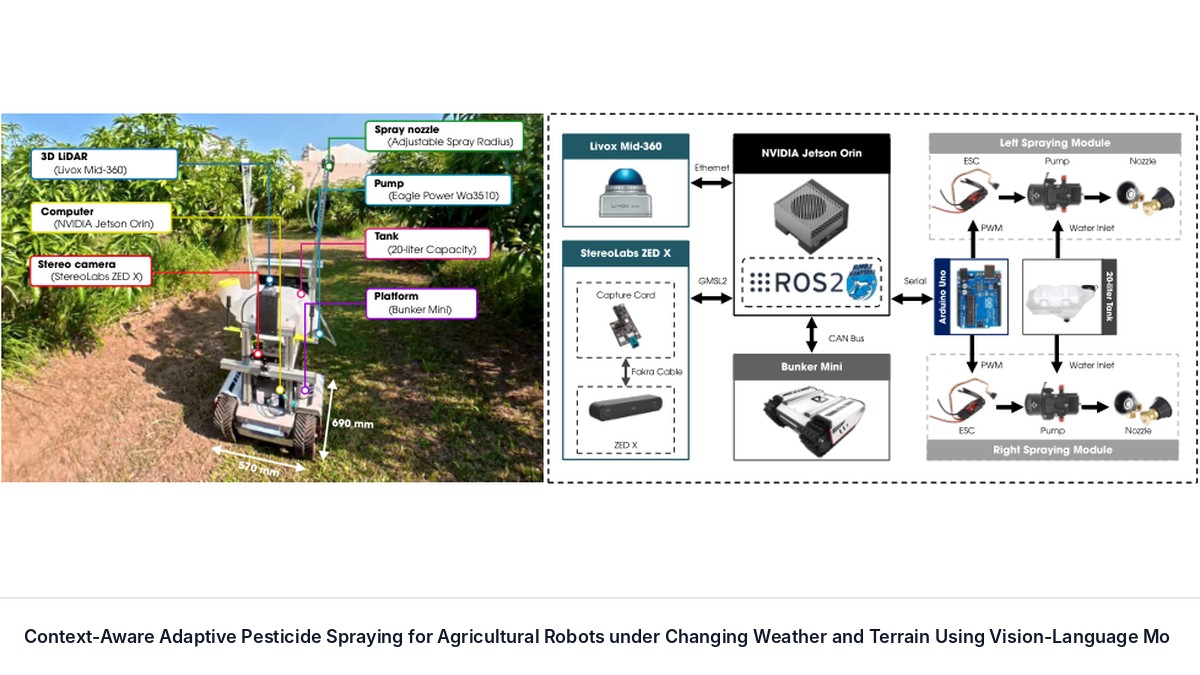
Context-Aware Adaptive Pesticide Spraying for Agricultural Robots under Changing Weather and Terrain Using Vision-Language Models
Cong-Thanh Vu, Yen-Chen Liu
Precision pesticide spraying is essential for optimizing application efficiency and ensuring uniform chemical distribution.
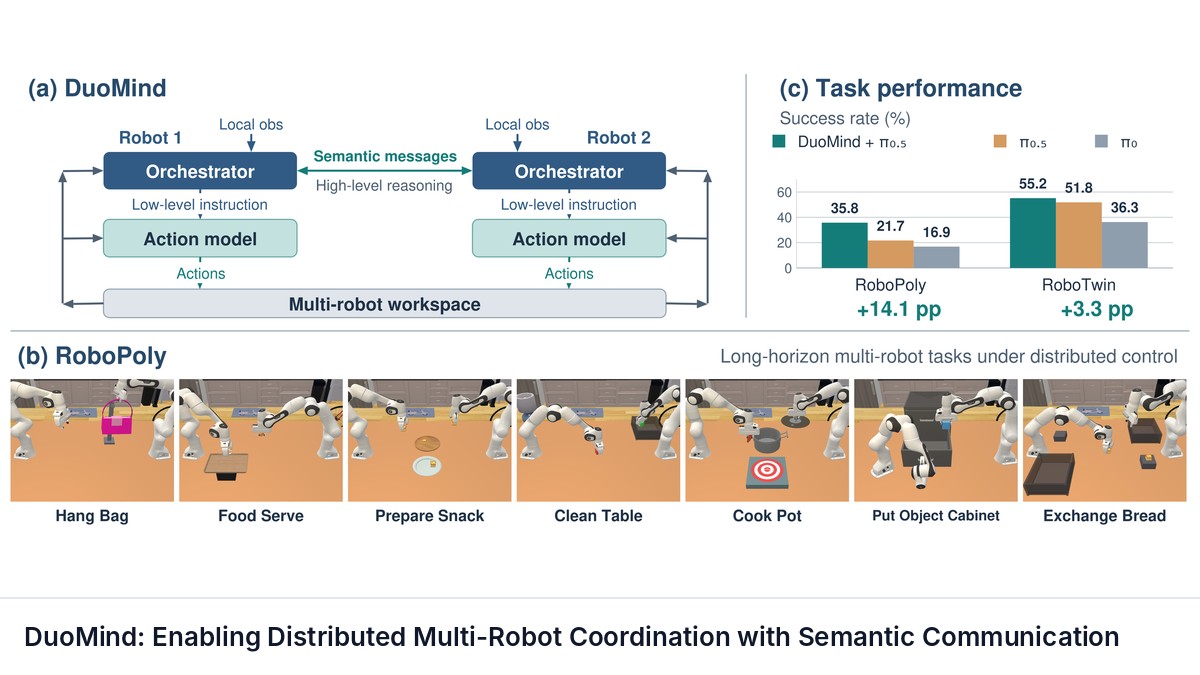
DuoMind: Enabling Distributed Multi-Robot Coordination with Semantic Communication
Hanchu Zhou, Dechen Gao, Hang Wang et al.
Vision-language models (VLMs) and vision-language-action models (VLAs) have recently driven rapid progress in general-purpose robots, yet most progress has focused on single-robot settings.
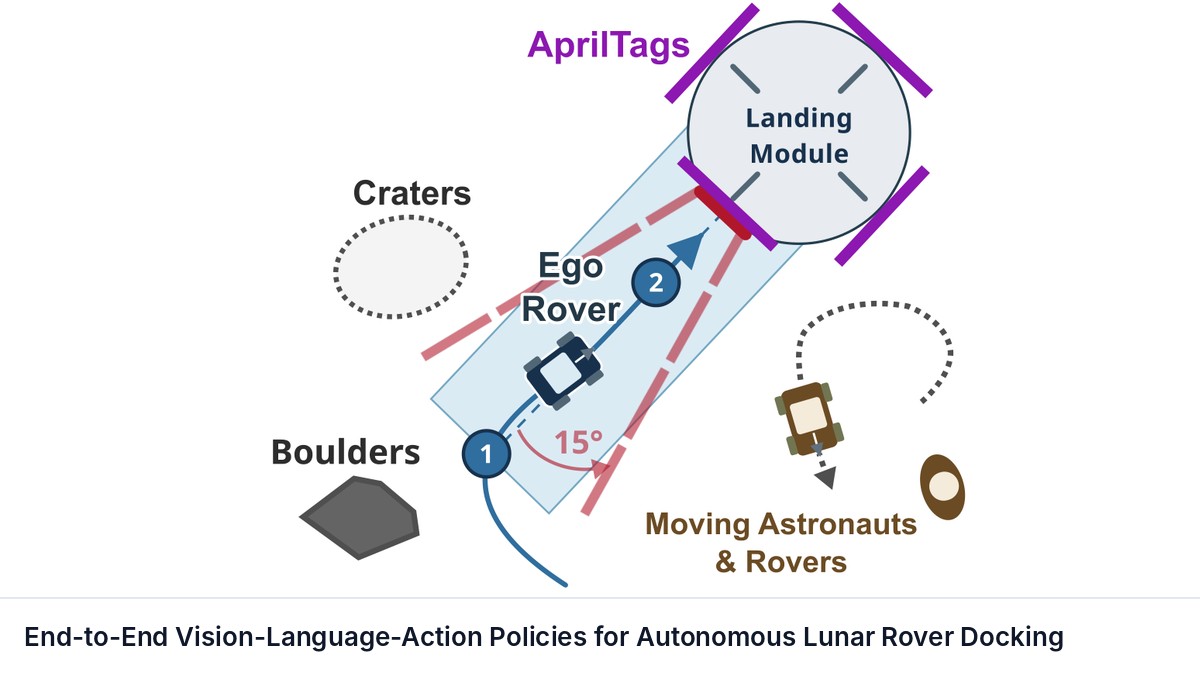
End-to-End Vision-Language-Action Policies for Autonomous Lunar Rover Docking
Sitan Huang, Grace Gao
Surface navigation on the Moon is subject to extreme illumination contrast and deployment-time perceptual disturbances.
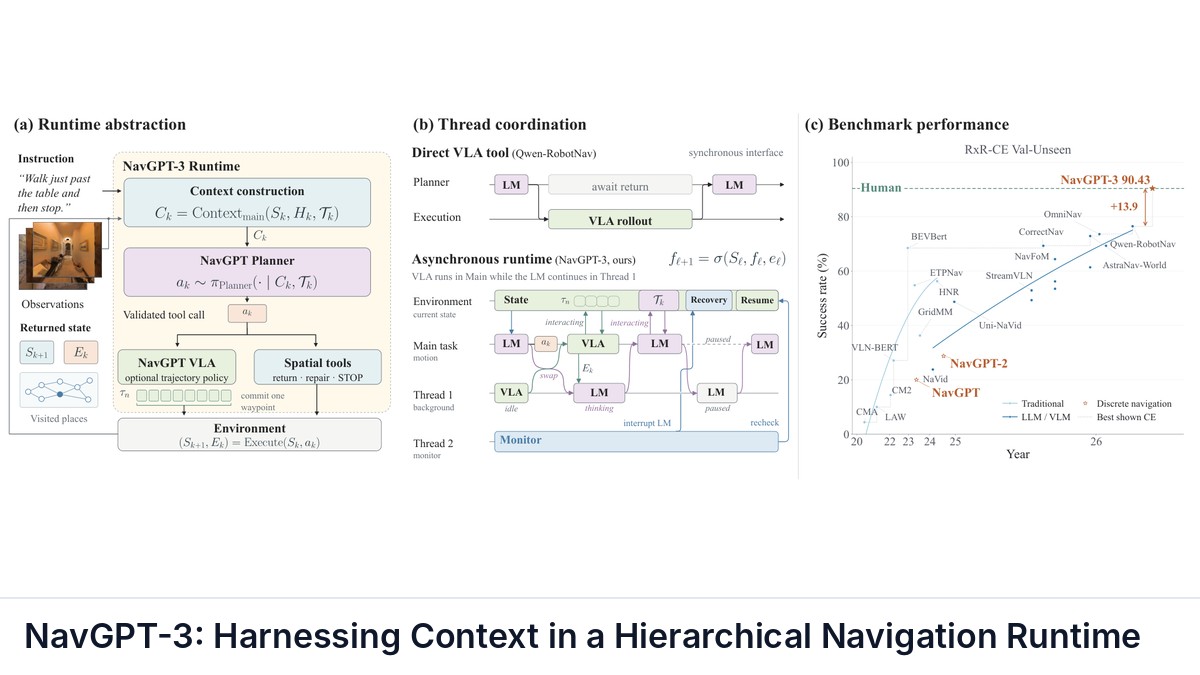
NavGPT-3: Harnessing Context in a Hierarchical Navigation Runtime
Gengze Zhou, Yicong Hong, Jiazhao Zhang et al.
Language models trained with long-horizon agentic reinforcement learning can generalize knowledge through reasoning, express precise actions, and pursue goals over many steps, raising the ceiling on what an embodied agent can understand and decide.