
Context-Aware Adaptive Pesticide Spraying for Agricultural Robots under Changing Weather and Terrain Using Vision-Language Models
Cong-Thanh Vu, Yen-Chen Liu · N/A · 2026
Framework
N/A
License
N/A
Stars
N/A
Summary
Precision pesticide spraying is essential for optimizing application efficiency and ensuring uniform chemical distribution.
Abstract Summary
Key Points
- Precision pesticide spraying is essential for optimizing application efficiency and ensuring uniform chemical distribution.
- Spraying performance is influenced by multiple factors, including environmental conditions such as temperature and wind speed, pesticide type, and the robot's capability to accurately perceive crops and target spray locations.
- Existing approaches predominantly emphasize crop detection and rely on predefined spraying parameters, whereas human operators dynamically adjust their spraying strategies by considering environmental conditions, region-specific crop characteristics, and the type of pesticide being applied.
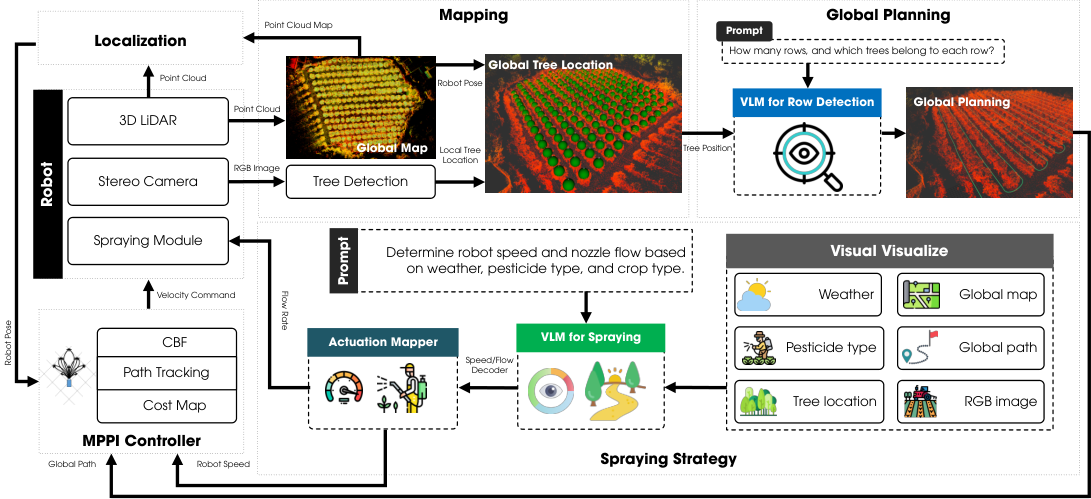
- In this study, we propose a context-aware adaptive spraying framework based on Vision-Language Models (VLMs), which enables robots to leverage spatial reasoning and integrate information from multiple sources, including crop type, pesticide type, and weather data, to make adaptive and optimized spraying decisions.
- Subsequently, a trajectory-tracking controller based on Model Predictive Path Integral (MPPI) control is employed to ensure precise navigation and accurate spraying at crop locations.
System Design
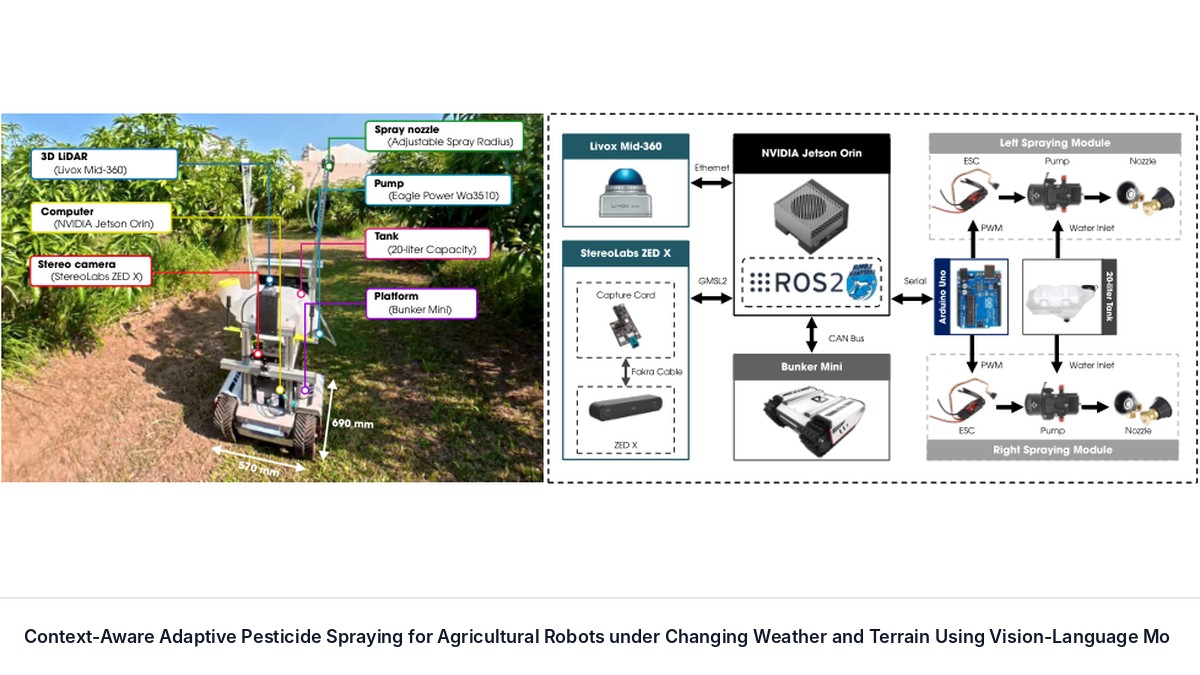
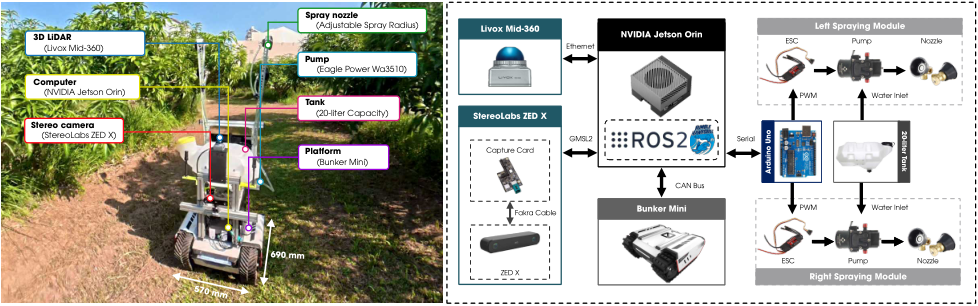
This section presents the autonomous pesticide-spraying robot used in the experiments. The robot is developed based on the Bunker Mini platform manufactured by Agilex. This compact chassis employs a tracked mobility system, enabling stable operation on uneven and complex terrains commonly found in agricultural fields, as illustrated in Fig. 1 .
Methods
In this section, we present the proposed methodology, including the system architecture, the VLM-enabled path-planning module for autonomous crop row detection, the VLM-based spraying strategy, and finally, the path-tracking controller The first step in our approach is to construct a global map of the field environment from point cloud data captured by a 3D LiDAR with a built-in IMU using the Fast-LIO2 algorithm ( Xu et al., 2022 ) .
Sources and Demonstrations
Figures are reproduced from Vu et al. See the full paper for experimental details and the project page, when the paper links one, for demonstrations and videos.
Related Papers
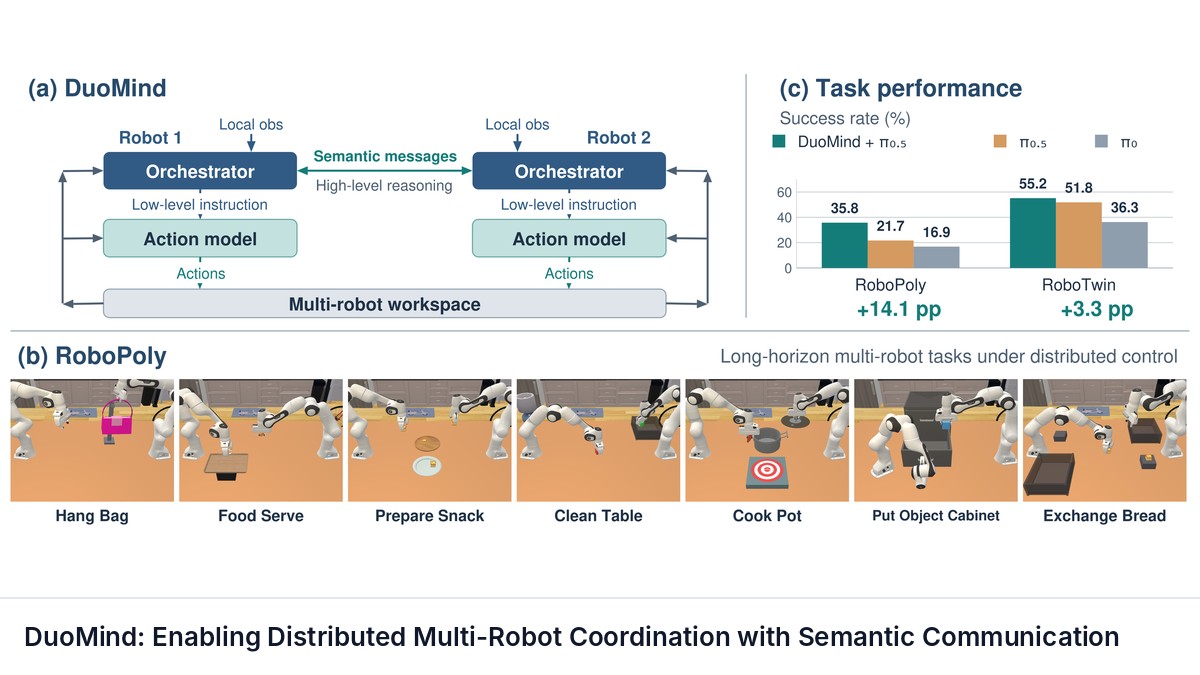
DuoMind: Enabling Distributed Multi-Robot Coordination with Semantic Communication
Hanchu Zhou, Dechen Gao, Hang Wang et al.
Vision-language models (VLMs) and vision-language-action models (VLAs) have recently driven rapid progress in general-purpose robots, yet most progress has focused on single-robot settings.
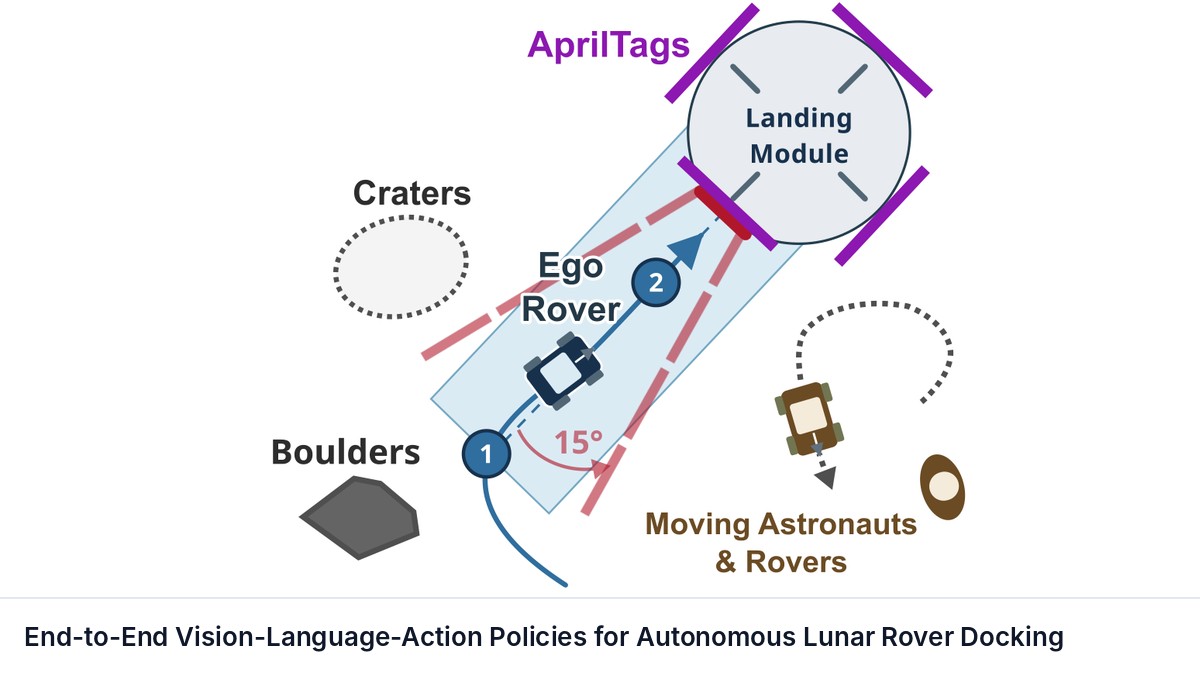
End-to-End Vision-Language-Action Policies for Autonomous Lunar Rover Docking
Sitan Huang, Grace Gao
Surface navigation on the Moon is subject to extreme illumination contrast and deployment-time perceptual disturbances.
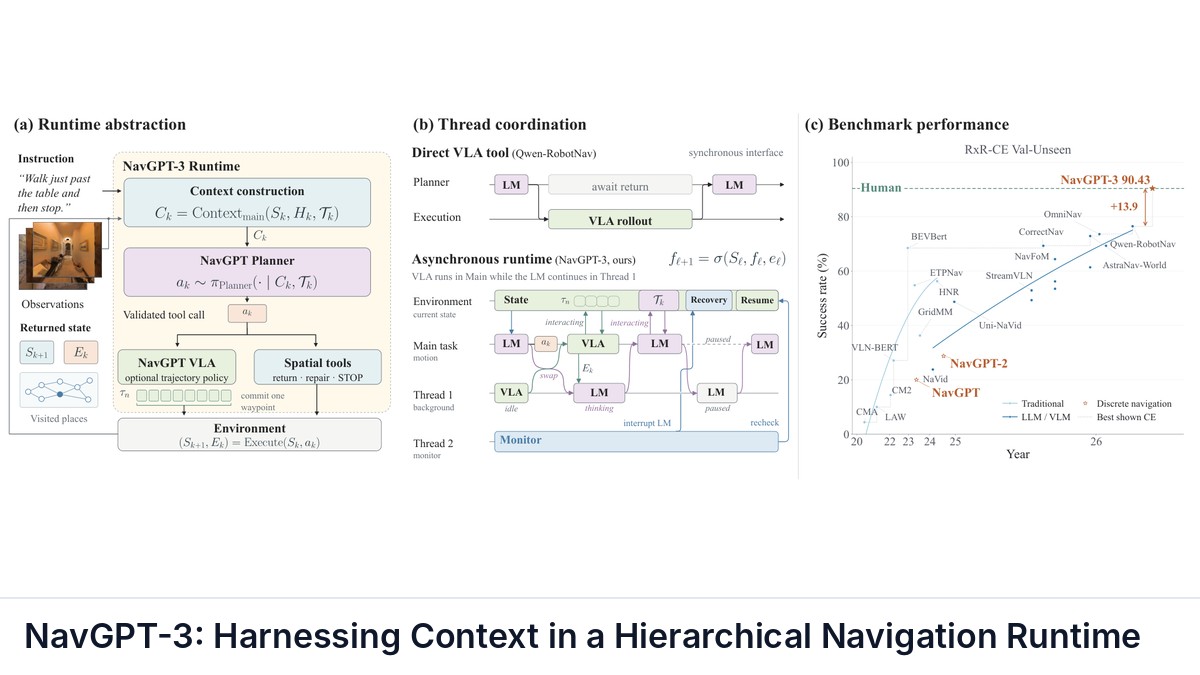
NavGPT-3: Harnessing Context in a Hierarchical Navigation Runtime
Gengze Zhou, Yicong Hong, Jiazhao Zhang et al.
Language models trained with long-horizon agentic reinforcement learning can generalize knowledge through reasoning, express precise actions, and pursue goals over many steps, raising the ceiling on what an embodied agent can understand and decide.
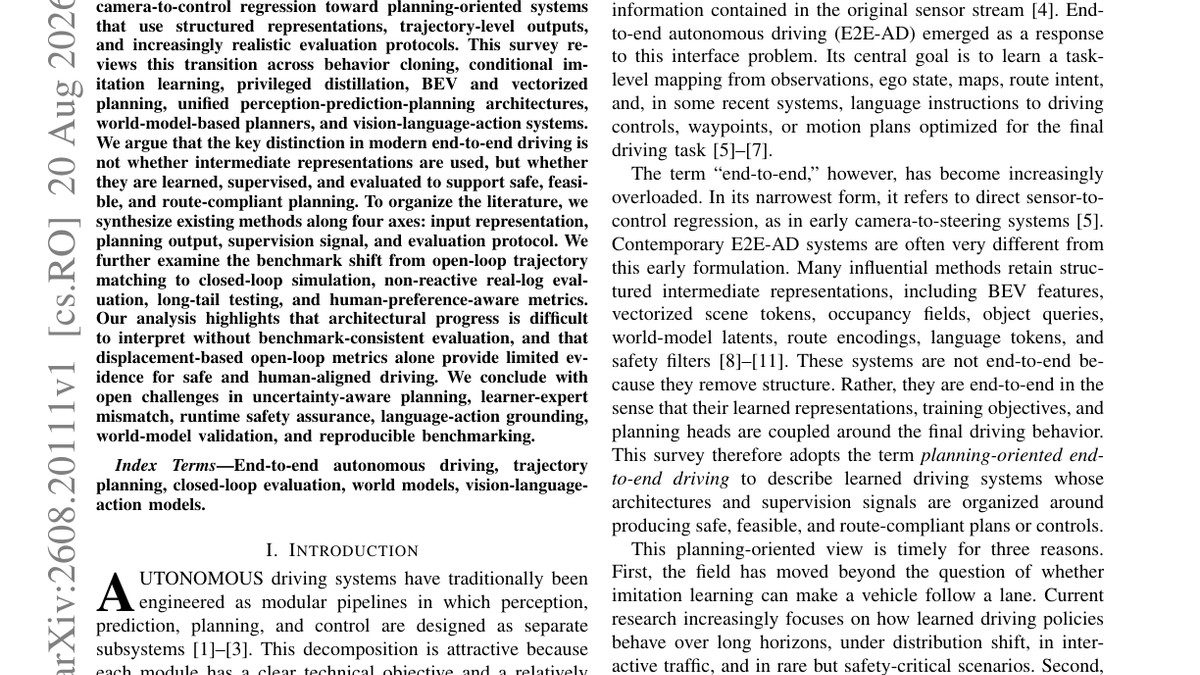
Planning-Oriented End-to-End Autonomous Driving: Architectures, Evaluation, and Emerging Paradigms
Yanchen Guan, Xingcheng Liu, Bin Rao et al.
End-to-end autonomous driving has evolved from camera-to-control regression toward planning-oriented systems that use structured representations, trajectory-level outputs, and increasingly realistic evaluation protocols.