
Autoware in Construction: Gap Analysis and LiDAR Perception Toward Off-Road Autonomous Driving
Yu Otsuki, Teja Emmey, Sena Matsushita, Akiro Harada, Takeshi Miura · N/A · 2026
Framework
N/A
License
N/A
Stars
N/A
Summary
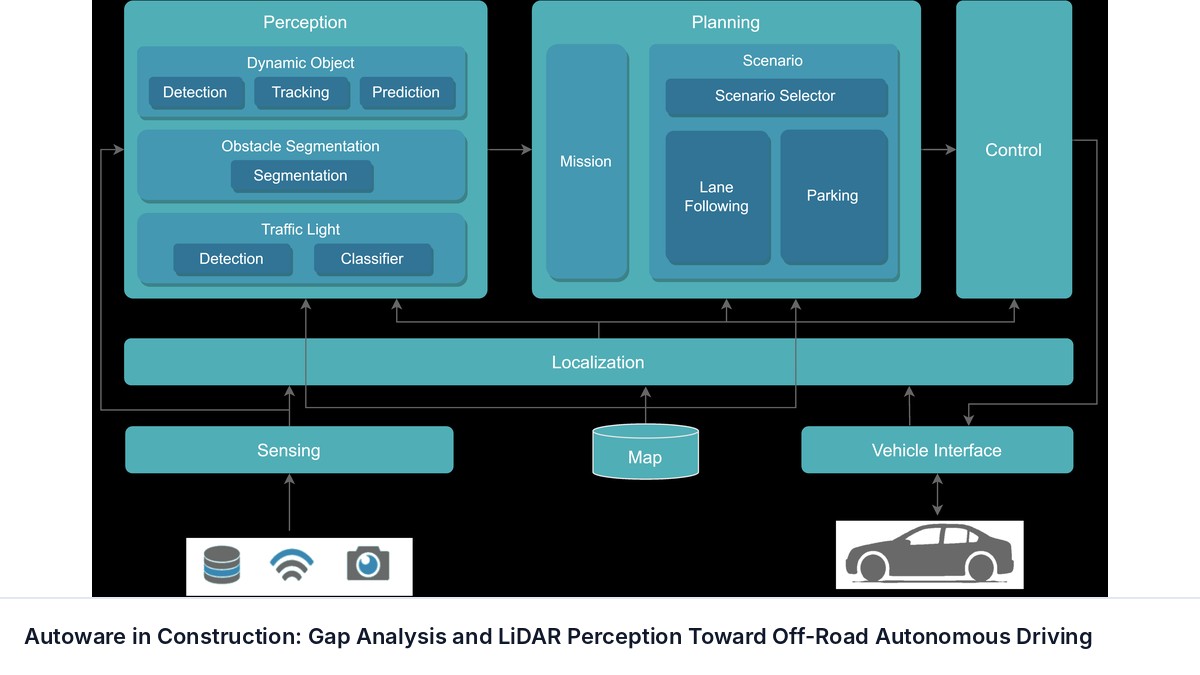
Autoware is an open-source autonomous driving software platform widely adopted by researchers and industry developers.
Abstract Summary
Key Points
- Autoware is an open-source autonomous driving software platform widely adopted by researchers and industry developers.
- Originally developed primarily for public-road applications, including passenger vehicles, taxis, and buses, Autoware is increasingly being extended to off-road environments such as construction and agricultural sites.
- Construction sites, however, differ fundamentally from public roads and challenge many assumptions underlying conventional autonomous driving systems.
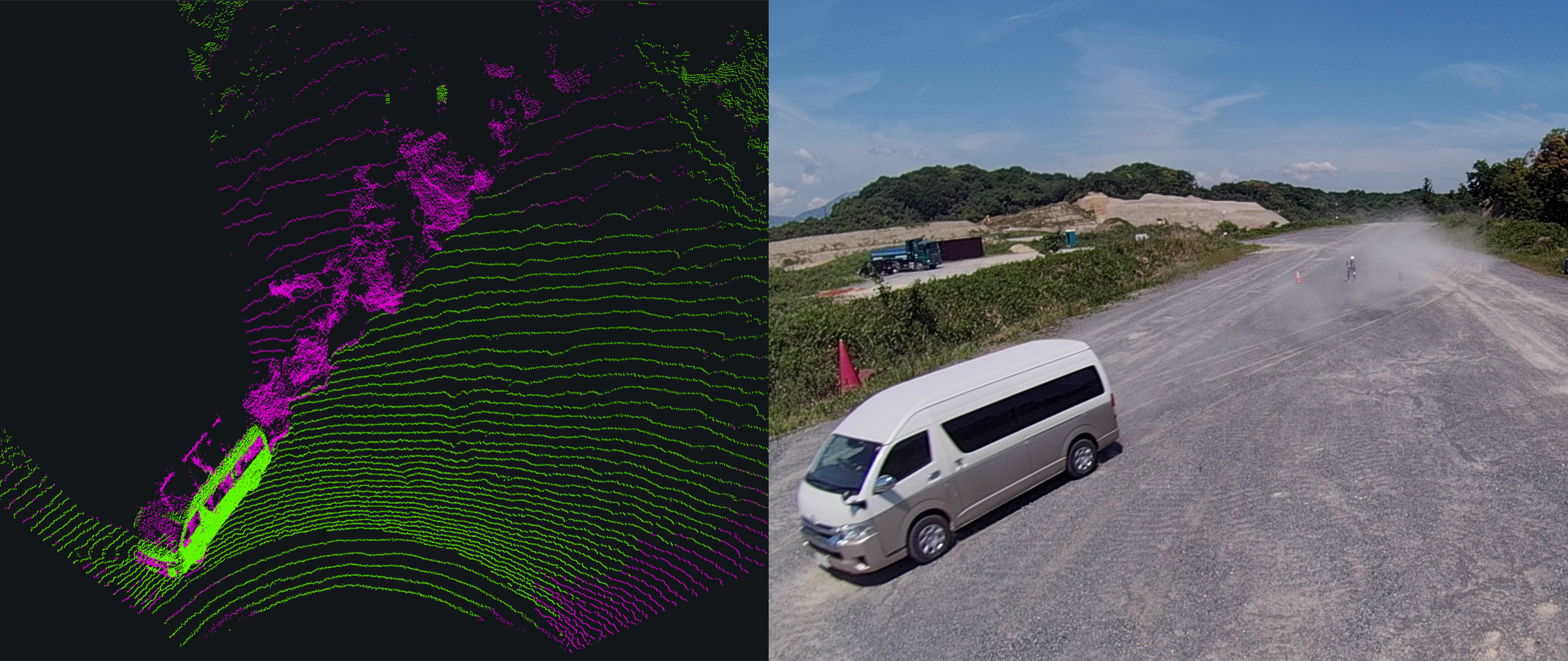
- They are characterized by unstructured terrain, airborne dust, continuously evolving site conditions, and construction-specific objects.
- This paper presents lessons learned from ongoing efforts to extend an Autoware-based autonomous driving system to large dump trucks operating at construction sites.
Technology Gaps in Autonomous Driving Between Public Roads and Construction Sites
We identified key differences between public-road and off-road construction environments in each module of the Autoware stack, as summarized in Table I . Challenges in construction environments are interdependent across these modules. Therefore, achieving construction autonomy requires system-wide integration rather than the isolated replacement of individual algorithms.
Lessons Learned from Field Development of LiDAR-based Perception
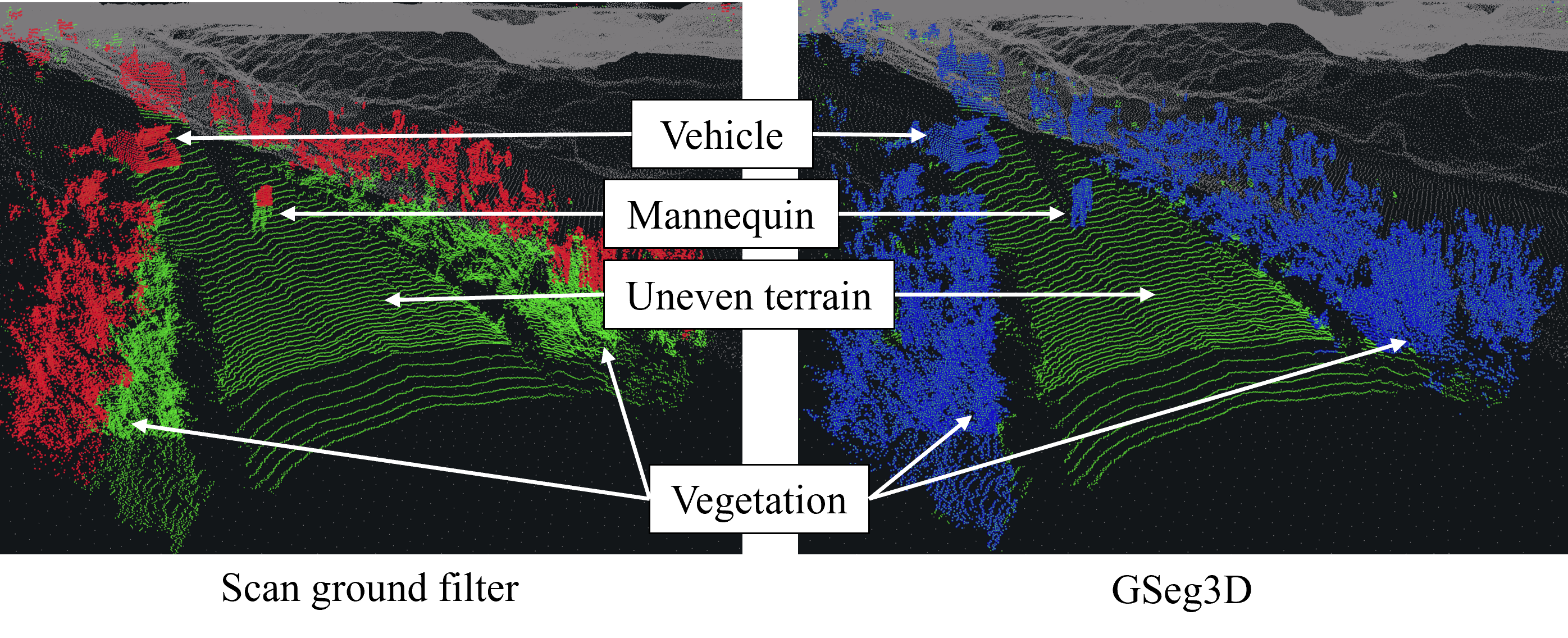
Among the technology gaps in Table I , this section presents our LiDAR-based perception pipeline: LiDAR sensor $\rightarrow$ sensor driver $\rightarrow$ preprocessing filters $\rightarrow$ multi-LiDAR concatenation $\rightarrow$ postprocessing filters $\rightarrow$ ground segmentation $\rightarrow$ dust filtering $\rightarrow$ object detection, developed by extending the existing Autoware pipeline.
Roadmap toward End-to-End autonomous driving in construction
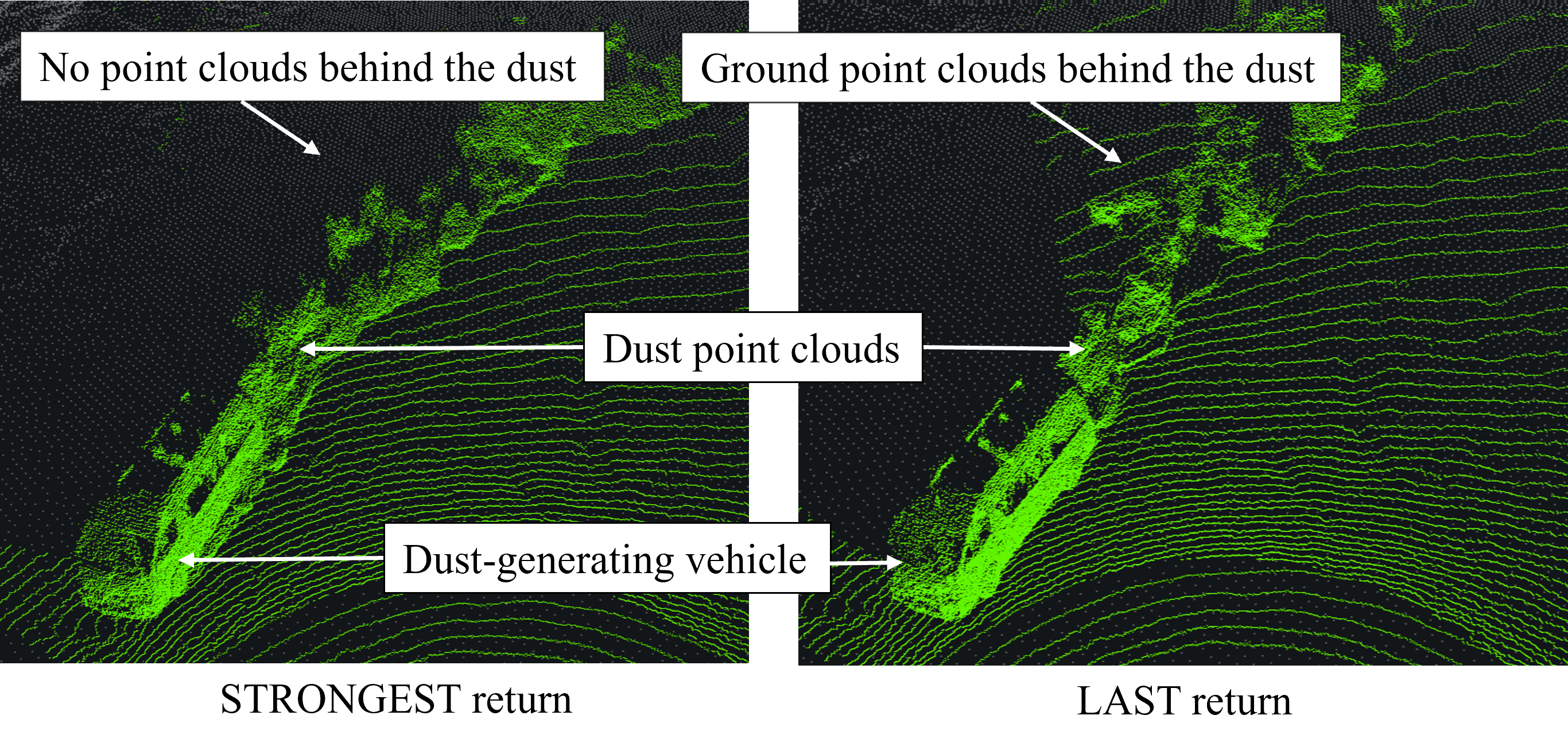
Current learning-based perception modules in Autoware have been trained primarily on public-road datasets [ 14 ] . For example, a standard LiDAR-based CenterPoint model detects five object classes: cars, trucks, buses, bicycles, and pedestrians.
Construction sites, however, contain a substantially different range of objects, including heavy construction machinery, service vehicles, workers wearing high-visibility clothing, traffic cones, rocks, and berms.
Sources and Demonstrations
Figures are reproduced from Otsuki et al. See the full paper for experimental details and the project page, when the paper links one, for demonstrations and videos.
Related Papers
A Low-Cost, Open Platform for End-to-End Autonomous Driving on a Miniature Ackermann Vehicle
Gustavo Claudio Karl Couto, Eric Aislan Antonelo, Gabriel George Zipperer
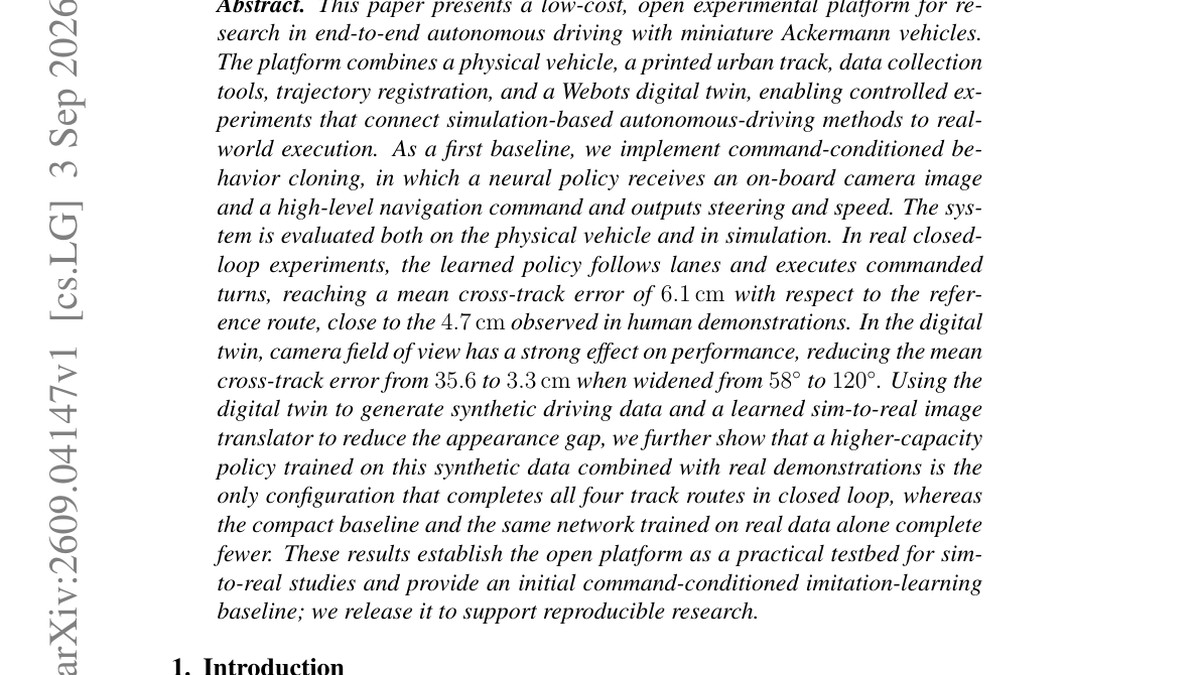
This paper presents a low-cost, open experimental platform for research in end-to-end autonomous driving with miniature Ackermann vehicles.
Aim Short to Reach Far: Your Frozen World Model Can Plan Better Than You Think
Xvyuan Liu, Jianjie Fang, Chen Gao et al.
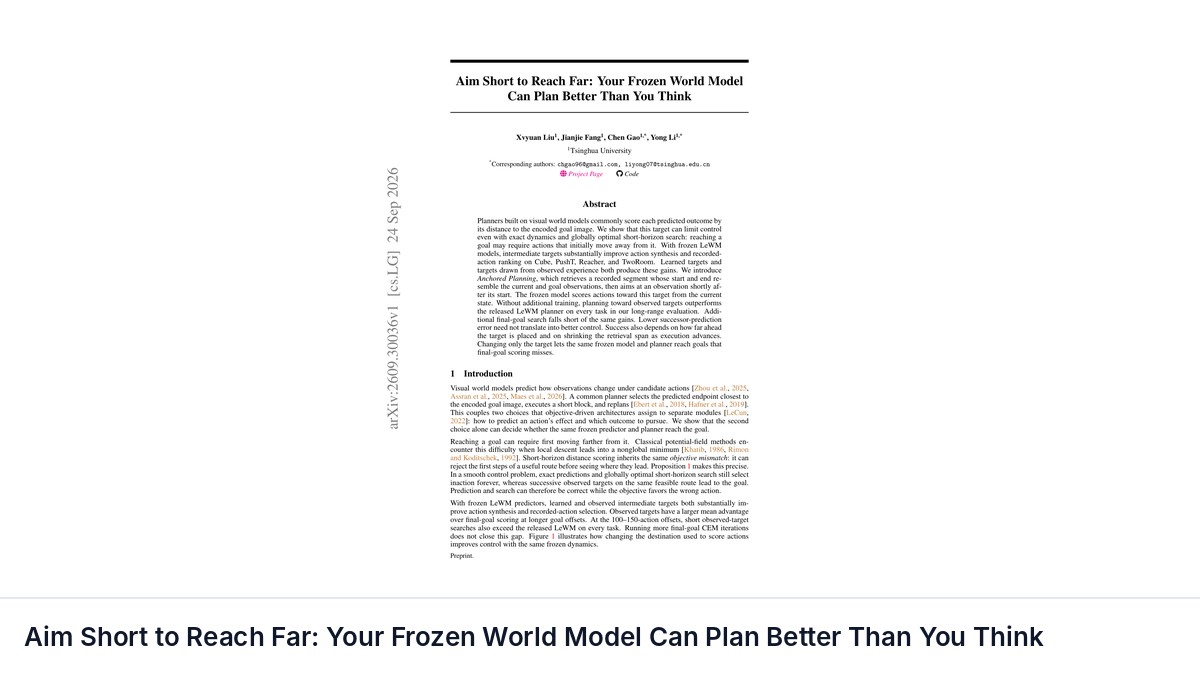
Planners built on visual world models commonly score each predicted outcome by its distance to the encoded goal image. We show that this target can limit control even with exact dynamics and globally optimal short-horizon search: reaching a goal may require actions that initially move away from it.
Autonomous Droplet Navigation via Model-Based Reinforcement Learning: Zero-Shot Transfer and Emergent Dynamics
Rajneesh Anand, Mayuresh V. Kothare
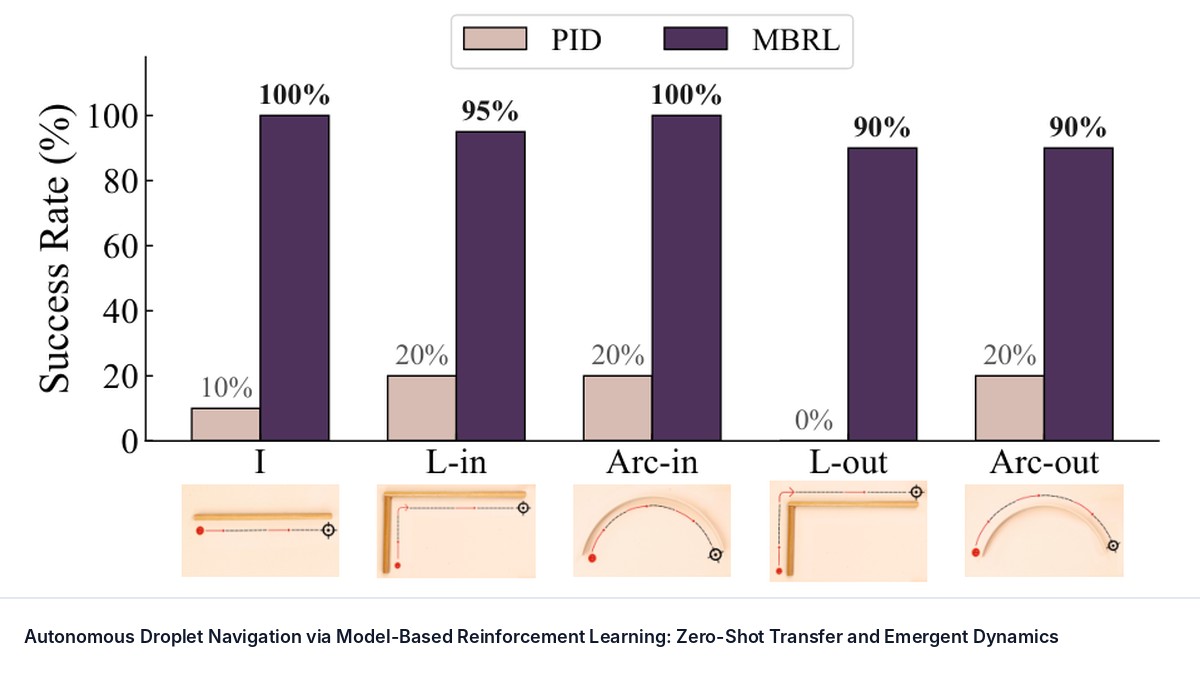
Self-driving laboratories (SDLs) are transforming chemical and materials discovery through closed-loop automation, yet automated infrastructure for physical manipulation of soft, deformable matter remains beyond current robotic platforms.
Catch, Throw, Repeat: Planning for Human-Robot Partner Juggling
Jonathan Rainer Lippert, Kai Ploeger, Abir Chowdhury et al.
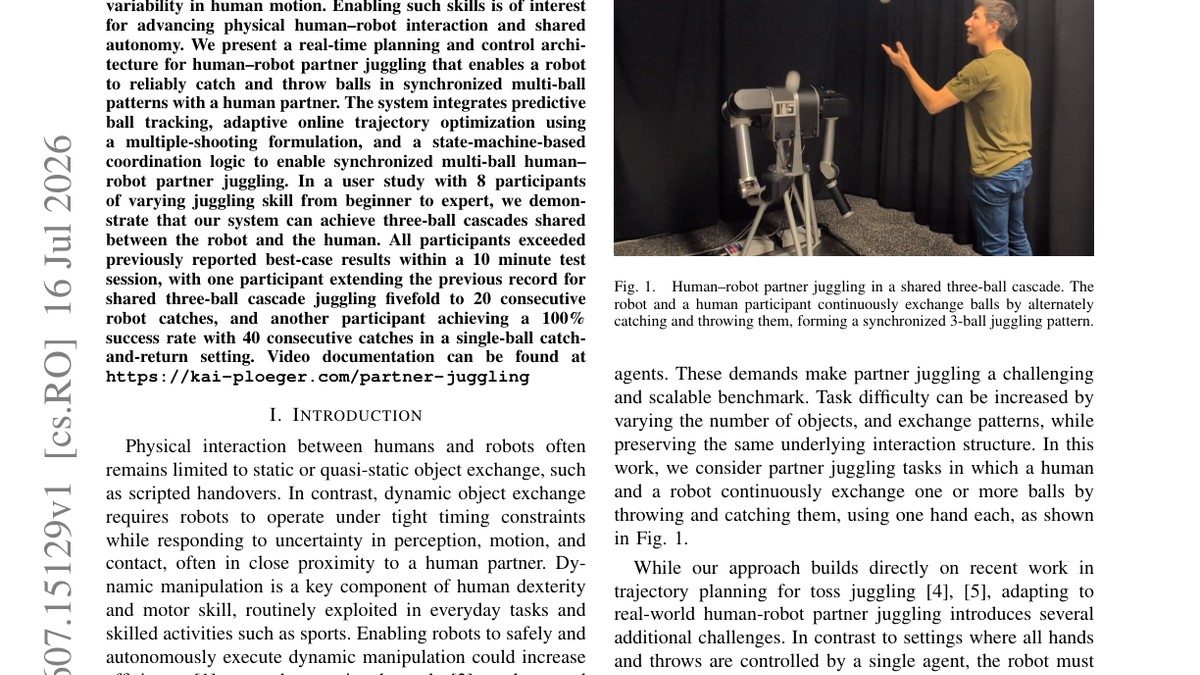
Dynamic object exchange between humans and robots remains a challenging problem due to uncertainty in perception, timing, and contact-rich interaction.