
TeleHairing: A Teleoperation Baseline for Robotic Haircutting
Zhendai Huang, Aleksi Vilkki, Jianan Huang, Bolin Liao, Chunbo Luo, Leopoldo Angrisani, Shuai Li · N/A · 2026
Framework
N/A
License
N/A
Stars
N/A
Summary
Robotic haircutting requires controlled tool motion near the head while simultaneously accounting for communication, visual feedback, tool actuation, and interruption handling.
Abstract Summary
Key Points
- Robotic haircutting requires controlled tool motion near the head while simultaneously accounting for communication, visual feedback, tool actuation, and interruption handling.
- Existing studies still lack an operator-in-the-loop reference for analyzing these coupled behaviors before human trials or stronger autonomy.
- This paper presents TeleHairing, a closed-loop teleoperation architecture for mannequin-based robotic haircutting evaluation under local, relay, and remote deployment conditions.
- Logged timing shows that the main remote latency increase occurs before the robot-side control endpoint: overall timing reached 190.5~ms in remote mode, while robot-side command queue, control processing, and control-to-robot timing remained similar across modes.
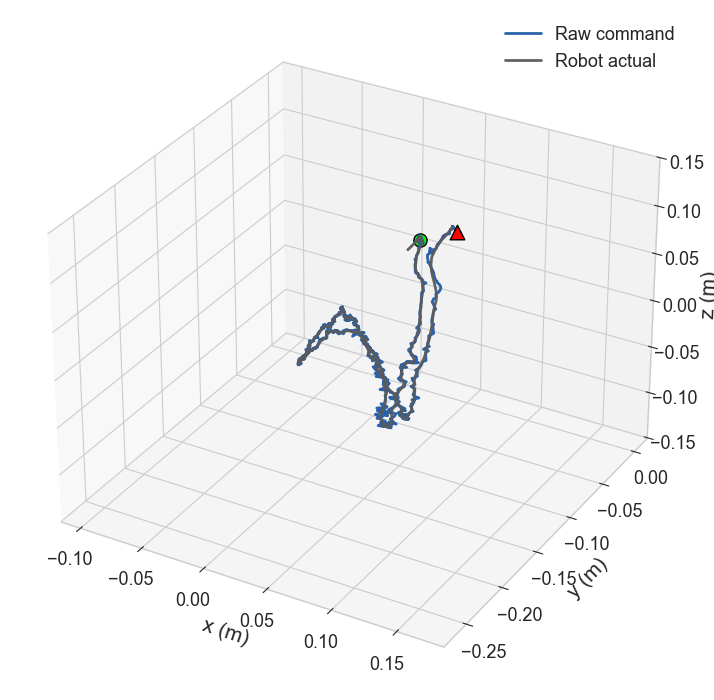
- Trajectory analysis shows that the larger remote command-following error was dominated by the terminal withdrawal segment rather than accumulated uniformly over the path; excluding this segment reduced remote root-mean-square error (RMSE) from 45.1 mm to 9.6 mm.
TeleHairing System Architecture
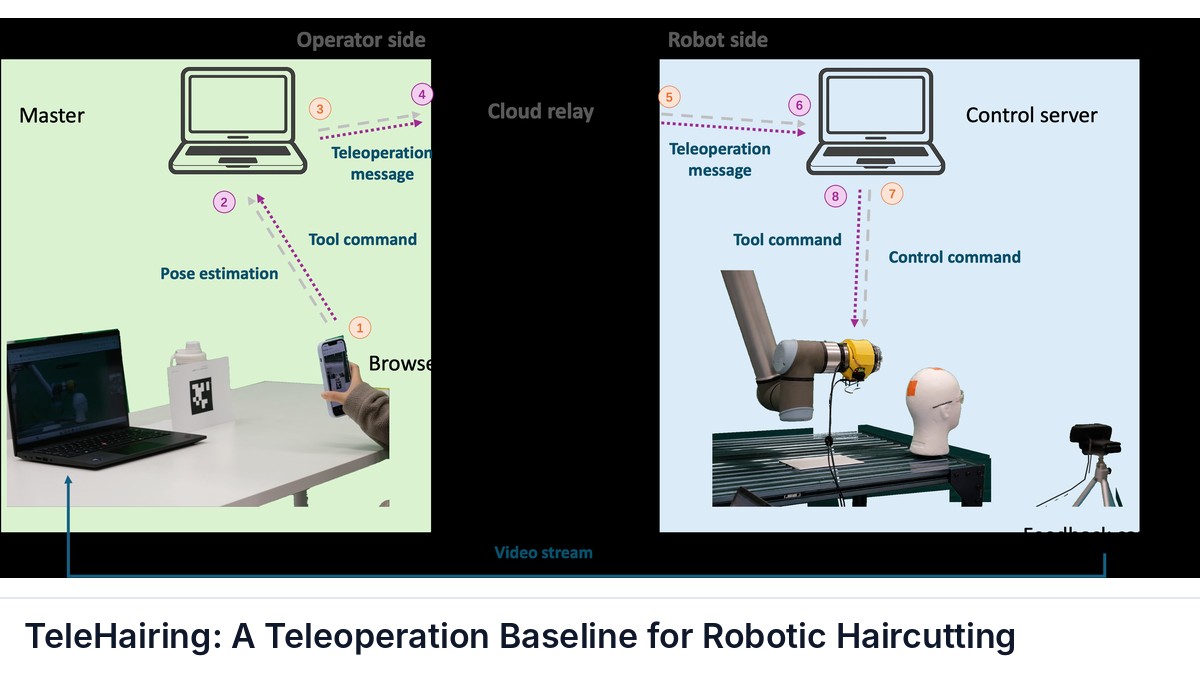
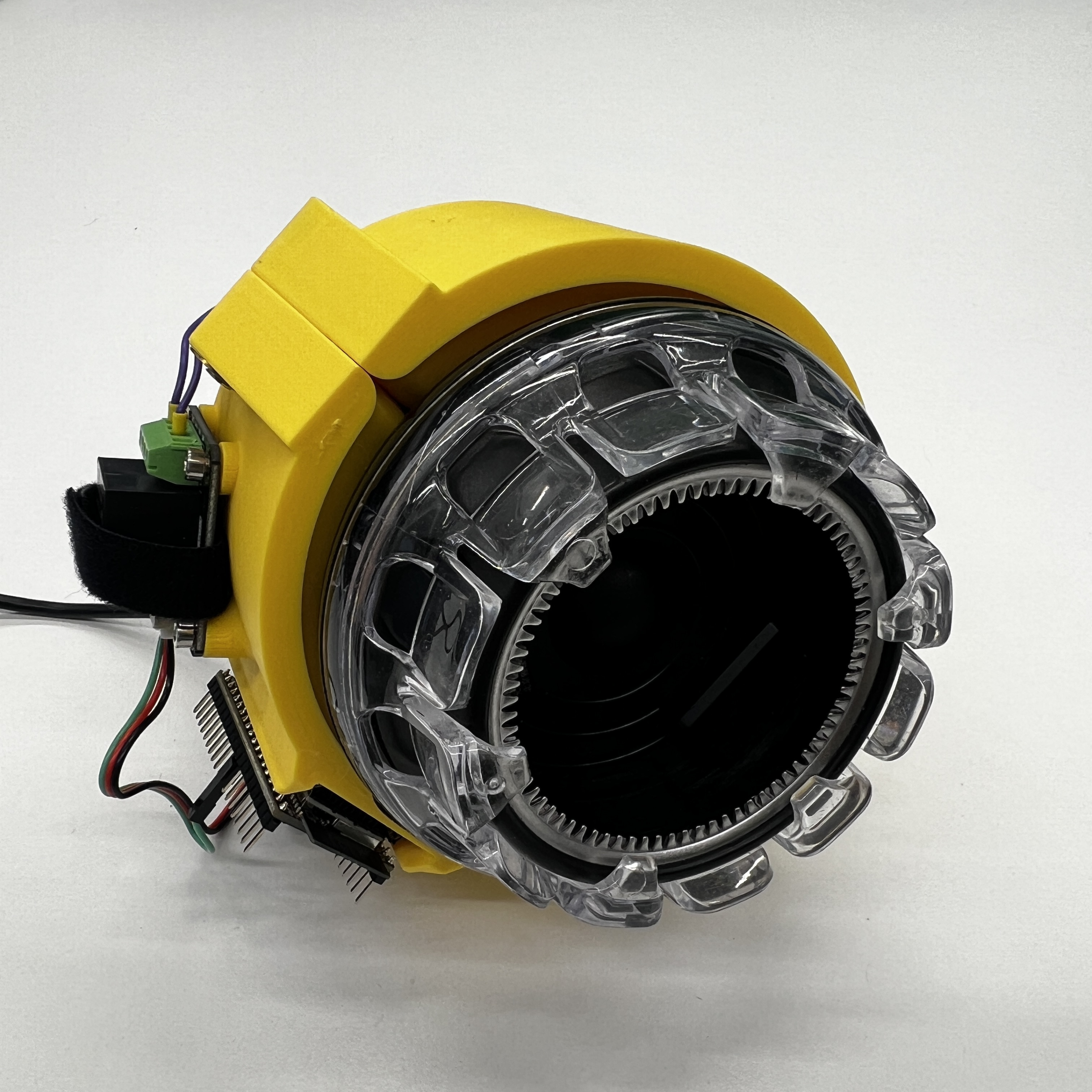
This section presents the TeleHairing architecture and the design rationale underlying its use for robotic haircutting teleoperation. It describes how the operator side, optional cloud relay, and robot side form a closed loop, followed by the communication pathways, pose-based control method, clipper actuation design, and operational safeguards used for near-head operation.
TeleHairing treats robotic haircutting as a supervised teleoperation task with near-head tool operation.
Experimental Evaluation
The experiments evaluate the teleoperation performance of TeleHairing for robotic haircutting. The present study focuses on system-level behavior rather than haircut quality and therefore employs a repeatable mannequin-based proxy trajectory under local, relay, and remote deployment conditions.
The dependent variables are communication timing across software endpoints, command-following trajectory error, and runtime fault-handling behavior.
Sources and Demonstrations
Figures are reproduced from Huang et al. See the full paper for experimental details and the project page, when the paper links one, for demonstrations and videos.
Related Papers

A Sim-to-Real Integration Pipeline for Training and Deployment of Chunk-Based VLA Manipulation Policies
Mathilde Kappel, Clémence Grislain, Mohamed Chetouani et al.
Vision-Language-Action (VLA) models have become a prominent paradigm for mapping multimodal inputs, including semantic instructions, visual observations of the scene, and proprioceptive observations, to robot actions.

Capability-Aware Arbitration for Semantic Intent-Based Shared Control
Zhaoda Du, Michael Bowman, Xiaoli Zhang
Shared control often allocates robot authority based on confidence in inferred human intent, assuming reliable autonomous execution. When this assumption fails, high intent confidence can cause over-helping.
Design and Evaluation of a Collaborative Teleoperation Interface for Multi-Operator Multi-Robot Systems in Challenging Environments
Alperen Kenan, Juan José García Cárdenas, Adriana Tapus et al.
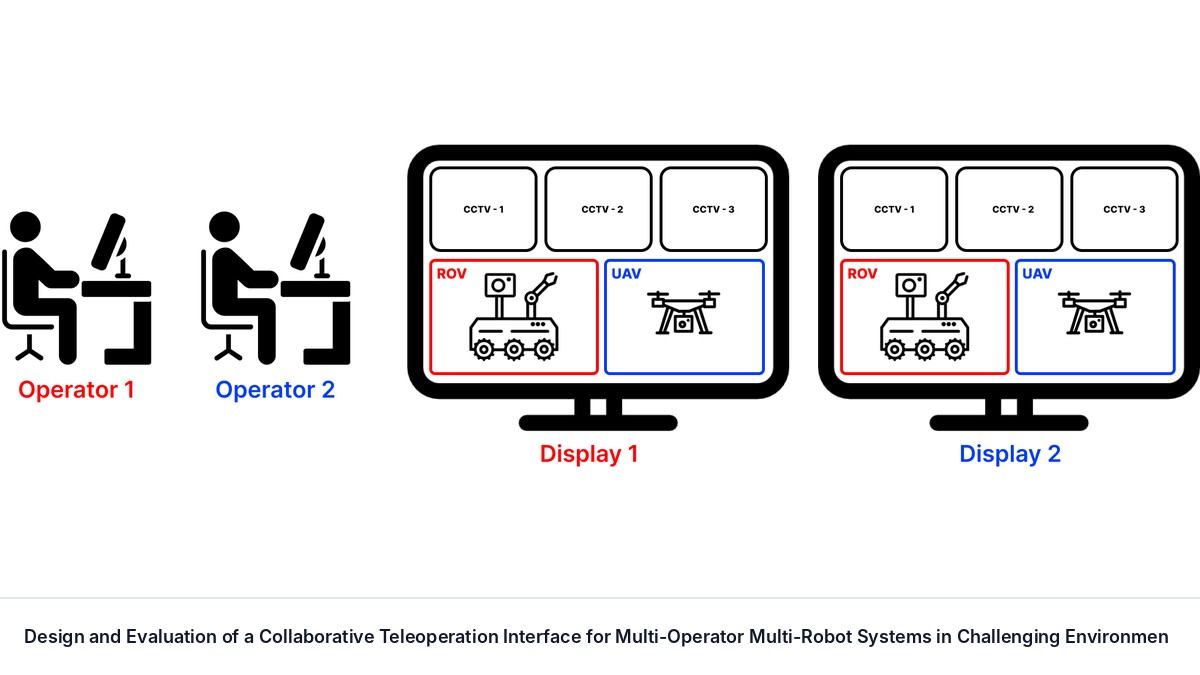
Multi-robot systems that combine the complementary capabilities of specialised platforms are critical for complex missions in challenging, inaccessible environments.
Design and Evaluation of a Touchscreen-Based Teleoperation Interface for Robotic Manipulators
Juan José García Cárdenas, Alperen Kenan, Hamidreza Raei et al.
Intuitive teleoperation interfaces are crucial for the safe and effective operation of robotic manipulators in challenging environments.