
Design and Evaluation of a Collaborative Teleoperation Interface for Multi-Operator Multi-Robot Systems in Challenging Environments
Alperen Kenan, Juan José García Cárdenas, Adriana Tapus, Paul Bremner, Manuel Giuliani · N/A · 2026
Framework
N/A
License
N/A
Stars
N/A
Summary
Multi-robot systems that combine the complementary capabilities of specialised platforms are critical for complex missions in challenging, inaccessible environments.
Abstract Summary
Key Points
- Multi-robot systems that combine the complementary capabilities of specialised platforms are critical for complex missions in challenging, inaccessible environments.
- Current deployments assign an operator or operator team to each robot, with collaboration relying on operator-to-operator communication to manually coordinate heterogeneous platforms with incompatible interfaces.
- This operator-dependent approach increases cognitive load and limits scalability across robots from different manufacturers.
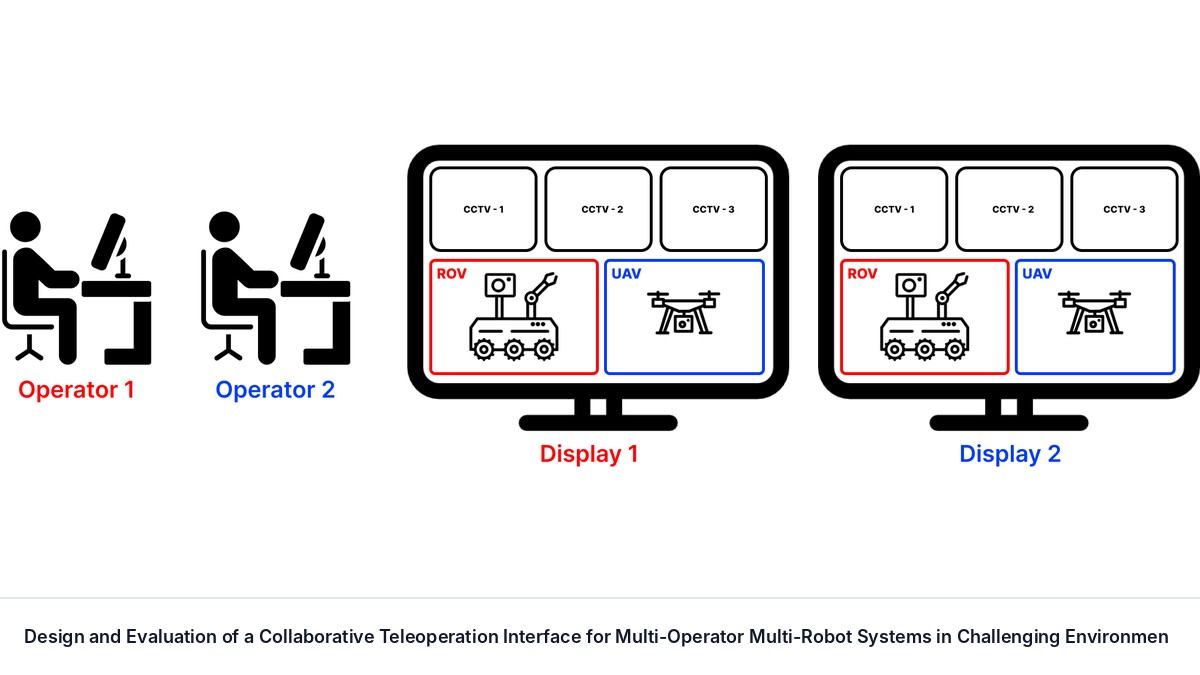
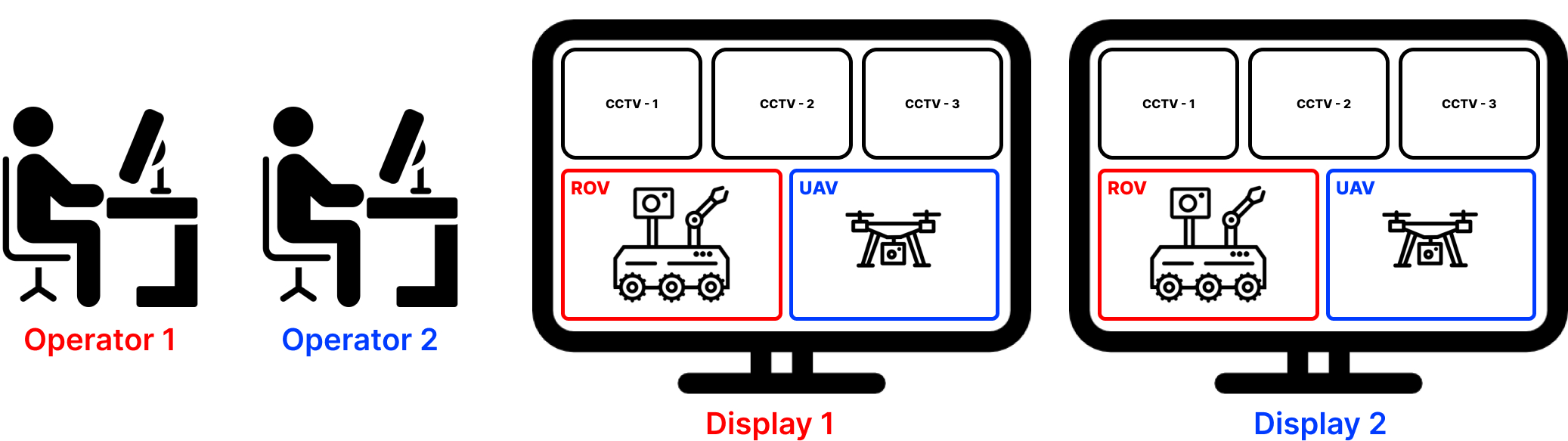
- This study designs and evaluates a shared-visualisation collaborative teleoperation interface to improve operator coordination, situational awareness, and the task performance in multi-operator, multi-robot systems.
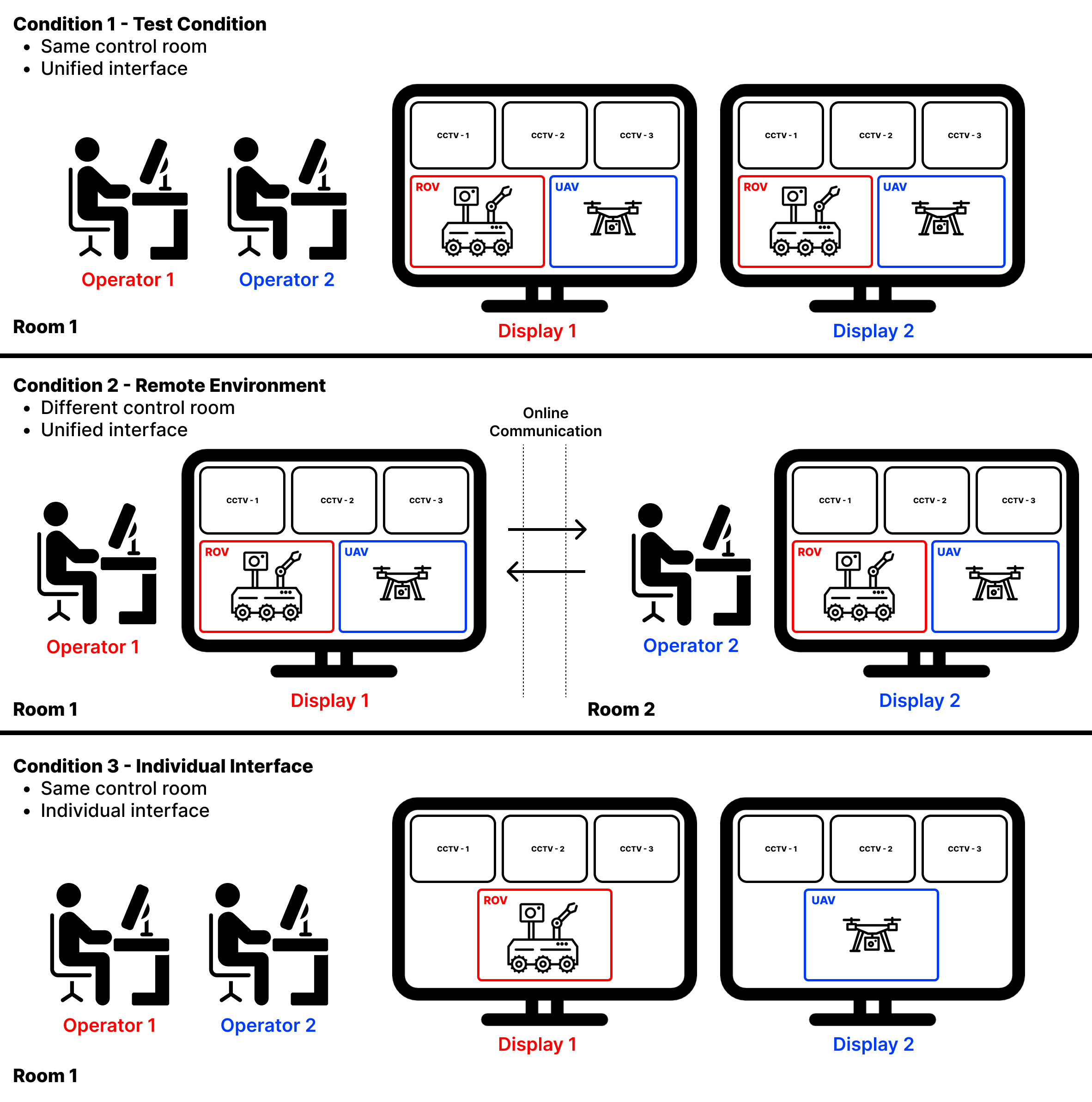
- A comparative user study with 16 participants compared three teleoperation conditions: co-located operators with a shared interface, remote operators with a shared interface, and co-located operators with individual interfaces.
Methodology
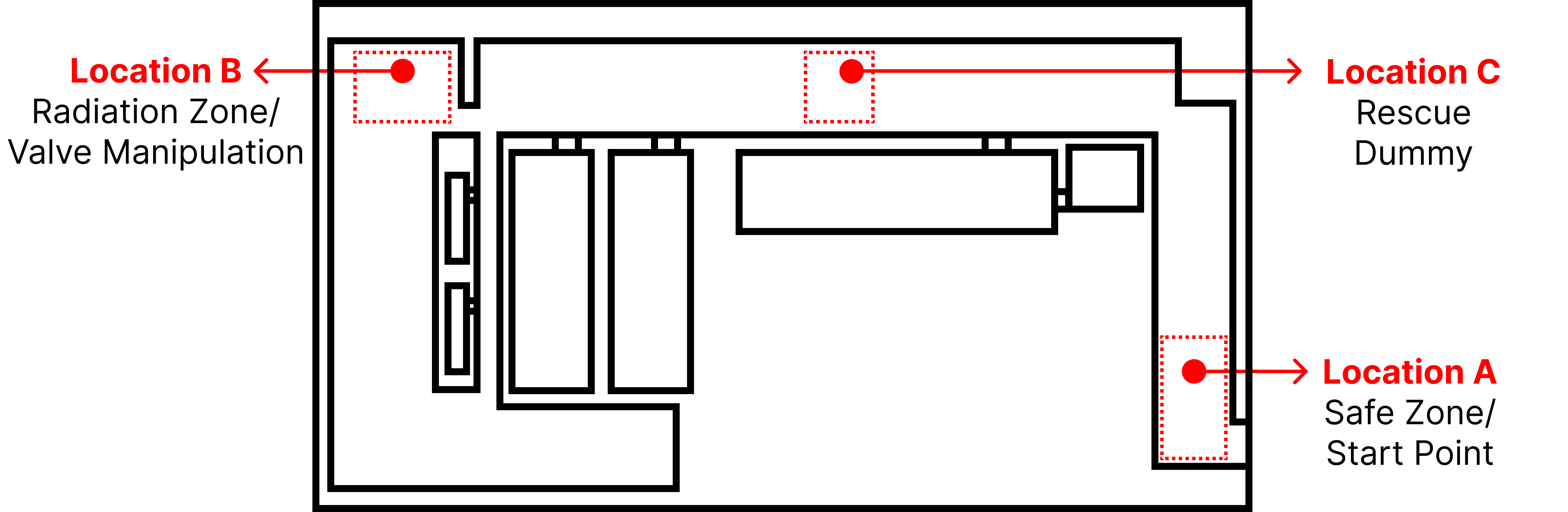
To evaluate the proposed collaborative interface for robot teleoperation, a comparative user study was conducted under three different conditions (Fig. 2 ). The objective was to assess usability, cognitive load, and task performance. Tasks were modelled on realistic disaster response scenarios such as radiation detection and search and rescue, which required collaboration between operator pairs.
Details of the simulation and the tasks are explained in Sec IV .
Digital Twin Simulation Implementation
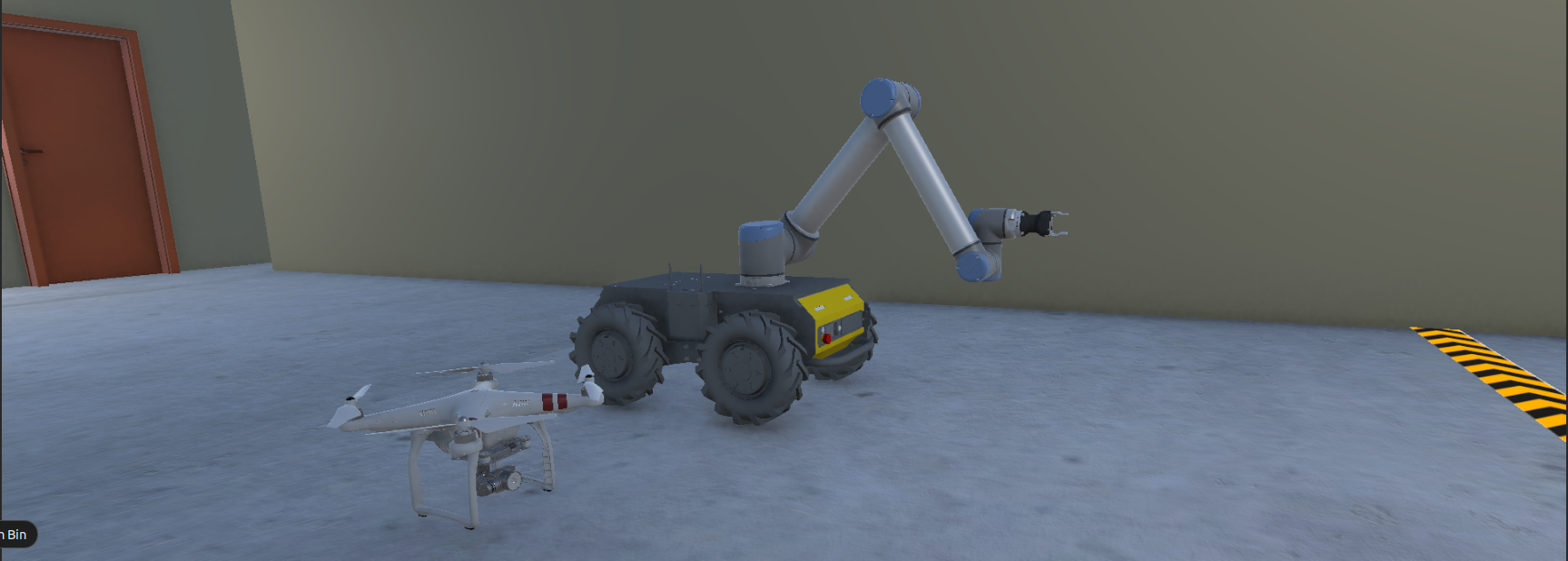
The environment is a digital twin of the Zwentendorf Nuclear Power Plant (NPP) in Austria, developed by the authors as part of the RAICAM team during the 5th European Robotics Hackathon using video and point cloud data. For the current research, the digital twin was extended with mobile robots, robot control and interaction algorithms, a collaborative User Interface (UI), and task scenarios.
Further details on the hackathon participation and digital twin creation process can be found in [ 10 ] .
Hypotheses
Building on research in collaborative HRI, three hypotheses are formulated: Participants in condition C1 (co-located, shared interface) will have lower cognitive load and better performance than condition C2 (remote, shared interface). Participants in condition C1 (co-located, shared interface) will have lower cognitive load and better performance than condition C3 (co-located, individual interfaces).
Results
All eight operator pairs completed the three experimental conditions. Unless otherwise stated, condition effects were first tested using one-way repeated-measures ANOVAs with condition as the within-subject factor. For task-performance and communication outcomes, the operator pair was treated as the unit of analysis; for questionnaire and physiological outcomes, the operator was treated as the unit of analysis.
Sources and Demonstrations
Figures are reproduced from Kenan et al. See the full paper for experimental details and the project page, when the paper links one, for demonstrations and videos.
Related Papers

A Sim-to-Real Integration Pipeline for Training and Deployment of Chunk-Based VLA Manipulation Policies
Mathilde Kappel, Clémence Grislain, Mohamed Chetouani et al.
Vision-Language-Action (VLA) models have become a prominent paradigm for mapping multimodal inputs, including semantic instructions, visual observations of the scene, and proprioceptive observations, to robot actions.
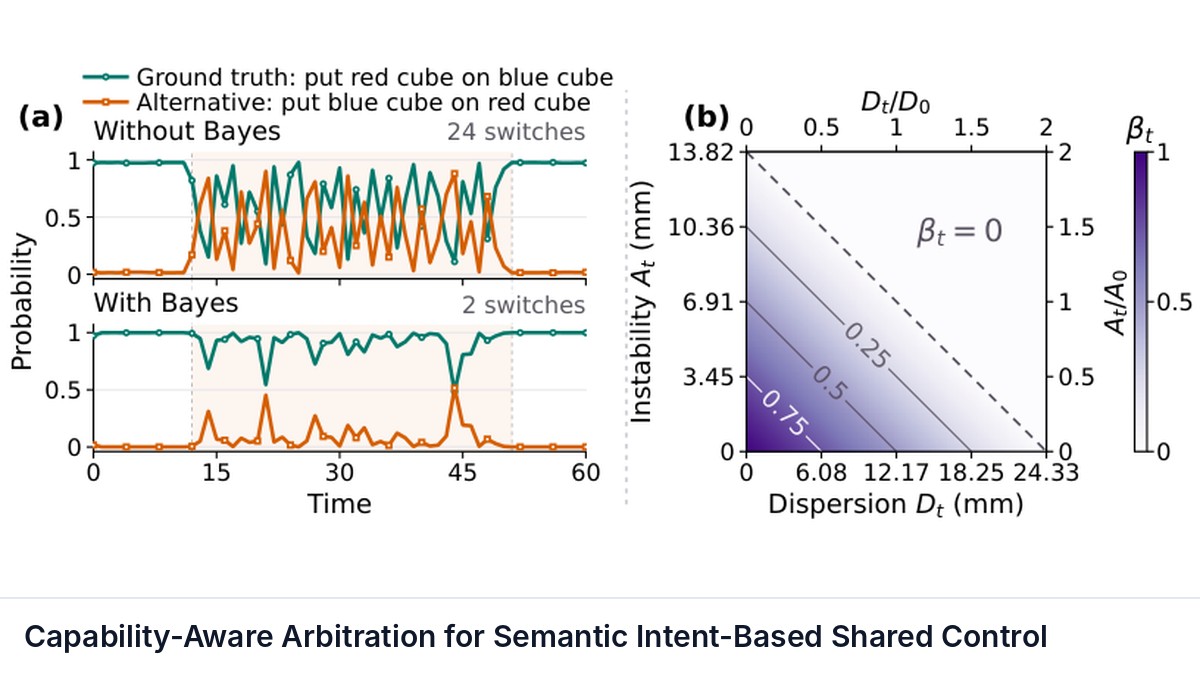
Capability-Aware Arbitration for Semantic Intent-Based Shared Control
Zhaoda Du, Michael Bowman, Xiaoli Zhang
Shared control often allocates robot authority based on confidence in inferred human intent, assuming reliable autonomous execution. When this assumption fails, high intent confidence can cause over-helping.
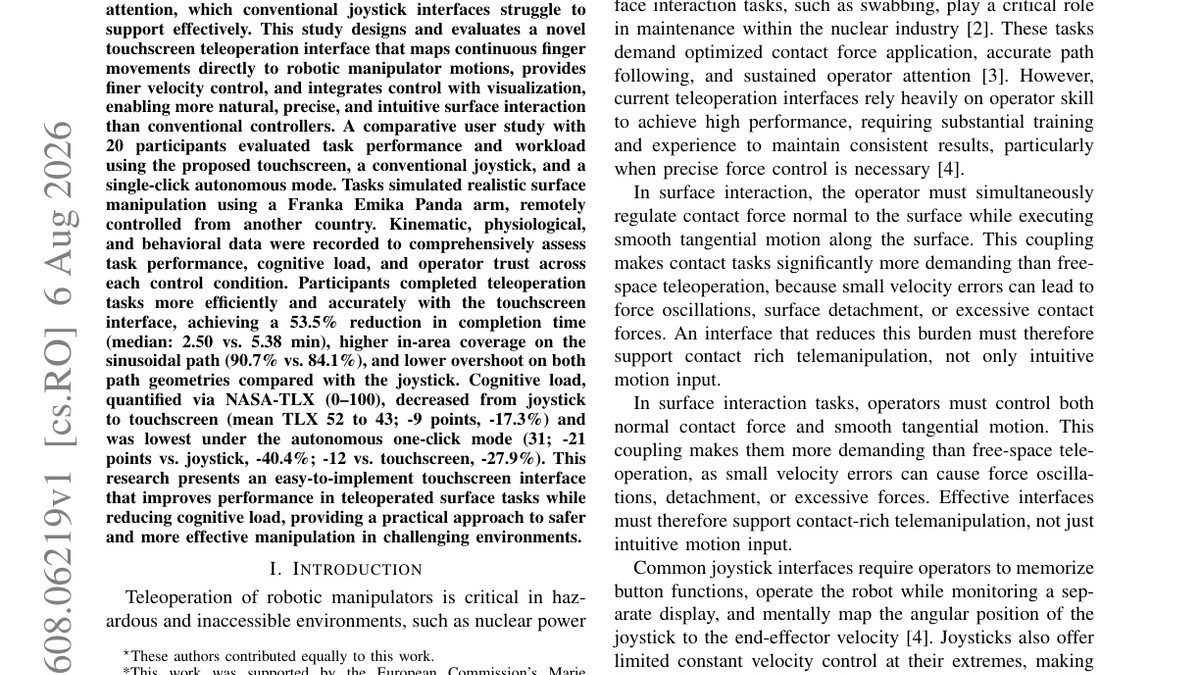
Design and Evaluation of a Touchscreen-Based Teleoperation Interface for Robotic Manipulators
Juan José García Cárdenas, Alperen Kenan, Hamidreza Raei et al.
Intuitive teleoperation interfaces are crucial for the safe and effective operation of robotic manipulators in challenging environments.
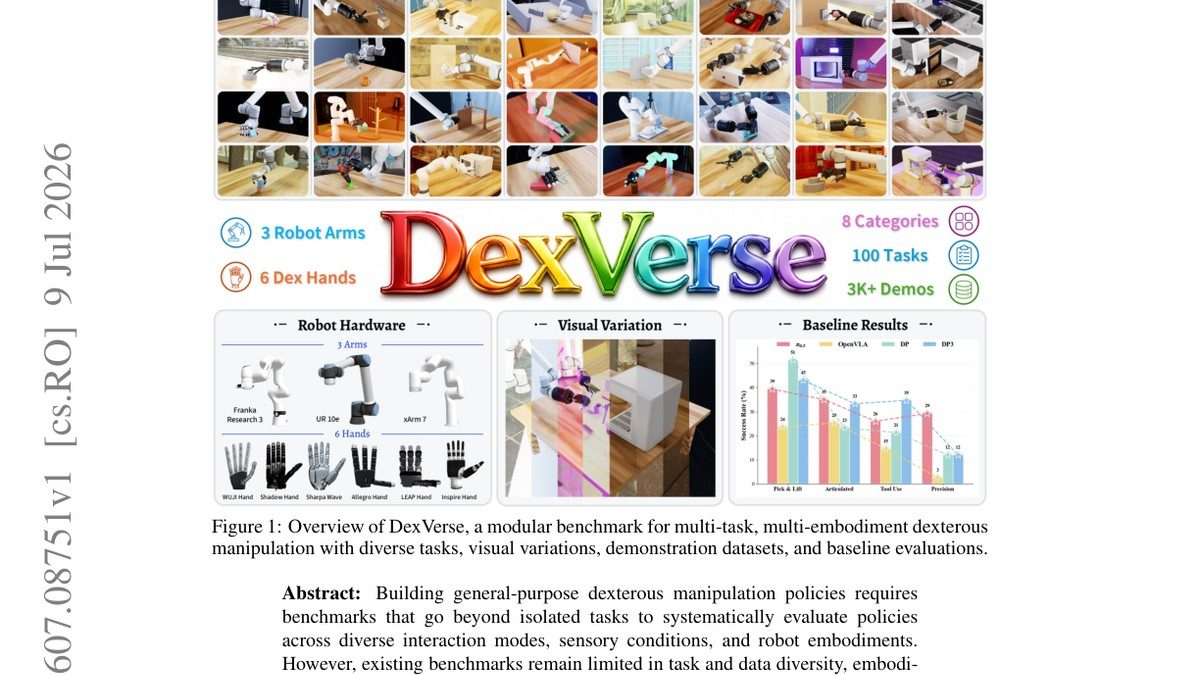
DexVerse: A Modular Benchmark for Multi-Task, Multi-Embodiment Dexterous Manipulation
Yunchao Yao, Zhuxiu Xu, Tianqi Zhang et al.
Building general-purpose dexterous manipulation policies requires benchmarks that go beyond isolated tasks to systematically evaluate policies across diverse interaction modes, sensory conditions, and robot embodiments.