
Workhorse: Learning Robust Whole-Body Humanoid Loco-Manipulation from Human Data
Hu, Songbo, Liao, Qiayuan, Chi, Yufeng, Zakka, Kevin, Shao, Yakun Sophia, Abbeel, Pieter, Sreenath, Koushil · N/A · 2026
Framework
N/A
License
N/A
Stars
N/A
Summary
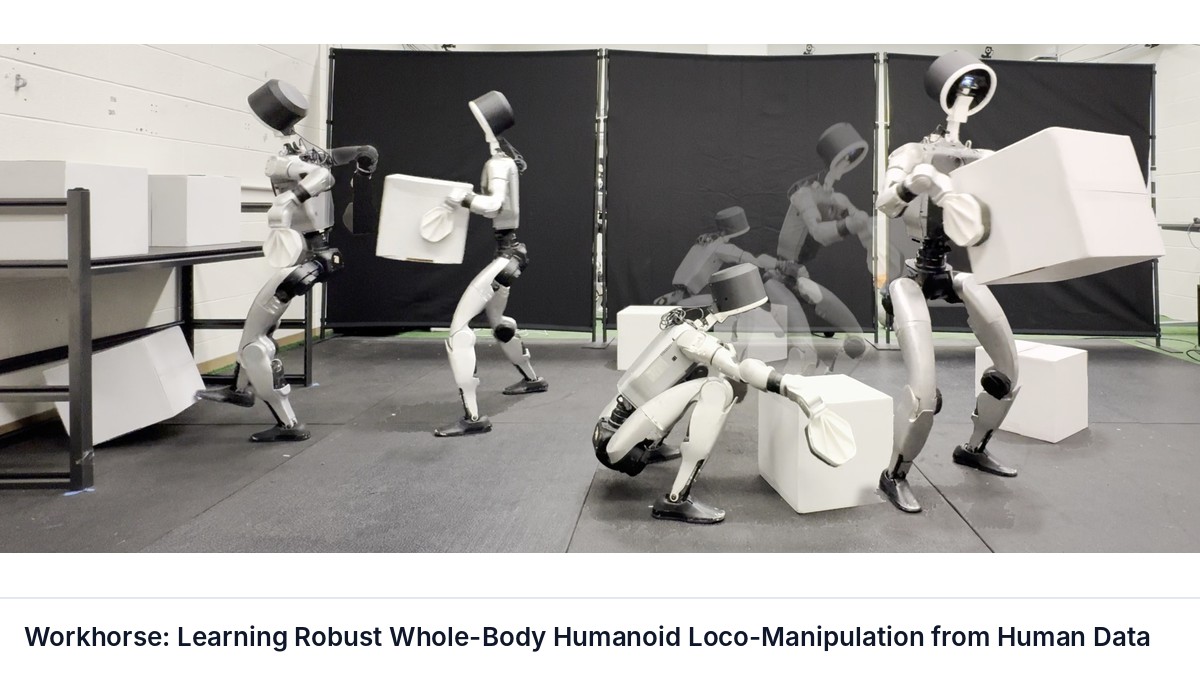
Humanoid robots still struggle to plan contact-rich whole-body manipulation from egocentric RGB and proprioception. Workhorse learns such manipulation from robot-free human demonstrations. A visual planner predicts five-link targets: the poses of the torso, both wrists, and both feet.
Abstract Summary
Key Points
- Humanoid robots still struggle to plan contact-rich whole-body manipulation from egocentric RGB and proprioception.
- Workhorse learns such manipulation from robot-free human demonstrations
- A visual planner predicts five-link targets: the poses of the torso, both wrists, and both feet
- A reinforcement-learning whole-body tracker follows them on the robot
- Both policies train separately on the same recorded human poses, without retargeting
HUMAN DATA COLLECTION
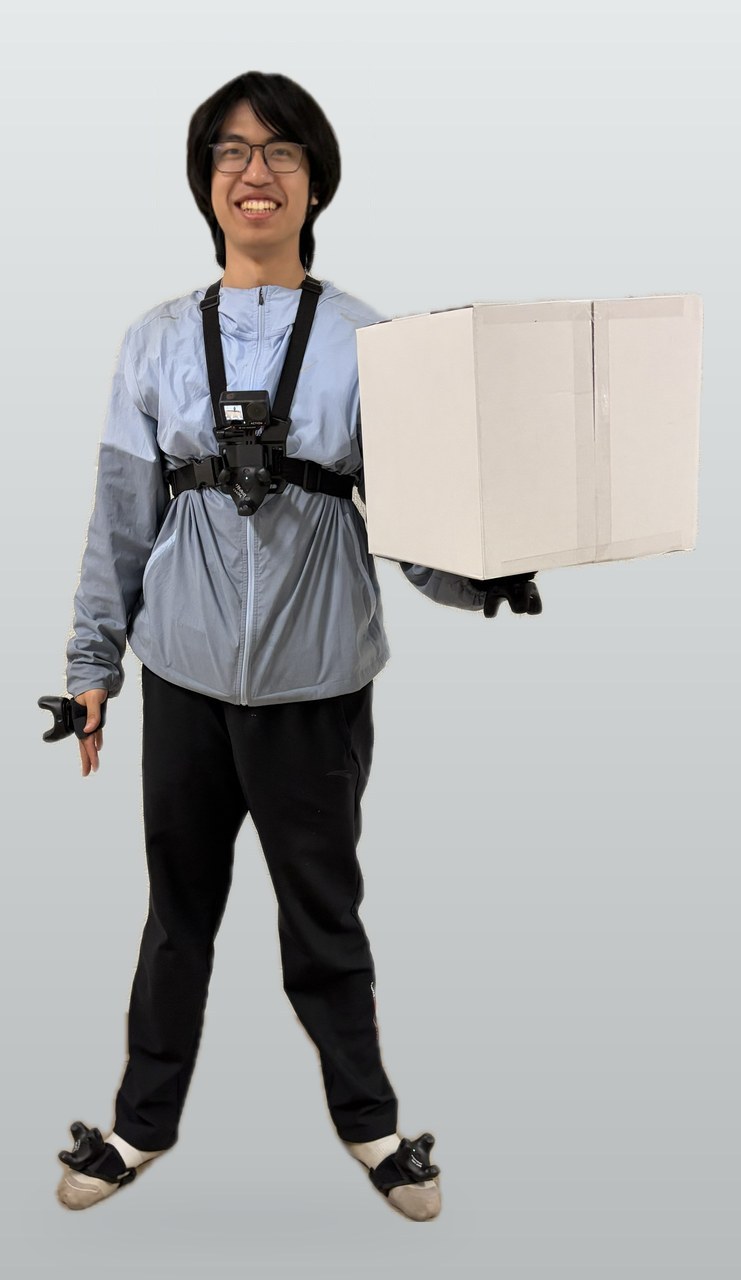
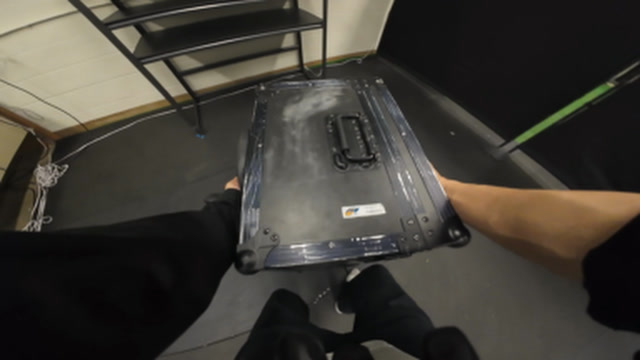
(a) (b) 0 1 $2\text{\,}\mathrm{s}$ audio onset (spectral flux) clap score (c) Both policies learn directly from the human demonstrations, so their quality limits how well the behavior transfers to the robot. This section describes the rig (§ III-A ), the recording protocol (§ III-B ), and the synchronization and processing (§ III-C ).
The protocol splits each session into repetitions, and it perturbs only the object, never the demonstrator.
HUMANOID SKILL TRANSFER
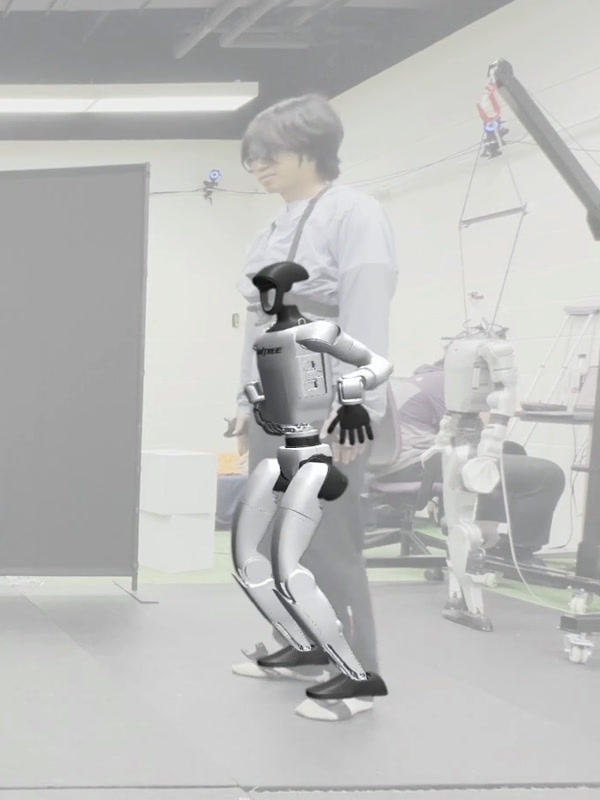
This section turns the human demonstrations into two policies and runs them on the robot (Fig. 2 ). Both policies share one interface, the recorded poses of five links (§ IV-A ). The visual planner trains on images edited to show the robot and on histories with added drift (§ IV-B ). The whole-body tracker trains on commands that drift and jump as they do at deployment (§ IV-C ).
At deployment, timestamps align the two policies, which run at different rates and with different delays (§ IV-D ).
SYSTEM EVALUATION
On a real Unitree G1, three tasks demonstrate long-horizon, contact-rich, and reactive loco-manipulation, and box sorting shows recovery from perturbations (§ V-A ). In simulation, we ablate the design choices (§ V-B ) and retrain both policies for a second humanoid from the same demonstrations (§ V-C ). (a) (b) (c) (d) (e) (f) Fig.
8: Recovery from perturbations during box sorting on the real G1, in one continuous run.
Sources and Demonstrations
Figures are reproduced from Hu et al. See the full paper for experimental details and the project page, when the paper links one, for demonstrations and videos.
Related Papers

A Sim-to-Real Integration Pipeline for Training and Deployment of Chunk-Based VLA Manipulation Policies
Mathilde Kappel, Clémence Grislain, Mohamed Chetouani et al.
Vision-Language-Action (VLA) models have become a prominent paradigm for mapping multimodal inputs, including semantic instructions, visual observations of the scene, and proprioceptive observations, to robot actions.

Capability-Aware Arbitration for Semantic Intent-Based Shared Control
Zhaoda Du, Michael Bowman, Xiaoli Zhang
Shared control often allocates robot authority based on confidence in inferred human intent, assuming reliable autonomous execution. When this assumption fails, high intent confidence can cause over-helping.
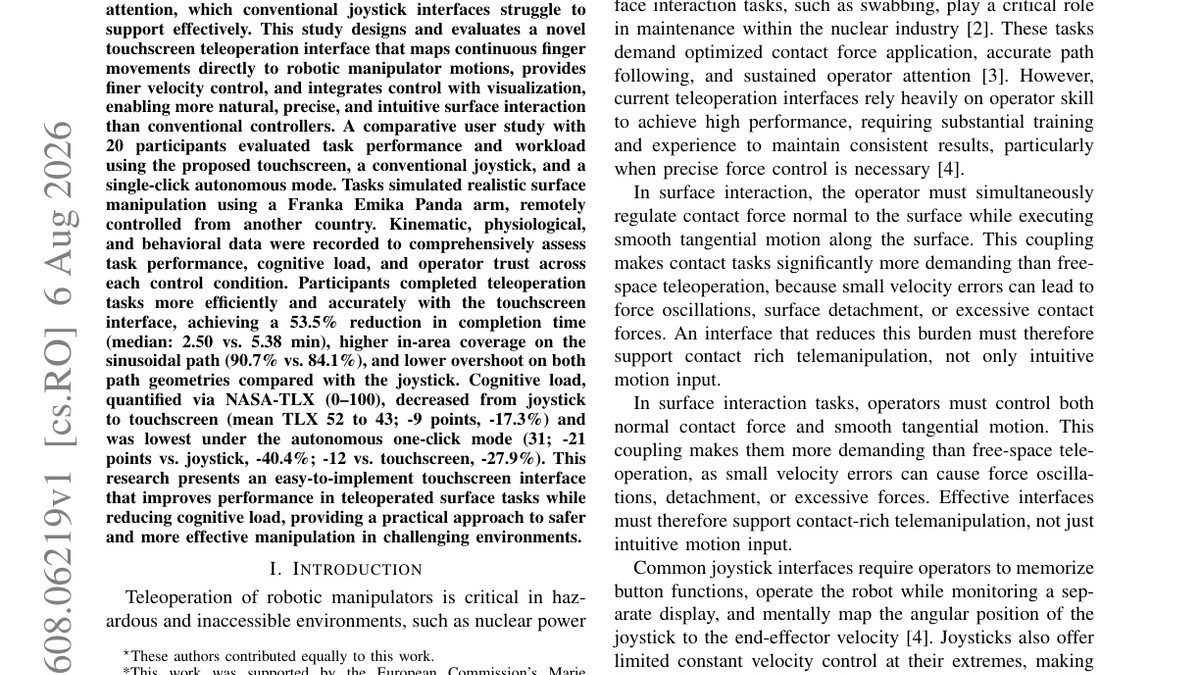
Design and Evaluation of a Touchscreen-Based Teleoperation Interface for Robotic Manipulators
Juan José García Cárdenas, Alperen Kenan, Hamidreza Raei et al.
Intuitive teleoperation interfaces are crucial for the safe and effective operation of robotic manipulators in challenging environments.
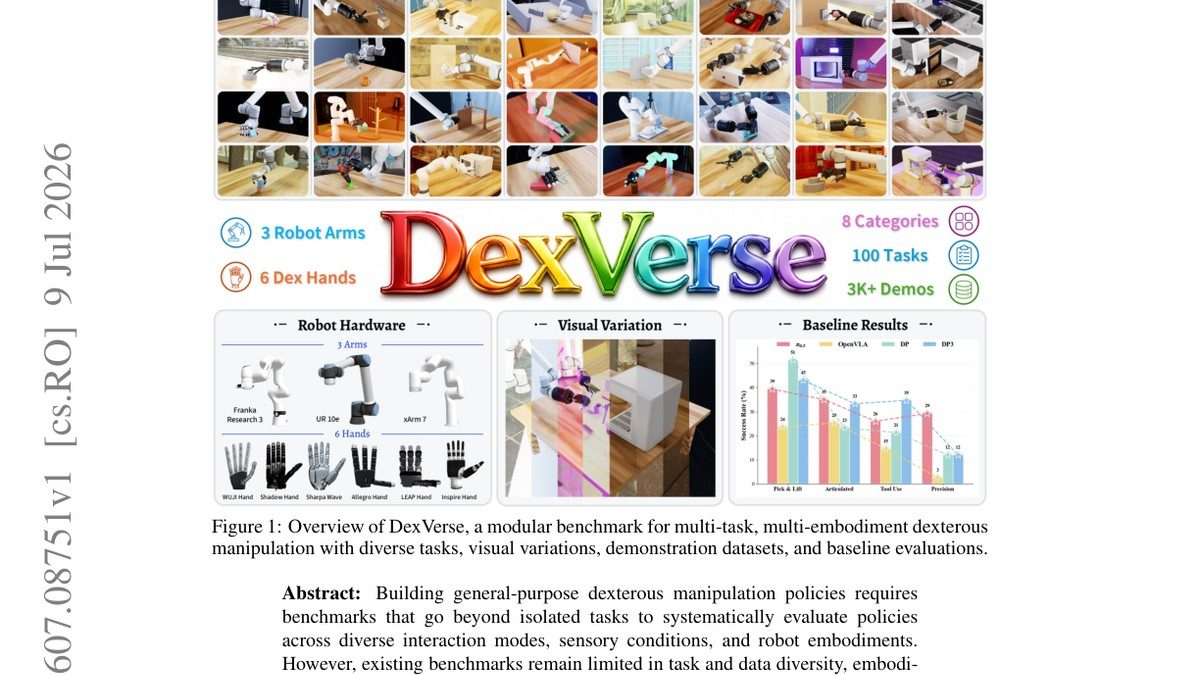
DexVerse: A Modular Benchmark for Multi-Task, Multi-Embodiment Dexterous Manipulation
Yunchao Yao, Zhuxiu Xu, Tianqi Zhang et al.
Building general-purpose dexterous manipulation policies requires benchmarks that go beyond isolated tasks to systematically evaluate policies across diverse interaction modes, sensory conditions, and robot embodiments.