
MOCHI: Motion Enhancement of Collaborative Human-object Interactions
FeaturedJiye Lee, Yonghun Choi, Jungdam Won · Seoul National University · 2026
Framework
PyTorch
License
N/A
Stars
N/A
Summary
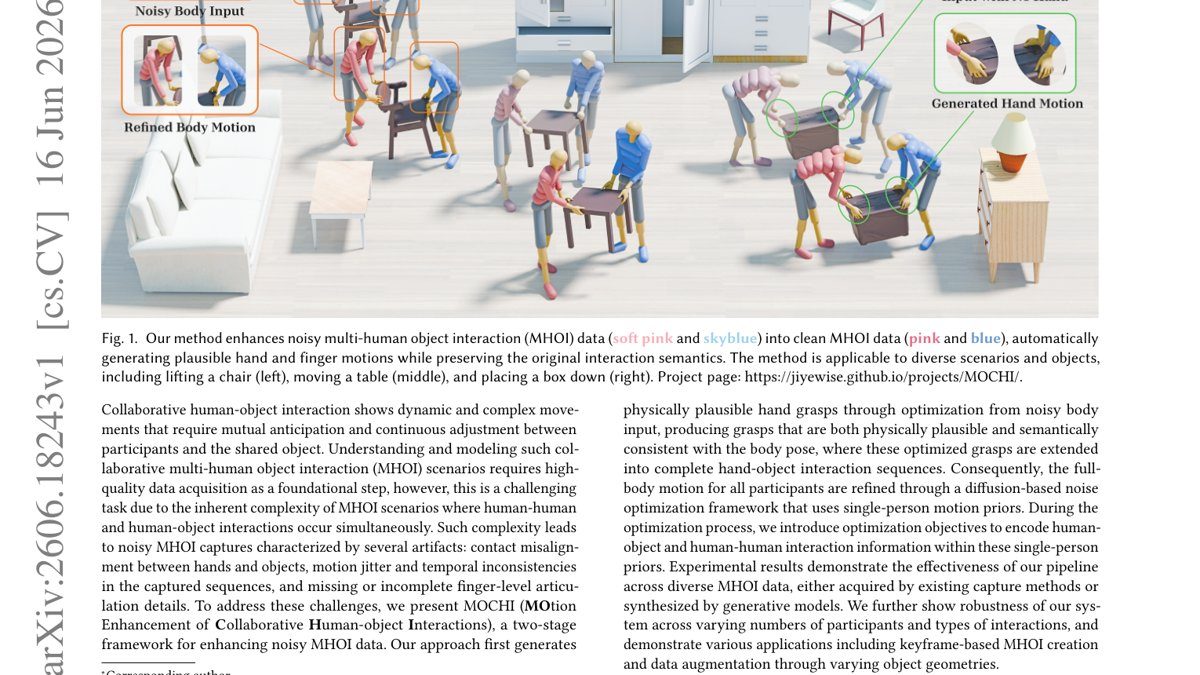
Two-stage framework that enhances noisy multi-human object interaction (MHOI) data by generating plausible hand grasps and refining full-body motion via diffusion-based optimization.
Abstract Summary
Key Points
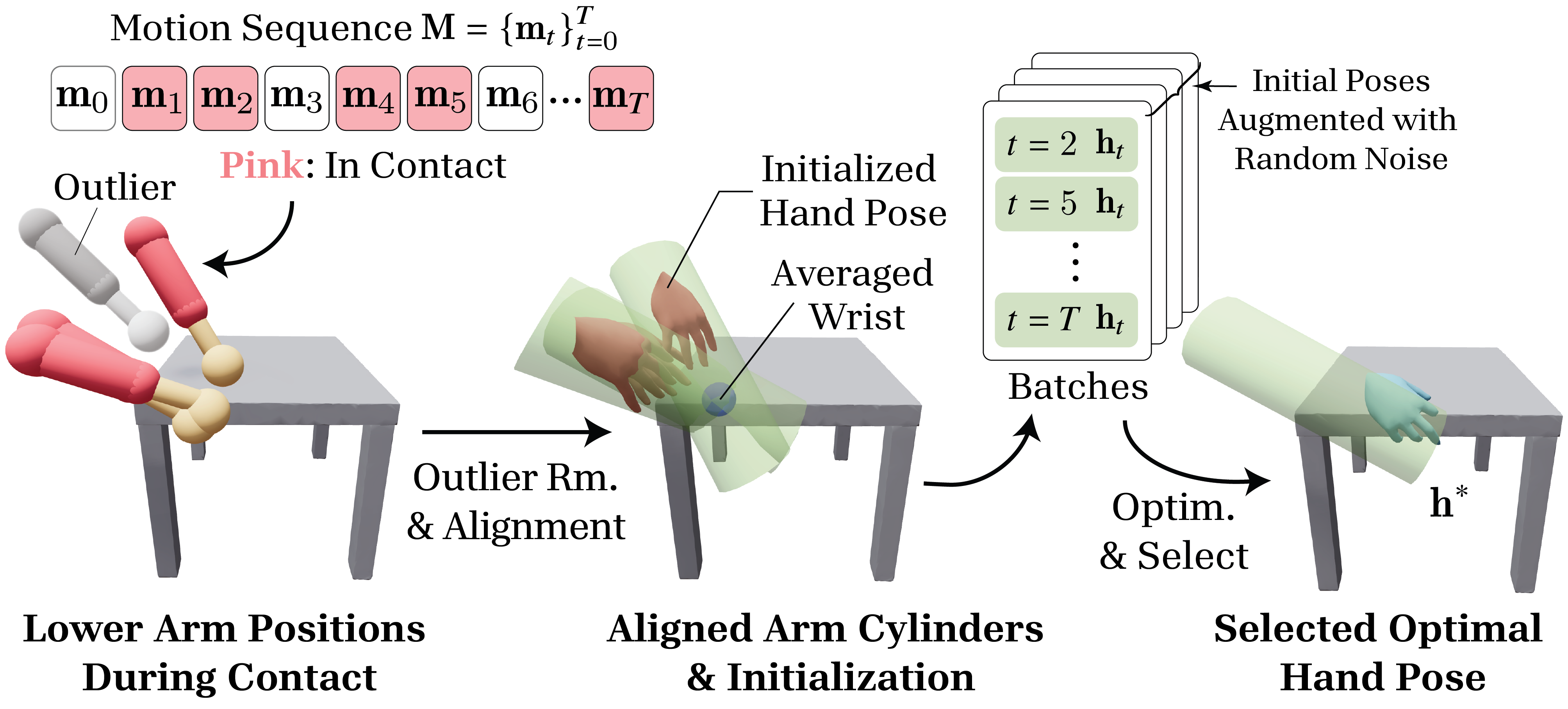
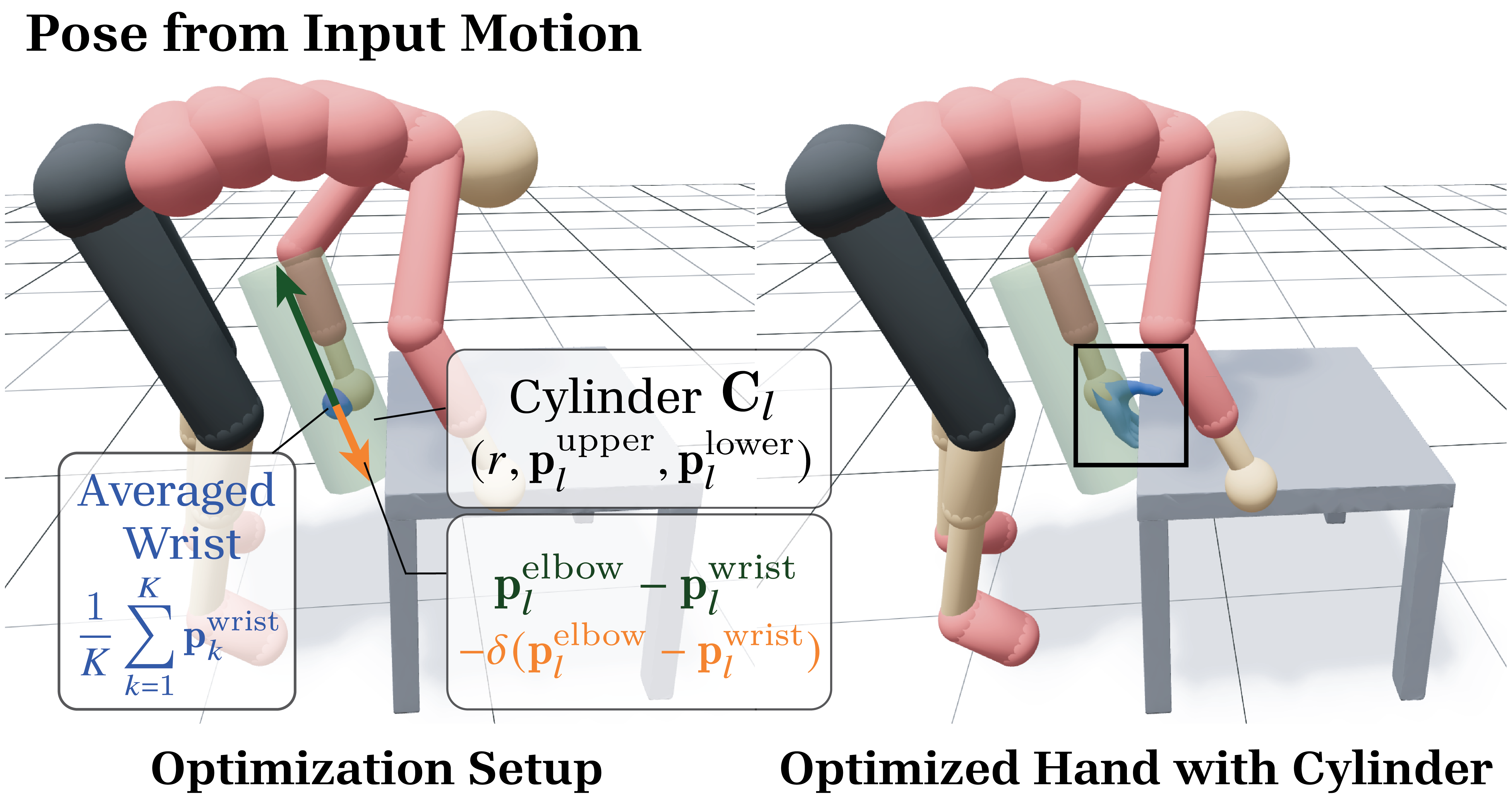
- Two-stage framework: grasp optimization from noisy body input, then diffusion-based full-body motion refinement
- Handles multi-human object interaction (MHOI) with simultaneous human-human and human-object contacts
- Uses single-person motion priors with added interaction objectives for human-object and human-human encoding
- Robust across varying numbers of participants and interaction types
- Applications include keyframe-based MHOI creation and data augmentation via varying object geometries
Method
We aim to develop a general method to enhance the quality of collaborative multi human object interaction (MHOI) motion sequences, applicable to any data including noisy capture results or erroneous outputs. We have examined existing MHOI data and identified three common shortcomings.
Results
In this section, we present both qualitative and quantitative results of our method across various types of noisy MHOI data and diverse application scenarios to demonstrate its applicability. To evaluate both Stage 1 (hand-object interaction generation, Sec. 3.2 ) and Stage 2 (body motion refinement, Sec.
3.3 ), we focus on collaborative object manipulation scenarios where multiple human subjects jointly interact with a shared object.
Sources and Demonstrations
Figures are reproduced from Lee et al. See the full paper for experimental details and the project page, when the paper links one, for demonstrations and videos.
Related Papers
EgoForce: Forearm-Guided Camera-Space 3D Hand Pose from a Monocular Egocentric Camera
Christen Millerdurai, Shaoxiang Wang, Yaxu Xie et al.
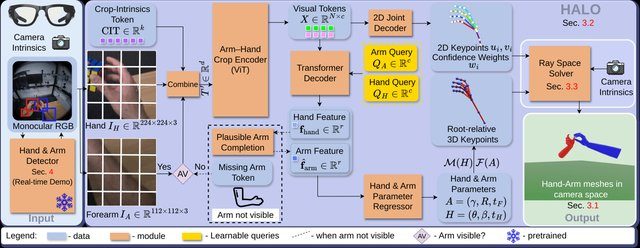
Reconstructing the absolute 3D pose and shape of the hands from the user's viewpoint using a single head-mounted camera is crucial for practical egocentric interaction in AR/VR, telepresence, and hand-centric manipulation tasks, where sensing must remain compact and unobtrusive.
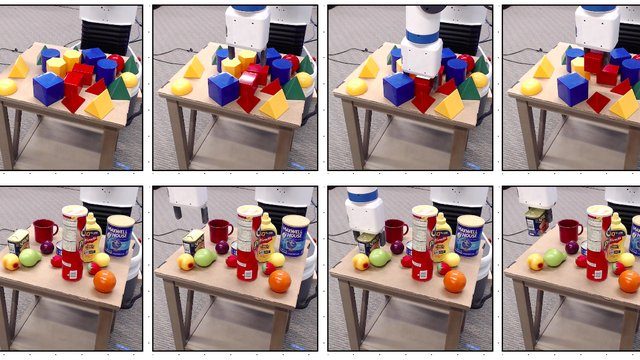
Domain Randomization for Transferring Deep Neural Networks from Simulation to the Real World
Josh Tobin, Rachel Fong, Alex Ray et al.
Introduced domain randomization for vision-based manipulation: randomize simulation textures, lighting, and camera parameters so that the real world looks like just another variation.
DynaFLIP: Rethinking Robotics Perception via Tri-Modal-Dynamics Guided Representation
Jusuk Lee, Seungjae Lee, Jonghun Shin et al.
Robot manipulation critically depends on perception that preserves the action-relevant aspects of a scene. Yet most robot learning pipelines are built upon visual encoders pre-trained for static recog
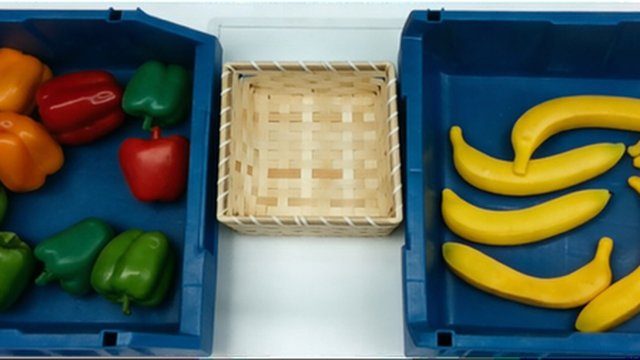
GesVLA: Gesture-Aware Vision-Language-Action Model
Wenxuan Guo, Ziyuan Li, Meng Zhang et al.
GesVLA augments standard VLA models with gesture awareness, enabling robots to interpret verbal instructions alongside human hand gestures for disambiguated manipulation.