
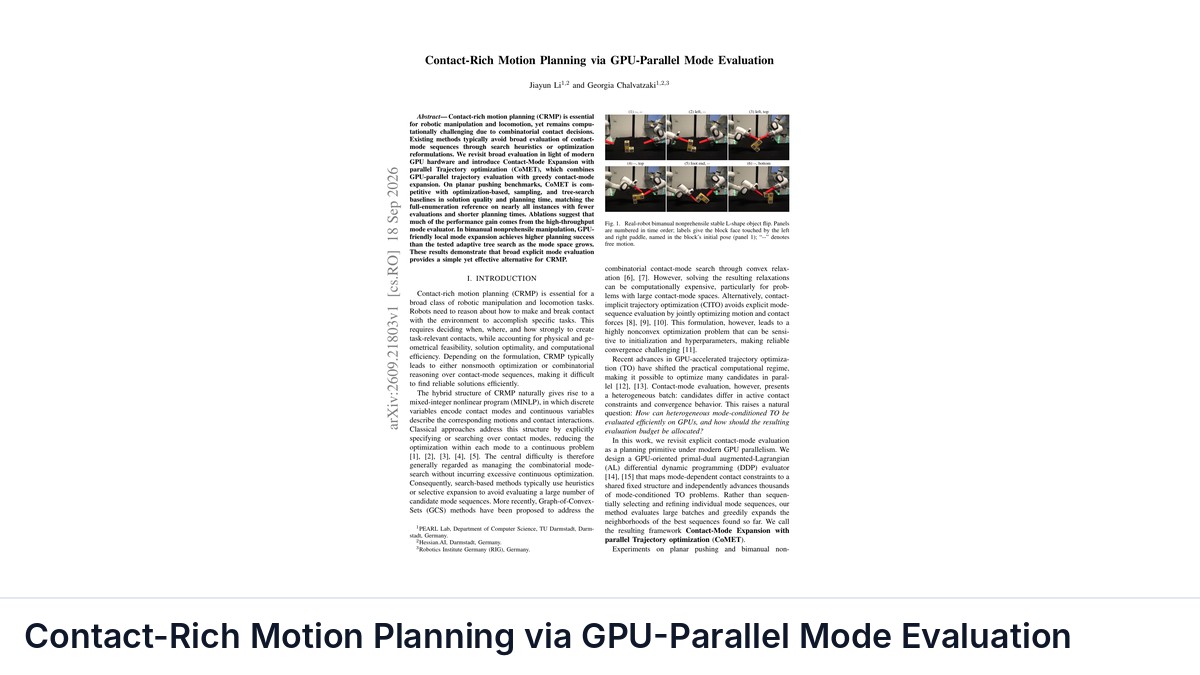
Contact-Rich Motion Planning via GPU-Parallel Mode Evaluation
Jiayun Li, Georgia Chalvatzaki · N/A · 2026
Framework
N/A
License
N/A
Stars
N/A
Summary
Contact-rich motion planning (CRMP) is essential for robotic manipulation and locomotion, yet remains computationally challenging due to combinatorial contact decisions.
Abstract Summary
Key Points
- Contact-rich motion planning (CRMP) is essential for robotic manipulation and locomotion, yet remains computationally challenging due to combinatorial contact decisions.
- Existing methods typically avoid broad evaluation of contact-mode sequences through search heuristics or optimization reformulations.
- We revisit broad evaluation in light of modern GPU hardware and introduce Contact-Mode Expansion with parallel Trajectory optimization (CoMET), which combines GPU-parallel trajectory evaluation with greedy contact-mode expansion.
- On planar pushing benchmarks, CoMET is competitive with optimization-based, sampling, and tree-search baselines in solution quality and planning time, matching the full-enumeration reference on nearly all instances with fewer evaluations and shorter planning times.
- Ablations suggest that much of the performance gain comes from the high-throughput trajectory evaluator.
Method
CoMET combines parallel contact-mode evaluation with mode expansion (Fig. 2 ). Each candidate specifies a contact-mode order, while continuous optimization determines the trajectory, contact interactions, and transition timing.
Starting from a broad seed batch, CoMET evaluates candidates in parallel under a limited optimization budget and expands the neighborhoods of orders ranked by a merit function combining objective value and constraint violation. The leading feasible candidates are then refined to obtain the final plan.
Experiments
We evaluate high-throughput contact-mode planning in two regimes. Planar pushing compares against existing planners and full enumeration, with controls separating the effects of the TO evaluator, GPU execution, and discrete search allocation.
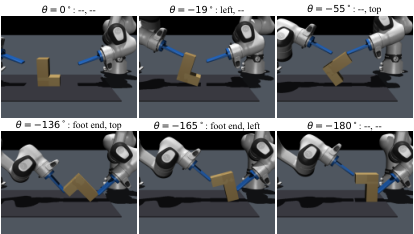
Bimanual flipping tests search allocation when the mode space greatly exceeds the evaluation budget, using the same TO evaluator and budget across policies, and validates the resulting plans on hardware.
Sources and Demonstrations
Figures are reproduced from Li et al. See the full paper for experimental details and the project page, when the paper links one, for demonstrations and videos.
Related Papers
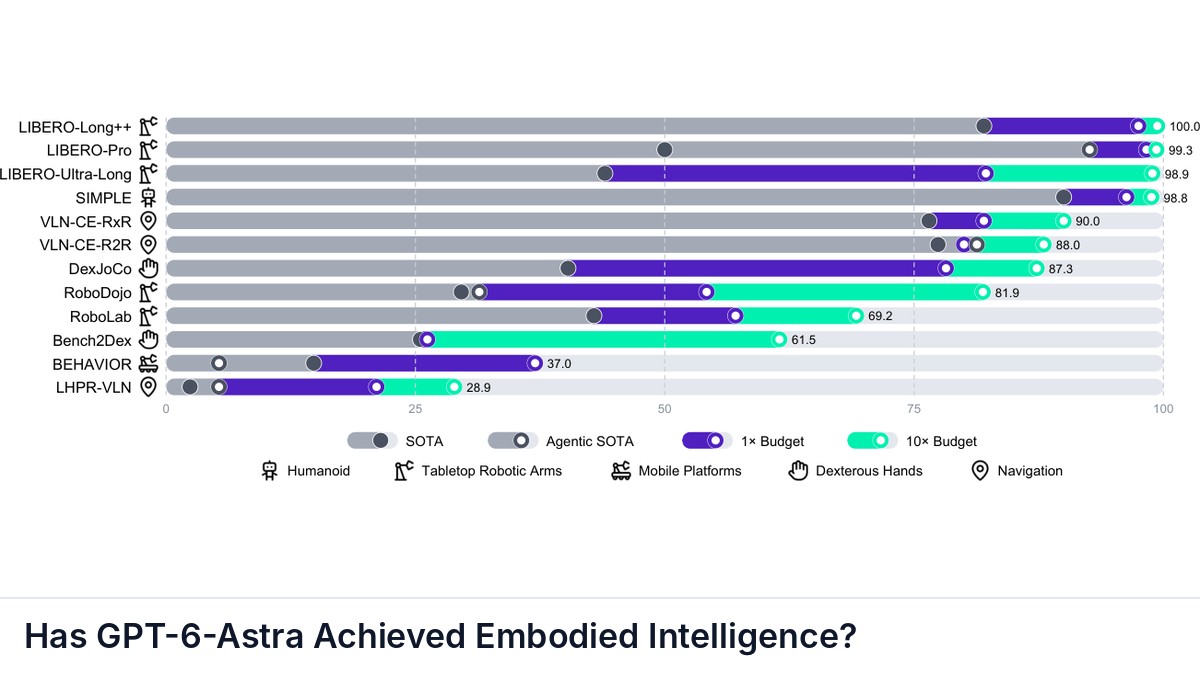
Has GPT-6-Astra Achieved Embodied Intelligence?
SenseNova, Joint Research Team, : et al.
GPT-6-Astra demonstrates a level of competence in robotic manipulation and navigation that challenges the conventional paradigm of building specialized models for individual tasks and embodiments.
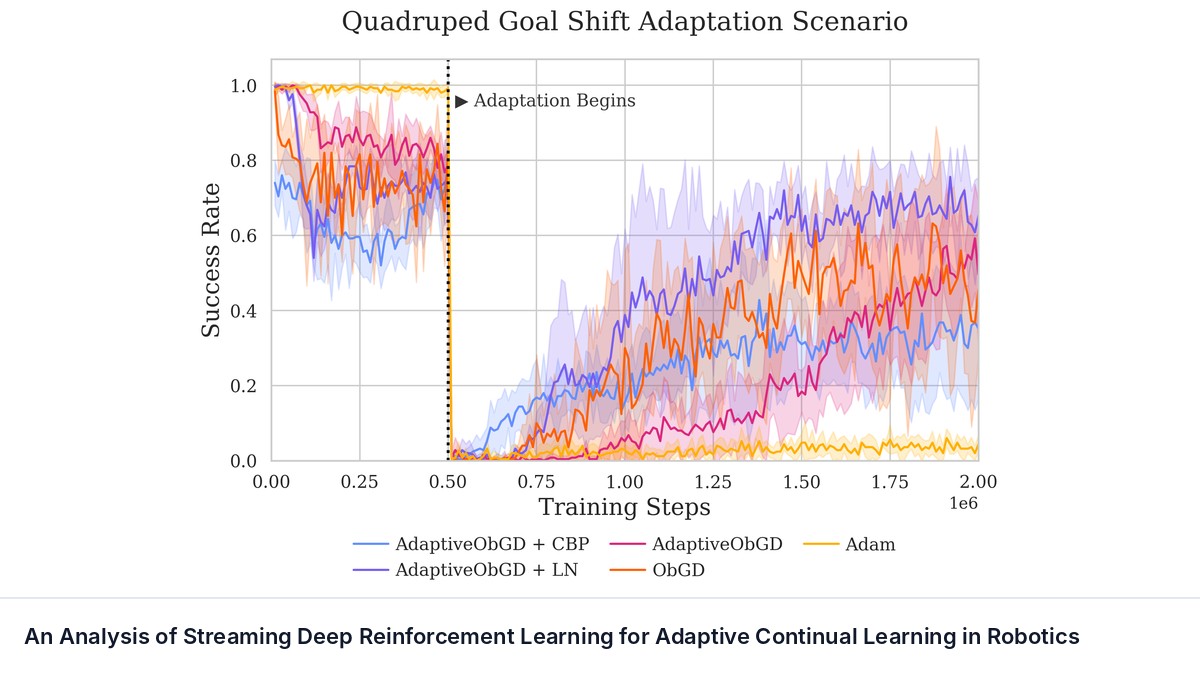
An Analysis of Streaming Deep Reinforcement Learning for Adaptive Continual Learning in Robotics
Teeratham Vitchutripop, Alyssa Quarles, Wenhe Zhang et al.
Over the course of a lifetime, robots may encounter novel scenarios unaccounted for in its original training that result in performance degradation. One common approach to mitigating this issue is to further grow the offline training dataset in hopes of producing a policy robust to these changes.
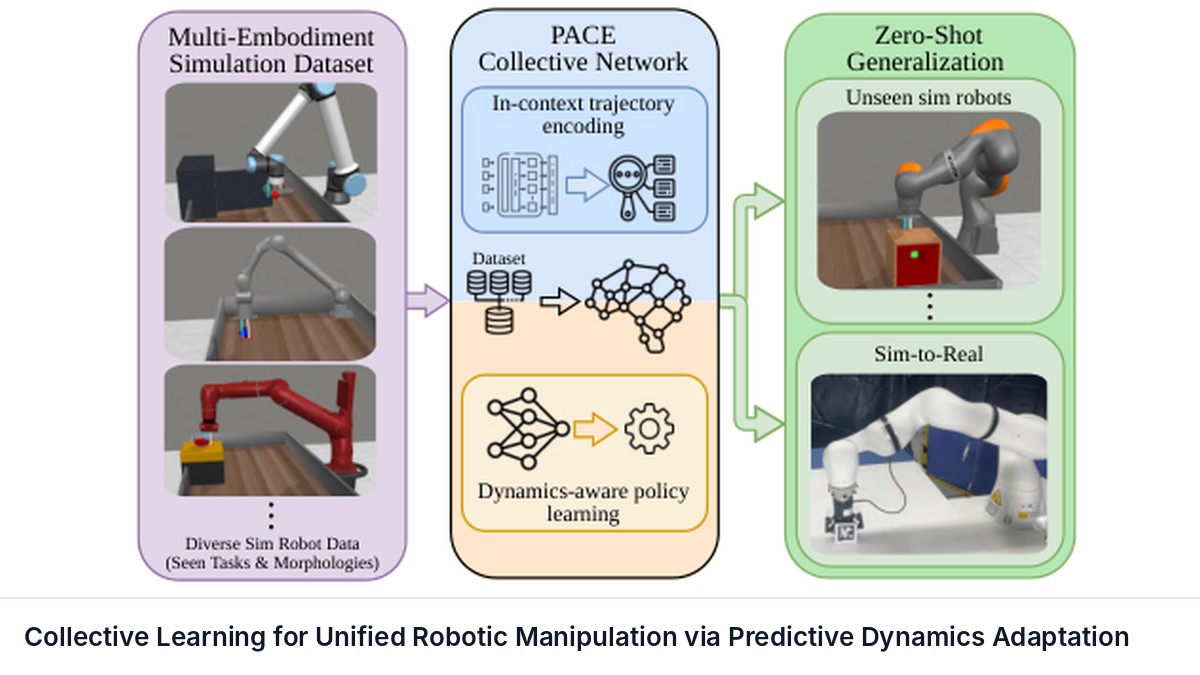
Collective Learning for Unified Robotic Manipulation via Predictive Dynamics Adaptation
Shaocheng Liu, Yuan Meng, Zhenshan Bing et al.
Learning a collective policy for state-based Cartesian manipulation across diverse robotic embodiments presents a fundamental challenge due to embodiment-dependent transition dynamics.
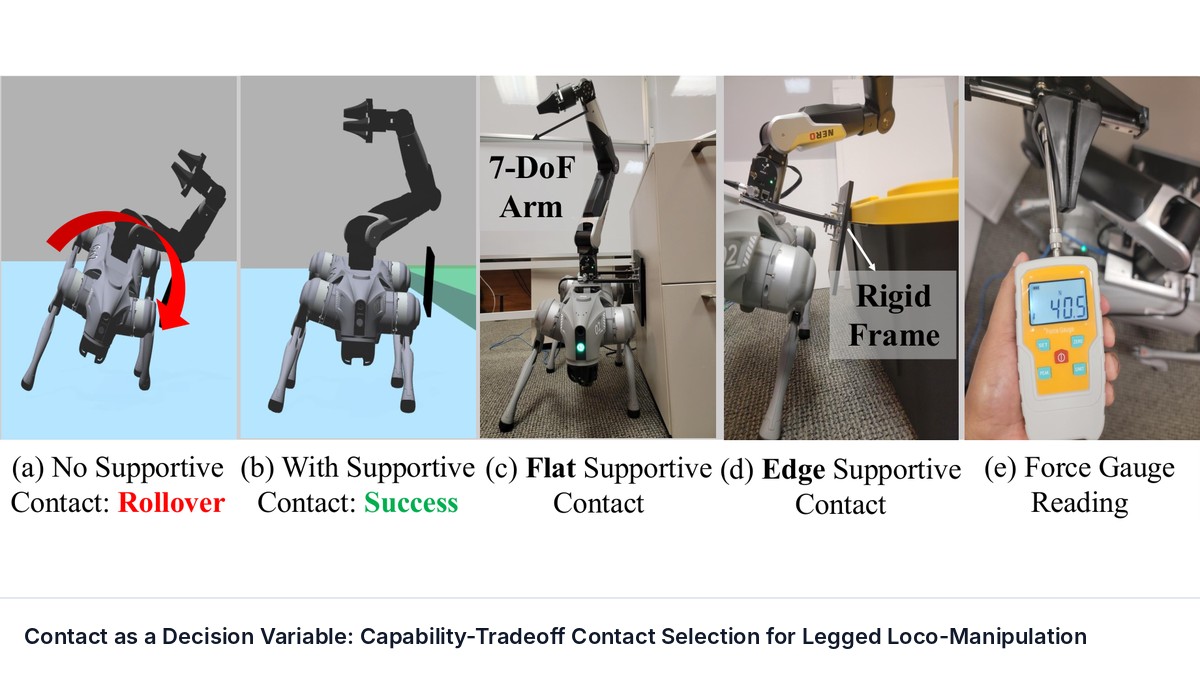
Contact as a Decision Variable: Capability-Tradeoff Contact Selection for Legged Loco-Manipulation
Al Jaber Mahmud, Shuai Li, Xuan Wang
In this paper, we study the joint selection of an environmental support contact and a whole-body configuration for a prescribed loco-manipulation task. A contact may provide greater physical support while restricting the motion required for the task.