
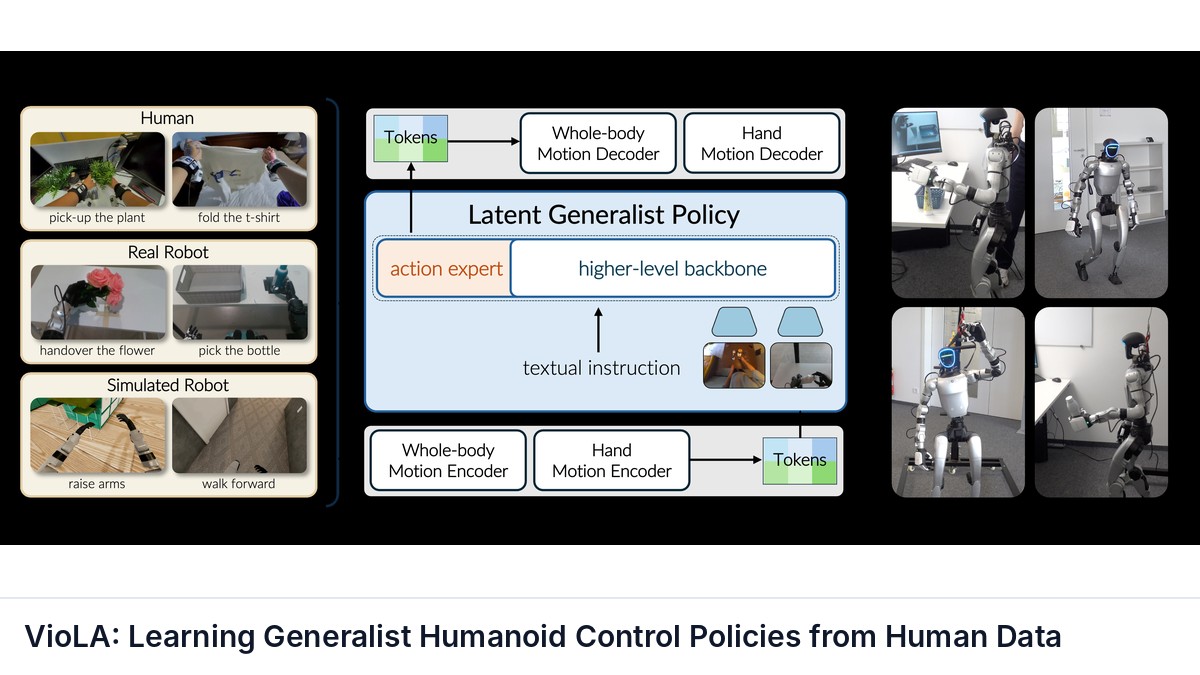
VioLA: Learning Generalist Humanoid Control Policies from Human Data
Mert Albaba, Jens Beißwenger, Anna Manasyan, Daniel Marta, Michael J. Black, Wieland Brendel, Andreas Krause, Georg Martius, Martin Riedmiller · N/A · 2026
Framework
N/A
License
N/A
Stars
N/A
Summary
Teaching a humanoid to follow instructions with its whole body runs into two obstacles. Its action space is large and tightly coupled: legs, arms, and fingers must move together while the robot keeps its balance, which makes joint-level actions hard to learn.
Abstract Summary
Key Points
- Teaching a humanoid to follow instructions with its whole body runs into two obstacles
- Its action space is large and tightly coupled: legs, arms, and fingers must move together while the robot keeps its balance, which makes joint-level actions hard to learn.
- And humanoid demonstrations are scarce, so current humanoid generalist policies do not follow new instructions out of the box and are fine-tuned on teleoperated demonstrations of each task before deployment.
- Human demonstrations exist in far larger numbers, but a person's motion is not a robot command
- We remove both obstacles by changing what the generalist policy predicts
VioLA
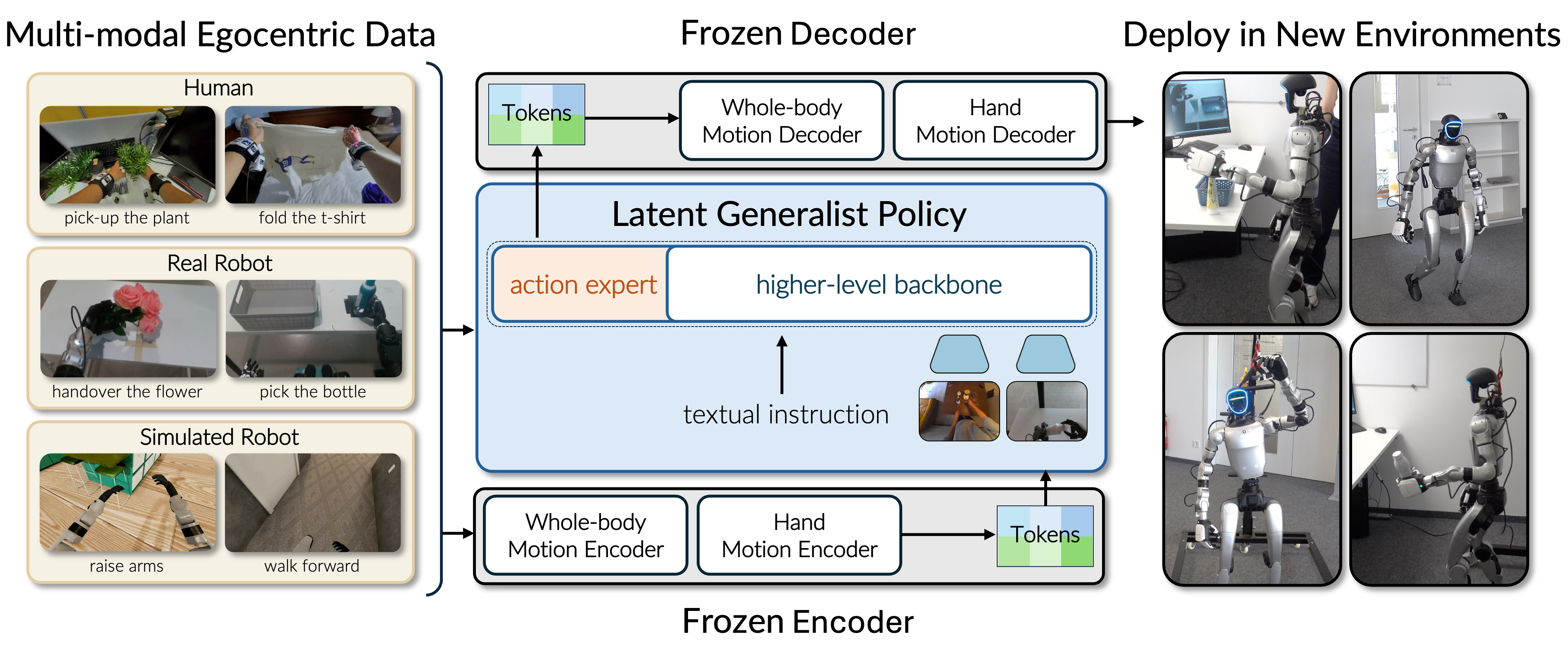
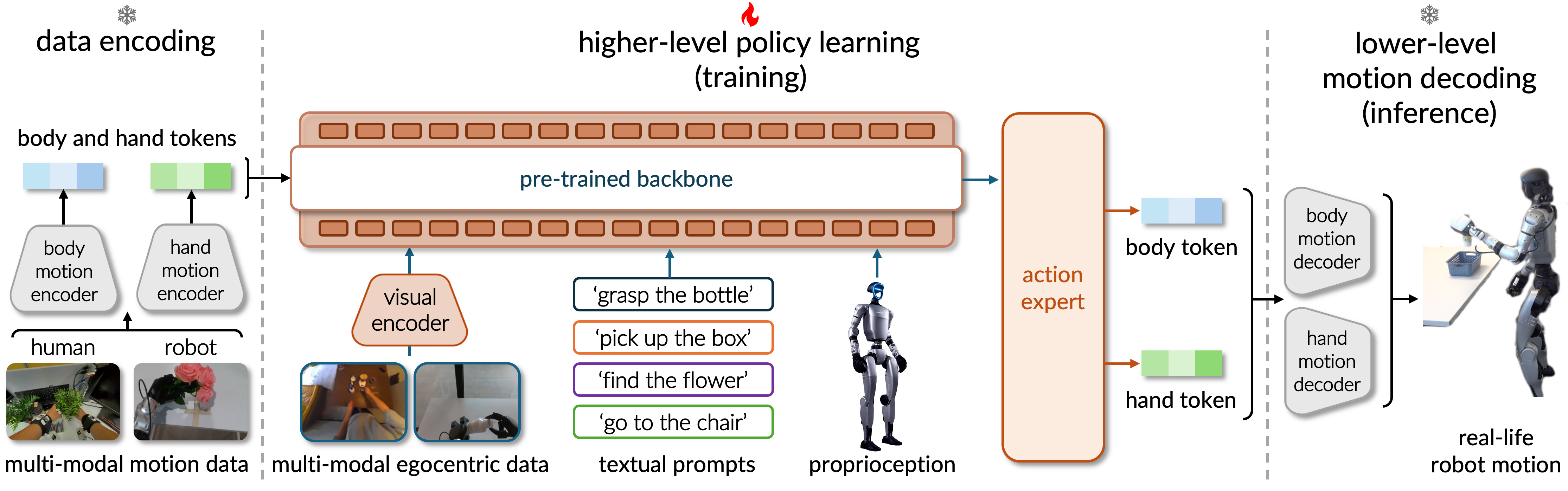
VioLA learns which body and hand motions an instruction requires while pretrained decoders produce the robot’s joint commands. The key choice is to use the shared latent spaces of paired motion encoders and decoders as VioLA’s action space (Figure 2 ). Human and robot encoders map demonstrated movements into this space, supplying the targets the generalist policy learns to predict.
All motion encoders and decoders are pretrained and remain frozen; training updates only the generalist policy.
Experiments
Can VioLA follow locomotion and manipulation instructions on a real humanoid without task-specific fine-tuning? We first evaluate task completion, then examine the motion predictions behind these behaviors. The remaining experiments test what human demonstrations contribute, which backbone learns humanoid behavior most effectively, and whether successive predictions produce continuous motion.
We evaluate on a Unitree G1 with five-fingered Inspire hands in our laboratory.
Sources and Demonstrations
Figures are reproduced from Albaba et al. See the full paper for experimental details and the project page, when the paper links one, for demonstrations and videos.
Related Papers
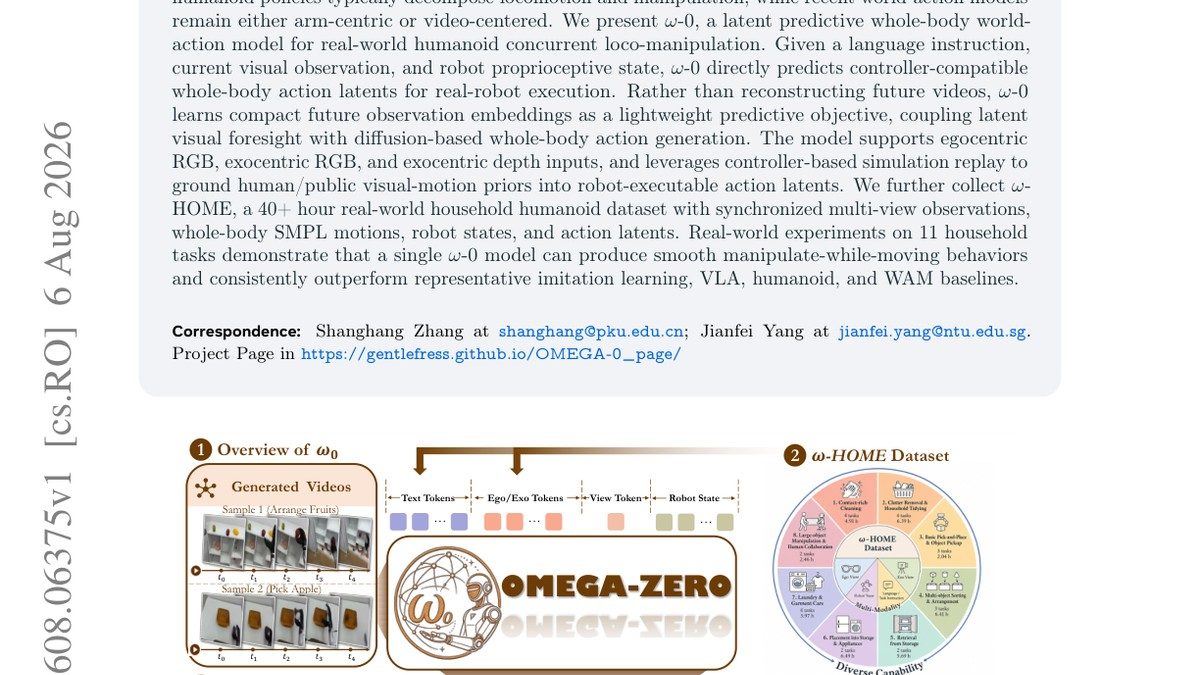
$ω$-0: A Latent Predictive World Action Model for Concurrent Humanoid Loco-Manipulation
Zhe Li, Zhenzhe Zhang, Yangyang Wei et al.
Humanoid household tasks often require concurrent loco-manipulation, where the robot must move, adjust posture, maintain balance, and manipulate objects as a single coordinated behavior.
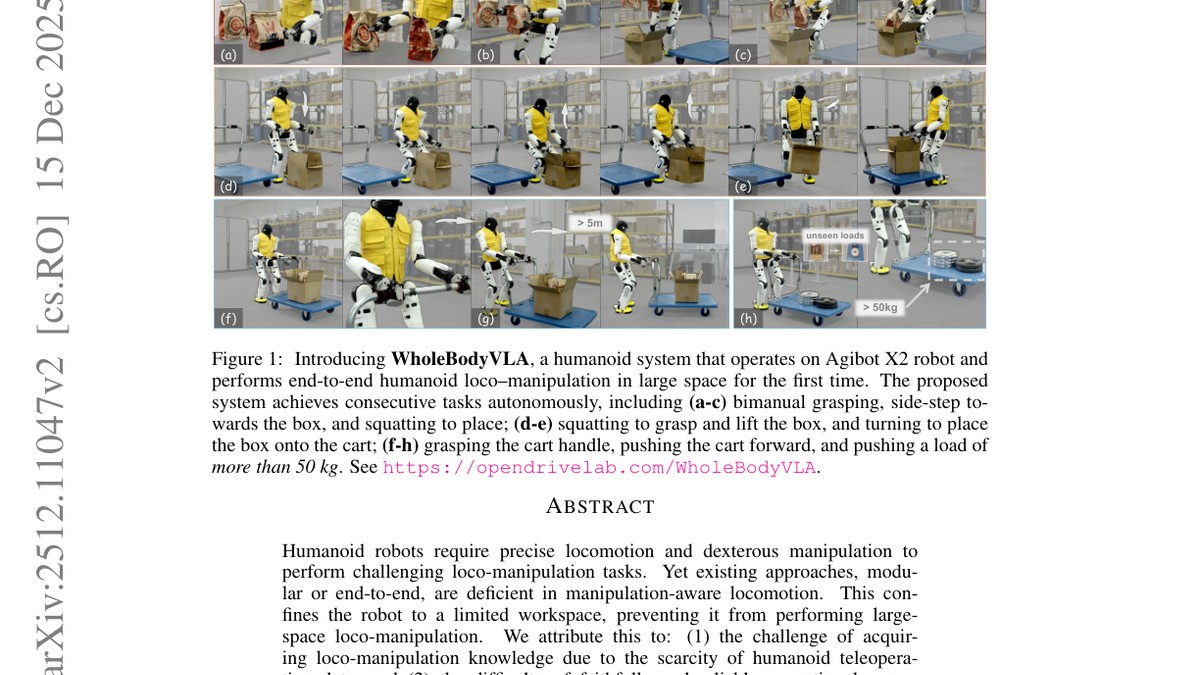
WholeBodyVLA: Towards Unified Latent VLA for Whole-Body Loco-Manipulation Control
Haoran Jiang, Jin Chen, Qingwen Bu et al.
Humanoid robots require precise locomotion and dexterous manipulation to perform challenging loco-manipulation tasks. Yet existing approaches, modular or end-to-end, are deficient in manipulation-aware locomotion.
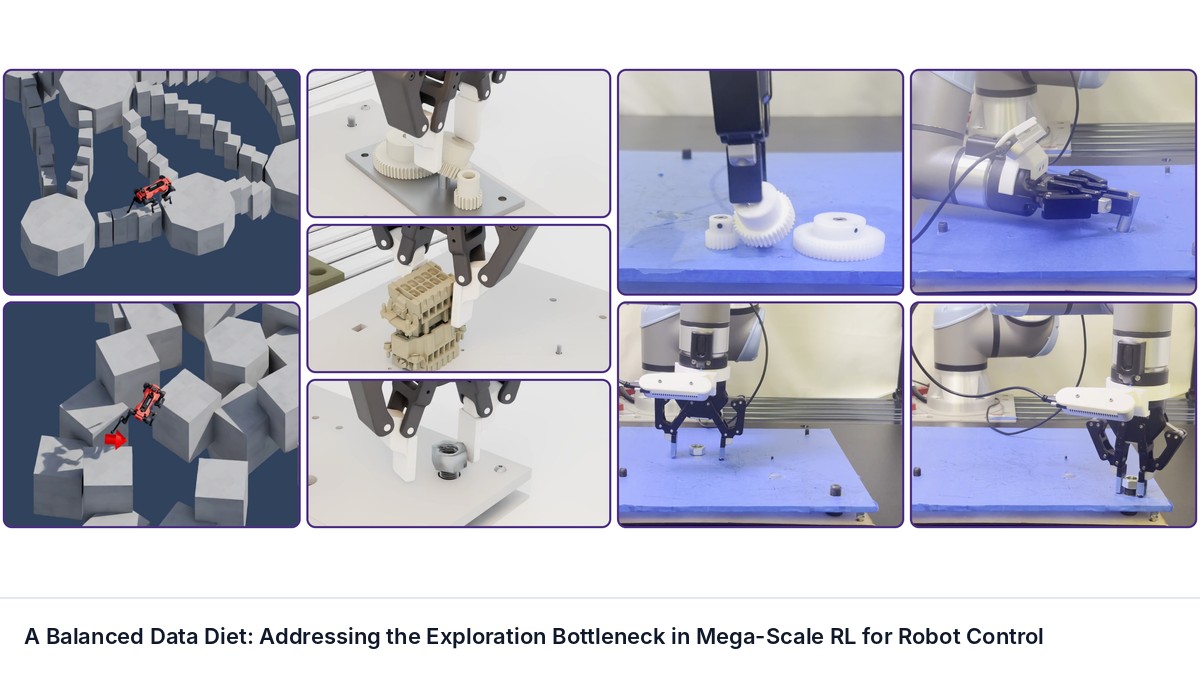
A Balanced Data Diet: Addressing the Exploration Bottleneck in Mega-Scale RL for Robot Control
Octi Zhang, Mateo Guaman Castro, Patrick Yin et al.
General-purpose robots must perform a wide range of tasks from agile locomotion to dexterous manipulation.

A Sim-to-Real Integration Pipeline for Training and Deployment of Chunk-Based VLA Manipulation Policies
Mathilde Kappel, Clémence Grislain, Mohamed Chetouani et al.
Vision-Language-Action (VLA) models have become a prominent paradigm for mapping multimodal inputs, including semantic instructions, visual observations of the scene, and proprioceptive observations, to robot actions.