
SynIL: Leveraging Synergy for Offline Imitation Learning from Imperfect Demonstration Datasets
Yuto Tanaka, Kyo Kutsuzawa, Martina Doku, Dai Owaki, Mitsuhiro Hayashibe · N/A · 2026
Framework
N/A
License
N/A
Stars
N/A
Summary
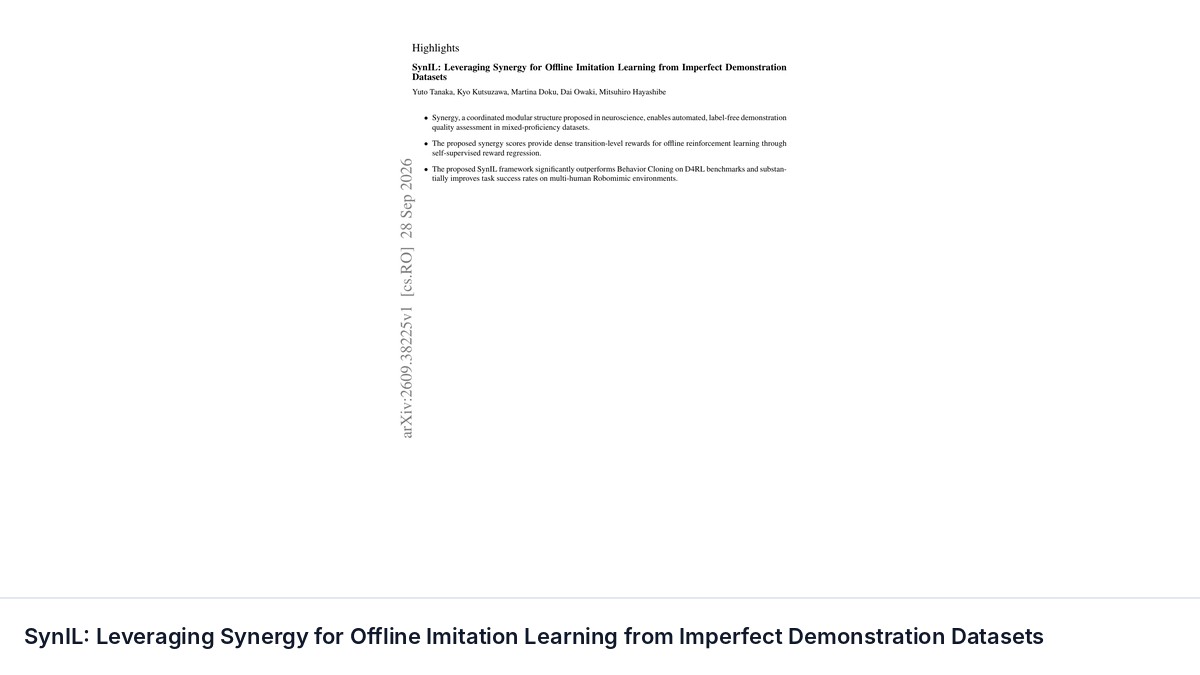
Imitation learning enables robots to acquire complex skills directly from massive demonstration datasets, but its performance degrades severely when datasets are contaminated with suboptimal or noisy demonstrations.
Abstract Summary
Key Points
- Imitation learning enables robots to acquire complex skills directly from massive demonstration datasets, but its performance degrades severely when datasets are contaminated with suboptimal or noisy demonstrations.
- While prior quality-assessment methods attempt to filter or reweight data, they typically rely on manual pre-selection of expert reference data or task-specific heuristics, limiting scalability.
- To address this challenge, we introduce SynIL (Synergy-based Imitation Learning), a novel framework for automated, label-free demonstration quality assessment in offline reinforcement learning.
- Grounded in neuroscientific evidence that motor synergy, a low-dimensional coordinated structure in movement, correlates directly with motor proficiency, SynIL algorithmically quantifies synergy manifestation to generate dense, transition-level reward signals via self-supervised reward regression.
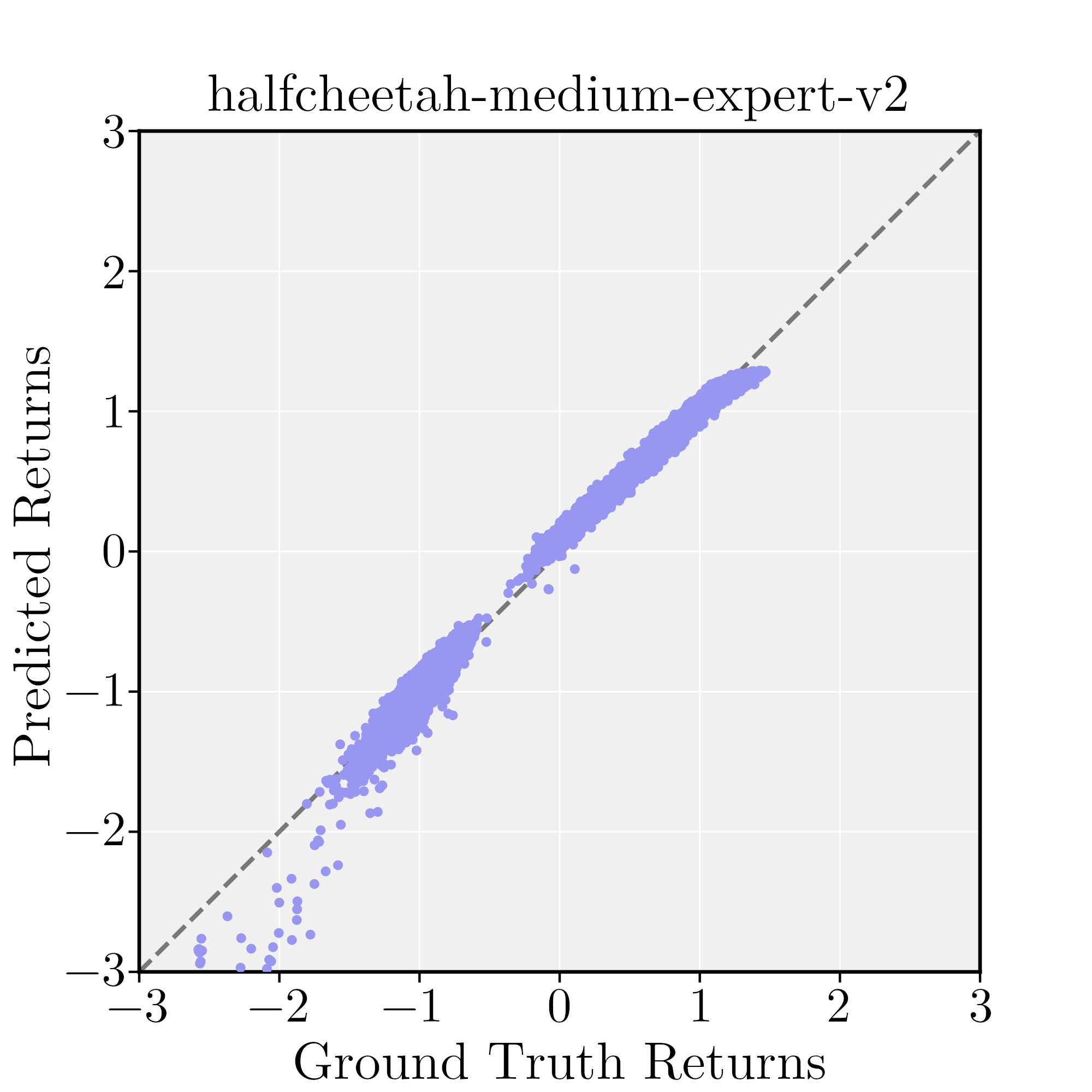
- Comprehensive evaluations on D4RL locomotion benchmarks and multi-human Robomimic manipulation datasets demonstrate that synergy-derived rewards correlate strongly with ground-truth rewards.
Methodology
This section describes the proposed method, SynIL, which derives its name from synergy-based imitation learning. This method allows a policy to imitate demonstrations by performing offline reinforcement learning based on rewards computed from the degree of synergy manifestation.
In SynIL, demonstrations do not have to include rewards; instead, rewards are computed from demonstrations using synergy, a concept proposed in neuroscience that quantifies the degree of movement coordination.
Evaluation
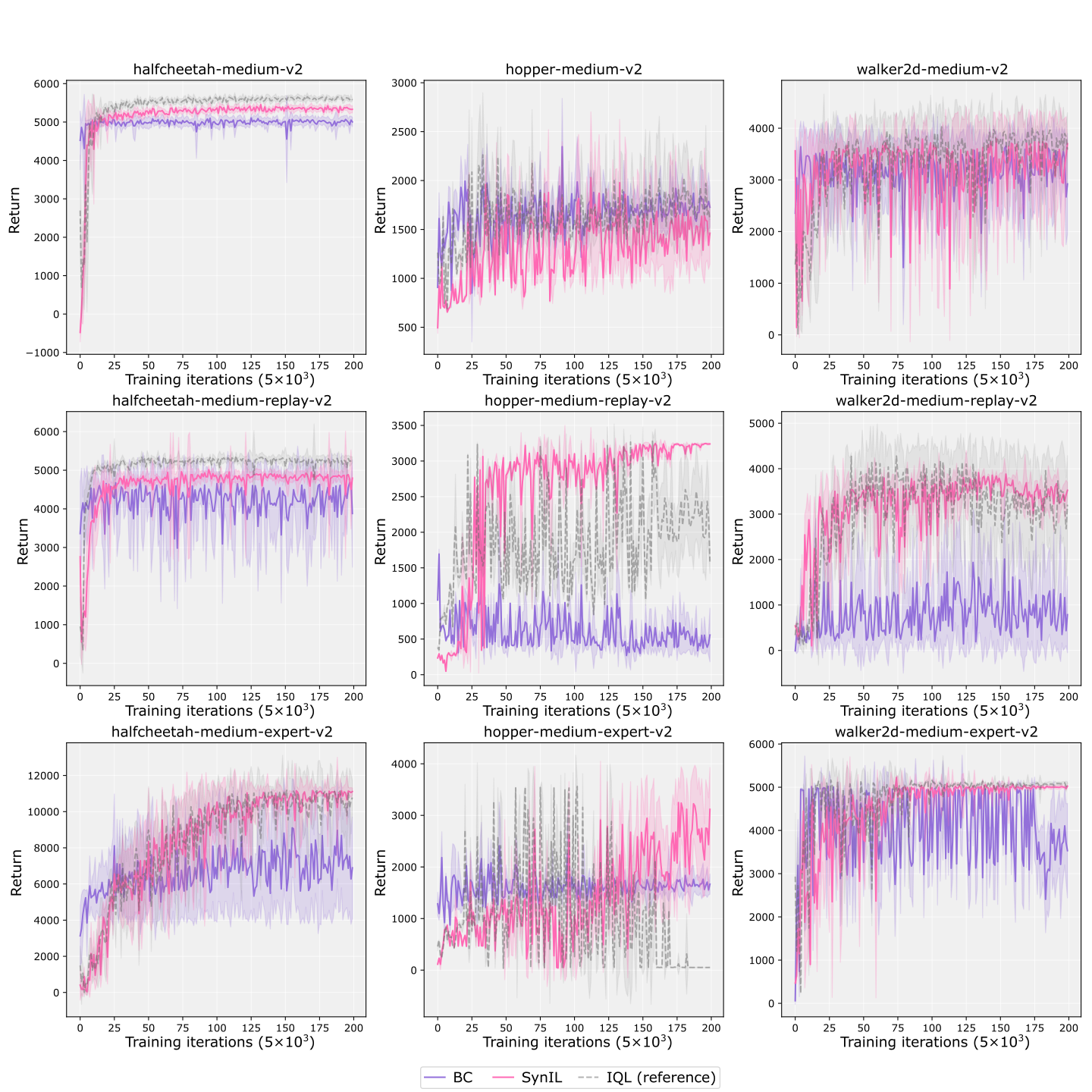
To evaluate the proposed method, we used D4RL ( Fu et al., 2020 ) and Robomimic ( Mandlekar et al., 2021 ) datasets as demonstration datasets. D4RL is a dataset for imitation learning and offline reinforcement learning, offering datasets for various environments and problem settings. Among various tasks, we specifically used the locomotion dataset as a typical motor task.
The locomotion dataset includes three types of robots: Hopper, HalfCheetah, and Walker2d.
Sources and Demonstrations
Figures are reproduced from Tanaka et al. See the full paper for experimental details and the project page, when the paper links one, for demonstrations and videos.
Related Papers
Has GPT-6-Astra Achieved Embodied Intelligence?
SenseNova, Joint Research Team, : et al.
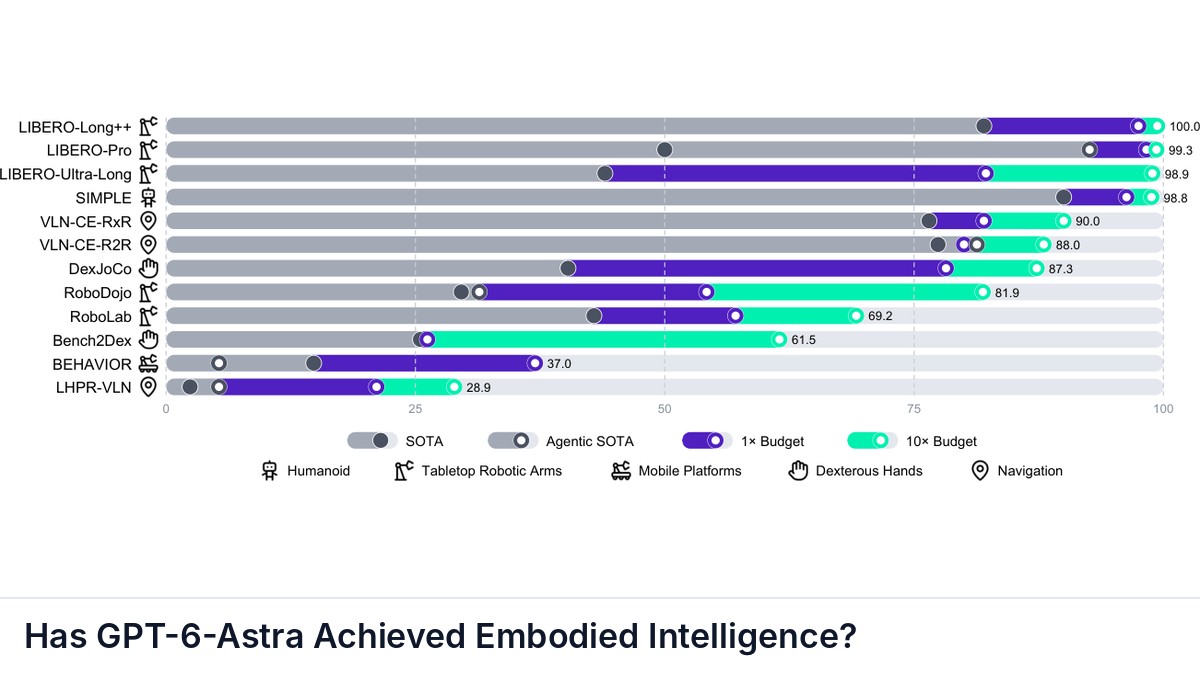
GPT-6-Astra demonstrates a level of competence in robotic manipulation and navigation that challenges the conventional paradigm of building specialized models for individual tasks and embodiments.
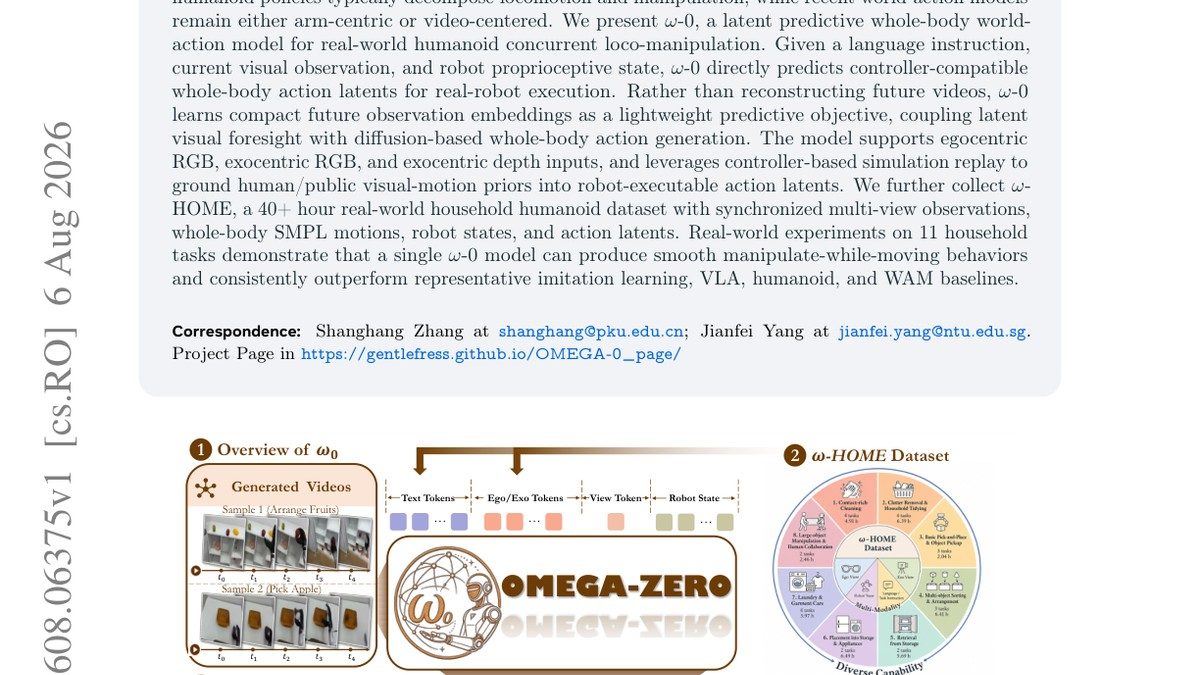
$ω$-0: A Latent Predictive World Action Model for Concurrent Humanoid Loco-Manipulation
Zhe Li, Zhenzhe Zhang, Yangyang Wei et al.
Humanoid household tasks often require concurrent loco-manipulation, where the robot must move, adjust posture, maintain balance, and manipulate objects as a single coordinated behavior.
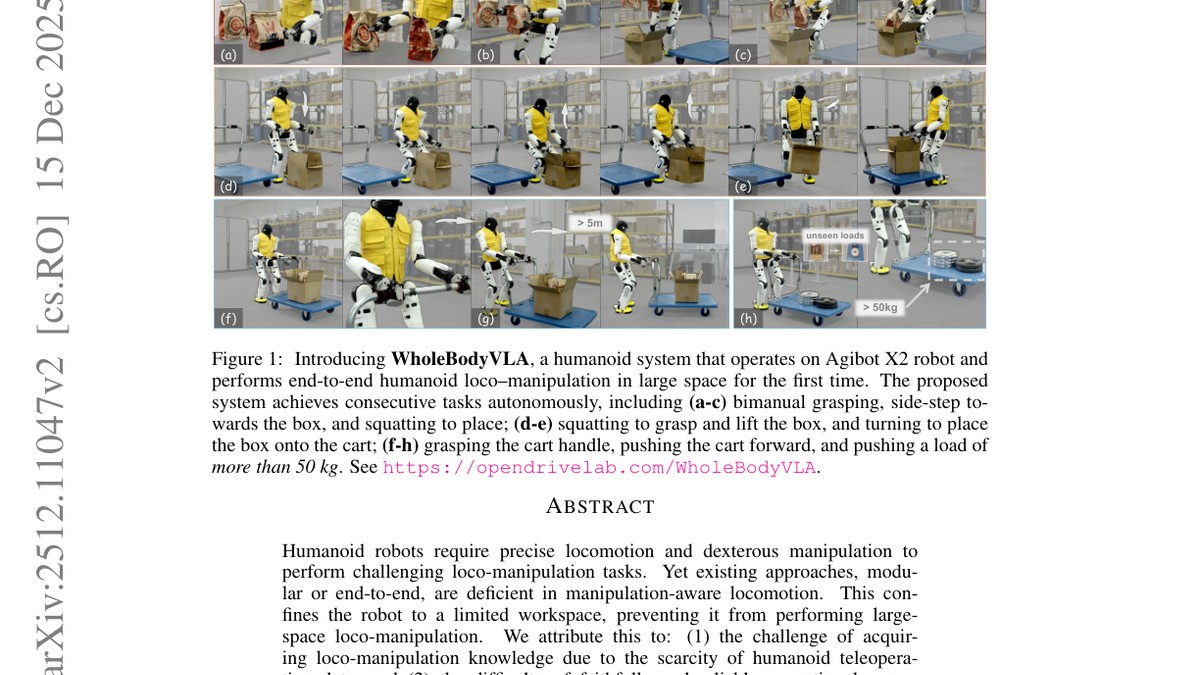
WholeBodyVLA: Towards Unified Latent VLA for Whole-Body Loco-Manipulation Control
Haoran Jiang, Jin Chen, Qingwen Bu et al.
Humanoid robots require precise locomotion and dexterous manipulation to perform challenging loco-manipulation tasks. Yet existing approaches, modular or end-to-end, are deficient in manipulation-aware locomotion.
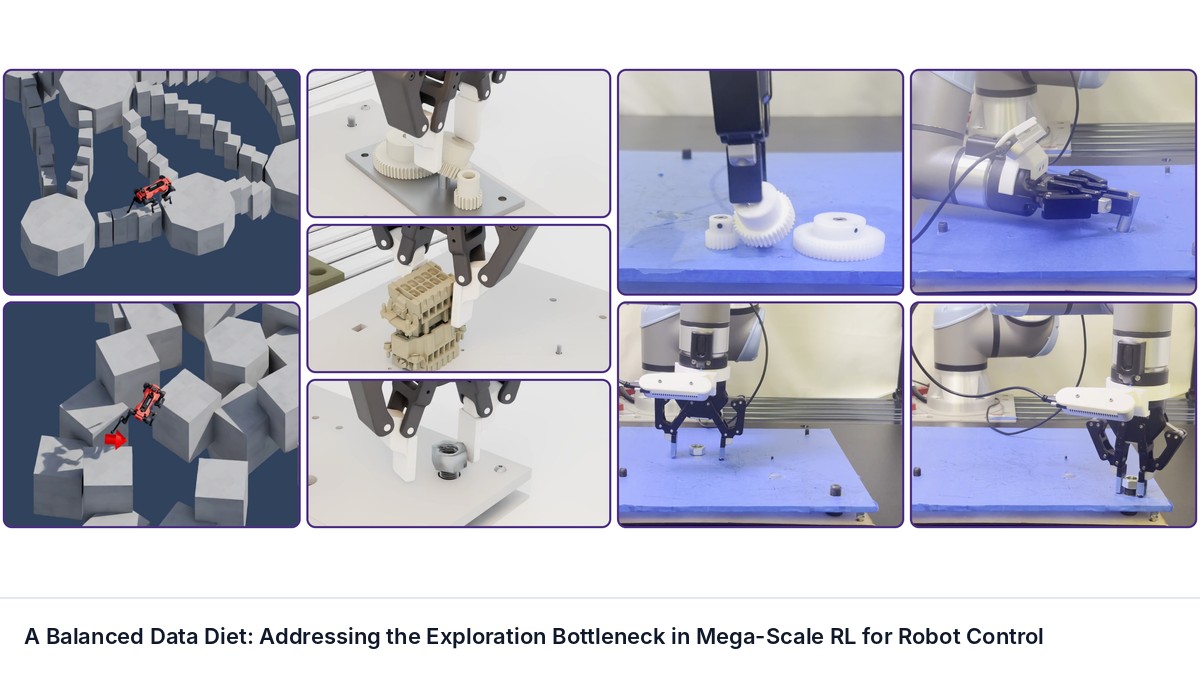
A Balanced Data Diet: Addressing the Exploration Bottleneck in Mega-Scale RL for Robot Control
Octi Zhang, Mateo Guaman Castro, Patrick Yin et al.
General-purpose robots must perform a wide range of tasks from agile locomotion to dexterous manipulation.