
Optimized Wrench Polytope Analysis for Real-Time Stability Control of Legged Robots in Complex Multi-Contact Configurations
Friedrich Graaf, Elias Birkefeld, Christian Eichmann, Elias Hofele, Tristan Schnell, Georg Heppner, Arne Roennau, Rüdiger Dillmann · N/A · 2026
Framework
N/A
License
N/A
Stars
N/A
Summary
Legged robots offer a variety of automation applications in real-world scenarios. But areas that are difficult to traverse, like slopes, caves, or scaffolding, still pose a great challenge for traversal.
Abstract Summary
Key Points
- Legged robots offer a variety of automation applications in real-world scenarios
- But areas that are difficult to traverse, like slopes, caves, or scaffolding, still pose a great challenge for traversal.
- To tackle this problem, we propose an optimized algorithm for evaluating the full actuatable wrench polytope for arbitrary contact scenarios.
- With our improved analysis algorithm, the torques for each joint of the robot can be calculated within a control frequency of 49 Hz.
- The achieved speedup allows for deployment within a regular control loop for actuating robot poses for different contact scenarios.
ROBOT STABILITY CONTROL
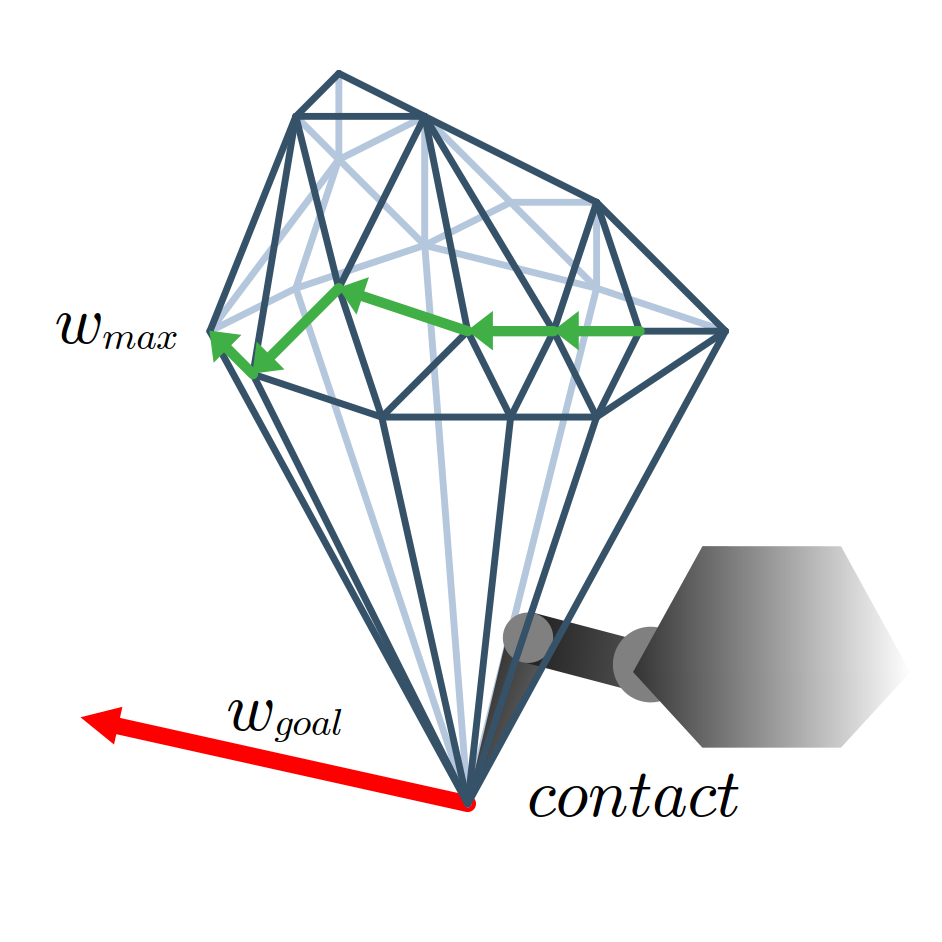
The proposed stability controller design is centered around the feasible wrench polytope ($FW$). The $FW$ is a 6D volume that contains all possible forces and torques that the robot can exert on its own center of mass ($CoM$) via its contacts with the environment. Given this polytope, external forces like gravity can be counteracted by generating a counterwrench that is contained in this polytope.
CONTACT WRENCH POLYTOPE CREATION
The 6D $CW_{c}$ that defines all possible force interactions for one contact point $c$ is defined by the intersection of two underlying polytopes. These are the friction polytope ($FP_{c}$) and the actuatable polytope ($AP_{c}$). The $FP_{c}$ is defined by the contact transmittable wrenches given through the friction model. Staying within the borders of the $FP_{c}$ prevents slippage or other loss of contact.
The $AP_{c}$, on the other hand, is defined by the joint torque limits of the robot’s joints.
FEASIBLE WRENCH POLYTOPE ANALYSIS
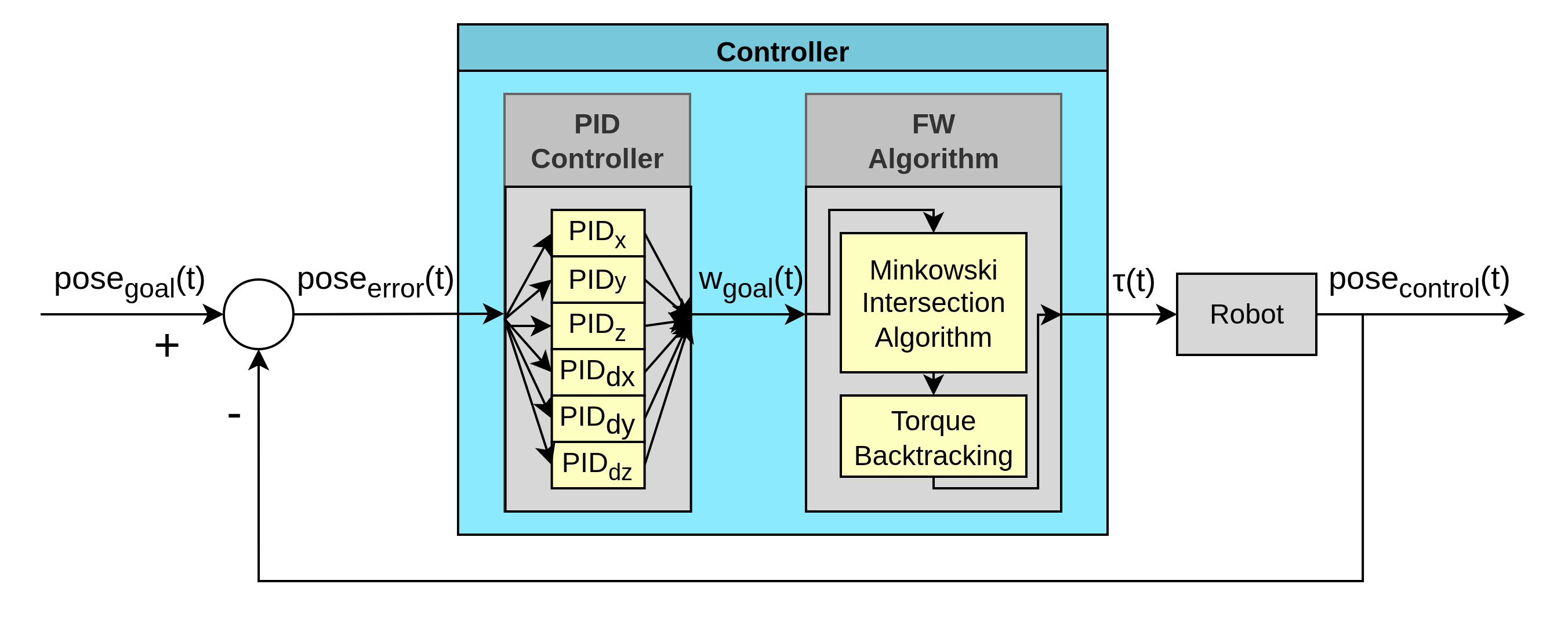
After creating the contact wrench polytopes $CWm_{c}$ for all foot contact points, they must be combined into one feasible wrench polytope $FW$ acting on the robot’s $CoM$. However, the problem is that the calculation of the full Minkowski sum for this combination is not feasible for real-time applications.
As the Minkowski sum of $FW$ is a combination of all possible foot wrenches in $CWm_{c}$, the number of vertices and interconnections between them grows factorial.
RESULTS AND EXPERIMENTS
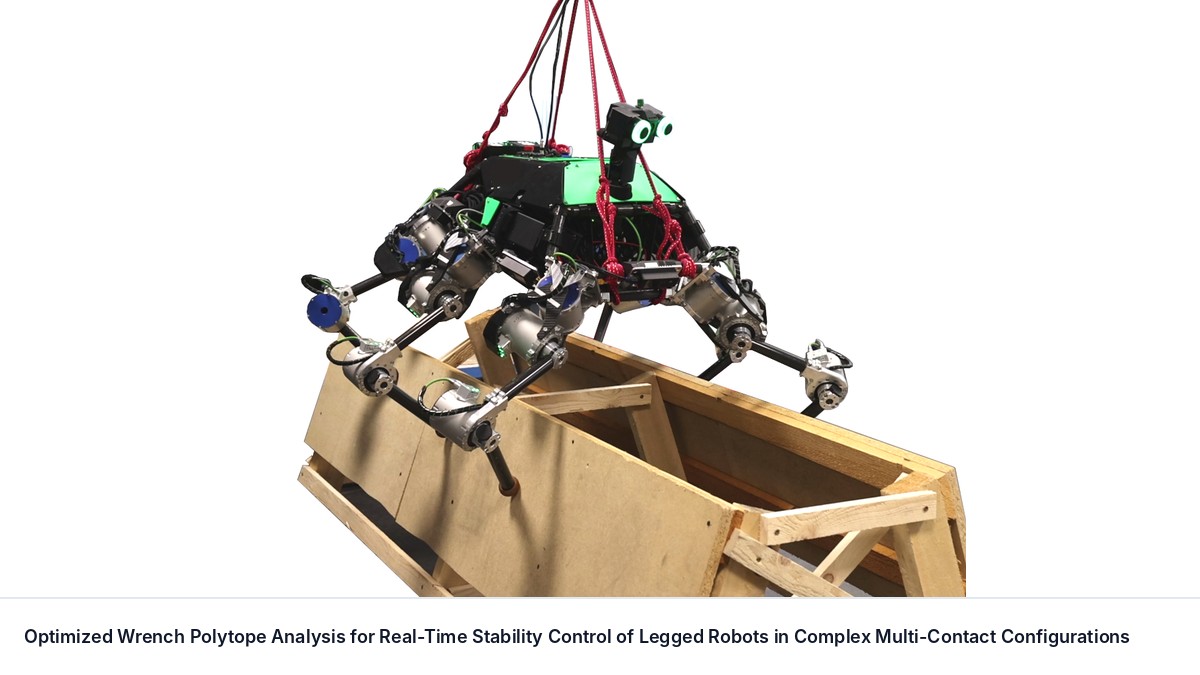
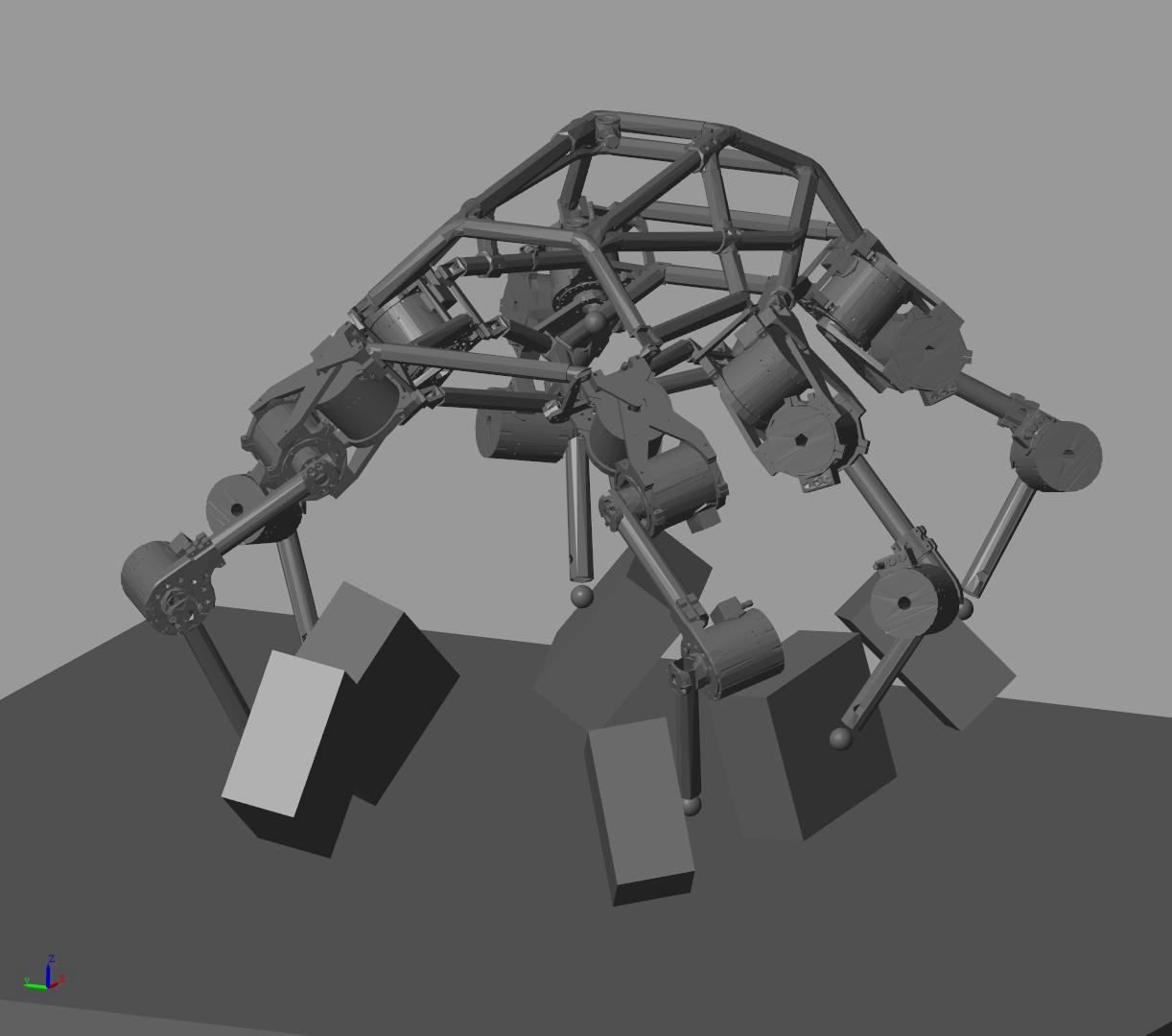
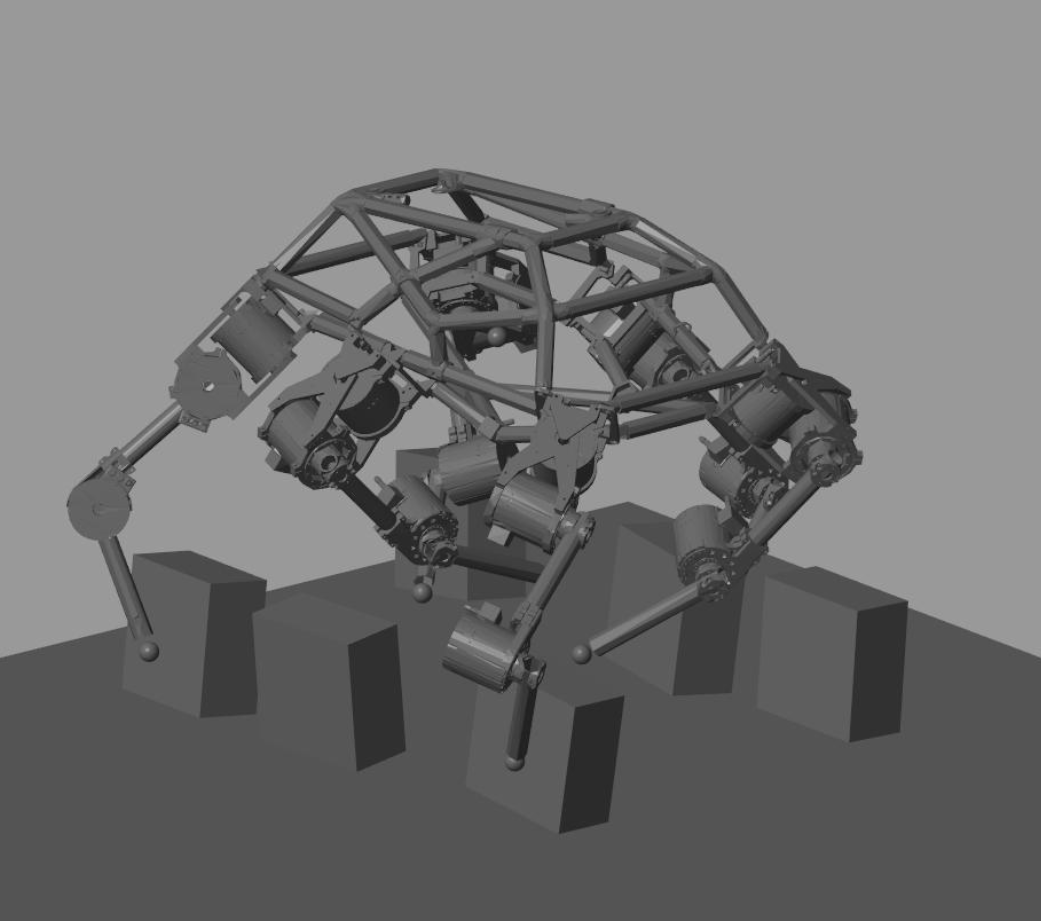
We evaluated the performance of the algorithm by deploying it on a six-legged robot in simulation and on real hardware to validate our proposed concept. For the evaluation in simulation, we used MATLAB Simulink [ 21 ] . The hardware tests were evaluated on LAURON VI [ 1 ] .
The reason that a six-legged robot was chosen for the evaluation is that more contact points allow for higher stability, as more friction forces can be exerted.
Sources and Demonstrations
Figures are reproduced from Graaf et al. See the full paper for experimental details and the project page, when the paper links one, for demonstrations and videos.
Related Papers
A Balanced Data Diet: Addressing the Exploration Bottleneck in Mega-Scale RL for Robot Control
Octi Zhang, Mateo Guaman Castro, Patrick Yin et al.
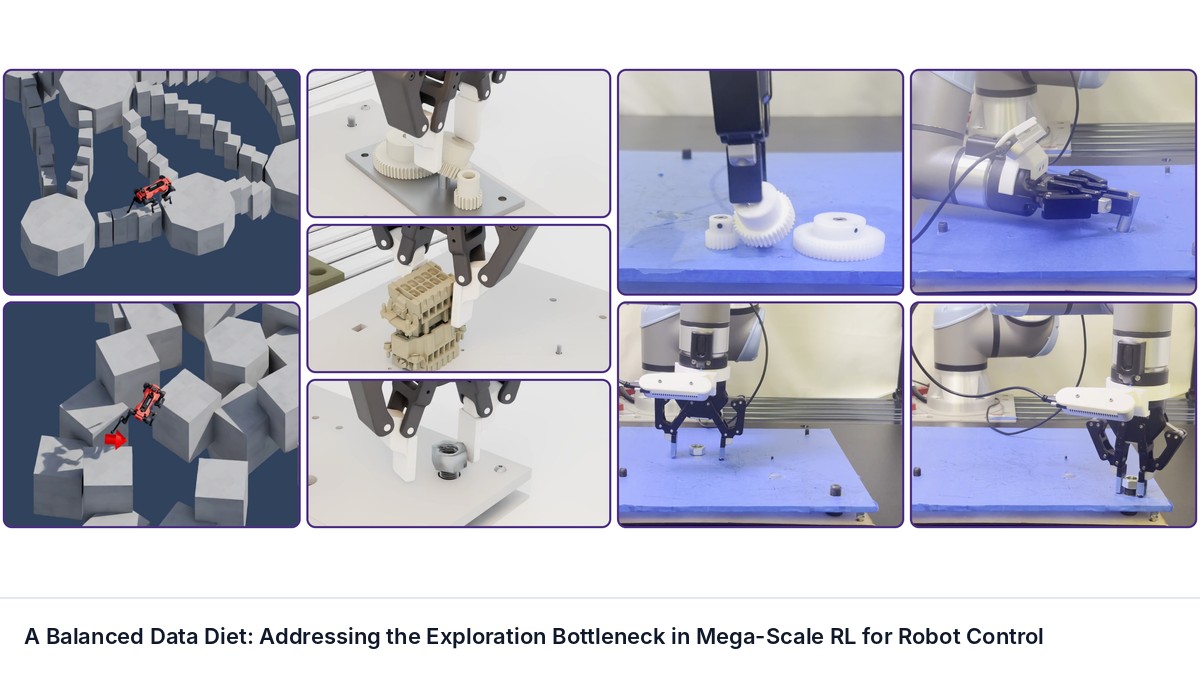
General-purpose robots must perform a wide range of tasks from agile locomotion to dexterous manipulation.
A Mode-Unified, Continuous, and Biomimetic Control Strategy of a Robotic Lower Limb Prosthesis
Hanjun Kim, Sixu Zhou, John Shim et al.
Existing biomimetic lower-limb prosthesis controllers are commonly designed for discrete locomotion modes, requiring separate parameterizations for level walking, ramps, and stairs.
A Unified Kinematic Representation Enables Reusable Biological Joint Moment Estimation
Jinwoo Hwang, Ilseung Park, Changseob Song et al.
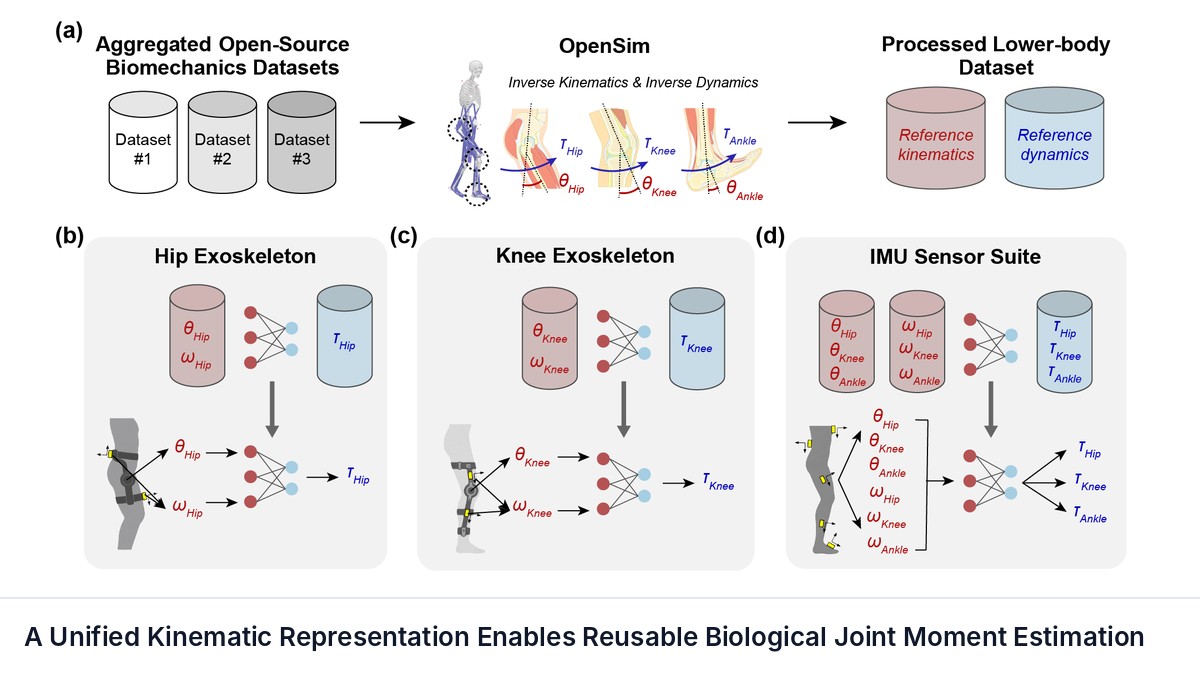
Objective: Data-driven models that estimate physiological states, particularly biological joint moments, are widely used in exoskeleton control.
Adaptive Rejection of Unknown Hybrid Sinusoidal Disturbances with Application to Humanoid Walking under Unknown Ground Motion
I-Chia Chang, Jacob Stewart, Petros A. Ioannou et al.
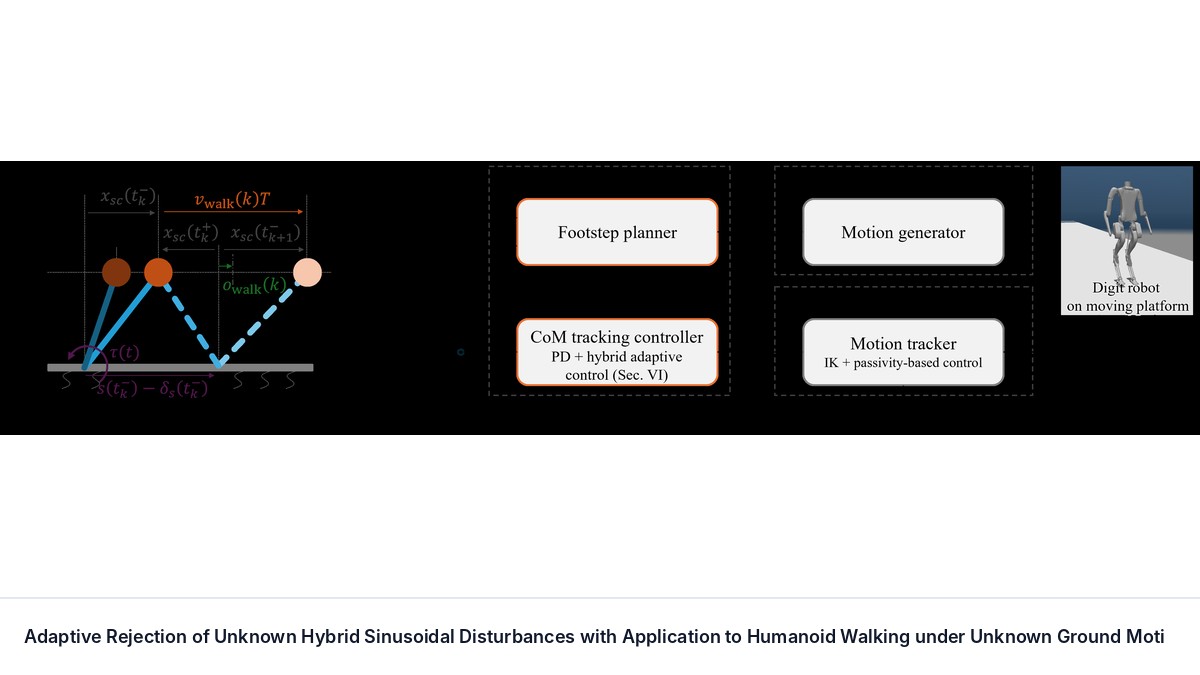
Legged robot control is not yet practical in non-inertial environments, where the ground and surroundings accelerate in the inertial Earth frame, mainly because of the unknown, time-varying, persistent perturbations caused by environmental motion, compounded by the associated hybrid robotic dynamics.