
OA-MPPI: Occlusion-Aware Model Predictive Path Integral Control for UAV Flight
Vittorio Palladino, Teaya Yang, Ruiqi Zhang, Mark W. Mueller · N/A · 2026
Framework
N/A
License
N/A
Stars
N/A
Summary
Autonomous UAV flight through cluttered and partially unknown environments requires reasoning not only about observed obstacles but also about occluded regions that the sensor cannot observe.
Abstract Summary
Key Points
- Autonomous UAV flight through cluttered and partially unknown environments requires reasoning not only about observed obstacles but also about occluded regions that the sensor cannot observe.
- We present OA-MPPI, an obstacle- and occlusion-aware extension of Model Predictive Path Integral (MPPI) control for quadrotor flight that accounts for potential moving agents emerging from these regions into the vehicle's path.
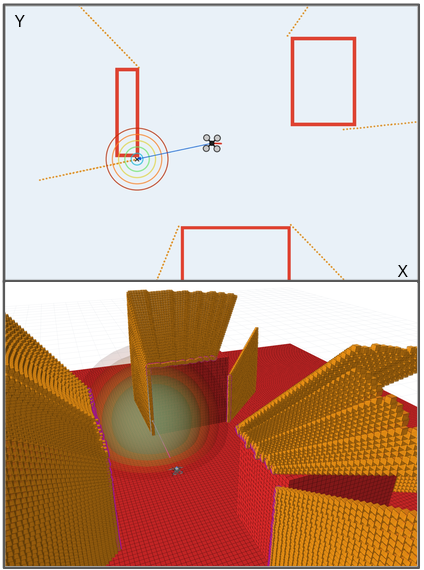
- At every planning step, we extract a 3D occlusion boundary from the online occupancy map and use it to model the regions that hidden agents could reach over the prediction horizon.
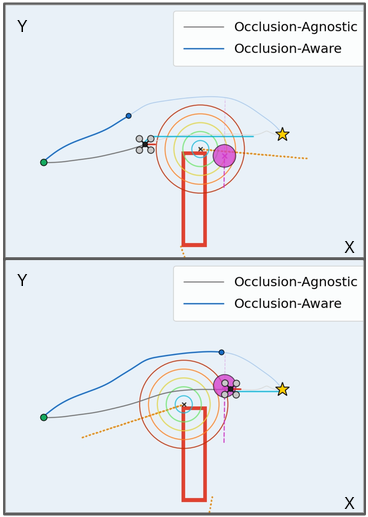
- We penalize trajectories that enter these expanding regions within MPPI rollouts generated using nonlinear quadrotor dynamics and accounting for individual rotor thrust limits.
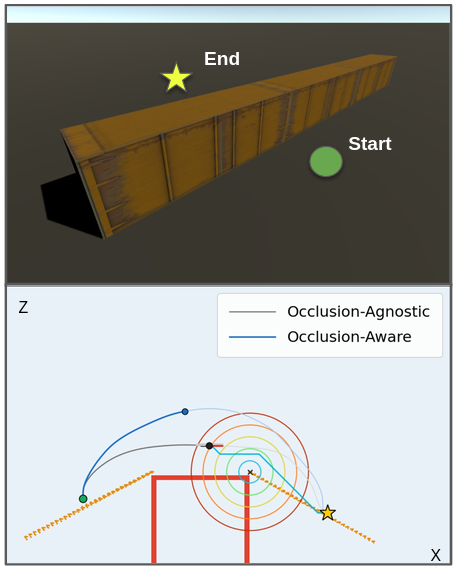
- We validate the proposed approach in simulation and hardware flight experiments, with the complete pipeline running onboard the vehicle in real time.
Preliminaries
MPPI draws a large number of candidate action sequences via Monte Carlo sampling and combines them into an improved sequence based on their cost. For a single rollout $k$, the cost takes the general receding-horizon form where $V(\bm{x}_{H})$ is the terminal cost, $\ell(\bm{x}_{j},\bm{u}_{j})$ the stage cost applied at every step of the horizon $H$, and $\bm{x}_{j}$ the state of rollout $k$ at stage $j$.
Methodology
We adopt the frame convention of [ 16 ] : ${B}$ is the body-fixed frame, with $\bm{u}_{3}^{B}$ perpendicular to the propeller plane, and ${E}$ the earth-fixed inertial frame, with $\bm{u}_{3}^{E}$ opposite to gravity.
The state is $\bm{p}:=\bm{s}_{BT}\in\real^{3}$ (position relative to a fixed earth point $T$), $\bm{q}:=\bm{q}^{BE}\in\mathbb{S}\mathbb{O}(3)$ (attitude), $\bm{v}:=\bm{v}_{BE}\in\real^{3}$ (velocity), and $\bm{\omega}:=\bm{\omega}^{BE}\in\real^{3}$ (body rate), so $\bm{x}=[\bm{p},\bm{q},\bm{v},\bm{\omega}]$.
Results
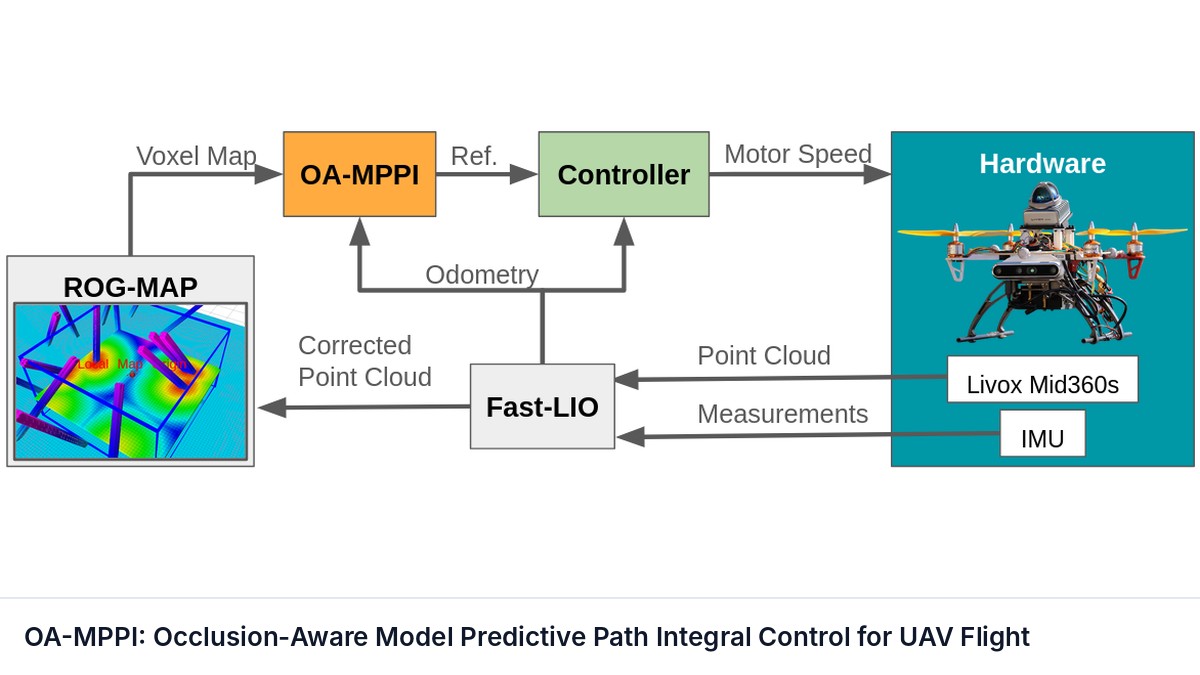
To validate the effectiveness of our approach, we evaluate it both in simulation and on real hardware. In simulation, a ray-casting sensor model [ 19 ] attached to the vehicle body samples the scene, and the resulting scan is consumed directly by ROG-Map [ 18 ] . In flight experiments, everything runs onboard a Jetson Orin Nano with $8$ GB of RAM.
In both cases, rollouts are evaluated in parallel via OpenMP across the available threads. Both the simulation tests and the real flight experiments use the same MPPI parameters, listed in Table I .
Sources and Demonstrations
Figures are reproduced from Palladino et al. See the full paper for experimental details and the project page, when the paper links one, for demonstrations and videos.
Related Papers
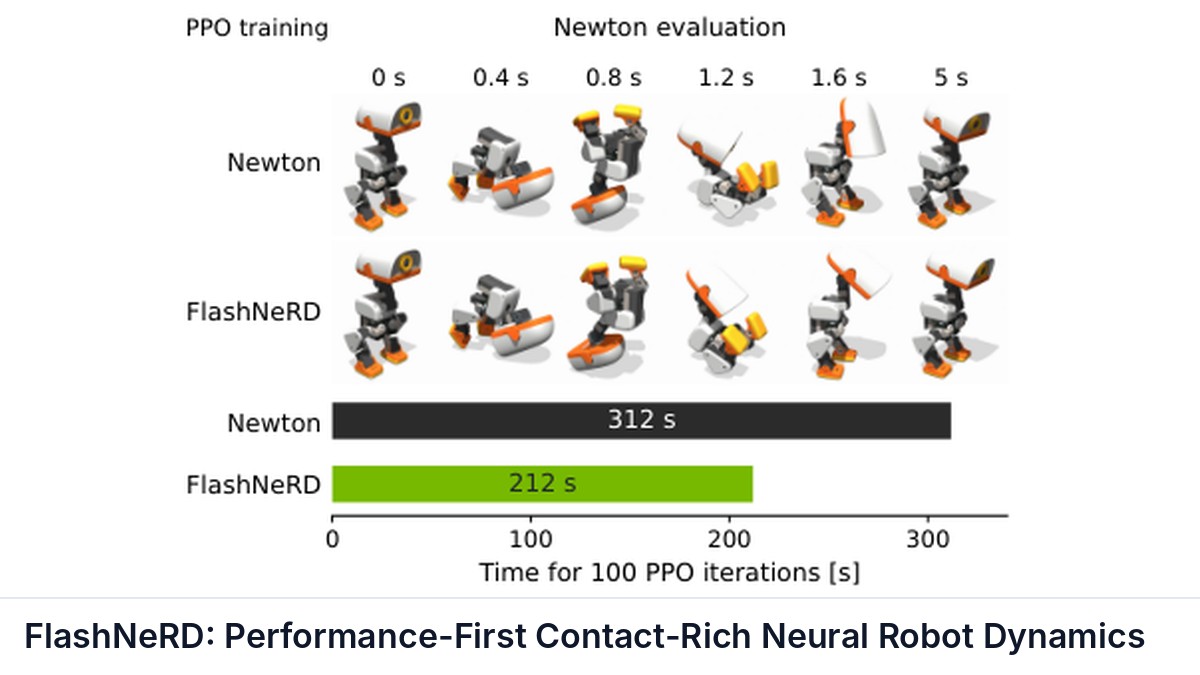
FlashNeRD: Performance-First Contact-Rich Neural Robot Dynamics
Mohammadmehdi Ataei, Mohammad Amin Nabian, Jie Xu et al.
Compared with analytical physics, learned dynamics models promise robot simulation that is faster, inherently differentiable, and easily adaptable to real data.
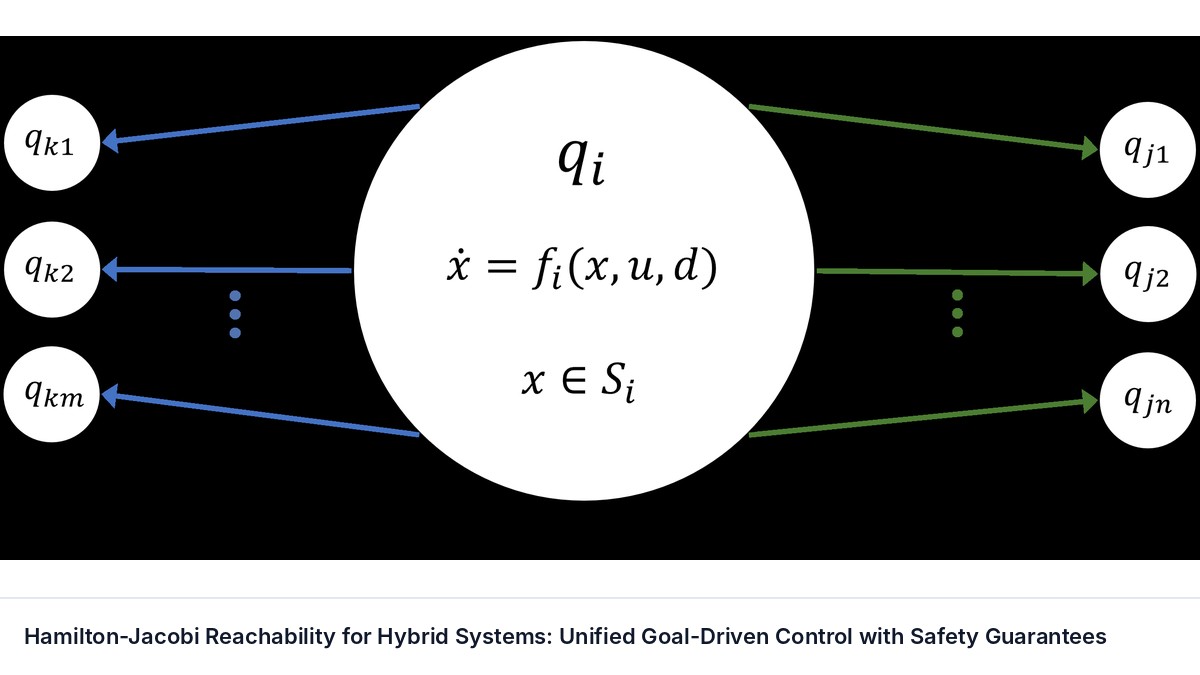
Hamilton-Jacobi Reachability for Hybrid Systems: Unified Goal-Driven Control with Safety Guarantees
Javier Borquez, Shuang Peng, Somil Bansal
Hybrid dynamical systems provide a powerful modeling framework for robotic systems, particularly in contact-rich environments. However, ensuring safety and performance in such systems remains challenging due to the intricate coupling between continuous dynamics and discrete mode transitions.
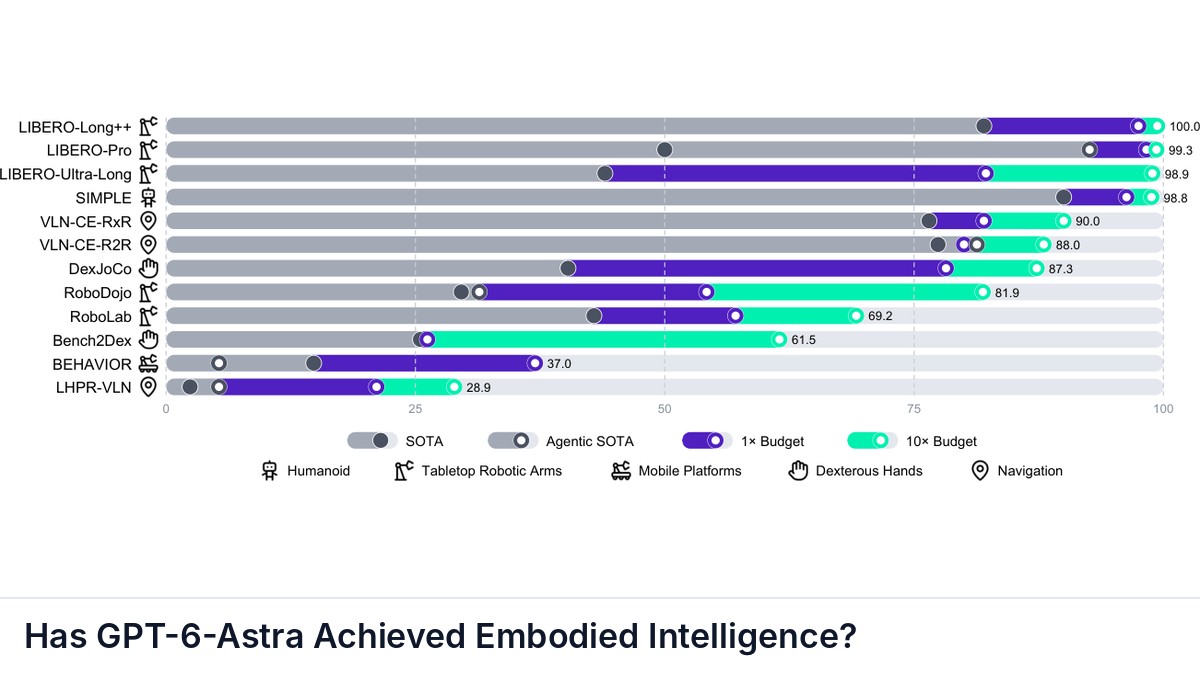
Has GPT-6-Astra Achieved Embodied Intelligence?
SenseNova, Joint Research Team, : et al.
GPT-6-Astra demonstrates a level of competence in robotic manipulation and navigation that challenges the conventional paradigm of building specialized models for individual tasks and embodiments.
LEAP: Learning Emergent Active Perception for Quadruped Navigation
\"U. Bora G\"okbakan (WILLOW), St\'ephane Caron (ISIR), Philippe Sou\`eres (LAAS-GEPETTO)
Active perception allows autonomous agents to select their viewpoints rather than passively process the viewpoints given to them, enabling them to target where to reduce uncertainty about their environment.