
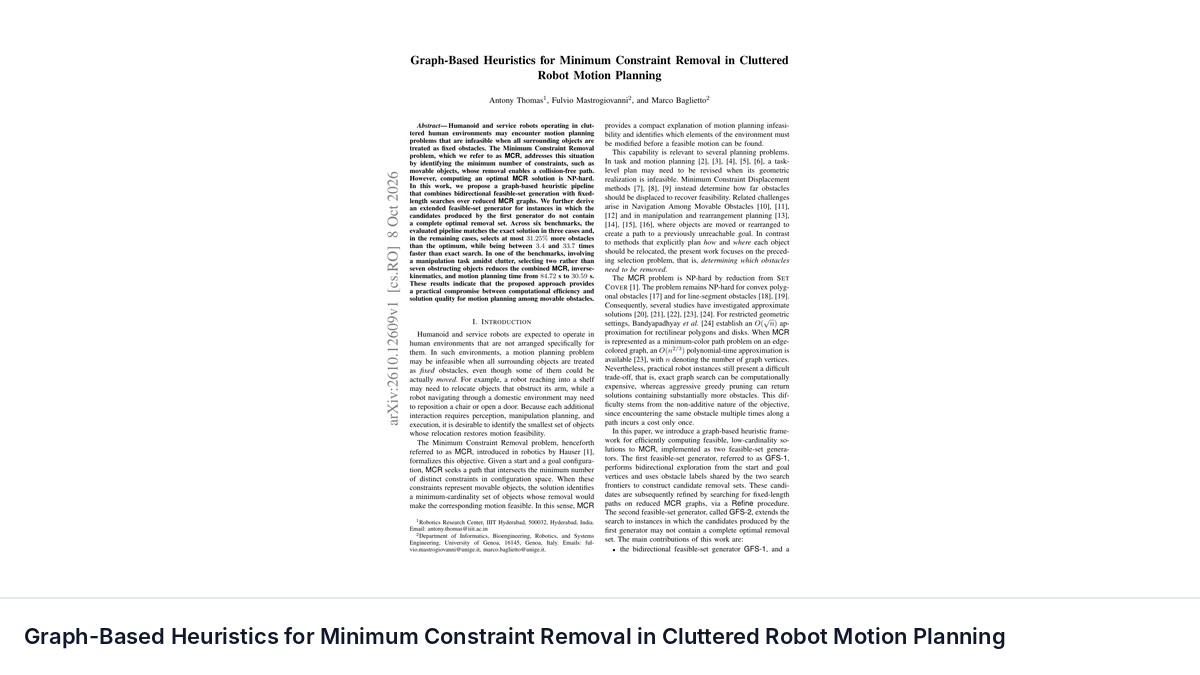
Graph-Based Heuristics for Minimum Constraint Removal in Cluttered Robot Motion Planning
Antony Thomas, Fulvio Mastrogiovanni, Marco Baglietto · N/A · 2026
Framework
N/A
License
N/A
Stars
N/A
Summary
Humanoid and service robots operating in clut- tered human environments may encounter motion planning problems that are infeasible when all surrounding objects are treated as fixed obstacles.
Abstract Summary
Key Points
- Humanoid and service robots operating in clut- tered human environments may encounter motion planning problems that are infeasible when all surrounding objects are treated as fixed obstacles.
- The Minimum Constraint Removal problem, which we refer to as MCR, addresses this situation by identifying the minimum number of constraints, such as movable objects, whose removal enables a collision-free path.
- However, computing an optimal MCR solution is NP-hard
- In this work, we propose a graph-based heuristic pipeline that combines bidirectional feasible-set generation with fixed- length searches over reduced MCR graphs.
- We further derive an extended feasible-set generator for instances in which the candidates produced by the first generator do not contain a complete optimal removal set.
Graph-Based Heuristics for Minimum Constraint Removal in Cluttered Robot Motion Planning
|Authors: Antony Thomas, Fulvio Mastrogiovanni, Marco Baglietto
|Venue: arXiv preprint | Year: 2026
|arXiv: 2610.12609
Abstract
Humanoid and service robots operating in clut- tered human environments may encounter motion planning problems that are infeasible when all surrounding objects are treated as fixed obstacles. The Minimum Constraint Removal problem, which we refer to as MCR, addresses this situation by identifying the minimum number of constraints, such as movable objects, whose removal enables a collision-free path. However, computing an optimal MCR solution is NP-hard. In this work, we propose a graph-based heuristic pipeline that combines bidirectional feasible-set generation with fixed- length searches over reduced MCR graphs. We further derive an extended feasible-set generator for instances in which the candidates produced by the first generator do not contain a complete optimal removal set. Across six benchmarks, the evaluated pipeline matches the exact solution in three cases and, in the remaining cases, selects at most 31.25% more obstacles than the optimum, while being between 3.4 and 33.7 times faster than exact search. In one of the benchmarks, involving a manipulation task amidst clutter, selecting two rather than seven obstructing objects reduces the combined MCR, inverse- kinematics, and motion planning time from 84.72 s to 30.59 s. These results indicate that the proposed approach provides a practical compromise between computational efficiency and solution quality for motion planning among movable obstacles.
Key Contributions
- Humanoid and service robots operating in clut- tered human environments may encounter motion plan…
- The Minimum Constraint Removal problem, which we refer to as MCR, addresses this situation by ide…
- However, computing an optimal MCR solution is NP-hard
- In this work, we propose a graph-based heuristic pipeline that combines bidirectional feasible-se…
- We further derive an extended feasible-set generator for instances in which the candidates produc…
Topics
- manipulation
- planning
- benchmark
Code & Data
No code repository linked in paper metadata.
BibTeX
@article{Thomas2026_261012609,
  title     = {Graph-Based Heuristics for Minimum Constraint Removal in Cluttered Robot Motion Planning},
  author    = {Antony Thomas and Fulvio Mastrogiovanni and Marco Baglietto},
  year      = {2026},
  eprint    = {2610.12609},
  archivePrefix = {arXiv},
  primaryClass  = {cs.RO},
  url       = {https://arxiv.org/abs/2610.12609}
}
Related Papers
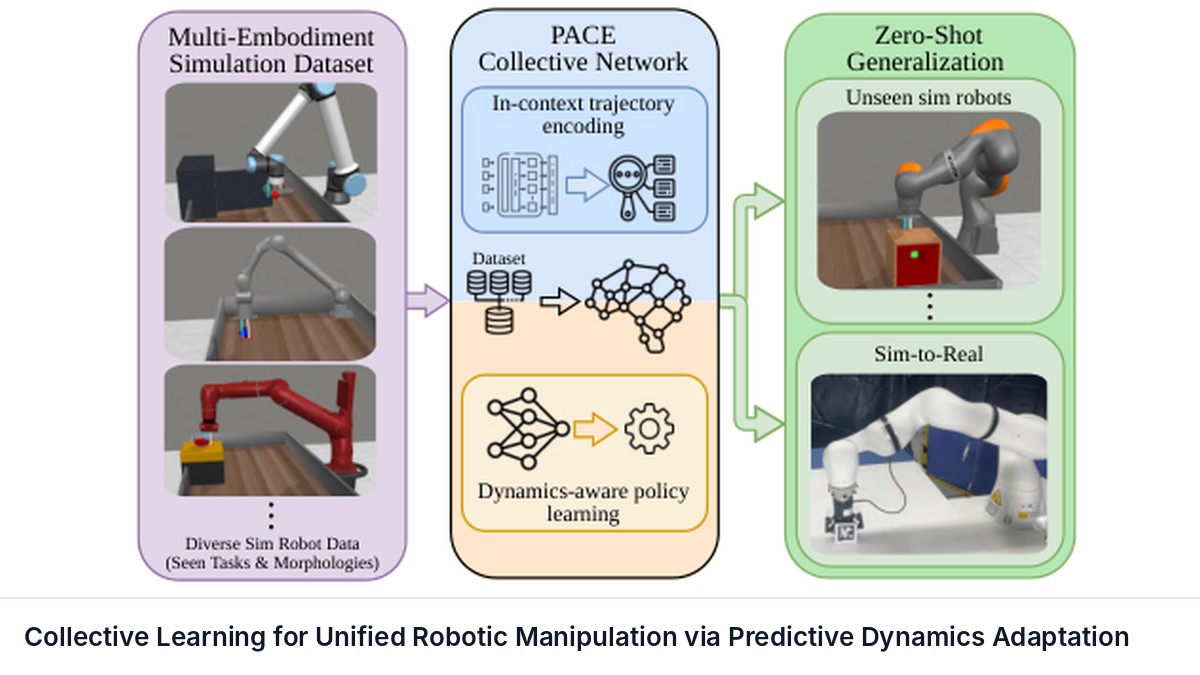
Collective Learning for Unified Robotic Manipulation via Predictive Dynamics Adaptation
Shaocheng Liu, Yuan Meng, Zhenshan Bing et al.
Learning a collective policy for state-based Cartesian manipulation across diverse robotic embodiments presents a fundamental challenge due to embodiment-dependent transition dynamics.
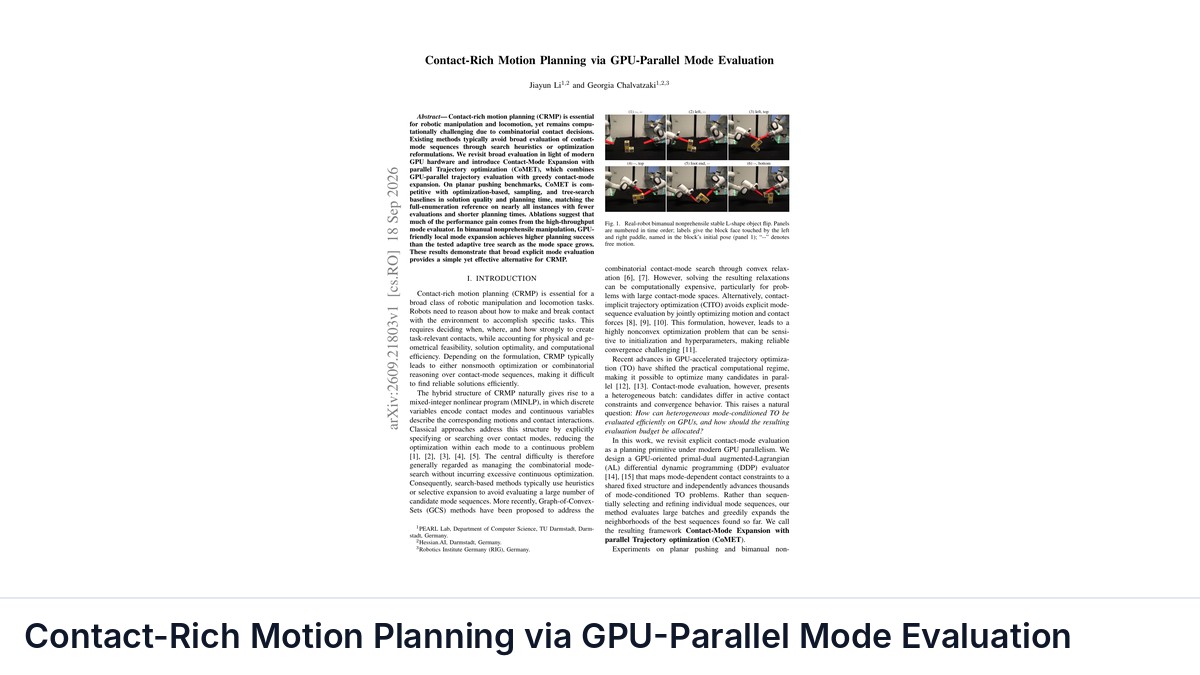
Contact-Rich Motion Planning via GPU-Parallel Mode Evaluation
Jiayun Li, Georgia Chalvatzaki
Contact-rich motion planning (CRMP) is essential for robotic manipulation and locomotion, yet remains computationally challenging due to combinatorial contact decisions.
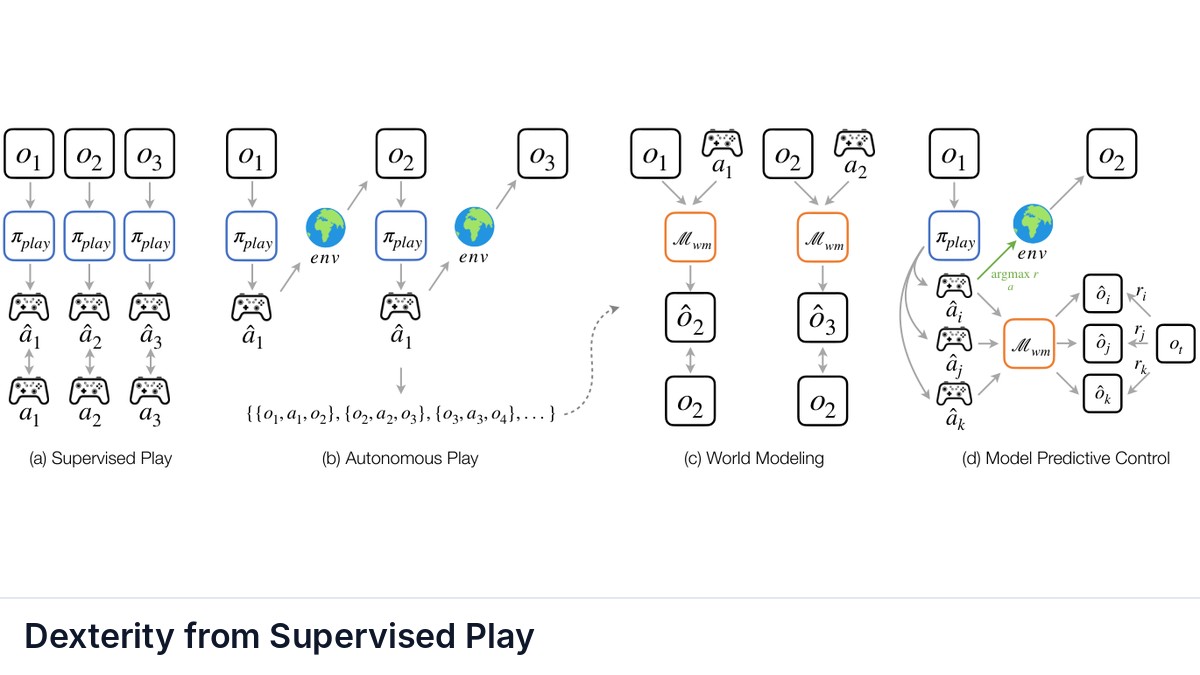
Dexterity from Supervised Play
Botao He, Yiming Dou, Yiannis Aloimonos et al.
How can robots autonomously collect the contact-rich experience needed to learn dexterous manipulation?
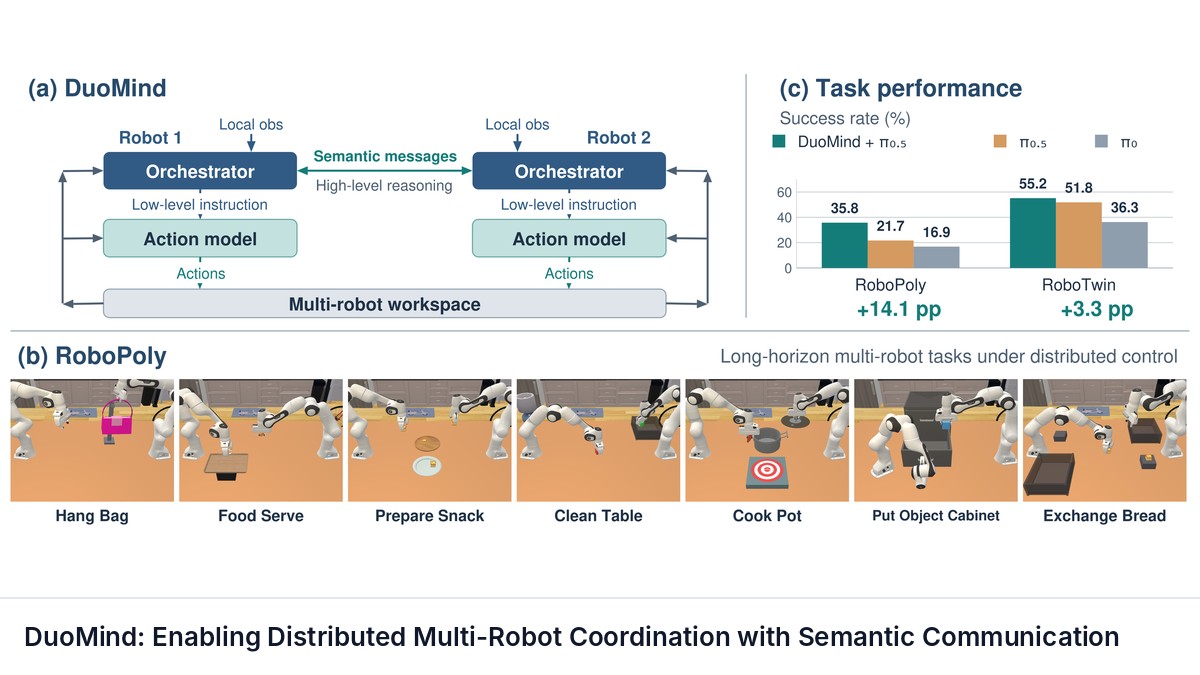
DuoMind: Enabling Distributed Multi-Robot Coordination with Semantic Communication
Hanchu Zhou, Dechen Gao, Hang Wang et al.
Vision-language models (VLMs) and vision-language-action models (VLAs) have recently driven rapid progress in general-purpose robots, yet most progress has focused on single-robot settings.