
Efficient Bezier Velocity Optimization for Free-Floating Space Manipulators
Duo Zhang, Zhizhuo Zhang, Xiaoli Bai, Jingjin Yu · N/A · 2026
Framework
N/A
License
N/A
Stars
N/A
Summary
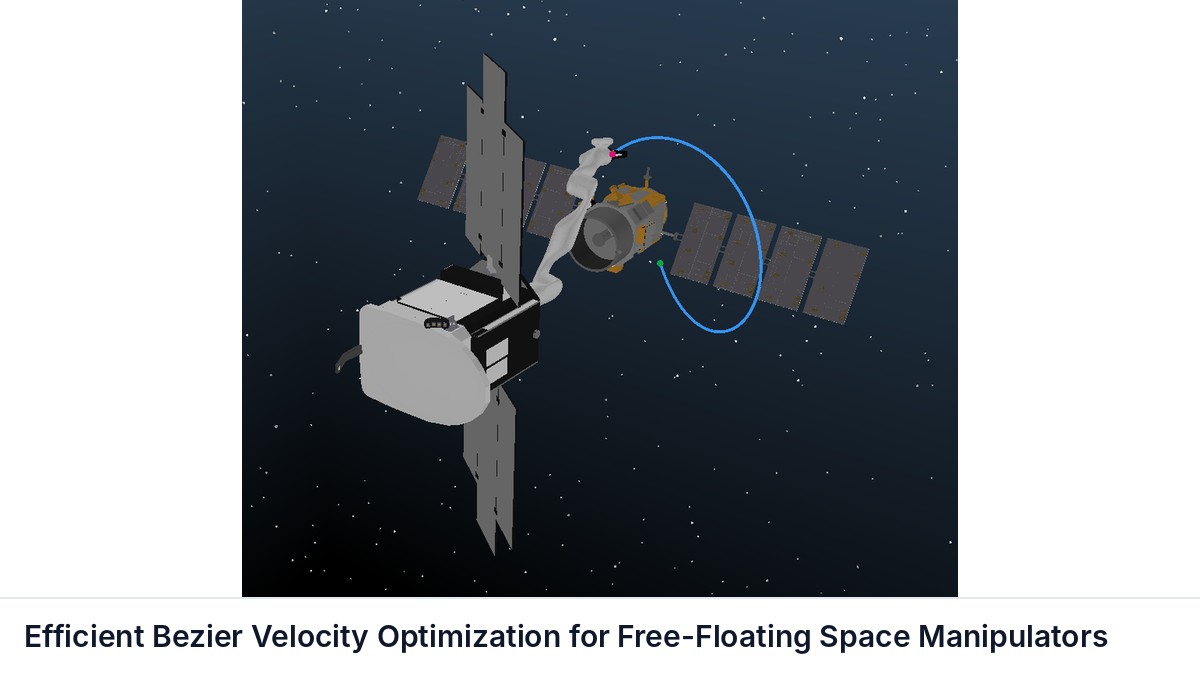
We present FAVOR (Free-floating Arm Velocity Optimization with Recursive Sensitivities), a planner for collision-free reaching, tracking, and prescribed-time pre-grasp interception on an unactuated spacecraft.
Abstract Summary
Key Points
- We present FAVOR (Free-floating Arm Velocity Optimization with Recursive Sensitivities), a planner for collision-free reaching, tracking, and prescribed-time pre-grasp interception on an unactuated spacecraft.
- It optimizes Bezier joint-velocity curves with linear velocity, acceleration, and continuity constraints.
- Decision dimension is independent of rollout resolution
- Analytical recursive sensitivities provide task and clearance gradients through the coupled base-arm motion.
- Parallel evaluation, caching, and incremental collision discovery reduce computation
Model and Planning Formulation
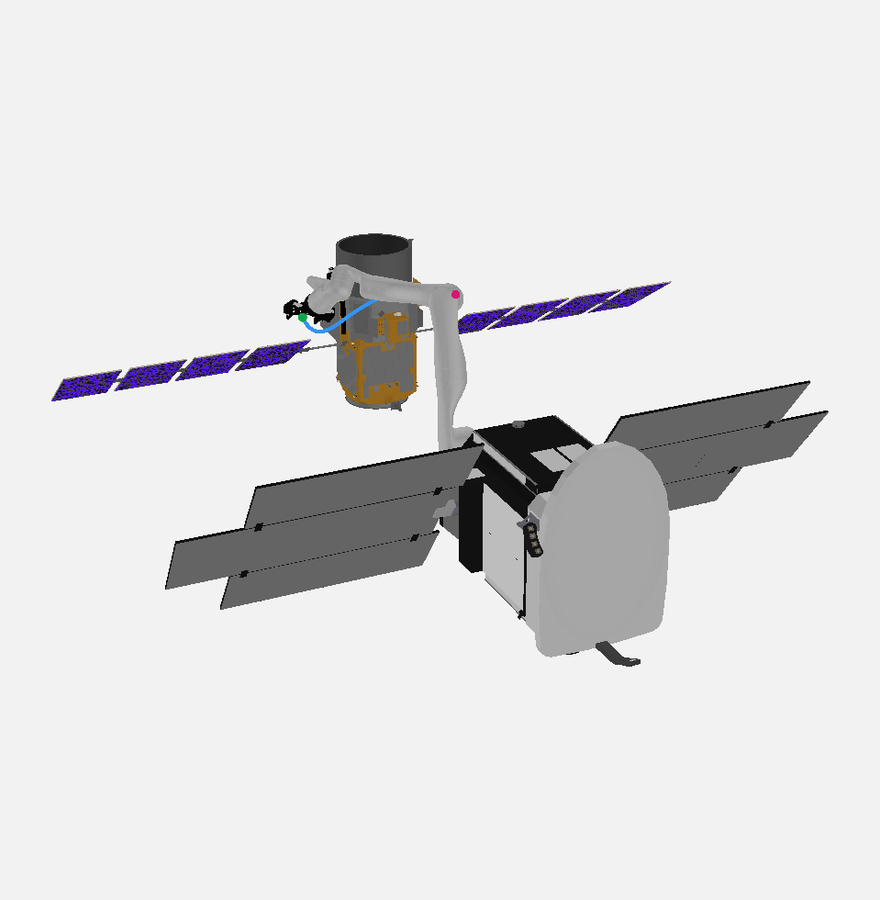
Consider an $n$-DoF arm mounted on an unactuated spacecraft. No external wrench acts during the planned maneuver, so the total linear and angular momenta, $P_{0},H_{0}\in\mathbb{R}^{3}$, are conserved. Angular momentum $H_{0}$ is measured about the fixed inertial origin. Let $r_{b}$ and $R_{b}\in SO(3)$ be the base position and attitude, and let $\theta\in\mathbb{R}^{n}$ denote the joints.
Base linear and angular velocities are expressed in the inertial frame.
Trajectory Optimization
The robot model and conserved momenta $(P_{0},H_{0})$ are fixed. The changing momentum map couples each state to preceding joint commands.
Writing the components of ( 2 ) as $(v_{b,k},\omega_{b,k})$, the simulator propagates the configuration by Together, these updates define the discrete state-transition map $q_{k+1}=F(q_{k},u_{k},\Delta t)$, with the updated rotation expressed in the attitude coordinates $\eta_{b,k+1}$.
Evaluation
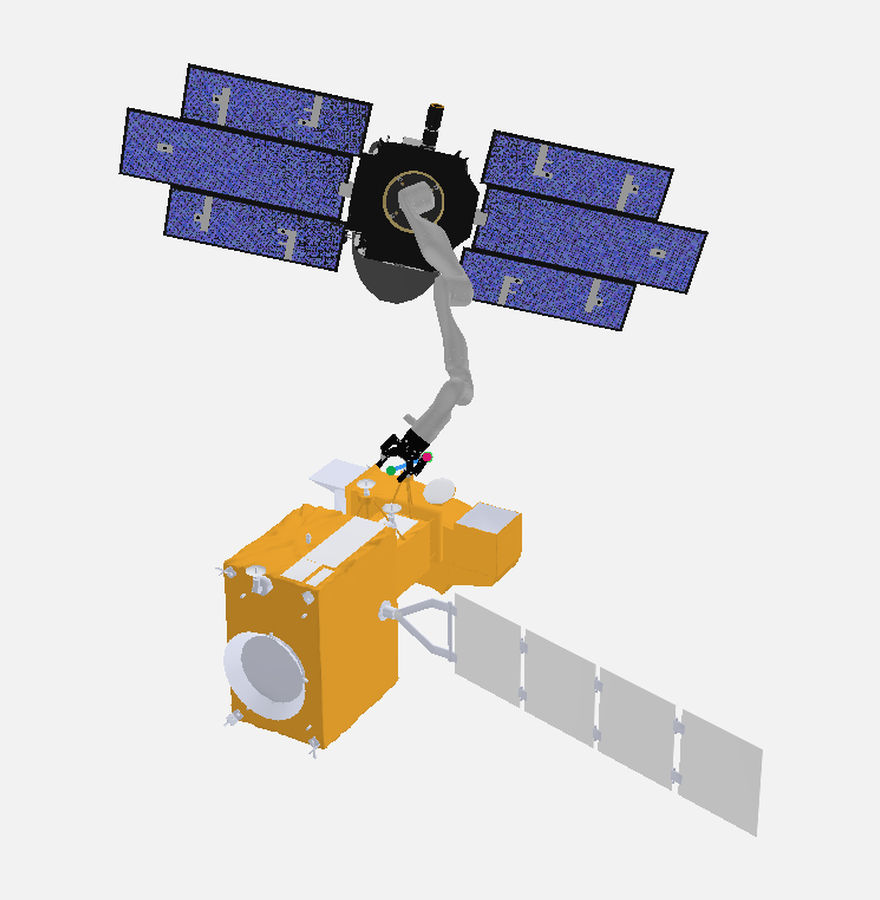
The simulator couples a seven-DoF Kinova Gen3-derived arm and Robotiq 2F-85 gripper to a freely translating and rotating base with CloudSat geometry. It includes link kinematics, masses, inertias, and self- and environment-collision models. We evaluate endpoint planning, inspection tracking, and prescribed-time pre-grasp interception.
For endpoint planning and interception, FAVOR enforces the prescribed initial joint velocity and arm-position limits of $[-2\pi,2\pi]$ rad. Base coordinates are unbounded.
Sources and Demonstrations
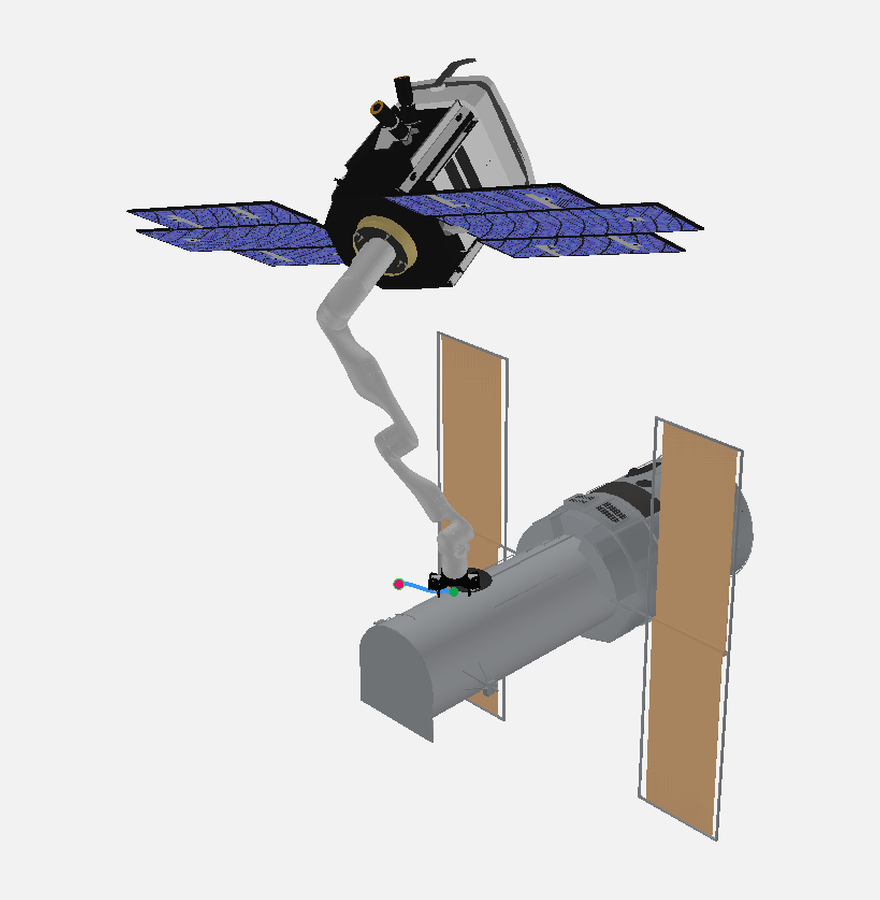
Figures are reproduced from Zhang et al. See the full paper for experimental details and the project page, when the paper links one, for demonstrations and videos.
Related Papers
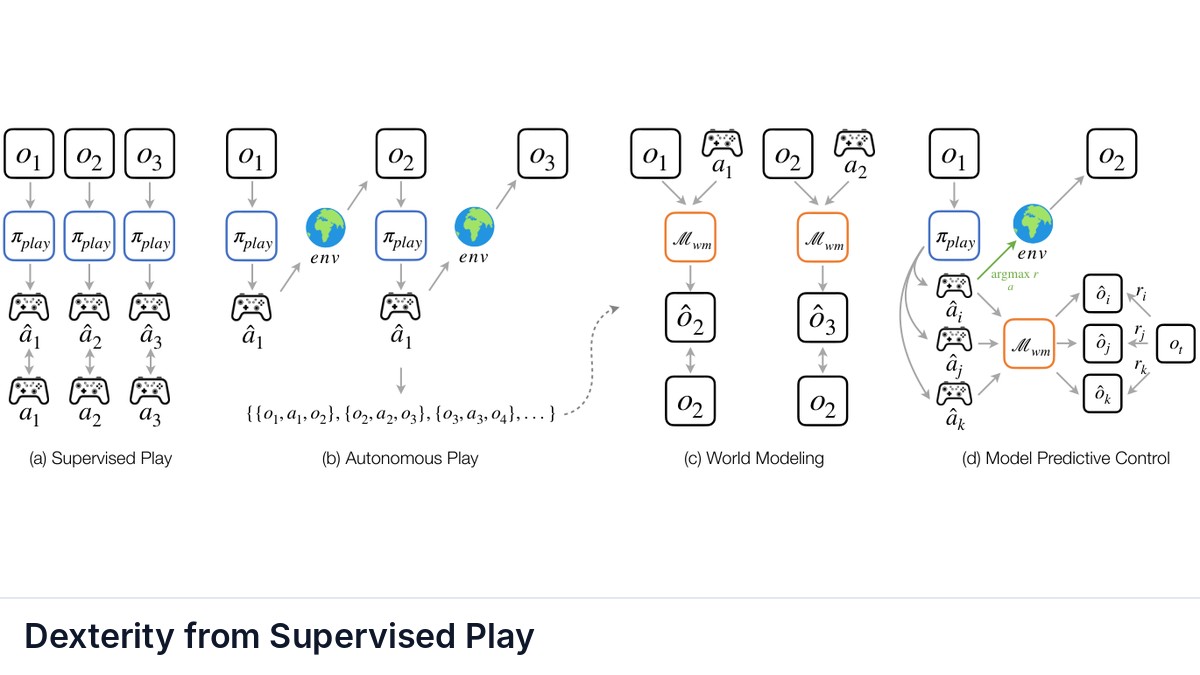
Dexterity from Supervised Play
Botao He, Yiming Dou, Yiannis Aloimonos et al.
How can robots autonomously collect the contact-rich experience needed to learn dexterous manipulation?
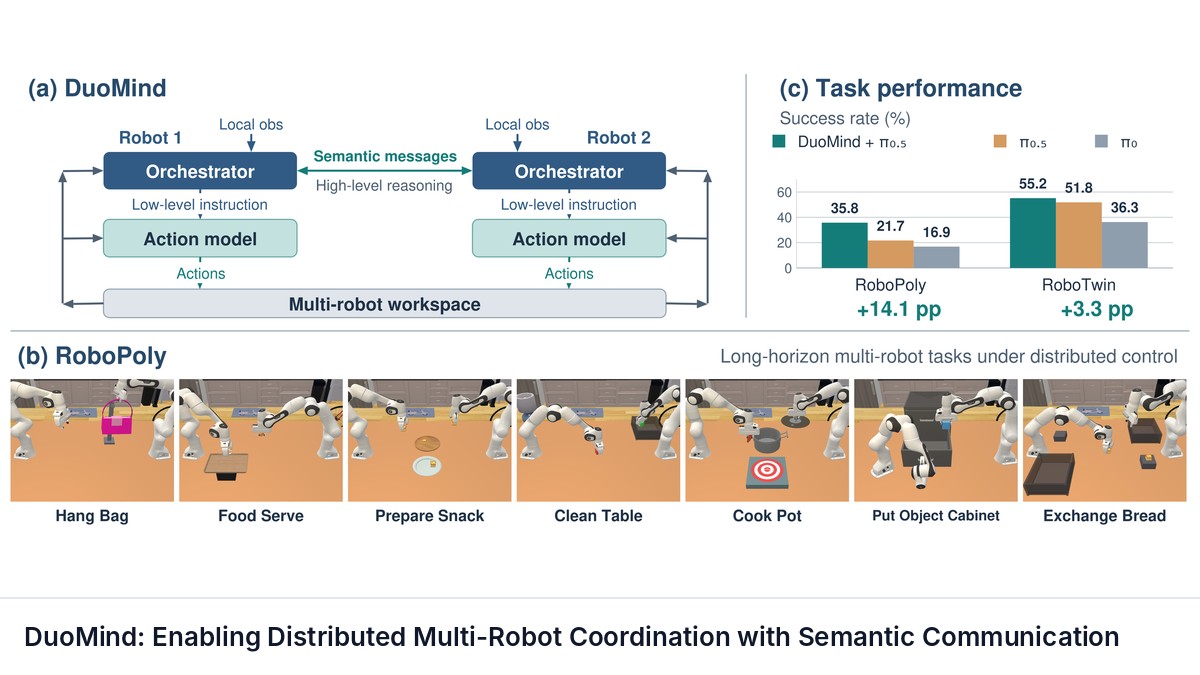
DuoMind: Enabling Distributed Multi-Robot Coordination with Semantic Communication
Hanchu Zhou, Dechen Gao, Hang Wang et al.
Vision-language models (VLMs) and vision-language-action models (VLAs) have recently driven rapid progress in general-purpose robots, yet most progress has focused on single-robot settings.
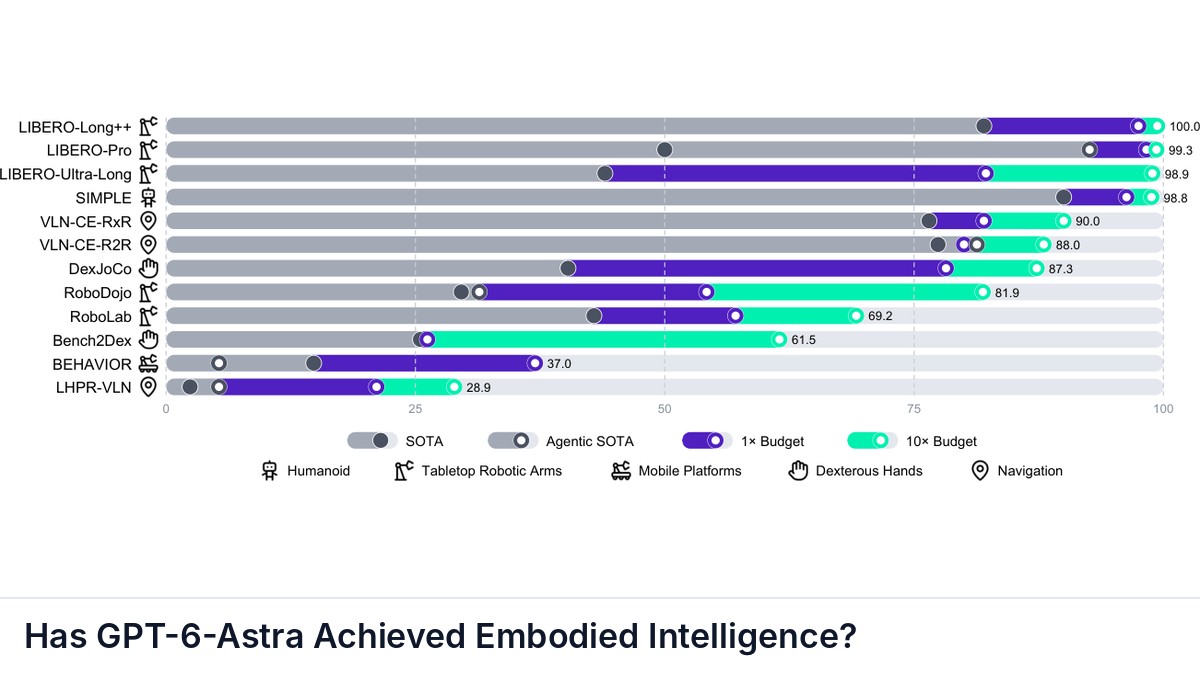
Has GPT-6-Astra Achieved Embodied Intelligence?
SenseNova, Joint Research Team, : et al.
GPT-6-Astra demonstrates a level of competence in robotic manipulation and navigation that challenges the conventional paradigm of building specialized models for individual tasks and embodiments.
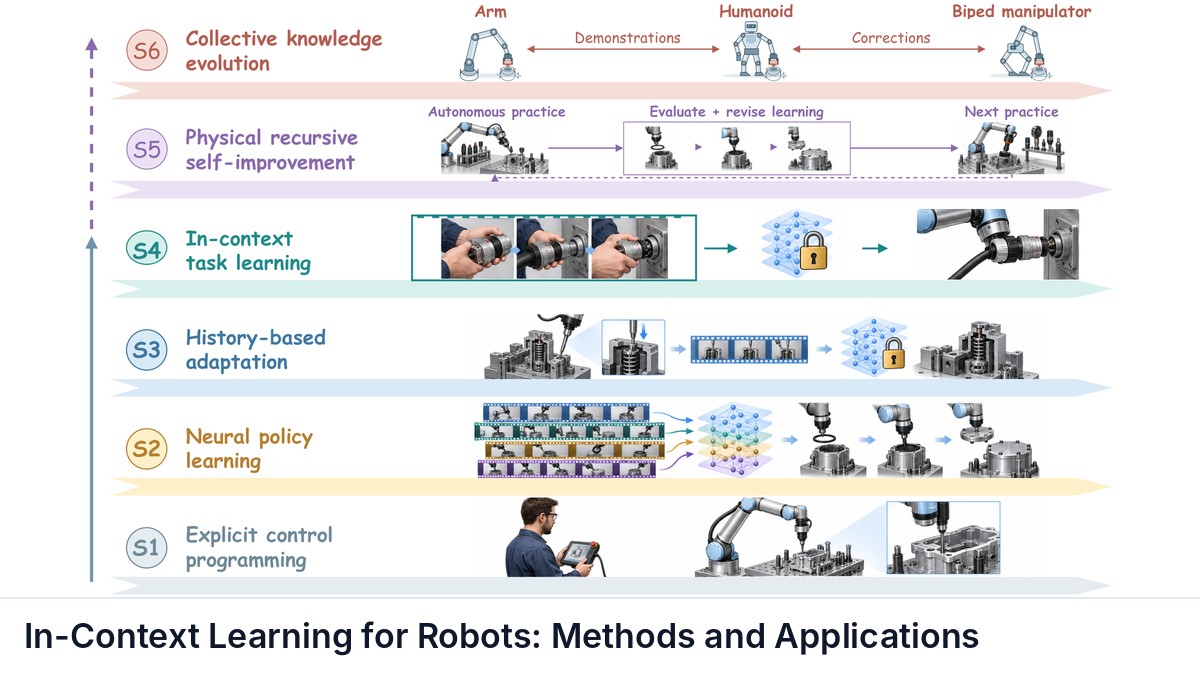
In-Context Learning for Robots: Methods and Applications
Haojian Huang, Zexi Li, Junhao Guo et al.
General-purpose robots must infer what a new task requires and translate that understanding into appropriate physical action.