
Effects of Assistance Delay on Joint Mechanics and Energetics in Biological Torque Control of a Hip Exoskeleton
Jimin An, Ryan Lee, Jingshu Peng, Eni Halilaj, Inseung Kang · N/A · 2026
Framework
N/A
License
N/A
Stars
N/A
Summary
Biological torque control directly maps an estimated human joint moment to exoskeleton assistance, providing a task-agnostic strategy for supporting diverse locomotor activities.
Abstract Summary
Key Points
- Biological torque control directly maps an estimated human joint moment to exoskeleton assistance, providing a task-agnostic strategy for supporting diverse locomotor activities.
- However, it remains unclear whether a fixed state-to-torque mapping provides effective assistance across biomechanically distinct tasks.
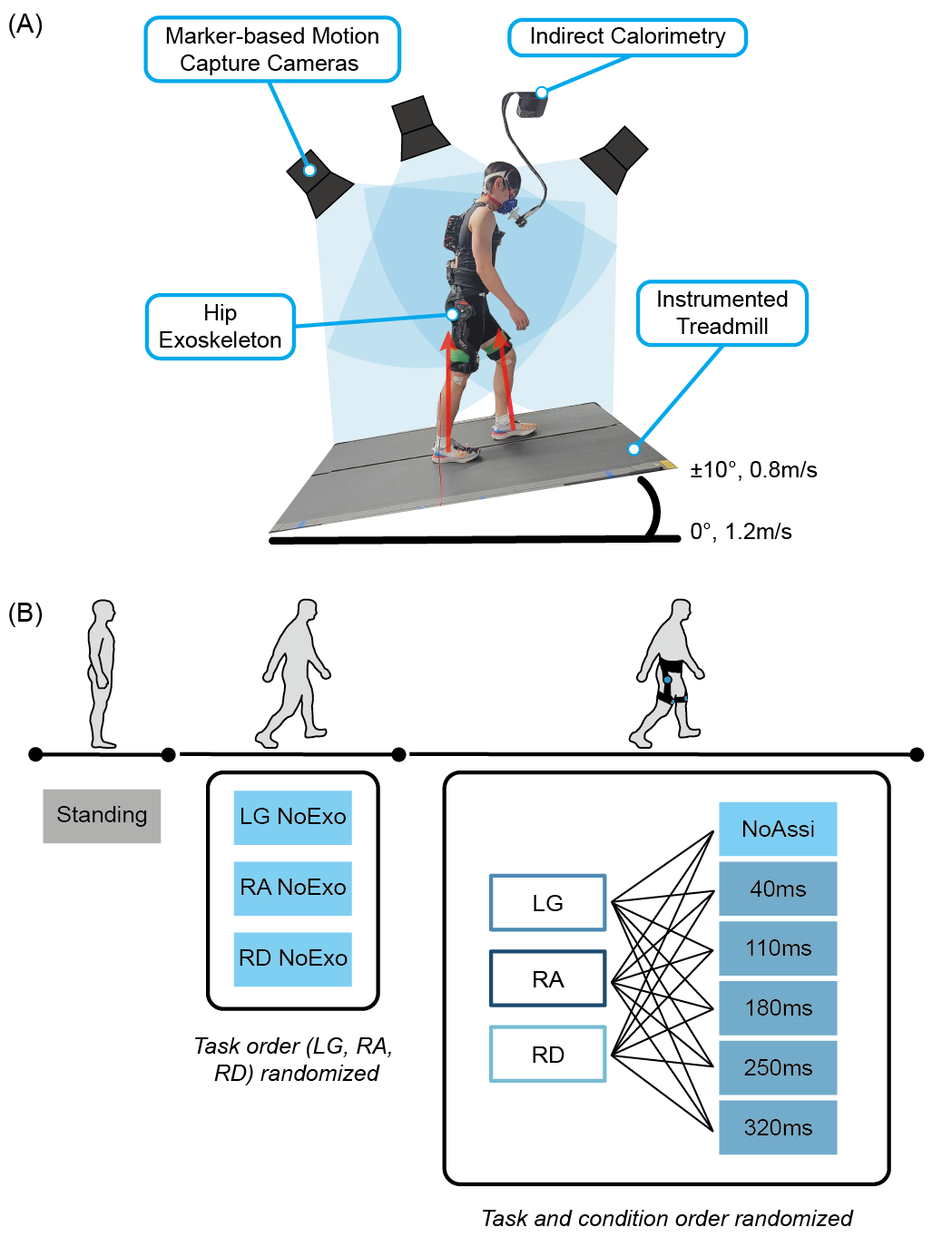
- We examined how assistance delay affected hip exoskeleton performance during level-ground (LG), ramp-ascent (RA), and ramp-descent (RD) walking.
- Eight participants completed a zero-torque baseline condition and five active assistance conditions with delays ranging from 40 to 320 ms.
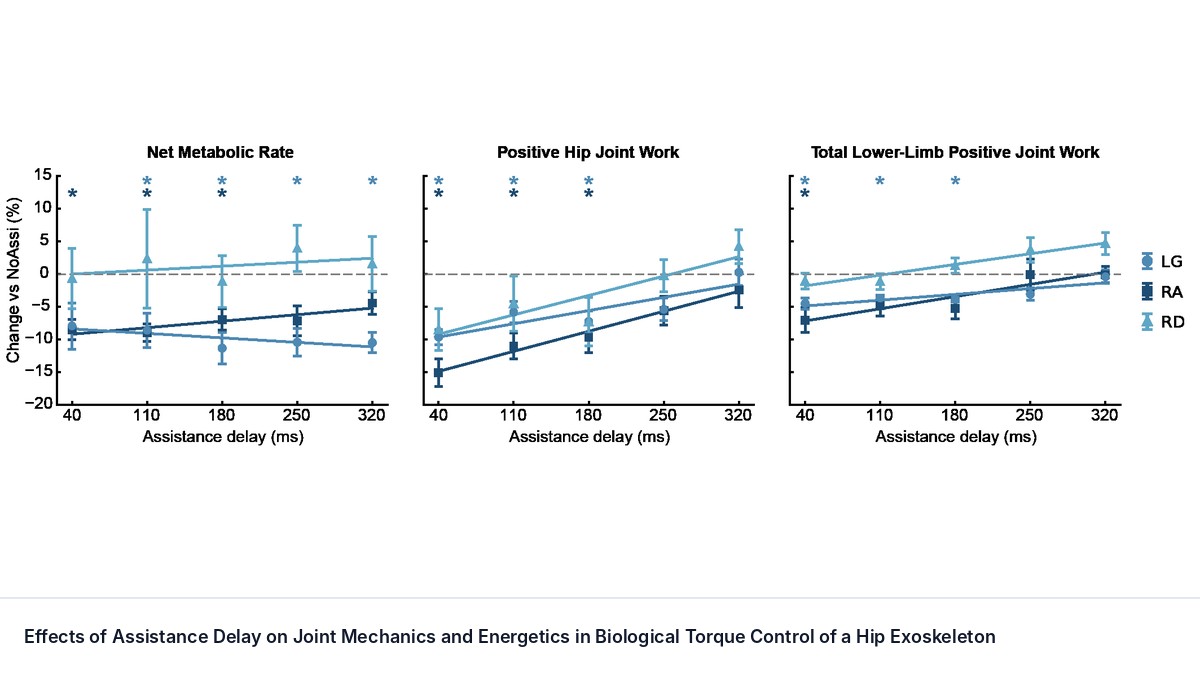
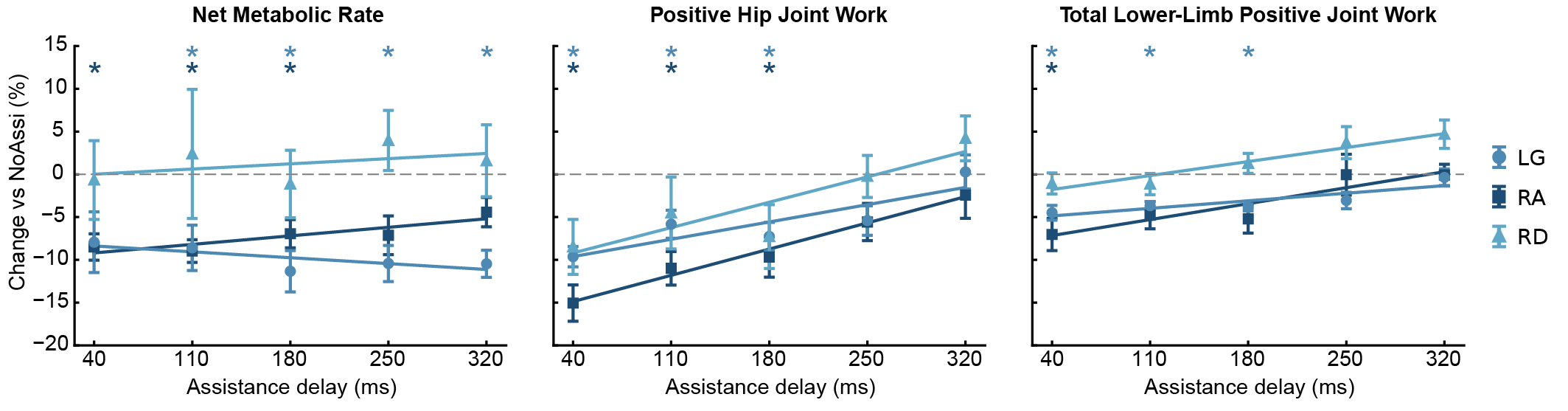
- Across tasks and active delays, assistance reduced net metabolic rate by 5.24%, positive biological hip joint work by 5.86%, and total lower-limb positive joint work by 1.68% (all p < 0.05).
Robotic Hip Exoskeleton
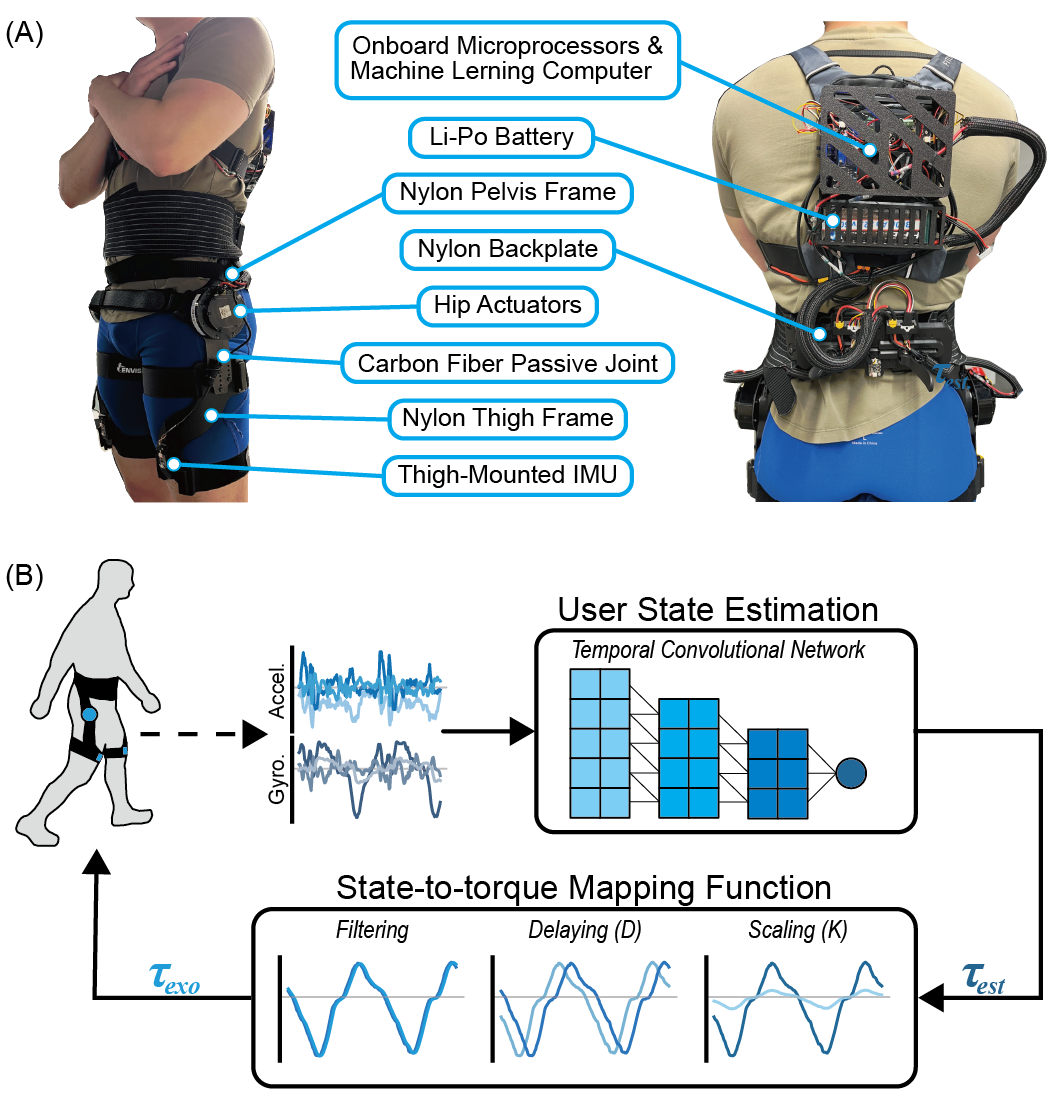
We developed a bilateral robotic hip exoskeleton to deliver assistive torque during locomotion (Fig. 1 A). The exoskeleton was designed to provide up to 18 Nm of hip torque across a sagittal-plane range of motion from 30 ∘ of extension to 100 ∘ of flexion. A compliant carbon-fiber passive joint permitted $\pm 5^{\circ}$ of hip abduction and adduction in the frontal plane.
The device weighed 4.3 kg and included two actuators (AK80-9; CubeMars, Nanchang, China), 3D-printed nylon user interfaces, body straps, and onboard electronics.
Methods
The study protocol was approved by the Institutional Review Board of Carnegie Mellon University on April 1, 2025 (Protocol STUDY2025_00000002), and all participants provided written informed consent before the experiment. Eight healthy adults were recruited for this study (seven males and one female; age: $26.4\pm 2.9$ years; body mass: $71.8\pm 9.8$ kg; height: $1.77\pm 0.07$ m).
Participants walked on an instrumented treadmill (FIT5; Bertec, Columbus, OH, USA) for 6 min under each experimental condition.
Results
Averaged across tasks and active-delay conditions, assistance reduced all three objective outcomes relative to NoAssi: net metabolic rate by 5.24% ($p=0.009$), positive biological hip joint work by 5.86% ($p=0.007$), and total lower-limb positive joint work by 1.68% ($p=0.013$). The dependence of these reductions on delay differed across outcomes (Outcome $\times$ Delay interaction, $p 3 ).
Sources and Demonstrations
Figures are reproduced from An et al. See the full paper for experimental details and the project page, when the paper links one, for demonstrations and videos.
Related Papers
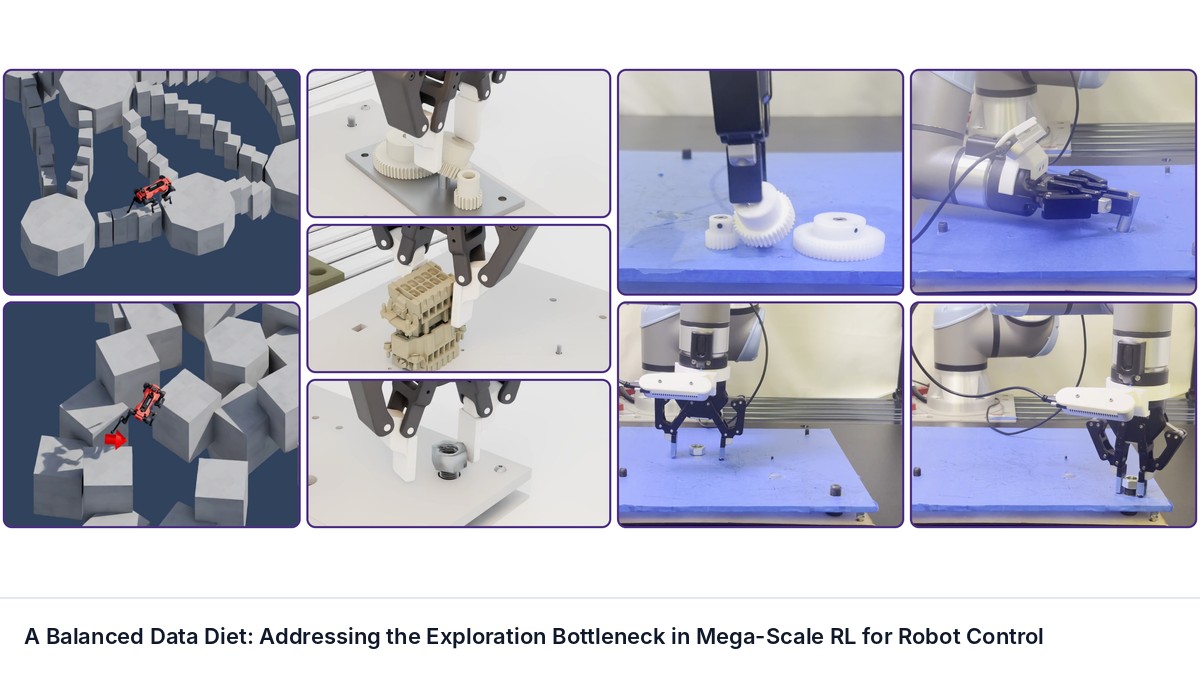
A Balanced Data Diet: Addressing the Exploration Bottleneck in Mega-Scale RL for Robot Control
Octi Zhang, Mateo Guaman Castro, Patrick Yin et al.
General-purpose robots must perform a wide range of tasks from agile locomotion to dexterous manipulation.
A Mode-Unified, Continuous, and Biomimetic Control Strategy of a Robotic Lower Limb Prosthesis
Hanjun Kim, Sixu Zhou, John Shim et al.
Existing biomimetic lower-limb prosthesis controllers are commonly designed for discrete locomotion modes, requiring separate parameterizations for level walking, ramps, and stairs.
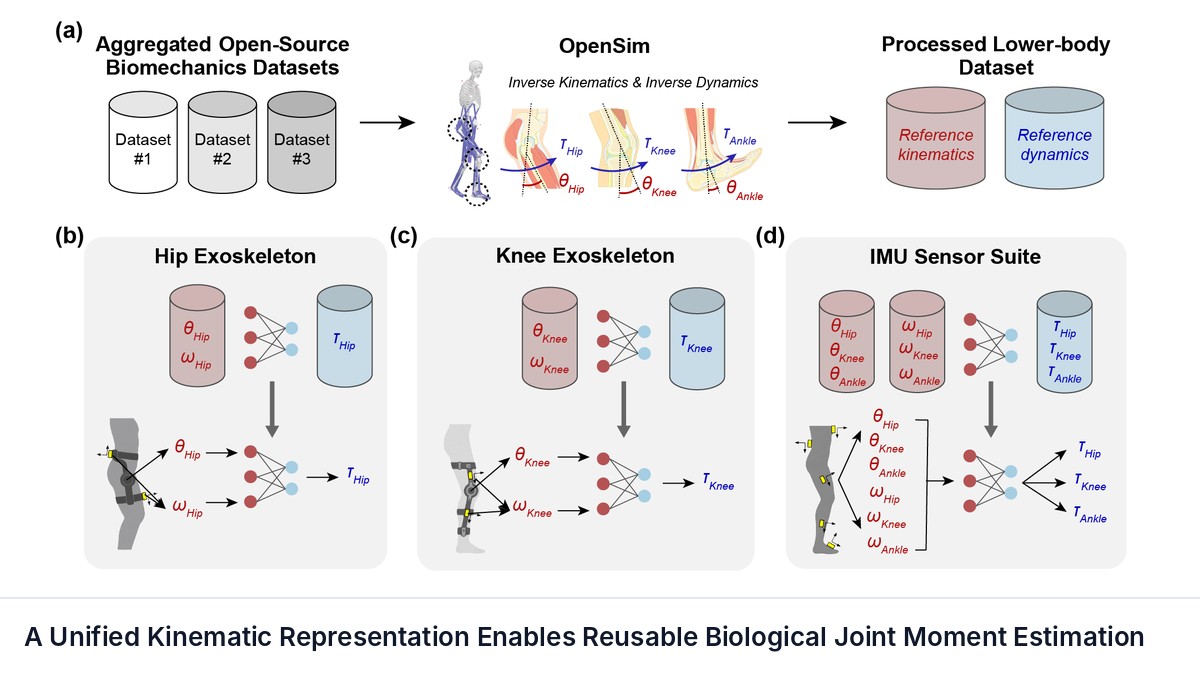
A Unified Kinematic Representation Enables Reusable Biological Joint Moment Estimation
Jinwoo Hwang, Ilseung Park, Changseob Song et al.
Objective: Data-driven models that estimate physiological states, particularly biological joint moments, are widely used in exoskeleton control.
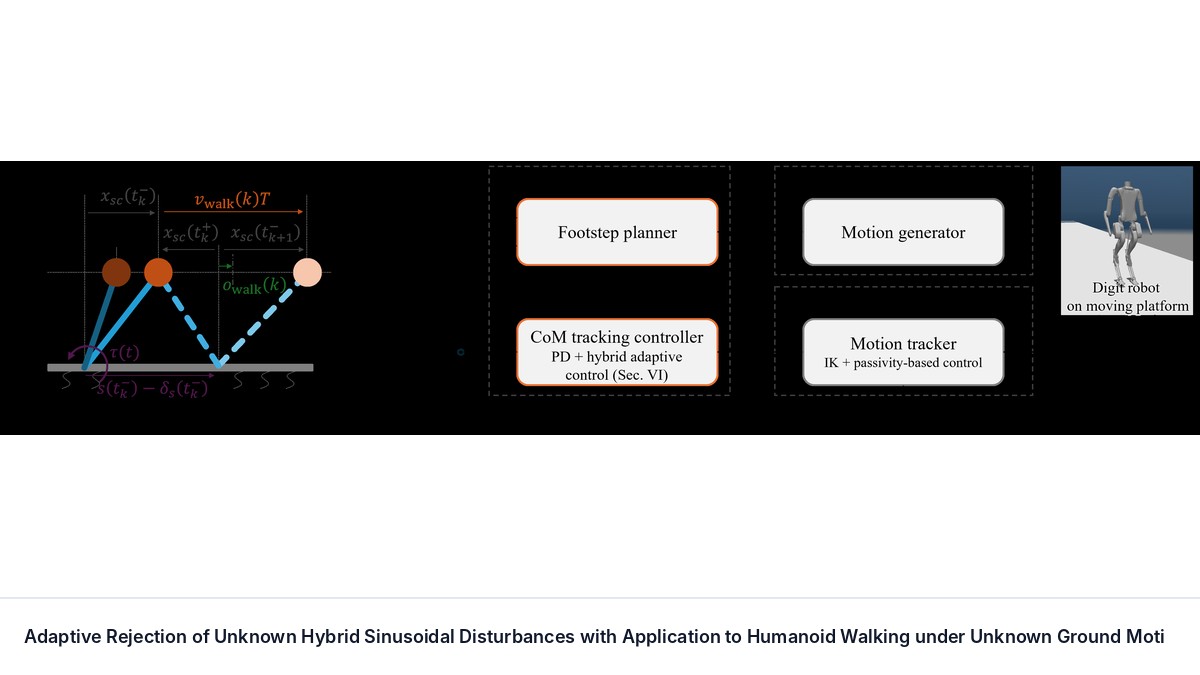
Adaptive Rejection of Unknown Hybrid Sinusoidal Disturbances with Application to Humanoid Walking under Unknown Ground Motion
I-Chia Chang, Jacob Stewart, Petros A. Ioannou et al.
Legged robot control is not yet practical in non-inertial environments, where the ground and surroundings accelerate in the inertial Earth frame, mainly because of the unknown, time-varying, persistent perturbations caused by environmental motion, compounded by the associated hybrid robotic dynamics.