
Angular momentum analysis on Karate roundhouse kicks: a longitudinal case study
Jan C. L. Lau, Christian Mele, Jonathan Feng-Shun Lin, Katja Mombaur · N/A · 2026
Framework
N/A
License
N/A
Stars
N/A
Summary
Human gait in reality extends beyond straight-line walking, with some situations even requiring drastic back-and-forth rotations. A smooth and stable execution may seem intuitive, but the underlying mechanics remains unknown.
Abstract Summary
Key Points
- Human gait in reality extends beyond straight-line walking, with some situations even requiring drastic back-and-forth rotations.
- A smooth and stable execution may seem intuitive, but the underlying mechanics remains unknown
- The Karate roundhouse kick may be an extreme case of exhibiting dynamic back-and-forth rotations, but investigating the angular momentum (AM) management can potentially inform stability analysis in dynamic human motions and smoother gait in robots and exoskeletons.
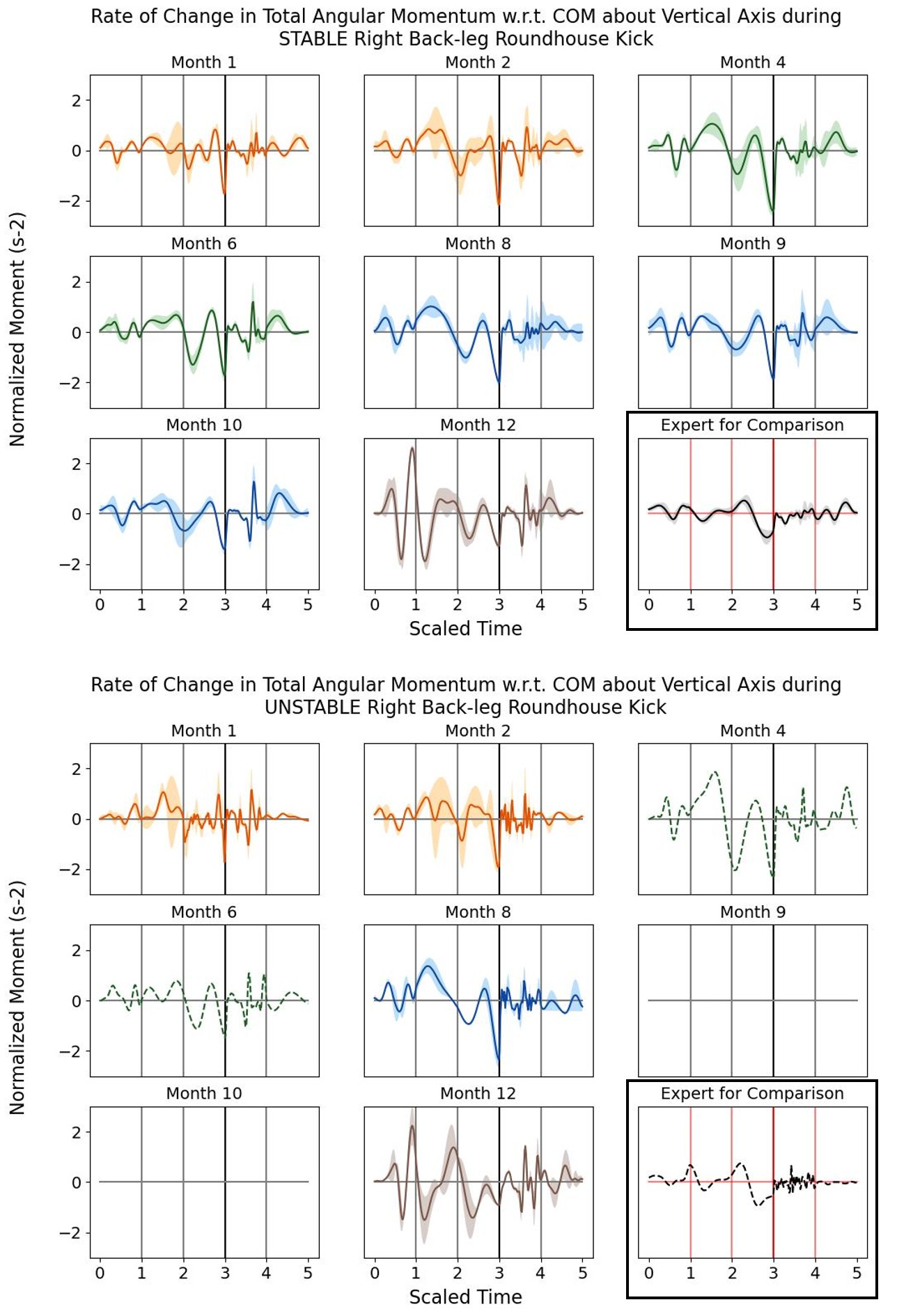
- This paper introduces two new AM-based measures and analyzes AM-related variables to study the target-less retractable back-leg Karate roundhouse kick.
- The purpose is to understand the underlying AM management, analyze the differences between stable and unstable kicks, and investigate how these variables and measures change over time with improvement.
Methods
The first author (female, age 25, $1.68m$, $55.44kg\pm 1.86$) participated as a Karate student and trained 3-4.5 hours per week. The second author (male, age 25, $1.83m$, $87.6kg$), who is also a black belt Karate instructor with 12 years of training, participated as an expert. Both practice Goju-Ryu Karate.
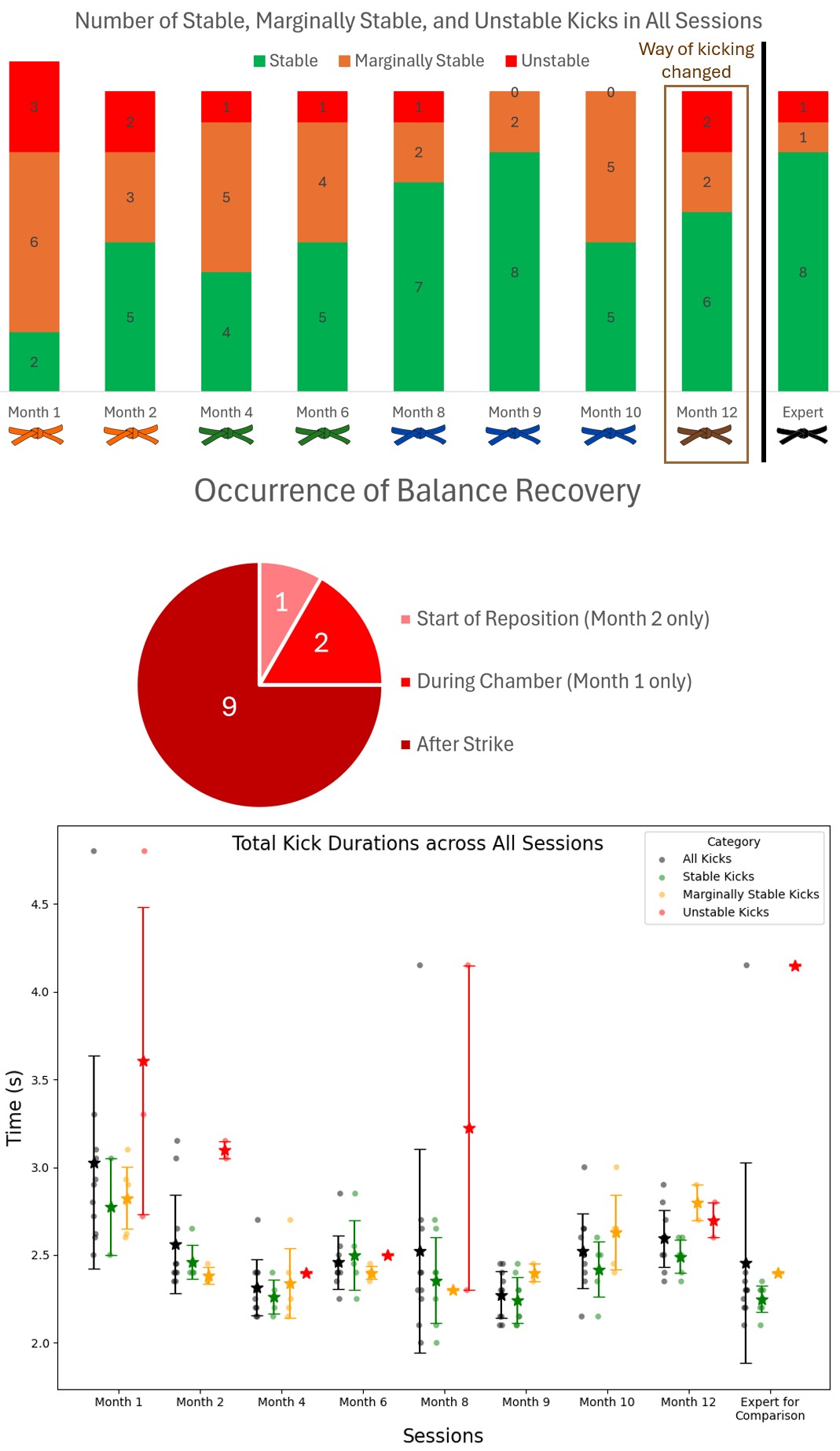
Eight sessions were collected with the student for one year, with each collection showing belt development over this time.
Results
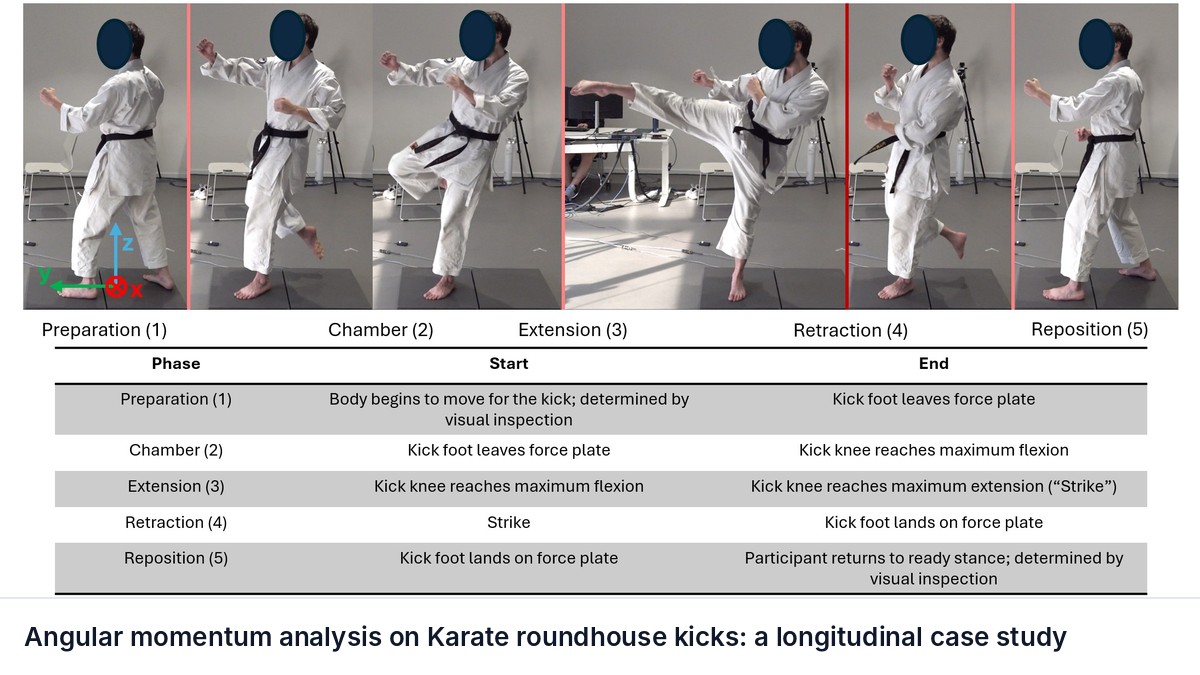
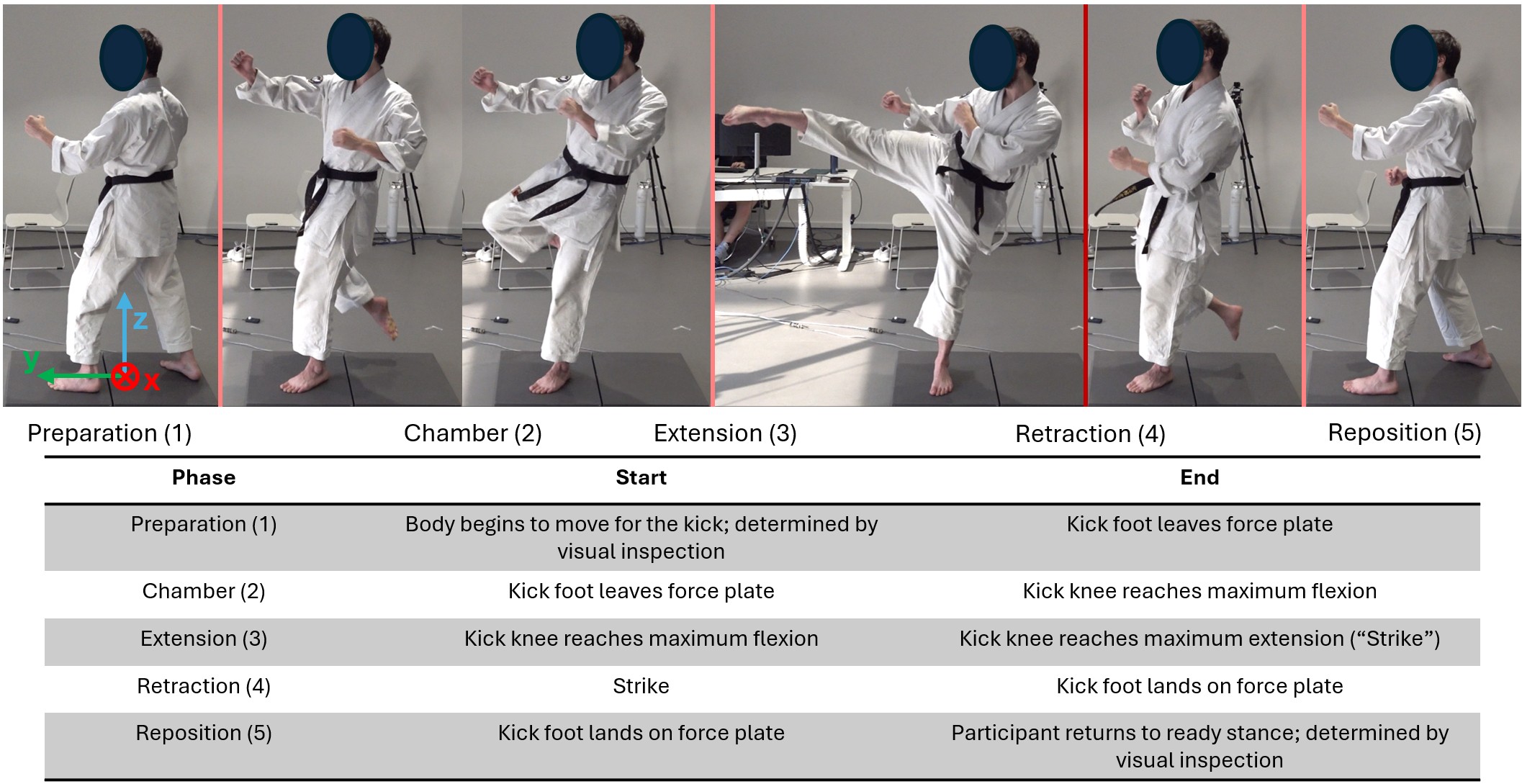
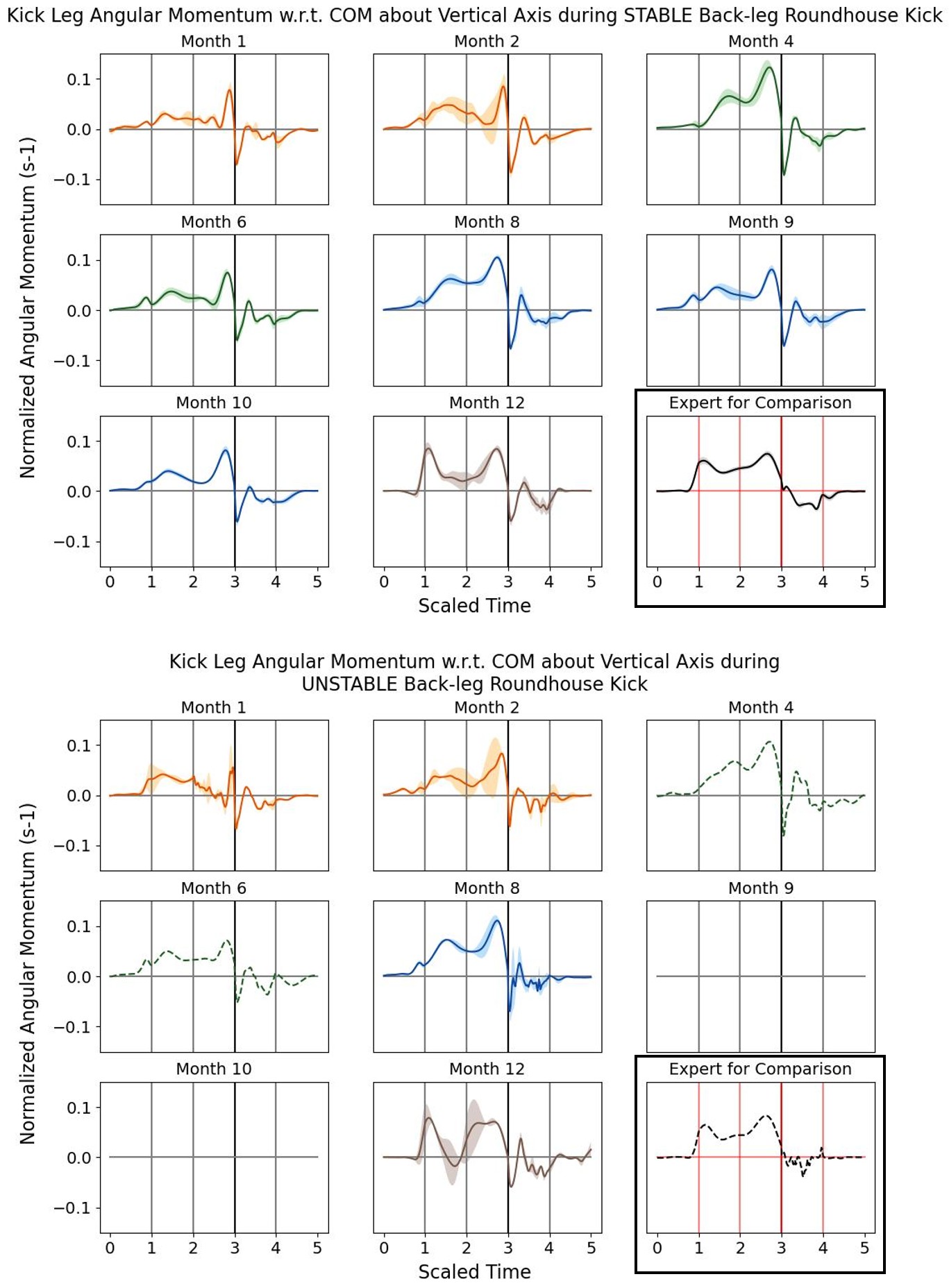
The figures presented have time scaled for each phase via 1D interpolation. The average values presented are computed based on the true non-interpolated data. The Cartesian coordinates are defined based on the ready-pose assumed during Preparation (see Fig. 1 , with X pointing to the right of the person, Y pointing forward, and Z pointing up. As mentioned, all AM variables presented are w.r.t. COM.
Except for the total AM inclination angle and angular velocity, values are normalized to body mass and height squared.
Author contributions statement
J.C.L.L., C.M., and J.F.-S.L. conceived and conducted the experiment. J.C.L.L. and K.M. developed the proposed AM measures and analyzed the results. C.M. provided Karate expertise. J.C.L.L. curated the data and wrote the original draft. K.M. acquired funding, provided supervision, reviewed and curated the manuscript. All authors reviewed the manuscript.
Additional information
Competing interests The authors declare no competing interests. Supplementary Information The online version contains supplementary material available at (link from Scientific Reports). We are continuing to improve HTML versions of papers, and your feedback helps enhance accessibility and mobile support.
To report errors in the HTML that will help us improve conversion and rendering, choose any of the methods listed below: ) button, located in the page header. Tip: You can select the relevant text first, to include it in your report.
Sources and Demonstrations
Figures are reproduced from Lau et al. See the full paper for experimental details and the project page, when the paper links one, for demonstrations and videos.
Related Papers
A Balanced Data Diet: Addressing the Exploration Bottleneck in Mega-Scale RL for Robot Control
Octi Zhang, Mateo Guaman Castro, Patrick Yin et al.
General-purpose robots must perform a wide range of tasks from agile locomotion to dexterous manipulation.
A Heterogeneous Architecture for Robot RL Beyond GPU-Dominant Paradigms
Yufei Jia, Zhanxiang Cao, Mingrui Yu et al.
Simulation-based RL for contemporary robot control is increasingly organized around GPU-resident simulation: physics, rollout collection, and learning are placed on a single GPU-centric execution path
A Mode-Unified, Continuous, and Biomimetic Control Strategy of a Robotic Lower Limb Prosthesis
Hanjun Kim, Sixu Zhou, John Shim et al.
Existing biomimetic lower-limb prosthesis controllers are commonly designed for discrete locomotion modes, requiring separate parameterizations for level walking, ramps, and stairs.
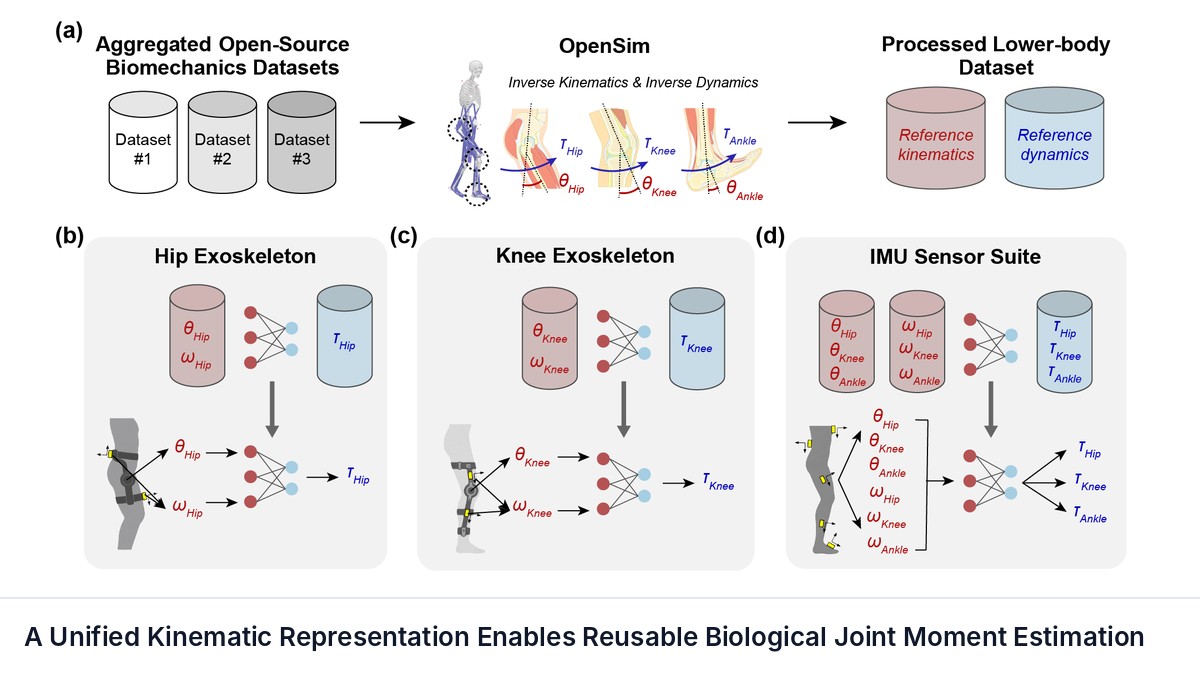
A Unified Kinematic Representation Enables Reusable Biological Joint Moment Estimation
Jinwoo Hwang, Ilseung Park, Changseob Song et al.
Objective: Data-driven models that estimate physiological states, particularly biological joint moments, are widely used in exoskeleton control.