
TactSpace: Learning a Physics-enriched Shared Latent Space for Tactile Sim-to-Real Transfer
FeaturedArunim Joarder, Arjun Bhardwaj, René Zurbrügg, Mayank Mittal, Florin Püntener, Sira Bielefeldt, Cosmin Roman, Vaishakh Patil, Marco Hutter · · 2026
Framework
N/A
License
N/A
Stars
N/A
Summary
Tactile sensing provides direct measurements of contact interactions that are essential for robotic manipulation.
Abstract Summary
Key Points
- Proposes TactSpace for robotics.
- Evaluated on real or simulated robotic tasks.
- Primary contribution in ar-vr.
Method
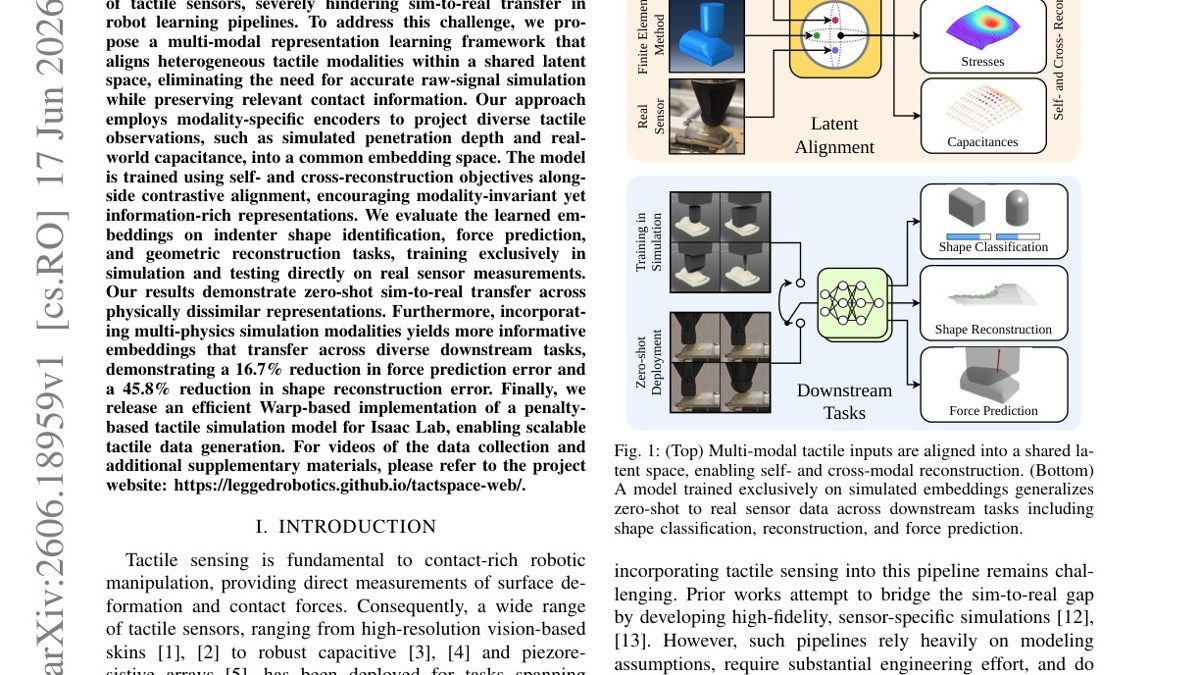
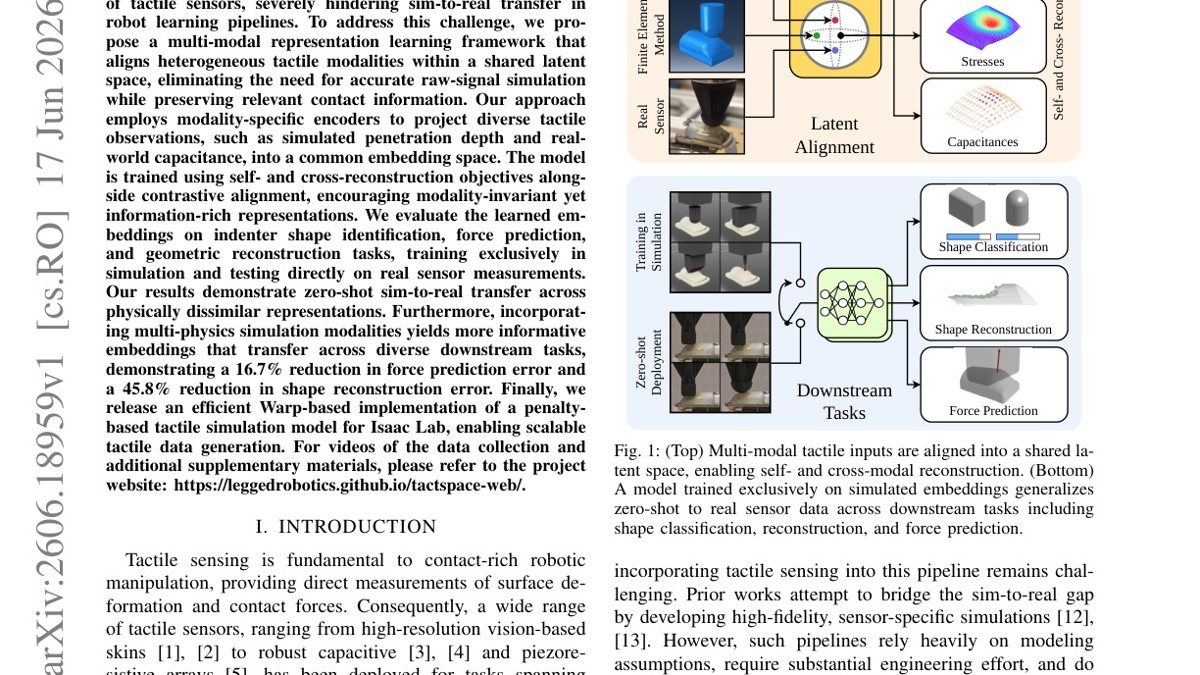
We propose a representation learning framework that maps heterogeneous tactile sensing modalities into a shared latent space, enabling sim-to-real transfer without requiring raw signal matching between simulation and hardware.
Experimental Setup
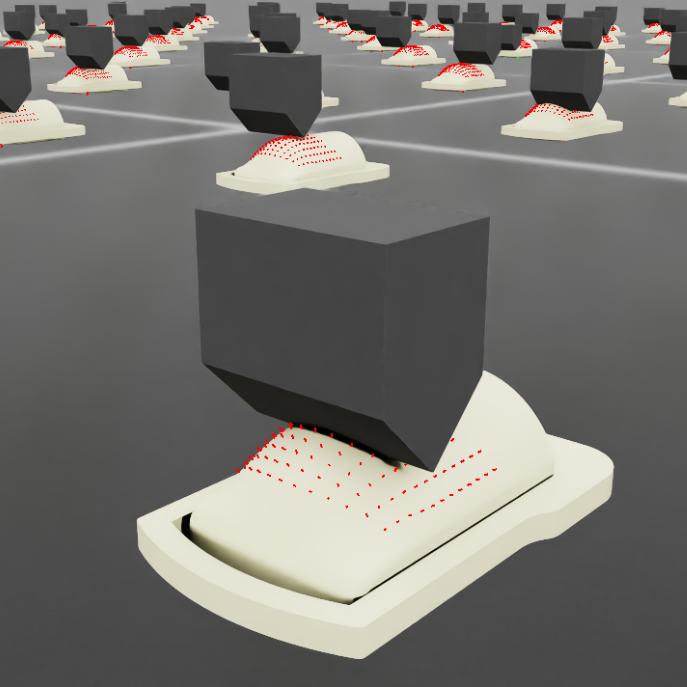
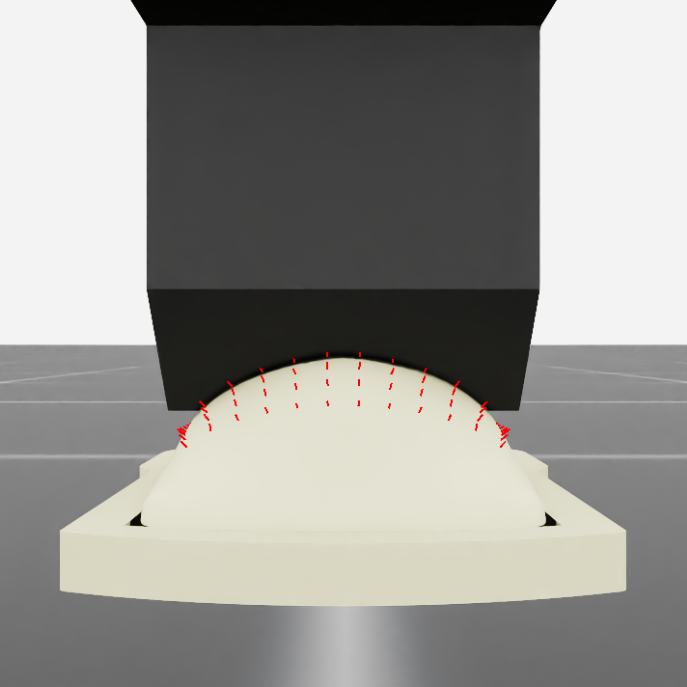
This section presents the experimental evaluation of the proposed framework. We first describe the sensor, simulation environments, and dataset used for training and evaluation. We define a physical stimulus as a probing interaction parameterized by: Indenter geometry: the shape (e.g.
Results
In this section, we empirically validate our multi-modal representation-learning framework. We first analyze the cross-modal alignment of the learned latent space ( Section V-A ) before demonstrating its effectiveness for zero-shot sim-to-real transfer on physical hardware ( Section V-B ).
We then present a comprehensive ablation study detailing the trade-offs of different modality and loss configurations ( Section V-C ).
Sources and Demonstrations
Figures are reproduced from Joarder et al. See the full paper for experimental details and the project page, when the paper links one, for demonstrations and videos.
Related Papers
TactSpace: Learning a Physics-enriched Shared Latent Space for Tactile Sim-to-Real Transfer
Arunim Joarder, Arjun Bhardwaj, René Zurbrügg et al.
Tactile sensing provides direct measurements of contact interactions that are essential for robotic manipulation.
Co-VLA: Coordination-Aware Structured Action Modeling for Dual-Arm Vision-Language-Action Systems
Yandong Wang, Jiaqian Yu, Xiongfeng Peng et al.
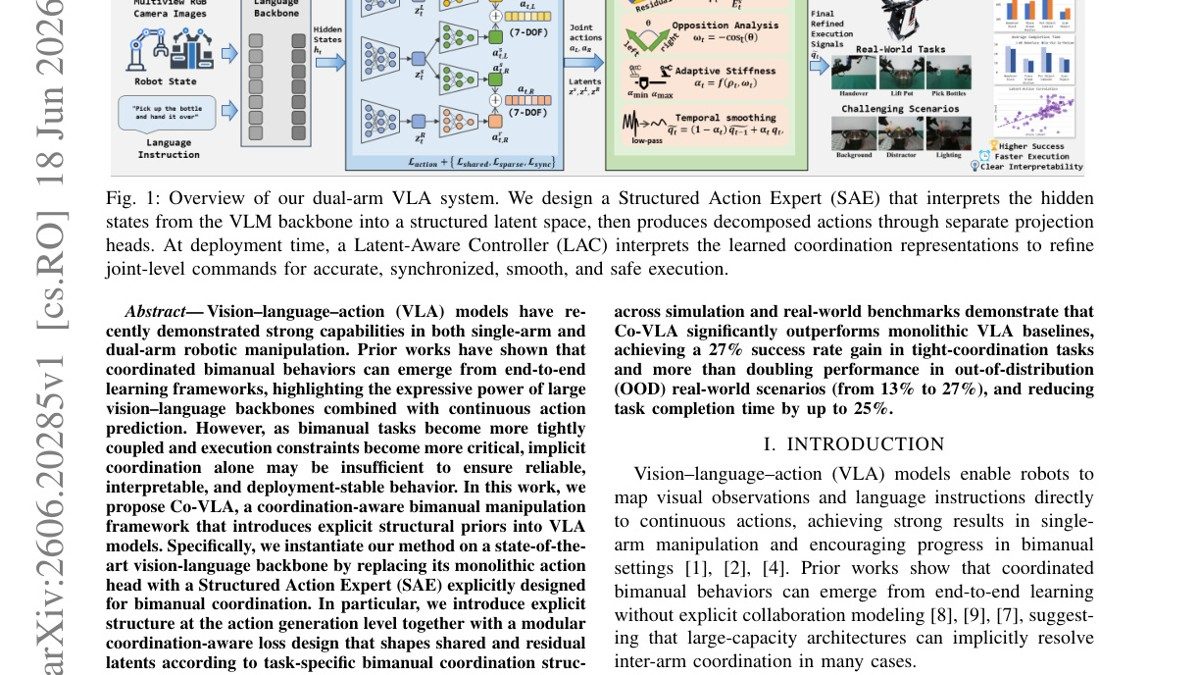
Vision-language-action (VLA) models show strong capabilities in single and dual-arm robotic manipulation. Prior works show coordinated bimanual behaviors can emerge from end-to-end learning, leveraging large vision-language backbones with continuous action prediction.
Co-VLA: Coordination-Aware Structured Action Modeling for Dual-Arm Vision-Language-Action Systems
Yandong Wang, Jiaqian Yu, Xiongfeng Peng et al.
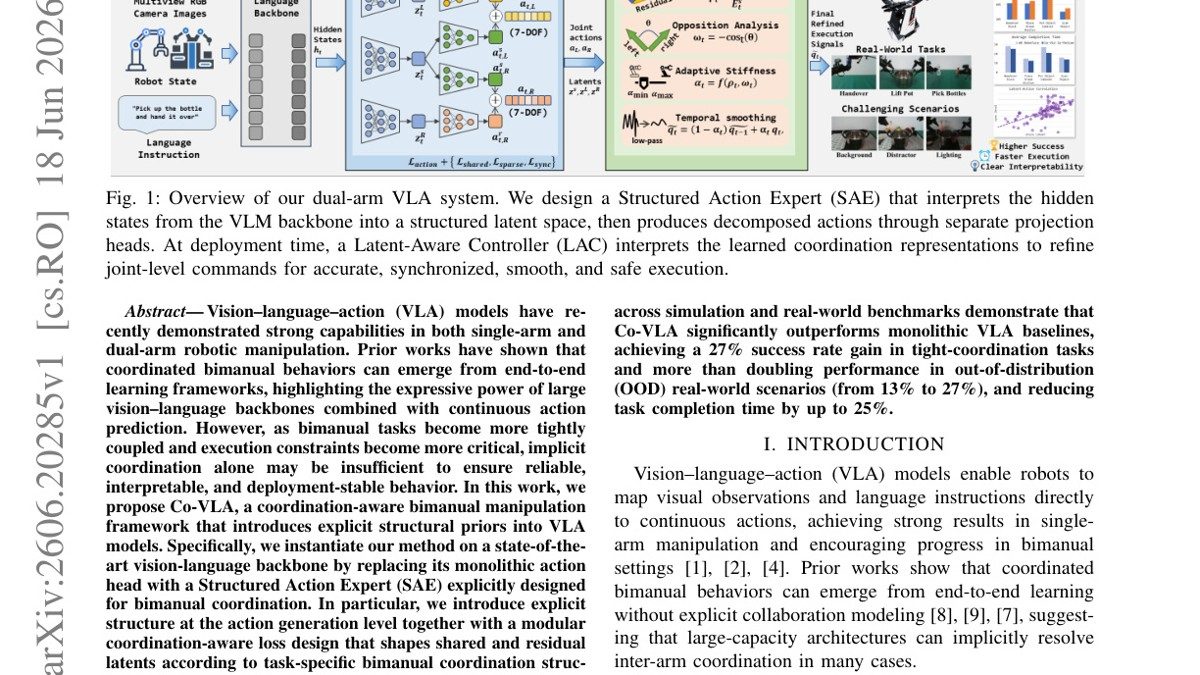
Vision-language-action (VLA) models show strong capabilities in single and dual-arm robotic manipulation. Prior works show coordinated bimanual behaviors can emerge from end-to-end learning, leveraging large vision-language backbones with continuous action prediction.
CoRe: Combined Rewards with Vision-Language Model Feedback for Preference-Aligned Reinforcement Learning
Hexian Ni, Tao Lu, Yinghao Cai
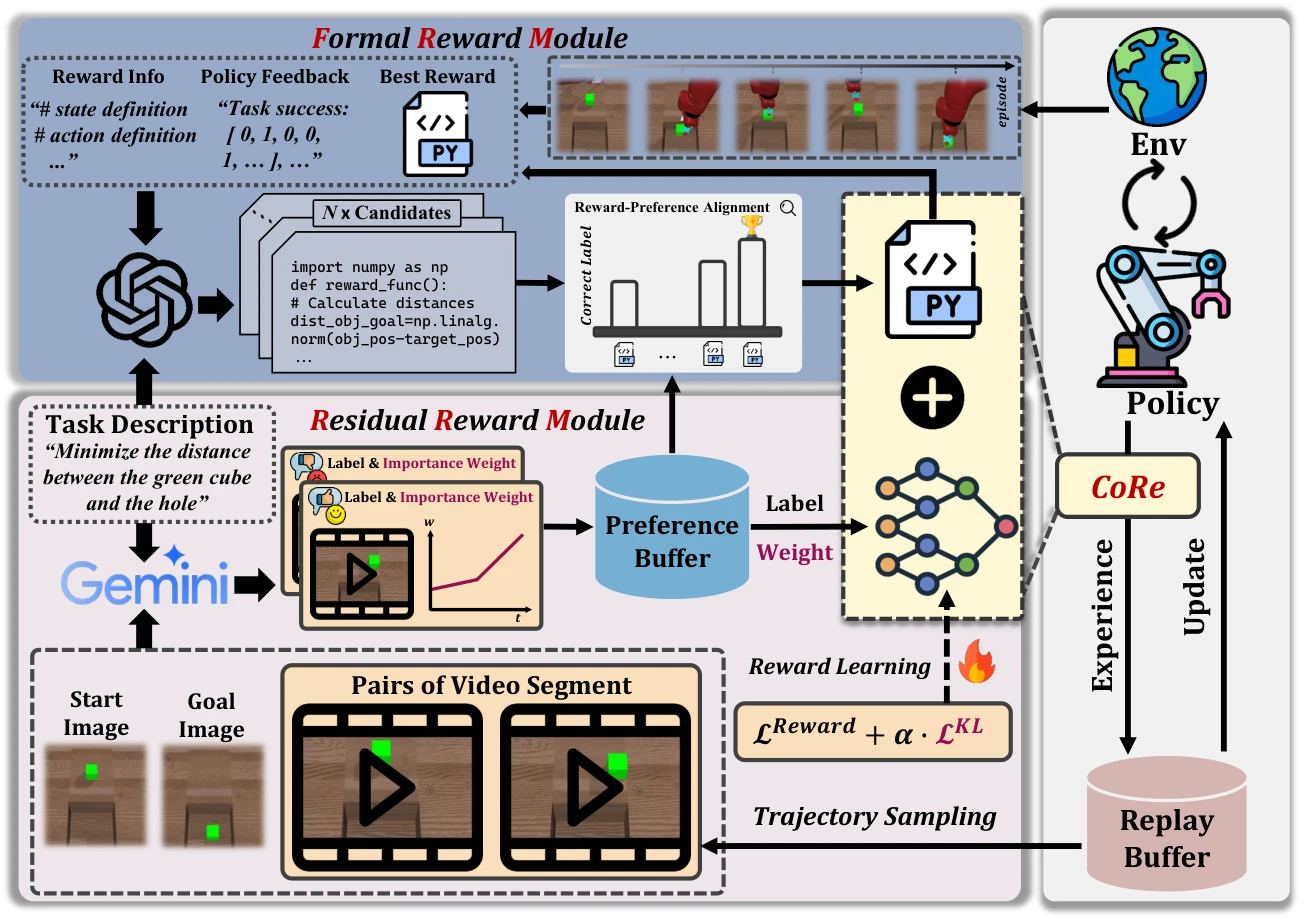
CoRe combines code-based rewards with learned visual preferences so that neither reward source has to capture the entire task alone.