
Scouting the Dynamics Gap: Test-Time Policy Adaptation via Action-Outcome Feedback
Yishu Li, Liyuan Geng, Xinyi Mao, Amber Li, David Held · N/A · 2026
Framework
N/A
License
N/A
Stars
N/A
Summary
While pretrained robotic policies exhibit impressive capabilities in controlled environments, unobserved physical properties and dynamics require these policies to rapidly adapt during deployment.
Abstract Summary
Key Points
- While pretrained robotic policies exhibit impressive capabilities in controlled environments, unobserved physical properties and dynamics require these policies to rapidly adapt during deployment.
- Existing test-time adaptation methods typically rely on sparse scalar rewards, failing to exploit the rich geometric and dynamic feedback from the environment during physical interaction.
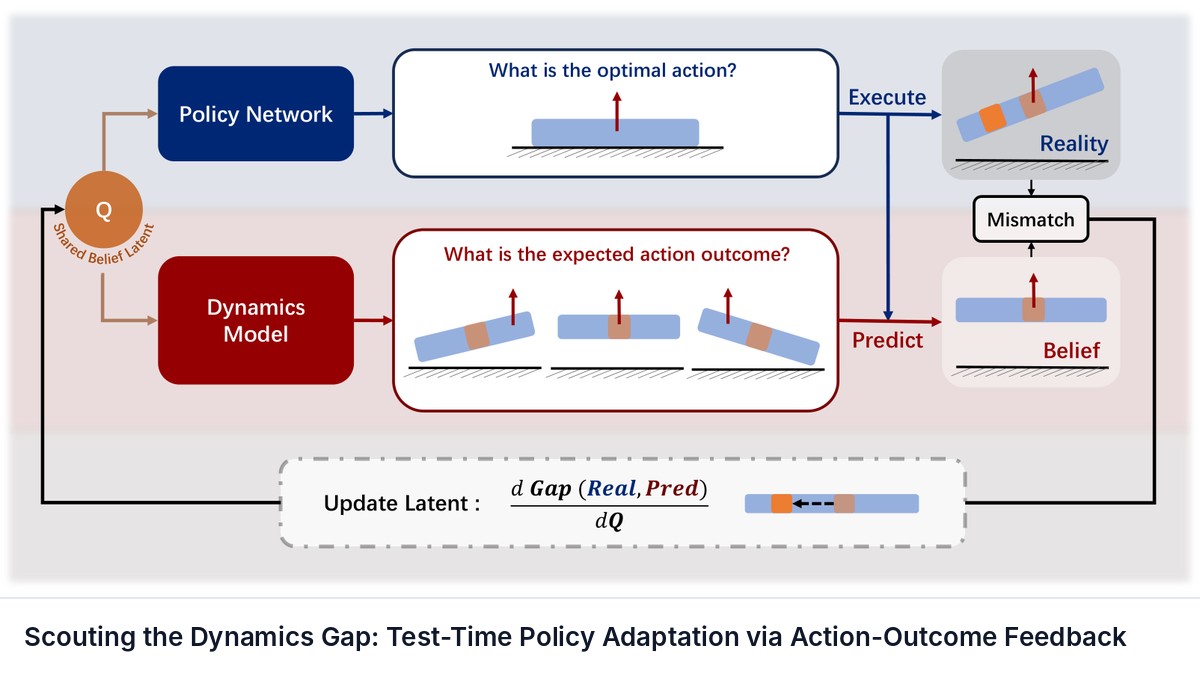
- To address this challenge, we propose SCOUT, a dynamics-aware meta-learning framework that enables manipulation policies to rapidly adapt by continuously revising their internal beliefs about environment dynamics.
- Our approach couples an action-prediction policy with a forward dynamics model via a shared belief latent space.
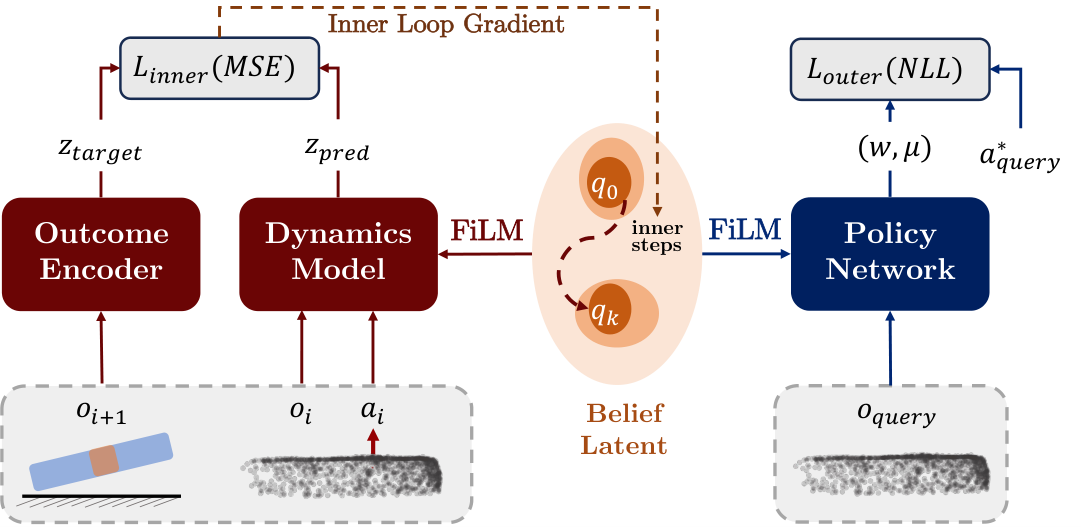
- During meta-training, an inner loop updates this shared belief latent by minimizing the dynamics prediction error against the observed action outcome, while the outer loop optimizes the network for action selection.
Problem Statement and Assumptions
We formulate the problem as policy learning under a partially observable Markov decision process (POMDP) subject to unknown or unobserved dynamics. In this setting, the environment’s behavior depends on latent physical properties that are not directly observable but are critical for accomplishing the task.
Formally, we consider a family of POMDPs indexed by a latent variable $z\in\mathcal{Z}$ that specifies the environment’s unobserved dynamics properties.
Method
Based on the above motivation, we propose a test-time adaptation framework that couples a policy with a predictive dynamics model via a shared belief latent. By optimizing this shared representation through an inner loop of dynamics prediction within a meta-learning framework, we provide a principled mechanism to translate dynamics prediction errors into actionable policy updates.
An overview of our framework is shown in Fig. 2 . We denote the agent’s current observation at time step $t$ as $o_{t}$.
Experiment and Analysis
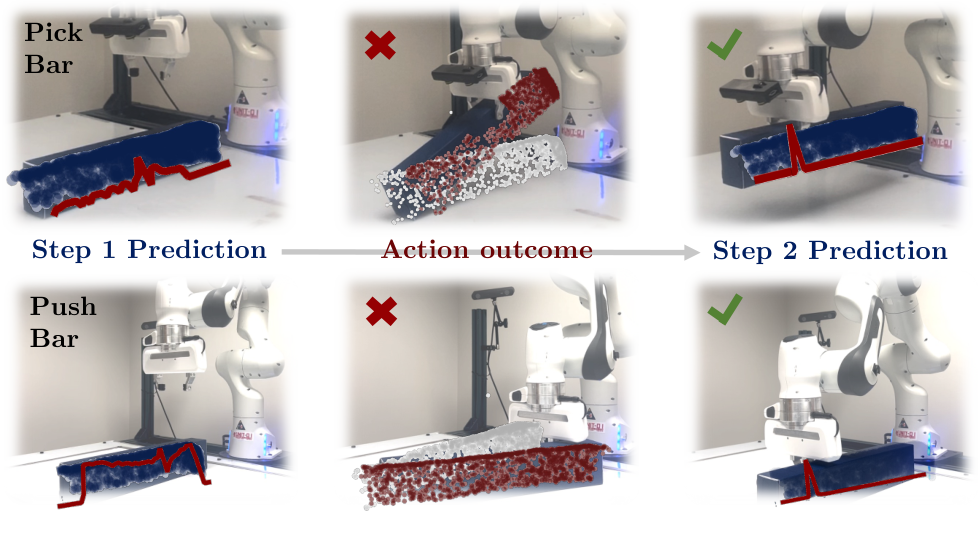
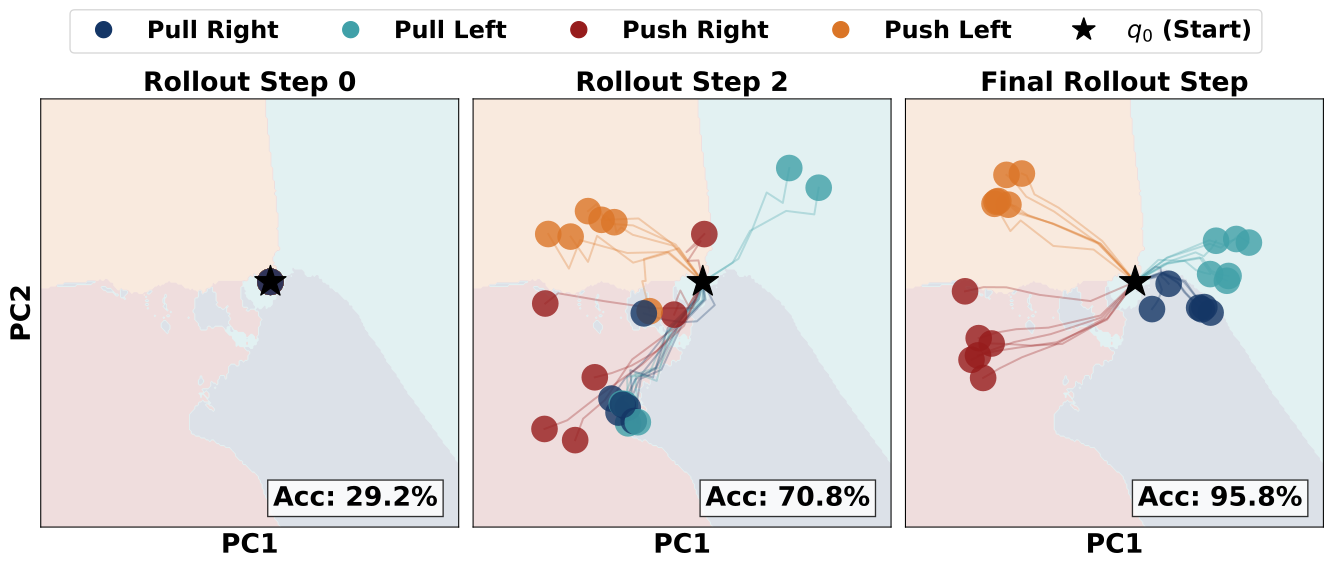
We evaluate our proposed method against baselines across multiple manipulation tasks. We follow the ISE evaluation task suite [ 40 ] , which includes the Slide Brick, Push Bar, Pick Bar, Open Box, and Turn Faucet, and also evaluate on an ambiguous door dataset [ 31 , 41 ] . We also conduct a sim-to-real experiment of pick bar and push bar on a real-world uneven bar.
Sources and Demonstrations
Figures are reproduced from Li et al. See the full paper for experimental details and the project page, when the paper links one, for demonstrations and videos.
Related Papers

A Sim-to-Real Integration Pipeline for Training and Deployment of Chunk-Based VLA Manipulation Policies
Mathilde Kappel, Clémence Grislain, Mohamed Chetouani et al.
Vision-Language-Action (VLA) models have become a prominent paradigm for mapping multimodal inputs, including semantic instructions, visual observations of the scene, and proprioceptive observations, to robot actions.
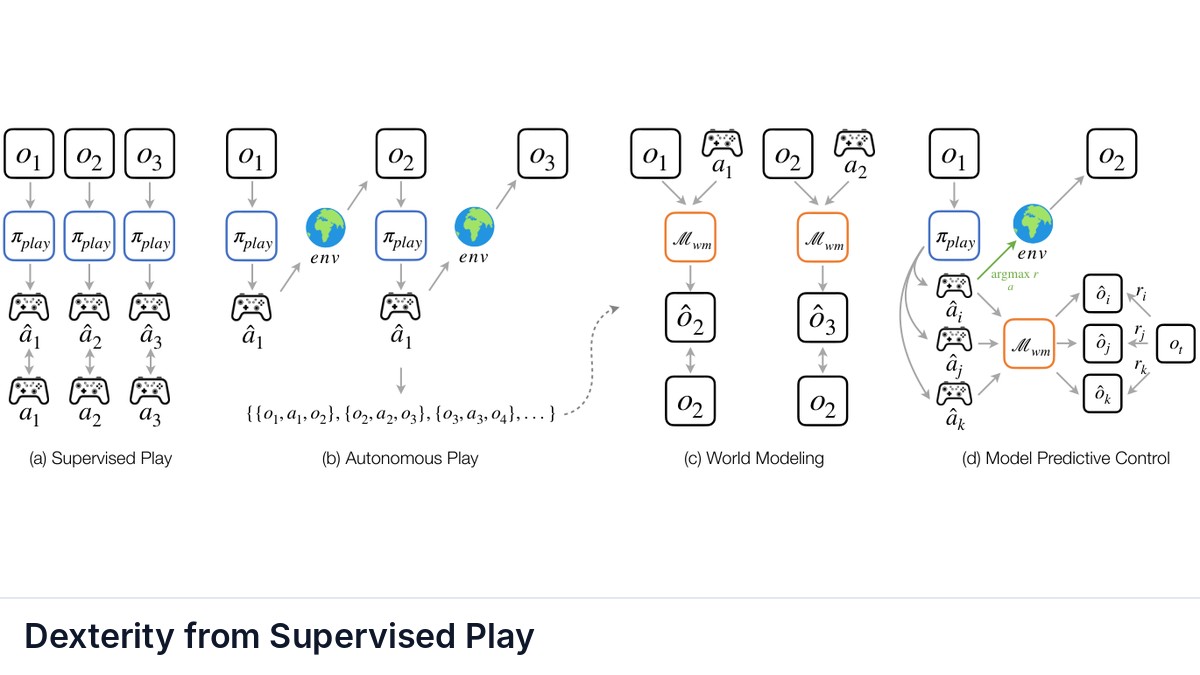
Dexterity from Supervised Play
Botao He, Yiming Dou, Yiannis Aloimonos et al.
How can robots autonomously collect the contact-rich experience needed to learn dexterous manipulation?
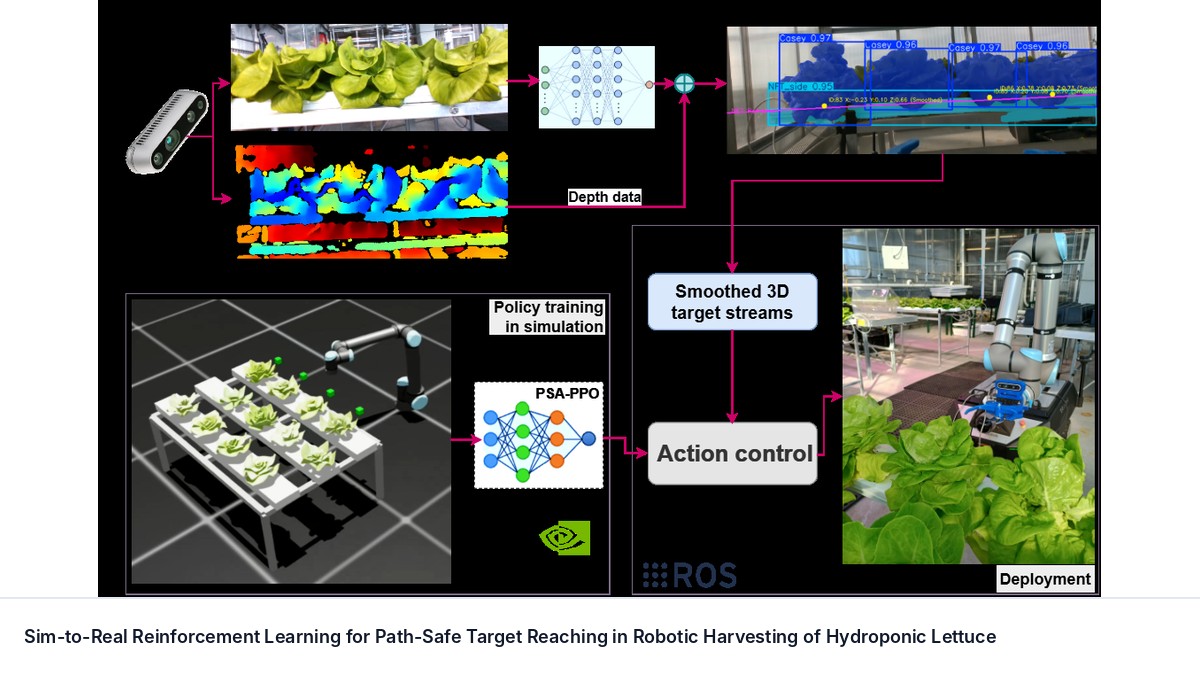
Sim-to-Real Reinforcement Learning for Path-Safe Target Reaching in Robotic Harvesting of Hydroponic Lettuce
Al Bashir, Partho Ghose, Yibin Wang et al.
Robotic harvesting requires precise manipulation to ensure accurate positioning of the end-effector, especially in a constraint workspace.
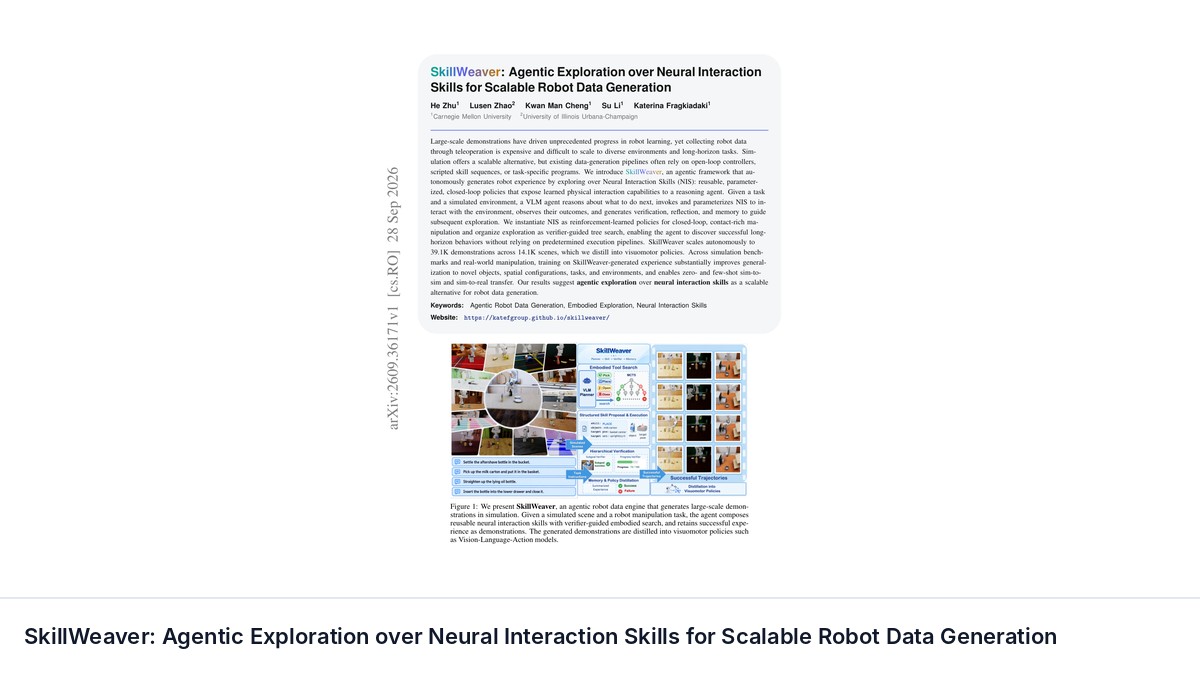
SkillWeaver: Agentic Exploration over Neural Interaction Skills for Scalable Robot Data Generation
He Zhu, Lusen Zhao, Kwan Man Cheng et al.
Large-scale demonstrations have driven unprecedented progress in robot learning, yet collecting robot data through teleoperation is expensive and difficult to scale to diverse environments and long-horizon tasks.