
Realizability Is Not Enough: Encoding, Liveness, and Auditing of Synthesized Robot Supervisors
David C. Conner, Joshua Luzier, William J. Doyle, Emma R. Faith, Aubrie B. Kooiker, Andrew J. Farney, Sebastian Fox, Evangelina Grimes, Ian G. Conner, Kyle Bloom · N/A · 2026
Framework
N/A
License
N/A
Stars
N/A
Summary
High-level robotic supervisors coordinate capabilities whose reported outcomes determine the robot's next action. Reactive synthesis can generate such supervisors with formal guarantees, but deployment requires more than proving a Generalized Reactivity (1) (GR(1)) specification realizable.
Abstract Summary
Key Points
- High-level robotic supervisors coordinate capabilities whose reported outcomes determine the robot's next action.
- Reactive synthesis can generate such supervisors with formal guarantees, but deployment requires more than proving a Generalized Reactivity (1) (GR(1)) specification realizable.
- Designers must encode failure-prone capabilities, choose liveness assumptions that match retry intent, audit strategies, and translate them into robot software.
- We present an open-source pipeline for Robot Operating System (ROS) 2 Flexible Behavior Engine (FlexBE) supervisors that generates capability-based GR(1) specifications, analyzes assumptions before synthesis, audits strategies, reduces states with a behavior-preservation proof, and emits executable state machines.
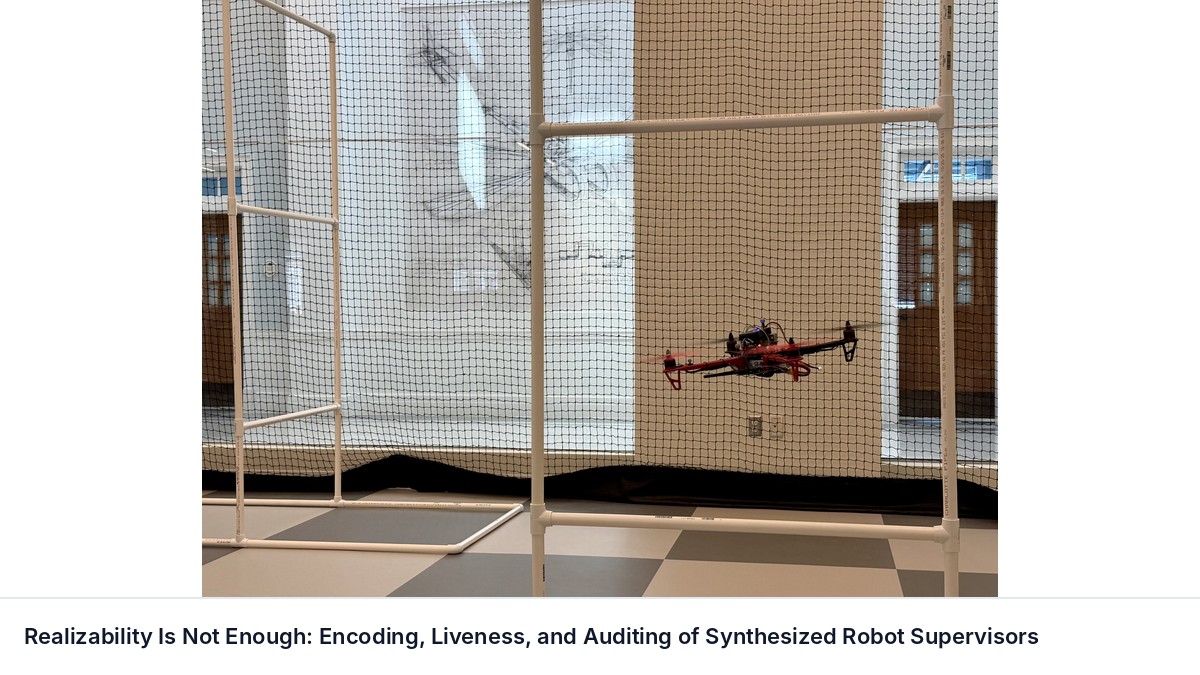
- Across four case studies (six comparisons), including hardware on two quadcopter platforms, we compare enumerated and one-hot encodings and two liveness formulations.
Synthesis Pipeline Overview
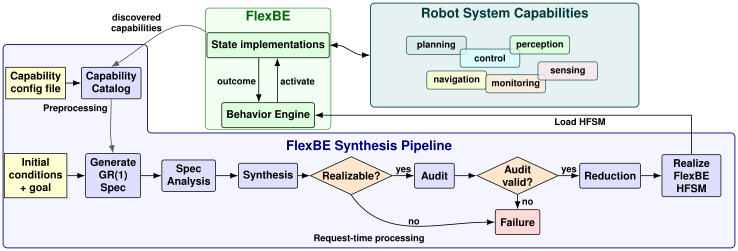
Before presenting the demonstration domains, we summarize how our synthesis pipeline turns a description of a robot’s software capability interfaces into an executable FlexBE supervisor, and introduce the vocabulary the demonstrations rely on. Section 5 formalizes this pipeline in full.
This overview focuses on the concepts needed to read a capability configuration file and follow what the synthesized controller is doing.
Demonstrations
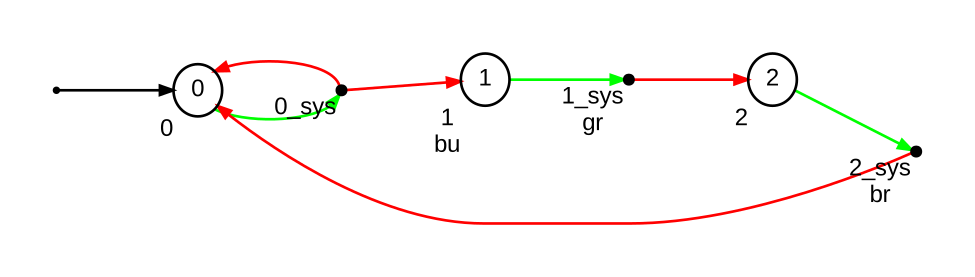
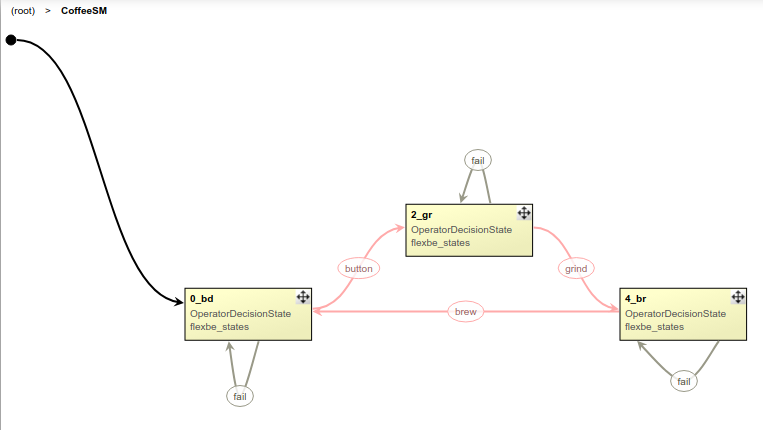
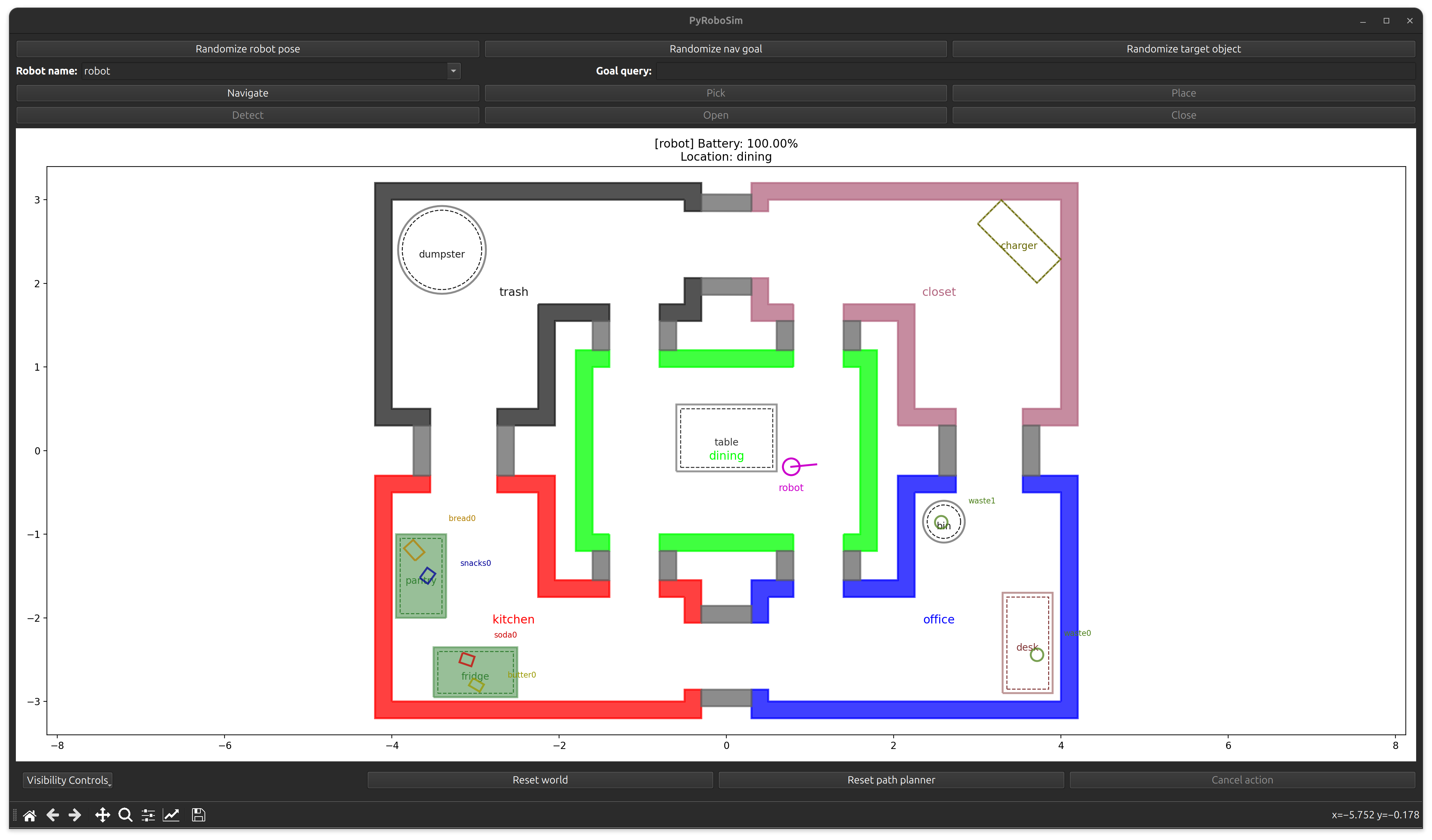
This paper presents four examples of synthesis using the modular pipeline. This section introduces the demonstration domains used throughout the paper so that the synthesis pipeline and specification choices can be described concretely. We describe the experimental setup and show the synthesized state machines executing here. Section 6 compares specification-generation variations.
All of the code required for these demonstrations is available open source CNURobotics (2026b) ; CNURobotics (2026a) .
Synthesis Pipeline
Section 3 introduced this pipeline’s stages and the capability vocabulary needed to read the demonstrations (Section 4 ). This section follows the stages shown in Fig. 2 : preprocessing, capability-based specification generation, specification analysis, the slugs synthesis wrapper that produces the raw strategy audited in Section 5.5 , and controller realization after auditing and reduction.
Proofs for the Strategy Auditor (Section 5.5 )
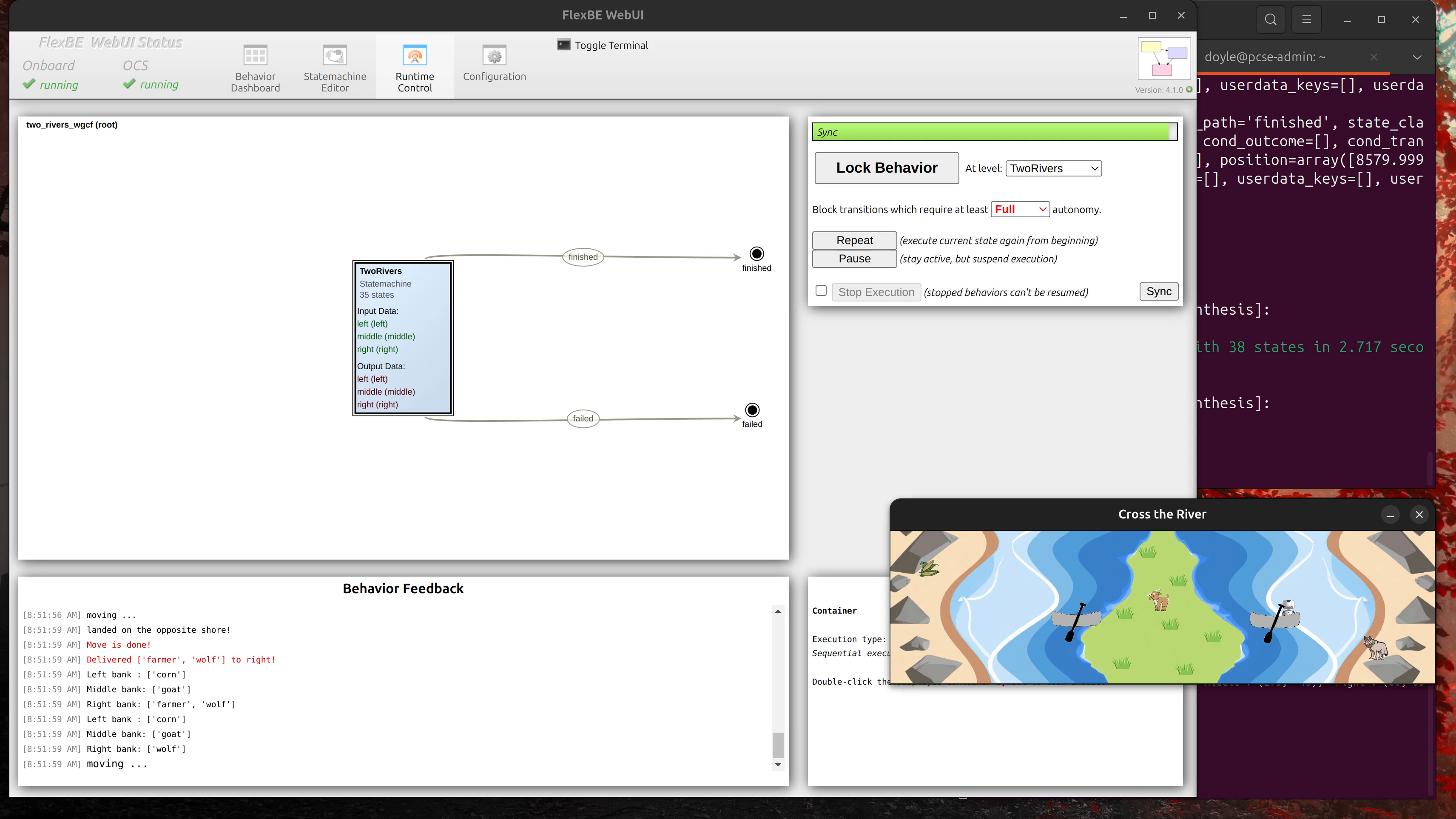
The auditor works directly on an explicit Mealy strategy of the kind emitted by slugs . As the main-body JSON example in Listing 2 illustrates, each JSON node is a strategy state. The variables item fixes the proposition order for the per-node state array, and trans lists the node’s successors. Each state therefore records both the environment input observed on arrival and the system output asserted there.
Proofs for State-Merging Reduction (Section 5.6 )
Throughout this appendix, let $A=(S,\delta,s_{0})$ denote the raw strategy automaton produced by slugs , where $S$ is the finite set of Mealy strategy states, $\delta\subseteq S\times S$ is the transition relation, and $s_{0}\in S$ is the initial state.
Each Mealy strategy state $s\in S$ carries labels $\mathit{in}(s)\subseteq AP_{I}$ and $\mathit{out}(s)\subseteq AP_{O}$, the environment-input valuation observed on arrival at $s$ and the system-output valuation asserted at $s$.
Coffee Demonstration
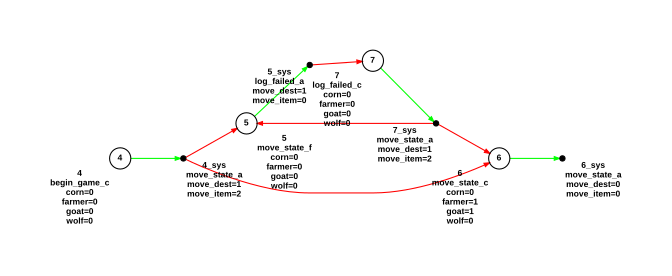
Section 6.1 summarizes the Coffee results by realizability, well-separation, strategy size, and the three headline timing rows. This appendix gives the full specification-size and BDD-node breakdown behind those summary tables, the per-configuration well-separation timing, the specification-level mechanism behind the strategy non-uniqueness noted there, and the full variable-ordering sweep.
Two-Rivers Demonstration
Section 6.2 summarizes the Two-Rivers results by realizability, well-separation, strategy size, and the three headline timing rows. This appendix gives the full specification-size and BDD-node breakdown behind that summary, the exact hand-written baseline comparison, the representative minimized well-separation cores, and the per-configuration well-separation timing.
As in Section 6.2 , Table 18 excludes both hand-written baselines to save space.
PyRoboSim Demonstration
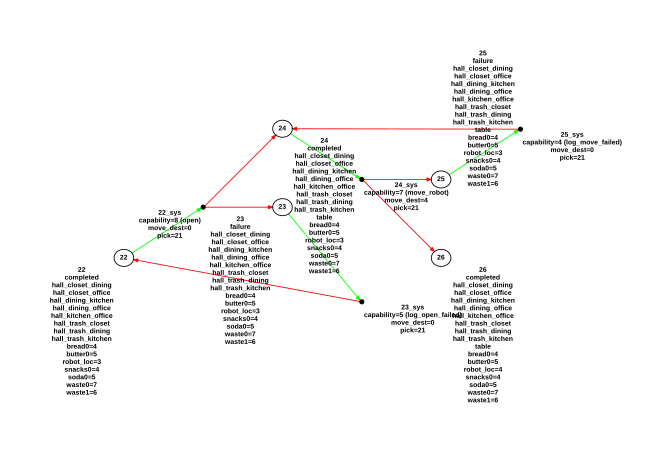
Section 6.3 summarizes the PyRoboSim results by realizability, well-separation, strategy size, and the headline timing rows (Section 6.3.1 for P0, Section 6.3.2 for P1).
This appendix gives the full specification-size and BDD-node breakdown behind the P0 summary tables, the exact hand-written baseline and encoding comparisons, the per-configuration well-separation timing, and the full well-separation minimized-core breakdown.
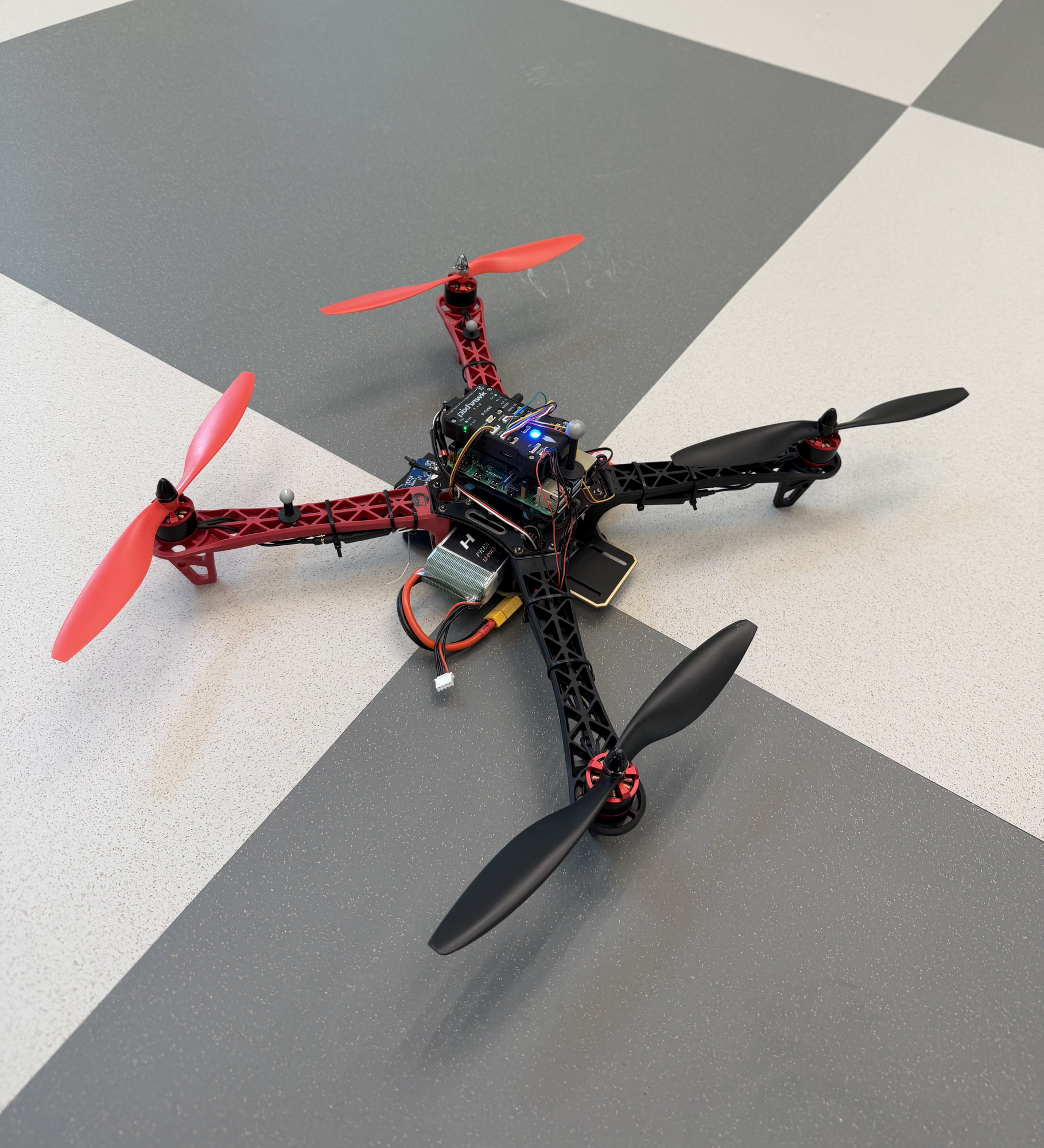
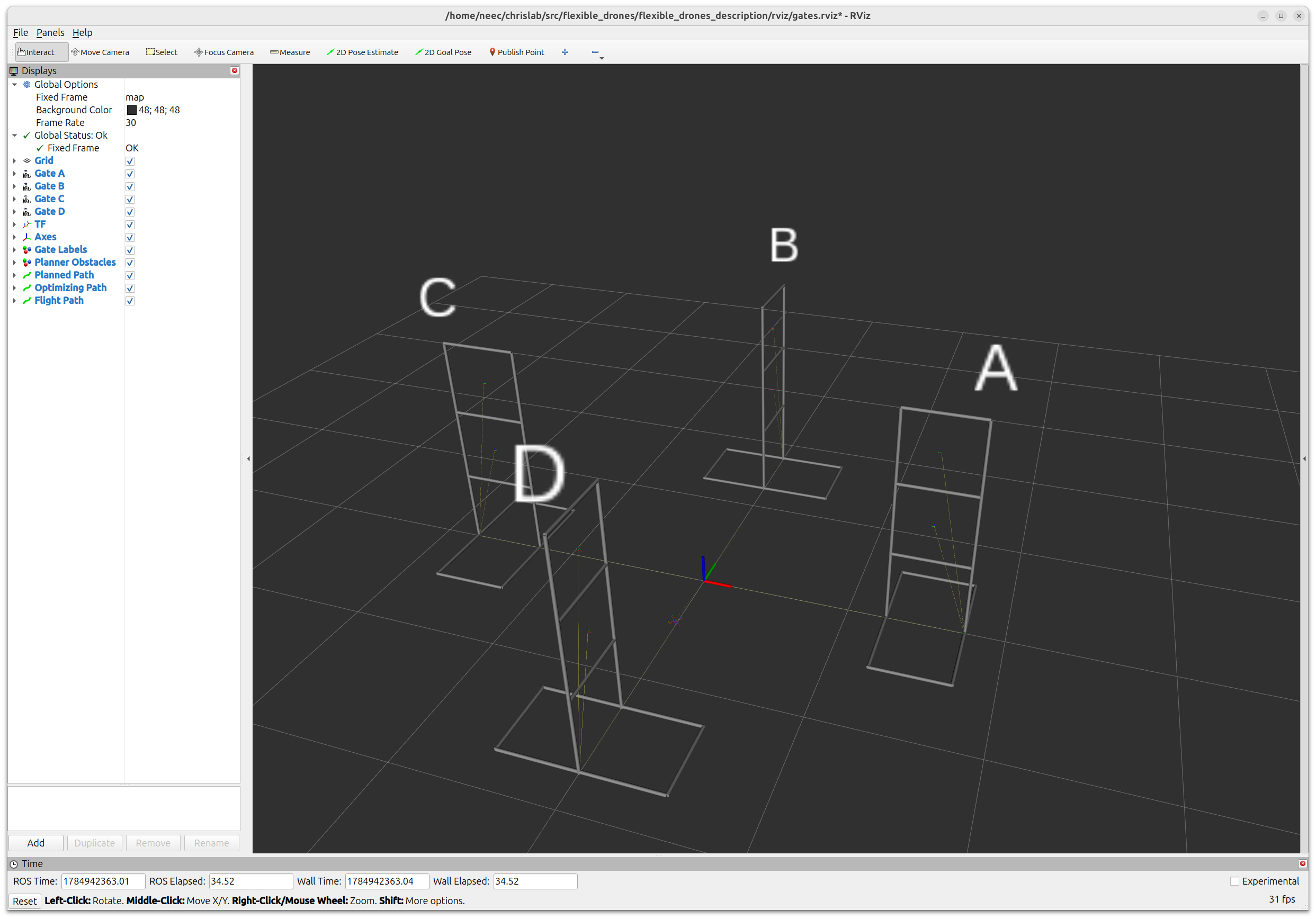
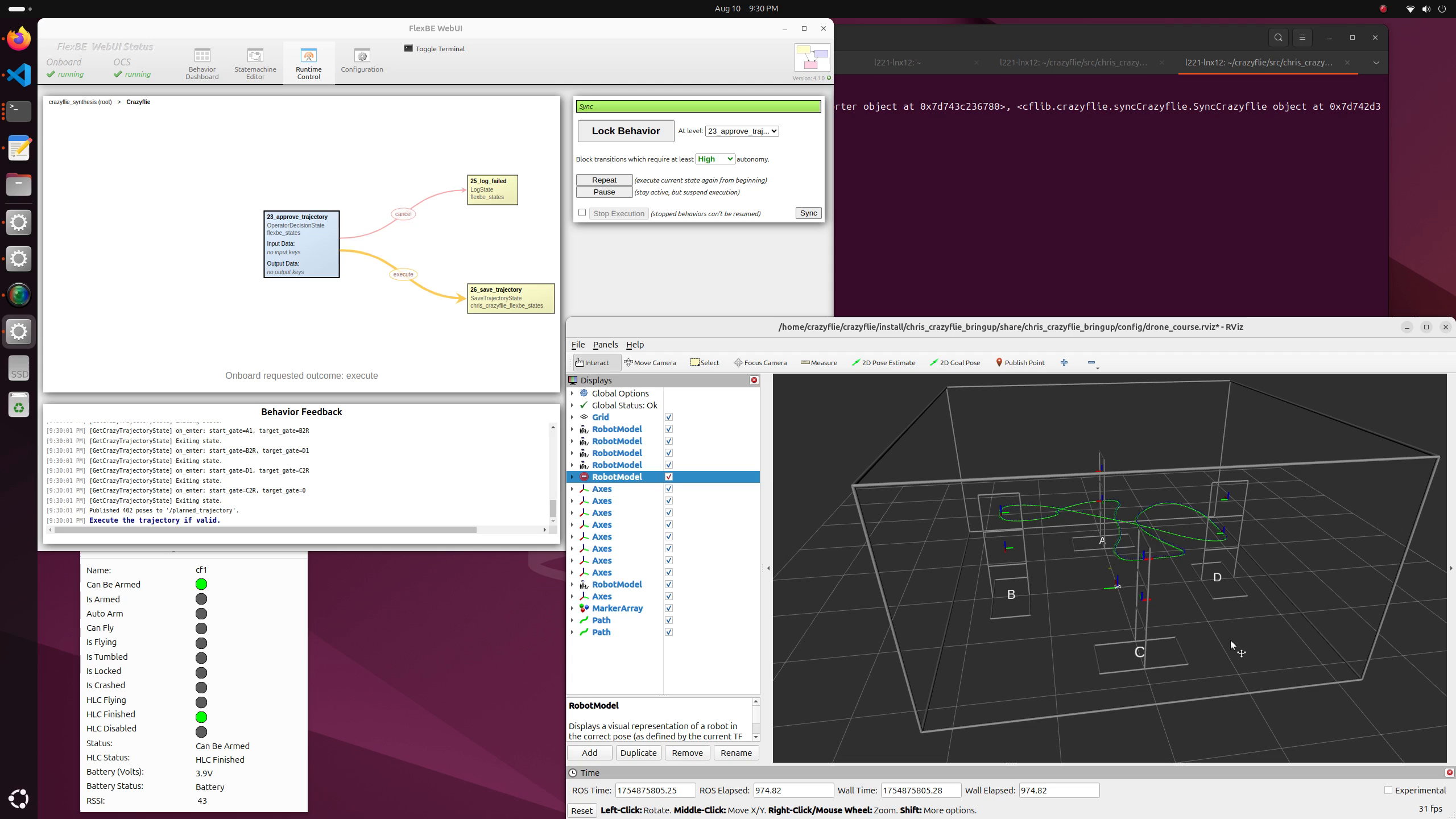
Quadcopter Demonstration Results
Section 6.4 summarizes the results for the quadcopter flight supervisor by realizability, well-separation, strategy size, and the headline timing rows. This appendix gives the full specification-size and BDD-node breakdown behind that summary, the exact budget-sensitivity and well-separation timing figures, and the current status of the Fair-Outcome-with-pending ( 1FP / 2FP ) configurations.
As in the other domains, enumerated variants (2*) reduce input AP count ($84\rightarrow 2$). The counts follow from the generated specification.
Declarations
Funding This work was primarily supported by United States Navy contract No. N00174-23-1-0018. Additional support was provided by the Christopher Newport University School of Engineering and Computing and the CNU Office of Research and Creative Activities. The views expressed are those of the authors. Competing interests The authors declare no competing interests.
Sources and Demonstrations
Figures are reproduced from Conner et al. See the full paper for experimental details and the project page, when the paper links one, for demonstrations and videos.
Related Papers

3D Euler-Angle Orientation Control for Two-Ray Fading Mitigation in Maritime Air-to-Sea Communications
Mohammed Bajja, Abdoul Karim A. H. Saliah, Hajar El Hammouti et al.
Maritime Air-to-Sea links are dominated by a line-of-sight ray and a sea-surface reflected ray whose destructive combination produces deep fades. Existing mitigation strategies optimize Unmanned Aerial Vehicle position or trajectory but leave attitude unexploited.
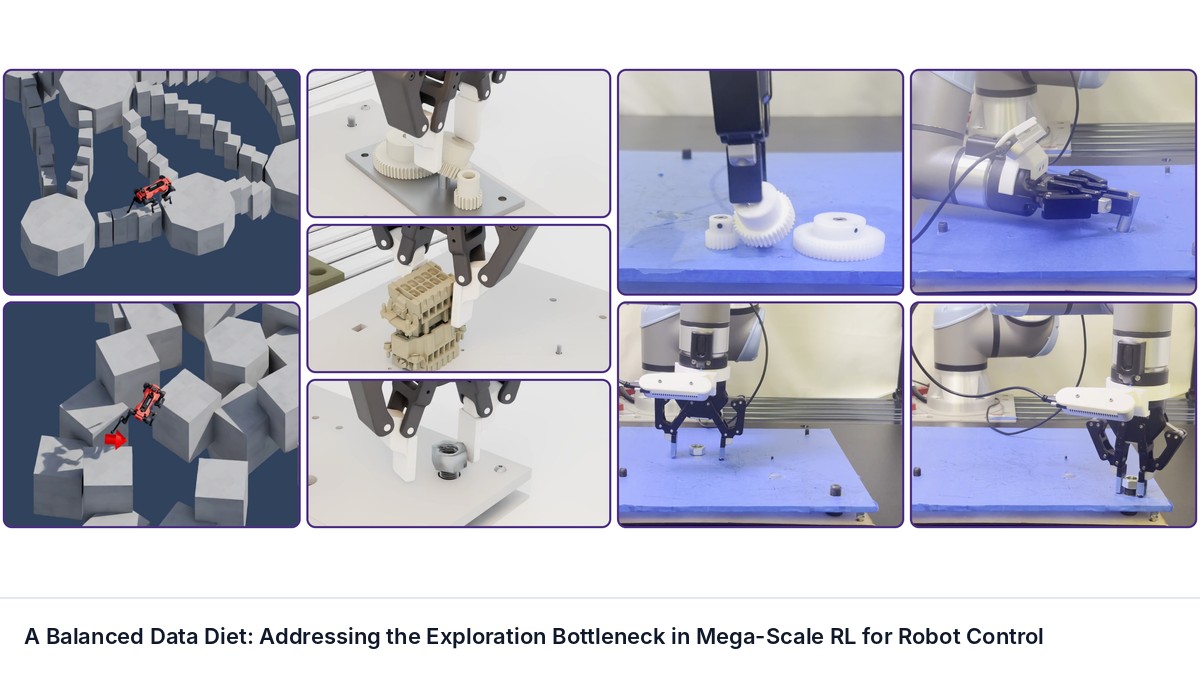
A Balanced Data Diet: Addressing the Exploration Bottleneck in Mega-Scale RL for Robot Control
Octi Zhang, Mateo Guaman Castro, Patrick Yin et al.
General-purpose robots must perform a wide range of tasks from agile locomotion to dexterous manipulation.
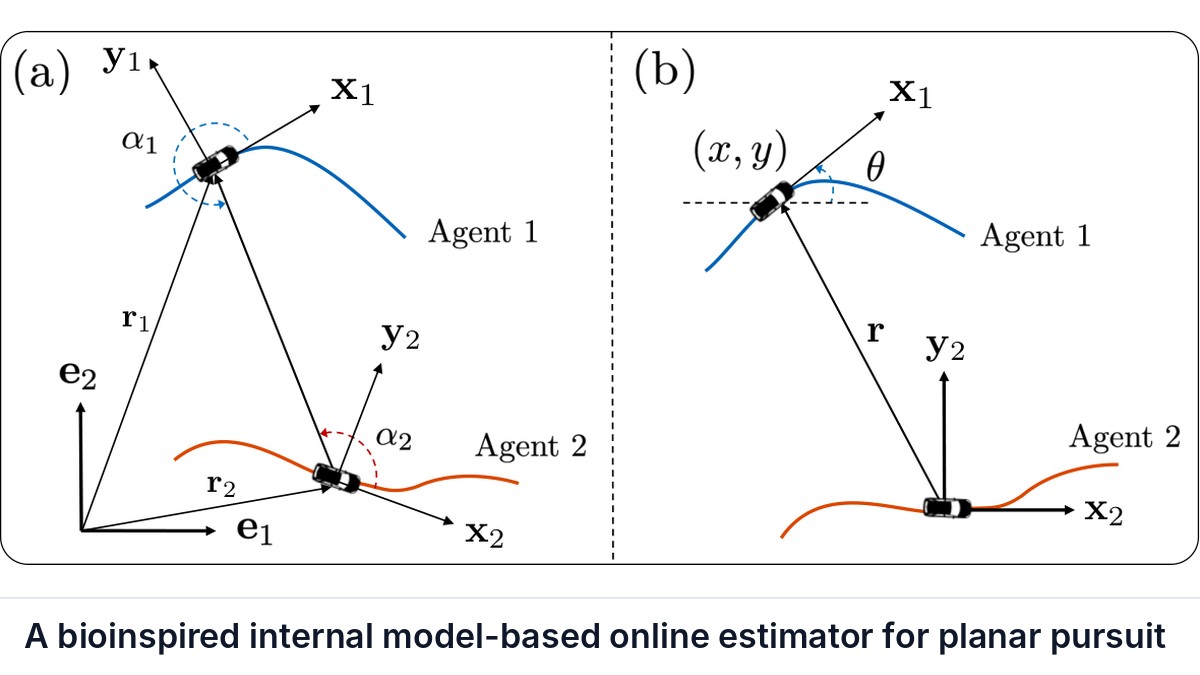
A bioinspired internal model-based online estimator for planar pursuit
Tengyue Liu, Xincheng Li, Sofia Morales Ferreira et al.
Bioinspired feedback controls for pursuit, tracking, and collective motion are often expressed in terms of the relative configuration between interacting agents.
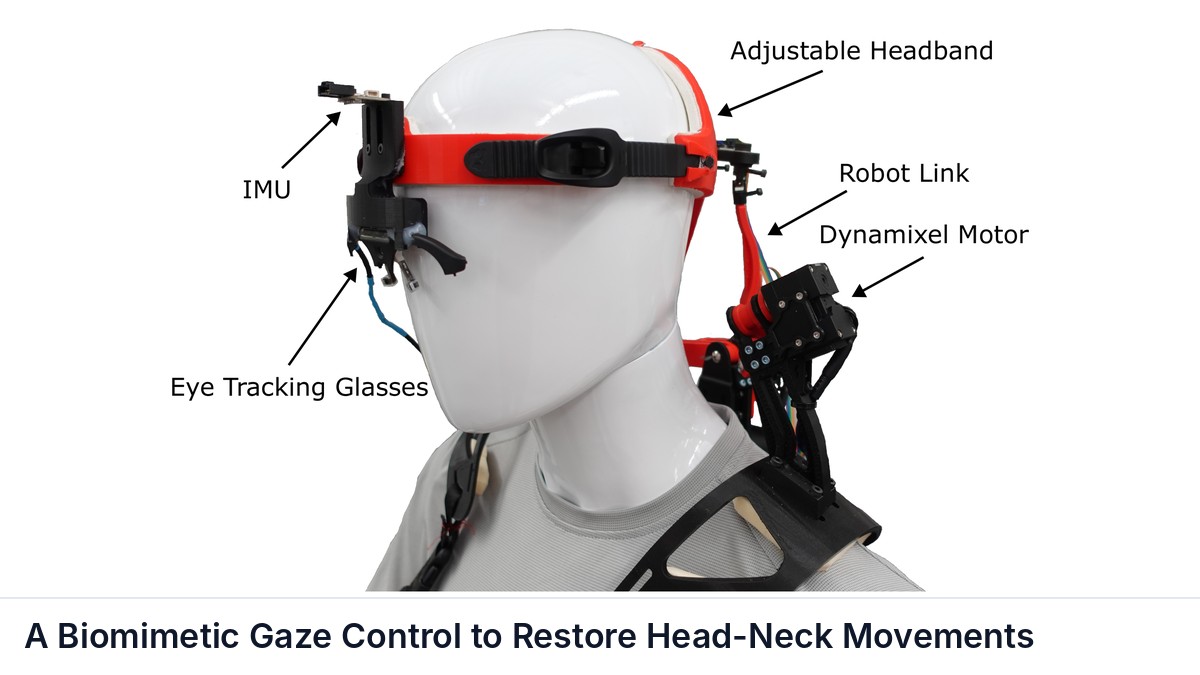
A Biomimetic Gaze Control to Restore Head-Neck Movements
Colin Rubow, Haohan Zhang
Powered neck exoskeletons are developed to restore head-neck motions for those with neck muscle weakness. Current methods using hand-held input devices to control these robotic systems are unintuitive or non-viable for these populations.