
POIL: Point-based One-Shot Imitation Learning with Stable Dynamical Systems
Sang Min Kim, Jinwoo Seo, Hyeongjun Heo, Junho Lee, Yonghyeon Lee, Young Min Kim · N/A · 2026
Framework
N/A
License
N/A
Stars
N/A
Summary
We present POIL, a point-based one-shot imitation learning framework with stable dynamical systems.
Abstract Summary
Key Points
- We present POIL, a point-based one-shot imitation learning framework with stable dynamical systems
- While one-shot imitation avoids collecting extensive demonstrations, successful one-shot manipulation requires not only transferring a demonstrated trajectory to a novel object but also executing it robustly under changing scene conditions, grasp configurations, and external disturbances.
- POIL addresses both problems through a shared representation: a set of 3D points on the object's functional part, used jointly for trajectory transfer and closed-loop execution.
- The one-shot transfer from the demonstrated trajectory is enabled with point correspondences
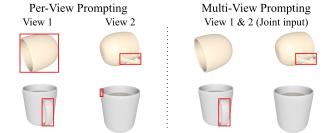
- POIL grounds the shared functional part with a multi-modal large language model, and transfers the trajectory across viewpoint, pose, and object category changes.
Method
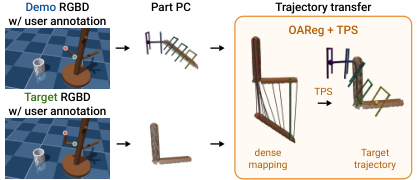
POIL takes a single demonstration and transfers the manipulation skill to a novel target object that shares a functional part, executing the task via a closed-loop controller with convergence guarantees (see Fig. 1 ).
The two stages share one representation – a set of 3D points on the object’s functional part – so that a single abstraction yields both the object generalization of the transfer stage and the object-centric convergence guarantee of the execution stage.
Experiments
We organize the evaluation into four studies. We isolate the performance of functional-part point transfer (Sec. IV-A ) and control (Sec. IV-B ) with ground-truth inputs. We then evaluate the full pipeline (Sec. IV-C ) across pose, grasp, object, and goal variations, as well as external disturbances. We use $N_{k}=10$ functional-part points, $\eta=3$, and 40 support points for all experiments.
We evaluate whether our functional-part point transfer remains accurate under large viewpoint and pose changes. Baselines.
Sources and Demonstrations
Figures are reproduced from Kim et al. See the full paper for experimental details and the project page, when the paper links one, for demonstrations and videos.
Related Papers
A Balanced Data Diet: Addressing the Exploration Bottleneck in Mega-Scale RL for Robot Control
Octi Zhang, Mateo Guaman Castro, Patrick Yin et al.
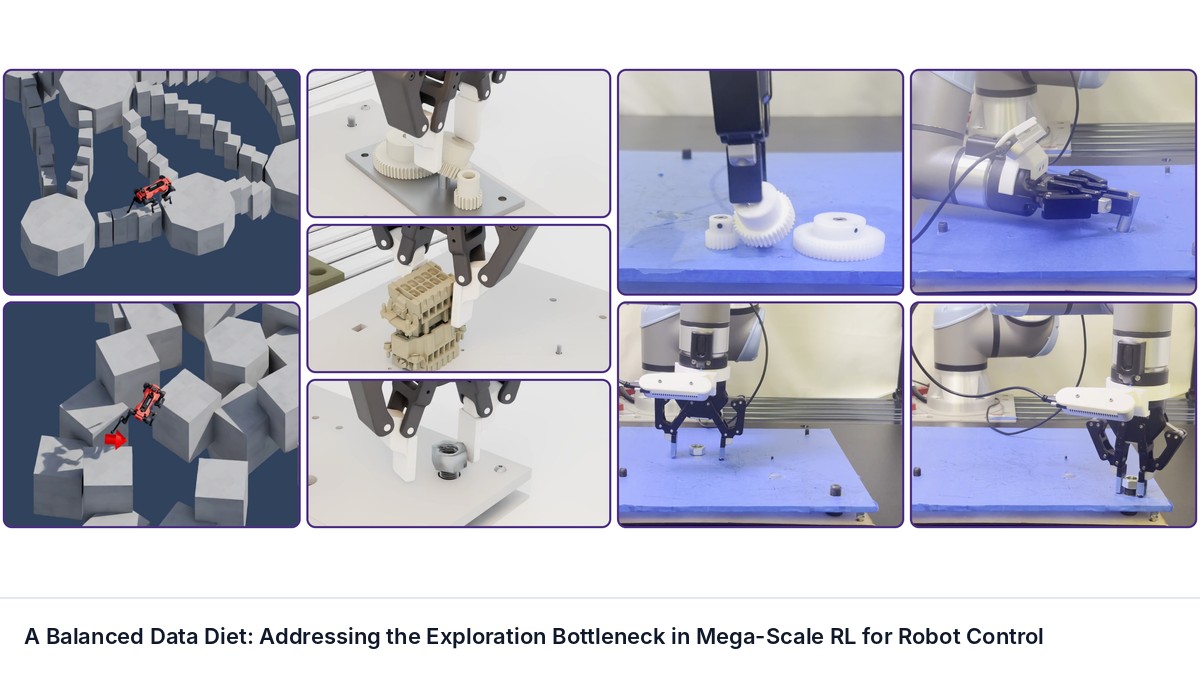
General-purpose robots must perform a wide range of tasks from agile locomotion to dexterous manipulation.

A Sim-to-Real Integration Pipeline for Training and Deployment of Chunk-Based VLA Manipulation Policies
Mathilde Kappel, Clémence Grislain, Mohamed Chetouani et al.
Vision-Language-Action (VLA) models have become a prominent paradigm for mapping multimodal inputs, including semantic instructions, visual observations of the scene, and proprioceptive observations, to robot actions.
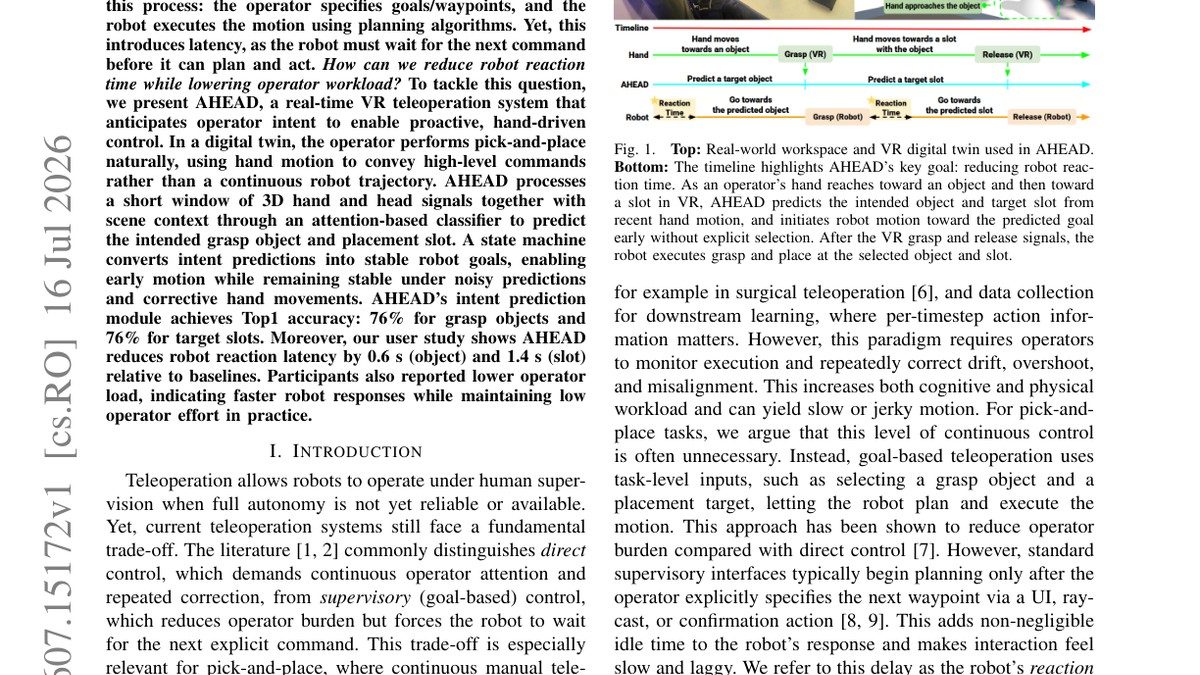
AHEAD: Anticipatory Hand-Driven Teleoperation via Human Intent Prediction
Seok Joon Kim, Junho Lee, Federica Spinola et al.
Direct hand-driven teleoperation maps an operator's hand motion to robot end-effector commands at every frame, enabling precise control, but it requires constant monitoring and correction during approach, grasp, and placement, which can be slow and fatiguing.
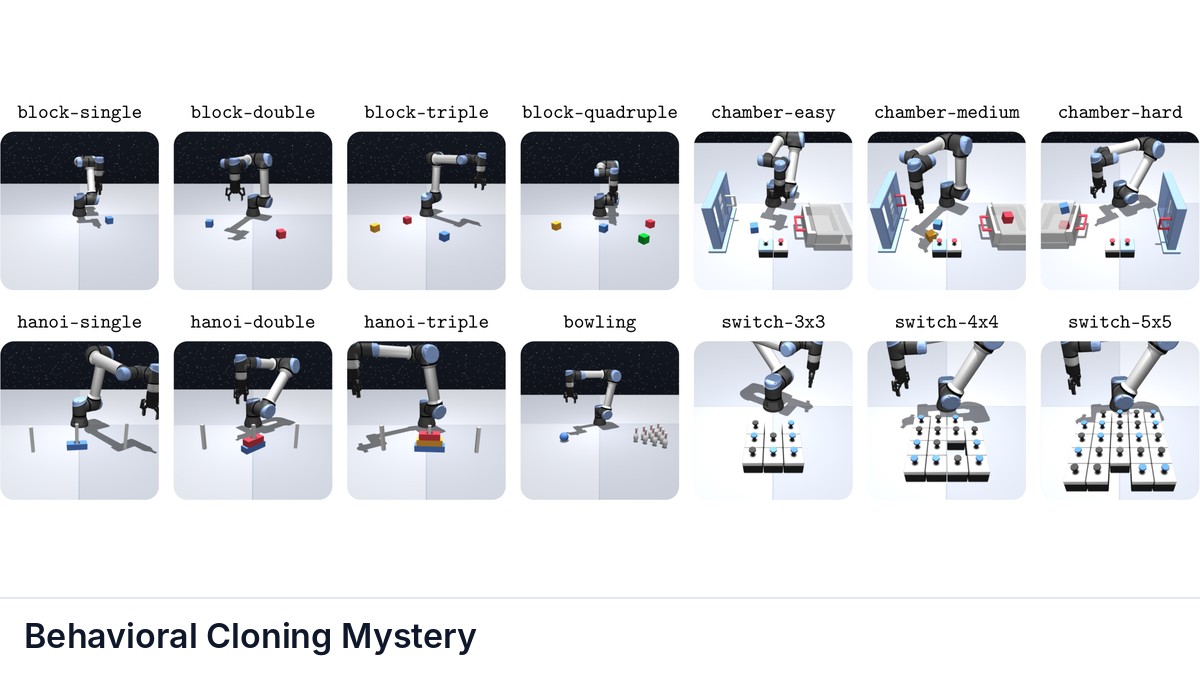
Behavioral Cloning Mystery
Seohong Park, Sergey Levine
Behavioral cloning (BC), despite its simplicity, exhibits many counterintuitive phenomena in the real world. For example, the performance of BC often keeps increasing as the model overfits more to the dataset, and fully closed-loop policies often completely fail without action chunking.