
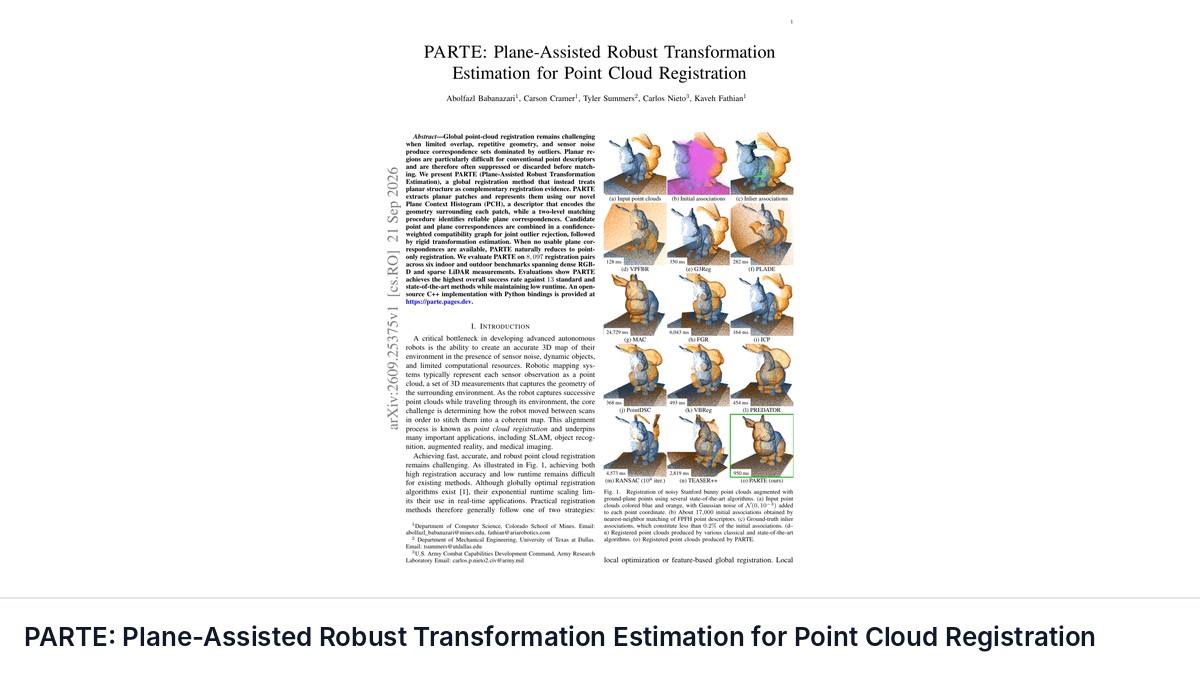
PARTE: Plane-Assisted Robust Transformation Estimation for Point Cloud Registration
Abolfazl Babanazari, Carson Cramer, Tyler Summers, Carlos Nieto, Kaveh Fathian · N/A · 2026
Framework
N/A
License
N/A
Stars
N/A
Summary
Global point-cloud registration remains challenging when limited overlap, repetitive geometry, and sensor noise produce correspondence sets dominated by outliers.
Abstract Summary
Key Points
- Global point-cloud registration remains challenging when limited overlap, repetitive geometry, and sensor noise produce correspondence sets dominated by outliers.
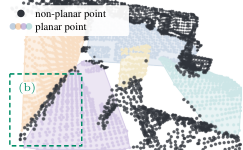
- Planar regions are particularly difficult for conventional point descriptors and are therefore often suppressed or discarded before matching.
- We present PARTE (Plane-Assisted Robust Transformation Estimation), a global registration method that instead treats planar structure as complementary registration evidence.
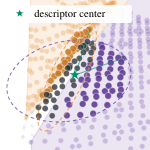
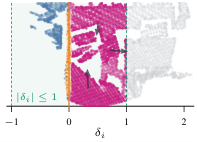
- PARTE extracts planar patches and represents them using our novel Plane Context Histogram (PCH), a descriptor that encodes the geometry surrounding each patch, while a two-level matching procedure identifies reliable plane correspondences.
- Candidate point and plane correspondences are combined in a confidence-weighted compatibility graph for joint outlier rejection, followed by rigid transformation estimation.
Notation
The main notation used throughout the paper is summarized in Table I . For a finite set $\mathcal{X}$, $/\mathcal{X}/$ denotes its cardinality. For a vector $x\in\mathbb{R}^{n}$, we use $\/x\/_{1}=\sum_{i}/x_{i}/$ and $\/x\/_{2}=(\sum_{i}x_{i}^{2})^{1/2}$ to denote the $\ell_{1}$ and $\ell_{2}$ norms, respectively.
For nonnegative vectors $h,g\in\mathbb{R}^{n}$, we define their $\chi^{2}$-distance as Superscripts $P$ and $Q$ identify quantities associated with the source and target point clouds, respectively.
Proposed Approach
PARTE follows the standard feature-based registration stages of feature extraction, descriptor matching, outlier rejection, and transformation estimation, as illustrated in Fig. 2 . Its distinction lies in how planar information is represented and integrated throughout these stages.
PARTE describes each extracted planar patch through the surrounding scene geometry using PCH, while retaining conventional FPFH point features for non-planar regions.
Experimental Evaluation
In this section, we evaluate PARTE at three different levels. First, we evaluate the proposed plane descriptor and matching procedure directly by measuring the quality of the resulting plane correspondences. We then evaluate the complete registration pipeline across indoor RGB-D, outdoor LiDAR, and partial-to-full registration problems.
Finally, we study the main design choices through ablation experiments and analyze the runtime of the complete pipeline. Datasets.
Sources and Demonstrations
Figures are reproduced from Babanazari et al. See the full paper for experimental details and the project page, when the paper links one, for demonstrations and videos.
Related Papers
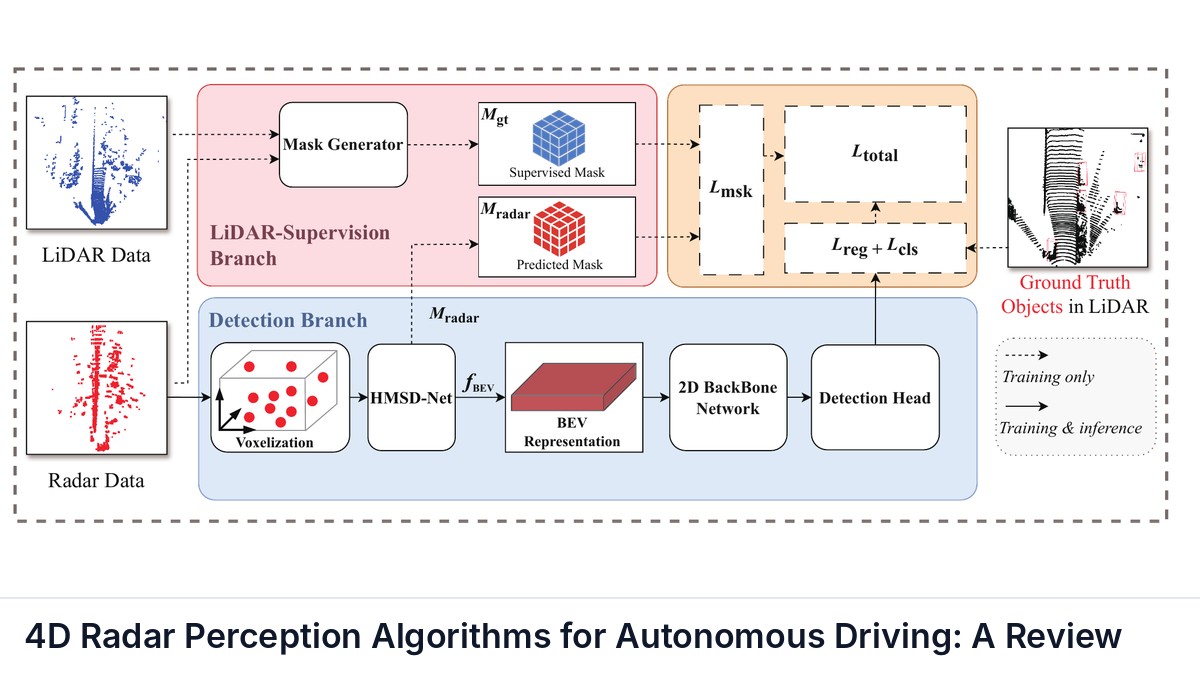
4D Radar Perception Algorithms for Autonomous Driving: A Review
Xumin Wu, Jun Zhou, Jilin Mei et al.
Research on 4D millimeter-wave radar perception algorithms has flourished in recent years, extending from signal processing and object detection to semantic segmentation, motion estimation, occupancy prediction, and dynamic scene reconstruction.
A Browser-Native Digital Test Range for Benchmarking 4D Ocean-Glider Planning Algorithms
Edward Holmberg, Elias Ioup, Mahdi Abdelguerfi
Repeated in-situ evaluation of ocean-glider planners requires scarce vehicles, operators, deployment and recovery resources, and ocean conditions that cannot be reset for competing algorithms.
A Mode-Unified, Continuous, and Biomimetic Control Strategy of a Robotic Lower Limb Prosthesis
Hanjun Kim, Sixu Zhou, John Shim et al.
Existing biomimetic lower-limb prosthesis controllers are commonly designed for discrete locomotion modes, requiring separate parameterizations for level walking, ramps, and stairs.
A Review Of Robotic World Models For Dynamic Environments Based On Factor And Scene Graphs
Marco Giberna, Miguel Fernandez-Cortizas, Jose Luis Sanchez Lopez et al.
Models based on graphs have emerged in robotics as a powerful foundation for internal world representations, where factor and scene graphs are among the most prominent model types found in the related literature and in successful robotic solutions.