
Multi-Reference Path Tracking Control for an Agricultural Tractor with Nonlinear Model Predictive Control
Marcel Moll, Timo Oksanen · N/A · 2026
Framework
N/A
License
N/A
Stars
N/A
Summary
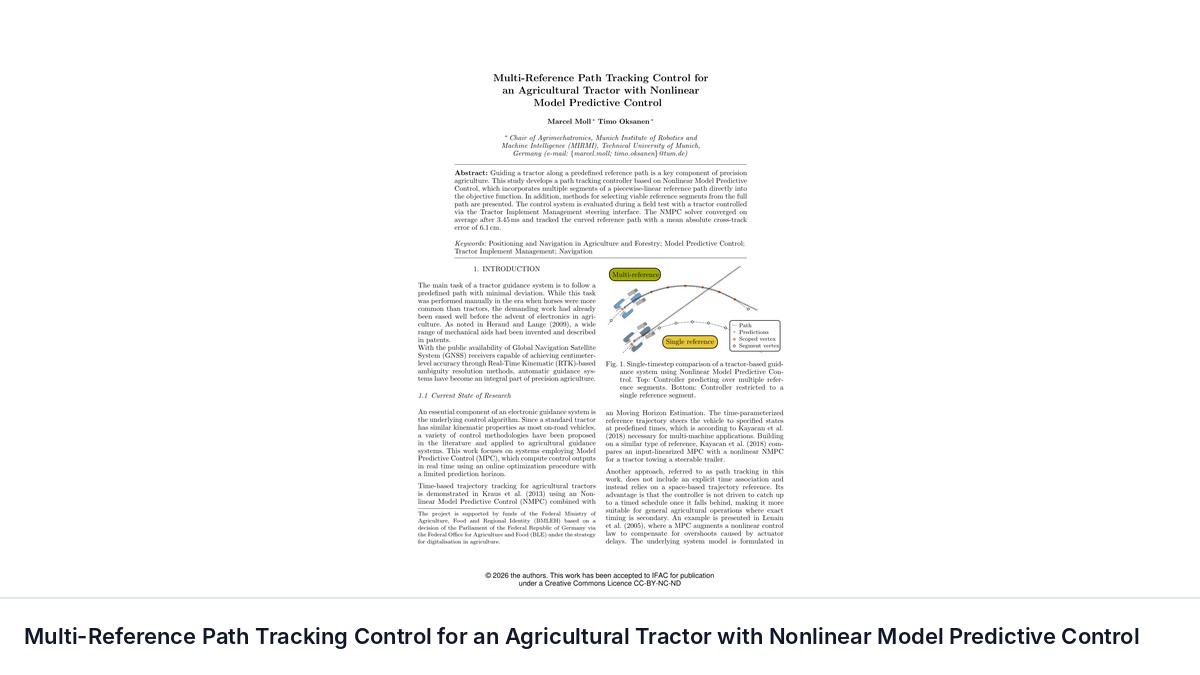
Guiding a tractor along a predefined reference path is a key component of precision agriculture. This study develops a path tracking controller based on Nonlinear Model Predictive Control, which incorporates multiple segments of a piecewise-linear reference path directly into the objective function.
Abstract Summary
Key Points
- Guiding a tractor along a predefined reference path is a key component of precision agriculture
- This study develops a path tracking controller based on Nonlinear Model Predictive Control, which incorporates multiple segments of a piecewise-linear reference path directly into the objective function.
- In addition, methods for selecting viable reference segments from the full path are presented
- The control system is evaluated during a field test with a tractor controlled via the Tractor Implement Management steering interface.
- The NMPC solver converged on average after 3.45 ms and tracked the curved reference path with a mean absolute cross-track error of 6.1 cm.
Multi-Reference Path Tracking Control for an Agricultural Tractor with Nonlinear Model Predictive Control
|Authors: Marcel Moll, Timo Oksanen
|Venue: arXiv preprint | Year: 2026
|arXiv: 2610.00057
Abstract
Guiding a tractor along a predefined reference path is a key component of precision agriculture. This study develops a path tracking controller based on Nonlinear Model Predictive Control, which incorporates multiple segments of a piecewise-linear reference path directly into the objective function. In addition, methods for selecting viable reference segments from the full path are presented. The control system is evaluated during a field test with a tractor controlled via the Tractor Implement Management steering interface. The NMPC solver converged on average after 3.45 ms and tracked the curved reference path with a mean absolute cross-track error of 6.1 cm.
Key Contributions
- Guiding a tractor along a predefined reference path is a key component of precision agriculture
- This study develops a path tracking controller based on Nonlinear Model Predictive Control, which…
- In addition, methods for selecting viable reference segments from the full path are presented
- The control system is evaluated during a field test with a tractor controlled via the Tractor Imp…
- The NMPC solver converged on average after 3.45 ms and tracked the curved reference path with a m…
Topics
- control
Code & Data
No code repository linked in paper metadata.
BibTeX
@article{Moll2026_261000057,
  title     = {Multi-Reference Path Tracking Control for an Agricultural Tractor with Nonlinear Model Predictive Control},
  author    = {Marcel Moll and Timo Oksanen},
  year      = {2026},
  eprint    = {2610.00057},
  archivePrefix = {arXiv},
  primaryClass  = {cs.RO},
  url       = {https://arxiv.org/abs/2610.00057}
}
Related Papers

3D Euler-Angle Orientation Control for Two-Ray Fading Mitigation in Maritime Air-to-Sea Communications
Mohammed Bajja, Abdoul Karim A. H. Saliah, Hajar El Hammouti et al.
Maritime Air-to-Sea links are dominated by a line-of-sight ray and a sea-surface reflected ray whose destructive combination produces deep fades. Existing mitigation strategies optimize Unmanned Aerial Vehicle position or trajectory but leave attitude unexploited.
A Balanced Data Diet: Addressing the Exploration Bottleneck in Mega-Scale RL for Robot Control
Octi Zhang, Mateo Guaman Castro, Patrick Yin et al.
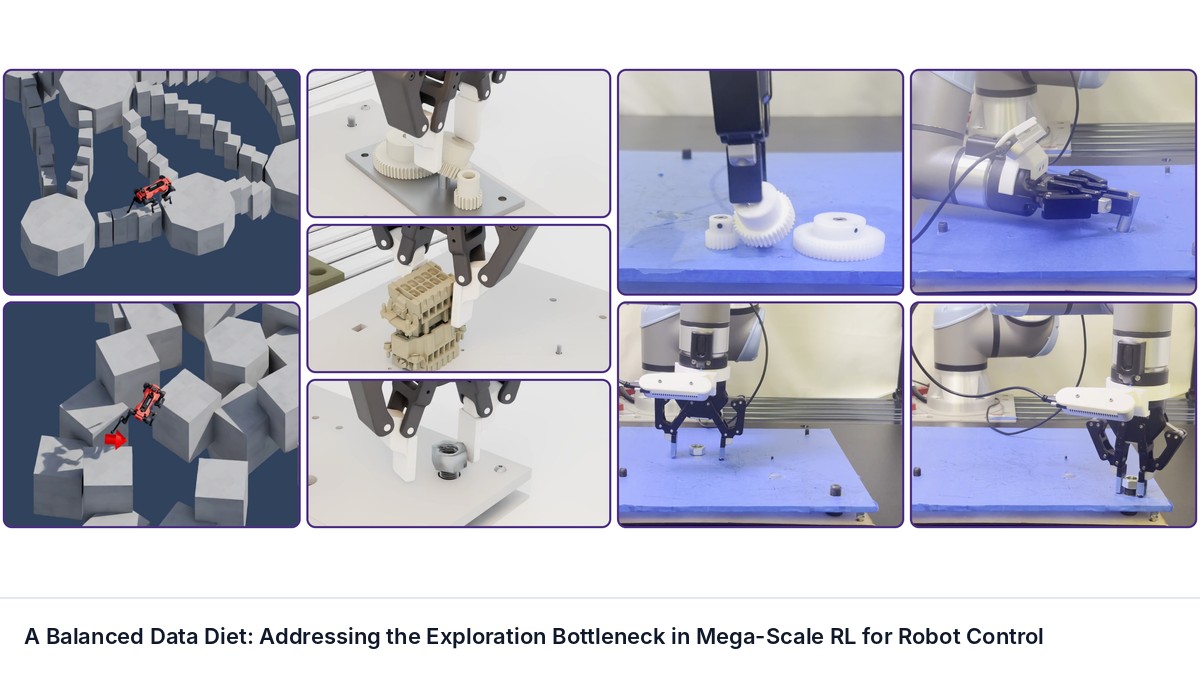
General-purpose robots must perform a wide range of tasks from agile locomotion to dexterous manipulation.
A bioinspired internal model-based online estimator for planar pursuit
Tengyue Liu, Xincheng Li, Sofia Morales Ferreira et al.
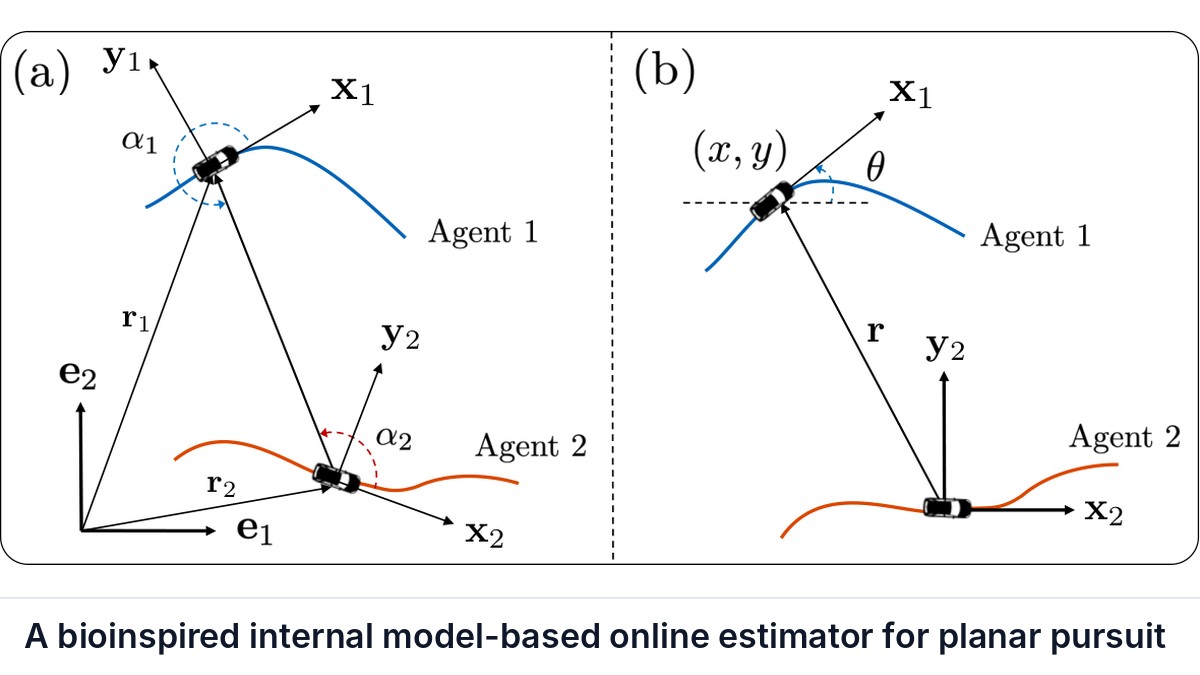
Bioinspired feedback controls for pursuit, tracking, and collective motion are often expressed in terms of the relative configuration between interacting agents.
A Biomimetic Gaze Control to Restore Head-Neck Movements
Colin Rubow, Haohan Zhang
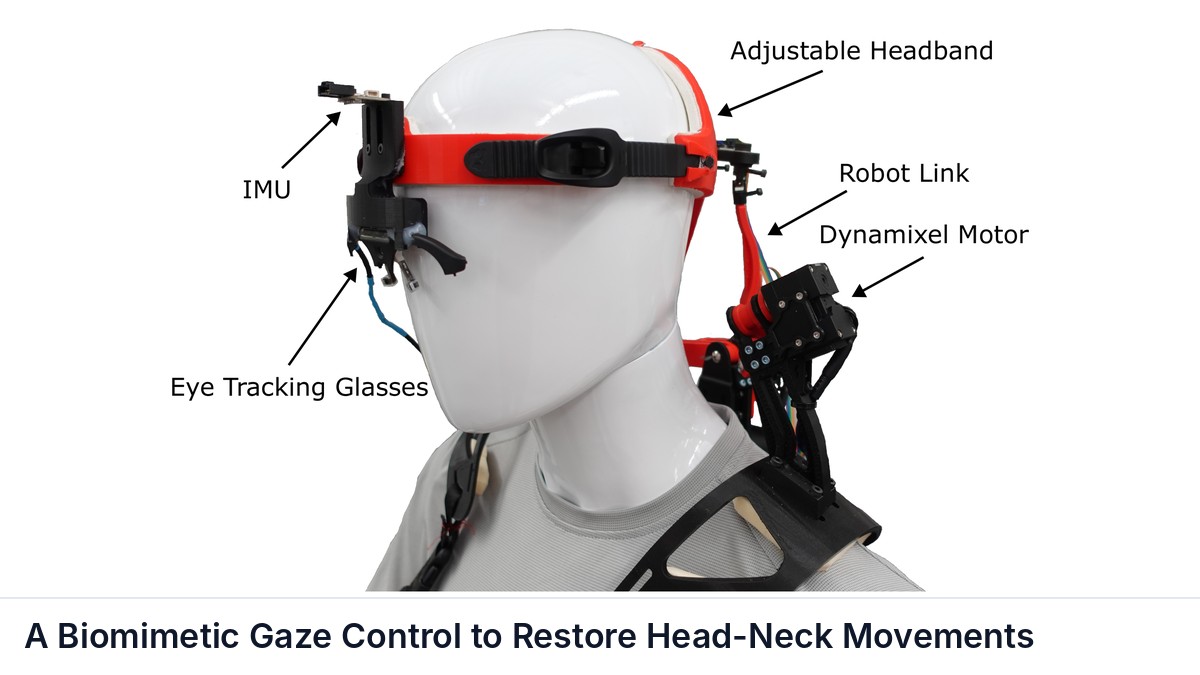
Powered neck exoskeletons are developed to restore head-neck motions for those with neck muscle weakness. Current methods using hand-held input devices to control these robotic systems are unintuitive or non-viable for these populations.