
Cross-Embodiment Robot Foundation World Models with Latent Actions
Huang Huang, Sriram Yenamandra, Arjun Majumdar, Elie Aljalbout, Tushar Nagarajan, Tsung-Yen Yang, Akshara Rai, Michael Rabbat, Li Fei-Fei, Jiajun Wu, Tingfan Wu, Franziska Meier · N/A · 2026
Framework
N/A
License
N/A
Stars
N/A
Summary
The diversity of robot embodiments and action spaces makes it challenging to build robot world models that generalize across different embodiments.
Abstract Summary
Key Points
- The diversity of robot embodiments and action spaces makes it challenging to build robot world models that generalize across different embodiments.
- We introduce the Latent Action-Conditioned Robot World Model (LAC-WM), which operates within a learned unified latent action space shared across diverse embodiments.
- This unified action space improves the world model's performance when adapted to previously unseen robot embodiments.
- We compare LAC-WM with an Explicit Action-Conditioned World Model (EAC-WM), which conditions on explicit motion labels.
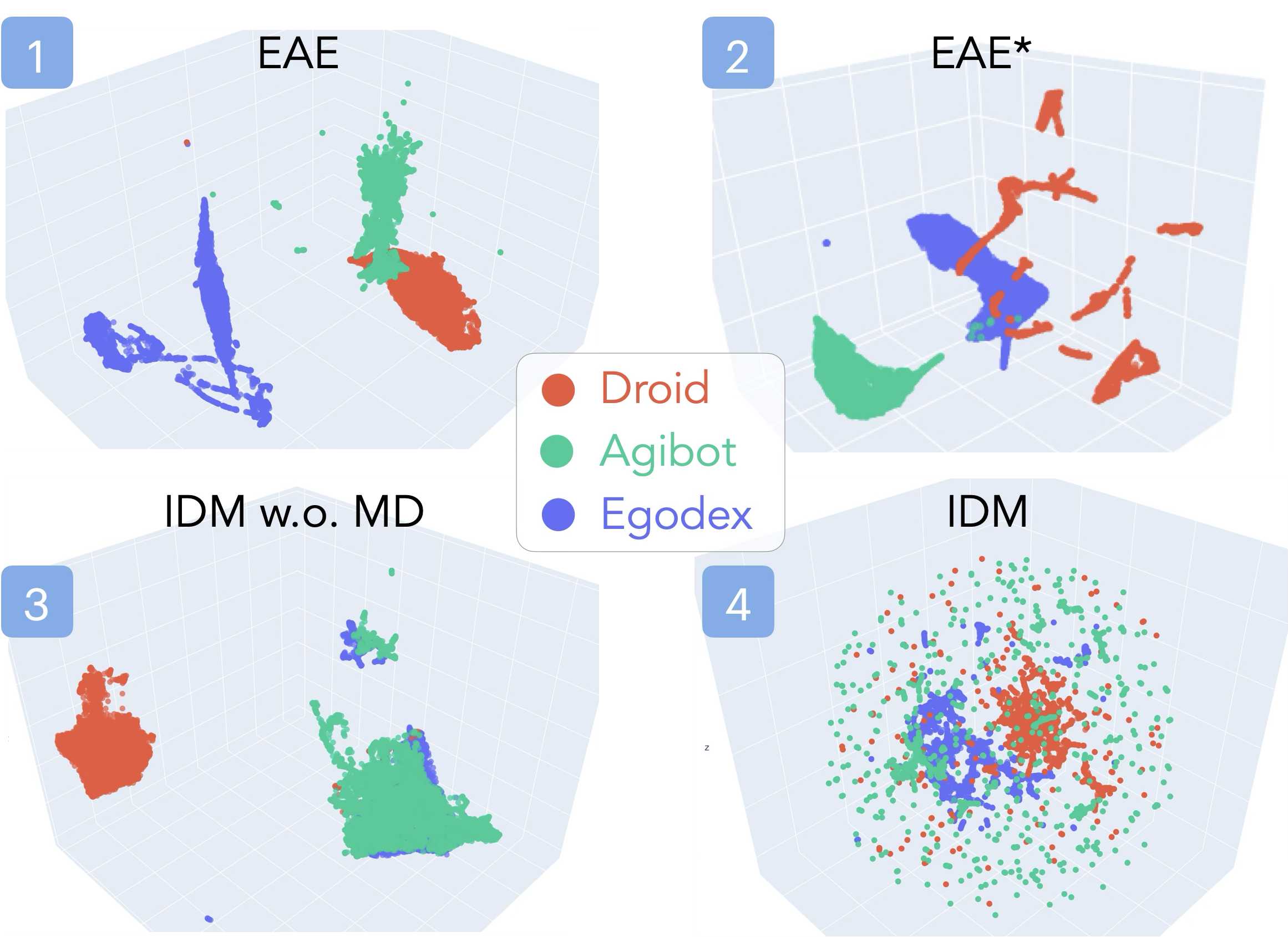
- Our results show that explicit action conditioning leads to disjoint action representations across embodiments, limiting downstream performance when adapting to new robots.
Method
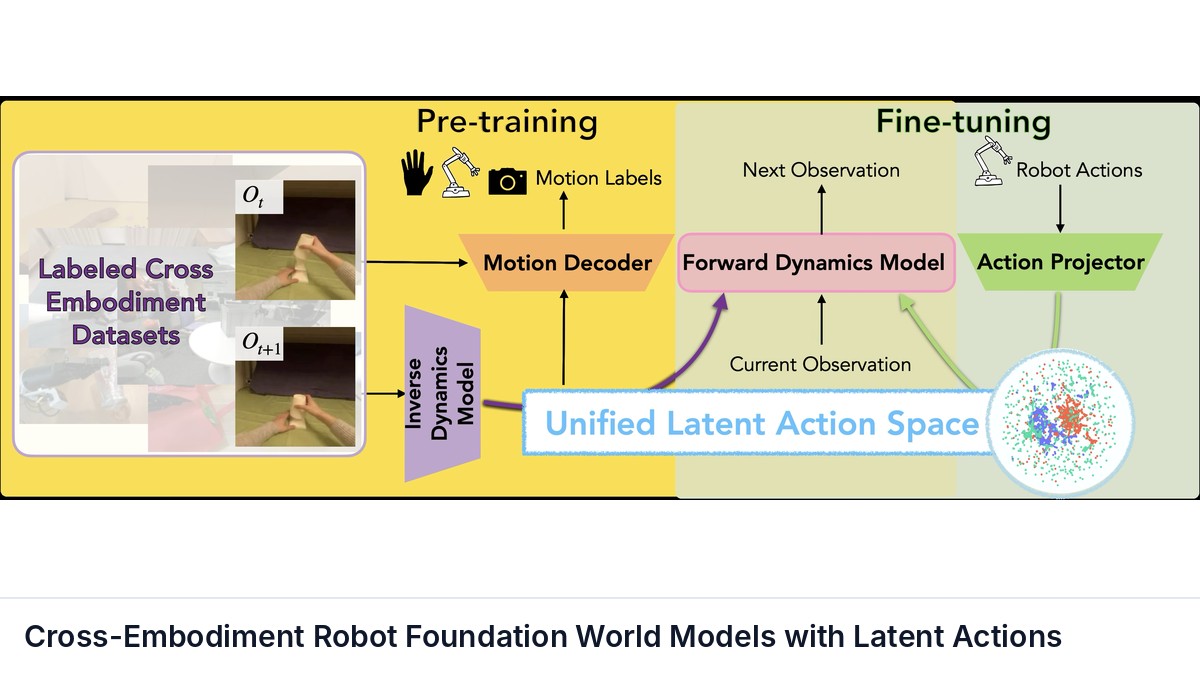
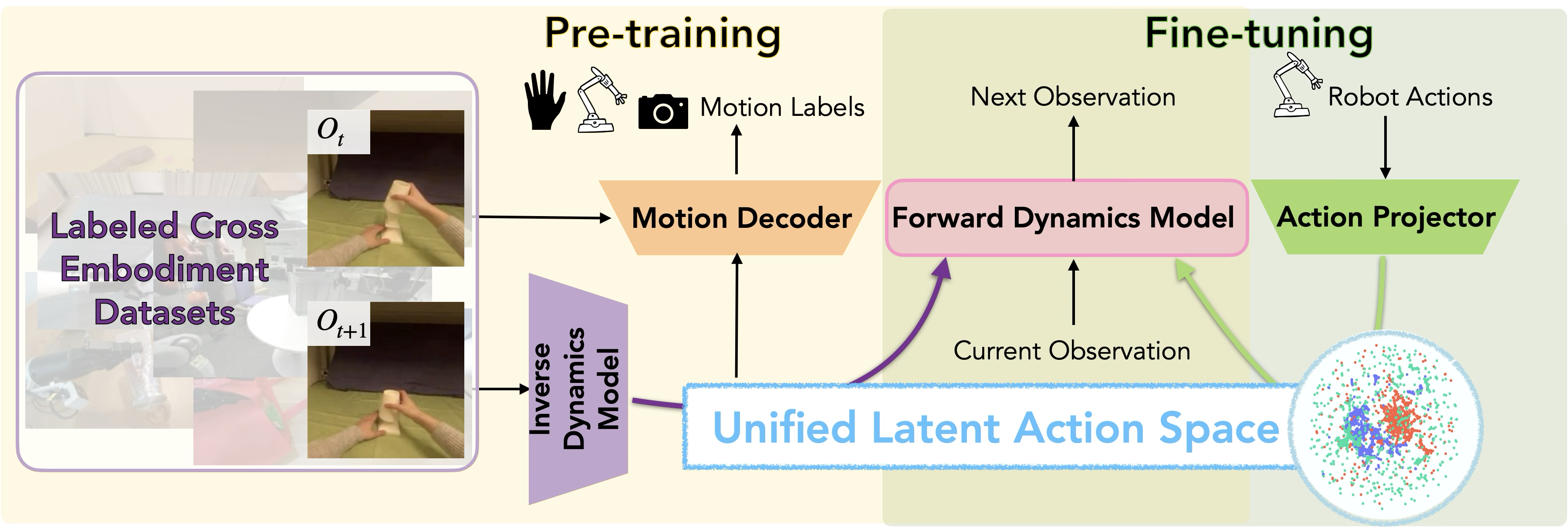
LAC-WM is pretrained on cross-embodiment datasets and finetuned to adapt to previously unseen robot embodiments. The overall framework is in Figure 1 . During pretraining (left, yellow), LAC-WM consists of an inverse dynamics model (IDM), a forward dynamics model (FDM), and a motion decoder (MD). The IDM encodes image observations into a latent action, which conditions the FDM to predict the next image latent.
Experiments
We use a robot world model with explicit action encoders as our baseline. Specifically, we adopt the same FDM architecture but generate action conditioning by directly encoding explicit motions, such as robot end-effector (EE) actions or delta human hand poses into action embeddings.
Since different embodiments have distinct action spaces, we employ separate action encoders for each embodiment, following common practice in multi-embodiment learning ( NVIDIA et al., 2025b ) .
Latent Action Analysis
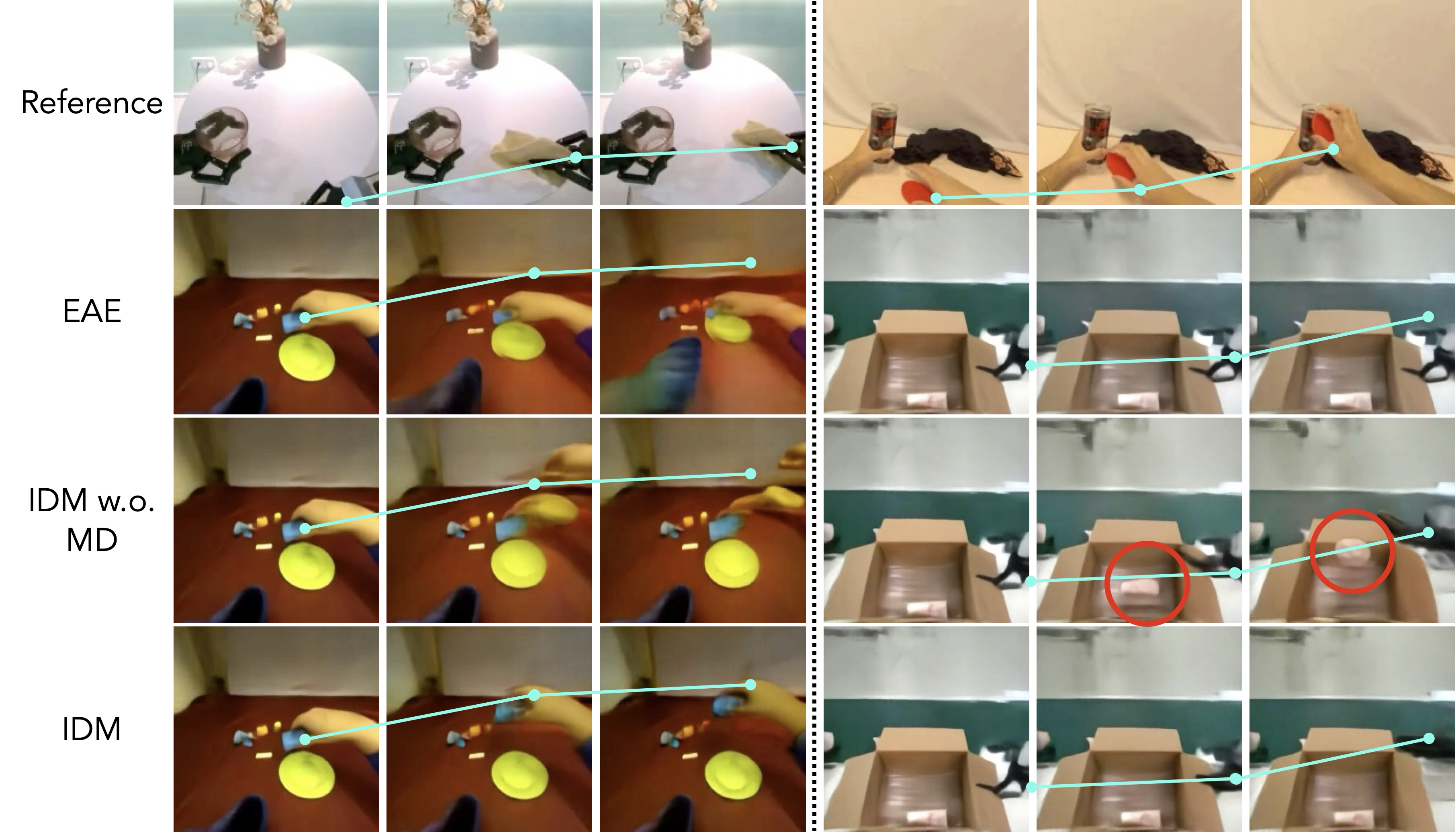
This section addresses the first research question of Do latent action models better unify cross-embodiment action representations compared to explicit action labels? Specifically, we visualize the latent action space and qualitatively evaluate the action transfer between different embodiments.
Robot Task Evaluation
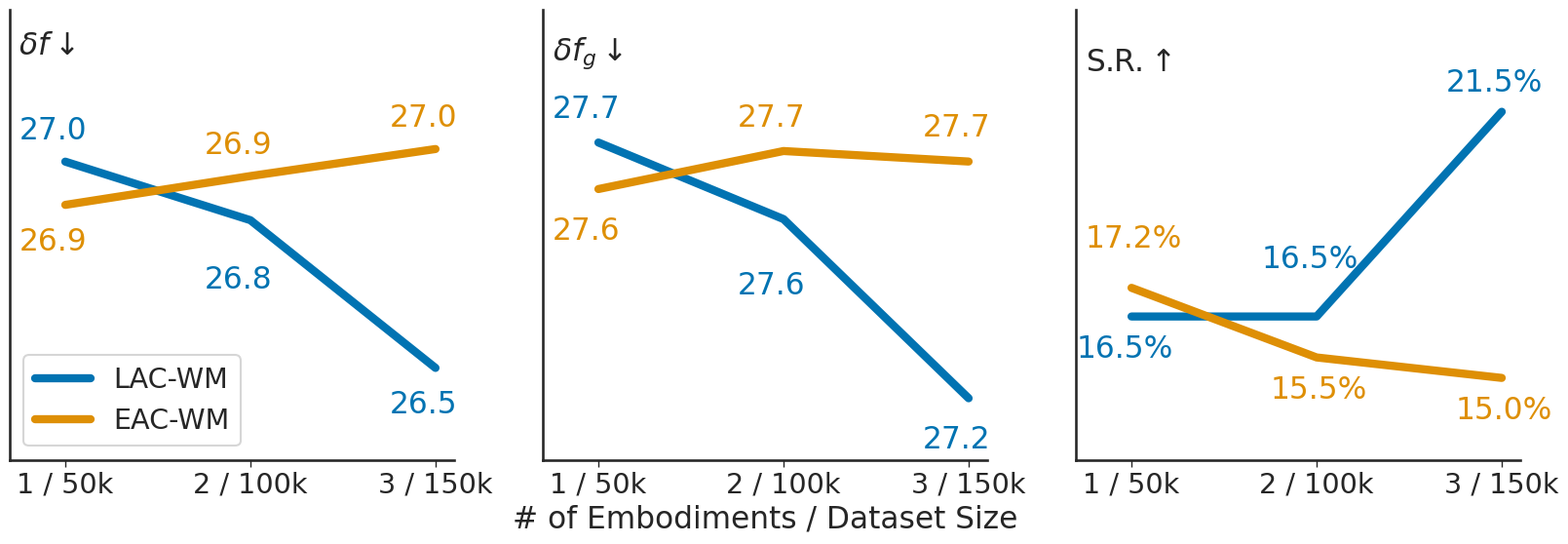
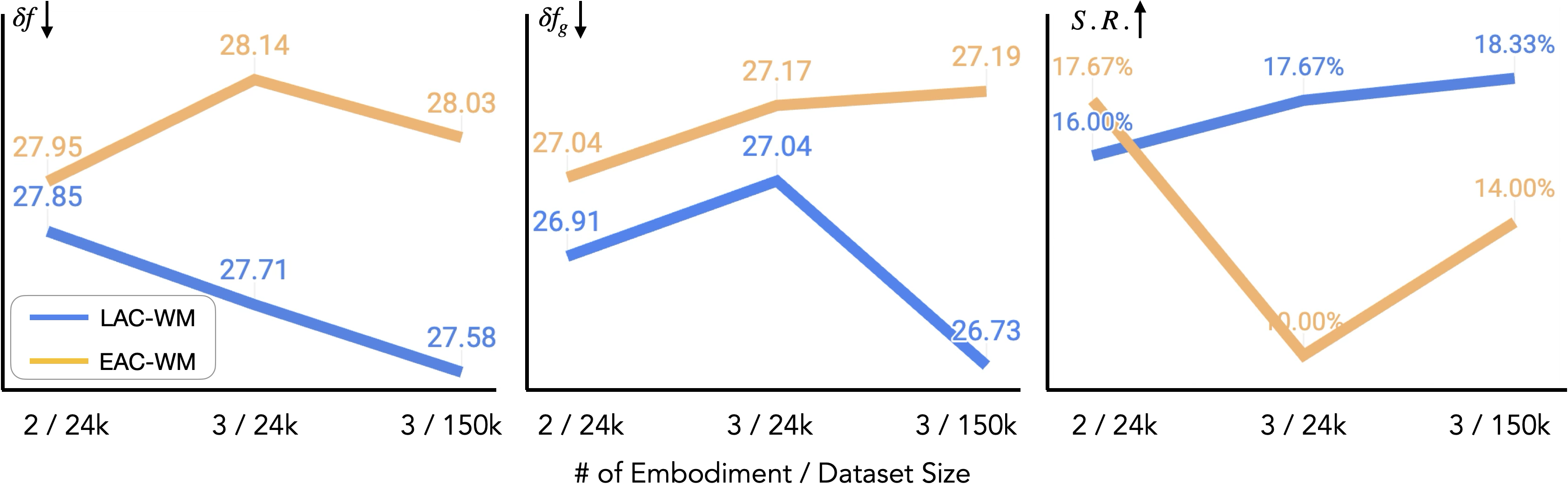
This section studies the world model performance when adapting to a previously unseen embodiment. We quantitatively evaluate action conditioned image generation performance of the world models by predicting eight future frames based on an initial observation and an action sequence, as in Figure 6 .
For evaluation, we use the held out BFA splits to test generalization to (1) unseen instances of objects within known categories ( Unseen Instances ) and (2) three entirely unseen object categories: donut, lime, and banana ( Unseen Categories ).
mpact Statement
This paper presents work whose goal is to advance the field of robot world model learning. There are many potential societal consequences of our work, none of which we feel must be specifically highlighted here. We conduct pretraining on three datasets: EgoDex ( Hoque et al., 2025 ) , Agibot ( Bu et al., 2025a ) , and Droid ( Khazatsky et al., 2024 ) .
The action space includes changes in end-effector poses and camera poses. The end-effector pose combines the wrist pose with additional dimensions for gripper or hand articulation.
Sources and Demonstrations
Figures are reproduced from Huang et al. See the full paper for experimental details and the project page, when the paper links one, for demonstrations and videos.
Related Papers

A Sim-to-Real Integration Pipeline for Training and Deployment of Chunk-Based VLA Manipulation Policies
Mathilde Kappel, Clémence Grislain, Mohamed Chetouani et al.
Vision-Language-Action (VLA) models have become a prominent paradigm for mapping multimodal inputs, including semantic instructions, visual observations of the scene, and proprioceptive observations, to robot actions.
A Two-Echelon Covering Tour Vehicle Routing Problem with Drones for Post-Disaster Relief
Dang Viet Anh Nguyen, Rajesh Piplani, Aldy Gunawan
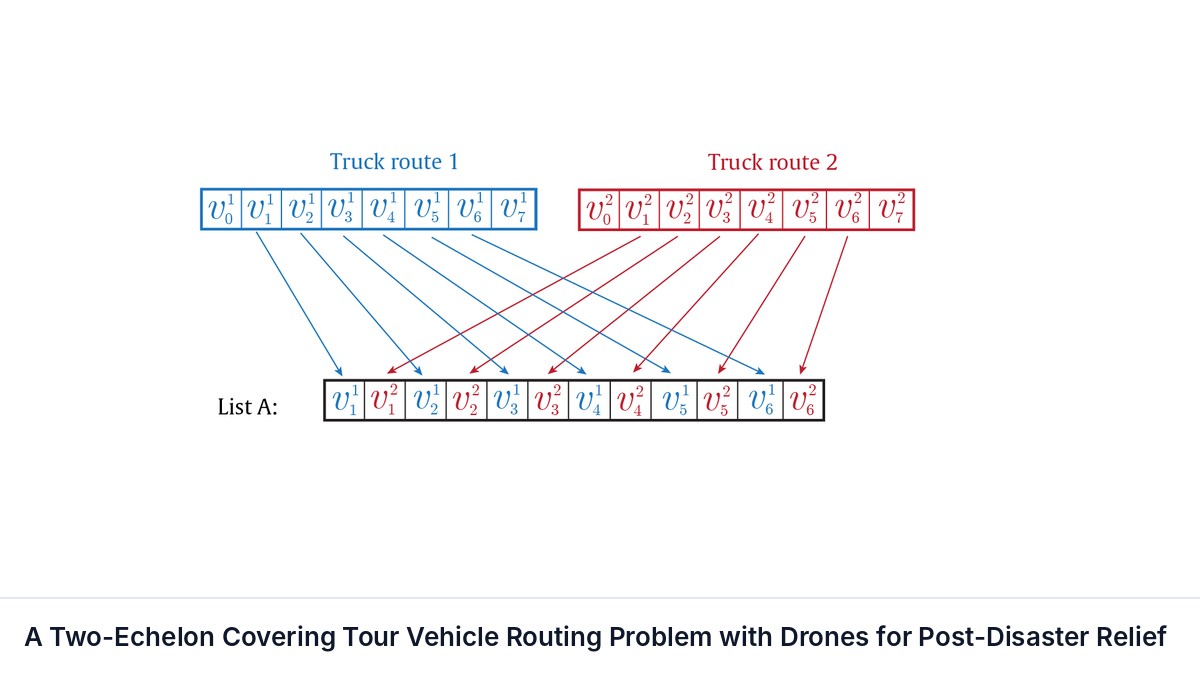
We introduce the two-echelon covering tour vehicle routing problem (2E-CTVRP) for the distribution of relief supplies after a disaster. In the first echelon, a fleet of trucks transports supplies and drones from a central depot to satellites at the periphery of the affected area.
An Analysis of Streaming Deep Reinforcement Learning for Adaptive Continual Learning in Robotics
Teeratham Vitchutripop, Alyssa Quarles, Wenhe Zhang et al.
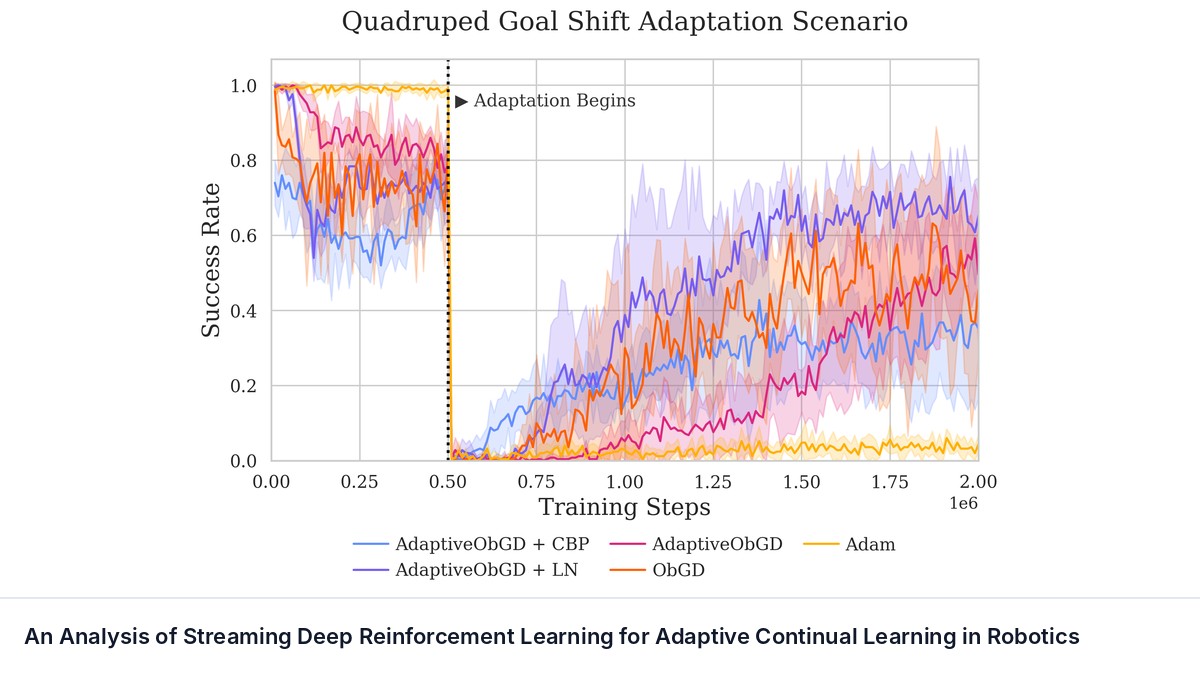
Over the course of a lifetime, robots may encounter novel scenarios unaccounted for in its original training that result in performance degradation. One common approach to mitigating this issue is to further grow the offline training dataset in hopes of producing a policy robust to these changes.
Behavioral Cloning Mystery
Seohong Park, Sergey Levine
Behavioral cloning (BC), despite its simplicity, exhibits many counterintuitive phenomena in the real world. For example, the performance of BC often keeps increasing as the model overfits more to the dataset, and fully closed-loop policies often completely fail without action chunking.