
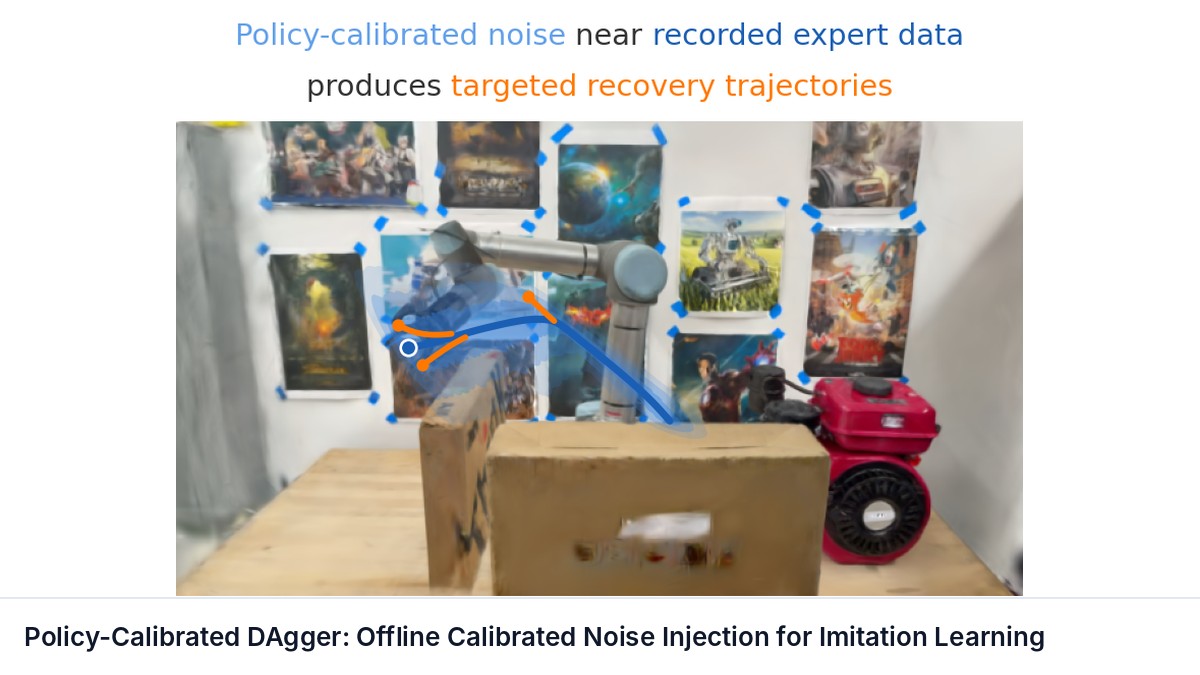
Policy-Calibrated DAgger: Offline Calibrated Noise Injection for Imitation Learning
Jenny Wang, George Kantor · N/A · 2026
Framework
N/A
License
N/A
Stars
N/A
Summary
Policies trained with imitation learning can accumulate errors over time, causing the robot to drift outside the training distribution. Existing methods mitigate this covariate shift by collecting additional data where the policy fails or is likely to fail.
Abstract Summary
Key Points
- Policies trained with imitation learning can accumulate errors over time, causing the robot to drift outside the training distribution.
- Existing methods mitigate this covariate shift by collecting additional data where the policy fails or is likely to fail.
- The first places the robot in unsafe conditions and the second requires choosing an appropriate noise distribution to collect new expert demonstrations under that noise.
- We propose Policy-Calibrated DAgger, a method that makes use of the properties of recent generative policies to estimate the policy's noise offline by using its own predicted action distribution.
- We measure a diffusion policy's spread of predicted actions at observations along the expert trajectory and measure its closed-loop error relative to a recorded trajectory.
Preliminaries
We aim to minimize covariate shift by optimizing the KL-divergence between the trajectories visited by the trained robot policy $p(\xi/\pi_{\theta})$ and those visited by the noised expert $p(\xi/\pi_{\theta^{*}},\psi)$. In DART [ 6 ] , the authors minimize covariate shift by optimizing the KL-divergence with respect to the sufficient statistics $\psi$ of the noise distribution.
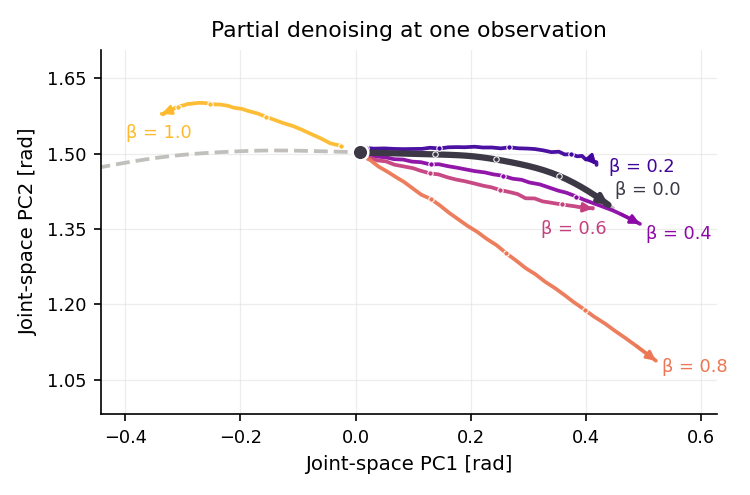
Policy-Calibrated DAgger
We introduce Policy-Calibrated DAgger, a method that predicts data augmentation noise parameters that make the expert demonstrations cover states closer to the final robot’s distribution. A key difference between our method and DART [ 6 ] is that we do not inject noise into the expert’s control loop—instead, we compute the sufficient statistics offline and in a simulator.
This places the burden of corrections on the policy instead of the expert and allows the expert to provide clean demonstrations, uninterrupted.
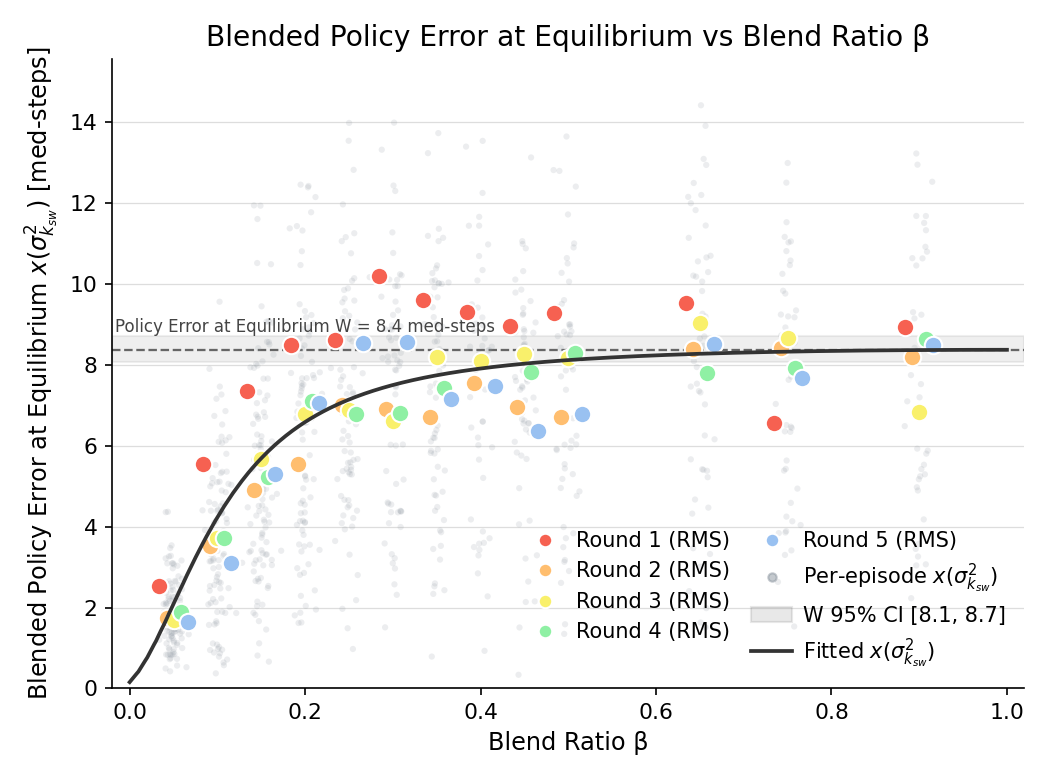
Experiments
We conduct a series of experiments to validate our method for data-efficient interactive imitation learning. Our primary research question is how our proposed augmentations to intervention data affect policy optimization given the same number of expert interventions. Our augmentations are based on a diffusion model’s [ 43 ] denoising process.
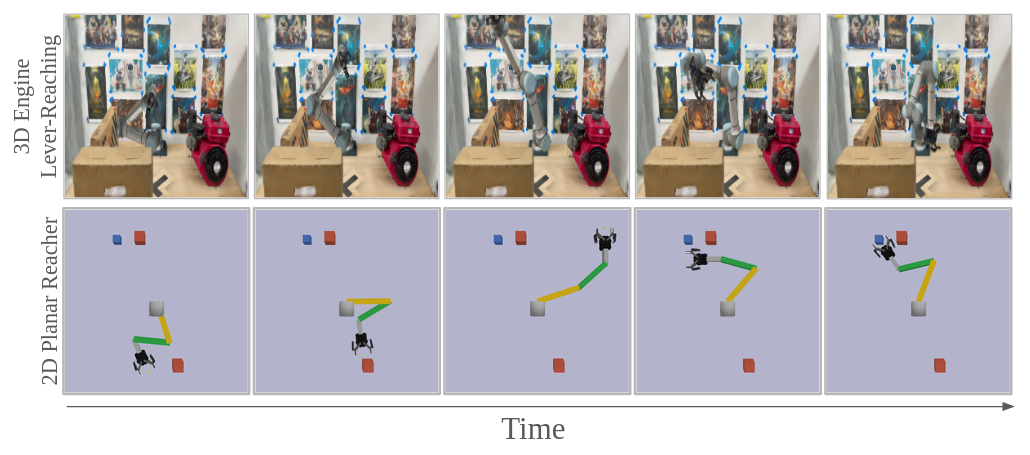
Sources and Demonstrations
Figures are reproduced from Wang et al. See the full paper for experimental details and the project page, when the paper links one, for demonstrations and videos.
Related Papers

A Sim-to-Real Integration Pipeline for Training and Deployment of Chunk-Based VLA Manipulation Policies
Mathilde Kappel, Clémence Grislain, Mohamed Chetouani et al.
Vision-Language-Action (VLA) models have become a prominent paradigm for mapping multimodal inputs, including semantic instructions, visual observations of the scene, and proprioceptive observations, to robot actions.
Behavioral Cloning Mystery
Seohong Park, Sergey Levine
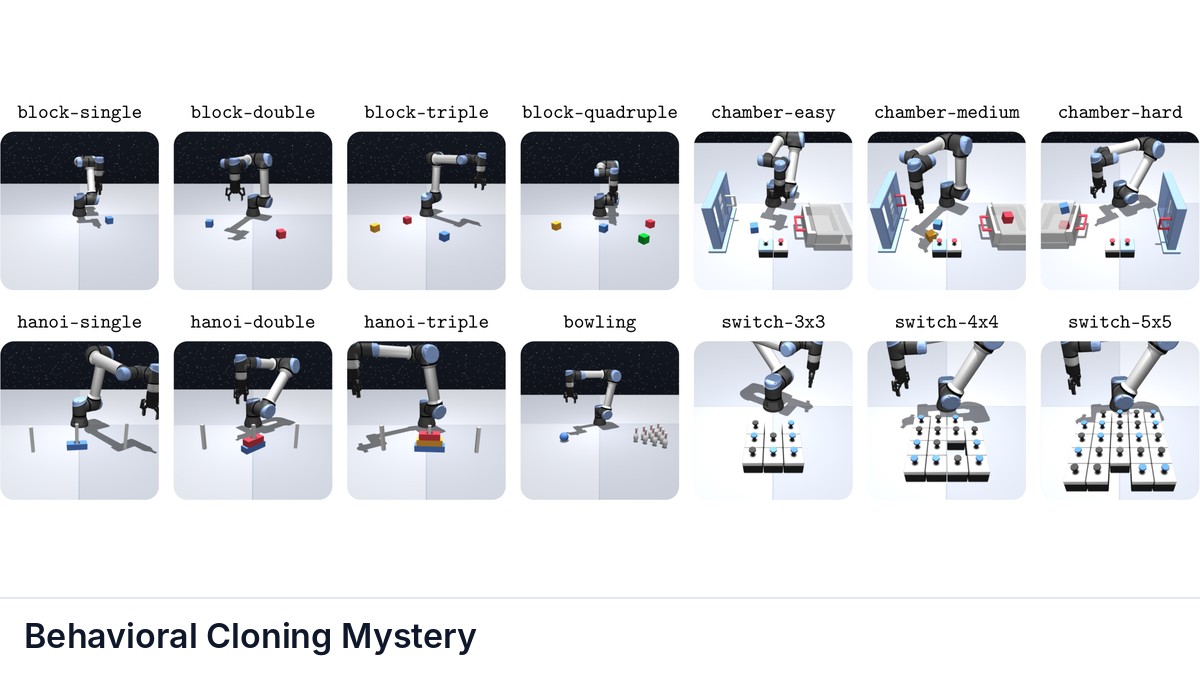
Behavioral cloning (BC), despite its simplicity, exhibits many counterintuitive phenomena in the real world. For example, the performance of BC often keeps increasing as the model overfits more to the dataset, and fully closed-loop policies often completely fail without action chunking.
Capability-Aware Arbitration for Semantic Intent-Based Shared Control
Zhaoda Du, Michael Bowman, Xiaoli Zhang
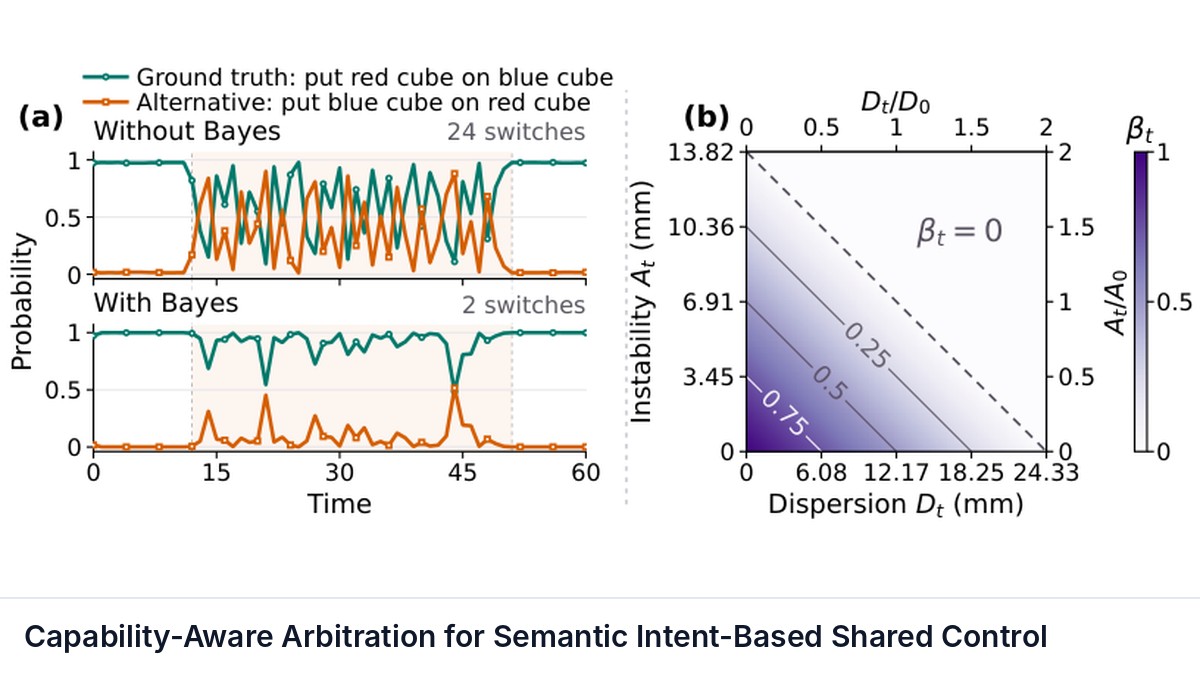
Shared control often allocates robot authority based on confidence in inferred human intent, assuming reliable autonomous execution. When this assumption fails, high intent confidence can cause over-helping.
Design and Evaluation of a Collaborative Teleoperation Interface for Multi-Operator Multi-Robot Systems in Challenging Environments
Alperen Kenan, Juan José García Cárdenas, Adriana Tapus et al.
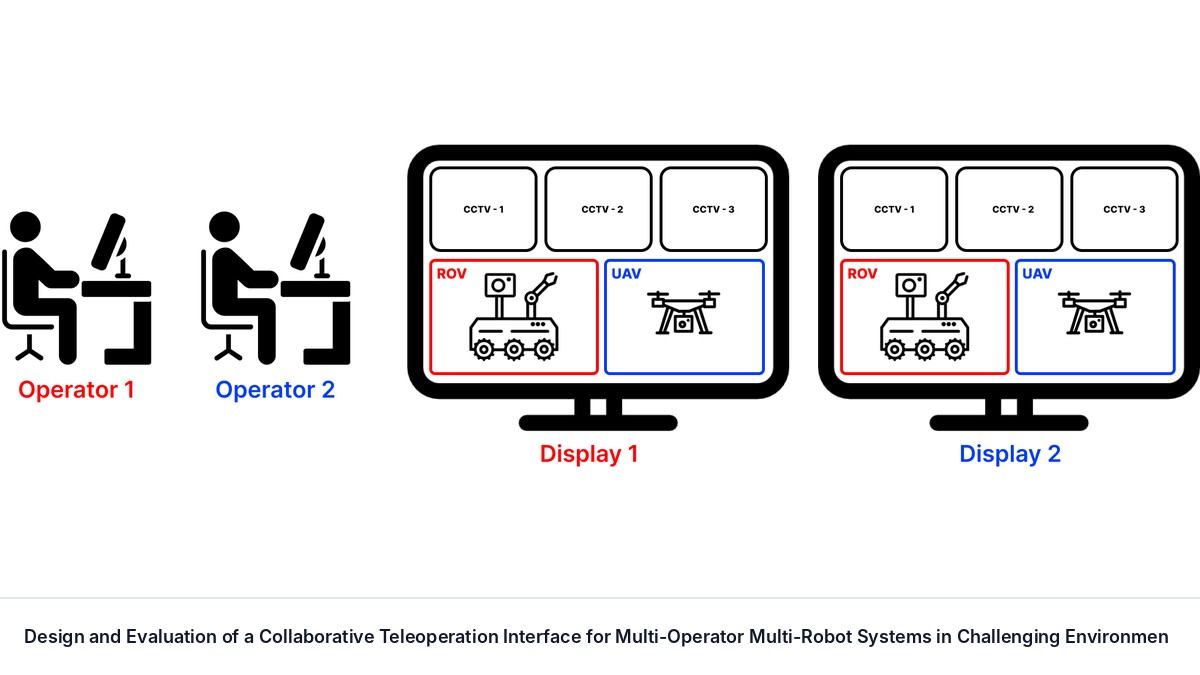
Multi-robot systems that combine the complementary capabilities of specialised platforms are critical for complex missions in challenging, inaccessible environments.