
ManiSkill: A Unified Benchmark for Generalizable Manipulation Skills
FeaturedJiayuan Gu, Sean Xiang, Stone Tao, Xuanlin Li, Chongkai Gao, Yihe Tang, Xiaodi Yuan, Yunfan Jiang, Pu Hua, Tongzhou Mu, Fanbo Xiang, Yuzhe Qin, Xiangfeng Hu, Xiaowen Ou, Yen-Yu Chang, Xuanlin Li, Hao Su · UC San Diego, BIGAI · 2023
Framework
PyTorch + SAPIEN
License
MIT
Stars
2,914
Summary
ManiSkill is a GPU-parallelized robotics simulation benchmark with 20+ manipulation tasks, PartNet-Mobility assets, and unified observation/action spaces, supporting RL, IL, and VLA training at millions of steps per hour.
Abstract Summary
Key Points
- GPU-parallelized simulation: 1M+ steps/sec, 1000+ parallel envs.
- 20+ tasks: articulated objects, tools, deformable materials.
- Unified observation/action spaces across all tasks.
- 100K+ motion-planned demonstrations for offline IL.
- Standard benchmark for VLA models (OpenVLA, π0, Octo).
Related Papers
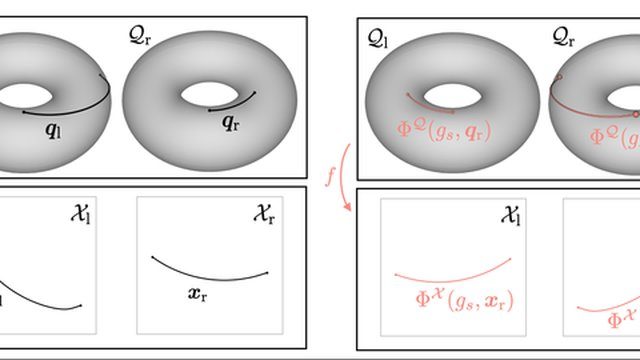
Symmetries Here and There, Combined Everywhere: Cross-space Symmetry Compositions in Robotics
Loizos Hadjiloizou, Rodrigo Pérez-Dattari, Noémie Jaquier · arXiv preprint · May 2026
Formalizes cross-space symmetry compositions in robotics and derives equivariant network architectures that exploit multiple simultaneous symmetries for improved generalization.
Eureka: Human-Level Reward Design via Coding Large Language Models
Yecheng Jason Ma, William Liang, Guanzhi Wang et al. · ICLR 2024 (Oral) · May 2024
Eureka uses GPT-4 to write reward functions for RL environments, achieving human-level reward design on 29 tasks and enabling zero-shot sim-to-real transfer on Shadow Hand dexterous manipulation.
LeRobot: A Library for Real-World Robot Learning
Remi Cadene, Simon Alibert, Alexander Soare et al. · NeurIPS 2024 Workshop · Jun 2024
Hugging Face's LeRobot is an open-source PyTorch framework providing pretrained models, datasets, and training scripts for imitation and reinforcement learning on real robots, lowering the entry barrier to robot learning.

Gymnasium: A Standard Interface for Reinforcement Learning Environments
Farama Foundation, Jordan Terry, Mark Towers et al. · JMLR 2023 · Mar 2023
Gymnasium is the maintained successor to OpenAI Gym, providing a standardized API for RL environments with 100+ built-in tasks, vectorized parallel execution, and native support for physics engines like MuJoCo, PyBullet, and IsaacGym.