
MagNav: A Dual-Core Magnetic Track Guidance Framework for Lighting-Invariant Navigation in Two-Wheeled Robots
Arpita Kumari, Anupam Chatterjee, Richa Srivastava · N/A · 2026
Framework
N/A
License
N/A
Stars
N/A
Summary
Two-Wheeled Inverted Pendulum (TWIP) robots are useful for studying how to control systems that are naturally unstable and have fewer actuators than degrees of freedom. Adding autonomous line-following to these robots is challenging because steering and balancing are closely linked.
Abstract Summary
Key Points
- Two-Wheeled Inverted Pendulum (TWIP) robots are useful for studying how to control systems that are naturally unstable and have fewer actuators than degrees of freedom.
- Adding autonomous line-following to these robots is challenging because steering and balancing are closely linked.
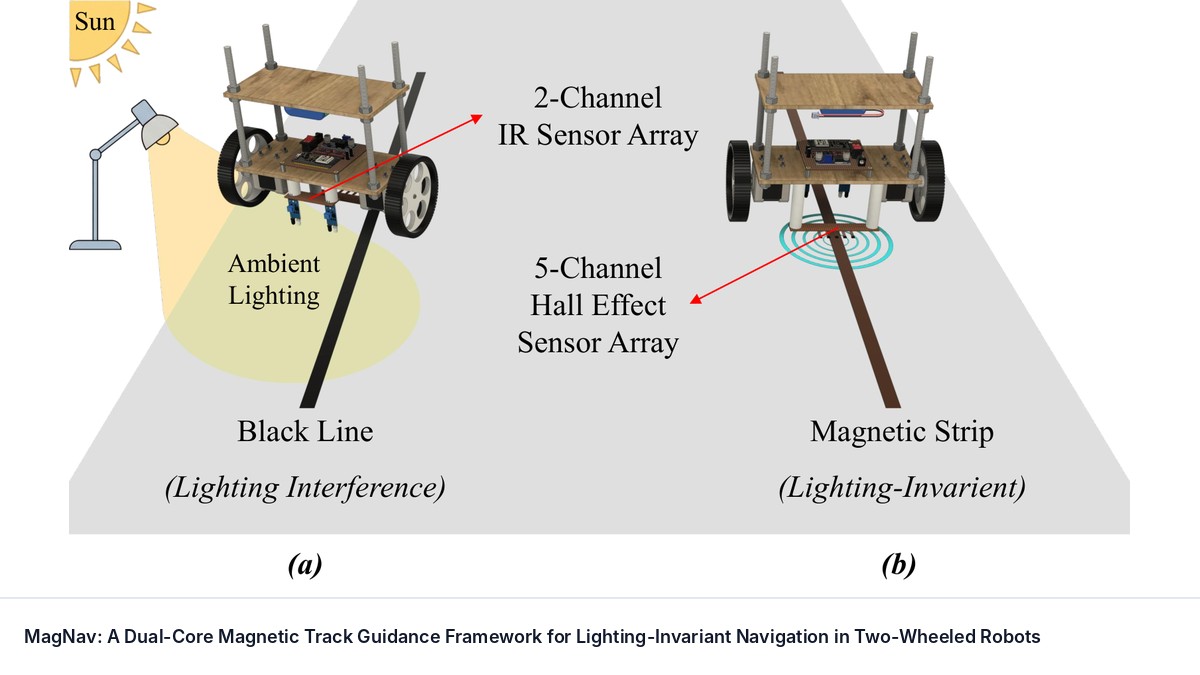
- Most existing systems use infrared sensors, which can be affected by changes in lighting, such as sunlight or shadows, making them reliable only indoors.
- This paper presents a self-balancing robot that can follow a line using a magnetic track guidance system.
- By using a five-channel analog Hall-effect sensor array, the robot is not affected by optical interference.
Methods & Materials
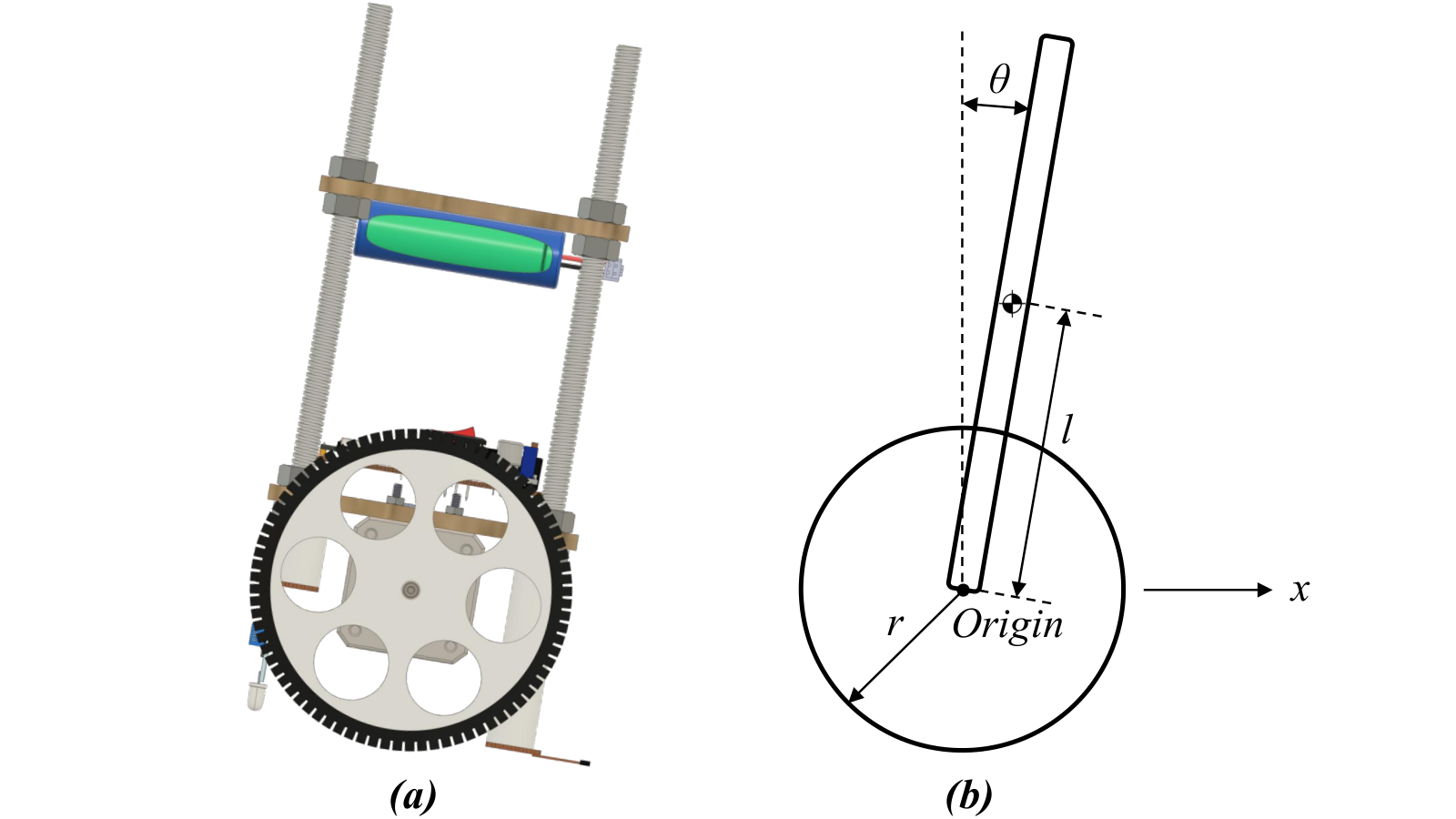
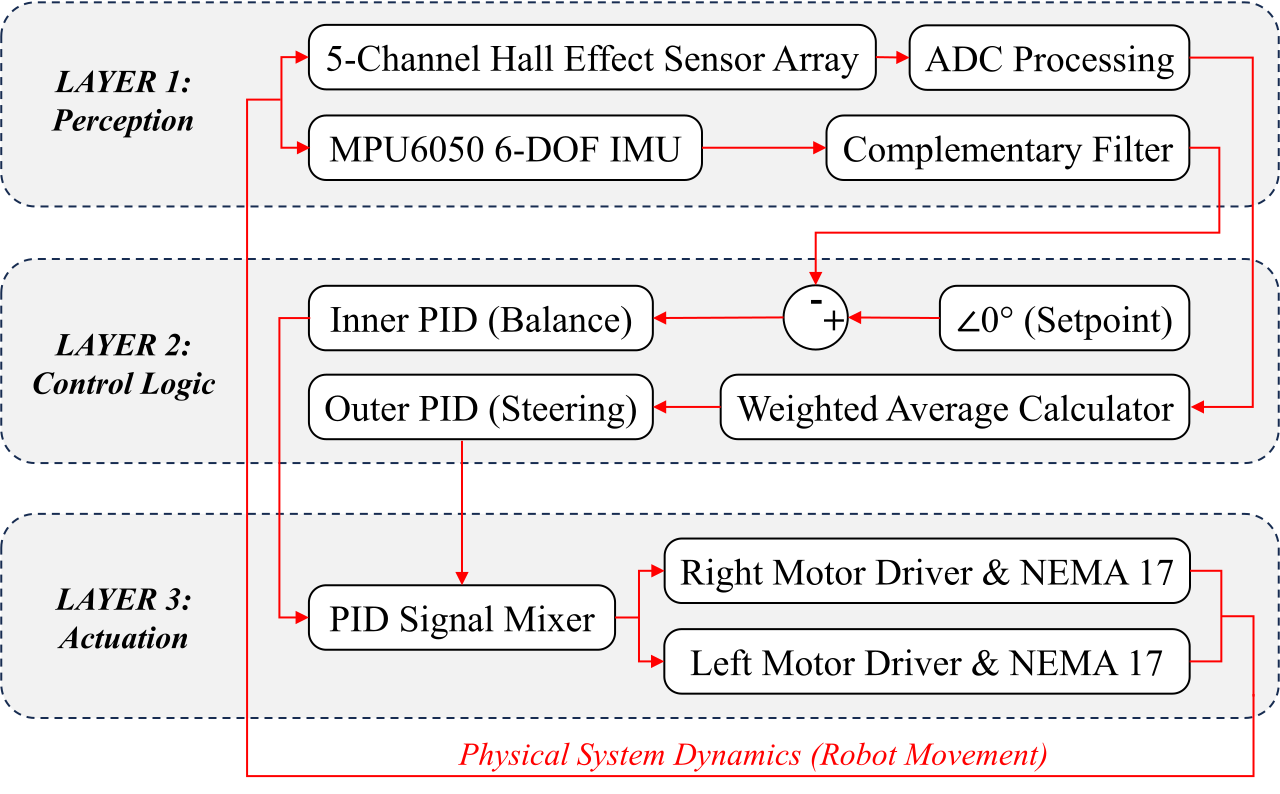
We decomposed our system development into three main phases: defining the physical hardware, modelling the system kinematics, and designing the hierarchical control loop to achieve stable balancing and robust trajectory tracking. The mobile platform was designed with a low centre of mass since this is essential for the passive stability of an inverted pendulum [ 2 ] , [ 1 ] .
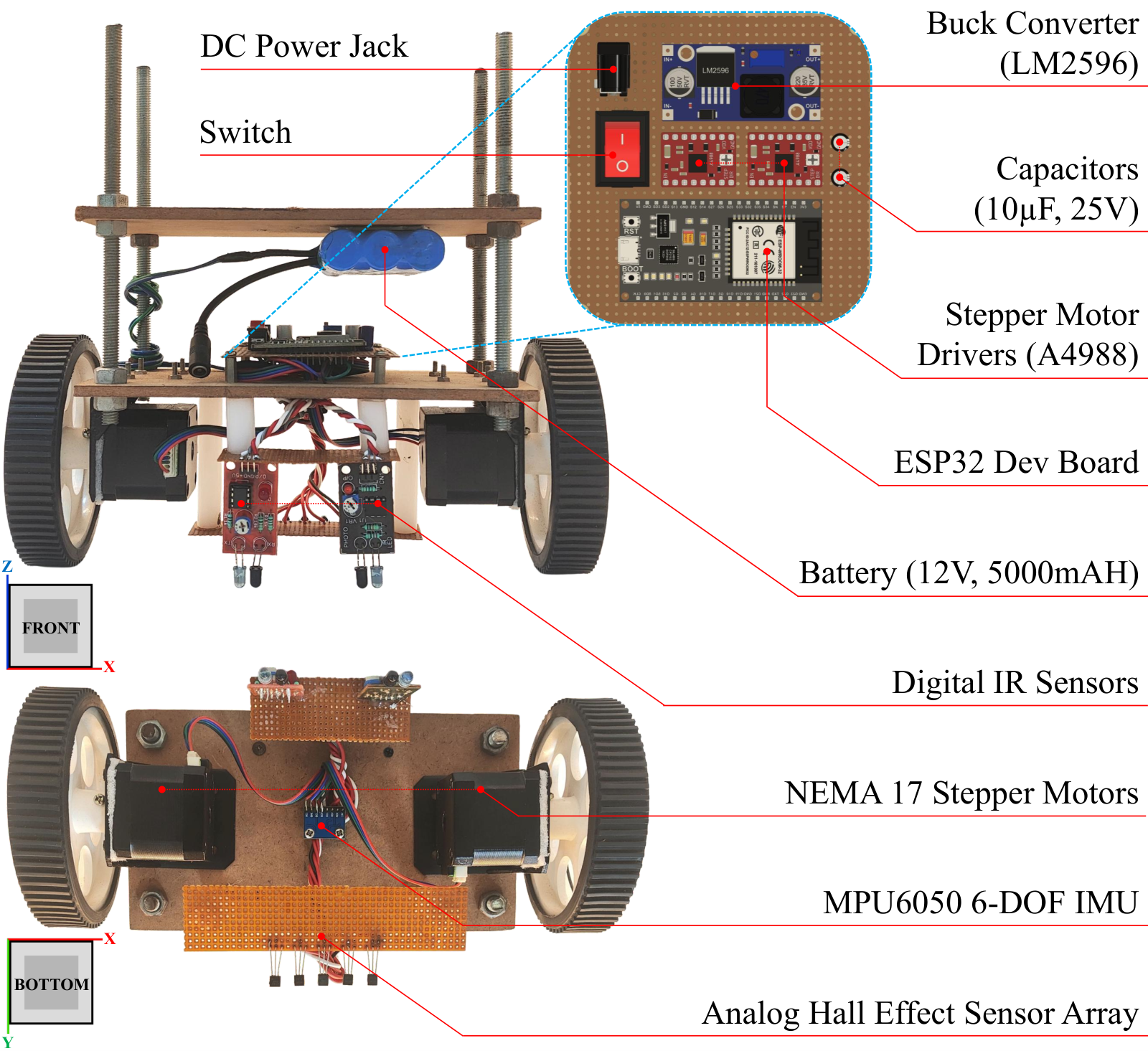
Figure 2 shows the arrangement of the internal components in side, bottom, and top views. The power is supplied by a 12 V, 5000 mAh battery housed on the upper deck.
Experimental Setup
The cascaded control architecture was assessed using a standard planar benchmarking track in order to examine its trajectory tracking performance and environmental robustness. As illustrated in Fig. 6 , the track is 15 mm wide and has a difficult 90-degree corner.
In order to allow for a direct comparative analysis of the two navigation methods, the same track geometry was built two times: once with black IR-absorbent tape for the optical testing phase and again with a continuous magnetic strip for the Hall-effect testing phase.
Results
In order to set up a comparative baseline, we first examined the conventional infrared tracking system. Figure 9 shows the severe vulnerability of the optical method. The top sequence shows the robot’s actual path, indicating that it successfully navigates the straight section and the first curve.
But when the robot enters the 10,000 Lux spotlight interference area at the 90-degree vertex, it fails entirely and moves off the black tape.
Sources and Demonstrations
Figures are reproduced from Kumari et al. See the full paper for experimental details and the project page, when the paper links one, for demonstrations and videos.
Related Papers
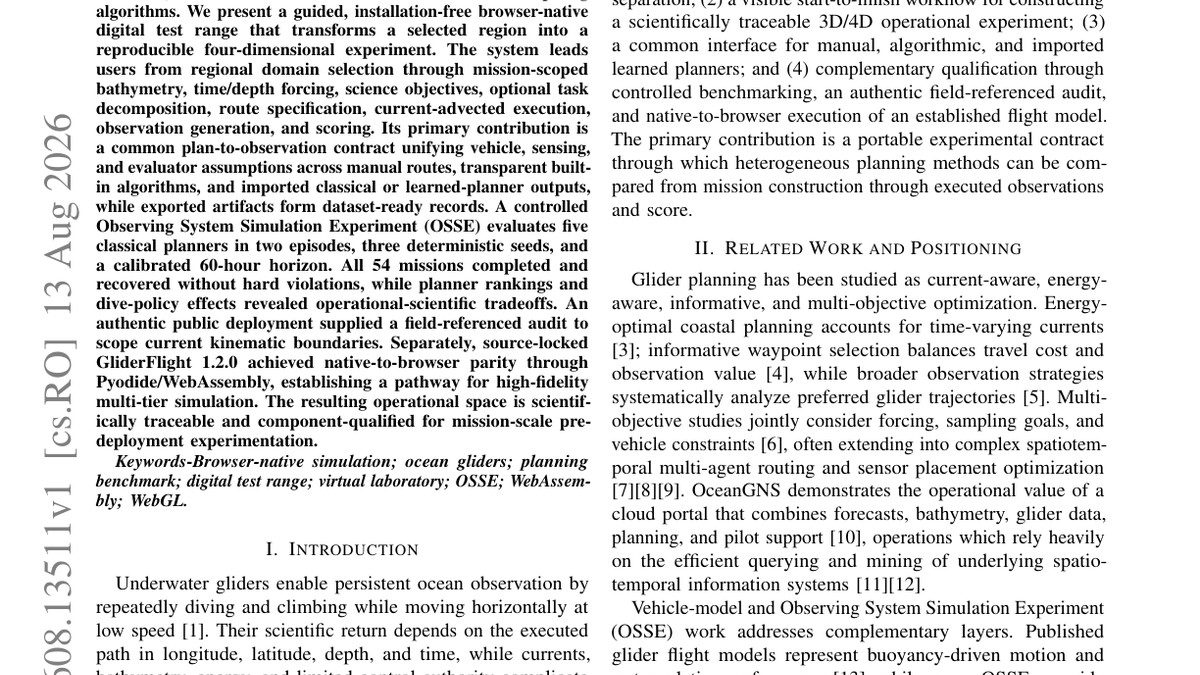
A Browser-Native Digital Test Range for Benchmarking 4D Ocean-Glider Planning Algorithms
Edward Holmberg, Elias Ioup, Mahdi Abdelguerfi
Repeated in-situ evaluation of ocean-glider planners requires scarce vehicles, operators, deployment and recovery resources, and ocean conditions that cannot be reset for competing algorithms.
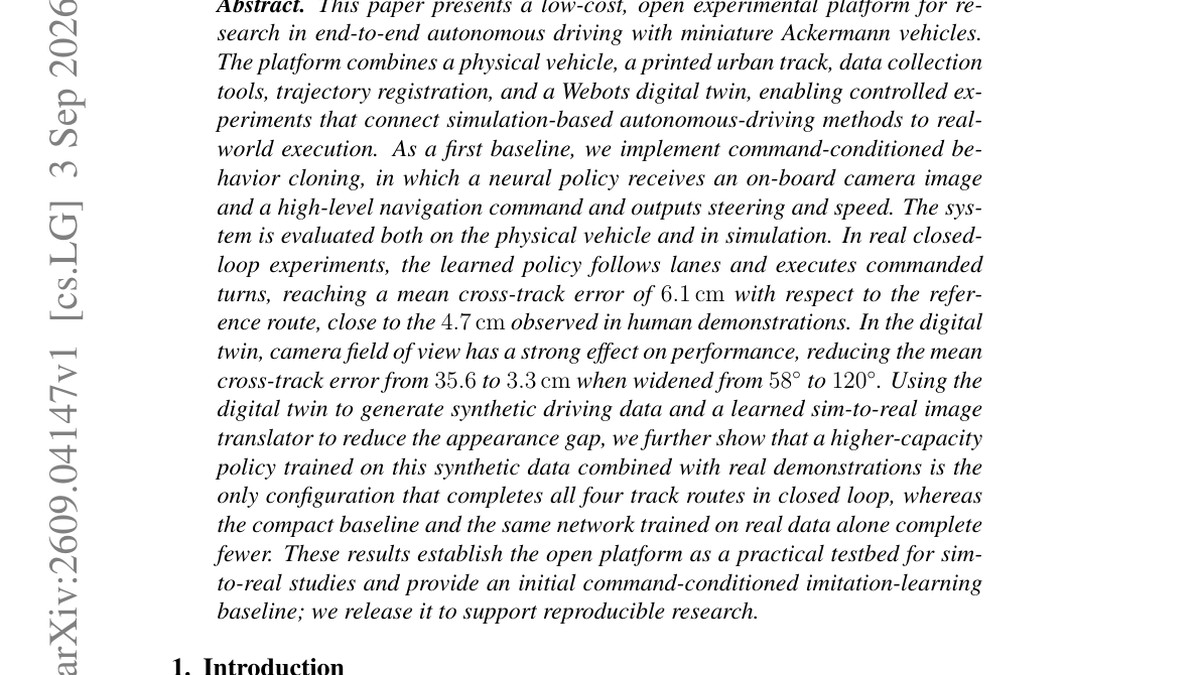
A Low-Cost, Open Platform for End-to-End Autonomous Driving on a Miniature Ackermann Vehicle
Gustavo Claudio Karl Couto, Eric Aislan Antonelo, Gabriel George Zipperer
This paper presents a low-cost, open experimental platform for research in end-to-end autonomous driving with miniature Ackermann vehicles.
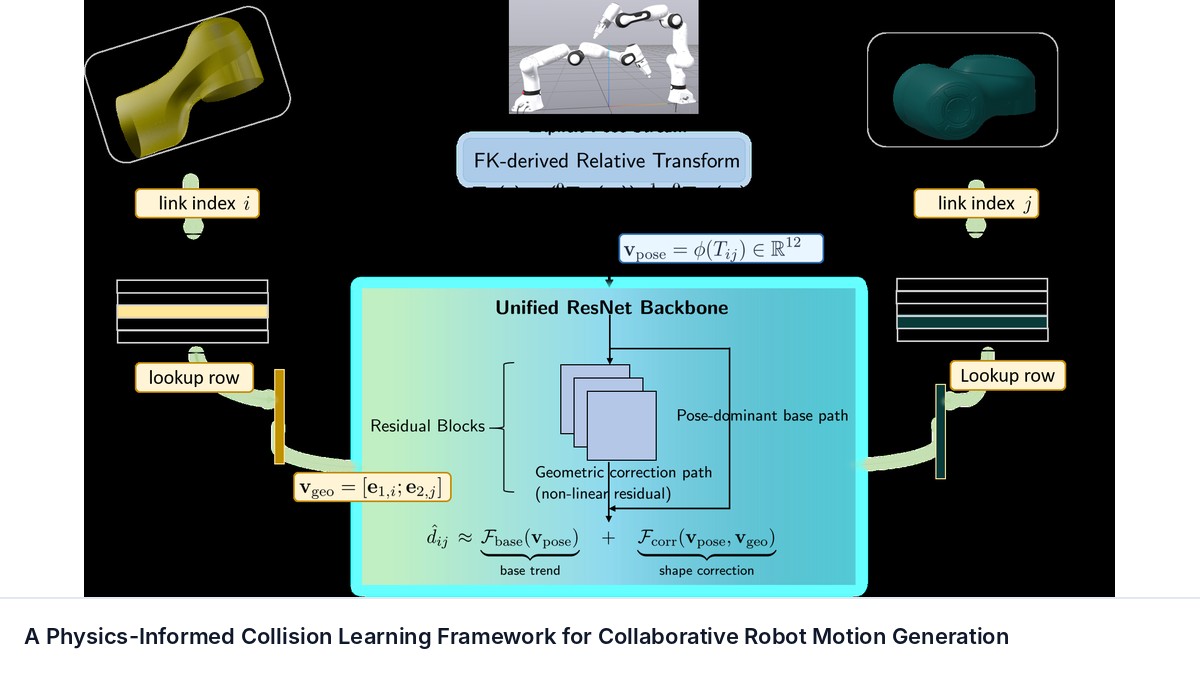
A Physics-Informed Collision Learning Framework for Collaborative Robot Motion Generation
Chen Cai, Steven Liu
Close-proximity multi-arm manipulation requires collision models that are both geometrically accurate and differentiable enough for real-time optimization.
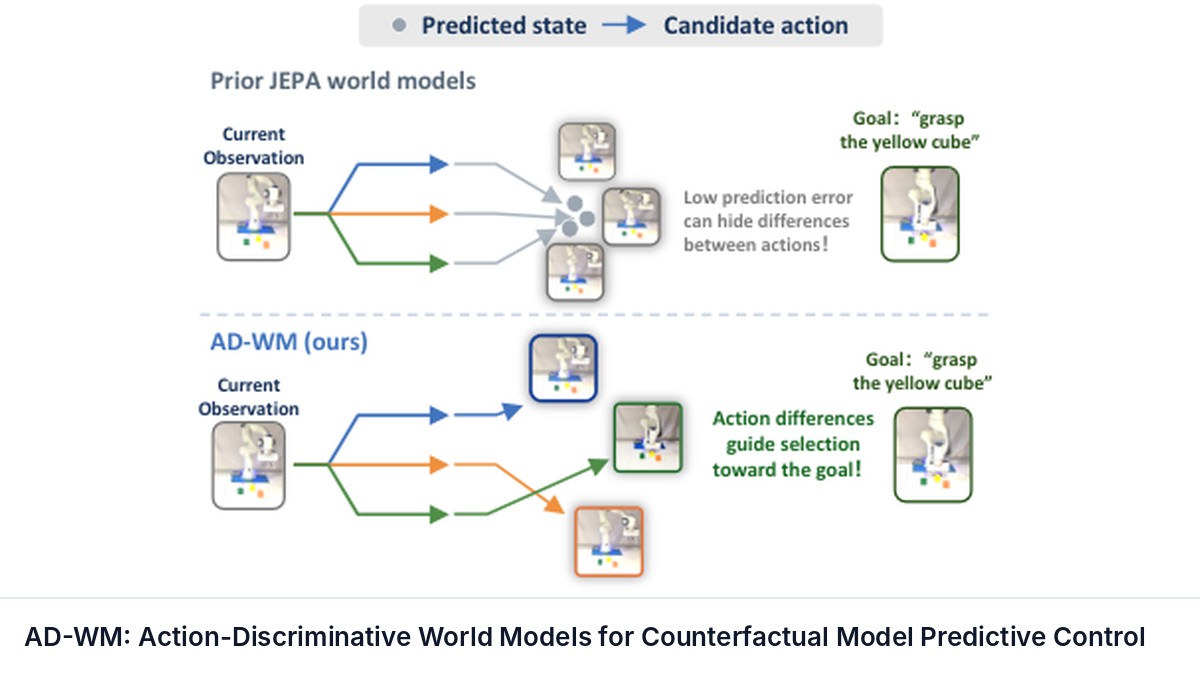
AD-WM: Action-Discriminative World Models for Counterfactual Model Predictive Control
Jiabin Qiu, Zixuan Chen, Hongye Cao et al.
Latent world models are typically trained to predict factual transitions, whereas model predictive control (MPC) must compare alternative actions from the same state. A model can therefore achieve low factual prediction error yet poorly distinguish candidate actions.