
iGibson: Interactive Gibson Benchmark for Real-World Navigation and Manipulation
Bokui Shen, Fei Xia, Chengshu Li, Roberto Martin-Martin, Linxi Fan, Guanzhi Wang, Yunfei Bai, De-An Huang, Dinesh Jayaraman, Yuke Zhu, Li Fei-Fei, Anima Anandkumar, Isaac Kamwa, Jiajun Wu, Biao Jiang, Shengjie Lin, Yunhai Feng, Silvio Savarese · Stanford, NVIDIA, BIGAI, UT Austin · 2021
Framework
PyTorch + PyBullet
License
MIT
Stars
806
Summary
iGibson is a photorealistic, physics-based indoor simulation platform with 15 interactive scenes, 500+ object categories, and GPU-accelerated rendering, enabling RL and VLA training for mobile manipulation and embodied AI.
Abstract Summary
Key Points
- 15 photorealistic scanned scenes with 500+ interactive objects.
- Real-world accurate geometry, lighting, and object arrangements.
- Interactive physics: doors, drawers, liquids, deformable objects.
- 50+ tasks: navigation, rearrangement, manipulation, social nav.
- ROS2 bridge + Gymnasium API for rapid sim-to-real transfer.
Extended Physical States for Simulation of Everyday Household Tasks
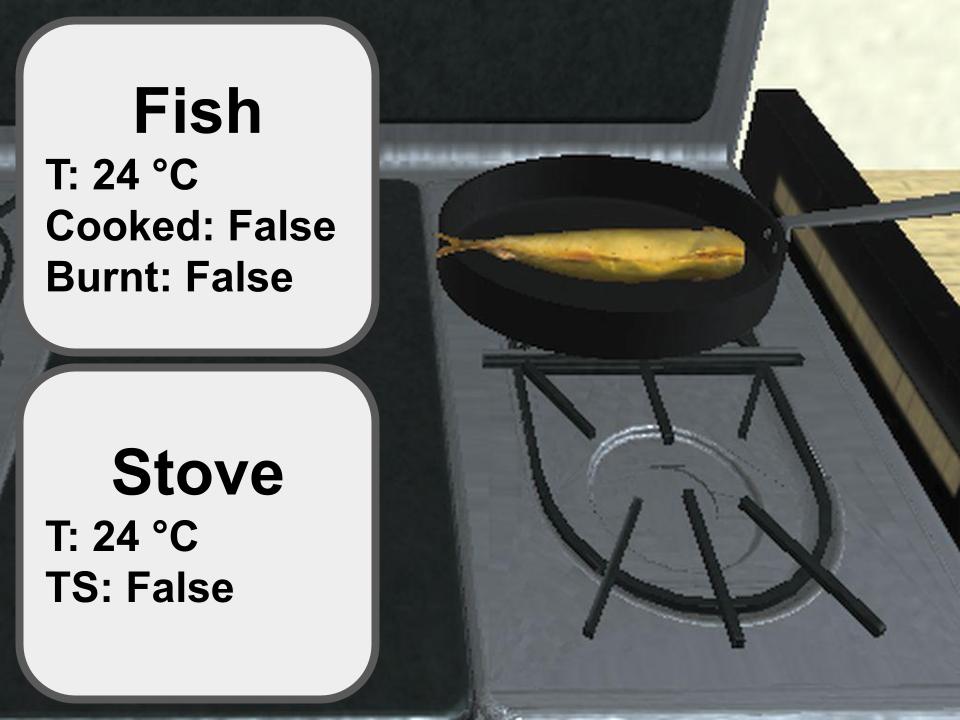
To perform household tasks, an agent needs to change objects’ states beyond their poses. iGibson 2.0 extends objects with five additional states: temperature, $T$, wetness level, $w$, cleanliness level (dustiness level, $d$, or stain level, $s$), toggled state, TS , and sliced state, SS .
Logical Representation of Physical States
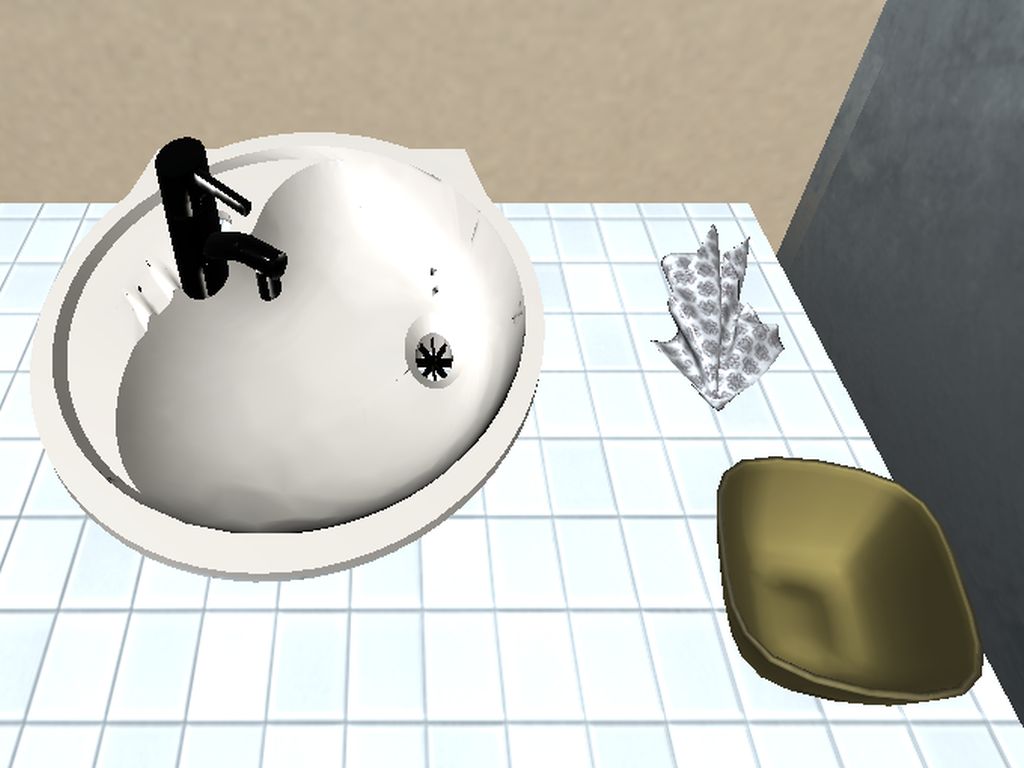
The new extended object states from iGibson 2.0 are sufficient to simulate a new set of household activities in indoor environments. However, there is a semantic gap between the extended states (e.g. temperature or wetness level) and the natural description of activities in a household setup (e.g. cooking apples).
To bridge this gap, we define a set of functions that map the extended object states to logical states for single objects and pairs of objects.
Virtual Reality Interface
iGibson 2.0’s new functionalities enable modeling new household activities and generating multiple instances in more densely populated scenes. To facilitate research in these new, complex tasks, iGibson 2.0 includes a novel virtual reality (VR) interface compatible with major commercially available VR headset through OpenVR [ 38 ] .
One of the goals is to allow researchers to collect human demonstrations, and use them to develop new solutions via imitation (see Sec. 6 ).
Evaluation
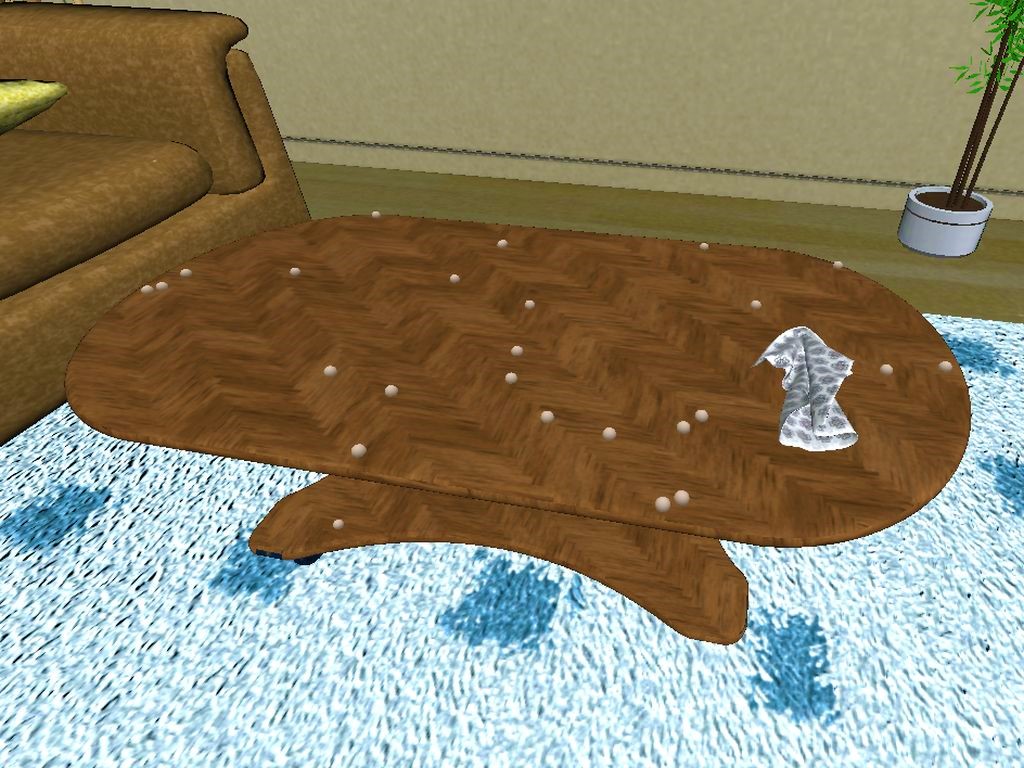
In our evaluation, we test the new functionalities of iGibson 2.0 explained above and that sets it apart from other existing environments. First, we create a set of tasks that showcase the new extended states (see Fig. 5(a) ) as their modification is required to achieve the tasks.
In our experiments, we make use of our discriminative and generative logical engine to detect task completion and create multiple instances of each task for training.
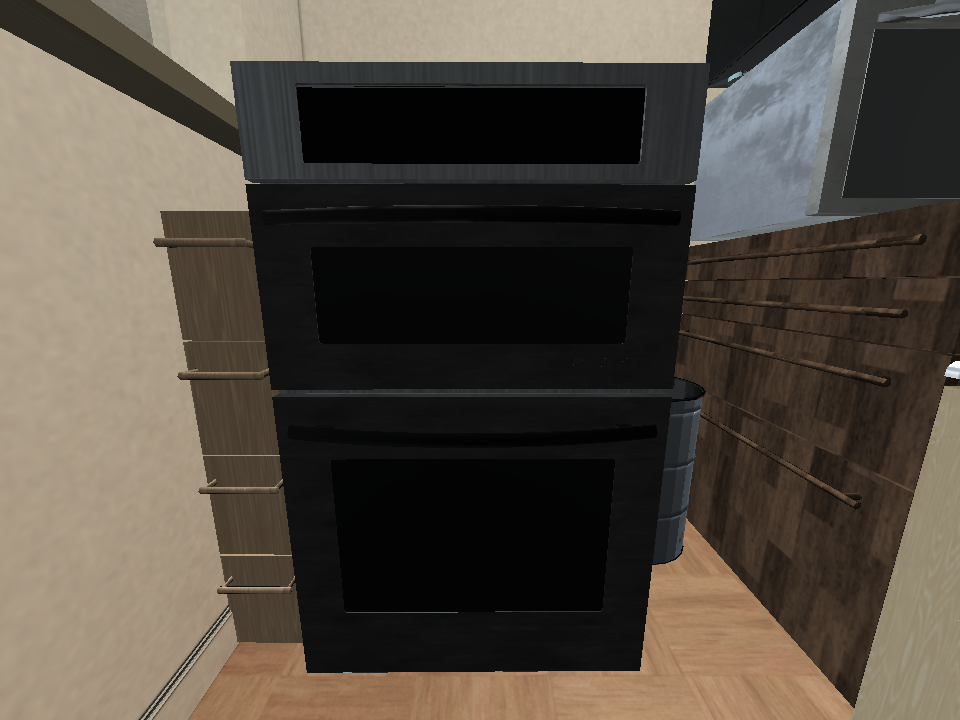
Sources and Demonstrations
Figures are reproduced from Shen et al. See the full paper for experimental details and the project page, when the paper links one, for demonstrations and videos.
Related Papers
Eureka: Human-Level Reward Design via Coding Large Language Models
Yecheng Jason Ma, William Liang, Guanzhi Wang et al.
Eureka uses GPT-4 to write reward functions for RL environments, achieving human-level reward design on 29 tasks and enabling zero-shot sim-to-real transfer on Shadow Hand dexterous manipulation.

Gymnasium: A Standard Interface for Reinforcement Learning Environments
Farama Foundation, Jordan Terry, Mark Towers et al.
Gymnasium is the maintained successor to OpenAI Gym, providing a standardized API for RL environments with 100+ built-in tasks, vectorized parallel execution, and native support for physics engines like MuJoCo, PyBullet, and IsaacGym.
ManiSkill: A Unified Benchmark for Generalizable Manipulation Skills
Jiayuan Gu, Sean Xiang, Stone Tao et al.
ManiSkill is a GPU-parallelized robotics simulation benchmark with 20+ manipulation tasks, PartNet-Mobility assets, and unified observation/action spaces, supporting RL, IL, and VLA training at millions of steps per hour.
Symmetries Here and There, Combined Everywhere: Cross-space Symmetry Compositions in Robotics
Loizos Hadjiloizou, Rodrigo Pérez-Dattari, Noémie Jaquier
Formalizes cross-space symmetry compositions in robotics and derives equivariant network architectures that exploit multiple simultaneous symmetries for improved generalization.