
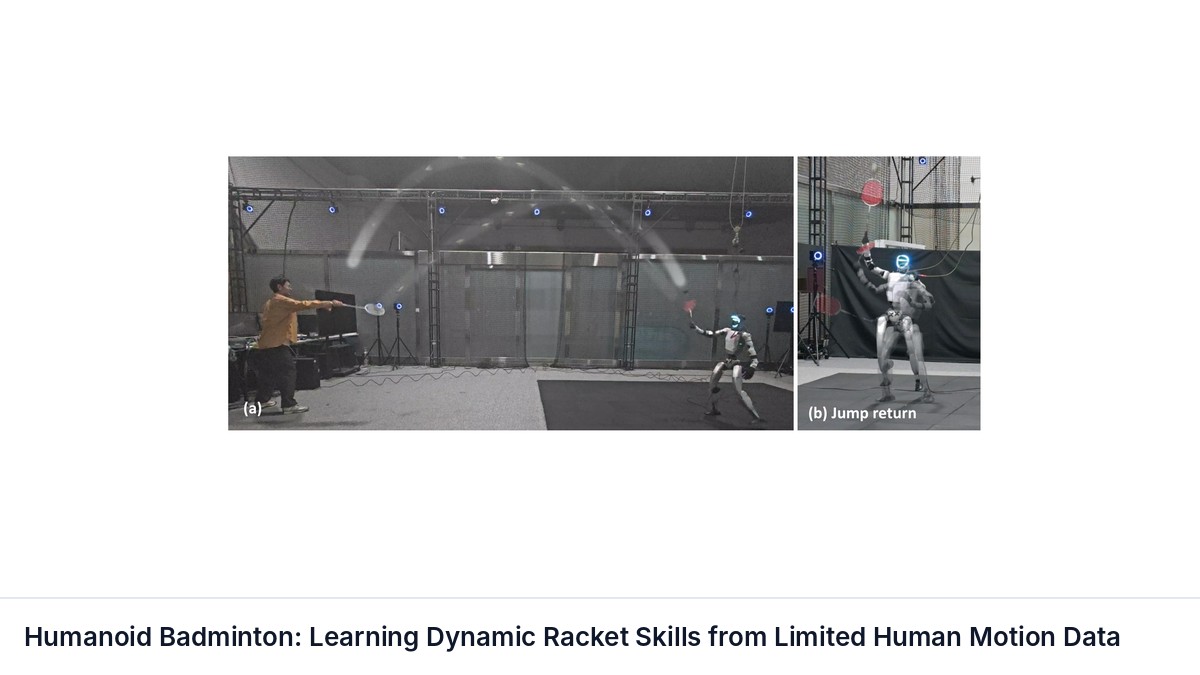
Humanoid Badminton: Learning Dynamic Racket Skills from Limited Human Motion Data
Jingzhi Cui, Zhexiong Wang, Bangjie Xu, Pengyu Zhao, Youyuan Li, Zhi Su, Peng Ren, Mengdi Xu, Chao Yu, Yi Wu, Luyang Wang, Zhongyu Li · N/A · 2026
Framework
N/A
License
N/A
Stars
N/A
Summary
High-speed racket sports provide a demanding testbed for humanoid robots, requiring time-critical decisions, precise striking, and dynamic whole-body coordination.
Abstract Summary
Key Points
- High-speed racket sports provide a demanding testbed for humanoid robots, requiring time-critical decisions, precise striking, and dynamic whole-body coordination.
- In badminton, fast-changing shuttle trajectories require timely contact decisions, while successful returns demand precise racket pose and velocity within a brief contact window and across a broad three-dimensional striking workspace.
- Human motion data provide valuable priors for such athletic skills, but usable badminton references are limited and imperfect.
- Direct tracking provides insufficient executable variation for diverse shuttle conditions, while purely task-driven optimization may produce unnatural motion.
- To address these challenges, we present a three-stage hierarchical reinforcement learning framework for dynamic humanoid badminton.
Method
We introduce a three-stage hierarchical framework that constructs a continuous target-conditioned latent skill space through task-randomized motion augmentation, trains a high-level planner for shuttle returns, and regularizes planner-level latent skill usage through a context-conditioned adversarial objective. As illustrated in Fig.
2 , our framework separates skill acquisition, task optimization, and planner-level latent skill regularization.

Experiments
We evaluate the proposed framework in simulation and real-world deployment.
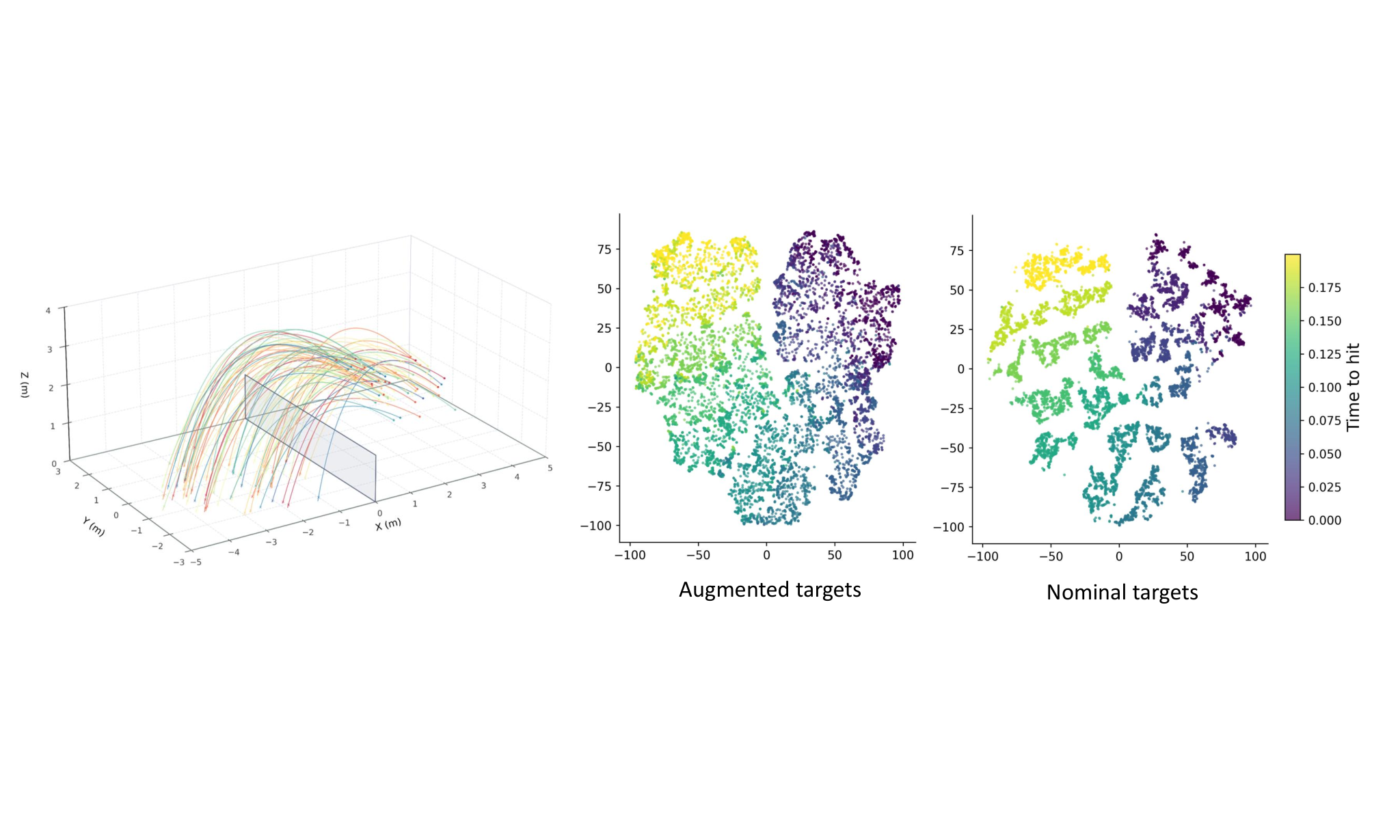
Our experiments address four questions: (1) whether the proposed method improves task performance, stroke diversity, and motion quality over representative baselines; (2) whether task-randomized motion augmentation expands the executable skill space and improves downstream planning; (3) whether staged training facilitates effective task learning and planner-level latent regularization improves motion quality while largely preserving task performance; and (4) whether the...
Sources and Demonstrations
Figures are reproduced from Cui et al. See the full paper for experimental details and the project page, when the paper links one, for demonstrations and videos.
Related Papers
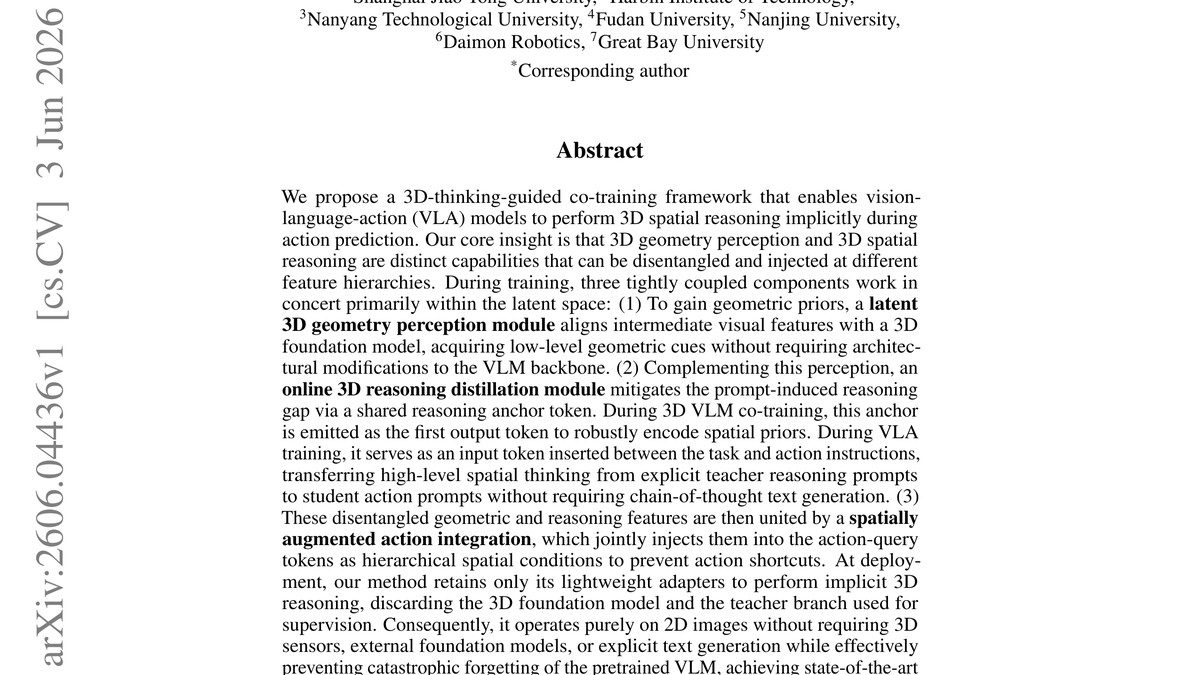
3DThinkVLA: Endowing Vision-Language-Action Models with Latent 3D Priors via 3D-Thinking-Guided Co-training
Jiaxin Shi, Xidong Zhang, Fucai Zhu et al.
We propose a 3D-thinking-guided co-training framework that enables vision-language-action (VLA) models to perform 3D spatial reasoning implicitly during action prediction.
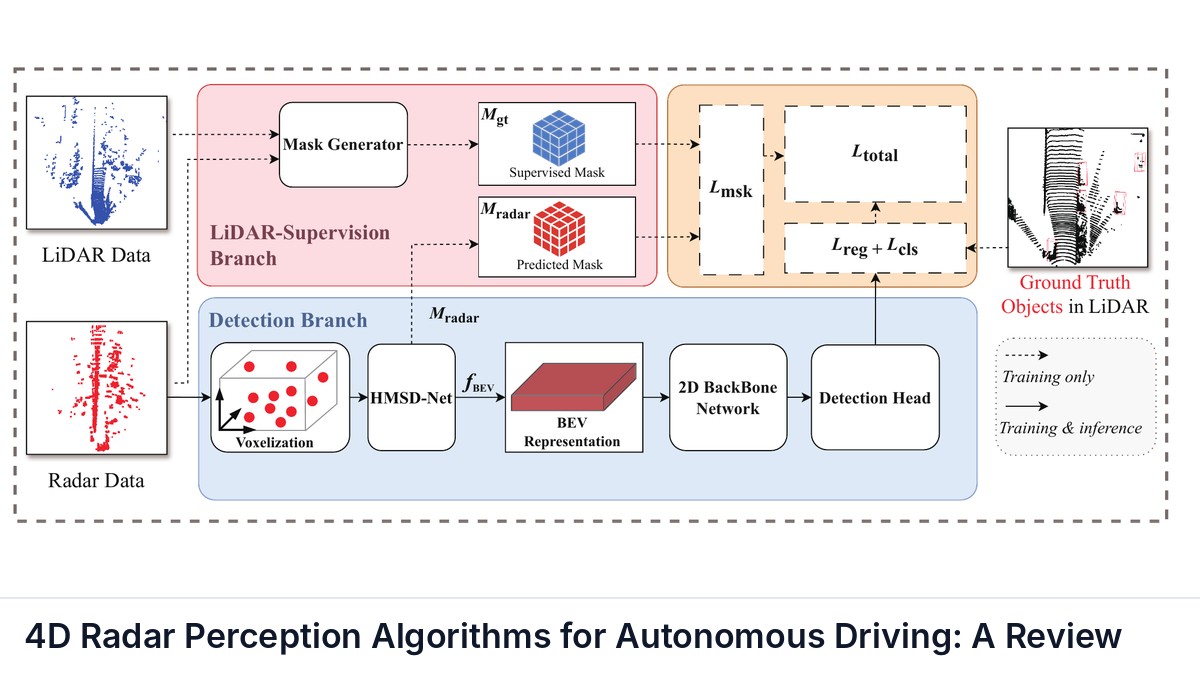
4D Radar Perception Algorithms for Autonomous Driving: A Review
Xumin Wu, Jun Zhou, Jilin Mei et al.
Research on 4D millimeter-wave radar perception algorithms has flourished in recent years, extending from signal processing and object detection to semantic segmentation, motion estimation, occupancy prediction, and dynamic scene reconstruction.
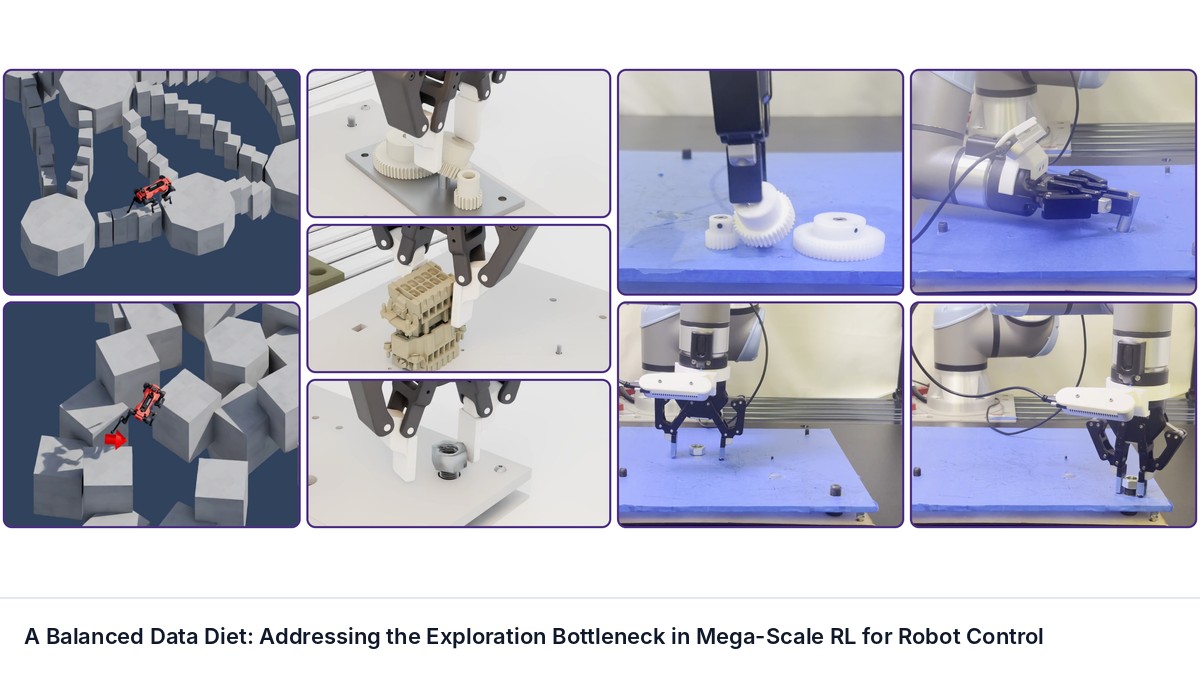
A Balanced Data Diet: Addressing the Exploration Bottleneck in Mega-Scale RL for Robot Control
Octi Zhang, Mateo Guaman Castro, Patrick Yin et al.
General-purpose robots must perform a wide range of tasks from agile locomotion to dexterous manipulation.
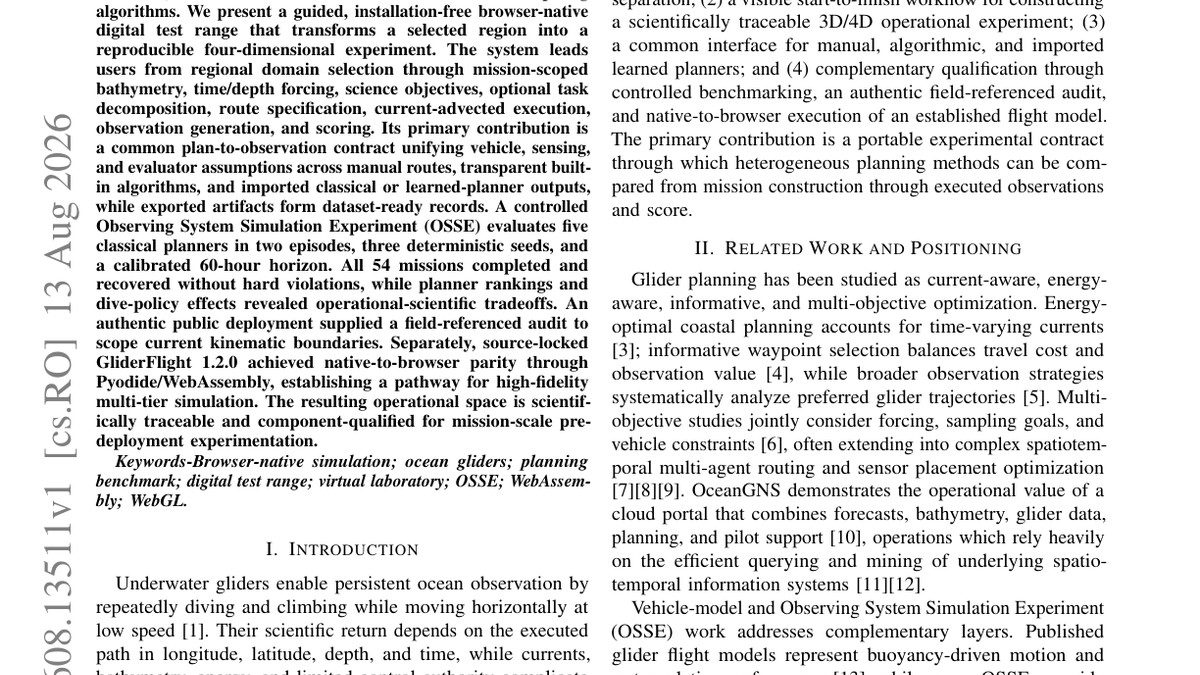
A Browser-Native Digital Test Range for Benchmarking 4D Ocean-Glider Planning Algorithms
Edward Holmberg, Elias Ioup, Mahdi Abdelguerfi
Repeated in-situ evaluation of ocean-glider planners requires scarce vehicles, operators, deployment and recovery resources, and ocean conditions that cannot be reset for competing algorithms.