
Faster Visuomotor Policy Learning on Action Manifolds via Riemannian MeanFlow
S. Talha Bukhari, Austin Garrett, Yi Wei, Ruiqi Ni, Zachary Kingston, Aniket Bera · N/A · 2026
Framework
N/A
License
N/A
Stars
N/A
Summary
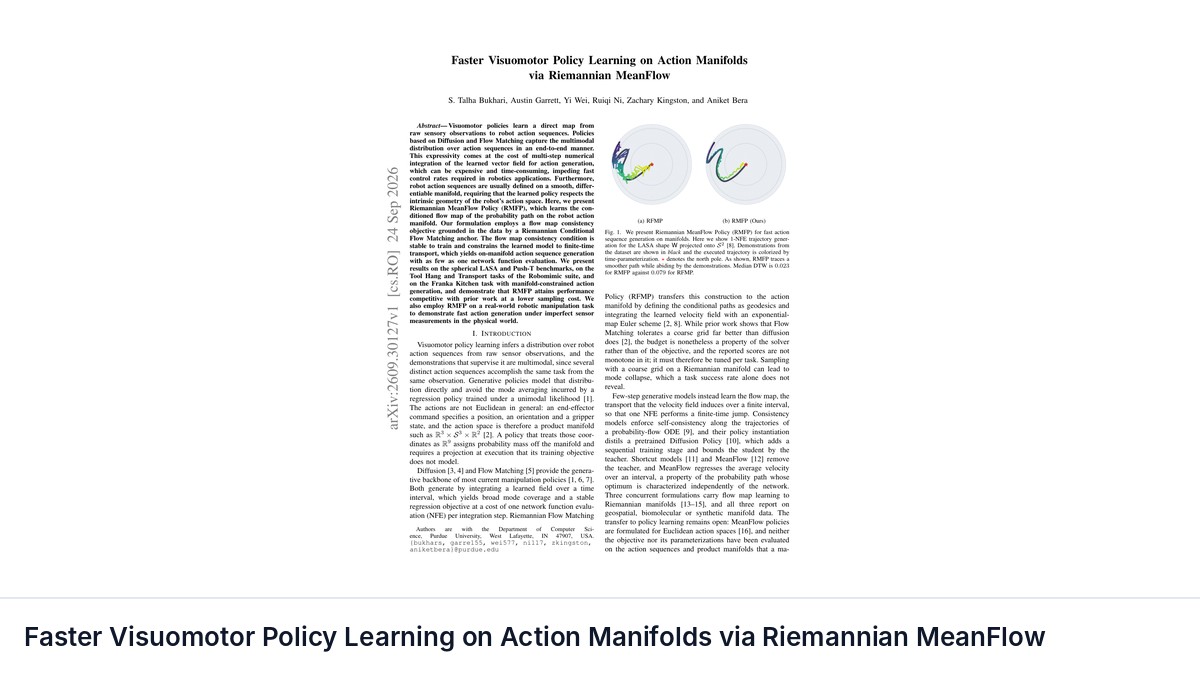
Visuomotor policies learn a direct map from raw sensory observations to robot action sequences. Policies based on Diffusion and Flow Matching capture the multimodal distribution over action sequences in an end-to-end manner.
Abstract Summary
Key Points
- Visuomotor policies learn a direct map from raw sensory observations to robot action sequences
- Policies based on Diffusion and Flow Matching capture the multimodal distribution over action sequences in an end-to-end manner.
- This expressivity comes at the cost of multi-step numerical integration of the learned vector field for action generation, which can be expensive and time-consuming, impeding fast control rates required in robotics applications.
- Furthermore, robot action sequences are usually defined on a smooth, differentiable manifold, requiring that the learned policy respects the intrinsic geometry of the robot's action space.
- Here, we present Riemannian MeanFlow Policy (RMFP), which learns the conditioned flow map of the probability path on the robot action manifold.
Methodology
The action space of a manipulator is a smooth manifold rather than a vector space. Let $\mathcal{A}$ denote the manifold of a single action, which for an end-effector controller is the product $\mathcal{A}=\mathbb{R}^{3}\times\mathcal{S}^{3}\times\mathbb{R}^{2}$ of a position, a unit quaternion and two finger positions [ 2 ] .
Experiments
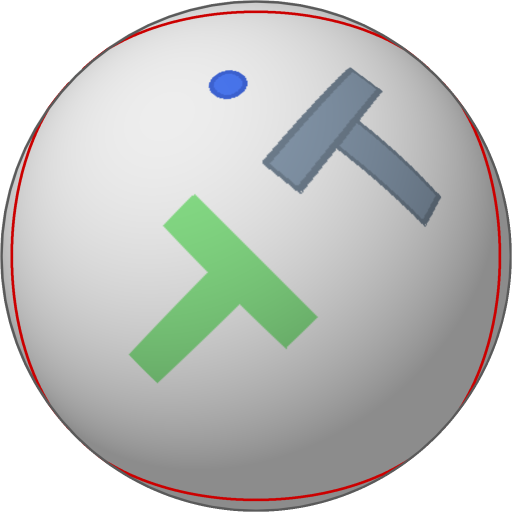
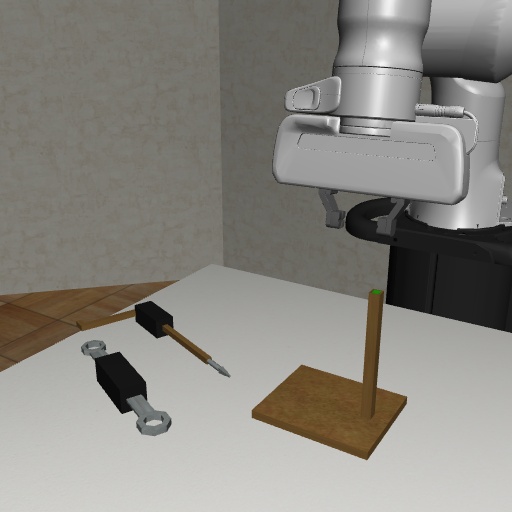
We ask whether a learned action flow map on a Riemannian manifold retains task performance at a limited sampling budget under different settings. We evaluate the proposed formulation against baselines for Riemannian generative policy learning on four simulated benchmarks and one trajectory-reproduction task. We use four simulated benchmarks (cf. Fig. 3 ) and one trajectory-reproduction task (cf. Fig.
1 ) that separate the effect of the training objective from the effect of the geometry of the action space.
Sources and Demonstrations
Figures are reproduced from Bukhari et al. See the full paper for experimental details and the project page, when the paper links one, for demonstrations and videos.
Related Papers

A Sim-to-Real Integration Pipeline for Training and Deployment of Chunk-Based VLA Manipulation Policies
Mathilde Kappel, Clémence Grislain, Mohamed Chetouani et al.
Vision-Language-Action (VLA) models have become a prominent paradigm for mapping multimodal inputs, including semantic instructions, visual observations of the scene, and proprioceptive observations, to robot actions.
Behavioral Cloning Mystery
Seohong Park, Sergey Levine
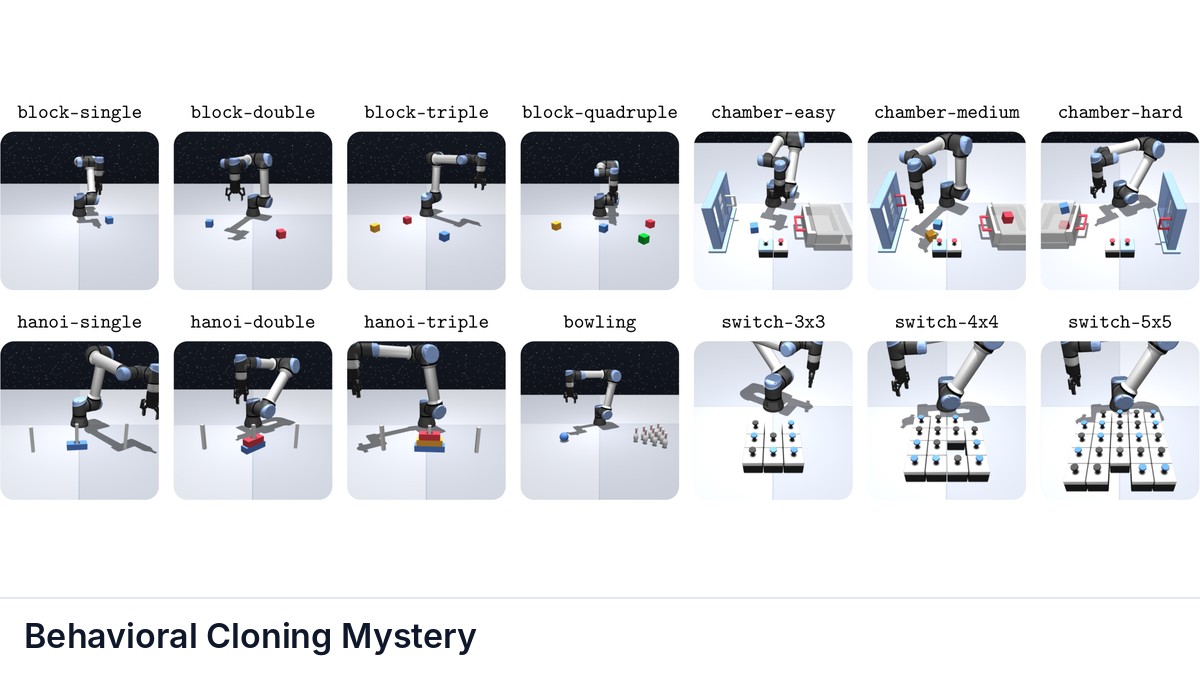
Behavioral cloning (BC), despite its simplicity, exhibits many counterintuitive phenomena in the real world. For example, the performance of BC often keeps increasing as the model overfits more to the dataset, and fully closed-loop policies often completely fail without action chunking.
Beyond Reconstruction: What Matters in Action Tokenization for Robot Policies?
Haoran Chen, Jingtian Ji, Samuel Wheeler et al.
Autoregressive action-token policies such as vision-language-action models require action tokenizers to translate discrete token sequences into precise control actions in continuous space. Many action tokenizers learn the mapping between tokens and actions via a reconstruction objective.

Capability-Aware Arbitration for Semantic Intent-Based Shared Control
Zhaoda Du, Michael Bowman, Xiaoli Zhang
Shared control often allocates robot authority based on confidence in inferred human intent, assuming reliable autonomous execution. When this assumption fails, high intent confidence can cause over-helping.