
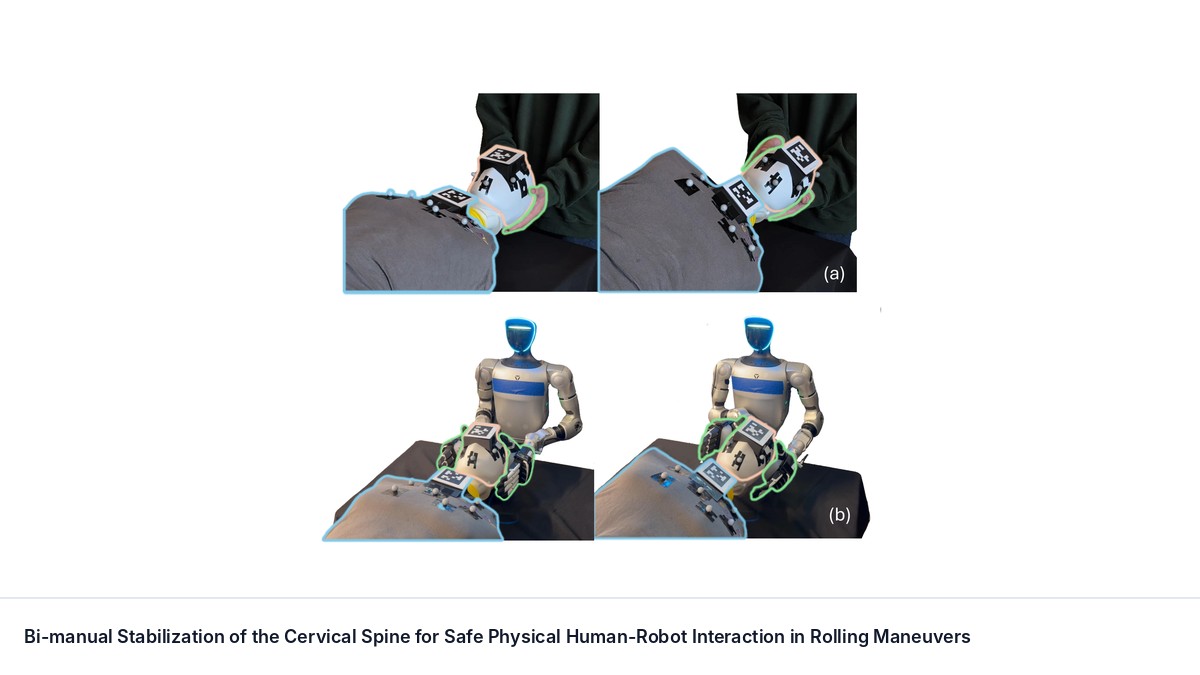
Bi-manual Stabilization of the Cervical Spine for Safe Physical Human-Robot Interaction in Rolling Maneuvers
Elizabeth Peiros, Moira Bohley, Lucas Yager, Derek Chen, Rebecca Fellbaum, Chris D'Ambrosia, Ananya Rao, Xiao Liang, Michael C. Yip · N/A · 2026
Framework
N/A
License
N/A
Stars
N/A
Summary
The neck, specifically the cervical spine, is a highly fragile and mobile part of the body with a high risk of catastrophic injury.
Abstract Summary
Key Points
- The neck, specifically the cervical spine, is a highly fragile and mobile part of the body with a high risk of catastrophic injury.
- Whether someone is injured on a battlefield, in a natural disaster, or in an athletic event, great care is always taken with the cervical spine when transporting, rolling, or moving the patient.
- In this work, we present an algorithm and adaptations for bi-manual robots to stabilize the cervical spine during rolling maneuvers.
- We investigate techniques to maximize grip strength within safety bounds and present a control approach for proper neck rotation.
- We found that with our approach, a bi-manual robot is capable of achieving human-level performance in maintaining target rotational alignments.
Methods
The overall method is broken down into sub-tasks which are completed in the following sequence. The head-mounted camera on the bimanual robotic platform locates two ArUco markers: one attached to the casualty head and one attached to the casualty torso. The robot records the location of the head marker relative to the robot’s base frame.
The robot runs a planning algorithm with the goal of moving its hands such that each hand is on either side of the head.
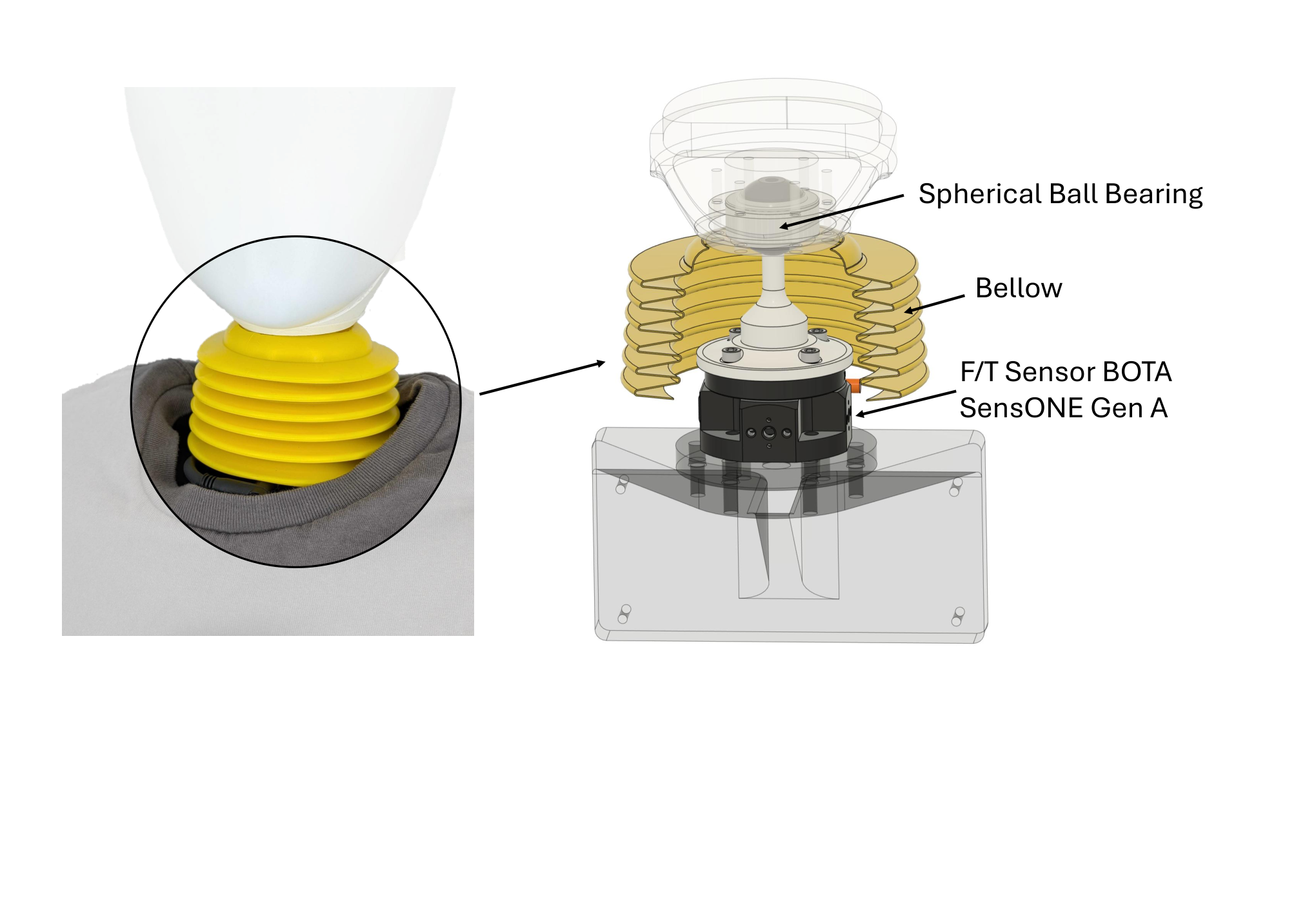
Experiments and Results
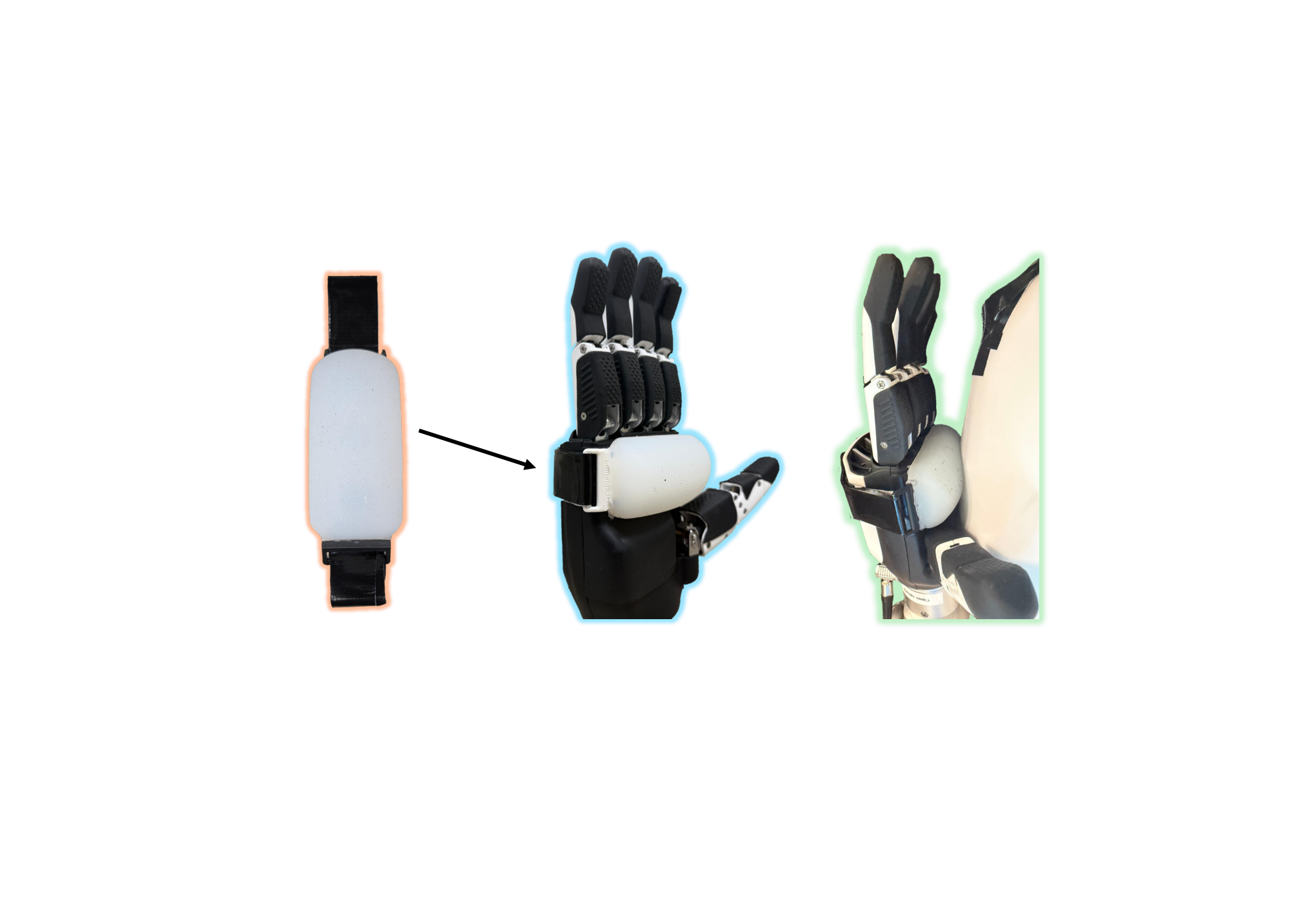
We placed heavy emphasis on safety metrics to evaluate the algorithm’s performance and the platform’s ability to execute this task. To compare robotic execution with human capabilities, we compared the robot’s safety metrics and responses with human experience, including novices and top performers, or ”experts”. The tasks require hardware capable of tracking a head and torso, grasping a head, and rotating it.
Sources and Demonstrations
Figures are reproduced from Peiros et al. See the full paper for experimental details and the project page, when the paper links one, for demonstrations and videos.
Related Papers
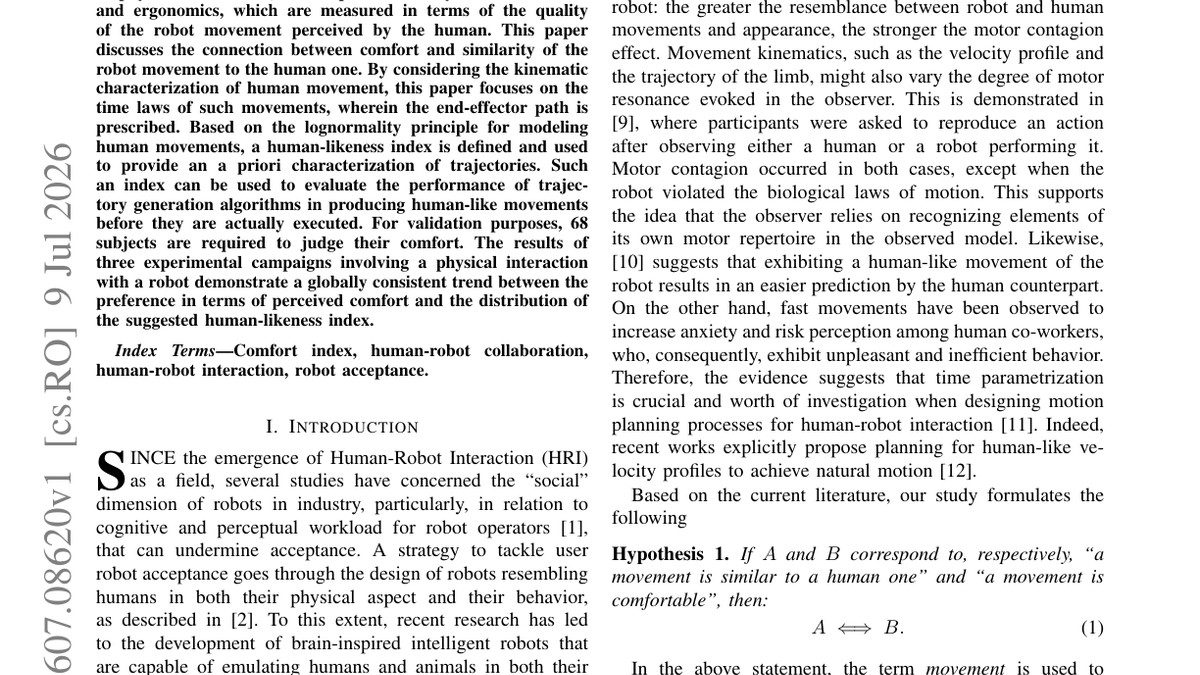
A New Human-Likeness and Comfort Index for Robot Movements Along Prescribed Paths
Rosanna Coccaro, Enrico Ferrentino, Antonio Parziale et al.
As human-robot interaction rapidly spreads in numerous fields, the subject of robot acceptance gains increasing importance.
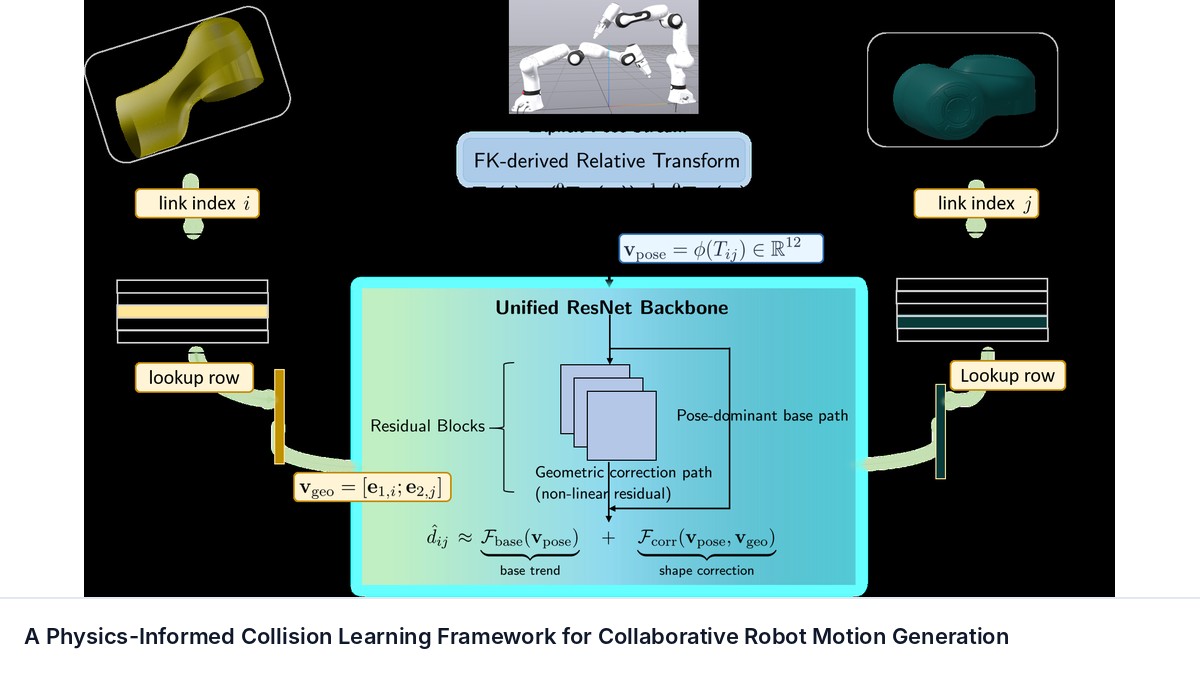
A Physics-Informed Collision Learning Framework for Collaborative Robot Motion Generation
Chen Cai, Steven Liu
Close-proximity multi-arm manipulation requires collision models that are both geometrically accurate and differentiable enough for real-time optimization.

Aim Short to Reach Far: Your Frozen World Model Can Plan Better Than You Think
Xvyuan Liu, Jianjie Fang, Chen Gao et al.
Planners built on visual world models commonly score each predicted outcome by its distance to the encoded goal image. We show that this target can limit control even with exact dynamics and globally optimal short-horizon search: reaching a goal may require actions that initially move away from it.
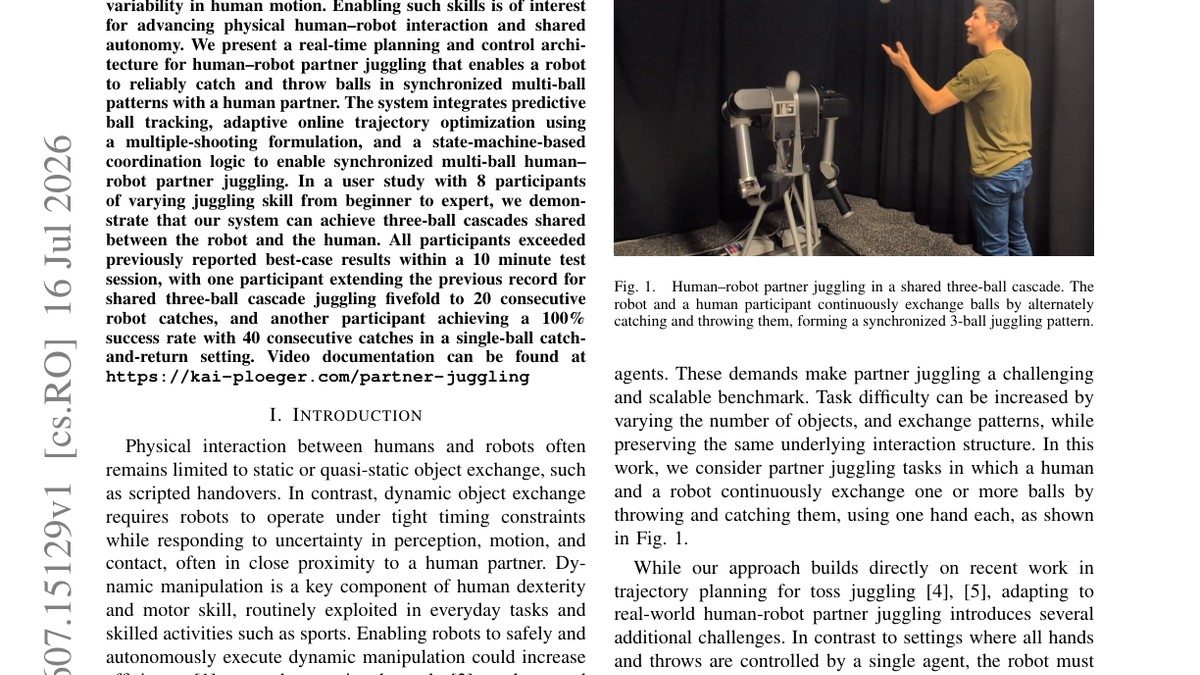
Catch, Throw, Repeat: Planning for Human-Robot Partner Juggling
Jonathan Rainer Lippert, Kai Ploeger, Abir Chowdhury et al.
Dynamic object exchange between humans and robots remains a challenging problem due to uncertainty in perception, timing, and contact-rich interaction.