
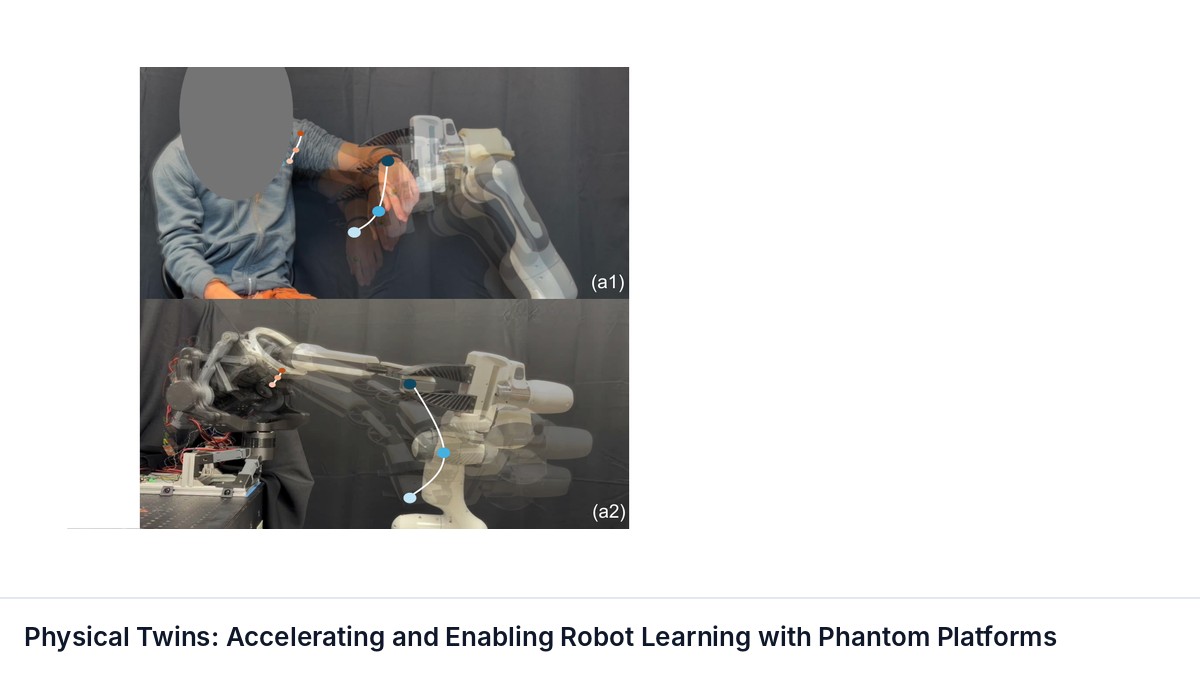
Physical Twins: Accelerating and Enabling Robot Learning with Phantom Platforms
Elizabeth Peiros, Derek Chen, Lucas Yager, Edward Lee, Kevin Wang, Zoe Samuels, Michael C. Yip · N/A · 2026
Framework
N/A
License
N/A
Stars
N/A
Summary
Improvements in human-robot physical interaction (pHRI) can have major implications for physical therapy, search and rescue, and telemedicine. However, a major challenge concerns human constraints and safety in human-robot physical experiments.
Abstract Summary
Key Points
- Improvements in human-robot physical interaction (pHRI) can have major implications for physical therapy, search and rescue, and telemedicine.
- However, a major challenge concerns human constraints and safety in human-robot physical experiments
- Concerns about human studies also include repeatability, scalability, and participant diversity
- To conduct such experiments, an IRB and willing human participants are required
- In this work, we present an improved phantom device, a physical twin, that enables real-world RL-type testing for physically interactive algorithms.
Methods
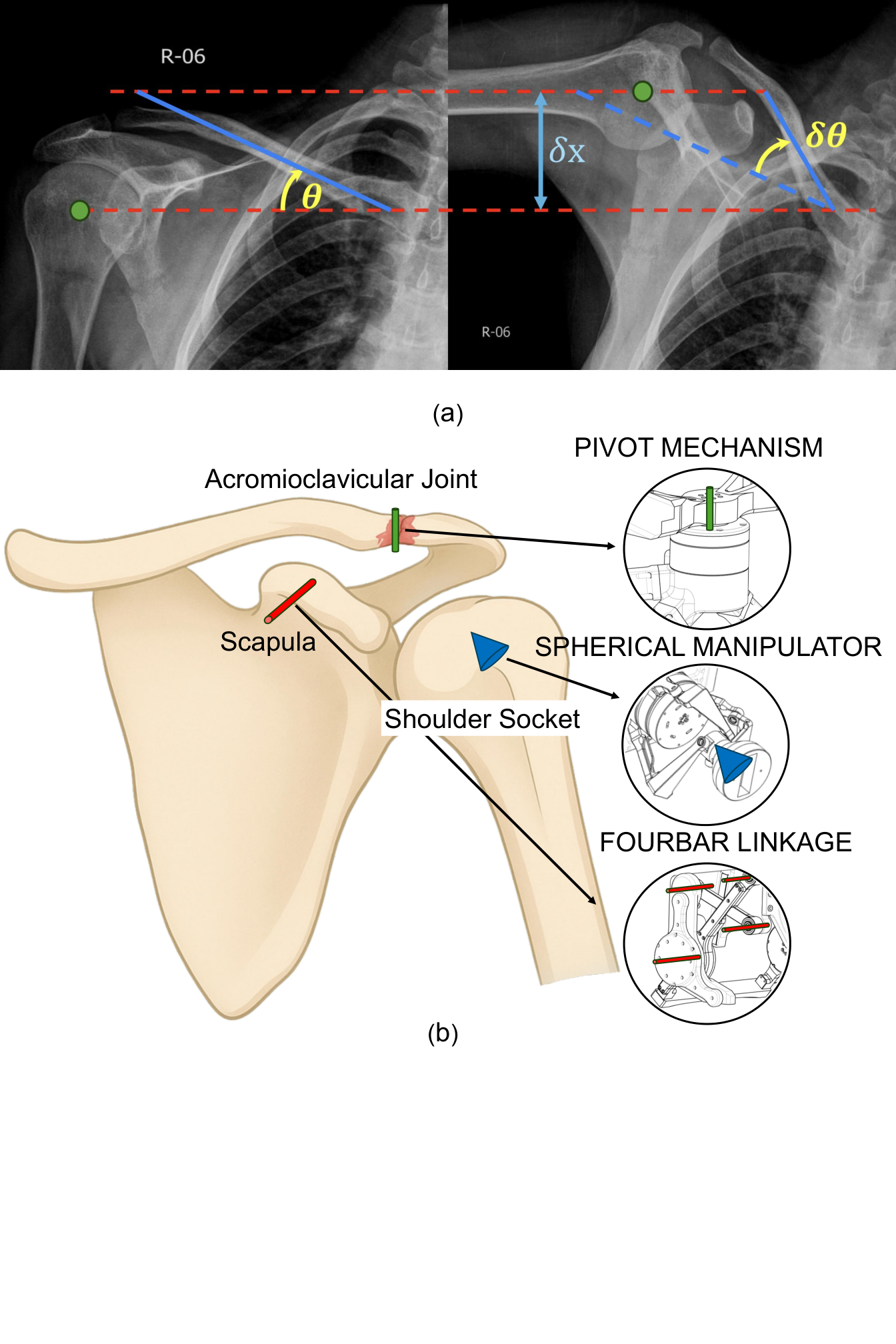
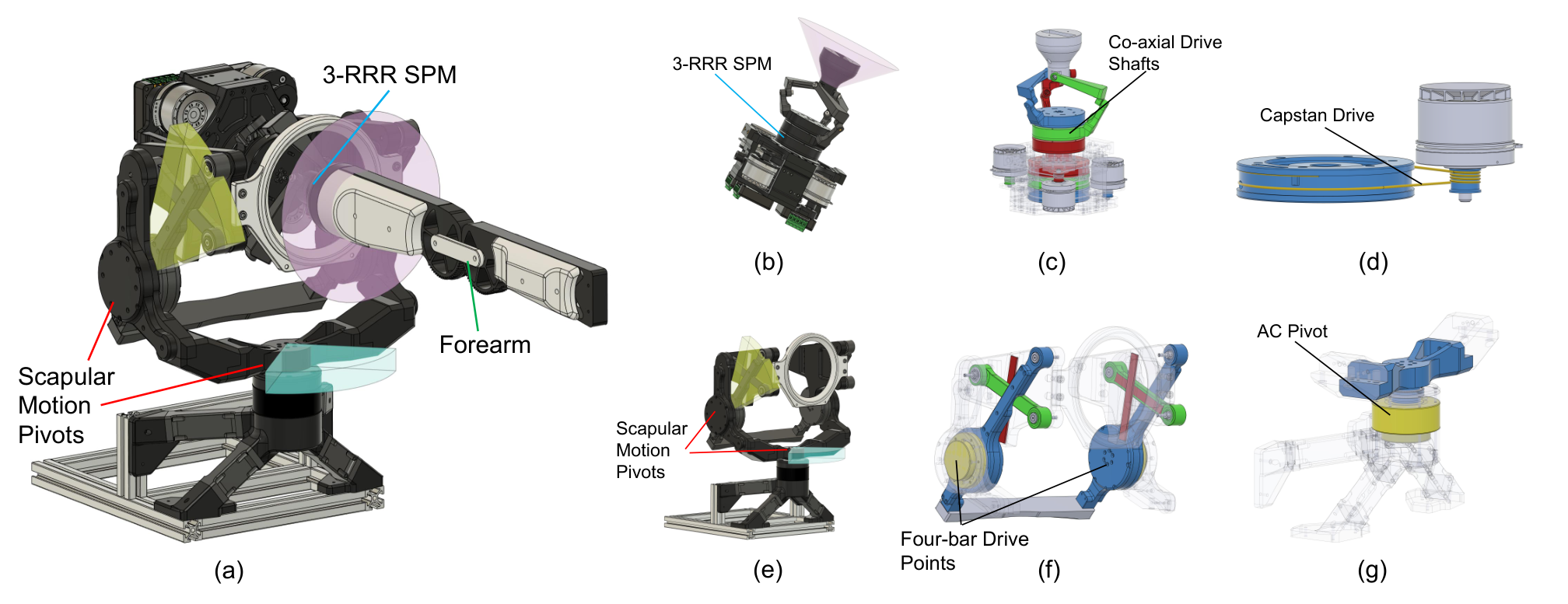
Our physical twin design features a mechanical mechanism that emulates the complex anatomy of the shoulder, with attention to realistic grasping and maneuvering points: the wrist, arm, and armpit, typically used for lifting, dressing, and weight shifting.
The device provides the robot manipulator with forces that are sensible at a scale safe for the lab environment and supports an infinite number of individual user profiles, enabling proper testing of the true safety of a robotically assisted task.
Experiments and Results
Taking the Jacobian for the three unique joints, the overall reachable space can be defined using the superposition (addition) of each joint’s ROM. A number of these results can be seen in Table I The humeral rotation given the initial pose, where the $\mathcal{B}$ and $\mathcal{C}$ frames are aligned, is [+330°, -270°]. Analysis of the force capabilities and singularities was done and is shown in Figure 5 (a).
Sources and Demonstrations
Figures are reproduced from Peiros et al. See the full paper for experimental details and the project page, when the paper links one, for demonstrations and videos.
Related Papers

Aim Short to Reach Far: Your Frozen World Model Can Plan Better Than You Think
Xvyuan Liu, Jianjie Fang, Chen Gao et al.
Planners built on visual world models commonly score each predicted outcome by its distance to the encoded goal image. We show that this target can limit control even with exact dynamics and globally optimal short-horizon search: reaching a goal may require actions that initially move away from it.
Assessing Physical Frailty and Fall-Risk Indicators with Social Robots: An in situ Evaluation with Older Adults
Aniol Civit, Antonio Andriella, Alba Martínez et al.
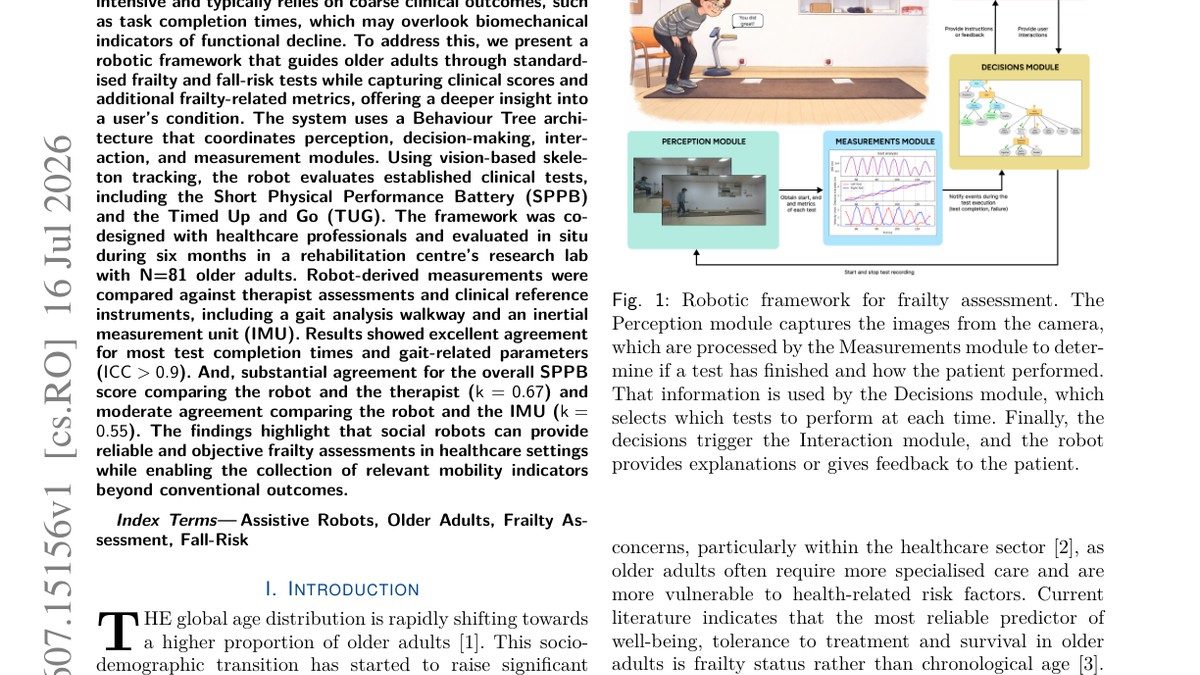
Frailty assessments are crucial to evaluate the risk of adverse events and the health and social care needs of older adults, yet their administration remains resource-intensive and typically relies on coarse clinical outcomes, such as task completion times, which may overlook biomechanical indicators of functional decline.
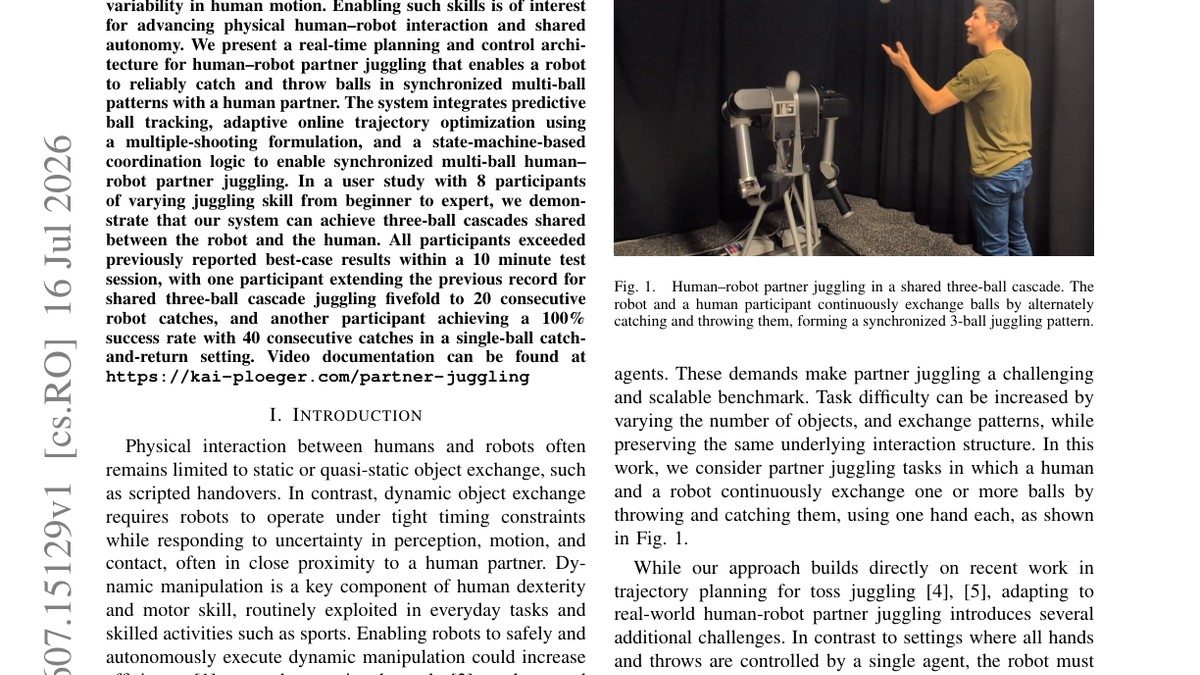
Catch, Throw, Repeat: Planning for Human-Robot Partner Juggling
Jonathan Rainer Lippert, Kai Ploeger, Abir Chowdhury et al.
Dynamic object exchange between humans and robots remains a challenging problem due to uncertainty in perception, timing, and contact-rich interaction.
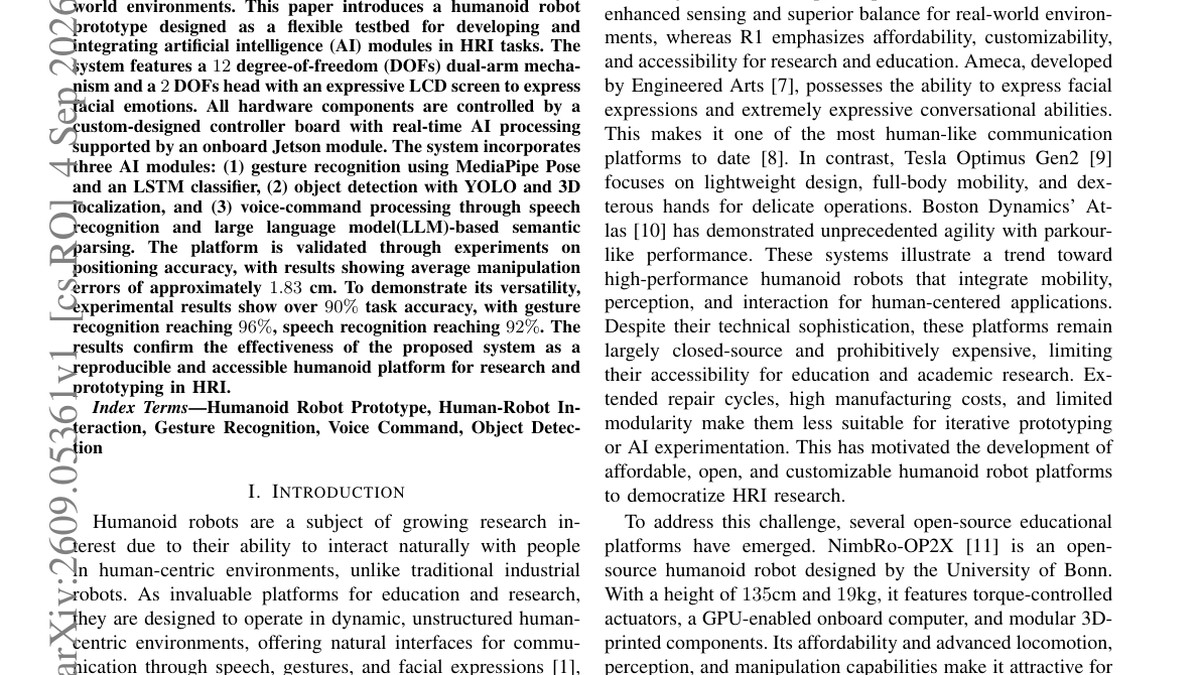
Development of a Humanoid Robot Prototype for Multimodal Human-Robot Interaction
Thang Tran Viet, Thanh Nguyen Canh, Huy Uong Gia et al.
Human-robot interaction (HRI) enables intuitive and intelligent collaboration between humans and robots in real-world environments. This paper introduces a humanoid robot prototype designed as a flexible testbed for developing and integrating artificial intelligence (AI) modules in HRI tasks.